All Our Names
The protagonist is a young Ethiopian; the adolescent longing to leave his remote village behind drives him to choose a purpose and a city: to become a great writer in Kampala, which, despite being the capital of Uganda, like him «belonged to no one and no one could claim it». It is therefore a non-place, where the young man hides, forgets, or simply abandons the twenty-five names by which he was called in his village. In Kampala, he meets his friend. > Isaac and I became friends the way two stray dogs find each other following the same trail every day in search of food and companionship . Both are unversed in urban life, but Isaac projects confidence and takes the protagonist under his protective wing—naive, fragile, and too much of a dreamer to survive on his own in a violent and chaotic metropolis. Having no names left, Isaac gives the boy several nicknames (no fewer than thirteen), all tied to his air of an intellectual and a man of letters. At first, the two young men frequent the university campus, a kind of "oasis > in a country increasingly torn apart by clashes between opposing factions, which soon culminate in dictatorship and repression. If students were initially allowed to voice dissent, demonstrations are subsequently banned and smothered in blood. For the protagonist, the situation is particularly dire because he is a foreigner; Isaac must step in repeatedly to save him and hide him in safe places. The political struggle has degenerated into gang warfare. Isaac, growing ever more mysterious due to the life he leads and the company he keeps, enters the service of a clan leader. The protagonist watches in horror as violence, executions by firing squad, and outright massacres unfold. Yet above all, he is appalled by his friend’s transformation: from a slightly provocative, somewhat playful young man, Isaac reveals himself to be a cynical killer, a skilled manipulator of men, an unscrupulous opportunist, perhaps even a double-dealer. But who is Isaac, really? What do we know of him, of his past? The situation deteriorates rapidly, and Isaac provides the protagonist with a passport and a plane ticket to flee to the United States. In doing so, he also gives him a name: his own. The young man, now Isaac, holds a temporary visa as a political refugee and is monitored by social services, in particular by a young caseworker, Helen. A love affair begins, but can one truly love someone whose past remains unknown? During their troubled relationship, Isaac asks what he can do for her: yes, I told her, promise me you won’t disappear one day > . Yet so it will be, because this is the fate of migrants, placeless and nameless: all they can say, promising to return one day, is that no one will ever have loved each other more than we did. For the sake of clarity, the plot has been presented according to a possible logical sequence: first the events in Uganda, then the love affair in America. In truth, the author does not construct the novel this way; the narrative unfolds through two parallel storylines: in the first, the narrator is the protagonist and the subject is his friendship with Isaac; in the second, the narrator is Helen, recounting her relationship with the protagonist. Only in the final lines do the two narratives intersect, when we discover that the phrase the false Isaac utters to Helen at the moment of parting was written by the real Isaac on a slip of paper for the protagonist. One is left to wonder whether the love for Helen is cut from the same cloth as the friendship between the real Isaac and the false one: extraordinary bonds in an age when relationships between human beings are like those of two men who meet unexpectedly in the middle of a desert after traveling so long they have begun to believe the world is uninhabited > .. Yet what does this strange novel mean? It conveys a sense of rootlessness, that special loneliness that comes from having nothing that is truly yours«, which drives Helen to search Isaac’s room to »seek proof of his existence > . This rootlessness possesses a dark allure of its own because it offers us a world weightless«, allowing one to confront a reality that »breaks you into pieces slowly« and to overcome the fear of »what comes next. It is an interesting book. It is, however, marred by an excess of intellectualism, discernible in many passages of the novel and in its overarching design: the reliance on two parallel narratives fragments the story, weighing it down needlessly and causing it to lose both narrative momentum and emotional tension. The almost Pirandellian interplay of the two Isaacs is pushed to an exaggerated degree, yet fails to surprise the reader upon discovering that Helen’s Isaac is not the real Isaac. The author sought to pack too much substance into a storyline and its characters, when it would have been enough to narrate them in their spontaneity, in their real lives as migrants of the world". Why not read it? It is boring.
All the Pretty Horses (Wild Horses)
Two boys, sixteen-year-old Grady and seventeen-year-old Rawlins, rest on their saddle blankets after dismounting their horses. > The night was cold and clear and the sparks rising from the fire spread warmth and reddish glows among the stars. They could hear the trucks out on the highway and they could see the lights of the town reflected far in the desert fifteen miles to the north. What do you think you’ll do? Rawlins asked. I don’t know. Nothing , Grady replied. After three hundred pages—some of them arduous reading—to the same question (“where is your country?”), Grady answers: “I don’t know. I don’t know where it is. (...) He touched the horse with his spurs and moved on. He rode while the sun turned his face copper-colored and the reddish wind blew from the west across the evening plain and the small desert birds sang among the dry ferns; horse and rider advanced and their long shadows moved together as the shadow of a single being. They passed and paled into the evening plain, toward the world to come > There is nowhere to stop; nothing remains but to keep moving, with only two certainties: the horses and the great untamed plain. The novel recounts the adventure of an adolescent. profoundly alone and in search of himself across the vast expanses of a West now overtaken by modern American society. We are like the Comanches were two hundred years ago. We don’t know what will show itself come daylight. We don’t even know what color it will be > . So his father told him, almost as if urging Grady to leave, perhaps to flee. And the boy embarks on a long journey on horseback, together with Rawlins. They strike out into the great expanses toward Mexico, into a swarm of stars, so that they rode not under but among them (...), like thieves newly loosed in that electric black, like young thieves in a luminous garden, ill-equipped against the cold and ten thousand worlds to choose from > . Along the way they encounter Blevins, a thirteen-year-old boy on horseback, solitary, perhaps on the run. They realize he may be a source of trouble: he is impulsive, stubborn, devoid of judgment, still a child. They take him in, and after feeding him, Blevins began to take off his clothes and walk naked across the grass, and, passing by the horses, plunged into the water. (...) The horses watched him > . The kid gets drunk and lets his horse get stolen by a group of Mexicans; he then drags the two friends into an attempt to recover the animal, and the whole thing ends in a shootout and a pursuit, from which Grady and Rawlins barely escape, nonetheless losing all trace of Blevins. The two young men seem to find a safe haven and employment at a large hacienda > ; Grady earns esteem for his exceptional skills as a breaker of wild horses; he also meets the master’s daughter, with whom he has a love affair. It is a situation fraught with peril: a poor cowboy in love with a wealthy heiress. And indeed, Grady and Rawlins are arrested by the Mexican police and accused of being accomplices to Blevins, whom they meet again in prison and who has allegedly killed a man. During the transfer from the police station to the prison, Blevins is killed; in the horrific Mexican penitentiary, the two young men are attacked and stabbed, and only the intervention of the aunt of the girl Grady has fallen in love with saves them from the hell they have landed in. It would seem that we have reached the end of the adventure, but Grady insists on getting the horses back, and consequently the novel concludes with a gunfight in which the young man reclaims the animals. Then again, what is more beautiful and more true than a horse? That night he dreamed of horses in a high plain where the spring rains had made the grass and the wildflowers grow and the flowers spread all blue and yellow as far as he could see in the dream he was among the running horses and in the dream he himself could run with the horses (...) and they ran he and the horses together out on the high ground where the earth resonated under the galloping hooves (...) in a resonance that was like a music..." It is a circular story, one in which the plot lacks any genuine development, continually folding back on itself—namely, onto the figure of Grady, his loneliness and despair. The characters are sketched superficially; in some instances, they are incomprehensible. If one wishes to appreciate the novel, one must focus on the contrast between the austerity of the dialogues between Grady and Rawlins—spare, minimalist, and precisely for that reason expressive of their existential condition—and the descriptions of the horses and the magical landscapes of the great wild plain. Yet a level of minute detail consistently predominates, encumbering the narrative and wearying the reader. As for the disquisitions on Mexican history, let us draw a charitable veil over them. Why not read it? It is prolix, overlong, and rambling.
American Rust
Paul Krugman, the American Nobel laureate in economics, begins his recent book (*End This Depression Now!*) by recalling how unemployment is "an immense human disaster," not only because of the resulting financial hardships, but because the effects on one's dignity, self-respect, and sense of control over one's life can be devastating. One no longer feels like a protagonist, and a profound malaise sets in—born, as the author of *American Rust* puts it, "from the pain of watching the world change without you." With this novel, the author sets out to do precisely this: to narrate the deindustrialization of a steel town through the eyes of its victims—not so much the workers who found themselves unemployed, but rather their children, who have lost the social and psychological anchor their fathers once possessed. The novel's protagonists are two young men, Isaac and Poe. The former, intelligent and a dreamer, is the son of a retired technician who, after working for decades in steel mills, is now confined to a wheelchair following a severe industrial accident. Isaac has given up his aspirations (he would like to become an astrophysicist) to care for his father, while his sister, equally intellectually gifted, severed ties with the past, leaving town to become a successful lawyer. Poe, by contrast, was once a local hero, a football star, but has been reduced to scraping by at the expense of his mother—an impoverished woman who lives in a trailer and supports the household through precarious employment at a small tailor's shop. The setting is the decline of an industrial town, painted by the author in somber tones yet devoid of nostalgia, with descriptions that highlight the ruin of mills and buildings alongside nature's reclamation of a space no longer dominated by man. > The mill had been a small city... now it stood like an ancient ruin, its structures overwhelmed by wild vines.... tracks of deer and coyote crossed the grounds: there were only the human signs of occasional squatters . A theme dear to American literature—including contemporary writing—resurfaces: the myth of the wilderness, of a rural society where man finds for himself, in total freedom and autonomy, the means of survival. Isaac steals his father's savings and decides to run away to pursue his dreams, finally free from the past. Before departing, he meets with Poe, his best friend, who once saved his life by thwarting a suicide attempt. They decide to spend one last night together in an abandoned mill. There, however, they run into a gang of thugs, whom Poe provokes with his customary recklessness. To save his friend, who is in danger of being murdered or severely beaten, Isaac kills one of the assailants. The two young men take flight. Poe is accused of the murder, while Isaac flees on foot toward California. The paths of the two young men diverge, each unaware of the other's fate, yet both endure the violence of a disintegrating society. Poe experiences the ruthless law of prison, which does not tolerate anyone failing to belong to a gang, and for this he is assaulted and left on the brink of death. Isaac, naive and fragile, suffers the violence of the road: he is deceived, robbed, and forced in turn to steal to survive. All Poe would have to do is tell the truth—that it was Isaac who killed the man—yet he refuses, feeling guilty for what occurred and, above all, knowing that his friend would never survive prison life. Isaac, in turn, realizes that flight is not the answer: he must return and confess to the crime, and, above all, he must live where his roots lie. Friendship is the central theme of the book: it is, indeed, the profound bond that unites the two young men, as well as the novel's secondary characters, shielding them from the unraveling of society. Why does Poe not choose to turn his friend in rather than endure the brutality of prison? Why does Isaac return to surrender himself when he could escape to California? From the standpoint of dominant economic rationality (grounded in the pursuit of self-interest), their behavior is irrational, inexplicable; yet it is, instead, the primal force that holds society together. Delving deep into the impact of economic decline on human relationships, the author probes the inner workings of the human mind during a phase of social disintegration, finding a solid foundation in the bonds between individuals. Yet does this offer us hope for the future? The narrative is driven forward through a literary device. Each of the protagonists tells their own story across dedicated chapters, whose sequence apparently follows no order but seems random. Consequently, only the reader possesses knowledge of the overarching plot and must construct an overall picture for themselves. This approach, undoubtedly refined from a literary standpoint, asks too much of the reader. Left without a guide, one gets lost in the characters' analyses, which are often a bit too intellectualized and introspective. Everything remains as if suspended, merely sketched, failing to grip the reader, failing to captivate. Moreover, the novel is deficient in action, meaning that only the psychological introspection of the characters and the examination of their relationships could offer points of interest. Yet this is precisely what remains unresolved, as the exploration of the mind's inner workings appears endless, lacking any definitive development. If the author does not wish to be all-pervasive and intrusive like the great Dostoevsky, he fails—or refuses—to untangle the narrative threads and bring them to a resolution, as the Russian master does so brilliantly. Consequently, the sluggishness and thinness of the plot render the novel tedious and ponderous. Why not read it? It is boring.
The Book of Illusions
The protagonist loses his wife and children in a plane crash. To escape despair, he writes the biography of a silent-film actor who had vanished without a trace. Tracked down by Alma, with whom he falls in love, he learns that the former actor lives on a farm, where he has continued to make films that he has resolved to destroy upon his death. The protagonist reaches the country house to witness the former actor's death, manages to watch one of the films that had been produced, and then stands by as a spectator to the fire that destroys the entirety of the cinematic works. The narrative concludes tragically with Alma’s death. It is a complex novel, in many respects intellectualized and erudite, unfolding through paradoxical events around two philosophical and existential themes: the world is entirely an illusion, where the boundary between what is real and what is fiction or the product of our imagination remains blurred; and destruction—death—is the arbitrary outcome of the illusion in which we live. The theme of illusion is personified by the former actor Hector: his origins are unknown, and he does everything to keep them obscure; he leads a double life in love that ends tragically; he is perpetually on the run, pretending to be someone else and fabricating situations until finally secluding himself in the countryside to produce cryptic films destined never to be shown in theaters. The theme of destruction, of tragedies overwhelming human lives, of inexplicable events, is embodied in the very plot of the book and in the protagonist's torments. > It is a book of fragments, a gathering of nostalgias and dreams only partially remembered . The book is very well written, in a pleasant and fluid style. Yet there is an intellectualist undercurrent that frequently renders the narrative pace cumbersome and redundant.

Canada
A teacher at the end of his career, married without children, with a wife who is an accountant by trade, decides to recount two pivotal events from his adolescence. Had he been—who knows?—an astronaut, a Silicon Valley adventurer, or simply a sensitive, and therefore fragile, person, he might have given us a tale less prosaic and intellectualized, yet rich in emotion and feeling; instead, the sprawling novel sets out to demonstrate how > the best thing to do in life, to survive, is to bear losses well. (...) the world changing around us does not care how I feel . The novel is divided into two parts. In the first, the setting is a small Montana town: an ordinary family, husband and wife, fifteen-year-old twins, a girl and a boy (our narrator-teacher). The father is strapping, amusing, the classic charmer: a former army officer who, after leaving the armed forces, chased far-fetched schemes, ending up in petty dealings skirting the edge of the law; the mother is slight, shy, introverted, and a dreamer. > The strange union of their ill-matched physical traits is always in my mind as one of the reasons for their tragic end: they were without question simply wrong for each other and should never have married . To the children, home seems normal, until the parents commit an incredible and unpredictable act: a bank robbery, following which they are arrested and sentenced to many years in prison. Why did they do it? What drove them to commit such an absurd act? Never mind the father, superficial and incurably optimistic, but why the mother, so sensible and on the verge of separating from her husband? > She might have felt not despair or terror or greater alienation (which would have been normal). But freedom. From all the forces that oppressed her. She might have concluded that this uncontrolled sensation came directly from the very qualities that isolated her. (...) This might have made her feel better than she had in a long time. The mother is undoubtedly the most interesting character in the novel, and it would have been worthwhile to investigate her further to grasp the full measure of her reckless act, which will lead her to suicide. Yet > my parents began to recede in my vision, as when you are sick and fever shrinks the world and stretches distances. My parents grew smaller and smaller until I was alone in the dimly lit kitchen, and they were on the verge of vanishing, almost disappearing . And indeed, in the novel's second part, the setting and circumstances are far removed from the still-adolescent world of the first. To escape the clutches of the authorities, a friend of the mother takes the boy to Canada, to a small town where her brother Arthur runs a hotel. Here, the narrative takes on an artificial cast, typical of a contrived armchair literary construct. The boy comes of age in short order (a coming-of-age novel?) and is drawn to the figure of Arthur: a cultured yet violent failed revolutionary who seems intent on assuming the role of mentor to the protagonist—a sort of *Great Gatsby*, a mysterious superhero, a failed and nonetheless arrogant intellectual. The friendship between Arthur and the boy ends abruptly when the youth becomes entangled in a murder. Arthur kills two people, and the boy is used, unbeknownst to him, to create a diversion and deceive the victims. And it is then that the protagonist realizes that the only possibility is to maintain life in a generally acceptable state, regardless of the borders crossed: like a puzzle, like a symphony, like > the game of chess, in which the individual competitors are part of a long, single enterprise that pursues a condition not of adversity or conflict, or defeat or even victory, but of an equilibrium underlying it all . It is a cynical and pessimistic conclusion, according to which, in order to survive—to avoid being overwhelmed and destroyed—one must not get involved; that is to say, one must not truly live. It is a dreadful novel, not merely due to its disproportionate length, but above all because it lacks tension, pace, and genuine psychological depth; the characters are stereotypes, mere pretexts for philosophical reflections that are, moreover, frequently impenetrable. The premise upon which the first part rests held real promise: an incomprehensible event upends everyone’s lives; parents can commit acts that alter their children’s lives, radically and for the worse. How often have we seen this happen! Yet the development of the idea disappoints through its absence of emotion, of real suffering. The second part is a series of clichés, of characters and settings that evoke literature rather than real life. What is Canada to the narrator-protagonist? An escape, an unreal country, the setting for his coming-of-age? We will never know, for the pointless digressions are far too numerous. Why not read it? It is long, prolix, tedious, and contrived.

Career Move
This is a short story in which two parallel narratives unfold. In the first, an aspiring screenwriter, forced to sell insurance for a living, desperately pursues a script reader to whom he has submitted his work. In the second, a poet, now famous and wealthy, is forced to endure futile meetings with publishing house staff and submit to demands for revisions to his poems. Regardless of the initial premise, the publishing world remains stupid, superficial, and arrogant, and the outcomes can be unpredictable: the aspiring screenwriter manages to have his work accepted in its entirety, whereas the renowned poet is forced to suffer alterations. The story might well have been interesting, but the style is so disjointed—riddled with constant narrative leaps and a spasmodic reliance on colloquialisms and neologisms—as to render the text arduous to read and, effectively, incomprehensible.
The Casual Vacancy
A successful author decides to abandon her genre to venture into other narrative territory. As often happens, this attempt turns out to be a resounding failure. Critics, however, have judged it very favorably: in the magazine *Internazionale*, the novel was awarded top marks, five stars. Did I fail to understand the book’s merits, or are publishing houses’ profit expectations dictating critical judgment? The core premise of the story is intriguing. We are in a small English town, perceived by its inhabitants as a «safe haven», where the respectable bourgeoisie believes it can live comfortably and peacefully, insulated from the problems of the modern world. A pity that, in the recent past, a major landowner sold a parcel of land upon which a council estate was built, whose social problems now negatively impact the town’s presumed well-being. Furthermore, an addiction treatment center is run on municipal property, with all the attendant disruptions that ensue. Well, the sudden death of a councillor—a man of deep social conscience and thus in favor of keeping the center—presents an opportunity to shift the majority on the town council, shut down the center, and transfer the council estate to the neighboring town, which might in turn be keen to alter its own political balance. A race ensues to claim the seat left vacant on the local council. One would have expected a narrative with a strong socio-political edge, replete with intrigue and potential plot twists. This is not the case. The story plods wearily along through the accounts of the various families involved: marital relations, parent-child dynamics, the school environment, and so forth. In the first part of the novel, the reader gets lost among the characters, all of whom seem to carry the same weight in the narrative structure. Later, the book becomes less tedious and more sharply delineated, as certain characters—mostly the «children»—post defamatory emails on the council’s website, not out of political motives, but to vent grudges and a desire for rebellion. It would have been an interesting idea, but this, too, peters out into nothing. Ultimately, the reader is left with a novelized version of *Desperate Housewives*, which wraps up—because every novel must come to an end—in a maudlin fashion, just enough to coax out a few cheap tears. The author writes very well, in prose that is at once elegant and modern. Even if one accepts the novel's psychological approach to social issues, it is baffling how generically such complex themes are handled, such as intergenerational relationships and youth in severely disadvantaged families. The weakest point is the narrative structure. First of all, the plot is scattered, fragmented, and devoid of action. How is it possible that such an experienced author was unable to give unity and momentum to the narrative? Secondly, the writer fails to establish a hierarchy of characters—key figures around whom the story can turn and through whom deeper psychological, existential, and social explorations might be developed. All the characters remain on the same footing, staying superficial and losing the reader across multiple narrative threads. Why not read it? It is tedious, banal, and pointlessly long.
The children's book
The novel is set in England between the late nineteenth and early twentieth centuries. It is the triumphant era of the bourgeoisie, which would come to a tragic end with the First World War. Technological and artistic innovation—including in the decorative arts and crafts—individual freedom and equality, the role of women and feminism, socialist and anarchist ideas: these are the defining hallmarks of this historical period, providing the backdrop to a profoundly contemporary theme: that of betrayed childhood. At the end of the nineteenth century, > children were different from children before and after. They were neither dolls nor miniature adults. They were not hidden away in nurseries, but were present at family dinners, where their developing characters were taken seriously and rationally discussed, during meals and on long country walks. And yet, at the same time, children in this world had their own separate, largely independent lives, as children. Parents found it hard to do in practice what they believed in theory that they should do, which was to love all the children equally . One should not, however, expect a conventional historical and social novel; it is in fact an intricate narrative in which different planes of storytelling, internal and external, intersect through the fairy tales written by one of the mothers of these large bourgeois families: Olive. Her seven children (who, as will emerge, are not all born of the same mother and father) are each the subject of a story. Yet here lies the first betrayal: the stories are not truly for them, but for the reading public, as Olive confesses at one point: > I don’t really like making up imaginary children. I get frightfully bored with their little quarrels and their innocence. But the readers have an insatiable desire for these clever little people having comical adventures . On the parents' part, there is no genuine attention paid to the children: their utopian ideas about education, about their children’s free will, about an affectionate and stimulating environment in which to bring up the young, are mere words masking a real indifference. And the children grow up regardless of their parents, gradually discovering the lies of their fathers and mothers, their subterfuges, and in some cases even their violence. They adapt by keeping the truth concealed, by not disturbing the prevailing hypocrisy, and by guarding family secrets. Each reacts differently: one takes refuge in the woods, cutting himself off from everyone; another skillfully conceals his true political beliefs; another vents his rage upon his father’s cherished possessions; another remains suspended, waiting, letting life simply roll by. There are also those who flee their parents’ ideological vagueness by pursuing concrete professions, such as medicine or stockbroking. The First World War brings a tragic end to many of the young protagonists' lives and leaves the survivors profoundly altered. Yet the war is merely the epilogue to a tragedy that had already found voice in Olive’s fantastical, almost psychoanalytic tales, all centered on underworld realms, as if foreshadowing life in the trenches. It happens sometimes that writers, even accomplished ones, measure themselves against narratives that vastly exceed their strength and skill. Such is the case with this book, which not only takes on too many themes (children and adults, the interrelated histories of several families, works of art and the emergence of modern museums, feminism, and many others besides) and too many characters, but above all proves redundant due to a rich, overwrought, and baroque prose. Too many words, too many topics, but little capacity to convey tension or foster readerly engagement. The narrative plot, much like the characters, feels contrived, monotonous, and in many instances predictable. Why not read it? It is prolix, and the labor of getting to the very end goes unrewarded by moments of high expressive power.
The Confidential Agent
The novel is set in England, where a secret agent must negotiate the purchase of coal for his country at war. The book is dull, perhaps because it is not so different from Greene’s other adventure novels, and in any case it lacks the irony and narrative pace of *Our Man in Havana*.
Cosmopolis
Eric Packer is a brilliant young financier who loses and makes millions of dollars in a matter of seconds, speculating on currencies and the stock market. The novel chronicles a single day in which Eric travels across the city in his limousine, alternating between fleeting sexual encounters, hurried breakfasts, traffic jams caused by violent protests and the funeral of a music idol, a doctor's examination, and the constant monitoring of the yen's performance—a currency against which he is losing millions of dollars. If at first the narrative seems surreal and ironic in its aim to depict the absurd life of a young man of finance, at a certain point in the novel one realizes it is heading toward tragedy. In reality, Eric's own life, well shielded by bodyguards and his limousine, is threatened by a wave of attacks—some far-off—targeting figures in the financial world. As the day unfolds, the barriers—both psychological and physical—that separate the young millionaire from the violent world surrounding him begin to fall. Eric moves toward death (he will be killed), yet he almost seems to crave and seek it out to escape a life that might become burdensome and unbearable if he can no longer relish the thrill born from the pursuit of money. > He understood what he was missing, the predatory impulse, the sense of great excitement that guided him through his days, the pure and intense need to live . The novel's premise is undeniably brilliant and unfolds on multiple levels: the protagonist’s existential crisis (he wakes up longing to go to the barber like an ordinary man), the depiction of a chaotic and absurd city, the hurried human interactions typical of the business and information age, and ultimately death as an inescapable denouement. The plot as a whole, replete with baffling episodes and characters, along with an exceptionally demanding linguistic structure in terms of both vocabulary and syntax, conspires to make the reading experience cryptic and ponderous. The book is fittingly dedicated to Paul Auster, as the intellectual imprint of this author—a hallmark of many New York writers—predominates.
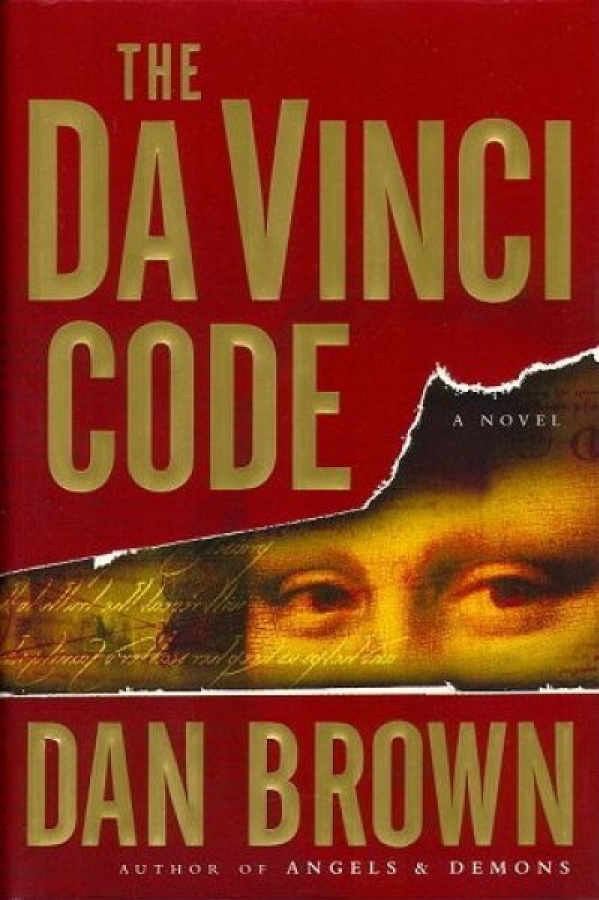
The Da Vinci Code
The novel is set in France and recounts the search for the Holy Grail—which purportedly points to the existence of a female apostle—and for a sect that has concealed and guarded this secret across the centuries, one of which Leonardo da Vinci was allegedly a member. Following the murder of the Louvre curator who was the custodian of the secret, his granddaughter and a scholar of medieval symbology set out in pursuit of the Holy Grail, while a high-ranking Opus Dei prelate is, in turn, hunting for the hidden secret. The novel enjoyed immense success, but it is, quite frankly, thoroughly dreadful from every perspective: the plot is tedious and implausible, narrative rhythm is nonexistent, and the prose is flat—opaque without being rich or complex. Why it could have achieved such widespread success remains a mystery. Despite my best efforts, I was unable to finish it.
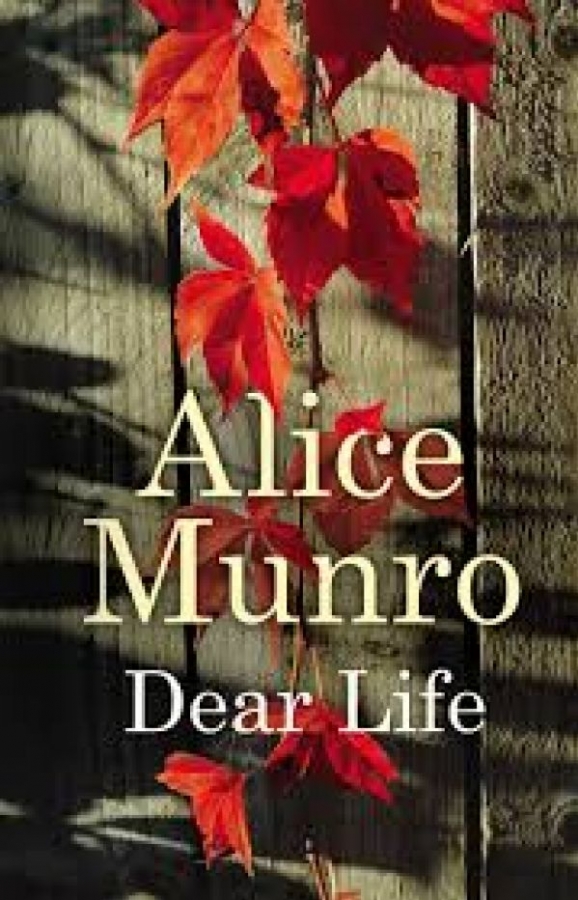
Dear Life (Getting Out Alive)
The book brings together fifteen stories, the last four of which > form a separate unit, autobiographical in feeling, sometimes even in fact . To make overall sense of stories that might otherwise be viewed as episodes of a female condition devoid of evolution and without outlets ( > too late to do anything else. When it could be worse, much worse ), one should perhaps start from the final story, *Dear Life*, which also lends its title to the entire collection. > I lived when I was young at the end of a long road, or a road that seemed long to me. Behind me, as I walked home from primary school, (...) lay the real town with its businesses and sidewalks and streetlights for when it got dark. (...) Marking the end of town were two bridges..... the road divided, one part of it heading south toward a hill (...) to become a proper highway, and the other running around old abandoned fields to turn west. This western road was my road . Reading this effective depiction of a childhood suspended between town and countryside, in that urban and social void that now characterizes our spaces, one's mind inevitably turns to a poem by Pasolini: > poor as a Colosseum cat, I lived in a borgata all lime and dust, far from city and countryside... that borough bare to the wind, not Roman, not Southern, not working-class, was life in its most current light.... bone of daily existence, pure, for being all too proximate, absolute for being all too miserably human (Pier Paolo Pasolini, *Il pianto della scavatrice*). Munro draws a clear and vivid portrait of how strange, perilous, and important our life can be, so dear to us; all this, however, not in the abstract, nor within a prevailing gender dimension (female sensibility contrasted with male indifference), but within the specific social and almost anthropological context in which we all live. Let us take, for example, a few stories. In *Amundsen*, the protagonist arrives in a small town to teach in a sanatorium for children and adolescents suffering from tuberculosis. “The world beyond the lake and the forest had vanished”; life is lived in isolation from external reality; small things prevail: the chill of the houses, the narrow road running through the woods and near the sawmill, the bar frequented by lumberjacks waiting to be called up for service. The relationship between the protagonist and the sanatorium’s director is predictable and prosaic, unfolding without clamor or enthusiasm in flat, modest, squalidly petty-bourgeois settings, ending in an obvious way, without any real reason. Yet it is precisely the banality of the affair and the cramped context of the small town that lead the protagonist to say: “nothing really changes when it comes to love.” In *Corrie*, into the routine of an apparently solid marriage bursts an old flame of the husband. The protagonist reacts by fleeing, takes the car and seeks refuge in the anonymity of the big city, in a squalid motel, eating and drinking in a restaurant where she wonders whether “any man, any old man, would think of hitting on her.” She returns home only to be told by her husband: > it’s not so much the person. It’s like a kind of atmosphere. It’s a scent , a desire for transgression. > What a mix of rage and admiration I could feel, facing his will to do it. All our life together came to an end . Here too, one would fail to grasp the entire affair if the story did not proceed from > a non-life, but survival (...) in whose arcane orgasm there is no other passion than for daily labor (Pasolini, *Ceneri di Gramsci*). In the story *In Sight of the Lake*, a woman suffering from Alzheimer’s goes in search of a specialist. She has been given an address in a small town; hesitant, frail, the woman wanders through the town, getting lost and asking passers-by—themselves uncertain—where the doctor's office might be. She arrives at a clinic, deserted and isolated: she tries to leave, to escape, but the door has become immensely heavy. > She opens her mouth to call for help but it seems no cry will come . Suddenly she is safe. It is the story of a woman who feels she is losing her memory, but why does this vanishing of consciousness take place in a squalid urban landscape, and not among glittering skyscrapers bursting with life, or in a gentle, wondrous meadow filled with flowers? A refined and elegant writer, Munro unfortunately loses herself in slight, inconclusive stories. The characters are ostensibly delineated, yet it is sheer literary technique; there is no real psychological depth: everything remains suspended. An overarching impression of fatigue prevails, of stories already written, rewritten in a masterful style, yet devoid of passion. Only in the final stories does narrative power resurface, but it is too late. Why not read it? It is slight, inconclusive, and dull.
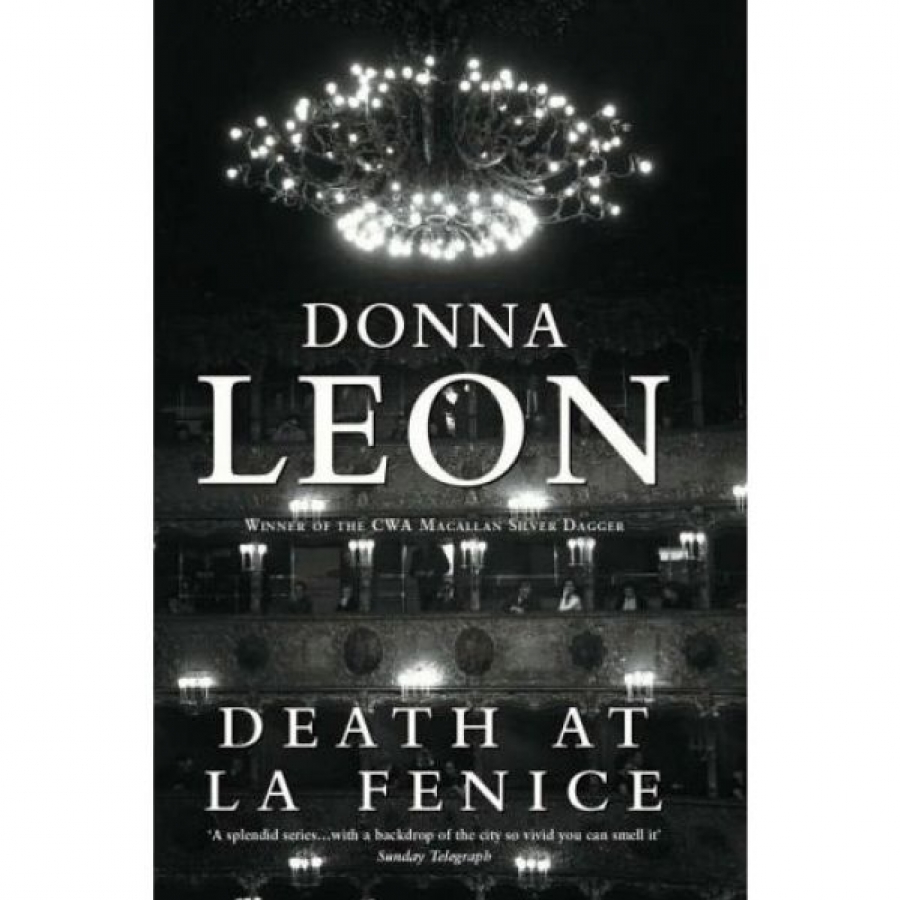
Death at La Fenice
The book is set in Venice and is a detective novel. A renowned conductor dies in his dressing room during an opera performance. A police inspector investigates, naturally suspecting homicide. In the end, it turns out to be suicide. The conductor had abused his wife’s daughter, who, by administering antibiotic injections, renders him progressively deaf. Driven by despair, the conductor killed himself. As a mystery, it unfolds slowly and even tediously. The author attempts to depict life in Venice and the dynamics within the inspector’s family: yet it all unfolds superficially and laden with stereotypes, ultimately ringing false.

Dirty Love
The bottom line is very simple: a wasted talent. Remarkable stylistic skill is placed at the service of tedious stories devoid of narrative development, inconclusive and cynical relationship dramas: in short, an unbearable book. In *Listen Carefully as Our Options Have Changed*, Mark has discovered that his wife, Laura, is cheating on him: he knows because he hired a detective to tail her and has proof on a video, which he watches obsessively. He is a successful project manager and thus wants to approach the problem according to the rational tenets of project management. > No, the project of saving his marriage appears to have failed, and he is faced with a new objective. This is not unusual. Some projects collapse for various reasons. (...) In this case, there was simply a change of heart. Or, more accurately, a shift from concealing love’s troubles to displaying them, though Mark was forced to acknowledge them, wasn’t he? (...) There was the cold politeness toward his mother. (...) There was Laura’s habit of getting the detailed grocery instructions Mark gave her wrong, (...) to the point that he had to drop everything and go to the supermarket himself. (...) There was Laura’s habit of watching banal detective shows late at night, her eyes glued to the screen, vacant like a child’s. There was her mediocre cooking, her preference for frozen, heavily salted foods, and unremarkable dishes she was not ashamed to serve with ketchup. And now she was deceiving him, making a fool of him, and betraying him. Uprooting their home from its foundations and hurling shards of boiling glass into Mark’s blood, his brain, and his heart: and all this intense pain for what? For her? Look at her; what was he losing anyway? But that was a question that died before it was even fully thought, because he loved her . Mark fails to understand the reasons behind the failure of his marriage, even when numerous signs should tell him that it is his very own cold, rational approach that has driven Laura away. His habit of judging, evaluating, and treating the people around him as though they worked for him. He does not understand, but he is a stubborn man: > he would not throw his wife out of his house. (...) He would step back, take no action, and let things run their course. He would let his wife’s mistake resolve itself . Hypocritical forbearance is the sole means to make a relationship survive. This is also the outcome of another story: *Marla*. She is a woman no longer young, very fat, a drab bank clerk destined to remain an old maid. It seems an inescapable fate, until she meets Dennis, an equally obese man, affectionate and kind. It is unexpected love. The two move in together, and cohabitation reveals traits in the man that Marla dislikes: an obsessive fixation with order, a preference for a repetitive and mundane life, the risk of slipping into a tedious routine. What is more, the man does not want children. Leave him? But that’s marriage, my dear, her friends tell her; children will come later, even if the husband doesn’t want them (just deceive him about your fertile days so he won’t wear a condom!). Now well on his way toward squalor, Dubus tackles the third story (*The Bartender*): two young people marry full of enthusiasm, she gets pregnant, and he cannot resist sleeping with a curvaceous coworker—quite a bitch, truth be told. In the seventh month, the wife discovers the affair and risks miscarrying; miraculously, both she and the baby girl survive. > He walked over beside her bed and stood still. (...) Soon she would open her eyes, (...) eyes he did not deserve but hoped to earn, eyes of dark hope . At this point, I should have tackled *Dirty Love*. I confess: I could not bring myself to do it, so grating did the reading promise to be. From the story, it is useful to quote a sentence to convey Dubus’s remarkable ability to sustain long periods through a masterful use of words—a succession of impressions not underpinned by punctuation or the unfolding of content (events, character descriptions, feelings), but anchored in a carefully and skillfully calibrated syntax. In Italian, much of this writing is undoubtedly lost, and a great translator would be required; nonetheless, I shall try. > Now everything is lined up, her feelings and the music in her head, and all of it keeps making her feel as if she were moving forward, gliding silently on an airport moving walkway, that time she was on one, back in the past when she was little and her mother and father seemed happy, or at least laughed together a lot, her mother still pretty or at least looking it because she took care of herself, heavy but still sexy, though Devon never thought about these things, she only sensed them, as if she were lying in a soft bed surrounded by cool, deep pillows and the scent of something sweet was in the air, and that day the three of them were boarding a plane to Disney World where everything was realer than real could ever be . Why not read it? Monotonous, ponderous, even superficial at times.
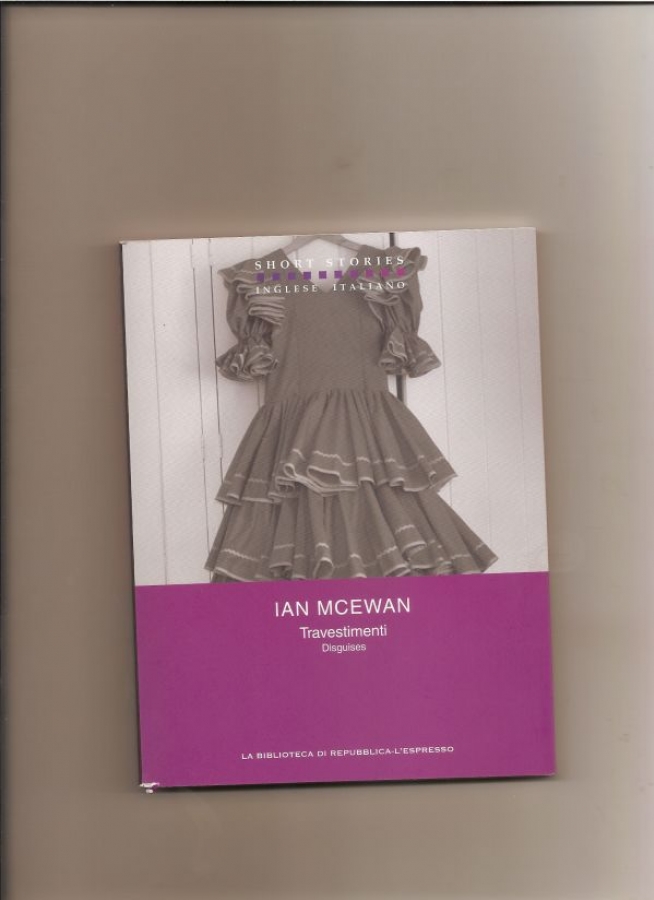
Disguises
*Disguises*—in Italian, *travestimenti*—is a short story centered on the theme of disguise as an ambiguous game leading to the distortion of reality and of the self. Henry, a ten-year-old boy, is orphaned and goes to live with his aunt, a former actress. The boy is made to undergo an evening ritual in which the two dress up and perform the roles inherent to their assumed appearances. It is a game that turns unsettling when the aunt forces the boy to dress as a girl and, met with her nephew's resistance, displays an authoritarian and aggressive temperament. As was to be expected, the boy makes friends and meets a girl his own age who invites him to her house. Henry is no longer a child; he is becoming an adolescent, and his aunt's inclinations grow increasingly intolerable. The aunt throws a costume party, and the story culminates in a crescendo of illusions, masquerades, and scenes either real or merely imagined, at a gathering where it is difficult to tell who is doing what: > now it came back to him, if you are dressed as someone else pretending to be them, you take the blame for what they have done, or for what you do being them... or that you did? It is a muddled story, tangling together several themes: disguise as play, the forging of identity in adolescence, and a conception of reality as illusion—an impression created by one's own senses rather than an objectively existing world. There are too many psychological and philosophical motifs for the story to remain intelligible; it seems merely an occasion to experiment with new subjects and cement stylistic virtuosity. Why not read it? It is difficult to read, inconclusive, and weighed down with literary preciousness.
Family dancing
The central theme of the story is the family, viewed by Leavitt as a closed, central nucleus in which relationships among members are vitiated by convictions and hypocrisies. A family reunion is organized, serving, however, as an occasion for each to expect roles and behaviors from the other that often bear no relation to the individual’s true desires. Not even the discovery of one of the family members’ homosexuality manages to break this pattern, as the gay condition is subsumed within the roles and rules of the bourgeois family. David Leavitt has often been regarded as the writer of homosexuality. In truth, he is the chronicler of the bourgeois family in an open society, which accepts anything provided it is reabsorbed into established frameworks. The elegant and effective prose cannot conceal the passage of time on this story, now dated against the neoconservative wave that has restored to homosexuality its status as an otherness and a threat to the family. Why not read it? Because it is predictable and stale.
Red Leaves
For William Faulkner, the short story is akin to poetry, "almost every word must be the right one"; and indeed, the narrative is dense, hermetic, rich in symbolism, and difficult to interpret. As in *Red Leaves*, the very choice of title raises numerous questions: what does it signify? For some commentators, the writer intended to refer to the cycle of the seasons, thereby emphasizing that what suffocates and destroys the Negro people is a natural destiny. The red leaves are said to express an existential, cosmic condition, as in Giuseppe Ungaretti’s poem addressed to the soldiers of the First World War: "Like leaves on trees in autumn." A great Indian chief has died; as tribal tradition dictates, those who served him in life (the dog, the horse, and his Negro slave) must follow him into the grave. Two Indians head to the slave quarters to retrieve the man. What disgusts them is the stench of the bodies, a revolting smell. The Negroes > seemed to be suspended as upon something remote, inscrutable. (...) They were like the roots of a great uptorn tree, the earth momentarily sheared away from the contorted, thick, fusty maze of its outraged and despairing life. From what the two men say, we learn that slavery is a burden, the fruit of the pure Indian people’s contamination by the white man. Born of a mixed marriage between an Indian and a white woman, the deceased himself had been to Europe and returned with several objects whose utility he did not understand; among them, a pair of red slippers; whenever his son tries to put them on, he falls into an unconscious state. What does this mean? Perhaps because > this world (...) is being ruined by white men. We got along fine for years and years, before the white men whooped us into using negroes. In the old days the old men sat in the shade and ate parched corn and venison slowly over the fire, and smoked and talked about honor and big things; and now what do we do? Contamination does not break the absurd ritual of death, as if to say that white, technological, and advanced society reinforces ancestral customs rather than evolving them toward civilized forms. It is mere corruption in an immobile society; it is not progress. Faulkner’s reflection does not concern only the American South, which, at least from what we know, seems trapped in nostalgia for the past; consider certain phenomena that strike us as inexplicable—femicide, infibulation, brutal exploitation—so widespread in our advanced Europe, despite proclaimed laws and values. Only individual acts of Resistance can overcome corruption and generate new visions and moral rules. Paradoxically, this is what the victim in our story does. The Negro, destined to follow his master into the grave, flees into the forest and, when captured, fights for life until the very end: he amputates an arm to survive the bite of a venomous snake; he accepts water on the brink of death. > It’s just that I didn't want to die, he said. Then he said again, it’s just that I didn’t want to die, in a quiet tone, of slow, faint wonderment, as if it were something which, until the words had formed themselves, he had not known, or not known the depth and measure of his desire . The death endured, without resignation yet with equanimity, bears witness to a moral strength absent in the story’s other characters, corrupted by white society while trapped in ancestral rituals. > The Negro was still about to step, his knee raised and bent, his head up as if he were looking into the teeth of a millrace. The pupils of his eyes were wild and cold, like a horse’s . Ralph Ellison, the first great African American writer, said that Faulkner > has actually explored the nature of man. (...) Faulkner, more than most men, was aware of human strength as well as man's weakness. He knew that understanding and overcoming fear was a large part of a writer's reason for being. Faulkner’s narrative is imbued with a strong ethical tension, a desperate quest for human goodness, for that which is deepest in the human being. He pursues this aim within his world, the American South, where everything in reality seems static and violent; yet what he narrates concerns us all; and quoting Ungaretti once again, one could say: "I seek an innocent country." At the center of his writing is the word, not the plot or the characters; and this is precisely its limitation, at least in the short stories: it is difficult to understand, it must be read too many times to grasp its manifold meanings, it demands too much imagination to interpret. Why not read it? It is difficult to interpret and, in fact, boring.
Freedom from Fear and other writings
San Suu was born in 1945, two years before the assassination of her father, founder of independent Burma and national hero. This biographical detail is essential to understanding this collection of essays, speeches, letters, and interviews, published between 1984 and 1994. Aims and prose vary, circumstances change, yet San Suu’s concern always shines through: to understand her father’s legacy, > to communicate what she has understood and to apply it to the problems of her own country . The essay that lends its title to the collection (*Freedom from Fear*) must not mislead: San Suu is not a moral philosopher, a sort of modern holy figure; she is, first and foremost, a political persona, characterized by a strong and prevailing ethical dimension. When the Burmese dissident calls for liberation from fear and corruption, she intends to assert > the firm conviction in the sanctity of ethical principles combined with a historical vision: despite setbacks, the human condition is placed on an ultimate path of spiritual and material progress . In a recent speech at the International Women’s Forum, San Suu defined politics as > the means to change society, and the change must be effective, not symbolic. And how effective it is depends on how correctly we evaluate the needs of the people and the country (quoted in *La Stampa*, 9 December 2014). That this is a long-pondered reflection emerges from a key essay included in the collection (*Quest for Democracy*). In it she affirms that > the true measure of the justice of a system is the amount of protection it guarantees to the weakest. Where there is no justice there cannot be a secure peace . We are speaking, therefore, of social justice, certainly not of abstract concepts belonging to the realm of philosophy and religion. To properly interpret San Suu’s thought, one must read the insightful analysis the author provides of intellectual life in Burma and India during colonialism. It is impossible to summarize such a complex essay: suffice it to say, in short, that the comparison with India allows San Suu to advance a severe critique of Burmese culture, of Buddhism itself, a “monolithic religion (...) with inflexible barriers”; to identify the sources of the regime’s consensus not so much in repression as in ethnic differences and chauvinism against Chinese and Indian communities; and to clarify how her inspirations are Gandhi and, above all, Nehru, her true spiritual father: a great politician, therefore, is her touchstone. If one does not stop at the vacuous, banal words of *Freedom from Fear* (but why does it lend its title to the collection?), one realizes that San Suu has no intention of locking herself within the spiritualist and Buddhist persona that the West would like to assign to her; she wants to be judged by what she manages to achieve for her country. To those urging her to leave Burma, > I replied that I would do nothing from abroad, and that if I wished to commit myself to a political movement, I would have to do so from within the country . Having read the entire collection, one asks oneself: has San Suu truly reckoned with her father? The answer is no. The daughter, San Suu, continues to idealize the father figure, without asking herself why the dictatorship originated in an army forged by her father: a man educated in monasteries, yet trained militarily and politically by the Japanese. As often happens, filial love compromises the lucidity and detachment that are, in any case, necessary in a political figure. Why not read it? It is dull, perhaps pointless. fragmentary, repetitive, and prolix.
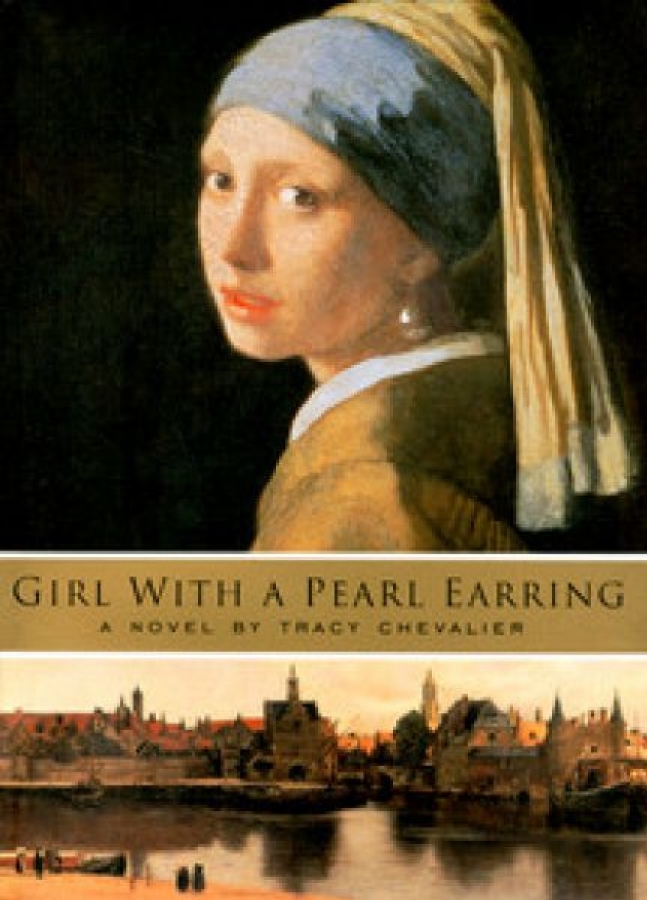
Girl with a Pearl Earring
The book is set in seventeenth-century Holland and recounts the story of a young maid who becomes, first, a painter's assistant and then the subject of a portrait. Layered together are the young woman’s intimate personal story (her family, her working environment, her betrothal, and the blandishments of a wealthy merchant), the depiction of the milieu, and the execution of a portrait, complete with the interplay of light and shadow and the construction of colors. Another theme is the painter’s obsession, which subordinates everything (even the girl’s honor) to the demands of his art. It was a major commercial success, but in all honesty it strikes me as a modest book: one finds neither an incisive analysis of the characters’ emotions, nor a compelling depiction of the setting (which lingers in the background without truly defining the work), nor does the creation of the artwork take center stage, along with the transition from religious painting to portraiture, in which real figures emerge. The style possesses the merit of being very simple and clear, but the narrative pacing unfolds monotonously, devoid of tension.
Herzog
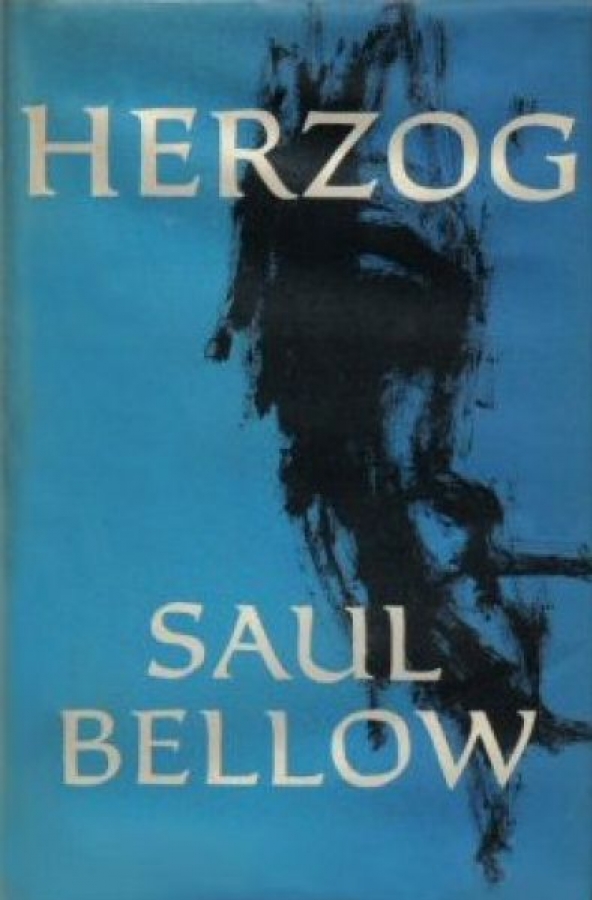
What an ordeal! It is an extremely tedious book, so steeped in intellectualisms as to make one lose both the sense and the direction of the reading. Herzog, a scholar of Romanticism, has been left by his second wife. He enters a phase of physical and psychological delirium, wanders between New York and Chicago, and imagines carrying on a correspondence with figures from his life, as well as with scholars and men of letters. In the end, he retreats to his country house and lapses into absolute silence: “at this time he had no messages for anyone. Nothing. Not a single word.” The book’s final sentence encapsulates its profound meaning: a verbosity that conceals the loss of meaning. For 340 pages (for 13. 600 lines) the author sustains an entirely fragmented narrative, devoid of narrative rhythm, yet brimming with adjectives and “parentheses.” Postmodernism engulfs both the philosophical and the personal plane of the book: everything is muddled, and there is neither a metaphysics nor a certainty to anchor oneself to. It is not marriage, which is a source of betrayal and misery (the figure of Madeleine); it is not romantic relationships outside marriage (Ramona, who nevertheless expects an ongoing relationship); it is not cities, by now reduced to mere rendezvous spots and places of rest; above all, it is not philosophy and literature, which often constitute a useless ornament and a cumbersome superstructure. Perhaps children and the family of origin are the only bonds that matter in a world confused and fractured in its unity. > The drama of this stage of human evolution seems to be... the age of a special comedy....perhaps the revenge taken by numbers, by the species on our impulses of narcissism (as well as on our demand for freedom) is inevitable. In this realm of multitudes, self-consciousness tends to reveal us to ourselves as monsters . In the preface to the book, Malcolm Bradbury underscores two important aspects of *Herzog*. The book was published in 1964, and its narrative style and sentence syntax opened a literary strand that is dominant today: the dissolution of the novel's structure. Many modern writers (think of Paul Auster himself) are deeply influenced by Saul Bellow. The novel no longer possesses completeness and unity, but is instead an assemblage of “zig-zags” reflecting the fragmentation and contradiction that dominate the individual, self-consciousness, and society. With the novel, one does not seek to provide a verisimilar representation of the world, but pursues, as Saul Bellow said in his Stockholm Nobel lecture, “a hut in which the spirit takes shelter.” The second aspect is the philosophical one. Herzog quarrels with modern thought and moves through the realm of ideas. His internal turmoil is primarily due to an existential anguish that finds no answer in a world dominated by metropolises, the masses, science, and organized power.
The House of Doctor Dee
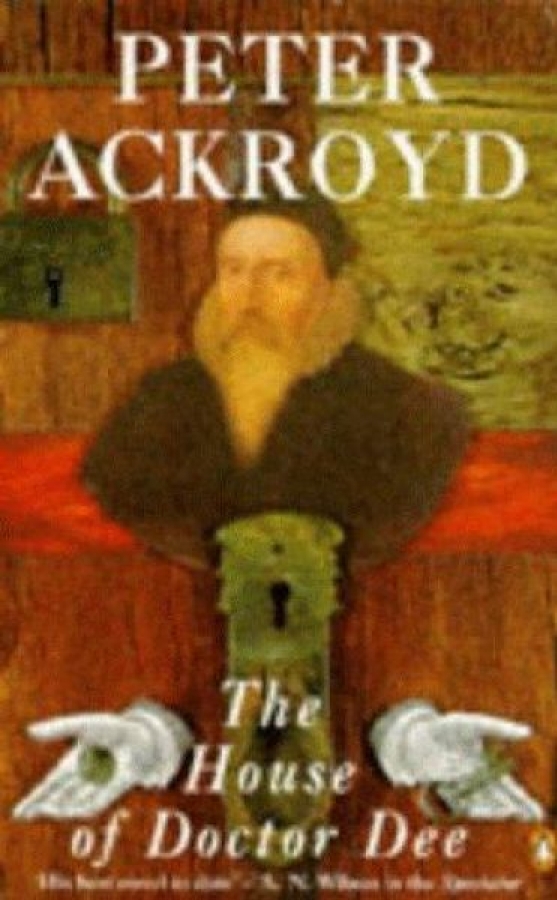
The book depicts a parallel narrative set across different historical periods. The protagonist inherits a house that once belonged to an Elizabethan-era alchemist (the setting is London). The story of this figure is thus evoked, overlapping with the narrative of the protagonist's gradual discovery of the house (or of himself). The style is verbose and tedious, devoid of the slightest narrative pace..
Jane Eyre
The book charts the emotional and existential journey of a young girl, Jane. An orphan, she lives first with her aunt, who later sends her to a grim, austere school where she navigates adolescence to become a young teacher. On her own initiative, she secures a position as a governess to a young girl in the household of a wealthy landowner. He is a restless figure, constantly traveling, self-absorbed and eccentric. Meanwhile, Jane has grown into an unexceptional-looking, diminutive, and seemingly fragile young woman, yet one possessed of a formidable strength of character. A mutual attraction develops between Jane and the wealthy landowner, who asks for her hand in marriage. At the wedding, however, it is revealed that the man is already married to a madwoman. Jane then refuses any compromise and flees penniless into the countryside. She is taken in at the home of a clergyman and his two sisters, becoming a schoolmistress in a school for the poor. The clergyman, struck by Jane’s resolve and abilities, asks her to become his wife and accompany him on his mission. Jane realizes this is not true love and decides to leave the home, returning to the wealthy landowner's estate to discover what has transpired. The story concludes happily: the landowner’s wife has died, allowing the two to marry and live happily ever after. Another theme that emerges is the critique of men who are ostensibly devout and pious, yet in reality hypocritical and cruel. And then, in the background, lies nature, rich in atmospheric power, alongside the realm of uncanny premonitions and phantoms: the child’s terror, the sense of the unknown, the voice beckoning toward destiny. The author demonstrates great skill in her descriptions and in the psychological examination of her characters, yet the sheer length and banality of the dialogue render the reading experience ponderous and tedious.
Oliver Twist
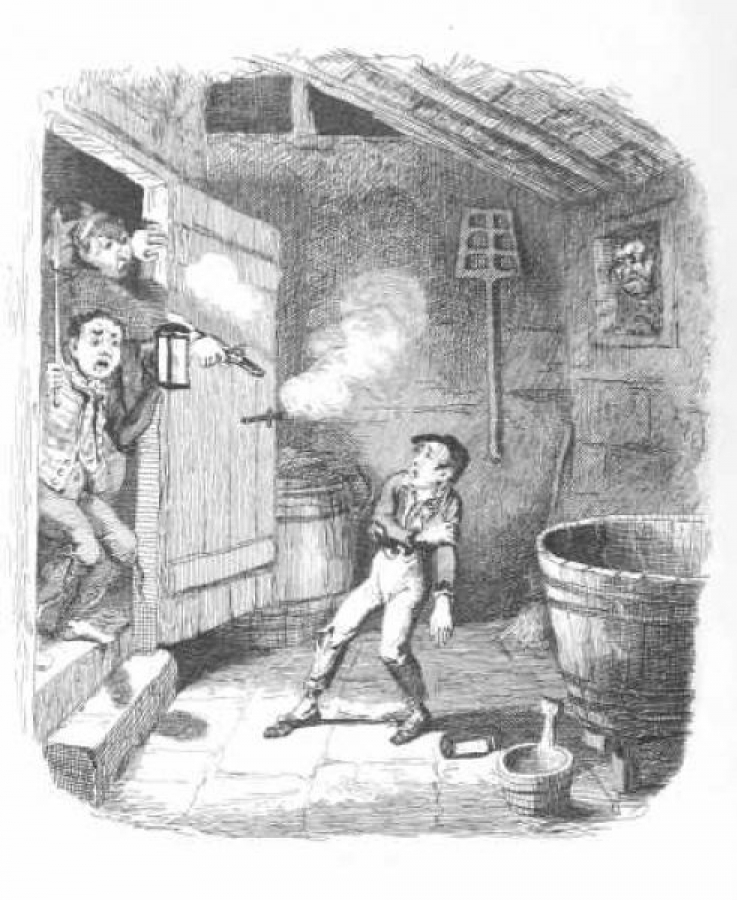
The setting is the England of the second half of the nineteenth century, marked by widespread poverty, rising criminality, and a bigoted bourgeoisie that was often hostile toward the poor. Oliver is a foundling who is first raised in a workhouse, only to be apprenticed (or handed over) to a family to learn a trade. There he suffers relentless abuse and consequently decides to flee, only to fall into the hands of a gang of criminals led by an avaricious and cruel Jew (Fagin), and by another character who is violent and paranoid. Oliver is forced to learn how to steal; during a burglary, however, he is wounded and taken in by a family who nurses him back to health, thereby introducing him to the kindness and generosity of the respectable middle class. There follows a series of adventures and an entanglement of characters, through which it is ultimately revealed that Oliver is the heir to a vast fortune and had been abducted by the Jew on behalf of his half-brother, who sought to prevent Oliver from claiming his lawful birthright. All ends well: the villains are punished, and Oliver can live happily with his new family. At a certain point in the novel, Dickens recalls how > it is the custom on the stage in all murderous melodramas to present comic scenes and dramatic scenes in regular alternation. Such changes appear absurd: but they are not so unusual as they seem at first sight. The transition in real life from a well-spread board to the deathbed, and from mourning weeds to holiday garments is no less incredible: only, there, we are actors rather than passive spectators, and that makes a vast difference . Life is thus an endless surprise, and the story of *Oliver Twist* seeks to portray the nineteenth-century journey of a hero in the era of massive urbanization. Yet there is nothing fantastical or truly adventurous in Dickens’s tale, save for a sequence of frequently maudlin episodes steeped in a facile moralism that sharply demarcates good from evil. In the first part of the novel, recounting the trials of young Oliver, the author still displays a subtle irony toward the English society of his day and a critique of the hypocritical approach to poverty that conceals contempt and cruelty beneath a veneer of charity and benevolence. Particularly effective in this regard is the scene where young Oliver, timid and awkward, appears before the workhouse board to be evaluated regarding his future placement. Dickens describes the various board members masterfully, revealing a lucid portrait of a bourgeoisie that views poverty as an innate predisposition toward wickedness and misfortune. Similarly, the author advances a social critique against the exploitation of child labor and the utter disregard for children's physical and intellectual needs. In the novel’s second half, the narrative lapses into melodrama, drawing a stark divide between the “world of good” (the middle-class gentry fueled by wholesome sentiments) and the “world of evil,” embodied by society’s underworld: the grasping Jew, the young prostitute who ultimately redeems herself, the brute, and the wicked half-brother. Oliver himself fades from view, while Fagin emerges as the pivotal figure, incessantly scheming in his pursuit of wealth and possession. The finest scenes are precisely those depicting the gang of criminals and their movements through the streets of London: a dark, filthy, decaying city where people dwell in windowless, dilapidated, foul-smelling tenements. In its richness and expressive power, the depiction of London recalls D’Annunzio’s poetry on the monstrous cities. Urbanization is viewed by Dickens as the community’s descent into an inhuman world, in contrast to the countryside, where one can live happily and serenely. It is hardly coincidental that Oliver and his companions ultimately abandon London to return to the small villages of rural England. The plot is predictable, an overbearing moralistic approach predominates, and the style is not always fluid—the sentence structure being frequently convoluted and redundant: all elements that render the novel scarcely enjoyable.
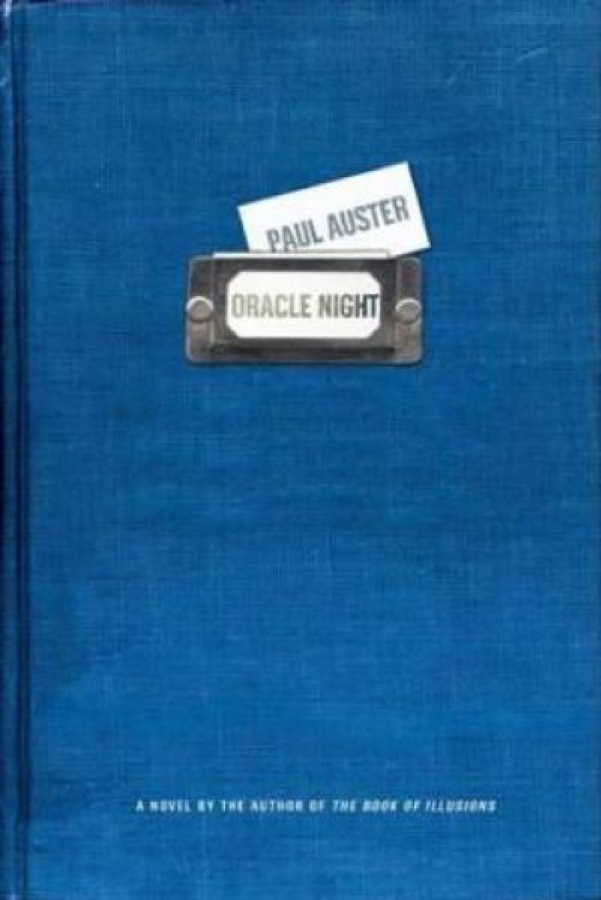
Oracle Night
The protagonist is a writer slowly emerging from a serious illness. On his daily walks, he enters a stationery shop, run by a Chinese man, and buys a notebook. He begins writing once more, but above all, a sequence of events is set in motion—some actually lived, others imagined and the product of illusions. Is the notebook magical? Does it possess the power to reveal what the writer had not previously realized? For example, the protagonist's wife is expecting a child, yet she does not seem happy: but is the child truly his own, or the result of an affair between his wife and an old family friend? The conclusion is not unequivocal, because reality is entirely an illusion, and it is always difficult, if not impossible, to know the truth. Like other novels by this author, the reading moves swiftly, aided on the one hand by a linear, elegant style, and on the other by a spare language that leaves no room for the use of difficult words. Yet a certain intellectualism always prevails, which in the long run makes the book heavy going.
Pleading Guilty
The book’s plot is typical of Scott Turow: set in a law firm, the protagonist, a former police officer, is tasked with tracking down an attorney from the firm who has vanished, leaving behind a substantial shortfall in a major client's funds. The narrative is characterized by frequent incursions into the protagonist's life, resulting in a tedious read. Furthermore, the style is exceedingly dense and convoluted, devoid of fluid, engaging English. I abandoned the book at page 161 out of 464.

Rabbit Redux
It is the 1960s in a provincial American town. The Vietnam War and profound changes—cultural, social, and sexual—serve as the backdrop to the novel, whose central thread is aptly summarized by what the protagonist says at the end of the narrative: > confusion is just a local view of things working out in general . Can one remain oneself, as if nothing were wrong, in a “terrible period, of profound confusion,” such as the one America was going through in the 1960s? Henry works as a typesetter and leads a seemingly peaceful life with his wife Janice and Nelson, their only child. Their marital relationship has been deeply shattered by the death of their other daughter, raising a wall between the two spouses that inevitably affects their sex life as well. Henry can be defined as a conservative: he believes in American values, the righteousness of the Vietnam War, and the idea that Blacks should stay in their place. This precarious balance is overturned by Janice’s affair with a colleague, a Greek man, with whom Henry has a furious argument specifically over the Vietnam War. Janice abandons the family to move in with her lover, leaving Henry to shoulder the burden of the house and their son. On the surface, he appears to be a solid man; in reality, beneath an apparent observance of the roles and conventions imposed by a respectable society, Henry is deeply restless. One evening, he is invited to dinner by a female friend who has just been left by her husband, and everything suggests the evening ought to end in bed, as tradition would have it. Instead, Henry ignores the woman’s overt signals and finishes the evening in a bar frequented primarily by Blacks. Here he meets Jill, an eccentric runaway girl, and Skeeter, a sort of visionary Black man. He takes them into his home and begins a relationship with Jill. A long portion of the novel, rendered verbose and tedious by its heavy ideological imprint, chronicles the life of the four (Henry, Jill, Skeeter, and Nelson) and the increasingly complex and ambiguous entanglement among them. From joints, they move on to hard drugs. Jill also sleeps with Skeeter and perhaps with Nelson, but what dominates above all is the figure of Skeeter and the reading of Black revolution texts. Somehow, Henry reconstructs his cognitive world to the point of defending Skeeter to his neighbors. Then, a terrible fire, perhaps set by the neighbors themselves, destroys the house and kills Jill. Henry, who helps Skeeter—the police’s prime suspect—flee, loses everything, including his job. The novel draws to a weary close: Janice wants to get back together with Henry and persuades him to stay at a hotel. Yet too many things have happened, and the burden of guilt weighs heavily on Henry in particular: “I feel so guilty.” “About what?”, Janice replies. “About everything.” “Relax, not everything is your fault.” “I can't accept that.” “He lets her breasts drop, lets them float away, lovely debris.” Updike’s chief virtue is his narrative style and, above all, his ability to bring characters and events to life through a rich and skillful use of adjectives. This novel lacks precisely that touch, dominated instead by the author’s urge to voice his own perspective—conservative and nostalgic for 1950s America—on the monumental events that convulsed the United States. The character of Skeeter, the glorification of revolutionary principles, and the political arguments are banal and predictable. They make the novel long-winded and, above all, overshadow Henry’s complex transformation and his fundamentally existential suffering. Why not read it? It is verbose and deeply dated.
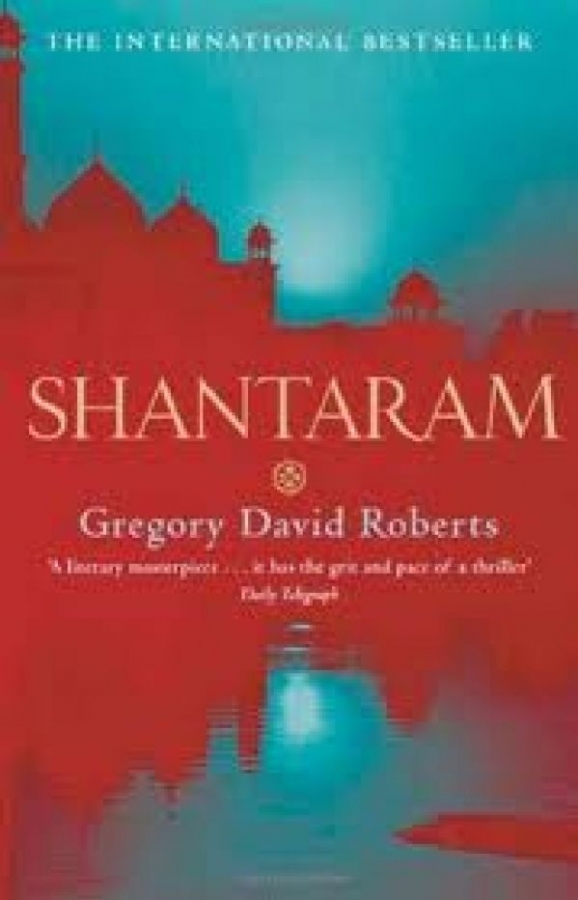
Shantaram
*Shantaram* is a book of roughly 1,200 pages and, in some reviews, has even been compared to *War and Peace*. In reality, it is a bloated potboiler, an implausible yarn that blends every Western stereotype about India with that inevitable refrain claiming economic backwardness should be celebrated as cultural authenticity. The trouble is that the novel—written, it must be said, in excellent English—is verbose, tedious, devoid of action, and lacking any psychological depth in its characters, whose personalities remain mere outlines, beginning with the protagonist himself. I must confess that my judgment, harsh as it is, rests on less than half the book: exhausted and disheartened, I resolved to abandon the reading, something I almost never do. It may well be that the second half of the novel is splendid, but I leave the burden of proof to other, far more patient readers. The plot purports to draw from the author's own life. The protagonist has escaped from an Australian prison and sought refuge in the vast, multifaceted expanse of Bombay. There he falls in with a circle of Western expatriates living on the borderline between the Indian world and the West. Circumstance, curiosity, and his friendship with a local man (Prabaker, the sole character delineated with any care) lead him to abandon this stance of "spectator": > I suddenly realized that if I wanted to live here, in Bombay, the city I had fallen in love with, I had to change, I had to get involved.... I had to expect it to drag me into the flow of its joy and its rage. Sooner or later, I knew, I would have to leave the safe zones and throw myself into the violence of the crowd, putting my own body on the line . And so he does, going to live in one of the city's many slums. From this point on, the implausibilities begin to mount: he sets up a clinic to provide basic first aid to the slum dwellers, befriends a syndicate of mafiosi who rule the shantytown (gangsters who happen to love debating philosophy), even finds the occasion to embrace a bear, fights wild dogs, and on and on. The episodes follow one another without any coherent thread, assembling every trope a tourist might expect from India. The narrative, which aims to be gritty and realistic, is instead steeped in hypocrisy and contrivance. To be sure, our protagonist is moved by the suffering, the squalor, and the sudden outbursts of violence among the populace, yet he complacently basks in the communal solidarity that permeates the poor, blind to the fact that these values are not rooted in an aspiration for change, but stem rather from resignation—from the passive acceptance of an unjust world. Indeed, change is deemed pointless: > when we act, even with the best intentions, when we interfere with the world, we always risk a new disaster that might not have directly stemmed from our action, but would not have happened without us. Some of the worst injustices are caused by people trying to change things . With such a philosophy, it comes as no surprise that the protagonist feels far more at ease with the mafiosi who run the city and the circle of Westerners idling away their days smoking marijuana. Nor should anyone be shocked when he finds himself embroiled in gang warfare. Yet on that portion I cannot comment because, as I have already mentioned, I put the book down. The sheer elegance and fluency of the prose arouse the suspicion that this book is fundamentally a marketing product—artfully engineered around a tired, overused trope in Western literature and culture: the fugitive who discovers a new lease on life in multifaceted India. > Like all fugitives, the more successful I was, the longer and further I went, the less of my identity I retained. But there were people, some who could reach me, some new friends for this new identity I was learning to inhabit..... such a desperate crowd—the richest and the most wretched, educated and illiterate, virtuous and criminal, old and young—it seemed the only thing they had in common was the power to make me feel something Western egocentrism at its finest! Why avoid it? It is tedious, cloying, and thoroughly exasperating.
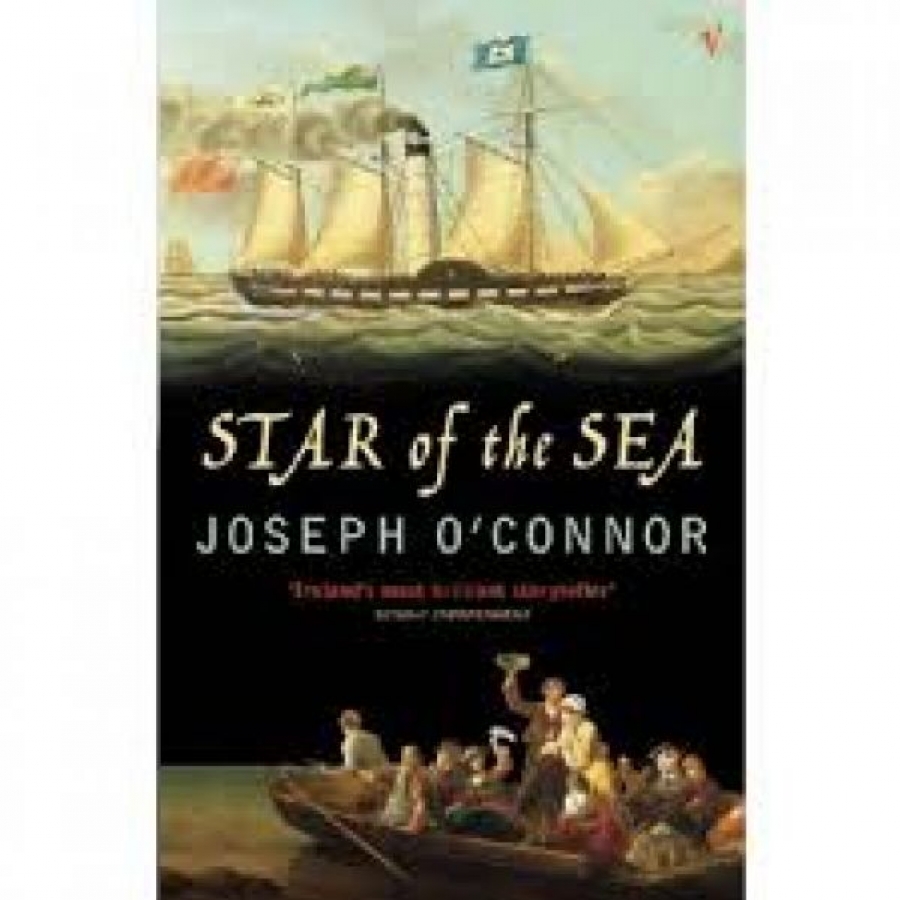
Star of the Sea: Farewell to Old Ireland
Between 1845 and 1849, a famine struck Ireland, giving rise to massive emigration toward Great Britain, the United States, and Canada. It was an enormous mass of people pushed to their absolute limits, malnourished and afflicted by typhus, tuberculosis, and cholera, already reduced to poverty and starvation in previous years by the rapacious policies of the landlords. The novel aims to recount this human tragedy and does so in an original, intriguing way: in the bitter winter of 1847, a ship sets sail for New York carrying hundreds of people fleeing a devastated land. > The ship was not bound for America, but for any country or territory that was not the United Kingdom; no matter how hostile and cold it might be . In tones reminiscent of Conrad, if not Melville himself, the author presents the ship as > a colossal beast of oppressive weight, its vertebrae creaking as if about to snap, dragged by some deity through their final tribulation, its skeletal frame already half-devoid of life and we passengers its parasites. (...) the shattered organ of a once majestic cathedral ; the metaphor, in short, of a ruined Ireland, of a desperate people. The multiple narrative voices are seductive as well, such as the captain’s log, which punctuates the days of the voyage with a roster of those who succumbed to disease and wasting; or the letters of certain passengers, bearing witness to hope, but also to the toil and despair of the emigrants. It is a pity that the plot and characters neither sustain this narrative approach nor reflect the historical and existential tragedy the work intends to portray. Aboard, alongside hundreds of emigrants, are a maid with a devastating secret, a bankrupt landlord with his family, a writer chasing elusive success, and a murderer thirsting for revenge. The lives of these characters are intertwined. Dissolving everything in its wake, the Great Famine shattered conventions and hierarchies, simultaneously releasing latent energies and repressed desires: one is finally free, yet this freedom also leads to self-destruction. At the center of the story stands the figure of the landlord, David Merridith: in love with the maid—whom we discover to be his sister—he must resign himself to a platonic relationship that no longer makes sense in this new state of affairs; drawn to darker, more ambiguous sex, he entered into a marriage of convenience rather than love, and mourns the life he could have had; driven by social aspirations, he has assumed, in spite of himself, the role of the "villain" toward his tenants, so much so that he fuels their hatred and desire for revenge. In the end, David Merridith dies mysteriously (murdered? suicide?), freeing the other protagonists from his now burdensome presence and allowing them to forge a new life in America. Does he embody the old society, and does his demise bear witness to a rupture with the past? Begun with high expectations, the novel soon collapses into yet another hodgepodge: it lingers over the characters' backstories, abandoning the ship and its passengers to recount the premises in exhaustive detail, stripping away any sense of surprise; it dwells at length on lurid, violent scenes, even on the wretched David Merridith’s syphilis; it strains to deliver a broad yet predictable panorama of mid-nineteenth-century Ireland and England. By attempting to pack in too many themes and situations, the author renders the plot tedious and prolix, fraying the narrative style, which sheds its Conradian, imaginative evocations only to become banal and redundant. Why not read it? It is long and boring.
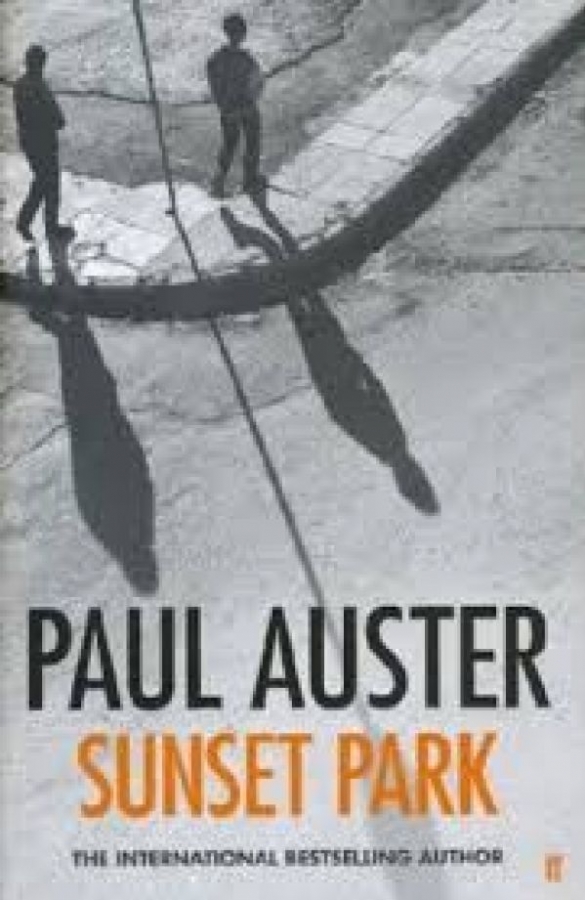
Sunset Park
Morris Heller, the protagonist’s father, is on an airplane watching an old Hollywood film (*The Best Years of Our Lives*), which deals with soldiers returning home from the Second World War and having to rebuild their lives; and what an old friend, a well-known writer, once told him comes to mind: > the idea he is toying with is to write an essay about things that do not happen, about the unlived lives, the unbought wars, the shadow world that runs parallel to the world we take to be real, the unsaid and the undone, the unremembered. A hazardous territory, perhaps, but it might be worth exploring . Miles Heller, Morris’s son, has a passion for photographing the belongings abandoned by those forced to vacate their homes in haste following an eviction notice. He has no plans, no hopes; “piece by piece” he has reduced his desires to a bare minimum. Why does a young man in his twenties, once a brilliant student, lead such an empty life? He is fleeing from guilt, from an existential malaise he cannot bring himself to confess: he is convinced he killed his stepbrother by pushing him under a car. What drove him to disappear was an exchange he overheard between his father and his stepmother. > He is a brilliant boy, I admit it. But cold, fragile, desperate, it chills me to think about his future. (...) They were cutting him to pieces. Carving him up with the calm, efficient strokes of pathologists at an autopsy, talking about him as if he were already a dead man walking. (...) Perhaps the best thing for everyone would be to remove himself from their lives, to disappear . His suffering runs so deep that he cannot even open up to a young girl with whom he has fallen deeply in love. He met her by chance because both were reading *The Great Gatsby*, the emblematic novel of a forceful personality. For a few pages, we hope that Miles might find in love the resolution to his anguish, regain his serenity, and be happy. Yet he is forced to leave Florida in a frantic rush and return to New York, as he faces potential charges of statutory rape—his girlfriend has not yet reached the age of majority. He accepts an invitation from a friend (Bing Nathan), who repairs all kinds of objects in a sort of “Hospital for Broken Things” and has taken up residence in an abandoned house alongside two young women: Ellen and Alice. The narrative then shifts its focus to the stories of the other characters, just as it traces the lives of Miles’s parents: his father, his stepmother, and his mother. We discover that each of them harbors an inner suffering, an unsaid and an unremembered: something they are incapable of expressing, acknowledging, or admitting. As the narrative progresses, glimpses of light and prospects of hope seem to emerge: Miles gets in touch with his parents and finally confesses the reasons for his flight, seemingly freeing himself from his feelings of guilt. Then everything plummets once more. During the eviction of the squat by law enforcement, Miles lashes out, striking an officer. Facing prison, he could turn himself in, yet chooses flight instead. > He wonders if it is worth hoping for a future when there is no future, and from now on, he tells himself, he will stop hoping for anything and live only for today, this moment, this passing instant, the today that is here and not here, the now that is gone forever . Why? Perhaps we can never truly rid ourselves of the anguish within us; perhaps existence can only be endured by retreating into the mundanity of everyday life. As in much of Auster’s fiction, an intellectualist imprint prevails; behind the characters’ refined psychology emerges a sense of contrivance, as though they were mere extras in an abstract line of reasoning, sealed within the author’s mind and largely detached from the actual mechanics of life. Indeed, Miles, Bing, Ellen, Alice, and the rest are not the true subject of the tale: in the background lies New York, the cultured and refined milieu of intellectuals—an enclosure beyond which lies the real world, the one of which Auster either cannot or will not speak. The narrative style is marked by sprawling periods in which commas separate clauses that are grammatically complete in their own right. It flows like a river in spate, a relentless succession of words and syntactic structures; at first captivating and highlighting the author’s undeniable skill, but gradually growing tedious, turning the story into an extended soliloquy: is it Auster speaking? Is it an essay, or a novel? Why not read it? Beautiful at first, it ultimately turns dull.

To the Lighthouse
A plotless narrative, focused on the poetic representation (albeit in prose) of the characters’ perceptions. The latter do not take on a «life of their own», but rather fulfill a symbolic function of social roles and/or psychological attitudes. While reminiscent of Proust, the narrative takes on an elegiac form that makes it, on the whole, tedious. The individual passages, on the other hand, exhibit an almost musical rhythm (which takes precedence over the content?), even though the sentence structure is highly complex and in certain cases convoluted.

A Visit from the Goon Squad (Time Is a Bastard)
The novel consists of 13 chapters, which could be read as stories in their own right, so disparate are they in genre and style. The connection between them is extremely fragile, resting merely on the fact that each chapter shares a character with another. There is, therefore, neither a unified plot nor a hierarchy of characters; the whole resembles the faint interplay of subatomic particles (in this case, the protagonists), with the author like a perplexed physicist wondering whether «a particle can know what is happening to the others». That is to say: is it possible, in our fractured and liquid society, to find a common ground of relationships, or does each individual live as a solitary, incommunicable monad? From this opening alone, one can grasp that this is a complex, sophisticated, fragmented, and in some ways incomprehensible novel. It is difficult to provide a cohesive overview of the narrative. I will try. The story is supposed to unfold from the 1980s to the present day, with the Bush era in between, and all that it meant for the American consciousness. Bennie is a former musician and now a record executive; his assistant is Sasha, a young woman suffering from kleptomania. From these two characters, several paths branch out, which only at the end, perhaps, converge once more. In a succession that is disjointed from both a chronological and narrative standpoint (the temporal leaps are numerous, just as the links between the stories remain unclear), we follow the fortunes of the band Bennie belonged to in his youth, the familial and romantic affairs of the record executive who discovered the group, the story of Jules—the brother of Bennie’s ex-wife—who served years in prison for attempting to rape Kitty, a young actress whom we find, many years later, collaborating with Dolly, a publicist who was herself, at another point in time, the employer of Bennie’s wife when the two were not yet separated.In other stories we follow Sasha, her transgressive life among a group of youths devoted to sex and marijuana, and then, no less, in Naples, where she lives in the Spanish Quarter. The book closes with the characters now advanced in years, far removed from their reckless, confused lives. Bennie and Alex, an old friend of Sasha’s from whom she had once stolen a wallet, go looking for her to find out what became of her. They do not find her, and so we are left to conclude that a stable relationship between people is impossible—that we are like «blind» individuals knowing nothing of one another. Yet the generation of the 1980s, to which the characters belong, is now gone, swept away by the Bush era: new lifestyles are emerging, embodied by Lulu, Bennie’s assistant and, as it happens, Dolly’s daughter—willful, cold, decisive, technological. The novel, with which the author won the Pulitzer Prize in 2010, was presented in Italy under the title *Il tempo è bastardo*, placing the emphasis on one of the book’s central themes: memory as an extreme, confused attempt to return to youthful egocentrism, when «nothing was decided yet». Time—not chronological, but that of memory—could be the novel’s unifying element. Yet perhaps, to make sense of the book, a near-literal translation of the title is more fitting: a visit from a squad of reckless fools (literally, it would be from a squad of thugs). Indeed, the novel seems to narrate the retreat into a bourgeois, conformist lifestyle of a generation that wanted to live «over the top», free and transgressive: nostalgia for that happy age is all that remains. The author displays formidable writing talent, through the richness and elegance of her language and the multitude of literary genres in which she has successfully tried her hand. In one chapter, she even abandons prose in favor of a PowerPoint presentation. What is evident is the courageous pursuit of approaches capable of constructing the form of the novel upon new rules and styles. Innovation, however, got the better of her when it comes to the overall structure: an incomprehensible mosaic, a lack of narrative momentum, a redundancy of characters, and a dispersion of plotlines. What remains, then, are a few exquisite stories alongside others that are far less compelling, but the whole proves unreadable. Why skip it? It is a book too intellectualized to be an enjoyable read.
World without end
Two hundred years after the events recounted in *The Pillars of the Earth*, Kingsbridge has become a prosperous town whose prospects for growth are, however, jeopardized by monastic rule, which curtails entrepreneurial freedom in favor of rigid stagnation and heavy taxation. There is, consequently, the risk of an economic and social decline. The engine of innovation and change is a woman, Caris. She refuses to accept the traditional role assigned to women—as mother and wife—and chooses to lead an independent life, renouncing motherhood and pursuing a troubled romance with Merthin. Caris will subsequently become a shrewd wool merchant, an innovator—introducing the manufacture of textiles and thereby giving rise to the English cloth industry—a nun and abbess (paradoxically more independent in this role than she would have been had she married), a physician of great renown, a courageous political figure, and ultimately Merthin’s wife. He, in turn, represents the engineer and the archetypal male figure, capable of profoundly innovating construction techniques, yet conversely unable to comprehend the complexity of the female character. Summarized in this manner, the book might sound compelling. In reality, the staggering number of subplots, situations, and characters fails to lend dynamism or allure to the narrative: there is no suspense for an action-driven novel, while the characters remain predictable and flat. Caris’s tormented life and her problematic, complex evolution are never explored in depth, as though this character surrendered her love life and accepted her fate as an independent woman without suffering, almost like an "automaton," bereft of feelings and remorse. Moreover, the sheer breadth of the subjects covered renders the historical reconstruction itself exceedingly fragile, and ultimately unable to hold the reader’s attention. One need only consider the description of the battle during the Hundred Years’ War: accurate regarding the decisive role of the archers, yet tedious, verbose, and scarcely engaging.

Wuthering Heights
A wild setting and free, violent personalities are the hallmarks of a complex and difficult novel. The complexity stems from the book’s “matryoshka” architecture: a first-person narrator records the story recounted by a second first-person narrator. Furthermore, the novel unfolds across different timelines, with frequent flashbacks. The difficulty lies in its language: the frequent use of dialectal English, a vocabulary-rich style, and an involved syntax. A gentleman moves to the country and, on a stormy evening, finds himself at Wuthering Heights (*Wuthering Heights*), undergoing an unsettling and, in some respects, terrifying experience. One feels transported back in time to a pre-industrial era unfamiliar with the manners of Victorian England, where a magical interpretation of the world still holds sway. This regression, which underscores the divide between city and country, between civilization and barbarism, is heightened by the use of dialect among many of the inhabitants of Wuthering Heights. From the outset, the novel’s opening foreshadows what will become the book’s underlying theme: the eruption of man’s primordial passions. Having struggled back to his residence, the gentleman has Nelly—the housekeeper who raised all the protagonists—recount the family’s history to him. Without presuming to detail the entire plot, one can summarize that the narrative hinges entirely upon the love between Heathcliff and Catherine; a love grounded precisely in the shared nature of the two characters: free, wild, and violent. Their love cannot be consummated in marriage—and thus recognized by society—precisely because Victorian respectability cannot accept that Heathcliff, a poor, dark-skinned orphan, might aspire to the hand of a young lady of good family. Yet Catherine happens to share Heathcliff’s temperament, and thus chafes against the rules of polite society. Catherine’s death, following a dramatic encounter with Heathcliff, unleashes the latter’s vengeful, sinister soul. At this point, the narrative drifts increasingly into the effects of terror and mystery typical of Gothic fiction, to the extent that at times Catherine’s ghost returns to haunt Wuthering Heights, reminding Heathcliff not only of their love, but also of his guilt. Yet the ending is predictable: bourgeois rationality prevails (there is no ghost), and the family scions marry happily. Yet is the story true, or merely a figment of the narrator Nelly’s imagination? Could it be that the housekeeper interprets the family’s affairs through the lens of her own fancy and local gossip? Heathcliff and Catherine are characters both modern and ancient at once. From modernity they bear the yearning for freedom and self-actualization; from the bygone world they retain a crude, vindictive spirit. The contrast with Victorian society is framed nostalgically—that is, as a return to a rural world where feelings could be expressed with greater freedom and transparency than under the strictures of bourgeois society. This sociological interpretation does not, however, translate into a genuine analysis of the characters, who remain impersonal and trapped in the roles assigned them by the author. The plot unfolds slowly, devoid of rhythm, often predictable and repetitive. Why not read it? The book is fundamentally boring, and the reading experience is weighed down by an unnecessarily difficult English.

The Yiddish Policemen's Union
Sitka is a remote Alaskan island where the author imagines that a community of Yiddish-speaking Jews from Eastern Europe has settled. Relations with the native population have proved difficult enough to prompt the United States government to relocate most of the Jews to other countries. In a situation suspended in uncertainty, Landsman—a skeptical, disillusioned Jew, a solitary alcoholic police detective abandoned by his wife—becomes embroiled in the murder of the son of a powerful Jewish sect leader. Despite the obstacles raised by the police authorities themselves, Landsman doggedly pursues the killers, only to discover an international conspiracy to blow up the Grand Mosque of Jerusalem. > Times have always been strange to be a Jew, just as they have always been for a chicken . This sentence encapsulates the book, whose fundamental motif is the isolation of Jewish society, increasingly locked into eschatological visions: the search for the promised land, the awaiting of the Messiah, the allure of magical and esoteric symbols. Yet in reality, money and power also reign supreme. The novel’s opening is promising, as the author effectively captures the figure of the protagonist and the cold, harsh Alaskan setting, while successfully generating the suspense typical of a detective story. The plot’s emphasis on chess—the victim was a great champion—introduces a stimulating element, raising expectations tied precisely to the tactical patterns of the discipline. Then the book devolves into a hodgepodge, crowded with the most predictable narrative tropes of high-octane pulp fiction: an overabundance of characters, increasingly convoluted family dynamics, terrorist groups, secret services, and ultimately an improbable international plot. The book’s other motifs are the Yiddish language and the historically pursued ideal of a promised land—not necessarily in Palestine—where Yiddish could be used as an official language. Yet are the “yids” capable of coexisting with others? To this question Chabon offers a negative answer: there is no happy ending to the diaspora. The novel’s brilliance, but also the sheer difficulty of reading it, lies in its language. The author upends English by imposing an idiom of his own, particularly in his diction. Suffice it to consider, for example, that Chabon uses “shalom” for a gun; but “shalom” in Yiddish means peace (in English, *peace*), whereas slang uses “piece” for a gun. It is a clever play on meanings, demanding considerable linguistic knowledge and close attention from the reader. Why not read it? It is an overblown potboiler, prolix, where the author’s intellectualism overwhelmingly prevails, alongside his existential angst regarding the Jewish people to whom he belongs.