Finished reading on: April 28, 2007
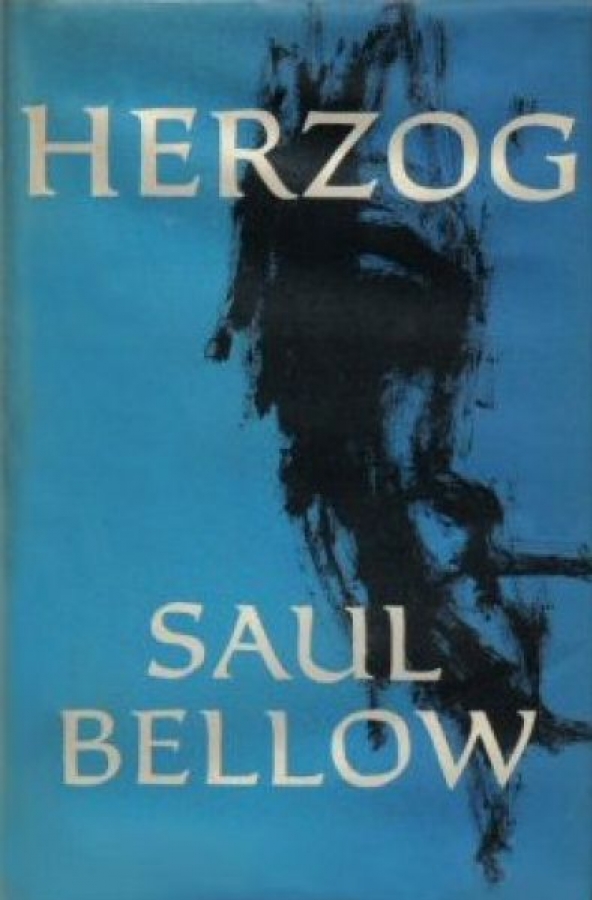
Herzog
AI Translation Notice: This review was translated from the original Italian using artificial intelligence. Book quotes and excerpts are translated interpretations and will not match the author's original English phrasing or official published translations.
What an ordeal! It is an extremely tedious book, so steeped in intellectualisms as to make one lose both the sense and the direction of the reading.
Herzog, a scholar of Romanticism, has been left by his second wife.
He enters a phase of physical and psychological delirium, wanders between New York and Chicago, and imagines carrying on a correspondence with figures from his life, as well as with scholars and men of letters.
In the end, he retreats to his country house and lapses into absolute silence: “at this time he had no messages for anyone.
Nothing.
Not a single word.”
The book’s final sentence encapsulates its profound meaning: a verbosity that conceals the loss of meaning.
For 340 pages (for 13.
600 lines) the author sustains an entirely fragmented narrative, devoid of narrative rhythm, yet brimming with adjectives and “parentheses.”
Postmodernism engulfs both the philosophical and the personal plane of the book: everything is muddled, and there is neither a metaphysics nor a certainty to anchor oneself to.
It is not marriage, which is a source of betrayal and misery (the figure of Madeleine); it is not romantic relationships outside marriage (Ramona, who nevertheless expects an ongoing relationship); it is not cities, by now reduced to mere rendezvous spots and places of rest; above all, it is not philosophy and literature, which often constitute a useless ornament and a cumbersome superstructure.
Perhaps children and the family of origin are the only bonds that matter in a world confused and fractured in its unity.
The drama of this stage of human evolution seems to be...
the age of a special comedy....perhaps the revenge taken by numbers, by the species on our impulses of narcissism (as well as on our demand for freedom) is inevitable.
In this realm of multitudes, self-consciousness tends to reveal us to ourselves as monsters
.
In the preface to the book, Malcolm Bradbury underscores two important aspects of Herzog.
The book was published in 1964, and its narrative style and sentence syntax opened a literary strand that is dominant today: the dissolution of the novel's structure.
Many modern writers (think of Paul Auster himself) are deeply influenced by Saul Bellow.
The novel no longer possesses completeness and unity, but is instead an assemblage of “zig-zags” reflecting the fragmentation and contradiction that dominate the individual, self-consciousness, and society.
With the novel, one does not seek to provide a verisimilar representation of the world, but pursues, as Saul Bellow said in his Stockholm Nobel lecture, “a hut in which the spirit takes shelter.”
The second aspect is the philosophical one.
Herzog quarrels with modern thought and moves through the realm of ideas.
His internal turmoil is primarily due to an existential anguish that finds no answer in a world dominated by metropolises, the masses, science, and organized power.