
The Adolescent
Arkady Dolgoruky, the first-person narrator, is the natural son of Versilov, > a cold and proud man, haughty and negligent toward me, who..., having fathered me and abandoned me among strangers, not only did not know me at all, but never even repented of it . Arkady suffers deeply from his father’s indifference, not least because the latter has taken his mother with him and reduced the young man to a state of acute social distress, as his status as an illegitimate son is known to all. > I was like an outcast... and I had decided to renounce them all and withdraw once and for all into my own life . What draws the young man, who has now completed his secondary studies, out of his isolation is a letter from Versilov inviting him to Petersburg. The first part of the novel recounts Arkady’s encounter with the complex and elusive figure of his father: a fraught relationship, also because > that man was nothing but my dream, the dream of my childhood years. Thus I had invented him myself, whereas in reality he proved to be different, fallen so far below my fantasy . Yet Versilov is not the sole center of Arkady’s life. The young man finds himself caught within a veritable “enigma,” woven of characters, relationships, and events, amid which he feels ill at ease with his rigid, solitary, and proud disposition. Much to his regret, he must acknowledge that people have multiple faces, that interpersonal relationships are often ambiguous, and that there is a “sacrosanct axiom” in Pushkin’s famous verse: “dearer to me than base truth / is the deception that transfigures us.” In the second part of the novel, Arkady appears to have accepted this reality. He leads a dissipated life, devoted to gambling, drinking, and women, while neglecting his mother and sister, whom he has only just met. This might be an ordinary phase in an adolescent’s life, were it not for the fact that Arkady carries a terrible secret: sewn into his coat is a document in which Katerina Nikolaevna, Versilov’s former lover, formulated a plan to have her father declared legally incompetent—a wealthy, elderly prince to whom, moreover, Arkady is deeply attached. The discovery of this document would prompt the prince to disinherit his daughter and would favor the aspirations of Arkady’s half-sister, who wishes to marry the old aristocrat. To complicate matters, Arkady is in love with Katerina and cannot bear to betray her. Furthermore, he is fond of his half-sister, fascinated by her intellect and strong character. Everyone suspects that the young man possesses the document, and so they cajole him with words and gestures that the naive Arkady misinterprets as genuine acts of friendship and even love. It is difficult to navigate this web of intrigue, especially when one lacks a clear perception of good and evil and when people are neither clearly wicked nor purely virtuous. What reigns is “the soul of a spider”—namely, that man > can cherish in his soul the loftiest ideal alongside the greatest baseness, and all in perfectly good faith . Yet Arkady too is seized by “ignominious thoughts”—for instance, using the document in his possession to win Katerina’s love. > Where, then, had all of this come from, already so prepared? And this, because I had the soul of a spider! It means that everything had sprouted long ago and lay in my corrupt heart, lay in my desire . And it is precisely Arkady’s weakness, his yielding to the pull of evil, that precipitates the crisis in the third part of the novel. The young man is himself duped by criminals who secretly steal the document from him and attempt to blackmail Katerina. To his horror, the youth later discovers that they are in league with Versilov.. Versilov’s split personality confronts the young man as a “broken image,” all the more so after an intense, long-awaited conversation in which Versilov had professed to his son his love for Arkady’s mother, only to subsequently send Katerina a formal marriage proposal. Who, then, is his father really? Perhaps merely a man driven by whim, by unchecked vanity, Arkady thinks. The disillusionment with the father figure is complete. Arkady is no longer an adolescent. *The Adolescent* is the author’s most contemporary novel. Several elements contribute to this: the modernity of the father-son relationship, the Pirandellian theme of duplicity, the detective-story elements of the plot, which is full of twists and turns and frequently leaves the reader in suspense as to what will follow. The book’s greatest merit lies precisely in its tight pacing, which leaves little room for philosophical disquisitions, as is so often the case in the author’s other novels. Beyond Dostoevsky’s well-known skill in constructing dialogue, what is striking is the author’s ability to mirror duplicity in the very structure of the sentence: for example, chapters unfailingly close with the image of a contradiction, of an ‘other,’ delineated in just a few sparse strokes. Why read it? It is one of Dostoevsky’s finest novels, insufficiently appreciated perhaps because it does not foreground philosophical and religious themes.
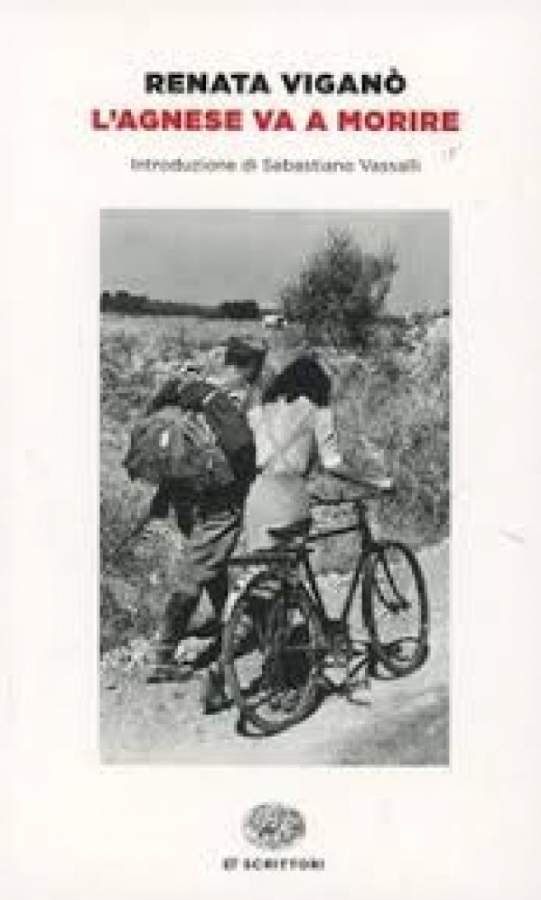
Agnese Goes to Her Death
The novel chronicles the Resistance in the Valli di Comacchio, between the mainland and the wetlands. Unlike the great works on the war of liberation (1943–1945), typically set in the mountains, *LʼAgnese va a morire* tells of the lowland partisan war, where > the Germans did not know that among those men and women, wandering through the snow, many, almost all of them, were partisans. Couriers dispatched with orders hidden in their shoes, leaders heading to meetings in peasant barns, commanders preparing actions where no one expected them. (...) A fire without flame or smoke: a markless fire. The Germans and the fascists walked right over it, noticing only when they were burned. The lowlands, and in particular the marshland environment, form the backdrop to Agnese’s story: a fat, old woman, who until then had been an industrious washerwoman and a rough peasant. > One September evening, Agnese, returning home from the washhouse with a heap of wet laundry on her wheelbarrow, met a soldier on the cart path. (...) His shoes were torn, and his toes could be seen, dirty, the color of mud . Without hesitation, Agnese gives him shelter and later shows him the escape route when the Germans arrive. With this seemingly obvious act, Agnese embarks on a human and political journey that takes her from > a mature, composed yet ruthless hatred towards the Germans, (...) towards the subservient fascists , to becoming > truly responsible for incomprehensible actions and unforeseen decisions . At first, she is asked to carry a parcel and she replies: “if I’m capable”; then she becomes the coordinator of the couriers while securing a safe hideout for the brigade command; finally, she is forced to make solitary, swift, and perilous choices involving the lives of many partisans. All this would remain an abstract tale were it not admirably embedded in the marshland setting and in the conditions of struggle and survival that defined it. Across the seasons, from spring to winter, living conditions grow increasingly harsh, mirrored by an escalating clash between partisans and Germans. > They moved by boat through the green canal, slimy as a slug. On either side the reeds stood tall, yet cast no shade: the sun pierced through the straight, bare stalks as if through an iron grating, burning on the water, on the floating weeds that resembled dead grass snakes. (...) It is a magnificent place, the Commander said, the reeds provide neither greenery nor shade, but they conceal. (...) Agnese knew that sound of the marsh at night: a dull hum, an isolated cry . The partisan detachment has taken refuge in an isolated hut in the wetlands, and here > toward evening they would sing, their voices low so that no one might hear them, and their song would seem little more than the rustling of the reeds... (...) The couriers brought bread, wine, orders, and circulars to the camp... . With winter and the mounting pressure from the Germans, > away, away from the house, away from the prison, prisoners still of that dark, roiled water, choked with weeds and mud, yet already bound for land, where one could breathe one's own air, clean air, not just the breath of the comrade beside you, and where one walked not across a few feet of flooring, but forward, along a road, an embankment, a field, forward toward the world of free men . Hemmed in between the Germans and the Allies, fleeing a hostile and intolerable environment, the partisans go to die, > if only to reach the shore, to be out of the water, to set foot upon ground that did not shake . Agnese dreams of her husband, who died during deportation to Germany: > It’s hard, isn’t it? I know you can’t take any more. But it isn’t time to let go yet, Agnese. (...) Agnese saw him open the door to the cold of the staircase, truly felt that wave of cold against her face. Then she realized it wasn’t Palita (her husband), and behind him was another, and another, and another. The last one quietly closed the door. After so many men as protagonists of the Resistance, here at last is a woman, and certainly not an intellectual! If only for doing justice to women’s contribution to the partisan struggle, the novel deserves a prominent place in the literature of the war of liberation. Yet one must not be confined by this single interpretive lens: the novel contains numerous characters, countless episodes of civilian and combatant life, and an intense narrative pace punctuated by dramatic twists, not least the final one. Criticism has regarded it as a neorealist novel; yet if one allows oneself to be captivated by the writing, particularly the descriptions of the marshland environment, it becomes evident that the narrative possesses a lyrical, even oneiric undertone. One might think of it as a dreamed epic, a modern *Iliad*, dense with myth and heroic figures: precisely what we need. The style is lean, marked by an adroit use of punctuation: the short, concise sentences do not fragment the narrative, but rather lend it communicative power, bolstered as they are by a richness of adjectives and the use of brief, succinct dialogue. Why read it? A masterpiece of substance and style!

Anna Karenina
The novel relates two parallel storylines originating in Kitty’s refusal to marry Levin, favoring the handsome and dashing officer Vronsky. From this act of vanity and levity, immediately undone by Vronsky falling in love with Anna Karenina, Levin’s trajectory begins: his love for the countryside, his rapprochement with Kitty culminating in marriage and the discovery of faith; while Anna’s sorrowful tale unfolds—her affair with Vronsky, the abandonment of her husband, their life together abroad, in the country, and in Moscow, down to her tragic suicide. We are faced with an «official» plot, which would perhaps seek to express Tolstoy’s own thought and message: only an adherence to religious values and Russia’s traditional customs can save man and the nation, whereas vanity and hypocrisy, typical traits of the aristocracy, can lead to nothing other than personal destruction and the moral and social unraveling of a people. The generous, profound Levin finds in the responsibilities of marriage, family, and estate management the answer to his social and existential inquiries. It is not new production techniques, economic theories, or philosophers that provide him this answer; rather, life itself has granted him revelation through the consciousness of good and evil. > I have not acquired knowledge, but it was given to me... because I, by my own strength alone, could not have attained it . The elegant and cultivated Anna, by contrast, having failed to honor ties with the traditional religious and social sentiments of Russia, is driven, in spite of herself, to despair: > how many things, (when I was a child) that seemed beautiful and unattainable to me in those days now seem wretched! And what I possessed then is now lost forever . Yet the contradiction between reason, which leads to death, and faith, which leads to life, persists up to the final moments of Anna’s life: > Yes, everything disturbs me, torments me. Reason is given to us to free ourselves from what torments us. Therefore, I must rid myself of it. Why not put out the light, if one no longer wishes to see anything, if looking at things arouses nothing but aversion?....suddenly the darkness that now enveloped everything for her was pierced and life appeared to her for an instant with all its bright past joys... Lord, forgive me everything! she uttered once more, feeling the impossibility of struggling. The muzhik, muttering something, worked on the foundations . As the novel unfolds, the character of Anna Karenina assumes an autonomous life, one that transcends the author's own aims and endows her with qualities starkly distinct from those demanded by the official plot. It is almost as though Tolstoy falls in love with his own creation, unable to confine her within the role originally conceived. At first, it is clear that Anna is a hollow and vain figure, fully conforming to the false standards of the Russian aristocracy; gradually, however, the complexity of this character deepens as she pursues absolute love and an authentic life, far beyond the hypocrisies of society. Anna is tormented by a profound sense of guilt over abandoning her husband and, above all, her son; yet she senses she is not guilty, for she wishes only to «live her life» in a sincere and genuine manner. From this perspective, she cannot simply be defined as a romantic figure, since the love affair is significant but ultimately serves as the catalyst for a deeper spiritual yearning: the resolve to live out her freedom without hypocrisy and false conventions. Anna Karenina is a tragic character who destroys herself and those around her, as though driven by a demon (the dream of the old muzhik) and by a destiny that surpasses her own will. Over the course of the novel, a kind of «reversal» takes place—a profound shift in perspective that leads to the elevation of Anna’s character, outwardly fragile and culpable, over the duller and flatter Levin and Karenin.
The Army of the Lost Rivers
The novel is set in Friuli in 1944 and deals with an event that actually occurred. In that year, the Germans relocated an army of Cossacks to Friuli, who had sided with Hitler under the illusion that they could defeat the Bolsheviks, their historic enemies. They were a people who had wandered across Europe with women and children in search of a land, spurred by the promise of a victorious return to their places of origin, amid the great rivers of European Russia. The narrative revolves around the figure of a woman, Marta. She arrived in the village with her fiancé and his sister, Anita. Yet she is soon left alone, as her fiancé is dispatched to the Russian border and never returns. Marta lives with a wealthy Jewish widow of Slavic descent, who had fled Russia following anti-Semitic persecutions and sought refuge in a remote village in Friuli. Life unfolds in an apparent serenity, which is shattered by a German raid that sweeps away the Jewish woman and, along with her, a group of Gypsies who were camping with their caravan near the village. Marta is left alone with Anita, who is expecting a child, and an old Gypsy who by chance had escaped. Marta is a strong woman who always looks to the future, confronting adversity with great courage. A young man arrives from the Russian front, Ivos, with whom she has a brief relationship, soon cut short by his decision to join the partisans. Alone in a large villa, Marta, Anita, and the old Gypsy live in a state of suspension, of waiting, striving to lead a normal life amidst an increasingly precarious and dramatic situation. At this point, the Cossacks arrive, overturning village life both materially (first looting, then installing themselves in the houses) and socially, introducing their own customs and forging ties with the locals. In truth, the Friulians seem to accept the arrival of the invaders, not least because they feel united with them by the longing for land and for a definitive resolution to centuries-old suffering. A family comes to live in Marta’s house (a woman, a youth, and a twelve-year-old boy), alongside the two commanders of the Cossack detachment: Gavrila and Urvan. With the latter, Marta embarks on a romantic relationship which, in her mind, might culminate in an escape to America to build a life together. In this section of the novel, the tone is light yet melancholy: the Cossacks are capable of both enjoying themselves and entertaining others, but they carry a profound longing for their native land, their customs, and their traditions. > In Urvan’s soul, deep, deep within, the ghosts of those archaic customs still wandered, like a faded, bleached memory whose roots lay in times worn away and undone for centuries. He had the sensation of having landed who knows where, and of being awaited behind the wall by dark, unpredictable events . Both the Cossacks and the local people delude themselves into believing they can continue living > inside the house, a place set apart from the world, like an unmoored ship gliding across a sea devoid of change and storms . At a certain point, the situation unravels. The embattled peace between Cossacks and partisans turns into open warfare. A sequence of bloody, gratuitously cruel episodes begins. In truth, there is no reason to fight, yet it is as if the fragile bond of coexistence between the two peoples had shattered. The Cossacks, who until then had respected the women and local customs, begin committing acts of violence and murder without even knowing why; it is as though the hope of a safe haven, of a homeland, had vanished. > But above all, it was the mental homeland that had vanished, that order of thought through which a man always felt, within them, to be in a familiar and reassuring place . At a certain point, the Cossacks decide to march again and return to their homeland. It will be a tragic exodus, as many will perish from hardship and disease, others in clashes with the partisans, while the last among them will commit collective suicide to avoid being repatriated to Russia, where certain death awaits them. Marta is left alone once more, yet the novel moves toward a natural conclusion, for the world must go on. Anita’s child is born, and Marta is reunited with Ivos and resolves to live with him: true happiness may remain elusive, but with courage, the struggle to survive will begin anew. The novel develops along two themes: one social and collective, the other more intimate and familial. The social theme, which renders this novel so timely, concerns the encounter between two peoples, framed, however, within the notion that we are forever shipwrecked: > humanity had reached a point where, increasingly, there would be entire populations without a homeland, nomads driven from their lands, crucified by painful circumstances offering no way out, propelled forward by armies and wars . Faced with this resurgence of barbarism, the author finds no socio-political solution, seeking it instead in the strength of intimate and familial bonds, and above all in womanhood. Marta embodies the mother-earth, the figure capable of fostering coexistence. > She was a simple, even elementary woman, who around her, as always, could see nothing but men, only men, all resembling one another, speaking different languages, harboring different thoughts, yet all battered by war and misfortune, all lost in the disorder and darkness of the world . The narrative pace is slow, at times excessively so, yet it is the writing that sustains the reading. One is captivated and enthralled by a calm, expansive prose that manages to draw a sort of mist, a veil over the cruelty of destiny: after all, that is what the characters themselves desire. As the author stated, > I like to view things from afar, to describe events as though they were already history or legend . Why read it? The story is compelling, the book is exquisitely written, and above all, it is a timely novel that speaks of the encounter between two peoples and the inexorable power of our shared belonging to the human race.
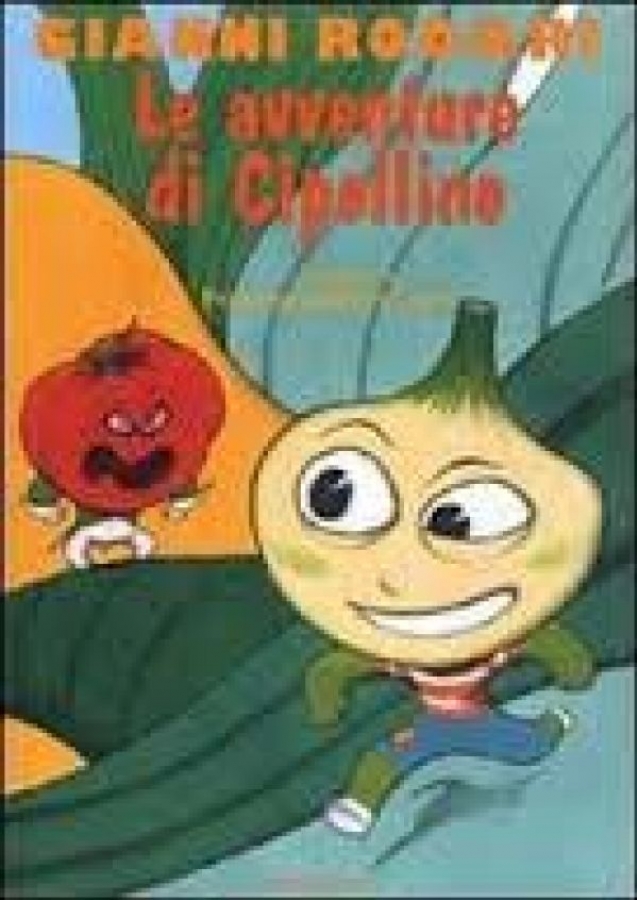
The Adventures of Cipollino
> Cipollino was the son of Cipollone and had seven brothers. (...) Decent folk, it must be said right away, though rather unlucky. What do you expect, when you are born an onion, tears come with the territory . Thus begins the book. In a few simple words, the author introduces the protagonist—Cipollino himself—the world of the novel, where the characters are fruit and vegetables, and the gentle irony that characterizes the entire tale. There are no humans, nor the typical figures of peasant life; with a stroke of genius, the author develops the narrative around the very foods we are constantly urged to eat in childhood and do so reluctantly. In this way, Rodari subverts the question: no moralizing for children; instead, the hated food becomes the protagonist of incredible, magnificent stories, offering an occasion to reflect upon freedom. What do Cipollino and these other extraordinary characters tell us? Freedom means fighting for an authentic life, free of superficial pretenses—a life in which what truly matters are friends, rather than social hierarchies, conventions, or deference to power. It is an invitation to be oneself, yet without affectation, leaving the child—and us adults—the pleasure of pure enjoyment. The story takes off from an act of abuse: Sor Zucchina has built himself a tiny house, where > the right hand is in the kitchen, the left hand is in the cellar, the legs are in the bedroom, and the head sticks out of the roof . Pomodoro wants to confiscate the little house, claiming it was built on the land of the Countess Cherries. Cipollino rebels, and from there the plot unfolds: the village folk (Mister Uvetta, Fagiolino, Pero Pera, and others) hide the little house with Sor Mirtillo, who "lived in a chestnut burr" and had posted a sign inviting the > gentlemen thieves, before entering kindly ring the bell . The narrative then introduces us to the Cherry Castle, where Ciliegino lives, a lonely and melancholic boy because, as Rodari writes, "oh, what an awful affliction it is to have no company." Cipollino and Ciliegino become friends—one among the lowliest of vegetables, the other among the most delectable of fruits. So much for social barriers! Together they fight to free their friends, who have since been thrown into prison, to save Sor Zucchina’s little house, and to defeat the story’s villains—yet without bitterness, almost with commiseration. The adventures are many, and they do not always turn out well. There are two minor characters who, more than others, highlight Rodari’s subtlety. Sor Pisello is the quintessential pettifogger, fearful and servile. Despite having been rescued by Cipollino, he betrays our friends to curry favor with the authorities: is he the archetypal Italian intellectual, ever ready to turn his coat depending on the whims of the powerful? Mister Carotino is a famous detective who, naturally, never uncovers a single thing. Whatever Mister Carotino says is repeated, yet amplified, by his faithful hound, Segugio; for instance: > We are in danger—Carotino noted, without batting an eye, reaching for his butterfly net—We are in great, great danger—echoed the dog . If we think of the police investigations in our own country, which often lead to nothing while generating an immense clamor, perhaps Rodari intended to demystify the police apparatus, as if to say: do not be afraid, they are all just like Carotino! In the end, the good triumph, but above all, the world is turned on its head. > Events rush headlong and we let them rush: days tumble one upon the other like sheets from a calendar, weeks pass seven by seven, and we have no time to see anything at all, just like when at the cinema the projector goes wild, and no sooner does it slow down enough for us to finally see what is happening than everything has changed. With Rodari, it is easy to fall into the trap of hunting for hidden meanings in his characters and stories; yet one is inexorably driven in this direction because the world he depicts is all too similar to our own, all too often mirroring the mechanisms of our society—absurdly oppressive and unjust. Could the world be anything other than a vast matryoshka doll, in which every social and ethical distortion is replicated across all tiers of nature? What pulls us back from this bitter conclusion, reminding us that we are before a splendid children’s tale, is the narrative style: elegant, witty, seemingly simple, light yet profound. Words are Rodari’s true magic, so much so that only by being read aloud does the story acquire its full charm and its true meaning: a flight of imagination, of fantasy where anything is possible, where even onions have a soul. Why read it? Thought-provoking, delightful, intoxicating.

Adventures Among the Redskins
The novel, published under the pseudonym Guido Landucci, is an adaptation of one of the earliest Western-genre tales, written in 1837: *Nick of the Woods: A Tale of Kentucky* by Robert Montgomery Bird. Perhaps for this reason, the novel exhibits several unique traits compared to Salgari’s typical approach. The author’s traditional formula is as follows: a hero, often defrauded of his wealth and social standing, is flanked by supporting characters whose role is to lighten the protagonist's profile, which is most often rigid and unyielding. At times, the author introduces disconcerting and ambiguous elements: as in *La Stella dell'Araucanìa*, where a nobleman turns cannibal through his contact with savages, corroborating the dark side inherent in each of us, even the civilized. In *Avventure fra le pellirosse*, the paradigm shifts: a secondary character reveals himself to be the protagonist, while the narrative—dense with dialogue, as usual—is interspersed with accounts of gruesome, bloody massacres perpetrated by redskins; an element in stark contrast with Salgari’s naive anti-colonialism, which routinely championed oppressed peoples. Let us turn to the plot. Two young people, Rodolfo and Mary, arrive in Texas in search of gold: they have been stripped of the inheritance of an exceedingly wealthy uncle, whose will was contested by the guardian of a young boy named as heir. From the outset, it is evident that the two youths have no grasp of the perils awaiting them: a vast, desolate prairie that turns into dense thickets near the Pecos River—a river that must be crossed if one hopes to reach the areas rumored to harbor gold. Joining the expedition are other characters worth noting: Telie, a young woman desperate to find her father who was abducted by Indians, and Morton the Bloodthirsty, accompanied by his inseparable little dog. He is a Quaker, regarded as “the most inoffensive man on the plain,” armed with an ancient, “almost” ruined rifle and a knife that “had probably never left its sheath to slay an Indian.” Roaming the plains alongside the savage redskins is Scibellok, believed by the Indians to be an infernal spirit: he kills them by crushing their skulls, leaving a cross carved into their chests as his signature mark. We find ourselves squarely in the territory of the classic English Gothic novel! Rodolfo is a valiant youth, yet utterly incapable of leading the small party; indeed, after various misadventures, the two girls, Mary and Telie, are kidnapped by the Indians. In an attempt to rescue them, Rodolfo is taken prisoner as well. At this juncture, we discover that Telie’s father has become an Indian chief and, worse still, is in the pay of the treacherous guardian: the latter intends to marry Mary and murder Rodolfo, since the genuine will names the two youths as the rightful heirs. Morton, too, is captured. > The Black Vulture is not accustomed to sparing his prisoners. I love slaughter, and I do not disdain drinking the blood of white men. (...) Morton (...) had been seized by a nervous trembling so violent that he could no longer stand on his feet. Whether it was the shock, fatigue, or something else, the trembling had turned into a convulsive seizure . The Black Vulture believes Morton to be a great sorcerer capable of leading him to Scibellok, the exterminator of the redskins. Do you want to know the ending? I will not spoil the surprise; suffice it to say that it all concludes with a happy ending. The novel is a miscellany, effectively blending Salgari’s style—typically rational and mechanistic—with Montgomery Bird’s redundant, brooding Gothicism. Morton is the protagonist, and in his figure pacifism and hatred, communal belonging and isolation, strength and fragility converge: conflicting sentiments that cannot coexist for long, foreshadowing a terrifying and harrowing end. There is also a peculiar sidekick: a little white dog—a novelty for Salgari—the faithful companion of a recluse and an extraordinary guide across the vast prairie. Furthermore, all the ingredients that make Salgari so beloved are present: the relentless succession of adventures, the surprises, the cliffhanger chapter endings heralding further action, the compulsive urge to read on. The Italian author does not linger; he charges straight ahead with his brisk, gripping narrative pace. Why read it? It is not entirely Salgari’s own creation, but it is masterfully adapted and an absolute pleasure to read.
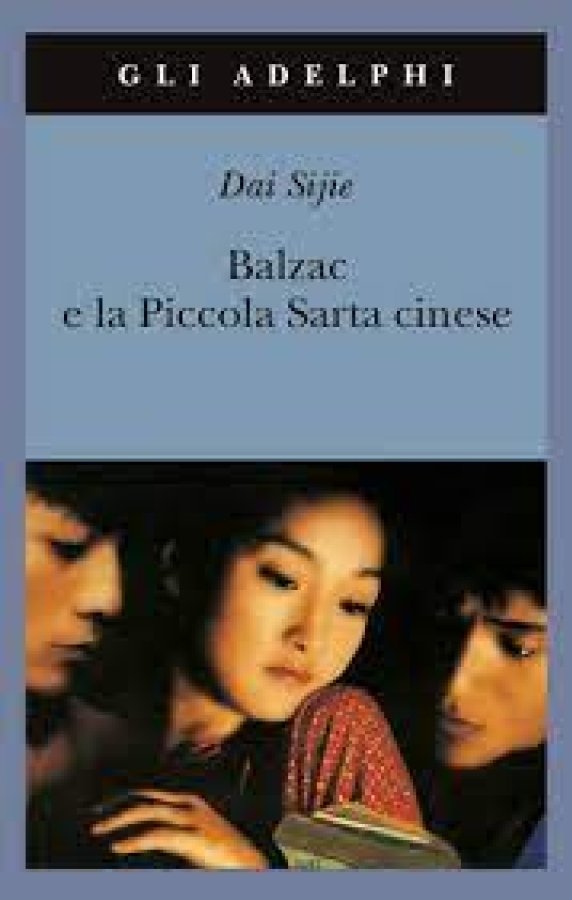
Balzac and the Little Chinese Seamstress
The year is 1971, in China during Mao’s Cultural Revolution. Two youths are sent for re-education to a remote mountain village. One is the narrator, while the other is his friend Luo. Unquestionably, a critique of the Communist regime runs through the entire novel—a critique mounted with irony and lightness, yet no less incisive for it. Were it confined to recounting how two charming and unfortunate city boys survived in an environment so far removed from their social and cultural origins, the book would remain trapped within its historically dated dimension; in truth, the author engages with the universal theme of the book as self-discovery and an instrument of emancipation. The two friends cross paths with a young woman, the daughter of the local tailor. > When she bent over the sewing machine, the gleaming metal base reflected the neckline of her white blouse, her oval face, and the sparkle in her eyes, undoubtedly the finest in the district . Sophisticated and elegant, “in a place where nearly everyone went barefoot,” the Little Seamstress captivates the boys, lending meaning to their wretched existence. Another event intervenes to alter the destiny of the two friends, and of the Little Seamstress: the discovery of a trunk containing the great masterpieces of French literature, from Balzac to Flaubert. They come into possession of the books and devour them ravenously. > Leafing through them with my fingertips made me feel as if my fragile hands were touching human lives . It is a wondrous yet insidious sensation, for immersing oneself in human nature through the pen of the great nineteenth-century writers will overwhelm the young men and transform the Little Chinese Seamstress. “She will no longer be a simple mountain girl.” In Luo, now her lover, there arises something akin to a delusion of omnipotence: the ability to govern the cultural maturation of the Little Seamstress. Is that possible? > She wants to go to the city, (the father) said. She mentioned Balzac. (...) She said she learned one thing from Balzac: that a woman’s beauty is a treasure beyond any price . Was it perhaps better to have left her in ignorance? For the most part, the novel follows a linear plot, rich in delightful, surprising, and joyful episodes. It is as if the two friends were revelling in it: they disguise themselves, for instance, as Mao to coax the lyrics of folk songs from a wild old mountaineer and hand them over to the owner of the books in exchange for several novels—a scheme crowned with success, yet ultimately doomed because the songs are brazenly erotic, and thus at odds with socialist morality. At a certain point, the narrative shifts tone, turning somber and oppressive. Two metaphors emerge—the precipice and the raven—omens of the disaster toward which the two friends are hurtling (in Chinese culture, oracles bear fundamental significance, revealing as they do “the Way of Heaven”). Later, the narrator steps back to make way for the accounts of other characters: the old mountaineer, Luo, and the Little Seamstress. It is a lyrical juncture, detached from the narrative approach maintained until then. It is as though the narrator has definitively accepted a subservient role; nevertheless, we perceive that he too is traversing his own path toward an understanding of femininity. And finally, we witness the resigned, desperate account of the Little Seamstress’s abortion, as she makes her choices unbeknownst to Luo, who impregnated her. It is as though a woman’s freedom always demands a painful act. The writing is elegant, adept at orchestrating diverse lexical and syntactic registers. Fluid, spirited, effervescent, the author manages never to dissipate the narrative drive despite engaging with numerous themes, many of which overlap and even clash. He can steer a steady course through to the end—surprising and unsettling—because the story revolves around the mysterious allure of the book. Why read it? It is a gem!
Bilal
This book belongs to a literary genre whose pinnacle is *Gomorrah*, and which could offer an opportunity for revival to an otherwise bloodless Italian literature. It is a hybrid of novel and investigative journalism. Fabrizio Gatti is a journalist who conducts his investigations into immigration by masquerading as a migrant, thereby experiencing their living conditions firsthand. The novel arises organically, as the author personally lives through the events narrated and the encounters depicted. In the first part of the book, the author retraces the route between Dakar and the Libyan border, chronicling the inhumane conditions and, above all, the violence inherent to these journeys. In reality, people are at the mercy of criminal syndicates—colluding with local police forces—who seize every opportunity to extort these desperate souls. Transit relies on makeshift vehicles (dilapidated trucks, off-road vehicles) that routinely break down along the way, abandoning passengers to certain death in the desert. The lack of funds to continue the journey reduces migrants to a form of servitude in transit hubs, where they are forced to work merely to have something to eat. This is the finest section of the book, both for its descriptions of place (at times almost evoking travel literature) and, above all, for the bonds of friendship the author forms with some of his companions. Here, the author's driving impulse behind these experiences becomes strikingly clear—a quest for adventure coupled with an investigation into the roots of one of the great agonies of our era: > and tonight, as I update my journal, tucked inside my sleeping bag with the mini flashlight wedged between my neck and shoulder, I feel that I am at the mercy of this immense river of arms. I realize there are no safe havens. It is no longer I who am making this journey. It is the journey, in its boundless cruelty, that is shaping me . In the second part of the book, the author reproduces an email correspondence with two friends, met during the earlier leg of the journey, who became stranded in Libya. It is the novel's weakest section, yet it still offers an insight into Libya and the plight of migrants within this country—which is not merely a transit point, as commonly assumed in Italy, but frequently an end destination for labor. Under Italian pressure, Libya carries out a veritable persecution of migrants, who are often rounded up in camps at the edge of the desert and subsequently abandoned to certain death. There are then two sections of the book that do not allow us to detach ourselves from the issue by dismissing it as someone else's affair. First, Fabrizio Gatti manages to pass himself off as a Kurd and gets himself "imprisoned" in the Lampedusa reception center. What emerges is a shameful picture of the material living conditions and the conduct of the Italian police, in flagrant violation of the principles enshrined in our constitution. Next, the journalist recounts his undercover investigation into the living and working conditions among tomato pickers in Apulia. The essence of its impact on the reader is encapsulated in a reflection by the author: > would you have let them be killed? The answer is a watershed. There is no middle ground. There is no room for compromise between a world of civil struggles and its surrogates of violence . Finally, in the closing section, the author retraces the journey "in reverse" from Libya to Dakar, partly to document the expulsion of migrants from Libya and partly in search of his lost friends. It is a muddled section, one where the limitations of Fabrizio Gatti’s prose become starkly evident—too journalistic to sustain a book of such length and complexity. The question one must ask is why such a "forceful" book met with such modest resonance. A primary explanation certainly lies in the shortcomings of style and narrative pacing: the former too fragmented to be fluid, the latter frequently repetitive and verbose. A second reason is to be found in the general Italian apathy toward the plight of migrants. We are confronted with pervasive indifference toward the "modern slave trade." Alas, dear Fabrizio Gatti, there is indeed a compromise between a world of civil struggles and its surrogates of violence: burying one's head in the sand and retreating into the seclusion of one's apartment building.

Billiards at Half-Past Nine
Il romanzo si avvia in un'atmosfera kafkiana: l'ingegner Robert Fahmel, esperto di calcoli strutturali, si lamenta con la segreteria per aver disubbidito a un suo preciso ordine: non dire mai dove si trova, se non alla madre e al padre, ai figli, e a un certo Schrella, che scopriremo poi essere suo cognato e amico di liceo, quando entrambi non aderirono alla gioventù nazista. Siamo nel 1958, nella Germania dell'immediato dopoguerra, quando > everything seemed submerged in the past, yet present. In the regular, even liturgical routine of his life, the distinguished engineer Fahmel goes every day, from nine-thirty to eleven, to play billiards in a grand hotel, doing so solely in the presence of an errand boy, to whom he recounts his high-school years when his classmates had partaken of "the sacrament of the buffalo" (a clear reference to Nazism, which is never explicitly named) and beat the "lambs of God," those who refused to adhere to Nazi ideology. > He struck a ball with a stroke now gentle, now hard, seemingly without reason or purpose; (...) five times, six times, as the struck ball hit the cushion or the other balls. (...) The carousel of lines was always anchored to the corners, obedient to the laws of geometry and physics. Is the daily, solitary game of billiards the pastime of a man enamored of the laws of statics, or does it conceal some mystery that engineer Robert Fahmel carries within himself? For a while, the question finds no answer in a novel characterized by a continuous shifting of narrators, from the third person to the first, and by ever-new windows opening onto the past and the present, as the laws of remembrance dictate. For pages on end, we follow the account of Robert’s father; of when, in 1909, he arrived in the city from the countryside to take part in an important competition: the construction of the Abbey of St. Anthony. The description of the hours spent in a café preparing the project drawings, eating cheese with ginger, is a light and amusing interlude in a grim, hopeless novel. Robert’s father, on the other hand, harbors great expectations, confirmed when he is awarded the construction of the Abbey, which will open up for him a future of success and renown as a great architect, and allow him an advantageous marriage, with the promise of a large family of children, grandchildren, and great-grandchildren. But at the very moment he was submitting the drawings, Robert’s father sensed an omen of the future: > squinting my eyes, the entire massive construction seemed to stand before me, already real, as if I were looking at it from a window: the monks bent over their work, the pilgrims quenching their thirst, and the female workers already singing below, anxiously awaiting the end of the workday, their voices bright and somber, reaching me up here like a death knell. Then I closed my eyes and already felt that chill that only fifty years later, as a grown man in the midst of swarming life, I was to feel again. Illness, Nazism, and the Second World War will take away many of his children and his young daughter-in-law, culminating in his wife’s descent into madness; the Abbey itself will also be destroyed, demolished by the Germans themselves to leave scorched earth for the Allies. From the past we return to the present, in 1958, with a seemingly marginal scene. Joseph, Robert's son, is with his fiancée, but he is taciturn, withdrawn into himself, unwilling to speak and reluctant to attend a family lunch. An architect himself, Joseph is working on the construction of the new Abbey and has discovered some numbers written by his father in several spots among the ruins of the old building: they are the markings indicating where to place the dynamite to demolish the Abbey. It was Robert, then, an officer in the combat engineers, who destroyed that masterpiece, which had meant so much in his grandfather's life. The balls, > red on green, white on green, the monotonous music of the balls, like the rhythm of a Gregorian chant, (...) almost tokens of a severe poetry , are the metaphor for the quest for an order that might heal, through its daily liturgy, the incurable wounds of a Germany in which the guilt of a people is intertwined with that of individuals, and torn family destinies are bound up with a nation's delusion of power. "Why why why"—this questioning refrain recurs often in the novel. How is it possible that an intelligent and cultured people spawned so much death? And is reconciliation with the past even possible? Through a family history pivoting on the meticulous rationality of engineering—in construction as in demolition—Böll succeeds in conveying the pain and confusion, the disorientation and despair of a people. In *And Never Said a Word* (1952), Böll depicted the condition of a people reduced to starvation amid the rubble of post-war Germany; later, in 1963, in *The Clown*, Böll would delineate the moral ravages of the economic miracle (see the reviews on this site); in this novel, the writer seems to want to distance himself from the Nazi madness, yet without succeeding: the past resurfaces incessantly, and the characters are like extras, groping between madness and indifference—perhaps the only way to process their grief. Whatever the outcome, Böll reckons with history without taking refuge behind an easy self-absolution. Have we Italians done the same? Did the likes of Moravia, Calvino, and the other post-war writers write of our own guilt, or did they retreat into familism, abstraction, or victimhood, as in Elsa Morante's *History* (see the review of this novel on this site)? We must not expect a linear plot; to appreciate the novel, one must let oneself be captivated by the writing, by the allure of a prose that at times recalls Thomas Mann (see the review of *Buddenbrooks* on this site) and at others the musicality of László Krasznahorkai (see the review of *The Melancholy of Resistance* on this site). It is a pity that, in the end, the novel loses itself in a delirious drift toward nothingness. Why read it? An anguished masterpiece upon which we Italians ought to reflect.
The Forest of Wool and Steel
Those who listen to music often fail to realize just how much the quality of sound depends on the tuning of the instrument. Between musician and tuner there exists an intricate bond, rendered by the author through the imagery of magpies. In an ancient Chinese legend, magpies form a bridge across the Milky Way between the stars Vega and Altair on the seventh day of the seventh lunar month: celestial lovers, sorrowful in their separation, who on that day can finally unite in the fulfillment of a great love. Sound—an inexplicable and captivating creation of both nature and man—lies at the heart of this novel. Tomura is a high school student living in an isolated mountain town; for him, it was enough to > scrape through school somehow until graduation, find any kind of job, and keep on living . It would have been sufficient for him merely to contemplate, year after year, the miracle of spring in the mountains, when “the bare trees all bud at once.” (...) > The entire mountain seemed to radiate light, from the vast expanse of branches softly suffused with a reddish glow. Overwhelmed by the sight of those illusory flames burning across the mountains, I stood spellbound, unable to do a thing. And I was happy for it . His life changes when a piano tuner arrives to service the school’s modest piano. Watching the man work, Tomura chooses this vocation. He enrolls in a vocational school and is subsequently hired by a musical instrument firm. At first an apprentice accompanying more experienced colleagues on client visits, he is gradually—and not without setbacks—permitted to work on his own. > I have no talent (Tomura told himself). (...) I couldn't hide behind the word talent: I mustn't use it as an excuse to give up. Experience, practice, effort, wisdom, presence of mind, perseverance, and then passion: if talent wasn't enough, I would replace it with these. (...) Clinging to something, and using it like a cane to lean on and pull oneself up. Once again, the turning point erupts from the outside. He attends a piano performance by the very young Kazune and is entranced, captivated by the music and by the girl's playing. > Kazune's piano was a spring connected to the world, one that never ran dry; indeed, it would have continued to pour forth ceaselessly, even if there were no one to listen . And an episode from his childhood comes back to him. As a boy, he was walking in the woods when he saw lights that > crowded upon the slender branches of an elm and shone dazzlingly. I don't know what phenomenon it was. But it was beautiful. Almost terrifying. Listening to Kazune's music, Tomura is certain that somewhere in the mountains, in a place unknown to him, a tree was glowing. Love, unreserved and unconditional—a feeling that expects nothing in return—compels Tomura to overcome his self-doubt and become a concert tuner, in service of Kazune, the piano, and music itself. It is undeniably a *Bildungsroman*. Tomura learns a trade while simultaneously coming of age. Aided by a workplace environment that is benevolent, perhaps beyond plausibility, the young man comes to understand that his humble, rustic mountain origins are not an impediment; rather, they grant him a stubborn tenacity that will prove to be his strength. Up to this point, it might seem a conventional narrative, woven from protracted dialogues with colleagues who dispense “nuggets of wisdom,” and weighted down by technical minutiae regarding the art of tuning—intriguing yet redundant curiosities. What endows the novel with an original and compelling dimension is that sense of the magical arising from the juxtaposition of the piano's sound with the lights and murmurs of the forest: a Shinto-inflected touch quintessential to Japanese culture, possessing nothing of the Romantic nor of the trivially pantheistic. While the piano is an invention of nineteenth-century Europe, its sweet melody and luminous atmosphere evoke sensations of the forest that our own positivistic and idealistic culture has forsaken for centuries. Beneath its ostensibly realistic veneer, the tale beckons us to achieve harmony with the Universe, guided by music. The narrative style is spare, almost minimalist: short sentences, sparing with adjectives—fitting, after all, for a narrator in his early twenties who was never particularly gifted in school. The recurring allusion to Hara Tamiki, where the poet of the Holocaust defines the complex ambiguity of style, signals that the prose’s simplicity is a deliberate aesthetic choice by the author, and an entirely successful one. Paraphrasing Tamiki, we might say: > a style that may seem gentle, up to a point, but is instead fraught with severity and depth; a style as beautiful as a dream, yet as certain as reality . Why read it? Luminous, quiet, replete with love and nostalgia.
Reeds in the Wind
The case of Grazia Deledda was a singular one: the only Italian Nobel laureate honored as a prose writer (Montale and Quasimodo were poets; Pirandello and Dario Fo essentially dramatists), Deledda’s oeuvre unsettled our literary establishment, which puzzled for a long time over the reasons behind the prize. As had already happened with Matilde Serao, critics sought to pigeonhole Deledda within literary schools, denying her autonomy and originality: a failed *verista*, the very accusation leveled at Serao? A corollary of Verga and D’Annunzio? Of Federico Tozzi, to whom she was bound by deep friendship? Lyric–visionary and symbolist? It would have sufficed to read her without prejudice to discover how unique Deledda is in Italian literature: an ancestral author, she speaks of sorrow as destiny, of life as a journey toward an elusive haven of stillness (death?), of a living, magical, and indecipherable nature, indifferent to the suffering of mankind. > The red twilight glow, overcome near the altar by the gleam of tapers, covered the crowd as if with a veil of blood, but little by little the veil turned black, faintly illuminated by the gold of the candles. The crowd could not bring itself to leave. (...) It was like the distant murmur of the sea, the stirring of the forest at vespers; it was an entire ancient people moving on, moving on, chanting the naive prayers of the early Christians, moving on, moving on along a dark road, intoxicated with sorrow and hope, toward a place of light, yet distant, unreachable . If we limit ourselves to the plot, one cannot but share the judgment of Benedetto Croce, for whom Deledda’s novels were > all equally plausible, and none fashioned in such a way as to leave a deep impression on the hearts and imaginations of readers . To grasp the emotional and spiritual power of *Canne al vento*, one must let go, surrendering to her prose, beyond the storyline. The novel’s protagonist is Efix, the old servant of three women, once well-off landowners and now reduced to living off the yield of a “smallholding,” tended by the man. The narrative opens precisely in this corner of the world. > The moon rose before him, and the voices of the evening warned the man that his day was done. It was the rhythmic call of the cuckoo, of early crickets, an occasional bird's cry; it was the sigh of the reeds and the ever-clearer voice of the river: but above all it was a breath, a mysterious panting that seemed to rise from the earth itself; yes, the working man’s day was over, but the fantastical life of elves, fairies, and wandering spirits was beginning. (...) Efix heard the sound the *panas* (women who died in childbirth) made washing their clothes down at the river, (...) and believed he caught a glimpse of the *ammattadore*, an elf with seven caps inside which he keeps a treasure, leaping here and there under the almond grove, pursued by vampires with steel tails. Nature, inhabited by malignant spirits, mirrors and feeds the terrible secret Efix harbors within: he killed his mistresses' father, an authoritarian and violent man; he did so to allow the other daughter to flee, to find freedom on the mainland. It is also for this reason that Efix has dedicated his life to the three women, to whom he is bound by a deep tie, as servant, friend, and protector. He wishes for them to be well; he fears dying before seeing them safe, delivered from poverty, with another man to protect them. When Giacinto arrives—the son of the sister who fled to the mainland—Efix hopes he might be the right person, capable of restoring prosperity and peace to his mistresses. He is mistaken: Giacinto is a petty rogue, who flirts with a local girl and flatters Noemi, the youngest and proudest of the women. What is more, Giacinto loses substantial sums gambling, pledging as collateral the “smallholding,” their sole source of income. Efix was unable to defend them, to protect them; thus, he flees, leaves the village behind, and embarks on a prolonged wandering across the Nuoro region, keeping company with beggars and asking for alms at the numerous village festivals. It is a journey that leads nowhere. > A nightingale sang on the solitary tree still suffused with smoke. All the cool of the evening, all the harmony of the serene distances, and the smile of the stars to the flowers and the smile of the flowers to the stars, and the proud joy of the handsome young shepherds and the pent-up passion of the women in red corsets, and all the melancholy of the poor who live waiting for the scraps from the rich man’s table, and the distant sorrows and the hopes beyond, and the past, the lost homeland, love, crime, remorse, (...) the laughter and weeping of the world, trembled and vibrated in the notes of the nightingale atop the solitary tree that seemed taller than the mountains, its crown grazing the sky and the tip of its last leaf driven into a star. And Efix began to weep. He did not know why, but he wept. He felt as though he were alone in the world, with only the nightingale for a companion. (...) All the elves and monsters had stirred and were dancing in the shadows, pursuing and surrounding him . Efix will return home and die in peace, because Noemi has agreed to marry a cousin of hers, a wealthy landowner. The happy-ending narrative, steeped in religiosity, drains the novel of its tension: it is an awkward and affected attempt to give meaning to Efix’s life, to offer us hope. Yet that is not how it is. Like the grieving parents in David Grossman’s *Falling Out of Time*, we all walk in a sacred procession toward that mysterious place that is the hereafter. Yet our march grinds to a halt before a wall. All is silence. "A yellow point shone behind a castle (...). Slowly its light illuminated the entire mysterious landscape, and as if at the touch of a magic finger everything vanished; an azure lake flooded the horizon (...) In the silence, the stream beat like the blood of the sleeping valley. And Efix felt death drawing near, slowly, as if climbing silently up the path, accompanied by a cortege of wandering spirits, by the beating of clothes by the *panas* down at the river, by the gentle fluttering of innocent souls transformed into leaves, into flowers.... Why read it? No one in our literature has sung of living nature with such depth.

Captain Tempest
We stand before one of Salgari’s most astonishing novels. The events of *Capitan Tempesta* are set in 1571 during the Turkish conquest of the island of Cyprus, which until then had been in Venetian hands. But who is Capitan Tempesta? > He was a remarkably handsome youth, indeed too handsome to be a warrior, somewhat tall, slender, elegantly proportioned, with two pitch-black eyes like glowing carbuncles, the mouth of a maiden with superb little teeth... all in all, he seemed more a most graceful maiden than a soldier of fortune . This very introduction by Salgari brings forth the underlying motif of the novel: the disguise of a splendid Neapolitan noblewoman in search of her betrothed, who has been taken prisoner. The plot unfolds around the ambiguity of Capitan Tempesta. A skilled swordsman and valiant combatant, he/she triumphs in duels over the finest opponents, both Christian and Turk, who then fall in love with the courageous maiden. After fighting in the defense of Famagusta and defeating in single combat one of the most renowned warriors of the Saracen army, the Lion of Damascus, Capitan Tempesta rushes to the castle of Ussif, where her beloved fiancé is held captive. Through cunning subterfuge, she manages to enter the good graces of the cruel Haradja, who becomes infatuated with the handsome youth, unaware of her true nature. Capitan Tempesta succeeds in freeing her betrothed and flees by sea, but is overtaken and captured after a typically Salgarian naval battle. She is freed, however, by the Lion of Damascus, who, hopelessly captivated by the young woman, flees with her to Italy (in the meantime, her beloved fiancé has been murdered). All the quintessential ingredients of Salgari’s novels are present, yet with something more. Not only does the narrative skillfully play upon the dual nature of Capitan Tempesta, but the other characters also rebel against the roles to which society seeks to confine them. Take, for example, the surprising and magnificent figure of Haradja. Fate would have her relegated to a harem, among the many wives of a pasha. Yet > I had the blood of a pirate in my veins, and woman though I was, I felt all its savage impulses . She could not help but fall in love with warriors, with a passion that, once spurned, turned into ferocious hatred. Even the opposition between the Christian and Muslim faiths, which at the outset of the book seemed an irreconcilable conflict, gradually tempers as one reads on, because it becomes evident that everyone moves along a ridge where rules and ideologies lose value and substance. Finally, the character of El-Kadur, Capitan Tempesta’s slave, is magnificent. Smitten with the maiden himself ( > I see you again when, on the sandy beach, you held out dripping seawater before me and rested in the shade of the palms, happy to look upon me ) he suffers terribly because he can never make her his. This unrequited love, of which Capitan Tempesta is fully aware, and his longing for “the vast, luminous horizons and the sand dunes” overwhelm the man to the verge of madness. In forms distinct from those of *Il Corsaro Nero*, where all is gloom and sorrow, here too Salgari operates on a psychoanalytic plane, wherein the characters and events are the iceberg of a subterranean world, forged of fantasies—even erotic ones—and of desires for a different life. Why read it? To adventure, it adds the complexity of the characters.
The House of Jasmine
> I know a city / that every day fills with sun / and everything is enraptured in that moment (Giuseppe Ungaretti, *Silenzio*, from *L'allegria*). The city is Alexandria, Egypt: > here is the sky, free of black clouds; here are the little white clouds scattered in the air like children skipping with joy across the immensity of space. Thank you, God! Here you are, you who never abandon your son Shagara Muhammad Ali, this strange name that caused him so much trouble during childhood and adolescence, and which your discontented servants still do not know well. God, please let me finish what I am doing... Shagara is a petty crook: he works in a factory, in a dusty office cluttered with paperwork, and is often assigned the task of organizing rallies and trips for workers chanting praise for Sadat, who succeeded Nasser in Egypt. Shagara skims off this assignment, pocketing a portion of the money given to him to pay the workers and bus drivers. Everyone knows it, but it is par for the course in a corrupt country. He moves through a city that is surreal, turbulent, and ever identical to itself, and > that old feeling came back with a vengeance: that I owned it, that I had built it myself, that I had traced its boundaries and erected the buildings along its sides . Is Alexandria real or merely Shagara's delirium? Strange, inexplicable, and unsettling things occur: a corpse was found in a sack, yet when they opened it, a breathtaking woman emerged; drunken dogs wandered all alone, shouting, "to hell with the British Empire on which the sun never sets"; a bird had seized a child in its talons and flown off "toward the seventh heaven where God reigns." And there were other incredible events that left the people stunned, even as they carried on living just as before. Rising prices, rampant corruption, peace with Israel after so much bloodshed, and the arrogance of a technocratic government set fire to the revolt. Alexandria is engulfed by an irrepressible, furious popular uprising. > But why, at this very moment, do I fix my gaze on the faces of women and young girls? (...) Perhaps because things drift past before my eyes and I take no notice at all? What is the source of our indifference? Is it perhaps that mysterious "house of jasmine," repository of enigmas no one can fathom, becoming a metaphor for the dark, unfathomable human soul; or is it rather "that dark mass stretching into infinity"? > That foolish water, for millions of years, knew nothing but low tide and high tide, alone, with itself, never anyone sharing anything with it . Just as the house of jasmine is demolished to make way for a hideous real estate speculation that destroys the splendor and allure of the ancient city, so nothing remains for us but to be annihilated in a bleak existence, shackled to petty bourgeois routines. > Where is God, how could he have abandoned us? He gave us a paradise; how is it possible that it all vanished in such a short time? What a fool I am! So much time has passed and I didn't even notice . Of this splendid novel, one could say anything: surreal, realistic, cruel, and ironic. Undoubtedly, the author chronicles the transformation of Alexandria in the wake of Sadat's savage, uneven modernization—a man lauded by the West, yet bereft of charisma and utterly estranged from the "religious heart" of the Egyptian people. And yet, the novel rises above historical contingency, developing in an admirable and captivating manner a discourse that is at once social and intimate: social, because it reveals how deeply the detachment of a cosmopolitan ruling class wounds a people, only to resort—after so many lofty proclamations—to the heaviest repression (and thus ends Alexandria's great uprising); intimate, because through the metaphor of the house of jasmine and the boundless sea, it speaks to our impenetrable inner world and urges us not to lose ourselves in the mundane, nor in futile invocations of God. Only understanding ourselves can save us from indifference. Reading this novel was an intense pleasure, an immersion into fantasy and sublime impressions, rendered through incisive prose characterized by brief sentences woven into an articulate, fluid syntax. Why read it? To afford oneself pure aesthetic pleasure.
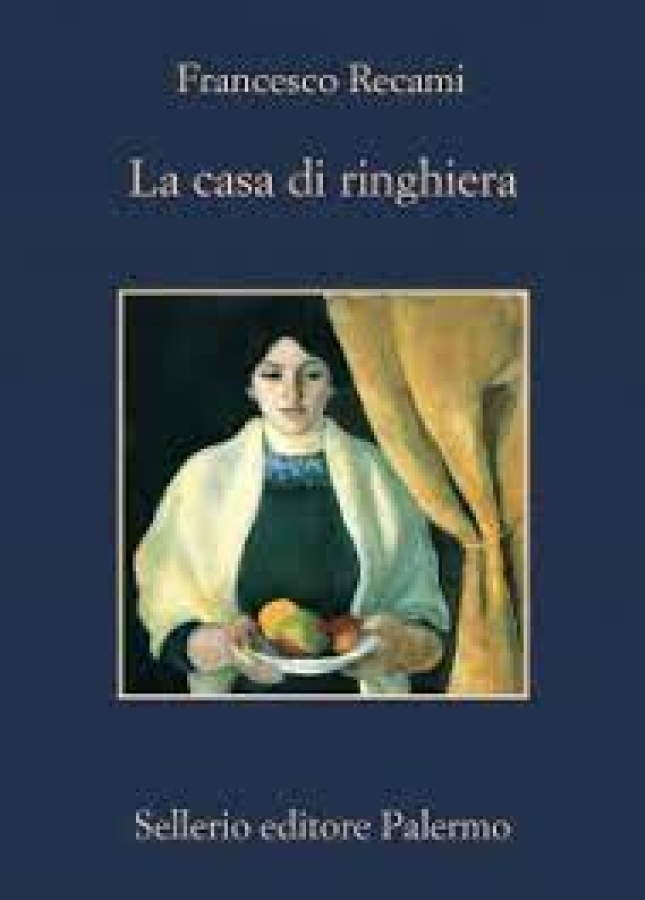
The Balcony-Access Tenement
Amedeo Consonni, the novel's protagonist, has been retired for many years and lives in Milan in a *casa di ringhiera*, built at the beginning of the twentieth century around a rectangular courtyard and now housing twenty flats. It is a «curious microcosm» bearing traces of industrial architecture, today severely deteriorated: crumbling stucco, dilapidated plaster, window frames—traditionally wooden and now replaced by others in anodized aluminum, in silver and brass tones—not to mention the numerous TV satellite dishes mounted on the railings, imparting a sense of globalized «squalor» > . On the surface, Consonni’s life is typical of a retired widower: tidying his small, comfortable flat each day, going to the supermarket and cooking his meals alone, reading the newspaper accompanied by an afternoon nap, exchanging a few words with the neighbors, and looking after his young grandson on Tuesdays and Thursdays. But Consonni harbors a strange hobby: he loves collecting crime news, cutting out any article concerning murders from the papers and archiving these clippings in binders meticulously ordered by crime. Over time, he has begun investigating in the field unbeknownst to the police. Alongside Consonni’s pastime, somewhat perverse yet harmless, Recami depicts the other inhabitants of the tenement: in particular, a family of four (father, mother, and two boys), where the man is frequently drunk and violent, the eccentric and noisy couple next door, and the octogenarian madly devoted to his old car. From reading this detailed and fascinating portrait of this microcosm > one might think we are in the presence of a novel of manners in which the detective plot is merely a device; Consonni’s investigation into a recent, savage, and mysterious crime is intriguing, yet the narrative seems aimed more at describing the character than at offering us the suspense and intrigue expected of a noir novel. When, suddenly, the murder of a female tenant sets off a shocking and astonishing sequence of events, entangling the inhabitants of our microcosm. Without giving away the ending—a genuine plot twist—we can say that the unfolding of events confirms how we Italians, all of us, even children, have, or think we have, something to hide, and in any case want to say nothing to the police. I read the novella in one breath". In the first part, I was captivated by the physical and social setting of the *casa di ringhiera*, almost suspended out of time: one need only think of the minute description of Consonni’s apartment with its nineteenth-century wallpapers, or the rivalries and petty slights over parking in the courtyard. In the second part, the narrative pace gathers speed and we cannot put the book down, eager to read the next episode. The narration is punctuated by suspenseful hints of dramatic twists, skillfully crafted to fuel the desire to press on, much like in a serialized novel. The prose is refined and succeeds in blending everyday speech with dialectal idioms, thereby conjuring the nostalgic atmosphere that pervades the tale. It is a minor gem that marries the novel of manners with noir, alongside a pleasing vocabulary and elegant syntactic construction. Why read it? It is intriguing and well written.
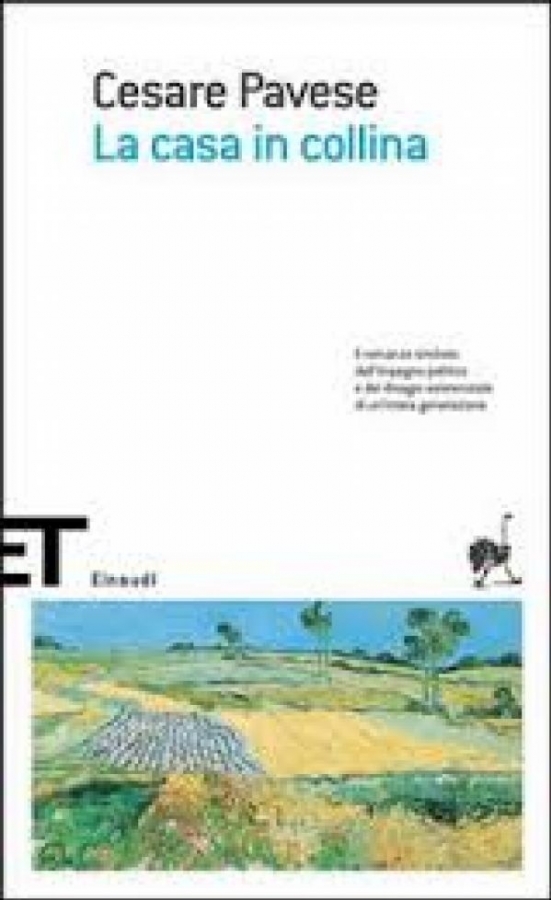
The House on the Hill
The Resistance is most often narrated from the perspective of those who took part in the partisan struggle. Pavese’s novella speaks of those who waited, even while caught up in it. > In essence I was asking for lethargy, an anesthetic, the certainty of being well hidden. I was not asking for world peace, I was asking for my own . Thus reasons Corrado, protagonist and first-person narrator, as the surrounding world is swept away by war. He has taken refuge in the hills, which > for me was not one place among others, but an aspect of things, a way of living. (...) I felt no sorrow; I knew that in the night the entire city could go up in flames and people die. The ravines, the villas, and the paths would wake in the morning calm and unchanged . During the day he often goes into town, to a tavern: here there is music, dancing, and badmouthing of fascism. > Each time I swore to remain silent and listen, to shake my head and listen. Yet that cautious equilibrium of anxieties, of waiting, and of futile hopes in which I now spent my days was made for me, I liked it: I would have wanted it to last forever. The impatience of others could destroy it. For a long time I had been accustomed to staying still, to letting the world go mad . Neither the fall of Mussolini and September 8th, nor the rediscovery of a woman from his youth—with whom he perhaps had a son, now twelve years old—are enough to shake him. > Now I was forty years old, and there was Cate, there was Dino. (...) Was I not being futile and boorish this time as well, hovering around her, half bewildered, half humiliated? The fragile and illusory equilibrium is shattered by Cate’s arrest. Corrado escapes by chance and takes refuge in a monastery, where Dino joins him. > What else to do under the empty portico if not savor once again, morning and night, that ancient dread? The monastery is no longer safe, so he decides to seek shelter at his parents’ home in the Langhe. Meanwhile Dino > has left, and in earnest. At his age it isn't hard. It was harder for the others, who nevertheless did it and are still doing it . The journey from Turin to the Langhe takes him into the very thick of the partisan struggle, yet he manages to save himself. > Despite the times, here on the farmsteads the corn has been husked and the grapes harvested. (...) Now that the countryside is barren, I roam it again; I climb and descend the hill, reflecting on the long illusion from which this account of my life began. (...) Here every step, almost every hour of the day, and certainly every unexpected memory, sets before me what I was, what I am and had forgotten. (...) At times, after listening to the useless radio, looking through the pane at the deserted vineyards, I think that living by chance is not living. And I wonder whether I have truly escaped. Can one go on living after a civil war? > One has the impression that the same fate that struck down those bodies keeps the rest of us nailed there to look at them, to fill our eyes with them And why did they die? > I would not know what to answer. Not now, at least. Nor does it seem to me that the others know. Perhaps only the dead know, and only for them has the war truly ended. Corrado’s failure (he could not even protect Dino) culminates in a meditation on the destiny of humankind that transcends the narrative: from the depiction of historical circumstance and internal existential anguish, it ascends to a cosmic dimension, singularly relevant in light of the civil wars that bleed many parts of the world today. From a stylistic standpoint, the novella is an absolute masterpiece: lean, spare, yet capable of evoking the sweep of history and the destiny of its characters. The writer works deftly with the phonetic juxtaposition of words, so much so that one often feels confronted with a poetic composition rather than a prose text. Equally extraordinary is the author’s ability to avoid fracturing the rhythm despite relying predominantly on the period, and thus on short sentences. The use of the comma to create a suspension between subject and verb (granting autonomy to the latter) is a stylistic gem, requiring an exceptional command of syntax, vocabulary, and the Italian language in general. The fusion of American narrative with classicism yielded exceptional results, rarely matched in Italian literature. Why read it? It is a masterpiece and a meditation on war.
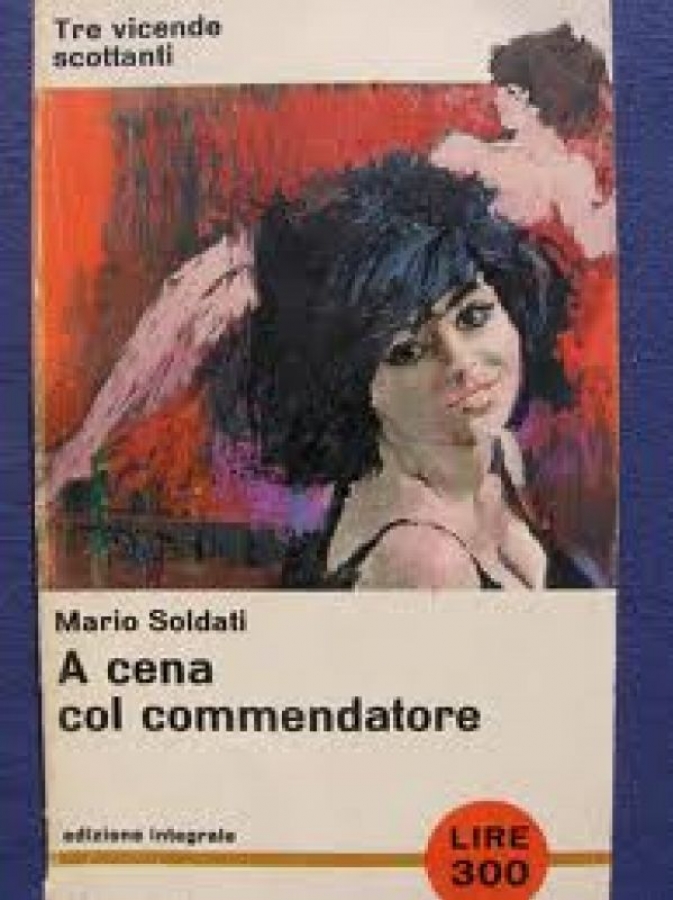
Dinner with the Commendatore
The author imagines a retired opera impresario deciding to set pen to paper so that it might be known who he truly was: > curious about the travails of others... a marmoreal commendatore of an era now bygone . Before his passing, the *commendatore* supposedly managed to compose three stories, which recount actual episodes from his life. In *The Green Jacket*, the impresario has engaged a brilliant conductor for Verdi’s *Otello*. > a man of genius (but) so vain that he is constantly preoccupied with the impression, indeed the effect, he produces on anyone who approaches him . During rehearsals, everything went smoothly until the timpani entrance, when the conductor suddenly asked to halt the performance, pleading a sudden indisposition. The impresario nevertheless managed to draw from him a confession of the true reasons behind the interruption, as well as the musician's decision to break his contract. During the Second World War, the conductor—then young and not yet famous—had taken refuge in a mountain village in Central Italy, where he had befriended the orchestra's timpanist: “a modest, quiet, middle-aged little man with dull eyes,” who had, however, passed himself off as a renowned maestro, earning the esteem and admiration of the local villagers. Yet the young conductor, far more gifted and accomplished than the poor orchestral player, had not disclosed his true identity, presenting himself instead as a humble bank clerk. But why dissemble? > Lightheartedly, out of curiosity, out of habit, I had strayed down the hazy path of jesting.... and seeing that plump little man, with his comical green jacket and skipping gait, coming toward me in the refectory, I had looked above all at the jacket and not at the man . Yet it was not merely shallowness that led him to this futile deception; there was also “an exquisitely subtle, heightened pleasure in no longer being myself.” But in doing so, he had betrayed friendship—the sincere bond between two men brought together at a difficult juncture in their lives. And now the conductor, celebrated yet conceited, prefers flight to confronting the poor player, who remains, conversely, steadfast in his role and his dignity, a modest artisan of music. In the second story, *The Father of the Orphans*, the impresario pays a visit to a former colleague who had abruptly abandoned the business to run an orphanage. When asked the reasons for such a drastic decision, the colleague tells him a moving story: he had met a sick child on a train and had been deeply affected; yet, out of indolence or the press of work, he had delayed offering help, and by the time he finally resolved to do so, he discovered that the child had died because the family had been unable to afford the necessary medicine. A beautiful tale, were it not for the fact that the impresario accidentally uncovers the true story: the colleague had been involved in a homosexual relationship with a young man, who in turn had fathered a child with a ballerina. Though pleaded with for help, the colleague had refused and had, moreover, cast the young man aside out of fear that his irreproachable bourgeois life might be shattered by scandal. > He had repented of many sins, but not of the single mortal one he had committed. He had made a thousand sacrifices, but not that one without which all the others were worthless: the sacrifice of his own vanity to love . The impresario wishes to force him to acknowledge his abjection, but is ultimately overcome by distaste for a hysterical scene, by the weariness of stripping a man of his mask. In the third story, *The Window*, the impresario goes to visit an old English friend with whom he has long been in love. He hopes they might spend the years of their old age together, only to discover that the woman has always loved a scoundrel, a good-for-nothing who deserted her many years ago. The impresario manages to expose the true character of this dandy, but to no avail. Even when confronted with the most glaring evidence, the woman reaffirms her love. For the impresario, it marks the disillusionment of a myth, of a lifelong dream: > when I thought of Twinkle as I had left her twenty years before and as I had always remembered her—forthright, witty, and of tastes so simply noble.... looking around me, I could hardly believe my eyes. And yet, her long solitude, teeming with fantasies and remorse, explained even this corruption to me . With his simple, elegant, and witty style, Soldati confronts the complexities of the human soul, tracing them back to everything within us that is ambiguous and uncertain. The mask behind which we hide is not an artifice, but an intrinsic part of our consciousness. The stories are compact and lean, sustained by a deft, swift narrative structure. The protagonists and settings are sketched with a few vivid strokes, attentive to detail (the hands, the attire, the decor), so as to recall, with delightful surprise, the nineteenth-century novel. Why read it? These are magnificent stories, written with grace and fluidity.

The Centre-Forward Was Assassinated Towards Evening
The novel chronicles the exploits of Pepe Carvalho, a cross between Marlowe and Nero Wolfe, hired to protect a footballer from Barcelona’s leading club, who is thought to be under a death threat. In reality, the detective plot serves as a backdrop to the depiction of a Barcelona milieu in the midst of a construction boom and urban transformation: the characters navigate a landscape in which old Francoist values are dissolving and new ones tied to rampant capitalism are emerging. Counterbalancing the decay of society and the prevailing violence are the small daily pleasures (eating) and the values of friendship, which represent humanity’s final anchors. The book’s greatest strength lies precisely in its portrayal of Barcelona and the characterization of its figures, whereas occasionally certain digressions of an almost philosophical nature slow the narrative pace. The style is richly articulated, bearing the clear influence of the great masters of American crime fiction and Simenon.
What of the Night
It is a book to be read in a single breath. The setting is 1960s Turin, during its phase of intense industrialization and the expansion of Fiat. Initially, the characters move independently of one another: a pencil vendor, who turns out to be an undercover *carabiniere* tracking down drug-refining laboratories; a young woman of the Turin bourgeoisie whose lover is a mysterious accountant, later revealed to be a bookkeeper for the Mafia; the editorial staff of a publishing house (the occasion for a parody of intellectuals), interested in publishing strange cassette recordings of dialogues by a parish priest who professes heretical ideas and has brainwashed a group of parishioners; a police precinct investigating an alleged assault on the priest; and a Fiat engineer concerned with inventory management. All these characters happen to cross paths at the heretical priest’s mass, during which the priest himself is killed in a bomb attack. A complex and arduous investigation ensues, marked by two further killings: those of the pencil vendor and the Fiat engineer. The story concludes with the uncovering of a fraud perpetrated against Fiat, masterminded by a senior corporate executive, with the priest, the engineer, and the parishioners serving as the material executors. The book is highly complex and multi-layered, yet possesses several remarkable facets: a compelling plot rich in twists and turns; a tight narrative pace that rarely lapses into the superfluous; and the overlapping of storylines and themes—the love affair between the young woman and the mob accountant, the world of Fiat with its corporate hierarchy and rituals, the police milieu and its frictions with the *carabinieri*, the religious realm with its age-old nightmares (the Gnostic sects), and the emotional solitude of Commissioner Santamaria and, more broadly, of all the "adult" characters in the book. In the background emerges an Italy in transition, where traditional values—and even petty thievery itself—are swept away by industrialization and the attendant urban sprawl: it is no coincidence that the novel is predominantly set on the periphery, within an urban and social fabric increasingly degraded and disrupted. Yet will this society be worse than the one that preceded it? The authors seem not to think so: Thea, this young bourgeois woman, prefers her liaison with a mafioso to the social circle of her own class, and her mother considers that this might well be better than marrying a corrupt, paranoid Fiat engineer. The rigid strictures of a hypocritical society are shattered, and only in this way do the characters find their destiny, and love, even if outside conventional bounds. There is, moreover, another theme that surfaces only at the novel’s conclusion. The senior Fiat executive is exposed because he forgets that he is constantly shadowed by two police bodyguards assigned to ensure his safety. The loneliness of power and its indifference toward the humble are also the undoing of those at the summit of society, who deem it thoroughly pointless even to notice others. Is democracy an inevitable process?

The Chimera
> Before me, on my desk, as I write, lies a color photograph... The photograph of Antonia , or rather of one of the many Madonnas, all so alike, painted by an itinerant painter in the early years of the seventeenth century. > Those eyes, black as night and bright as day; that mole on her upper lip; those full, red lips, and then that rebellious curl escaping from the drapery onto her left cheek .... it was a faithful copy of the portrait of Antonia, the fifteen-year-old witch of Zardino. We may assume it was this photograph of an adolescent girl—«a state of grace, even before an age»—that prompted Vassalli to narrate > a grand tale, of a girl who lived between 1590 and 1610..., and of the people who were alive alongside her, during the very years she lived, and whom she knew; of that era and of those places . The places are Novara and a small village, now vanished. Zardino > was a village like those others visible down there, a little to the left and slightly beyond the second overpass; beneath the greatest and most imposing mountain in this part of Europe, Monte Rosa. (...) A chimera! From up there, from the summit of the chimera today one sees > a hazy plain with a few scattered trees and a highway emerging from the mist ; back then, in the seventeenth century, one gazed upon > a landscape of vineyards and woods stretching toward the marshes and the riverbanks; of meadows and *baragie* (wastelands, heaths) (...); of fields of maize, wheat, and rice paddies and a settlement which > between the houses was grey, cramped, primitive, and yet, in the fair season, all abloom with bindweed and climbing wild roses . In this era and in these places Antonia spent her brief life: abandoned at birth, having survived infancy, adopted by a peasant family of Zardino whose modest prosperity aroused envy and rancor, the girl was too beautiful, proud, and independent not to become the focus of gossip and spite among the village crones: she, «a foundling», what did she think she was, a fine little lady! Perhaps she might have grown into womanhood, married, and had children, had circumstances not dragged her toward a ruthless death. She becomes infatuated with a «camminante», that is, one of those «anarchists of the countryside» who wandered in hatred «of all servitude». Enamored precisely of his free spirit, of his tales of travel and cities, Antonia commits the imprudence of meeting him at night, at dusk, beneath an ancient oak tree that local lore held to be a haunt of evil spirits, the dwelling place of the Devil. A fanatical young priest denounces her to the Holy Office, accusing her of witchcraft. As chance would have it, a power struggle is underway between the Inquisitorial Court and the Bishop’s Curia, and poor Antonia becomes the unwitting victim of this political clash. A scorching heat, a prolonged drought, and the dread of epidemics fuel the search for a scapegoat: and who better than a wretched peasant girl, far too reckless and spirited? > The flames crackled high, night became bright as day, tongues of fire merged into a single blaze. (...) The witch’s hair could be seen vanishing into nothingness and her mouth opening in a soundless scream. (...) Antonia was no more. The crowd’s jubilation erupted. (...) Then, at last, the celebration began . In the preface, entitled «Nothingness», Vassalli offers us a metaphysical interpretation: > to search for the keys to the present, and to understand it, one must step out of the noise: go to the depths of night, or to the depths of nothingness . If one steps away from the clamor and passion of our time, one realizes that history, and our very existence, are nothing more than a purposeless, meaningless flux—nothingness, precisely. Why was Antonia sent to the stake? Why was she not granted the right to live? To prevent time from closing in upon us, to keep nothingness from reclaiming us, perhaps only a God could intervene, but > he is the echo of all our vain shouting. (...) He who knows the before and the after and the reasons for everything, and yet, alas, cannot tell them to us for this single, utterly futile reason: that he does not exist. With all due respect to the author, we must say that the novel’s enchantment does not reside in its philosophy of history; what captivates are the characters and the setting. To be sure, they have all vanished, yet to us readers they still appear so profoundly alive in their feelings, in the petty and momentous motives that stir them and drive them to love, to believe, to survive, even through suffering. And what of Antonia, a seventeenth-century figure yet so modern in her naive yearnings and wonder? Here she is arriving in Zardino, still a child. > The foundling, huddled between two sacks, watched it (the Novara countryside) flow past her wide-open eyes; and who knows what crossed her mind, seeing for the first time the mountains reflected and shattered in the mirrors of the rice paddies, and the long rows of pollarded willows, and all the rest. (...) Perhaps, indeed probably, she was thinking of nothing; letting herself be lulled by the swaying of the cart and distracted by the novelty and variety of the sights (...) a heron standing motionless in the midst of a paddy, a flight of ducks... Never mind metaphysics—this is true love for one’s protagonist! Vassalli is a great writer from a stylistic standpoint as well. The syntax is rich and articulate, marked by a masterful use of punctuation. The detailed descriptions of the landscape, the nuanced depiction of characters—even the most odious among them, such as the executioner or the grand inquisitor—and the deft deployment of adjectives are all elements that render the narrative fluid and engaging. Its only limitation, perhaps, is the excessive reliance on quotations from historical documents, almost as if striving to confer reliability upon the narrative. Why read it? Beautiful, enjoyable, compelling, and profound.
To each his own
The book, set in a small Sicilian town, recounts a murder and the investigation undertaken by a provincial teacher, "out of curiosity and boredom," who discovers the true killer and is murdered as a result. Beyond the setting—characteristic of a society dominated by *omertà*, hypocrisy, and deceit in human relations—the most compelling aspect lies in the figure of the protagonist, Professor Laurana: simultaneously curious and naive, he inhabits a world of his own, outside the conventions of the small community. In reality, he harbors no intention of denouncing the killer; rather, what drives him, and ultimately seals his doom, is an "Enlightenment" faith in knowledge and the pursuit of new emotions. Essentially alienated from the society in which he lives, he fails to grasp its rules, making entirely fitting the book's closing words: "he was a fool." The spare, vigorous style, which leaves no room for rhetoric or baroque redundancies, makes the work an exemplar for all of Italian literature.
Five Novellas
The book comprises five novels (*La strada che va in città*, *È stato così*, *Valentino*, *Sagittario*, and *Le voci della sera*) and four short stories (*Unʼassenza*, *Casa al mare*, *Mio marito*, *La madre*). Written over a thirty-year span, from 1933 to 1961, they mirror the author’s literary and existential evolution, from youth to full maturity. As the writer herself remarks in the 1964 preface, one confronts a stylistic pursuit in which the effort “to no longer write by chance... pretending to know,” led to the discovery > that I still ran the risk of being haphazard. Because it was not a flaw of adolescence, but rather a flaw of my spirit.. I was adept at pretending to love what was in truth indifferent to me . Yet this 1964 note seems itself to be an artifice, for across all the writings in this collection there emerges such a *mal de vivre*, such an acute pessimism regarding the female condition, that it would be disquieting if these existential states were merely a simulation, a matter of “guesswork.” And indeed, the collection also bears witness to a life's trajectory, from the awareness of unhappiness to indifference. To consider solely the three principal novels: in the first (*La strada che va in città*, 1941), the protagonist is an adolescent girl living in the countryside alongside her siblings and her cousin Nini. The city is a place to escape a monotonous life and discover love. The girl is courted by Giulio, yet deep down she is in love with her cousin Nini. Adolescence comes to an abrupt end when the protagonist discovers she is pregnant with Giulio’s child and, though aware she does not love him, agrees to marry him. Yet she longs to return to the time before, when she could > run off to the city every day, and look for Nini and see if he was in love with me, and go to the pine grove with Giulio too, but without having to marry him. Yet all of this was over and could never begin again . With that same passive resignation, she receives the news of Nini’s suicide, and over time “it became harder and harder to think of him.” The second novel (*È stato così*, 1947) is the most unsettling. It opens with the protagonist shooting her husband dead. What follows is the account of how this murder came to pass. A young schoolteacher meets Alberto, an older man, unhandsome but intriguing. > I wondered if he was in love with me and if I was in love with him, and I no longer understood anything. He never spoke words of love to me, and I certainly never spoke to him of that either . Yet she marries him, only to discover that her husband has had a mistress for many years and frequently goes away with her for long periods. The protagonist accepts this life > because I had never been capable of living and now it was certainly too late to learn , but the death of the daughter born of the marriage and her husband’s cold reaction unleash a despair that had been repressed too many times. She can no longer live with this man, nor will she ever know other men, and so “I shot him in the eyes.” In her 1964 notes on this novel, dedicated to her husband, Ginzburg seems almost to downplay its dramatic impact, asserting that “the gunshot was born of chance”—it might just as well not have been there, even though it is precisely the murder that gives meaning to the tale. Does the writer wish to disown a deep and intimate unhappiness by pretending to write by chance? And why, moreover, dedicate to her husband a piece of writing in which resentment and disillusionment resonate so powerfully? In the third novel (*Le voci della sera*, 1961), the narrative moves away, at least ostensibly, from the themes of grief and sorrow, sliding toward the dilemmas of indifference and incommunicability. The protagonist chronicles the Balotta family saga and their gradual dissolution. The various members of a once-vigorous lineage wearily pursue entrepreneurial schemes that never materialize and contract drab, unhappy marriages. The protagonist, too, conducts a relationship with one of the scions, but in secret, like clandestine lovers. When they decide to come out into the open to marry, they stop speaking to and seeking out one another, because > everything has been spoiled... because we have begun to bury our thoughts, deep down, deep down inside us. Then, when we start talking again, we will say only useless things... it means being unhappy, but making sure not to say so to each other, in order to live . Nothing remains but incommunicability, aptly conveyed by the senseless dialogues—full of banal, trivial matters—of the protagonist’s mother, with which the novel concludes. From her earliest work, Ginzburg’s writing is spare, essential, and incisive, and thus strikingly innovative compared to the bombastic, redundant style of the early twentieth century. As one advances through the collection, certain attempts to make the narrative more airy and descriptive become apparent, but the author inevitably returns to concision: her sentences are no longer, however, “a whip-crack and a slap,” as in *La strada che va in città*, but turn into tightly wound dialogues with a distinct theatricality, almost Pirandellian. It is as though the author had attempted an opening, only to withdraw once more into a world where only vacuous communication is possible. Natalia Ginzburg’s narrative overpowers, invading with its “absolute, inexorable, and mortal awareness” of an inescapable unhappiness, of a life that must have endured a profound sorrow, well concealed beneath an intellectually and socially brilliant existence. It is an affliction marked by a deeply feminine character. The female protagonists, who are always the first-person narrators, are plain and ordinary; they cross paths with shallow, selfish men, and their very motherhood is experienced as an obligation, an accident, which often comes to an ill-fated end. The female condition appears as a prison and a foreordained fate within a petty-bourgeois milieu. Why read it? These are literary works of great beauty, bearing witness to a feminine dimension of grief.
The Clandestine
In the Resistance (the war of liberation between 1943 and 1945), the decision to take up arms against Nazi-Fascism rarely arose from a deliberate, mature reflection; more often than not, it was an act of unconscious bravado, oblivious to the risks being run. As Luigi Meneghello wrote in *I piccoli maestri*, it was > a cry, (...) a collective (...) intoxicating feeling: one sensed the overwhelming power of things that rise from below, spontaneous things . Mario Tobino, too, explores the choice of the partisan struggle in depth, doing so in his signature style, that of one who "studies men and loves them." Anselmo is a young medical officer, recently returned from Libya. > He was still dazed by the war, the soldiers’ groans still in his ears, having been a spectator to cruel deeds. Like the protagonist of Cesare Pavese’s novel (*La casa in collina*), he yearns for "a lethargy, an anesthetic," in order to > rediscover the goodness, the tenderness that, beyond all ugly violence, must still exist in the world . One day, after September 8, a woman stops him in the street. > I was waiting for you, I wanted to ask you, since you fought in the war. (...) Who did this? Who are we with now? What did they make us believe? Whose fault is it? And all those who died, poor souls? (...) I saw them die, it was all for nothing... replies Anselmo, and "felt he was stupidly on the verge of tears." For the young man it is a jolt, an awakening; he must shake off his torpor, spring into action. In his hometown, Viareggio (called Medusa in the novel), a group of youths has established an underground organization: they style themselves Marxist-Leninists, profess to be communists, even though they have never read Marx or Lenin and have not yet had any contact with the resurrected Communist Party (though they yearn for it ardently). Then there is an old admiral who longs to act; he was retired by the Regia Marina for his anti-fascist stance. yet he is fueled by a boyish urge to fight, to show the Fascists and the Germans what he is made of. Anselmo soon becomes the liaison officer between "the clandestines" and the admiral; he is entrusted with delicate and difficult missions, which he always manages to carry out exceedingly well, thanks to his poise and his gift as a subtle weaver of human relationships. Tobino guides us through the early steps of the partisan struggle as though it were an escapist novel; perilous situations, recounted nonetheless in an exhilarating, ironic vein, intertwine with the depiction of the growing bond forged among the young conspirators—youths not yet adults, of profoundly different temperaments, varying social backgrounds, and unequal levels of education, yet forever animated by a zest for life and a mutual understanding that transcends their shortcomings and divergent dispositions: action leads to friendship, and friendship to unity. The clandestines, just like the admiral, live on the brink of the abyss as though it were a game—risky, certainly, but undoubtedly bound for a happy ending. The cruel face of war emerges, belying our wish for a serene adventure: this is not the cinema, as one of the book’s protagonists daydreams! Searches, roundups, and arrests begin. Anselmo takes part in the killing of a Fascist in La Spezia; he himself kills a squadrista who had brutally murdered the admiral. They must leave Viareggio and head into the mountains to fight the partisan war, where Anselmo will meet his death. > He closed his eyes (...) and at once dreamed he was in a wood dense with foliage; he lay stretched out, fledgling birds flew around him, brought their beaks close, opening them as if laughing, like children content after a meal . Anyone expecting Fenoglio’s *Il partigiano Johnny* cannot help but be disappointed: here there are no solitary heroes. The novel is constructed linearly, without bombast, an open chronicle rich in endless possibilities, capable of humor because it is lucid, transparent, and yet affectionate toward its characters—even toward the Fascists. > But why do the Fascists do this? Anselmo asked himself in a murmur . The resolve of the "clandestines" takes shape from events; it is events that make them adults, mature them politically, turn them into fighters, convinced all the same that, just as ships can sail through calm waters as well as rough seas, even among the trees, where > death whined, (...) there was nevertheless happiness, gladness, in the face of the present solitude . Why read it? A splendid book by a regrettably forgotten author.

The cold eye of Heaven (Farley)
When drawing near to the end of life, one feels the urge to retrace one's existence through memory. Great men may indulge the illusion of leaving behind a remembrance through a biography teeming with characters and events: a grand narrative, of sorts, of their role in history. But when one is an ordinary man leading a banal existence, what meaning is there in chronicling one’s life? Nothing remains but that remembrance which sees us "in the fixity of a portrait," the fruit of a mingling of real facts and imagination (see Salvatore Satta's *The Day of Judgment* on this site); or, to put it in the words of Italo Svevo, > the most intense life is summarized by the most rudimentary sound, that of the wave of the sea, which, from the moment it forms, changes at every instant until it dies (see *Zeno's Conscience* reviewed on this site). Christine Dwyer Hickey undertakes a venture even more daring than that of Zeno and Satta. On the surface, the author retraces Farley's existence as though it were a reverse chronicle of the most significant events of his life as an unassuming clerk: now in his seventies and alone, he anxiously waits to catch sight of his young neighbor who might "make him feel a little younger, just a little less old"; he frets over purchasing a suit suitable for his employer's funeral—a funeral to which, moreover, he has not been invited; we see him at his retirement reception wondering whether he will miss anything about office life, with > the stupid wisecracks and the arrogance of youth, the Monday morning trivialities and the smell of cheap aftershave, the too many annoyances and the senseless spites, the teachers' pets and those who couldn't care less about anything Moving back through time, we see Farley caring for his mother, who always favored his intellectual, selfish, and absent brother; then with his mistress (his employer's wife), making the reckless decision to finance the firm he works for without demanding any formal record of the loan; and further back still, the devastating grief over the loss of his wife, the choice to go to work in order to marry, abandoning dreams of travel, the news of his father’s death when he was just twelve, and finally, at five years old in a hospital, the futile wait for his parents to visit. To be sure, Farley is the quintessential petit bourgeois; if he has flattened into a routine devoid of ambition and dramatic turns, it is ultimately his own fault: he has always made the least demanding choices, placing himself almost willingly at the disposal of others—be it his employer, his wife, his mistress, or his mother, his brother, and even the girl next door, yearned for in the erotic remnants of a poor old man. Yet if we place Farley "comfortably reclining in a Club armchair," as Svevo would have said, we realize how Farley's life revolved around a single waiting: that for his father. Take, for instance, two passages from the novel. Farley is five years old; his mother and brother finally arrive at the hospital, and he asks where his father is. Is he out fishing? To the woman's reply that he is at work and could not come to see his son, Farley perceives > the sound of gently flowing water. He sees himself now on a riverbank. (...) He is wearing the waders that reach up to his thighs: boots he recognizes from a box on a shelf as belonging to his father. (...) He is alone. Alone on the bank. A man, a boy, a child, a baby, a man again, all of a sudden . Now he is old, at the end of the book. He watches his neighbor run to catch the bus, but cannot recognize the face. > Then his own father invades his mind. Face unfortunately clear. Died of a heart attack.. (...) In any case, certainly a bastard who never had the time or a word for anyone. A snarler. He snarled at the newspaper, snarled at the radio, snarled if you spoke to him while he was having lunch . And at the funeral, so many fine speeches about a man he and his brother had never known. > A great conversationalist. An intelligent man. (...) Passionate about fly-fishing . The novel is a masterpiece. It is not merely the clever device of a reverse narrative. In each of the events of his life, Farley moves like Bloom in Joyce's *Ulysses*: a rambling yet captivating journey through the streets and shops of Dublin, among minor characters who evoke the sense of a solitary yet superficially sociable life (Farley is always in control of himself), among lateral, seemingly marginal reflections. What emerges is a sprawling path of the protagonist's streams of consciousness and of how the arduous manifestation of the self is rooted in places and relationships, rather than abstractly on a psychoanalyst's couch. Moreover, the prose is magnificent and vibrant: a deluge of marvelous words, of untranslatable phonemes in which one takes pleasure through the ear rather than the eye, of a lexicon crossbred with everyday speech, set within an overwhelming syntactic architecture—even if not immediately transparent to the Italian reader, and undoubtedly difficult to render into our language. Why read it? It is splendid; the author is Joyce and Rushdie combined.

The Conquest of America
The book takes as its subject the Spanish conquest of Central America in the sixteenth and seventeenth centuries, a conquest narrated through the trajectories of five figures: Columbus, Cortés, Las Casas, Durán, and Sahagún. To each of these figures, the author matches a distinct stance toward the conquest: in Columbus, the prevailing approach is that of discovery, which leads him to pay close attention to nature and the environment, alongside a fundamental indifference toward the indigenous population, who are essentially assimilated into nature; in Cortés, the spirit of conquest prevails, and with it, knowledge of the language and mentality of the indigenous population in service of military objectives. Cortés quickly grasps the symbolic world of the Aztecs and the Maya, deploying it to great effect to reinforce and project the Spaniards’ invincibility. Indeed, the author argues that one of the reasons for the rapid unraveling of the Aztec empire lies precisely in a belief system rooted in the inevitability of the future—a destiny that could not be altered and could only be deciphered through a series of “signs.” Cortés therefore investigates the indigenous population precisely to comprehend their spiritual world and its corresponding “signs,” thereby turning them to his advantage through a shrewd politics of communication. From this perspective, Cortés emerges as a precursor of semiotics; in Las Casas, a Dominican friar, the guiding thread is love for the indigenous population, grounded in an egalitarian conception and the conviction that the Amerindian people already embodied Christian values and were therefore “good,” in stark contrast to the cruelty of the Spaniards. As the author notes, the Dominican friar’s approach relies on evaluative categories rather than on an understanding of Aztec customs and culture. > If the prejudice of superiority is unquestionably an obstacle on the path to knowledge, one must recognize that the prejudice of equality represents an even greater obstacle, for it leads to identifying the other purely and simply with one’s own ideal of oneself (or with one’s own ego) ; in Durán, a Dominican friar raised in America, the spirit of inquiry emerges, albeit within a mestizo vision of relations with the indigenous population. The later Las Casas, following the famous Valladolid debate against another priest who argued for the inferiority of the indigenous peoples and the right to enslave them, had already discovered the relativity of various ideal positions and the disappearance of any privileged vantage point, thereby renouncing the right to assimilate the Indians. Durán believes that knowledge of the language and culture of the indigenous peoples is the essential instrument for converting them to Christianity. This study leads him toward a kind of cultural hybridization that manifests itself in various, sometimes singular ways: the conviction that the indigenous peoples had already been the recipients of Christian preaching, making their deities akin to the Christian God; the belief that he is fulfilling the role of a historian chronicling a history of heroes (that of the Aztecs); and a narration of the conquest that mirrors bewilderment at the collapse of such a well-organized empire; in Sahagún, a Franciscan friar who wrote no fewer than twelve books in Nahuatl and Spanish detailing the civilization of this people. The author is the forerunner of modern scholars, managing to describe without imposing any interpretation. Of great interest is the comparison between the description of a human sacrifice by Durán and that by Sahagún, which distinctly highlights the latter’s cold, detached account. Sahagún employs questionnaires whose structure reflects his conception of what a civilization can be. In his work, too, knowledge reflects value judgments. The book is deeply complex and multifaceted, yet ultimately seeks to address several fundamental questions: Is it possible to know the other? Is it possible to safeguard difference within equality? Is it possible to avert massacre—both cultural and physical—at the hands of the conqueror? To these questions, the author cannot provide an exhaustive answer; yet the book traces a plausible trajectory, from discovery through massacre to cultural hybridization and relativism, asserting that one must begin from mutual knowledge, which in turn is mediated by communication (the knowledge of language and of “signs”).

Conversation in Sicily
A young worker experiences a feeling of profound dissatisfaction with his life: > the quiet of non-hope. To believe mankind lost and to have no desire to do anything to the contrary, no desire to lose myself, for instance, along with it . This dissatisfaction («these abstract furies») is an intimate matter, but also an awareness of cosmic grief. The young man seeks to escape it through a journey that might constitute both a return to his childhood and, at the same time, an exploration of self, a reflection upon the prevailing values and ideas in society. The journey is structured around several key moments: the acquaintances made on the train, where people are archetypes of social roles; the arrival in the village; the conversation with his mother; the rounds made with his mother among the village houses to administer injections; the encounter with the knife-grinder and the drunken bout in the tavern; the brother killed in the war; and finally «the synthesis» of the entire novel by the village's bronze monument. The development of the themes, the frequent shifts in style and narrative rhythm (at times cinematic, at others lyrical and evocative, rich in symbolism and allegory) make it extremely difficult to provide a single, definitive interpretation, as demonstrated by the critical reception, where each commentator seems to be discussing a novel entirely different from the one read by the others. There are undoubtedly several interpretive keys: the relationship with parents and the native land, the depiction of a crisis of values that finds no answer in political and social forces (personified in the knife-grinder, the upholsterer, and the innkeeper), existential despair, which is not resolved by a return to the maternal womb, and a stylistic search for a cinematic approach to writing. It is probable that the novel is a bit of all of this, so much so that it takes the shape of an open and dynamic system that cannot be enclosed within a single interpretation. I like to think that the true interpretive key to the novel is the context, that Sicily, > a small, huddled Sicily, of medlars and roof tiles, of holes in the rock, of black earth, of goats, with a music of reproaches, receding behind us, and turning into cloud and snow, high above . That setting which frames the continuous rhythm of life («the round of injections»), of illness and death, which make all men alike and equal before suffering and a common destiny. > It was night over Sicily and the calm earth: the outraged world was covered in darkness, men had lamps beside them shut up with them in the rooms, and the dead, all the slain, had sat up in their graves, meditating. I thought, and the great night within me was night upon night. Those lamps below, above, and that cold in the darkness, that ice of star in the sky, were not a single night, they were infinite; and I thought of my grandfather’s nights, my father’s nights, and the nights of Noah; the nights of man, naked in wine and defenseless, humiliated, less a man than a child or a dead man . And so the true theme is, perhaps, identification and the sense of belonging to a collective dimension, constituted by humankind. The central character is that of the Great Lombard, who feels and expresses a yearning for great duties, to do something for humanity. Yet no one knows what to do, and so the worker concludes: > I do not weep within myself. I do not weep in this world... And he walked out of the house, on tiptoe . The novel features deeply evocative pages and reaches its stylistic and narrative peak in «the round of injections» and more generally in the first part: the train journey and the arrival at the village. At other times an intellectualistic approach prevails, which also leads to a fragmentation of the narrative, rendering it at times redundant and prolix.

The Boarding School
The novel is the concluding chapter of a trilogy: *The Road of the Donbas* (2009), *Mesopotamia* (2014), and *The Orphanage* (2017). Just as in Cesare Pavese's novel *The House on the Hill* (see the review on this site) Corrado sought "a stupor, an anesthetic, a certainty of being well hidden" so as not to become embroiled in the Resistance, so Pasha, the protagonist of *The Orphanage*, responds to those advising him to flee that "he was just a teacher, a simple teacher (...) nothing more than a teacher, the rest mattered little to him. Where was he supposed to go, who would be waiting for him, what was there to fear, everything would be fine, he was just a teacher > . And he remained with his elderly father without even following the news on television while war flared in the Donbas between Ukrainians and Russians. No one knows how it happened that the bowels of the earth burst open, spitting out that black grime, (...) everything will catch fire like in a medieval city: house by house, street by street, a matter of a few days, and then there will be nothing left > . What shakes him from his torpor is the remorse over having allowed his sister's son to be shut away in a boarding school; he wants to go and retrieve him, even if he must cross the front line, amidst the fighting. He sets out on a journey, a peregrination that continually brings him back to the very same places, as though he were not advancing in any particular direction, but pacing in circles like a circus bear. (...) For three days I have been walking alongside people I do not even know. As if a spring were pushing me from behind, preventing me from stopping. And the spring pushes them too, in the same way, far from home. Even though at least half of them no longer have either a home or a family. They wander along the ring road without any chance of escaping it. They go round in circles around their own city. And I, too, circle with them, I do not know why > . In a landscape devastated by bombs and violence, where there is mercy for no one, Pasha's wandering becomes a pilgrimage outside of time and space (the 2014 Donbas war): it is like journeying through a nightmare, woven from a medley of characters, destruction, death, and memories of the past. Is it a dream or reality? Why did that soldier, a former pupil of his, spare him? Why did they kill the boarding school’s caretaker, the only teacher who had not fled, staying behind to protect the institution’s young residents? Why will he, so timid and clumsy, be saved? The illustrious doctor asked him to attend to a wounded man, an adolescent of twenty. > Soon he will be gone; now he will close his eyes and it will all be over. (...) Suddenly Pasha senses another presence beside him, unfamiliar, standing there waiting, pertinacious. (...) Who is it waiting for? Whom has it come for? Surely for me, Pasha imagines. It is this presence that hasn't let me out of its sight for three days, it is what gives off this heavy smell of wet dog, it is hunting me, it is taking aim at me. (...) At that moment the wounded man squeezes his hand. (...) He senses that death is bypassing him, moving away and drawing near the other. (...) Don't look, he tells himself, you must not look, just run, run as fast as you can, while you still have the strength and the time, run and do not look back... Giovanna Brogi, the fine translator from Ukrainian, interprets the novel in her afterword as a coming-of-age journey for Pasha, who reflects on his own identity—linguistic included—becomes conscious of his own pusillanimity, and realizes he must choose where to stand. This interpretation clashes with the metaphysical darkening that shrouds the entire narrative, where there is no prospect of salvation or rebirth. Consider a passage near the end, rich in symbolism that contrasts with the tale's apparent hyperrealism. We left Pasha in his flight from death. > There is such an abundance of white that it seems as though all colors have been exhausted. (...) White fields and the black asphalt of the road along which he tries to flee, which ought to save him. (...) And he clearly discerns the dark dogs against the white background. (...) They are drawing closer and closer, fierce and fearless; they know the victim cannot escape, has no way out—there it is, just a few leaps ahead, one more moment, a few more seconds, and you will be able to pounce, sink your teeth into its throat as it tries to break free, to cheat fate . All that remains for Pasha is compassion, the Latin *pietas*, expressed in the final pages by his no longer adolescent nephew: the boy's recognition of his uncle's fragility, perhaps, saves Pasha. The essentiality of the prose, the sparse diction, the driving rhythm accompanied by prolonged suspensions, the narrative ability to shift from an intense realism to an oneiric symbolism are the hallmarks of this masterpiece, a welcome surprise in an often banal literary landscape. Could it be that the stark, essential conditions of existence forge works of true value—something impossible when a soft, parlor-room everyday life prevails? Might European literature need war in order to be reborn? Why read it? It is compelling from a historical perspective, but above all, its literary style is captivating: a masterpiece.

The Black Corsair
We are in the seventeenth century, the age of pirates, > folk made up mostly of misfits, soldiers, and sailors greedy for plunder , roaming the Caribbean Sea > to lay their hands on the rich mines from which Spain drew rivers of gold . Among these “sea robbers” was also an Italian nobleman, the Count of Ventimiglia, the Black Corsair: > he was dressed entirely in black.... even that man’s appearance held, like his attire, something funereal, with that pale, almost marmoreal face . The story begins with the news of the hanging of the Red Corsair, the Black Corsair’s brother, who met the same fate as the other two brothers, all treacherously murdered at the hands of Duke Wan Guld. The Black Corsair resolves to retrieve his brother’s body to give it a proper burial. The expedition to Maracaibo, where the Red Corsair was hanged, serves as a preamble to the book’s central themes: plot twists, duels, cunning, and heroic deeds, framed by a lush and wondrous nature, with vignettes of a typical colonial town inhabited by Spanish merchants and cavaliers. Men fight and kill, yet there is no hatred between pirates and Spaniards: there is only one true enemy, Duke Wan Guld: the treacherous Fleming. We arrive at a turning point in the novel. Having recovered his brother’s body, the funeral takes place aboard the *Folgore*, the Black Corsair’s ship: > the sea still flared around the ship, murmuring dully.... those swells held strange whispers at that moment. Now they seemed the moans of souls, now hoarse sighs, now faint laments . Before a crew moved yet terrified by the ghosts of the dead brothers, the Black Corsair breaks the funereal silence with a terrible oath: > may my soul be damned for eternity, if I do not slay Wan Guld and exterminate his entire family as he has destroyed mine! . Destiny is sealed: there is no longer room for other choices, for an alternative will. The Black Corsair’s life can follow only the path carved out by this oath. The Black Corsair seeks vengeance, yet instead—and unpredictably—encounters love. The *Folgore* comes across a Spanish ship, captured after a bloody battle, where the pirates take a young woman captive, > a beautiful figure of a maiden, tall, slender, supple, with delicate skin of a faintly rosy white . What a contrast between the lugubrious appearance of the Black Corsair and the fair radiance of the maiden! From the outset, one understands that love has blossomed, but this love carries tragedy in its wake. Salgari leaves us in suspense; he does not immediately reveal who the maiden is, yet it is clear that the Black Corsair knows that > the dead can leave the deep chasms where they rest and rise to the surface to shatter any hopes of happiness. For her part, the young woman senses that the traitor upon whom that “funereal gentleman from overseas” seeks vengeance might well be her father. The reader must wait a little longer. The pirates set out to conquer Maracaibo, and then the Black Corsair pursues Wan Guld through the forests and swamps of Central America. Nature, splendid yet merciless, becomes the novel’s protagonist for numerous pages. The adventurous, exotic Salgari writes here some of his finest pages. Wan Guld manages to flee, but unfortunately a Spaniard reveals to the Black Corsair that the maiden is the daughter of the treacherous Fleming. The Black Corsair does not abide by the maxim observed by the pirates, who never demand that their women account for what they have done in the past, but only for what they will do in the future. For the Black Corsair, the past is locked within his inhuman oath: the maiden is cast adrift in a longboat: "the wind blew hard then, and vivid lightning flashed in the depths of the sky, while the roar of thunder joined the crashing of the waves... as the longboat drifted ever farther away... amid the moans of the wind and the roar of the waves, dull sobs could be heard at intervals... Look up there! (says faithful Carmaux) the Black Corsair is weeping! *The Black Corsair* is Salgari’s masterpiece and, without doubt, one of the finest books in Italian literature, not merely of adventure fiction. Only an elitist critical tradition, such as the Italian one, could fail to grasp the novel’s complexity. It is an adventure book, and something more besides. First and foremost, it is an explosion of fantasy, a relish for the marvelous and the gruesome that only the imagination can achieve. One need only consider the rich, meticulous description of the natural setting, the attention to garments—all embroidered, laden with lace, and overflowing with color—and the gruesome, brutal battle scenes. Fantasy also constitutes an escape from an existential anguish, which lies at the foundation of the Black Corsair’s persona. Life’s vicissitudes bring only grief, affections are a source of suffering, and one must flee a reality that yields neither happiness nor peace. In some way, a demon drags man toward his sorrowful fate, and so it is better, while there is still time, to take refuge in the imagination. Why read it? It is an adventure book, Romantic yet also modern in its message of sorrow and anguish.

Zeno's Conscience
We are in Trieste between the late nineteenth century and the early years of the twentieth. The author imagines that a psychoanalyst publishes "out of revenge" the memoirs of one of his patients, who broke off treatment and told a pack of lies. The novel thus adopts the narrative form of an autobiography. "Lying comfortably in a club armchair," Zeno attempts to recall the most significant events of his existence, mindful that > the most intense life is recounted in synthesis by the most rudimentary sound, that of the sea wave, which, from the moment it forms, changes at every instant until it dies . The effort to return to the past is not a chronological journey, but rather a lingering over the crucial moments of life. Indeed, the narrative structure follows the shifting viewpoints from which Zeno observes his own biography. The first chapter centers on smoking—or rather, the last cigarette, that perpetually broken resolution to abandon the habit. The reader immediately encounters the subtle, paradoxical irony that permeates the entire book, but also confronts the novel's central theme: the dread that > finding myself racing through time, I could no longer be reached by love and, more broadly, by what one would wish to be. Returning to the past resurrects the chasm between one's aspirations and what has been attained. A persistent sense of guilt emerges, for which a plausible justification must be found. The awareness of having "lived in vain," as Leopardi put it, "shall embitter me," feeding a mixture of melancholy and anguish. Remembrance is > sweet in itself; but painfully the thought of the present intrudes, an idle yearning for the past, sorrowful though it was, and the saying: I was (*Le ricordanze*). The subsequent chapters develop the same theme within an increasingly complex and articulated narrative framework. Zeno investigates his own psyche in relation to the primary figures of his life. In the second chapter, "death of the father," Zeno is unable to offer the filial affection he desires because his father’s disappointment over his son’s blatant ineptitude as a businessman is too profound. In the third chapter, "marriage," the protagonist fails to attain love, embodied by the beautiful Ada, and marries—without knowing why—Augusta, the plain sister. In the fourth chapter, "wife and mistress," Zeno is neither a good husband nor a good lover, while in the fifth chapter, "partnership," it is friendship that is lost. Zeno, who nevertheless tried in every way to help Guido, Ada’s husband, proves incapable of averting his financial ruin and suicide, to the extent of being accused by Ada, his eternal love, of having betrayed his friend. The autobiography could well conclude at this point. Instead, the doctor’s assertion that Zeno is cured—because he has realized that in his unconscious he loved his mother and hated his father (the famous Oedipal dynamic)—triggers a rationalistic reaction from Zeno, who candidly confesses that he has lied all along, readily offering a justification: > (the doctor) studied nothing but medicine and therefore does not know what it means to write in Italian for those of us who speak, but do not know how to write in, dialect.... if he only knew how we favor recounting all those things for which we have a phrase at hand, and how we shun those that would force us to consult a dictionary . In truth, if we adopt an outside perspective rather than Zeno’s, events could be interpreted quite differently from the protagonist’s view. Zeno is a good son who strives to remain close to his father; he is a good husband despite a few dalliances; he cares for his children; he is generous, ready to help his mistress and a friend in distress; he even reveals himself to be an astute businessman when forced to be one. All his existential dilemmas arise from how he experiences life within his consciousness rather than from actual lived reality. It will take the war to tear away the veil of ignorance Zeno harbors about his own life and to reveal that the protagonist can face adversity and even turn it to financial advantage. Is the book, then, merely facile irony directed at psychoanalysis, and more broadly at psychology?—disciplines that seem intent on contriving problems where a rationalistic approach to life would offer a workable, serene solution. In reality, the novel can be read in concentric circles, moving from external reality to the unconscious and vice versa: the depiction of the deep self’s impact on human consciousness, a true exception to the prose of existence. There exists an interpretive key to every consciousness, which the author must concede, his rationalistic approach notwithstanding. For Zeno, this interpretive key seems to reside in the good–bad dichotomy, nurtured by an episode from his childhood. > I watched without great pain the torture inflicted upon Guido by the balance sheet I had drawn up with such care, and a curious doubt came over me, followed immediately by a most curious memory. the doubt: was I good or bad?... I saw myself as a child, dressed (I am certain of it) still in short skirts, looking up to ask my smiling mother: am I good or bad?.... Oh, incomparable originality of life! How wondrous that the doubt it had once inflicted on the child in so childish a form had not been resolved by the adult who had already marked the midpoint of his life . Why read it? It is a remarkably dense, complex book, brimming with insights. It must be read, though not before falling asleep.
The Crisis of the European Mind
The book traces the development of ideas from 1680 to 1715, a period in which, as the author states > a crisis occurred in the European mind: between the Renaissance, from which it directly derived, and the French Revolution, which it prepared, there was none more important in the history of ideas. Man, and man alone, was becoming the measure of all things . The first part of the book deals with the dismantling of the past, in particular the development of opinions directed against religion. The chapter titles are emblematic of the object of this destructive fury: major psychological shifts, and against rational beliefs. The author dwells both on the great figures (such as Pierre Bayle, Leibniz, Bossuet) and on the cultural currents underlying the major philosophies, such as the denial of miracles, oracles, and witchcraft. What emerges is an incredible fresco of personal histories, of interrelations among figures, of an extraordinary dissemination of books and journals, of a cosmopolitan world whose origins lie in the revocation of the Edict of Nantes, through which the Protestants were expelled from France. In truth, the Reformation lies at the foundation of the new thought, and heretical philosophers, particularly Spinoza, are its inspirers. Of particular interest is the figure of Richard Simon, who seeks to read sacred texts literally and grasps all their contradictions. As Simon says, > I am convinced that one cannot read the Bible fruitfully without first knowing what pertains to textual criticism. As Hazard puts it, they were born rebels…. curt, presumptuous, they likened all of history to a sheet of paper full of bad creases: those creases had to be smoothed away, and a return made to the blank page, that was all!... the world was full of errors, generated by the deceptive faculties of the soul, warranted by unchecked authorities, spread under favor of credulity and indolence…(they) had first and foremost to make an immense clean sweep > . The second part of the book concerns the construction of the future, and specifically the path that will lead to the predominance of Reason, that is, of the scientific method. Here too, the author dwells on the contribution of great men—first and foremost Locke, Newton, once again Leibniz, and Vico—but above all he explores the subterranean changes, what Hazard calls imaginative and sensory values: the picturesque, the psychology of uneasiness, and so forth. What emerges is a fresco rich in suggestiveness, succeeding admirably in depicting the contemporaneity between high thought > , which seeks to trace reality back to a rational approach, and subterranean currents that preserve magical elements within society. Modernity is thus born two-faced, but its engine is fueled by uneasiness, by the desire for exploration, by the pursuit of a happiness that can no longer be deferred to the hereafter. A philosophy that renounces metaphysics and deliberately restricts itself to what it can immediately grasp within the human soul. A morality that fractures into multiple moralities: the recourse to social utility, just to choose one. The right to happiness, to happiness on earth…. Science, which will ensure the indefinite progress of man and therefore his happiness > . Tolerance as a virtue (one need only think of Locke’s *Epistola de Tolerantia*) and then the first traits of Romanticism found in Locke’s concept of uneasiness: and it will not perhaps be useless to observe that uneasiness is the chief spur exciting men's industry and activity > . Uneasiness consists in the longing for what we lack, but also in the hope and confidence of being able to obtain it. What remains of this bubbling of ideas today? The critical spirit has been extinguished in a flood of empty words, the scientific method has shattered into methodologies and techniques; man has consequently lost faith in the future, and the magical > , irrational beliefs have regained vigor. Uneasiness has turned back upon itself. What must be done? Cast books to the nettles (as Olmi’s film *Cento Chiodi* seems to suggest) and plunge into empathy with others and with nature? Or calmly pick up the threads of an interrupted discourse, restoring faith in the scientific method? As Vico said, yet in such a dense night of darkness…. there appears this eternal light, which never sets, of this truth…: that this civil world has been made by men, whence its principles can, because they must, be refound within the modifications of our very own human mind".
The Decameron
If we consult the Zingarelli dictionary, we find the following definition of the adjective "boccaccesco": "affected, salacious as in certain tales of Boccaccio." And the dictionary adds: "identifies situations, descriptions, writings of a sexual nature, to which a vein of lightness, amusement, and even mordancy is nonetheless not foreign > . This definition reflects common perception, which stems from many novellas of the *Decameron* (one need only think of the fourth novella of the first day, where a monk and his abbot take a young peasant girl to bed), and resonates with its language: vernacular, rich in double entendres, and often coarse. On the other hand, for Giosuè Carducci the *Decameron* is the reverse of Dante's divine comedy," and Boccaccio a "cynic, (...) in whom there is naught but paganism and decrepit corruption" (quotations from "Life and Works of Giovanni Boccaccio" > in Vittore Branca's introduction to the *Decameron*). Poor Boccaccio, who loved Dante so dearly! The critical debate is vast and complex; as a mere reader, I shall outline a few general traits before proposing possible groupings for the hundred novellas. In the proem, the author writes that women are restricted by the wills, the pleasures, the commands of fathers, mothers, brothers, and husbands, spending most of their time enclosed within the narrow circuit of their bedchambers... (...) Wherefore, so that through me fortune's fault may be in part amended > . Woman stands at the center of the novellas; she is neither Dante's Beatrice (the personification of Love for the Good) nor Petrarch's Laura, simultaneously object of desire and mother figure; we are speaking of real woman, made of flesh, (...) "full of concupiscible desire," who proudly considers herself equal to men, as Ghismunda says to her father Tancredi (Novella I of the Fourth Day): > look somewhat to the beginnings of things, and thou shalt see that we all have our flesh from one same mass of flesh, and that all souls were created by one same Creator with equal forces, with equal powers, with equal virtues . The writing of the novellas takes its cue from an extraordinary and tragic event: the plague of 1348. And it is precisely from the description of this terrible epidemic that we can glean two other essential traits of the work. With the brushstrokes of a great sociologist, Boccaccio analyzes the social mechanisms triggered by the pestilence, lucidly capturing how it devastated above all the most destitute classes of society, who were unable to protect themselves from contagion by fleeing the city. It is an acute, cold analysis, free of that compassionate and tiresome moralism found in Manzoni's description of the plague. The poor folk wished to bury their dead with dignity; and so > countless times it happened that, as two priests were walking with a cross for someone, three or four biers, borne by bearers, fell in behind it: and where the priests believed they had one dead body to bury, they had six or eight and sometimes more . Certainly, to an obtusely conventional mindset, such as that of Carducci and indeed Benedetto Croce, this hilarious scene might seem a biting act of cynicism by an urchin laughing at the world. And yet it reveals the empathetic and pessimistic attitude that pervades Boccaccio's entire work: a realism that shares in the suffering of the human being. A living woman, the portrayal of society as it is, sympathy toward the destiny of humanity—these are the hallmarks of the hundred novellas. It is precisely in light of these interpretive keys that they can be grouped into four fundamental strands, for each of which I indicate the most representative novella. The first strand is the fairy-tale one, for which Boccaccio draws upon Arab-Muslim and chivalric literature: I single out Novella VII of the Second Day. The second group of tales is the picturesque, and here one cannot fail to cite a masterpiece: the celebrated Novella V of the Second Day. Then there are the masks of the *Commedia dell'Arte*, drawn from popular, urban, and rustic culture: to laugh bitterly at our own gullibility, I recommend Novella X of the Sixth Day. Finally, for the moralizing strand—Boccaccio's weary and pessimistic reflection on life and its misfortunes—I invite you to read the final novella of the *Canzoniere*, which so pleased Petrarch and his contemporaries (Novella X of the Tenth Day). The *Decameron* is a magnificent masterpiece of prose-poetry, a masterly synthesis of the Dantean hendecasyllable and Padan and Mediterranean narrative. Critics have spoken of plurilingualism to denote Boccaccio's lexical richness, which draws upon so many tongues of our country to reflect the social and cultural differentiation of our land. As has been written (see Vittore Branca, "A Key to Reading the *Decameron*," in the introduction to the Einaudi edition), this linguistic expressionism is programmatic because > it aims to create, at the phonetic, lexical, and grammatical level, an ambient atmosphere of spirits rather than things, even through phonic, not to say musical, suggestions . In short, the *Decameron* is a testament to what the Italian language could have been and was not: the rejection of homogenization by a ruling class that was distant and frightened of the people. We had to wait until the second half of the twentieth century! Why read it? Entertaining, fascinating, splendid.
The Deserter
It is a great anti-war novel; it recalls two other books on the subject, both reviewed on this site: Karl Marlantes's *Matterhorn*, set in the Vietnam War, and Erich Remarque's *All Quiet on the Western Front*. While the former is an epic tale, a sort of modern *Iliad* demonstrating the futility of war as an occasion for social change (dispelling a great myth!), and the latter is a descent into the underworld where "living dead" survive in the trenches, *The Turncoat* tells the story of a German soldier who becomes conscious of the absurdity of nationalism, of the tragedy engulfing him, and believes he can find a solution by crossing over to the other side to fight among the partisans. The setting is World War II in Poland; a small German outpost must guard a railway line in territory now held by the enemy. Isolated, abandoned, and demoralized, > the wilderness gazed with innocent voluptuousness upon those soldiers who, viewed from a fair distance, hardly seemed seized by gasping, moaning, or nearing despair; from afar, they appeared more like figures one sometimes finds depicted at the market of old engravings, moving merrily, aimlessly, free from all gravity . Proska finds himself in this detachment by chance; he was traveling on a train toward the Eastern Front when a bomb wrecked the convoy; having miraculously survived, he falls into rank, naturally like a good soldier, in a small squad under the orders of a clumsy, authoritarian, and violent non-commissioned officer; the military command is far away. It is a motley assortment of humanity, ranging from a somewhat dim-witted beanpole to a former fire-eater whose companion is a hen, through to a young student, the butt of the commander's sadistic jokes. As in *Matterhorn* and *All Quiet on the Western Front*, it is brotherhood that cements the group, while patriotism is by now seen as a swindle. > They call it a sense of duty, Milkbun said contemptuously (a nickname for Wolfgang, the young student), they injected it into our blood. And with that, they unhinged us, stripped away our independence. (...) Nationalist resentment is contagious. A resentment that is the root of presumed German superiority and the wellspring of this goddamned sense of predestination . A few words, and above all the deadly consequences of a delusion of omnipotence, dismantle that universal mission of which Thomas Mann spoke, and which infected German society. It is for this reason, and because of the story it tells, that the novel had to wait a long time before being published. In war, a soldier's primary task is to save himself, and that cannot be done without dealing death. > Quick, the trigger is impatient; it has a great thirst for death. (...) Another burst. All twenty-eight. What else are you waiting for? And the rounds left the muzzle and shaved the reeds. (...) The river, brazen-faced, silently pushed its waters to the sea, sweeping past meadows and soaring woods, sweeping past the granite vaults of the bridges, past towns great and small, sweeping, sweeping past. A man dreamed of his wife. Water under the bridge. He dreamed of a son. (...) All water under the bridge: the fire leaping from lips, the longings welling in eyes; the tenderness, the steadfast loyalty, and the anguish in the chest. Only the conscience does not run dry, this proud, harsh landscape of justice, this fortress against remorse . Proska watches a young partisan walking as though taking "a sentimental stroll." He does not want to shoot him, yet "we are forced to obey war even if we hate it like the plague." There is no alternative to war, and it is this feeling, together with disillusionment and the opportunistic instinct for survival, that drives Proska to defect and fight with the partisans. On the other side of the barricade, life is "just as gray, not a bit better." Proska does his duty nonetheless, just as he had as a German soldier. And he shoots, dealing death without even knowing who faces him. With the great westward advance of the Red Army, Proska reaches his sister's house and, unintentionally, on instinct, kills his brother-in-law, who—failing to recognize him, and likewise driven by instinct—was leveling the barrel of a rifle at him. When Proska realizes what he has done, he hides the corpse: for years, his sister believes her husband to be missing in action. > Maria wants certainty. Only you can give it to her, Proska. You must give it to her. (...) Once you know where to sleep, once you have found where you can be alone with yourself and your long days, once you know that all roads wish to be traveled to the very end: then, Proska, you must write to her. You will do so. You must . A wretched man, a decent man yet too small to make the right choice, finds himself caught up in the war against his will. He reacts as best he can and becomes a deserter not out of choice, but out of necessity, because in war one must deal death regardless. This is the book's profound message: violence can only be answered with nonviolence if one wishes to save one's conscience. It is an illusion, a poignant yearning, to hope that one might sink "into the remote swamps of oblivion," or that evil can be remedied with more evil. Only a choice for peace can truly bring serenity. It is a virtually flawless novel: masterfully constructed with an exact balance of plot, characters, and landscape; traversed by an intense pacifist spirit, never declamatory, but voiced through the lives of ordinary people, soldiers despite themselves: > the clock that every war/clasps within its bloody claws/drips down along its hands/the minutes of its soldiers/and the pride of life/falls silent, without an echo,/and the wind sweeps away names/upon the swing of oblivion . Why read it? A masterpiece.
Tomorrow in the battle think on me
The novel recounts the peculiar story of Victor, a ghostwriter who is invited over one evening by a married woman, Marta; however, on the verge of making love, Marta dies, and Victor, frightened and uncertain, leaves the house without alerting anyone. Seized by remorse and curiosity, he manages to make contact with Marta’s family: her father, a Madrilenian gentleman; her sister, with whom he hopes to begin an affair; and her husband, a businessman who was in London at the time Victor was invited by Marta. In the end, Victor confesses that he was the man in Marta’s house, and the husband, in turn, confesses that he was in London with his mistress, who had told him she was expecting a child and wished to have an abortion in the English city. In reality, this was untrue, and the man, in a moment of madness, attempted to kill her; the woman fled and was fatally struck by a taxi. Alongside this main storyline, two parallel plots unfold. Someone has told Victor that Celia, his ex-wife, works as a prostitute. One evening, Victor believes he recognizes his wife in a prostitute named Victoria, whom he picks up in his car in order to determine whether she is indeed his wife or simply another person who resembles her. The difficulty of distinguishing between truth and falsehood, between fiction and reality, recurs in his encounter with a powerful man, the Only One, who has summoned him to ghostwrite a speech. In fact, Victor introduces himself under a friend’s name (another fiction that turns into reality); furthermore, during their conversation, the Only One reveals his despair at being unable to voice the doubts and uncertainties that lie at the foundation of his actions. In his commentary on the book, the author identifies its fundamental theme as deception—not deliberate deception (the outcome of a rational plot or societal hypocrisy), but that which arises from time and memory. > The most complete of biographies is made of nothing but irregular fragments and faded scraps, even one’s own biography. We believe we can recount our lives in a more or less reasoned and precise manner, and when we begin, we realize that they are crowded with shadowy zones, with unexplained and perhaps inexplicable episodes... Deception and its discovery show us that the past, too, is unstable and precarious, that not even what seems fixed and established within it is so once and for all... . Is deception truly the book's leitmotif? I do not believe it exhausts the substance of this novel, in which the characters move through a kind of enchantment, an unreal dimension born of two fundamental forces: time and memory. > What weighs on us, says Marta’s husband, the terrible thing is that the time during which we believe what was not becomes something strange, fluctuating and fictitious, a kind of enchantment or dream that must be suppressed by our memory; suddenly, it is as if we had not lived through that period at all . And again > the dead woman who haunts and spies on and visits him is another, his own dead woman who dwells in his thoughts as mine resides in mine, like an incessant throb in waking or in sleep, his wretched wife and his wretched mistress mingled and lodged together in our heads for lack of more comfortable lodgings, struggling against dissolution and seeking to become incarnate in the only thing left to them to retain their vigor and presence, the infinite repetition and reverberation of what they once did or what took place one day: infinite, yet each time more tired and faint . The protagonists of this novel are swept away by events that appear paradoxical and unpredictable, governed by a rhythm that dissolves the distinction between past, present, and future. Yet an event, the moment it has passed, in turn disperses, and one desperately longs to turn back, wishing that things had never happened or had taken another course. Yet do we truly live, are we truly ourselves, or do we inhabit a continuous fiction, since reality cannot encompass our imagination? In this context, only death seems to be a real fact, yet death is the beginning of a gradual loss of memory. It is an important book, propelled by an irresistible narrative pace, "a literary rap," which demands that one immerse oneself fully in the reading to keep up with its stride.

Don Quixote
The novel is set in the early seventeenth century and narrates the exploits of a country gentleman who, inflamed by chivalric tales, imagines himself to be a knight-errant. He thus embarks on a journey through La Mancha with his squire, Sancho Panza, and two faithful beasts: the horse Rocinante and the donkey. The novel is structured in two parts. In the first part, the most incredible episodes unfold, born of Don Quixote’s imagination: an inn becomes a castle to be stormed, a party of wayfarers enemy knights to be engaged in battle, a gang of convicts unfortunate souls to be freed—who will in turn rob Don Quixote. All these episodes generally come to an unhappy end: Don Quixote and Sancho emerge beaten, mocked, and with their bones half-broken; yet Don Quixote remains forever convinced that he was defeated by an “enchantment,” an artifice concocted by some malevolent sorcerer. The first part closes with Don Quixote’s return home, carted away inside a cage. The tale of the knight-errant is interspersed with a series of episodes—genuine autonomous stories—whose sole unifying thread appears to be the depiction of a hypocritical reality where brute force and overbearing arrogance hold sway. This first part pivots on the contrast between the heroic dream, that of Don Quixote, and the plebeian dream, that of Sancho. Don Quixote dwells in a perfect world and collides with history and reality; Sancho lives within history and accepts it as it is: a human realm of petty miseries and mediocre joys, devoid of disillusionment because it harbors no grand illusions. In the second part, the author imagines that Don Quixote’s exploits have already been narrated; consequently, the people the knight-errant encounters on his new adventure take pleasure in playing along with him, contriving paradoxical and often cruel situations. The novel concludes with Don Quixote’s return and his deathbed acknowledgment that knight-errantry is a falsehood and that the only true faith is that of the Catholic religion. This part of the book was written many years later, and one can certainly assert that Don Quixote “dies while living,” in that > the story now precedes him and makes him the ridiculous laughingstock of peasants and servants, of dukes and bandits . The novel is an exaltation of the imagination. In a dull, hypocritical, and unjust world, Don Quixote devises his own rules—those of chivalry errant—and even when these rules clash with reality, the phenomenon of enchantment allows Don Quixote to go on living according to his worldview. Yet is he mad, or does he act deliberately so as to survive and find amusement nonetheless? To Sancho’s admonition that he should not have set the prisoners free, Don Quixote retorts that > knights-errant must aid the oppressed as people in need, looking to their distress and not to their crimes. I came upon a troop of miserable and unfortunate souls, and I did for them what my rule commands, and for the rest, come what may . Yet what is this rule? > The ultimate aim is to administer distributive justice upon earth, rendering to each his own, interpreting and upholding good laws... (arms) have for their object peace, which is the greatest good that men can desire in this life . Don Quixote is thus mad, yet at the same time wise; his figure, still central in the first part of the book, increasingly takes on the role of a counterpart to the other great protagonist: Sancho Panza. A witty yet credulous peasant, he embodies peasant wisdom, resolving problems with common sense. The bond between Don Quixote and Sancho is one of profound affection and deep esteem: the squire is the only one who believes in the knight, and he does so even while recognizing that he is mad, because he loves him. When it is pointed out to Sancho Panza that he too must be mad if he believes in a madman, the squire replies that loyalty to Don Quixote prevails in him, and with it the desire to stand by him and aid him. Moreover, conversation with Don Quixote has been for Sancho Panza > the manure fallen upon the barren soil of my dry wit, and the time spent serving and frequenting your worship has been its cultivation... Don Quixote laughed at Sancho’s speeches, so full of affectation . Along with Don Quixote and Sancho, the other two protagonists are Rocinante and the donkey: > the friendship between the two beasts was so close, so unique of its kind... that whenever the two beasts could come together, they took care to scratch each other... and Rocinante would rest his long neck across that of the donkey . Freedom of the imagination and friendship are thus the two fundamental themes of the book, to which must be added the taste for adventure—expressed not in distant realms, but in La Mancha itself, just a few kilometers from home. The book’s modernity lies precisely in these themes and in the hall of mirrors (fiction within fiction) that unfolds in the second part—which is, however, the less accomplished, and in many passages verbose and redundant.
The Gifts of Life
The delicate elegance of the writing welcomes the reader from the novel’s very first pages: the prosaic, tranquil life of a provincial town, daily routines, rigid social roles, thwarted romances, predictable and mundane existence are described with such affectionate and ironic detail that one wishes the story would continue along this path, as if it were a modern, condensed edition of Marcel Proust’s masterpiece (*In Search of Lost Time*), where truly nothing happens. Non è così, because war bursts in! The story begins with a scandal: against the will of his grandfather, a powerful and wealthy industrialist, Pierre marries Agnes, a girl without a dowry or useful social connections, with whom he is nonetheless deeply in love. Pierre’s mother > thought confusedly: to have loved him so much, protected him, shielded him from every evil, only for him to be snatched away from me in an instant! He will not be able to stay in Saint-Elme. His grandfather will not allow it. I have lost him . The First World War breaks out, and Pierre is called up to arms. There is far more to worry about. People cling to the illusion that > a world war must unfold almost without bloodshed. (...) no State will want to answer before posterity for such a crime! (...) It is impossible for such a thing to happen, she told herself, and millions of people that evening repeated the very same words. (...) But out there, my God, there is Pierre; come now, there is Pierre, my baby boy! It is not possible. It is a nightmare . (...) And yet, not a single tear escaped her. Her grief was too strange and too intense to allow her to weep > . If these were the mother’s conflicting feelings, the newlyweds had bid each other farewell with calm resignation. Alone, in the silence of their room, in the warmth of their bed, the night before they had exchanged their parting kiss, a mute and deep kiss, without lamentations, without futile recriminations. Now their lips were weary and lifeless > . When returning home on leave, the soldiers do not recount what truly happens at the front; they want to keep the war separate from the lives of their loved ones. It is enough that we suffer > , they think. Yet that is impossible. Saint-Elme, too, is overwhelmed by bombings, by columns of refugees and fleeing soldiers, by the German occupation. The population stubbornly resists. On the other hand, the war will pass, we will pass, but there will always be these simple, innocent pleasures: the coolness of the air, the sun, a red apple, a fire burning in winter, a woman, children, everyday life... the roar, the din of wars will eventually fade away > . It is a vain hope: once the first great slaughter is over, another follows, even more terrible. War was awaited as a man awaits death. He knows he cannot escape it; he merely pleads for a reprieve > . It is the Second World War. This time it is Guy, the son of Pierre and Agnes, who is called up to the front. During a leave, Rose, Guy's wife, announces to him that she is expecting a child: this war is horrible... No, don’t laugh. I’m a woman, I’m childish. But what do you expect? I see things as a woman. (...) Do you remember the book you had me read, (...) a military commander is ironic because the man he sent to his death has a wife waiting for him at home, with the lamp lit on the table and flowers on the tablecloth, and clean sheets on the bed? But she is the one who is right, and I, I....(...) I am very happy, he repeated without looking at her, with a strange shyness, very, very happy. (...) It was a feeling of triumph. Ah, you mock me, but I mock you too. (...) You want to destroy me, and I live! You want to rob me of all hope? Look, I marry, I love, I rejoice, I have a child! And the more you vent your fury upon me, the more stubborn I will be on my part! > By many, the novel is viewed as the story of a provincial bourgeois family during the two world wars. It is a reductive approach to a book that speaks of how feelings—real ones—withstand every tempest and allow human beings to overcome any disaster. Pierre and Agnes continually seek each other out, drift apart, and reunite; there is perhaps not the passion one might expect, but rather a profound tenderness. In the novel’s conclusion, Agnes finds her husband again after a long and arduous journey through the war. He is alive; he is safe. She stopped at the doorway, seized by such a trembling that she could go no further. He seemed to sense her presence. He walked toward her: Is it you? My God, at last it's you!, he said. Everyone was watching them. They kissed fleetingly, awkwardly. No kiss, no embrace could express the joy of their hearts". Is it a bourgeois story? Perhaps, but it expresses the strength that enables survival and rebuilding after the most appalling disasters. It shows how a woman, with her sensitivity and gentleness, views one of man’s most absurd follies: war. One can speak of death without being captivated by it: a lesson for our own time, traversed by so much violence, both real and narrated. Why read it? It is a masterpiece, for its splendid writing.
A Woman
The book is autobiographical in nature and historically set in the early twentieth century. The protagonist, still a girl, is raped by a young man whom she later marries and with whom she has a child. She lives with her husband in a small provincial town, where she strives to abide by social conventions that dictate a woman be confined to the home, in total dependence on man. When her husband loses his job, the couple relocates to Rome, where the protagonist begins writing for a literary journal, makes herself known in cultural circles and within the feminist movement, and cultivates a broad network of friendships—among them a singular intellectual with whom she becomes fascinated. The husband himself is attracted to one of his wife's colleagues, and thus traditional social values begin, in a sense, to shatter. The husband, however, finds the opportunity to return to work in the small provincial town, and the protagonist once again finds herself locked within domestic walls, despite having awakened to the ideals of the feminist movement, to her own literary abilities, and, above all, to the fact that she no longer loves—and can no longer endure—her husband. The crisis erupts, turning into a tragedy for the woman, as she knows that should she decide to leave her husband, she will lose her son. Yet she resolves to move to Milan, enduring an agonizing separation from her child. With great discernment, the author titled the book *Una donna*, because, beyond its autobiographical dimensions, it chronicles woman's emancipation and, above all, the spiritual conflicts that engulf her on a path that runs counter to the maternal role. "It struck me as strange," writes the author, recounting a parliamentary debate, > inconceivable that educated people attached so little importance to the social problem of love. Not that men were unconcerned with woman; on the contrary, this seemed to be their principal concern, or nearly so. Poets and novelists continued to rehearse the eternal duet and trio, with sentimental complications and sensual perversions. No one had been able to create a great figure of a woman . And this is the premise of the book: to narrate the realm of male-female relations as seen by woman. In this sense, the novel deals not so much with the social emancipation of woman as with her role within the couple's relationship. Its contemporary relevance lies precisely here: the great social revolution that shattered the nineteenth-century social fabric is woman's autonomy from husband and children, even if this autonomy is subsequently circumscribed by woman's acceptance of male benchmarks in the workplace and, more broadly, in politics. There are four fundamental themes in the novel: the rupture of the dependent relationship with man in order to construct a different relationship with the other. > How can she become a woman, if her relatives surrender her—unaware, weak, incomplete—to a man who does not receive her as his equal; who uses her as a piece of property; who gives her children with whom he leaves her alone, while he fulfills his social duties, so that she may continue to play with trifles as in childhood? and further > between the two phases of female life, between the virgin and the mother, stands a monstrous, unnatural being, created by a bestial male egoism: and she avenges herself, unwittingly. Here is the crisis of the struggle of the sexes. The naive, dreaming virgin finds in her bridegroom a sorrowful heart and withered senses: made a woman and experienced, she understands how her love was forestalled by a brutal initiation. Between the two, the intruder often returns, and the mere memory degrades their kiss ;eroticism, namely the pursuit of pleasure, including physical pleasure, in the relationship with man. > He would enter the dark room, tired or irritated, light the lamp, move about without looking to see if I was asleep. Then, my eyes were shut, and I would feel a heavy mass stretch out beside me; in the silence a few words, meant to express passion, ecstasy; and I was in his power.... This is my life. To be used as a thing of pleasure, to feel my innermost substance bound. And to see days follow nights, one after the other, without end ;the crisis of motherhood as both a bond and a prison for woman’s autonomy, but above all the depiction of the harrowing conflict ignited by two opposing imperatives: love for one’s children and the pursuit of a full and complete life. > Why in motherhood do we worship sacrifice? Whence has this inhuman idea of maternal immolation descended upon us?... It is a monstrous chain... What if, once and for all, the fatal chain were broken, and a mother did not suppress the woman within herself, and a child learned from her life an example of dignity? . the pursuit of truth, which transcends the hypocrisy, ambiguity, and deceit of a society capable of accepting anything so long as it is not spoken or done openly, in the light of day; and all this even at the expense of the relationship with her son, opening a lacerating conflict. > To leave, to leave forever. Never again to relapse into lies. For my son even more than for myself! To suffer everything—his absence, his oblivion—to die, but never to feel disgust at myself, never to lie to the child... This was the dreadful dilemma. If I left, he would be an orphan. If I stayed? A debasing example; he, too, would grow up between crime and madness . I do not know for what reason, after an initial great success, this book was cast aside in Italian literature, accused of aestheticism and sentimentality. Criticisms were even leveled against its excessive fidelity to reality, to the author's actual lived experiences. Pirandello himself believed that the novel should have concluded with the protagonist departing with her son: talk about a happy ending! The novel exhibits lapses in style, at times overly lyrical and emphatic, and in narrative pacing, especially in the section dealing with life in Rome. It is nevertheless a profoundly relevant book, precisely because it brings to light the figure of woman as an individual, in her expectations and her contradictions, demonstrating how the quest for an autonomous female role generates harrowing conflicts of great depth and complexity: in particular, the relationship with motherhood and children. It would do well for this book to be read—indeed, learned by heart—by people like Buttiglione, who presume to accuse women of superficiality and hedonism merely because they seek to claim a fully realized role as individuals.

And he did not even say a word
We find ourselves in Germany in the years immediately following the Second World War. The wounds of war are still palpable, physical and psychological: destruction, destitution, memories of the conflict’s horrors, and no hope for the future. Fred, a telephone operator at the city’s archbishopric, has abandoned the family home where his wife, Kate, and their children live, after catching himself venting his rage on the children, beating them. He can, in fact, no longer endure the cramped misery and desolation of the single room in which they live. Given over to drink, he roams the city and arranges clandestine encounters with his wife in squalid hotel rooms, in parks, and amidst abandoned courtyards. The story is indeed constructed around one of these meetings, through the alternating narration of Fred and Kate. In this way, it becomes possible to grasp the two different points of view: Fred’s despair and Kate’s exhaustion. Despite their mutual love, they are now divided by the different ways in which they have responded to hardship. Kate is sustained by a profound devoutness, grounded in a direct relationship with God. > God alone seemed to remain with me in that malaise that overwhelmed my heart, filled my veins, circulated within me like my own blood..... I was seized by a great indifference toward them all, and nothing remained with me but the word of God . In Fred, religion offers no comfort, but rather further proof of the falsity and vacuity that govern the world; for him, nothing remains but a dark affliction, a somber existential despair, a monotonous succession of tavern visits, hurried meals, and the desperate hunt for money, often to be spent on drink. Are they by now two strangers, or is love stronger than desolation? The novel’s conclusion leans toward the former outcome. In several remarkably powerful pages, the author brilliantly renders the sense of a growing estrangement. After a night during which Kate has told Fred of her intention to leave him, the man, locked in a mute resignation and an agonizing passivity, walks aimlessly and catches sight of a woman > no longer young, but beautiful, I could see her legs, the green skirt, the worn brown jacket, I could see the green hat, but above all the sad and gentle profile..... and suddenly I knew that it was Kate. Then she seemed a stranger to me once more..... it was she, but she was different from how I remembered her.... so we walked on, one behind the other, both thinking of the children, and I did not have the courage to catch up with her, to speak to her . The novel has been interpreted in various ways: an erotic tale, where the reader waits in suspense for the love scene between husband and wife, turned once again into clandestine lovers; a meditation on the loss of meaning in religion and, more broadly, of values after a war; the description of a battered city, where survivors wander in an endless struggle to stay alive, and thus the representation of a mutilated Germany. Toward this latter interpretation points a narrative inextricably fused with madness, visions, noises, advertisements, and the popular songs of the metropolis where the protagonists live. To me, however, it seems that the novel should be read in the simplest way. It is a love story that does not, despite everything, survive destitution, because Fred and Kate react with differing moral strength to their own desolation and to that of society. Kate still looks to the future despite a deep-seated malaise; Fred allows himself to be dragged along, with self-pitying indulgence, in an attitude of victimhood and self-destruction. The narrative plot, slender and sparse, is sustained by an exceptionally effective style. The spare yet incisive prose and the stripped-down syntactic structure are clear proof of how a complex narrative can be crafted without getting lost in linguistic redundancy. Why read it? It remains intensely relevant, capturing as it does the sense of disorientation before a society that is dissolving, while no traces of the emerging one can yet be seen.
The Family of Pascual Duarte
Cela's long tale is a pervasive novel, fearsome and pitiful at the same time; one might wish to see it as a fresco of an ancestral peasant society dominated by violence, or consider it "a clear vision of man's vulnerability," as stated in the motivation for the Nobel Prize awarded to the Spanish writer in 1989. In reality, Pascual Duarte is not a victim; he is, quite simply, a murderer: > blood seems to be the relish to the bread of your life , Lola, his first wife, tells him, confessing that she has a lover. To be sure, in the long letter written in prison prior to his execution, Pascual attempts to demonstrate how he was dragged along by destiny; in the long, rambling account of how he came to murder three people (his sister's lover, his mother, and Don González, > distinguished patrician to whom he mischievously dedicates this confession of sorts), sentences recur such as: I tried to postpone > the collision that was bound to happen nonetheless, fatal as diseases and fires, as sunsets and death, because nothing could prevent it. or: > had my condition as a man allowed me to forgive, I would have forgiven, but the world is made as it is made and wanting to go against the current is not possible. After being released from prison, where he was serving the sentence for his first crime, Pascual goes so far as to accuse the leniency of the law of having dragged him > toward a worse evil. Better it would have been to stay in prison! Mad impostor or fragile soul, shaped by an unhappy childhood, by the agony > of not being able to escape evil while within us rots this charnel house of hopes stillborn.... If we take as true what Pascual tells us, we must lean toward his innocence, not before the law, but before Divine Justice: a brutal father, > tall and massive as a boulder , a mother, > tall and thin, (...) skittish and violent ; both devoid of any moral principle and of any restraint on their instincts; and then, a simpleton brother and a sister who soon abandons the home to become a prostitute; and what of Lola, who insults him, telling him he was no man, he was just like his simpleton brother. There are the dead children, one due to a restless mare and the other to the freezing wind of Castile. Pascual harbors within himself a hatred that relentlessly erupts into a bloodthirsty fury; a monster from which it is useless to escape. > I began to run; and the shadow ran too. I stopped; and the shadow stopped as well. I raised my eyes to the firmament: there was not a single cloud across its entire arc. The shadow continued to accompany me, step by step, all the way home...(...) I would have liked to put the earth between my shadow and myself, between my name and myself, between my blood and myself, this self from which, were one to strip away the shadow and the memory, the name and the blood, so little would remain.... In the Hindu conception, every individual has their own "karma," a kind of supra-temporality of being that upon death does not follow the fate of the body but passes from one life form to another in the eternal cycle of rebirths. Pascual's karma is a bloodthirsty inclination; this is the shadow that pursues him. Pushing the interpretation, one might say that underlying the narrative lies a metaphysical vision, a timeless pessimism regarding humanity. If we bring this condition into the present, if we think of the genocide in Gaza, the massacres in Ukraine, the countless conflicts across the world, Pascual's story does not remain confined to his personal tragic plight, but constitutes a kind of apocalyptic prophecy for all of humankind. As Sebastiano Vassalli writes in *3012: The Year of the Prophet* (see the review on this site), men > began slitting each other's throats with such enthusiasm that no natural or supernatural force could have stopped them. (...) Amen . Built around a clever literary device—a kind of rambling confession rediscovered by a mere transcriber—the novel possesses a seemingly disorganized plot, owing to the flow of overlapping memories and the lengthy interruptions in writing by the imprisoned Pascual; in truth, the narrative is handled exceedingly well, suffering, perhaps, from a lack of plot twists, if one excludes the dramatic murder of his mother. I do not know whether it is deliberate or an oversight: nowhere is the assassination of Don González recounted. The writing is effective, alternating tight dialogues with expansive, evocative descriptions of the settings and deep insights into the protagonist-narrator's state of mind. The other characters are supporting players. Why read it? It is a punch to the gut.
Sons and Fathers
The book comprises three novels spanning the entirety of the 1990s: *Luce del nord* from 1991, *Colpa di nessuno* from 1995, and *L’amico d’infanzia* from 1999, finished only a few months before the author’s death. All three novels revolve around a male protagonist, set against the backdrop of the Roman petite bourgeoisie and a Rome undergoing profound transformation. In *Luce del nord*, Angelo has long lived in New York, far from his family, his brother, and his mother. One day, he receives a letter from his brother, Ferruccio, who tells him of a strange dream: he is gravely wounded, and Angelo urges him to run away, to flee, as though he had faced grave danger. A few days after the dream, he learns that his brother has died. He thus decides to return to Rome, but pretends to be a friend of Angelo's, Cesare. The novel unfolds around this deception, which allows Angelo to infiltrate his brother’s life and grasp all its squalor, amid financial hardships, professional disappointments, and marital betrayals. Indeed, he becomes the lover of Ferruccio's wife, who despises Angelo yet learns to love Cesare. Angelo also reconnects with his father and grows attached to his brother’s son. The story seems to move toward a happy ending, when Angelo decides once more to flee and return to the United States, where, to gain acceptance, he begins inventing other stories anew. It is a novel of perpetual flight, wherein America represents a dream of freedom and individualism. In *Colpa di nessuno*, perhaps the most socially conscious novel of the three, the point of departure is the protagonist's need—a squalid door-to-door insurance salesman—to pick up the threads of his life: > it is time to take down the streamers, gather the paper ribbons and carnival masks, and throw everything into the basket of past celebrations . Paolo, the protagonist, meets Laura in the United States, and once she becomes pregnant, they marry and return together to Italy. To make a living, Paolo takes a job as a salesman for Italo, his father-in-law. He thus enters his wife’s family, comprised of his mother-in-law Ida, a greedy and dismal woman; Laura’s sister, Silvana; and her husband, Daniele, a violent, right-wing man. Paolo leads a squalid existence in which his marriage progressively falls apart, to the point where, one day, he discovers that his wife is cheating on him. The embrace of fatuous, crude, and vulgar values brings about Paolo's steady decline, which is repeatedly underscored by his father, a man of another generation. There is no real conflict between son and father, as the title given to this collection of novels might suggest; political, social, and intergenerational conflicts have vanished, replaced by resignation and individualism. In reality, all the characters suffer, in one way or another, from the crisis of Italian society in the 1990s, and it is precisely this theme of the decay of relationships and values that appears to define the novel. An old man he meets urges him to always remain alone. > Already now, friendship and solidarity are called complicity and omertà. Never trust anyone, never give in. It is no longer time to be together. You must never have to say we; that would already be a sign of yielding And then the author inserts an intensely evocative autobiographical note > When I was little, I believed the world was a kind of carousel made solely to amuse me. But now what dragon’s mouth have I wandered into, what sort of figures are these before me that no longer amuse me, two-bit little monsters, capable of everything and of nothing? . A crime—the murder of Italo, of which everyone believes Paolo to be guilty—becomes the cathartic element that opens the protagonist's eyes. Paolo realizes the sterility and squalor of his life, of this acquired family that drags greed and violence in its wake, as well as the malice of his wife, Laura. The novel concludes with a cry of despair and hatred. > When I think of the future, Laura, I imagine it as a vast, crowded square, where people scream and laugh. There will be men and women from all corners of the world, in clothes bought in New York, Rome, Sarajevo, Jerusalem, and Mogadishu. People of all races and origins, crossing paths and contaminating each other with history. Each with the other's story, infected with the world. Only the two of us will not be there, Laura. We, with our tangled feelings, were unable to give anything to the present, so let alone to the future. We are two specks of spit from the past that somehow ended up here. But our son, yes, he will be there. I hope he crosses the entire square, and that a roar laden with hatred accompanies him always and never leaves him, that he feeds and grows on all their malice. I will leave him to corrode them with their own teeth . *L’amico d’infanzia* is the most intense and profound novel of the three, almost premonitory of approaching death. Fausto's story is narrated by his journalist friend. It is the story of a failure. The two had been friends since childhood in a neighborhood on the outskirts of Rome and later drifted apart: Fausto began scraping a living through odd jobs, eventually ending up as a real estate salesman for a company that buys public housing on the cheap to flip it at higher prices, evicting the tenants. It is a squalid job that Fausto accepted to scrape together money so that his son, who lives far away with his mother in Milan, could study abroad. The story takes a tragic turn when Fausto, in a fit of rage, bludgeons his boss to death after being denied a loan. What follows is Fausto’s descent into hell: he lives as a vagrant, hunted by the police, yet precisely at the height of his despair he finds solidarity and help among the destitute. In the end, in a moment of lucid madness, he blows up the real estate company’s offices and is fatally wounded. Fausto's story overwhelms his friend as well, leaving him drained of energy. The narrator-friend acknowledges that “there was not the wretchedness of a single seed in the great tornado that shattered our lives,” leaving behind only vast misery and extreme existential pain. The novel ends with a profound reflection on life and death. Confronted with Fausto's death, the narrator remains bewildered by the thought > that in reality we like and hate one another solely based on the contingency of a moment and closes the novel with this stanza: “but we were born to be here / and for a while we managed / and it is this that our dry / mouths now want to sing.” Reviews emphasize above all the social hallmarks of the three novels: the 1990s, the urban and cultural decay of Italy. In truth, it seems to me that the three novels (and especially the last one) revolve around existential despair and the search, often disillusioned, for hope. The very setting of the final novel, the decay of the Roman periphery, drifts gradually toward a surreal context where everything is possible, even the most incredible occurrences: an elephant strolling through the streets of Rome, a hooded crow colonizing the city to forage, a child learning to play soccer in an empty stadium, a new life represented by the child expected by Elena, the great love of Fausto's life, the solidarity of the victim's own wife, the school principal who has become a hermit on the outskirts of Rome—all of these demonstrate that within the underbelly of urban life there still exist positive energies capable of transforming such a degraded reality.
Francesca and Nunziata
Francesca and Nunziata are two women upon whom chance bestowed a shared object of love: pasta making. The novel chronicles the story of a family of Neapolitan pasta makers and their evolution from simple craftsmen into industrialists. The story begins shortly before the Expedition of the Thousand and the fall of the Bourbons. Francesca’s grandfather produces the finest pasta in Naples, enlisting his numerous offspring in the work. This is the most evocative part of the narrative, owing also to the use of Neapolitan in the dialogue. Exquisite are the scenes of the *fusillare* at work and their reception of the machine destined to replace their labor: > “Girls, girls, get your bundles ready, get your bundles ready!” Disdainful, the *fusillare* ostentatiously feigned ignorance of the intricate workings of that cumbersome contraption, but the women of the household paused beside it with delight, and the little girls gathered around it in celebration And the grandfather would sing, “Gold and diamonds has the Sultan, but I hold your braids in these hands of mine.” That was the time when > the great ranks of his family, accustomed to sacrifice, industrious and spirited, had always drawn serene happiness from every small thing, but that was the time of their fullest joy . The narrative resumes much later with Francesca, by now a major entrepreneur, a wealthy and powerful woman. As an act of thanksgiving for the recovery of one of her daughters, Francesca adopts Nunziata, a poor orphan girl. Nunziata is the only one among Francesca’s numerous children to work in the pasta factory, thus acquiring the art of pasta making from early childhood. > She hasn’t grown much, Francesca thought, she has stayed small, but she has ironclad health, and besides, she is a worker, she is just like me . Yet Nunziata is a spirited, sensual young woman: she is left pregnant by her adoptive brother, the handsome and cultured Federico. Francesca decides to marry her off to cover up the scandal, and as she bids her farewell, asks what gift she desires: > a *ruotolo* of gold, a diamond parure... And Nunziata had summoned her courage and raised her eyes to answer her. For a moment their gazes met: I want two presses for making macaroni > . In the third part of the novel, Nunziata has become a successful entrepreneur, while Francesca has suffered a series of financial misfortunes that have brought her to ruin. Nunziata’s days, in their rhythm of sunshine and anxieties, sorrows and songs, bore the distinct mark of tireless industriousness, of sacrifice without neglect, just like Francesca’s. Yet in their unfolding they were cheerier and more fortunate, and in their slow unwinding more fulfilled. It brightened her life and helped her endure: *tressette* > . Nunziata is an independent, unconventional woman, sustained by an atavistic desire to live, even off life’s smallest things. Her lovers, alongside her deep bond with Federico’s family—now fallen into destitution—place her in stark conflict with her children. Nunziata’s personal decline, opposed and isolated, is emblematic of the end of a civilization: Naples disappears, submerged beneath a blight that would dry up the working lifeblood of a proud, skilled craftsmanship and erase the vital importance of experience and expertise. The book is a grand fresco that can be read from many vantage points: a hymn to a Southern vitality too often forgotten, the history of Naples and its squandered opportunities, the evolution of an industry from manual labor to mechanization, the role of families and of women. Such a complex narrative rests not so much on its characters and plot as on a lush, captivating style, all while remaining firmly anchored in the storytelling. Beyond the first part—the most authentic and exhilarating—there are some truly magnificent pages, such as the description of the luncheon offered by Francesca. Red and yellow, arranged in quiet rows, gently withered by the fire, muted in the tone of their colors, the stuffed peppers retained glistening oils within their weakened veins, within the wrinkles of their wilting flesh, and slackened, limp and almost sensual, their splits offering a glimpse into the secret of the filling and the eyes of the black olives.” And then the final touch: “The two men of faith went off to eat them in the seclusion of the pine grove... and so in the dark, only the stone eyes of a malevolent Hercules, noseless and handless, knew the carnality of the meal.” Why read it? It is a hymn to Naples, to industry, to women, and to the Italian language.
The Brothers Karamazov
The novel is set in a Russian provincial town and deals with the events surrounding the Karamazov family and the complex relationships between the father and his sons. The narrative can be divided into three fundamental parts. In the first part, the profiles of the main characters are outlined through a succession of dramatic events, in which the sons' feelings toward their father are revealed (contempt and hatred, but also the awareness of being "cut from the same cloth"), and thereby the complex, contradictory temperaments of the protagonists: Dmitri, impulsive and "animalistic," yet also swept away by passion and love; Ivan, cynical and reflective, yet also anguished by a profound sense of guilt and despair (over the suffering of humanity and the consciousness of being like his father); Alyosha, good and gentle, yet in a sense a bystander to the dramatic events and himself gripped by a sensuality inherited from his father; and finally the old Karamazov's illegitimate son, Smerdyakov, who embodies all the pain, the sense of injustice, and the hatred also present in the brothers, but in an "animalistic" and therefore unrestrained dimension. The first part of the novel, the richest in themes and resonances, depicts the philosophical and religious world of the narrative, in the extensive treatment of Father Zosima (his worldview, his death, and the disillusionment over the rapid decomposition of his corpse), and then in the dialogue between Ivan and Alyosha (the chapters *Rebellion* and *The Grand Inquisitor*). In the second part, the events leading to the murder of old Karamazov and the arrest of Dmitri are depicted. These are the most fragile chapters of the book, centered primarily on the figure of Dmitri and on two female characters: Katerina Ivanovna (Dmitri's fiancée, who nevertheless loves Ivan) and Grushenka, the woman who provides the ostensible motive for the crime (Dmitri loves Grushenka, who is in turn coveted by old Karamazov). The second part concludes with the mutual acknowledgment of love between Dmitri and Grushenka. The third part describes the trial, with the closing arguments of the prosecutor and the defense counsel. Yet the true focus of this part lies in the encounter between Ivan and Smerdyakov, and in the latter’s accusation against Ivan: Smerdyakov murdered old Karamazov because he felt sanctioned by Ivan’s departure. In truth, Ivan is the real instigator of the crime. This revelation gives rise to Ivan's descent into madness and, in a sense, to Katerina's decision to present in court a letter from Dmitri foreshadowing the murder, which will form the basis of the conviction. Critics typically speak of two levels on which the characters should be "read": the empirical and the metaphysical. In truth, one should also distinguish between the metaphysical-religious level and the metaphysical-philosophical one. From the "empirical" point of view, the rhythm of the narrative rests essentially on dialogue between the characters and is embodied in the theme of the contradiction between rationality and irrationality: the characters appear driven by two conflicting forces, yet are continually brought back to a "destiny" grounded in the intrinsic nature (in their genetic code, as one might say today) of the individual. This is the plight of the Karamazov brothers: they hate and despise their father, or take pity on him (in Alyosha's case), but in every instance they are forged from the very same nature, to which they are irremediably bound. This ineluctability of their nature is clear to Ivan (and lies at the root of his madness); it is conspicuous in Dmitri and Smerdyakov, yet it also surfaces in Alyosha, for instance in his dealings with young Kolya. As Ivan says in a conversation with Alyosha: > why lie to oneself, when all men live like this and perhaps cannot live otherwise? Are you asking me this on account of what I said just now, that one reptile will inevitably devour the other? Allow me then, in that case, to ask you a question: do you believe me capable, like Dmitri, of shedding Aesop's blood—that is, of killing him? . The second level is the religious one, which is deeply intertwined with the theme of suffering and its compatibility with the existence of God. As Ivan says to Alyosha in the chapter *Rebellion*: > if all must suffer in order to purchase eternal harmony with suffering, what have children to do with it?... I do not want harmony; I do not want it out of love for humanity... It is not that I do not accept God, Alyosha: I simply, most respectfully, return Him the ticket. If the sufferings of children have gone to replenish the sum of suffering needed to pay for the truth, I declare right now that no truth is worth such a price . There is no certainty in faith; Alyosha himself doubts the very moment he witnesses the decomposition of Father Zosima’s body, and, above all, God cannot be justified if such suffering exists in the world. The third level is the philosophical one, bound to the rise of modern man. It is in the chapter of *The Grand Inquisitor* that the conflict is articulated between Christ's sacrifice to grant men freedom of judgment and the desire of the Church (and thus of any Institution) to keep men in a state of tutelage. Thus speaks the Grand Inquisitor: > what fault is it of the weak soul if it lacks the strength to receive such terrible gifts?... And if there is a mystery, we too had the right to preach mystery and teach men that it is not the free choice of their hearts that matters, nor even love, but mystery, to which they must bow blindly, even against their conscience. And so we have done. We have corrected Thy work and founded it upon miracle, mystery, and authority . The link between the three levels (empirical, religious, and philosophical) is forged by Ivan's assertion that everything is possible for man: this articulates a concept of the "man without limits" that lies at the root of all the novel's events, its philosophical framework, and the contradictions present within the characters and the spirit that animates the book.
Jerusalem Delivered
*Gerusalemme Liberata* recounts the climax of the First Crusade, when Godfrey of Bouillon conquered Jerusalem in 1099. It can be interpreted as an epic poem (a sort of Christian *Iliad*), but in truth its interpretive keys are far more intricate than those of Homer's work. First and foremost, the poem is the narrative of a purification, both collective and individual: > thus singing, the devout host unfolds and spreads in wide circles, directing its slow procession toward Olivet ( Canto XI, verse 10). This holy advance collides, in bloody combat, with the Saracens and with the forces of evil: a struggle between supernatural powers of the underworld and the heavens. The clashes between armies and knights form one of the poem's central threads, allowing Tasso to display a consummate mastery and knowledge of the art of war and dueling, imbued with a taste for the macabre that anticipates modern adventure cinema: > and between neck and nape he strikes the blow; severed the sinews and slit the throat, the spinning head fell down and stained its face with foul dust before the trunk could fall; the trunk remains (a wretched monster) seated in the saddle, but freed of the rein, wheeling and kicking wildly, the steed shakes it off . ( Canto IX, verse 70). Yet what a contrast between dreams of military glory and the harsh, cruel reality! In memorable verses, Tasso sings of the absurdity of war. At the battle's end > there is no silence, nor any distinct cry, but a hoarse and muffled sound is heard: shudders of fury, murmurs of rage, groans of those who languish and those who breathe their last. The weapons, once so joyous to behold, now made a grim and mournful show; the iron had lost its gleam, the gold its rays, and no beauty remained in their once-fair hues . ( Canto XX, verses 51 and 52). Alongside the epic component lies the elegiac and lyric dimension, made up of extended landscape and sentimental interludes. It is the most luminous facet of the poem, pivoting upon woman—a figure who, for Tasso, is complex, richly nuanced, a mystery to be unveiled. Erminia, a delicate Saracen maiden in love with Tancredi, a Christian knight, longs to become a warrior to remain near her hero: > ah, why did Nature and Heaven not make my limbs and breast as strong, that I too might exchange skirt and veil for cuirass and helmet ( Canto VI, verse 83). Yet Erminia realizes that war belongs to men, and that she can only be a gentle wife: > unhappy Erminia flees, and her swift steed gallops across the earth ( Canto VI, verse 111). And Armida, the true protagonist of the poem, is a sorceress, an enchantress, and a conqueror of men; yet when she beholds her Rinaldo—himself a Christian knight—her hatred turns to love: > but when she fixed her gaze upon him and saw how placidly he breathed.... from an enemy, she became a lover . ( Canto XIV, verses 66 and 67). It is precisely the portrayal of the poem's women and their star-crossed love for Christian knights that reveals the complexity of Tasso's universe. He aspires to be the poet of the Counter-Reformation, of steadfast faith unclouded by doubt; yet one senses how deeply the poet loves the feminine realm, probing its torments and sentiments, just as he harbors a predilection for the vanquished and the infidels. In contrast to the rigid, impersonal Christian knights (Goffredo, Tancredi, and Rinaldo), stand complex characters endowed with profound humanity: the tender Erminia, the ill-fated Armida, the valiant Saladin, and the fierce Argante. These are living figures, fraught with doubt, affection, and memory. This is Tasso's spiritual world, mirroring his own anguish: > I shall live amidst my torments and my cares, my rightful Furies, frantic and wandering; I shall dread the dark, solitary shadows that bring my first transgression before me, and of the sun that unveiled my misfortunes, I shall abhor and loathe the sight. I shall fear myself; and ever fleeing from myself, shall have myself forever near .( Canto XII, verse 77). Here is the modern, pre-Romantic, and existential Tasso, with his passion for nocturnal scenes: > meanwhile night rises, and beneath its wings the sky shrouded the boundless plains; and sleep, the soul's repose, oblivion of woes, with flattering touch lulled cares and senses into rest yet there is no peace, “for the cruel fury appears before him in dreadful phantoms, striking him with terror” ( Canto VIII, verses 57 and 59). Why read it? It is a long poem, at times tedious, written in demanding verse that is dense and convoluted. Yet when Tasso breaks free from religion, from faith, from what must be said, and gives rein to his inspiration, a musical and profound lyricism captivates the reader.
The Garden of the Finzi-Continis
The narrative recounts the love story between the author and Micòl within the milieu of a prominent Jewish family of Ferrara: the Finzi-Continis. Two fundamental themes emerge: nostalgia for a serene, peaceful Ferrara and, above all, an intimate tale tied to personal relationships that unfolds as if suspended over an abyss: the protagonists attempt to live as though nothing were happening, but in truth the racial laws, marginalization, war, and deportation, as well as illness, loom over and increasingly engulf their lives. It is reductive to read the novel as the story of Ferrara or a tale of unrequited love; it is the story of the Jews, but also of anyone who, in the face of danger and the dissolution of a world, «pretended not to see, let things slide...». The style is characterized by a pronounced musicality, as well as a richness of adjectives and narrative threads, which nonetheless does not come at the expense of incisiveness and concision. The characters are not «excavated» but remain on the surface, almost indecipherable and contradictory in their sentiments and behavior.
Gilgi, una di noi
Who knows whether Alba de Cèspedes had read this novel before writing *Nessuno torna indietro* and *Dalla parte di lei*, published respectively in 1938 and 1948, just a few years after the 1934 Italian release of Irmgard Keun’s novel, heavily censored to excise its most transgressive passages (see the reviews of de Cèspedes’s books on this site). Even allowing for a completely different style (elegant and baroque in the case of the Italian-Cuban writer; cinematic and remarkably modern in that of the German author), there are numerous affinities. The young boarding-school girls of *Nessuno torna indietro* seek their own path beyond the stereotypes of the “pretty wife and mistress,” just as Gilgi forcefully asserts her independence from Martin, the man she loves—fatuous and manipulative. > All tenderness vanishes from Gilgi’s face, her voice hard and clear: I settle my own affairs myself, (...) I will not tolerate anyone feeling responsible for me, it is the greatest insult one could pay me, I... Even greater similarities seem to emerge with *Dalla parte di lei*. Like Gilgi, abandoned by her birth mother, Alessandra is haunted by her mother’s suicide, which upends her life and drives her to seek a man with whom she can find total harmony. And if Alessandra kills her husband when she realizes she cannot be loved completely (“Francesco,” I cried out in despair, “help me, Francesco”), so Gilgi leaves Martin when she recognizes the vast gulf between the external world into which he has dragged her (living day-to-day in superficial lightheartedness) and her inner world as a young woman determined to remain a cog in the whole. Confronted with the destitution that drove a family to suicide, Gilgi understands that > lightheartedness has become an illusion, (...) that one cannot hide within the collective, that one is alone. This is what must be learned: one must learn to be a person, one must learn that a single laugh costs a thousand tears, must know that an hour of happiness must be paid for with a thousand hours of pain... And so it is impossible to continue living with a man to whom > everything else becomes utterly, deeply indifferent. One must leave, reclaim one's own life. > She belongs to the universal structure, she is not made to stay outside... now she believes once again, deeply, in the duty of young, healthy hands... Set in 1930s Germany, Gilgi’s story carried clear political and scandalous undertones, which prompted the Nazis to burn the book and the Fascists to censor substantial portions of it. Through contemporary eyes, Gilgi appears as a typical, conscientious office clerk, a sort of Carla from Elio Pagliarani’s eponymous poem. The charming Miss Gilgi loves an orderly life: she wakes up early in the morning, takes a cold shower to invigorate herself, does gymnastics, hurries to the office (she is a model employee), then studies foreign languages. > The fact that my demands (Gilgi tells a friend) are never beyond my reach makes me free... Shattering this industrious life arrives Martin, a carefree, selfish globetrotter. > Gilgi’s imagination had always been a well-behaved child. (...) Now the well-behaved child is straying a little too far; Martin tells his tales, and Gilgi sees oceans, deserts, landscapes—what she sees is not reality. Love overwhelms her and seems to consume her entirely. After an occasionally wry depiction of Gilgi’s life, such as the small ploys to ward off her boss’s advances, the narrative dwells at length on Gilgi’s infatuation, an incessant oscillation, a pendulum swinging between the bourgeois values with which the girl is steeped and the transgressive existence that awaits her with Martin. The prospect of an unwanted child, the encounter with an old friend who has lost his job and been reduced to penury by children that came unbidden, Martin’s glaring superficiality—attentive only to himself and heedless of what is happening in a Germany ravaged by poverty—are all factors that drive her toward a fateful choice in a feverish, dreamlike delirium: first she contemplates suicide, then she flees to Berlin, opening herself to a new life. The novel's virtue lies in its writing, which one might describe as cinematic: the dialogues evoke a film script where the actors must be given room, the descriptions are replete with vivid imagery that imprints itself on the reader’s imagination, and even Gilgi’s long deliriums, while at times discursive, remain visionary and profoundly striking. Consider Gilgi’s encounter with her biological mother, from whom she intends to ask for money. In Gilgi’s eyes, the rediscovered mother is merely a “white patch.” > There is no sound in the room, only a heavy, silent gloom and a small white patch: the face of the woman from the magazine. (...) They are all dead... I am completely alone, alone on the planet... And what of the image of her departure for Berlin, when Gilgi sees, or imagines seeing, > a small orange rolled down from the platform, lying amid the smooth, straight, ingenious tracks, awkwardly simple and inadequate: an oneiric conclusion to a stylistically singular novel. Why read it? The prose is captivating, though at times the narrative becomes redundant.
The Day of the Owl
The setting is once again Sicily, and the subject is mafia murder. A Carabinieri lieutenant from Parma, stationed on the island, finds himself investigating the murder of a small building contractor, soon followed by the killings of a peasant—a pruner by trade—who had recognized the assassin, and of a police informant who had named the instigators. Dismissing the crime-of-passion angle (the pruner’s wife had a lover), the lieutenant skillfully manages to extract a confession from the hitman and the man who commissioned him, tracing the trail back to a powerful mafia figure and risking the exposure of connivance with the political sphere. A member of parliament and a government minister may be implicated, both intervening repeatedly to halt the investigation. In the end, it is the mafia that will provide the three suspects with «illustrious alibis». While on leave in Parma, the lieutenant learns that the killer and the instigators have been acquitted, and that the crime-of-passion lead has been reopened. After dinner with friends, the lieutenant «felt like a convalescent: intensely sensitive, tender, hungry». «To hell with Sicily, to hell with everything»....He walked back home around midnight, crossing the entire city on foot....but before reaching home he knew, with lucid certainty, that he loved Sicily and that he would return. «I’ll break my head against it,» he said aloud. With subtle irony, the author constructs a plot suspended between the detective story—fraught with suspense at times—and the political novel, focusing on the ambiguity of power (magnificent, in this respect, are the exchanges between the member of parliament and other institutional figures whom the reader is deliberately not allowed to identify) and the perhaps natural collusion among the various tiers into which power itself is structured. Precisely because power is the fundamental theme, one of the book’s most famous scenes appears genuinely out of place: the passage in which the mafia boss expounds his vision of society to the lieutenant (men, half-men, pigmies, arse-takers, and *quaquaraquà*), introducing folkloric elements and a trite sociology that diminish the intellectual weight of a work that is not merely about Sicily and the mafia, but seizes upon the mafia crime as an opportunity to reflect on power as an obscure, invulnerable force. It is for this reason that the novel achieves universality, transcending its historical and social context. The style is brisk and brilliant, driven by a narrative momentum that suffers rare lapses in tension (most notably in the aforementioned soliloquies of the mafia boss). The syntactic structure and language are lean yet incisive, entrusting their expressive force to narrative cadence, the careful deployment of adjectives, and the seamless transition between clauses. Sciascia remains an essential reference point for the Italian language.

Gomorrah
*Gomorrah* is a book about the Camorra—that is, about what is known as the "System." Yet in reality, it does not merely recount criminal affairs; it investigates the deep entanglement between economy and crime, and the awakening of a consciousness toward a corrupt world against which one must rebel, first and foremost through information and denunciation. The book opens and concludes with this nexus between economics and criminality. The apparel industry, waste collection and disposal, and the building trade are all "legitimate" sectors in which major corporate groups exploit the Camorra to turn a profit and circumvent market regulations and the law. A large portion of the book is then devoted to the unprecedented, ruthless violence of the gangs and Camorra families: an unbridled war that strikes enemies and innocents alike. Now and then, isolated voices courageously emerge: a priest, a young schoolteacher, a magistrate, and so forth. The book can be read as a journey of mounting awareness regarding the state of abandonment in which Campania has been left—a condition of which all its inhabitants seem to be victims, from ordinary citizens to the criminal foot soldiers, up to the bosses themselves, whose fate appears sealed: either to be murdered or to end up behind bars, condemned to life imprisonment. Yet why does all this happen? Why has this region been turned into the cesspool for all the country’s toxic waste with the acquiescence of local elites? To these questions, Saviano seems to offer a definitive answer: > a looted wealth, painstakingly seized by someone and dragged into their own hole . This sentence encapsulates Neapolitan society, yet it holds a broader truth that concerns the entire country. The total absence of any sense of community, save for that of the clan; the cultural dependence on stereotypes (Camorra bosses imitate cinema, not the other way around); and the myth of violence are all cultural premises of a society that readily allows itself to be subjugated by dominant economic interests. In this sense, the Camorra bosses are destined to pay the price for those pulling the strings in the shadows: > the bosses who decide not to repent live off a metaphysical, almost imaginary power but > bosses always pay, they cannot not pay. They kill, they command military squads, they are the first link in the extraction of illegal capital, and this will always render their crimes identifiable, never diaphanous like the economic crimes of their white-collar counterparts . Against this state of affairs, Saviano, and a rare few others, rebel. Standing before Pasolini’s grave, the author feels he is "less alone." > And there I began to mutter my rage, fists clenched so tight that my nails dug into the flesh of my palms. I began to articulate my *I know*. The *I know* of my time... I know where the pages of economics textbooks vanish, mutating their fractals into matter, things, iron, time, and contracts. I know . And thus rises the cry of revolt: > let us not permit, men, that our lands become places of the Camorra, that they become one great Gomorrah to be destroyed . Yet can such a cry find an answer in an Italy as hidebound and stagnant as that of today?
Grande Sertão
The Sertão is a vast region in northeastern Brazil: an expanse of low plateaus characterized by brief, intense rains that give rise to alternating periods of drought and flood, ruining crops and bringing famine to an impoverished population historically exploited by large landowners. At the end of the nineteenth century, widespread banditry developed, blending rebellion, brigandage, and confused social demands. In this setting, where "the criminal lives as he pleases," Guimarães Rosa composed an epic poem, a kind of *Iliad*, with its heroes and its battles (see the review of the *Iliad* on this site). Furthermore, the author recounted an unhappy and enchanting love story, a seemingly impossible, extraordinary passion reminiscent of that for the Pisana in Ippolito Nievo's *Confessions of an Italian* (see review on this site). Riobaldo is the son of a wealthy landowner; he could live in comfort and marry a wealthy, beautiful woman of his own social class, yet he chose instead to go fight alongside the rebels: > the Sertão produced me, then swallowed me, then spat me out from the heat of its mouth . Among the rebels, he met a splendid, delicate youth with whom he fell in love. > I felt the need to place my fingers, light, very light, upon those tender eyes of his. (...) My treasure, if only it were broad daylight, and I could see the color of your eyes...; so I said, lost in oblivion, as if I were only thinking aloud, almost reciting a line of verse. Diadorim stepped back, frightened. (...) And he laughed wickedly. We are not in ancient Greece, where homosexual relations were customary and Achilles could love Patroclus; here, in the Sertão, Riobaldo and Diadorim can only be friends, and Riobaldo’s advances a mere "mocking jest." Diadorim is the son of the most prominent gang leader, who is murdered by a cruel, bloodthirsty rival, "the man without a face"—perhaps the Devil himself. The vendetta begins. Several bands under Riobaldo’s command pursue their enemies in ceaseless clashes amidst great rivers, swamps, and scrublands, magnificent wild beasts, impoverished peasants, and wealthy landowners—stealing, raping women, looting, and dying of disease and in battle. The Great Sertão profoundly transforms Riobaldo: from a reflective, insecure youth he becomes a ruthless leader, shrewd and resolute. With his feminine sensitivity, Diadorim gently reproaches him: "what is changing within you is the task of the soul, not the duty of command." Did Riobaldo make a pact with the Devil? To be sure, he sought a pact on a stormy night, but the Devil never appeared. At last, we arrive at the final, decisive battle. Diadorim slays "the man without a face," avenging his father, but dies fighting. And when the pious women wash the corpse, as was the custom in the *Iliad*, they discover that Diadorim is a girl! > She was, such that she thus disenchanted herself, in so terrible an enchantment. (...) I howled. (...) Diadorim was a woman, she was a woman as the sun does not kindle the water of the river Urucuia, as I sobbed out my despair . The novel is not merely a love story. There are at least two other narrative strands. First and foremost, Guimarães Rosa tells of the vanished world of the "jagunços" and their natural and social environment: hardened men whose fate is sealed from birth and who know they will be defeated, yet continue to live in the Great Sertão, singing their songs: > life is a most perilous lot/in the duty of loyalty:/every night a river downstream, /every day is darkness... Another theme is the metaphysical one: does the Devil exist, and where is God? If by the end of the novel we cannot find an answer to the first question, we nevertheless understand quite clearly that God, if He exists, is like the Great Sertão—pervasive yet exceedingly distant, indifferent to the plight of human beings. As the translator notes, Guimarães Rosa’s narrative and lyrical world > blends regional terminology, structures, and inflections with the boldest innovations and the distinctiveness of the natural and human world from which it springs. Much is perhaps lost in translation, yet the magical sense of the narrative remains, sweeping the reader into a dreamlike and fascinating tale. Riobaldo, at the end of his life, narrates his Sertão to an unidentified person, addressed only as Vossignoria"; in this way Guimarães Rosa gives momentum to the novel, alternating brief colloquial phrases with detailed, intense descriptions, melding reality and imagination. It is a pity that Feltrinelli ruined this masterpiece by using a tiny typeface that is exhausting to read: perhaps to save paper and ink! Why read it? Arduous, but magnificent.
The War of the End of the World
> How was it possible that there, at the end of the world.... something different ordered things, men, time, death, something that it would be unjust to call madness and too broad to call faith and superstition . Such are the reflections of one of the protagonists of an incredible, and in some respects indecipherable, book. Vargas Llosa recounts an actual event that took place in Brazil in 1889, during the transition from empire to republic. A multitude of the disinherited had gathered around a holy man and, in a kind of messianic and religious fervor, had founded a utopian place, free from exploitation. The government of the young republic dispatched a mighty army against them, which, after a bloody battle, carried out a chilling and ruthless massacre. The episode had been recounted many times before, yet Vargas Llosa crafts a complex narrative from it, weaving social and political themes with spiritual and psychological ones. The novel can be divided into three parts. In the first, the author relates the background to the uprising: a strange figure wanders through the *sertão*, followed by a handful of disciples, to rebuild abandoned churches and thus bring a religious sign to a people forsaken by everyone, even their own priests. Then, an ever-growing crowd gathers around him, as the holy man manages to convert the most disparate figures: gang leaders, bloodthirsty killers, merchants, fallen women, hunchbacks, and the wretched. All are drawn by a quest for redemption and peace. In the second part, the utopian enclave of Canudos is created out of nothing; its renown draws yet more people, but it also attracts the attention of monarchist landowners, who hope to exploit the revolt for anti-republican ends, and the interest of socialists and revolutionaries, who interpret through European lenses events that defy the frameworks of Marxist and anarchist ideologies. The first expeditions sent to quell the uprising fail miserably: Canudos's survival is a threat, not because the poor intend to stage a revolution, but because it bears witness to a utopian society. A distinctly Brazilian alternative to exploitation exists, and this is unacceptable to monarchists and republicans alike: the two political factions join forces, and a massive army is dispatched. And here begins the third part, the most extraordinary in the entire book. With exceptional narrative skill, Vargas Llosa describes the siege of Canudos across two hundred pages: a continuous alternation of martial descriptions with the personal chronicles of the various characters. There are four central figures whose stories unify a narrative that would otherwise have been fragmentary. First, a trio composed of a dwarf, a peasant woman, and a journalist who is virtually blind because he has lost his glasses. His blurred eyes take in the terrible scenes through an out-of-focus perspective, lending an air of unreality to the entire narrative (an exceptional literary device). Far from the battlefield, in the aftermath of events, there unfolds a dialogue between this same journalist and one of the monarchist leaders, a baron whose wife was driven mad by the sight of her home torched by the rebels. Reason, the great organizer of the world, has dissolved in the face of the horrific events of Canudos: the rules no longer make sense; the world is turned upside down. > Love, pleasure, thought the baron, bewildered. It seemed to him a sacrilege that those beautiful, forgotten words should appear on the lips of that ridiculous creature, huddled like a heron in the armchair. Was it not comical, grotesque that a mongrel bitch from the sertão should make a man who was, despite everything, cultivated, speak of love and pleasure? But in the world, truth and happiness may be found in the most improbable things, such as in a bond of love and affection between a journalist, a peasant woman, and a dwarf, or in the lesbian love of the baron's wife for her maid, in which the baron himself might have taken part had he realized earlier that it would have pleased his wife. And so it might be that the baron could see that > the people in the boats were not fishing but throwing flowers into the sea, scattering petals, corollas, bouquets upon the water, and crossing themselves, and, though he could not hear it, his chest pounded hard, he was certain that those people were also praying and perhaps singing . It is extraordinarily difficult to give a single interpretation to the book. It can certainly be read in many ways: an indictment of a ruling class ruthless in defending its own interests, a critique of a left wing often vainglorious and far from understanding the specific reality, a cruel depiction of the violence of war as well as the ignorance of the masses. I believe, rather, that the unifying thread is confusion—a crowding of voices and images, a firework display that lasts only a few minutes but illuminates the sky in points of light, without any discernible meaning. Why read it? The narrative style is splendid and sustains a book that is undoubtedly long and fragmentary.

The Double: A Petersburg Poem
Yakov Petrovich Golyadkin is a respected civil servant. Dostoevsky introduces him in his tidy and modest dwelling on a morning brimming with expectations for our "hero": > the dingy, smoke-grimed greenish walls of his little room, the mahogany chest of drawers, the Turkish-style divan of red oilcloth with greenish little flowers, looked upon him with familiarity. In front of the mirror, on this exceptional day for him, > it would really be a fine thing," Golyadkin said under his breath, "it would really be a fine thing if I weren't in proper order today, if, let's say, some novelty had cropped up, a nice, completely untimely pimple, for instance. Our hero must be flawless; he is invited—or believes himself to be—to the birthday of the only daughter of State Councillor Berendeyev. Yet amidst this prevailing euphoria, Dostoevsky immediately gives us several signs that something is amiss: as he steps into *a light-blue carriage for hire*, his servant exchanges > knowing glances with the coachman and several loafers, (...) barely suppressing the coarsest laughter; having climbed into the carriage, our hero > shuddered (...) and hastily, almost terror-stricken, shrank into the darkest corner of the carriage; finally, we discover that Golyadkin, the staid civil servant, is in the care of a doctor who urges him not to shun a carefree life, not to be an *enemy of the bottle*. We are therefore hardly surprised when our hero is turned away by the doorman and denied entry to the birthday of the powerful councillor's daughter. He is not a welcome guest! Through a subterfuge, Golyadkin manages to slip into the reception, where, in a state of delirium, he behaves so unseemly that he is shown the door. But is it reality or a hallucination born of an already diseased mind? This serves as the prelude to the entrance of a new character: the double, the slimy, disgusting, cunning Golyadkin number two. At first, the double displays a humble attitude toward "number one," *hanging on his every glance*, but soon grows increasingly arrogant, currying favor with our hero's superiors. What is more, he mocks him in front of their younger colleagues. > After tickling him a little, (...) causing great amusement among the young people surrounding them, Mr. Golyadkin number two, with disgusting brazenness, decisively gave a tap to the protruding belly of Mr. Golyadkin number one, accompanying the gesture with the most venomous and suggestive of smiles, saying: "having fun, little brother?" What is the double referring to? As Dostoevsky will make explicit in *Notes from Underground* (see the review on this site), there is within us, deep in our soul, a malice that leads us to commit wicked acts, and which can also drive us to madness. Only in a dream does our hero manage to glimpse a petty act, > a piece of cowardice seen, heard, or committed by himself not long before, an unbecoming behavior: > a well-known young lady, (...) a little German girl, to whom the double can freely allude, > wheedling around Golyadkin, smiling at him affably, and displaying, in that way, false cordiality toward him. For our hero, it comes as a relief when he sees the doctor arrive: > tears streamed from Mr. Golyadkin's eyes. "in that case I am ready... I submit entirely and entrust my fate (to the doctor)," (...) a tremendous and deafening cry of joy burst from the chests of all those surrounding him and, with the cruellest resonance, rippled through the waiting crowd. (...) The slimy twin of Mr. Golyadkin (...) blew little kisses to Mr. Golyadkin; but then he began to show signs of flagging and appeared less and less frequently, until he disappeared completely. A psychiatrist might say that we are confronted with a schizophrenic personality in a state of mounting impairment, with a splitting of the self. A psychoanalyst, long before Freud, might discern the ego's fear of meeting its double, of uncovering the evil harbored within, behind the veneer of bourgeois respectability—a rejection of the cogs of the Russian Empire's oppressive bureaucracy. And so Golyadkin's madness, the conjuring of his disgusting, slimy double, is nothing less than a desperate act of revolt, one that can only lead to the asylum, deviant as it is from the reigning norms. And Dostoevsky is the bard of Petersburg society. > Oh, if only I were a poet! A poet, naturally, equal to Homer and Pushkin, for with a less sublime talent it is impossible to step forward. Could it be that for us contemporaries, too, nothing remains but madness in the face of such a suffocating world—yet where is a Dostoevsky? The pace is brisk and lively, calling to mind for the reader the splendid *The Village of Stepanchikovo and Its Inhabitants* (see the review on this site). Already a great writer, Dostoevsky leads us by the hand through the tale of the protagonist's madness—at first incredulous, with gentle, ironic touches, then in an increasingly overt manner. To be sure, the narration of madness coils in upon itself, and how could it be otherwise, given that only through the repetition of events and emotional states can one dig deep beneath the surface? The concept of the double is brilliant because it establishes another point of view, a perspective both external and internal at once—a truly innovative narrative device found in few novels, such as Natsume Soseki's *I Am a Cat* (see the review on this site), though undeniably with a vastly different rhythm. Why read it? Intense and disquieting at once.
The Village of Stepanchikovo and Its Inhabitants
The first-person narrator is a young man living in Petersburg > with nothing to do, (...) convinced that in short order (he would) accomplish truly remarkable, even grandiose things. He is supported by an uncle, a wealthy landowner in distant Stepanchikovo. Their correspondence is sparse, but of late the young man has been urged to join his uncle through rambling, incoherent letters, beneath which lies an entreaty to marry the young governess—an unhappy, beautiful, and educated girl. Our young man decides to comply with these requests, out of a blend of curiosity and affection. He finds himself amidst a > bizarre collection of characters, a tight-knit community revolving around a shrewd, charismatic manipulator—what we would call today a "guru"; hence the modern resonance of the tale. Foma Fomich > was short, fair-haired and grizzled, with a hook on his nose and fine wrinkles all over his face. (...) He would read aloud books on the salvation of the soul, speak with eloquent tears of the various Christian virtues, (...) recount his life and his exploits, (...) and was a master at passing judgment on his neighbor. Having lived in squalor, all his life he had been forced to wander from one landowner’s estate to another, playing "the buffoon." In Stepanchikovo, at long last, he was able to practice his arts as a fabulist, indulge his vanity, and redeem himself from the humiliations suffered for so long. His technique consists in exploiting the weaknesses of others, shifting from an aggrieved, haughty victimhood to sermons extolling his own virtues while decrying the depravities of others. Suffice it to say, he finds fertile ground. The uncle, a former hussar colonel, is good-natured, honest, and trusting, yet he is carrying on an affair with the young, destitute governess: he wishes to marry her off to his nephew in order to continue the liaison. The girl’s father displays a dignified indifference, but in truth aims to marry his daughter to the aging, wealthy landowner. Then there is Tatiana, a wealthy, somewhat nymphomaniacal spinster; the household hopes she will marry the uncle to unite their fortunes, but a few dandies are scheming to abduct her to get their hands on her money. Then there is the general's widow, with her entourage of devout and venomous young ladies: hysterical fits, fainting spells, and seizures occur whenever Foma’s position is called into question, whereupon, deeply offended, he declares he is leaving, going into exile. Naturally, he never will. > Foma occupies two large, splendid rooms. (...) Absolute comfort surrounded the great man. The fresh, colorful wallpapers, the shimmering silk curtains at the windows, the rugs, the pier glass, (...) everything bore witness to the tender solicitude of the master and mistress of the house toward Foma Fomich. And what of our young man? He postures as a "scientist," "philosopher," "know-it-all": he observes the dynamics of these human beings, growing indignant only in fits and starts when he sees his uncle trampled by this rogue. The narrative moves swiftly, paced like a theatrical play: brisk dialogue, sharp humor, caricatures, stereotypical "masks" of human pettiness. One senses a disdain for the provinces and for the peasant world in particular—exemplified by that poor serf, constantly abused by Foma because he keeps dreaming of "a white bull" rather than "refined ladies and gentlemen taking tea." In a crescendo worthy of a comedy of errors, Foma seems on the verge of losing his grip, yet with a dramatic reversal the sly, adept manipulator reasserts his dominion over the inhabitants of Stepanchikovo. It is the fate of great authors that their broader oeuvre is overshadowed by their undisputed masterpieces. When Dostoevsky is mentioned, one immediately turns to works such as *Crime and Punishment*, *The Idiot*, and *The Brothers Karamazov* (see the review of *The Idiot* on this site). Across the Russian writer’s vast output there is much else of enduring worth. Consider *The Adolescent*, so strikingly contemporary in its scrutiny of the protagonist's relationship with his father (see the review on this site). *The Village of Stepanchikovo and Its Inhabitants* is unanimously labeled a comic work, thereby missing the novel's distinctive qualities. It is a study of Power, and of the profound motivations that underpin it: it is not money (Foma rejects a handsome offer to quit the estate), nor is it even the taste for raw dominion or the authority to make critical decisions (on the contrary, Power evades decision-making). What drives Foma is sheer vanity—a narcissistic hunger to occupy center stage, to revel in his own rhetoric, to be revered and flattered. Its contemporary relevance is glaring in an age of Power that seeks only to generate talk about itself in a media frenzy. The inhabitants of Stepanchikovo may be an isolated community in the Russian countryside, but they speak volumes about sycophancy and the vacuity of the human soul. The writing and plot are effervescent, departing stylistically from the major novels: there is no psychological introspection, nor are the relationships between characters probed in depth. It is without question a coming-of-age novel, in which the great writer hones his craft in dialogue construction, paying scant attention to setting, and above all neglecting the narrator, behind whom Dostoevsky himself lurks. Why read it? It is entertaining and profound.
At the ass end of the world
Eight years have passed since the end of the Portuguese Colonial War, which devastated Angola between 1961 and 1975: Salazar’s Portugal on one side, and the Angolan liberation movements on the other. The protagonist, who is also the first-person narrator, meets a woman in a bar, just as he has done so many times before, > when the bar is a shipwrecked Titanic, (...) a submerged Spanish galleon, populated by the drifting corpses of the crew, illuminated obliquely by a sublunary glow, corpses floating without clinging to their chairs, in mid-water, waving boneless arms in a calm of seaweed . We know little of this woman, but she undoubtedly knows how to listen, for our protagonist begins recounting his twenty-seven months of war, in «the ass-end of the world», dying > not from the death of war, which suddenly deprives us of our brains with a flash of an explosion and leaves in its wake a disjointed desert of moans and a chaos of panic and gunfire, but from the slow, afflicted, agonizing torment of waiting: the waiting of months, the waiting for landmines along the track, the waiting for malaria, (...) the waiting for the secret police jeep that passed by every week, (...) bringing along three or four prisoners who dug their own graves, huddled inside them, closed their eyes, and collapsed beneath the bullets as a soufflé collapses in the oven, with a red flower whose petals bloomed upon their foreheads ; a war that made one vomit and reply in > a child’s gentle voice Don’t waste your time on me because I am so tired of this war that not even bombs will get me out of here ; a war impossible to forget, so much so that > the moment her knees softly part, her elbows clutch my ribs, and her reddish pubis unfurls its fleshy petals with the moist surrender of warm, soft valves, I will enter her, do you understand?, like a humble, mangy cur dozing in a stairwell, in search of an impossible comfort on the hard wood of the steps, because the soldier of Mangando and all the soldiers of Mangando and Marimbanguengo and Cessa and Musuma and Ninda and Chiume will leap to their feet inside me in their lead coffins, wrapped in fluttering, bloody bandages, demanding from me, with the resigned lamentations of the dead, what fear kept me from giving them: the cry of revolt... The protagonist thus recounts his experience, yet we should not expect a mere report or an indictment: the cruel and cowardly devastation of war lays bare the poverty of our soul, its cowardice, its ideological and emotional void, while simultaneously revealing the futility of so many words, uttered by those who have never felt upon their own skin «the furious and piercing fear of dying», by those who can afford to > be competent, serious, wise, social-democratic, sardonic, carrying in their suitcase along with their books the facile cunning of the latest paper truth . The experience of war is a rupture between before and after, a descent into the depths of the soul, a spiritual death that strips away our capacity to love. Nothing remains but fleeting moments of tenderness, through which two lonely beings conjure up «a diaphanous peace of childhood». To be appreciated to the fullest, this book ought to be read aloud, like a long poem. If one had the patience to do so, one would discover the masterful cadence of the words and their evocative power, finding oneself in an oneiric yet terribly real world, where sensuality, nostalgia, despair, and death intertwine, unearthing the monsters of our childhood and our existential solitude. > Were we, for example, anteaters, you and I, (...) perhaps we could understand each other in a complicity of restless snouts sniffing together along the concrete for the nostalgias of nonexistent insects; perhaps we would unite, under cover of darkness, in couplings as bleak as Lisbon nights. (...) Perhaps, after feeling myself all over, I will find that I am suddenly a unicorn, perhaps I will embrace her, and perhaps she will flutter her astonished arms like a butterfly pinned to a needle, thick with tenderness. (...) And in this way we would have recovered something of childhood that belongs to neither of us and insists on sliding down the chute in a laughter whose muffled echo reaches us, now and then, in a kind of rage . Why read it? It is a great book, about war and human solitude.
I'm Not Scared
The novel revisits the theme of the author's previous book: the squalor of the domestic and social environment set against the innocence of childhood. Michele lives in a small village, and during an outing with friends, he discovers a child who has been kidnapped and imprisoned by a group that includes his own father. A spiritual and psychological journey thus unfolds, throughout which Michele achieves autonomy from his parents, culminating in a desperate dash to save the abducted child from the threat of murder by his captors. He manages to save him, but is shot by his father, and «now it was dark again and there was Papa and there was me». Unlike in the previous book, the contradiction between familial and clan ties (ever defined by affection and protection) and the immorality of the kidnapping—a collective act implicating the entire village—becomes far more evident. It falls upon a young boy, Michele, to reorder his hierarchy of values, even at the expense of family bonds. It is thus a portrait of Italian society that transcends its immediate setting (the small village) to become emblematic of a broader cultural climate. The sun-drenched landscape and vast horizons, paired with the claustrophobic confinement of the spaces (splendidly rendered by the author), are an integral part of the narrative, articulating the contrast between a closed, desolate world and the yearning for greater freedom and clarity of emotion and values. It acutely reflects a society, and its individuals, poised between a hollow present and a future of greater substance. With this novel, the writer has achieved a greater tightness of style and narrative rhythm, producing a work that is deeply evocative as well as a compelling read. It is undoubtedly a novel of exceptional narrative and thematic caliber.
Jolanda, the Daughter of the Black Corsair
The novel is, in a sense, the continuation of *The Black Corsair*. Jolanda, the pirate’s daughter, returns to the Caribbean to reclaim her mother’s inheritance. Here, she is repeatedly abducted by the Count of Medina, her grandfather’s natural son, who seeks to seize Jolanda’s fortune and, above all, avenge the killing of his father—Jolanda’s grandfather—at the hands of the Black Corsair. Morgan, the pirate friend of the Black Corsair, fights to free Jolanda, culminating in the slaying of the Count of Medina and his marriage to Jolanda, who in the meantime has fallen in love with him. The plot provides the occasion for a series of adventures that unfold across the Caribbean Sea, Venezuela, and Central America, through a succession of naval battles, sieges of Spanish cities, and tempests. The style remains characteristically Salgari’s—brisk and fast-paced in depicting martial engagements—though it must be noted that the narrative suffers from a slackening rhythm and a repetitiveness that at times makes for tedious reading. The finest part of the book is the account of Jolanda and Morgan in the Venezuelan jungle. With the pirate gravely wounded, the young woman is swiftly forced to contend with an astonishing and hostile wilderness, the threat of wild beasts, and attacks by savages. This unfolds as a form of initiation open to multiple interpretations: the exaltation of a heroic figure—here embodied by a woman—the portrayal of an exotic natural world (Salgari’s hallmark exoticism), the passage from youth to adulthood, and the confrontation between the resolve of the will and an antagonistic external environment. As with the story of *The Black Corsair*, a psychoanalytic and autobiographical interpretation of the tale is possible, focusing specifically on Jolanda’s trials in the forest.
The Order
The novel’s settings are the Finnish winter and spring, while the historical context is the war between the White forces, fighting to defend the country’s independence, and the Red forces, intent on extending the communist revolution to Finland as well. War, intertwined with a wild and pristine natural world, forms the backdrop to the ordeal of an imprisoned woman and her interactions with the judge (an alcoholic, paranoid writer) and the soldier, with whom she lived for eight days on a deserted island and by whom she is expecting a child. The entire story unfolds within a former asylum, where one of the protagonists is a poor madman who believes he is photographing ghosts, laying bare the sheer absurdity of events. Finally, there is also a young boy, the orphaned son of the woman’s friend, who suffers violence at the hands of his grandfather and cousins before ultimately being rescued by her. Alongside the plot and the characters’ trajectories, brief introductions to each chapter depict the behavior of wolves and humanity’s attempts to exterminate them in an apparently endless struggle. It is then, perhaps, that the meaning of the book begins to emerge—a work that remains, in certain respects, cryptic and elusive. The woman is a she-wolf: fierce and determined, yet devoted to her young—both the boy in her care and the child fathered by the soldier. In a hostile environment, pitted against a judge who is both cunning and cruel, the woman, like a she-wolf, moves with calculated shrewdness. By contrast, the soldier (a young man who enlisted to redeem himself both from professional failure and from his father) behaves like “a dog”: time and again he saves the woman’s life, falls in love with her, remains loyal, and dies to protect her. Two heroes, then: the woman is the positive hero, who does not passively endure the absurdities of war, but reacts, confronting them with her gaze fixed on the future; she ultimately prevails, restoring hope to a child and carrying within her the germ of a new horizon. The soldier is the negative hero, a weak man destroyed by war who nevertheless, unlike the others, salvages his dignity through the very act of protecting the woman. The book possesses profound depth and addresses a remarkably timely theme. In a society that is unraveling, the future must be confronted with strength and tenacity.
The Fourth Summer
Following an eventful journey and having lost her luggage, the young doctor Andrea Dalvina Zanardelli arrives in Ravenna to take up work at the Marina di Ravenna sanatorium, where "scrofulous" children from the orphanage are treated. The year is 1943. Dalvina comes from an affluent family on Lake Garda. Her very first encounter surprises her, when at the station she is asked whether she needs to go to Marina or to Abyssinia. Then there is this strange landscape, so distant from her idea of the sea: > a sort of swamp, a pool of rippled water that one sensed was barely deeper than a puddle, and which are called "valli" (or piallasse), like those in her mountains. From the outset, she felt its charm, a > wild charm, (...) burdened by the toil of poor folk, (...) the camaraderie among the sailors, the respectful silence with which they greeted one another while puffing on clay pipes, and because of all this (...) she felt rather at home. For her, the lovely girl *with apricot-coloured hair*, little was needed: > her character demanded frankness, authenticity, for she felt she belonged to simple stories. And so she immediately took to the sanatorium, > the absolute radiance of the place, the ceaseless breaking of the waves, the briny taste clinging to the flesh, (... the orderly simplicity of the rooms and the quiet diligence of the nuns, bearing peculiar names such as Leopola, Nolasca, Zoefe, Benespera, Galizia: a community of religious women devoted to Saint Dalmazia, yet always and above all women, with their secrets and their loves, not necessarily directed solely to Christ. Over the span of a few months, a "simple" story unfolds—a microhistory set against the grand history sweeping across Italy, from the Allied landing to Mussolini's downfall and the German invasion. Up until 8 September 1943, the author recounts these events through the madness of the sanatorium’s previous physician, who was removed and institutionalized because he believes himself to be Benito Mussolini: a deft metaphor for the folly that dragged our country into war. Then, at a certain point, it is no longer possible to hide behind the incurable rhetorical delusions of a poor madman: > the word "bombing" had just entered, with all its disruptive force, into the organized routine of the sanatorium. What had seemed stable and everlasting now wavered, was no more, and by any measure of logic no guarantee, no immunity could be foreseen. For just a while longer, we readers hope to remain immune to the war, able to follow Dalvina as she discovers herself, her body yearning for love, and her maternal side, which binds her inextricably to a poor scrofulous boy—not out of pity, but because > she felt those whispers creep into her flesh, cross barriers and defenses, and reawaken an intimate, indecipherable unease that made her start, and certainly not because of the mysterious origin of the words. Yet destiny looms over us all, its meaning difficult to discern because it pays no heed to Love and Hope: > bombs are hardly obedient, nor are they intelligent. They go wherever they please. (...) Yearning to dream. And so who knows, perhaps she had made up this whole fable of nuns, sea, and children. Her children. These are Dalvina's final thoughts. And had everything remained a dream, might she have been saved? Paolo Casadio possesses the ability to take small, real facts—the fruit of meticulous archival research—and build stories that invariably feature an enchanted "Setting", steeped in mystery and magic. In his debut novel, *Il bambino del treno*, it is a small station along the Faenza–Florence railway line that serves as the backdrop to a true event. In the subsequent *Fiordicotone*, the setting is Lugo di Romagna, although this narrative effort is less successful than the former because the author scatters his focus across too many themes and departs from his smooth, elegant prose—Casadio's quintessential virtue (see the reviews on this site). Here, by contrast, the Romagnol author is at his best: the reconstruction of Marina di Ravenna's atmosphere, so different from what it is today, evokes in the reader indecipherable, fairy-tale sensations, and it is easy to imagine how captivating it must have been for an educated girl from the North; the nuns' personalities are portrayed with affectionate irony, and we seem to see them right before our eyes, in their feminine passions and their nonetheless steadfast faith; and what of the "scrofulous" children, growing increasingly unruly and lively as their health improves (thanks also to the herbs of the pine woods); and then that gem of the delusional patient who believes himself to be Mussolini, amusing yet realistic. Perhaps the only shortcoming concerns the figure of Dalvina, drawn with insufficient psychological depth and constantly relying on hints of past wounds, which remain unresolved and prevent us from fully grasping her personality. And finally, we readers are left disappointed, having expected a happy ending. Why read it? It is a wonderful novel, an enjoyable and compelling read.

The Eternal Virgin
The author imagines a former schoolmate, now a film producer, proposing that he write the screenplay for a film based on *Michael Kohlhaas*, an 1810 novella by Heinrich von Kleist. The plot lends itself to a theme particularly dear to Kenzaburo Oe: that of freedom and rebellion against the abuses of Power. Set in the sixteenth century, Von Kleist's novella recounts the story of a horse dealer who refuses to accept being robbed and humiliated by a powerful feudal lord and, stubbornly and desperately, fights for Justice. It is only natural for Kenzaburo to transpose this tragic tale to the peasant uprisings that shook Japan in the second half of the nineteenth century, which swept through the writer's own native village, as previously described in *The Water Forest* (see the review on this site). Such is the context thus far; yet from the very first pages, one senses that something else lies beneath the plot, as though the screenplay were unleashing primordial forces that well up from the underground of the human soul. Unlike Fyodor Dostoevsky's *Notes from Underground* (see the review on this site), here it is not malice, but that subtle, ambiguous, and shameless desire for erotic fantasies that can still overpower an old man. Indeed, the novel is structured around two distinct periods in Kenzaburo's life: in the first, he is already an established writer, yet deeply depressed and trapped in a severe creative crisis; in the second, he is an elderly gentleman in physical decline. The clue to an "underground" theme beneath the official plot is found in the quotation of a poem by Edgar Allan Poe, written in 1849, the year of Poe's death (how many "allegorical" references abound in the great Japanese author!): "It was many and many a year ago / in a kingdom by the sea / that a maiden there lived whom you may know / by the name of Annabel Lee; / and this maiden she lived with no other thought / than to love and be loved by me". These are Poe's verses, laden with erotic evocations; but who is Annabel Lee to Kenzaburo Oe? She is Sakura-san, a Japanese actress famous in Hollywood whom the producer wishes to cast as the lead in the film on Michael Kohlhaas. As coincidence would have it, Kenzaburo had already seen the young Sakura—and had been "captivated" by her—in a short film on Annabel, where Sakura, then still a child, starred in the final scene in the guise of a > maiden in a flowing white gown, who beneath the purity of the image possessed > something ambiguous and mysterious. The novel's plot unfolds around Sakura's "underground," beyond her calm, self-assured demeanor. First of all, the actress is determined to center the film on the woman who led the peasant revolt in the second half of the nineteenth century and who was gang-raped before being murdered: the ordeal of this woman, known in legend as Meisuke's mother, was the subject of a stage play organized by Kenzaburo's grandmother and mother, in which the writer took part as a young boy. Later, the writer learns that Sakura is known as the "Eternal Virgin": while still a child, Sakura was taken to America by a soldier who became her husband and launched her film career; a man who loved her, yet with whom Sakura was never able to consummate a full sexual relationship. It is from this that a recurring nightmare of Sakura's arises: > in the dream I felt an unspeakable fear, yet I didn't quite know why; I couldn't bring it into focus. And yet in that short film on Annabel Lee, directed by her husband himself, such purity shone through the image of the child Sakura reclining on a tree trunk by the riverbank, just as in Poe's poem. But there was something else, something hideous in the short film's ending—a conclusion kept hidden, and which Sakura unconsciously sought to retrace as the lead in the theatrical staging of the tragic tale of Meisuke's mother. > Thanks to an extremely placid and bucolic passage, I was even able to imagine Meisuke's mother setting out along a mountain path leading deep into the forest. (...) I felt a profound regret, thinking that I had lived so many years without reflecting deeply on what might truly lie hidden beyond this path; I had become a seventy-year-old man who had done nothing but listen to that melody, so simple and pure (Beethoven's Piano Sonata Opus 111, accompanying the short film on Annabel Lee), which dragged me inexorably toward the unknown. I could not, and will never be able to, rid myself of the image of that thick, stubby thumb forcing its way into that small slit.... > I awake in the darkness that precedes dawn, floundering among the agonized shreds of dreams that still linger in my consciousness, in search of a burning sensation of anticipation. (..) I have slept with my arms and legs bent to the side, in the posture of someone who refuses to remember his own nature or the predicament in which he finds himself. So writes Kenzaburo Oe in *The Silent Cry* (see the review on this site), as if to express what we have repressed our whole lives, only for it to return in old age, fiercer than ever. In *The Eternal Virgin*, it is an old man's erotic impulses, in a narrative revolving around a woman who is captivating precisely because of her deepest secrets—so deeply buried in the "underground" of the soul as to be unknown even to herself. Artistic creation is essential to dredge a lifetime of grief back to the surface. The novel is a hymn to literature, to its capacity to interweave historical events, literary references, self-reflection, and therapeutic powers. One senses an undercurrent of regret for what was left undone, and unlived. It is a flawless novel! To be sure, with subtle irony, Kenzaburo pokes fun at his own tendency to lose himself in the narrative, to often be verbose and rambling. That cannot be said of this work: the plot develops seamlessly, steering the reader with a steady hand toward the dark core of the story. The success of the narrative stems, perhaps, from having focused on a single character who grows and asserts herself, slowly but inexorably, throughout the novel, in search of herself and of her determination to remain authentic, like a Japanese Anna Karenina (see the review of Tolstoy's masterpiece on this site). The prose flows with elegance and precision, displaying such stylistic mastery as to leave one astounded. Why read it? It is a masterpiece.
The Dark Side of the Moon
> Come to this wall if you hate your place/and face a taste of cosmic space/where no form of life can exist/and objects do nothing but fall (Joseph Brodsky, *The Berlin Wall Song*, 1983, from the special insert of *Internazionale*, 2019). This poem apt encapsulates the narrative under review, set in Berlin in 1975. It is no coincidence that the opening image is that of a bird falling, as if out of nowhere, at the feet of one of the protagonists, sixteen-year-old Sven. The boy has just fallen in love with a peer: green-haired Cloe. > I wish I could remember what we talked about. I really do. And yet, nothing. What I remember is that Cloe’s right shoe and my left shoe brushed against each other (...); I remember her skin, on her wrist, almost translucent, and her tense arms and her head hunched into her shoulders. Her hair. (...) Every now and then Cloe would turn and give me a strange look . It would seem like a typical adolescent story, and for a long time the narrative unfolds slowly and prosaically around the two teenagers, who alternate as narrators with a somewhat repetitive cadence. We gather from subtle clues that Sven and Cloe’s circumstances are profoundly different. Sven lives in a “normal” family: his parents, small shopkeepers, would still like to control the boy, but are too consumed by arguing and separating. Cloe was abandoned by her mother, has an eccentric, fragile father who drifts through precarious jobs, and must care for her grandmother, who suffers from Alzheimer’s. She survives an attempted rape, is at times seized by suicidal urges, and procures a gun to avenge the assault given her father’s pusillanimous inertia; inwardly, she scoffs at the romantic Sven for wanting to help her. > Trust by the bucketload. In what he does. In who he is. In what awaits him. Probably, he even trusts me. (...) Stomach-turning stuff . But this is Berlin, where a Wall divides the city, and to those who, like Cloe and Sven, live in the West, the East seems a mysterious place, albeit so remarkably similar: > streets and buildings, and more streets and other buildings, just like here. Perhaps, looking closer, it would have been different, but I had never been to East Berlin. There had never been any reason . Kurt, Sven’s best friend, wants to liberate Frida, his childhood sweetheart who lives in East Berlin. The plan fails because Kurt and Frida are taken prisoner by a criminal gang; upon learning this, Sven resolves to go rescue them, and Cloe decides to help him. Why? Does she love him after all? Nothing of the sort. > Berlin is at our feet, burning in the sunset, (...) it is a promise. And the East burns too, where I have never been, yet even just seeing it from here, (...) it is a promise. (...) A promise of adventures like the ones when I was little, but more exciting. And wilder. (...) My hand gripping a gun. Nothing is real. That is why I want to enjoy everything, and I want to suck every moment down to the marrow . In an adventure that tastes of a thriller and lacks a happy ending, Cloe is irrevocably lost, but Sven fails to grasp this and searches for her in vain. One is led to wonder whether this is merely an adolescent story, or rather a tale that speaks of ourselves, of that “no man’s land,” of that > painful time that for me and you and all of us painfully wears away (Arrigo Bertolucci "time wears away" from *Viaggio d'inverno*). And if the poet finds his son again in the crowd at midday Mass, such is not the case for Sven: with a restless, naive gaze he searches for Cloe through a tumultuous and indifferent Berlin, believing that love alone can save her, can redeem us. Bleak is our fate! It is a fine novel: the writing is clear and precise, the protagonists intense, and the plot well-crafted, gripping us from a certain point onward and building suspense. At times one gets the impression of something contrived, deliberately engineered, but this feeling is overcome by the landscape of Berlin—deeply loved by the two authors—and by its steering clear of the expected conclusion, the happy ending. Why read it? Highly compelling; the figure of Cloe is fascinating!
Letters of a Novice
The book is structured in epistolary form, a collection of letters exchanged among the various protagonists. The central figure is a young girl, Rita, who, on the verge of taking the veil, writes a letter to a priest confessing her lack of vocation. At first, her arguments appear rational and straightforward; gradually, the account given by the girl—and by the other protagonists—turns ambiguous, increasingly laying bare the complexity of the human soul. Rita is a young woman who genuinely wishes to aspire to goodness and clarity, yet is actually ruled by a languid passion, by far more material fantasies and longings. There is in her a sense of grievance against a fate that forced her to live in a convent from early childhood, contrary to her own sensuality and her yearning for life. The contradiction between appearance (the good, devout maiden) and her true being (the desire to seize the pleasures of life, beginning with love) drives her to cunning and deceit: her true personality emerges, however, over the course of the letters, when, confronted with the facts, she is forced into a gradual unveiling. The other protagonist is the mother. Hers is a clearer personality compared to her daughter's. She is evidently a frustrated, fragile woman who wishes to lean on her daughter, drawing her into her own romantic tribulations. When she realizes that her daughter rejects this role—and indeed deceives her—a deep hatred erupts, rooted in the nuisance of having had to look after a child and then an adolescent: hence also the decision to urge her to become a nun. Alongside the story of these two women are the priests and nuns: the ecclesiastical world acts with hypocrisy, seeking to conceal the scandal that gradually comes to light (Rita has killed a man, and the mother superior is aware of it) and, in some instances, allowing itself to be drawn by the girl into an intimacy that seems to suggest a romantic liaison (as in the case of Don Paolo). As the author states in his preface, > the characters in my book possess this inner diplomacy, but turned to an evil end and to the sole benefit of their indolence and selfishness , but, > the fanatical morality of inner clarity is of no use to art, since it combats and destroys the world of feelings, rendering them fictitious, framed as they are within rules foreign to the complexity of the human soul . The plot is very simple. From childhood, Rita is sent to boarding school. Leaving the country house is traumatic, as it separates her from her grandparents and from nature—the Venetian landscape she deeply loves. The girl experiences all this as an act of cruelty to which she must resign herself. On holiday at her mother's home, Rita believes she has rekindled an affectionate relationship with her, only to realize that the latter merely seeks support for her own fragility and romantic sorrows. In the meantime, she meets a young man with whom she falls in love and wishes to run away. When the young man tells her that he has no intention of fleeing with her, Rita, seized by rage, kills him. At this point, the mother, in agreement with the mother superior, decides to make her a nun in order to conceal the crime and the scandal. Yet Rita's refusal to accept this fate, relying on a series of letters—some anonymous—riddled with lies and half-truths, ultimately brings the crime to light. Now abandoned by all, deemed deranged, the poor girl ends up in prison, where she dies of pneumonia. The world's uncharitable judgment is encapsulated by the priest who delivers the news of her passing: > today I have reflected at length and ascertained that Rita was not good, though liked by all. And for this reason we say with special sorrow: May God have mercy on her! . The book may well be called perfect. The epistolary device, the gentle, lucid prose, the gradual thinning of the descriptions of Venetian landscapes—ever moments of serenity and sweetness—and the ability to bring forth little by little the complexity of the characters are all elements that make the reading enjoyable and richly suggestive.
The Free Women of Magliano
Just like *Per le Antiche Scale*, the book is set in an asylum, and the protagonist, who is also the first-person narrator, is a psychiatrist. There is no plot; rather, it is a fragmented narrative composed of descriptions of individual figures—mostly women—within the institution: patients, nurses, nuns, and peasant women from the countryside surrounding the asylum. Some of them, such as Lella, play more than a fleeting role in the tale, yet generally they are all subsumed by madness, as though it were difficult to discern sanity from insanity. > With the mad who communicate their laws I easily settle in, we walk along the same track, and if a sudden onlooker were to judge on the spot which of the two is the sick one, he would find himself uncertain; and this exercise of mine, which on some days I repeat frequently, exhausts me and I return to my corridor in the mist of a vague anguish, almost a convalescent, as if those minutes I spent transferring into the mind of the madman, forsaking my own, were like going into hell, living in the circles, having crossed the cold waters of Hades, and returning to life with my soul still frozen by death . It is, therefore, a series of episodes which, despite their specificity and apparent disarray (almost diary-like), allow several narrative threads to be identified: the tenderness and wonder that emerge from the portraits. It is not the physician writing, nor is there any search for an ideological imprint; the individual characters are described with affection, at times with irony, but always with the acute awareness that there is no escape from madness. The theme of eroticism emerges, clearly revealing how loneliness often lies at the root of the path leading to madness; yet madness is also an inevitable fate, binding together both the poor and the rich. Emblematic is the figure of Lella, who seemed to have emerged from her illness, yet it takes merely another woman showing an interest in the object of her desire (a purely dreamed-of affection) to plunge her back into a depressive crisis and thus into madness once more. The balance is ever precarious. > The woman has a very beautiful face and, strangely, though she implores so, she seems on the verge of laughing, and at moments laughs as if in a blissful intoxication, as though touched in that instant by an amorous joy . Yet madness conceals itself. > Perhaps it was that woman, an ultra-flourishing blonde woman, exuberant and domineering; for several days she had been polite, sweetly accommodating in assisting with every service on the ward; indeed, like a sinless nun, she tended with all piety to another most petulant patient. And this morning I read a letter of hers addressed to her husband where the words declared her spirit lusting for violence and murder ; the serenity of the Tuscan landscape, almost in contrast to the violence and disorder of the asylum. > The plain of Lucca sparkles with harvests from the burst of spring until autumn; it rests in a deep ellipse surrounded by mountains silhouetted clearly against the sky. The Lucchese plain in summer is a shifting-swaying of laughing green, a witty conversation with every fruit and bud, and one’s sight varies and dances and is lost and is refreshed, and by no means do the mountains that distantly encircle it hinder that gladness ; the existential pain of the protagonist, whose anguish stems simultaneously from within himself and from the life of the asylum: the bond between his own existence and the fates of the mad seems the sole reason for overcoming an anguish that would otherwise prove unbearable. > My life is here, in the asylum of Lucca. Here my feelings unfold. Here I reveal myself honestly. Here I watch dawns and sunsets, and time passes beneath my watchful gaze. Inside a room of the asylum I study men and love them. Here I wait: glory and death. From here I depart for holidays. Here, until now, I have returned. And my desire is to make of every grain of this land a calm, orderly, universal speech . Yet there is hope, the love between creatures: all this allows the writer to say that there is, perhaps, a way out of madness and existential anguish. > And of little Lella I hope to say no more, for ample, if heaven has aided me, are the words I have spoken . The book, magnificent, is distinguished by an elegant style—imbued with a classical education—that admirably manages to evoke a dreamlike atmosphere, as though what is narrated were not real but rather the fruit of the author’s imagination and desire. The phrasing, the choice of adjectives, and the diction, often bearing a distinctly Tuscan stamp, make the reading pleasurable while highlighting the dramatic weight of the subject matter.

The House by the Medlar Tree
The setting is a fishing village in late nineteenth-century Sicily. The Malavoglia are a family of fishermen, owners of a boat (the *Provvidenza*) and a home with a small plot of land (the house by the medlar tree). Life unfolds serenely and with dignity within a community that respects the Malavoglia because they are economically self-sufficient. In short order, a succession of misfortunes plunges the family into poverty and grief: the *Provvidenza* is shipwrecked, claiming the life of Bastianazzo, the son of Padron ’Ntoni, and a cargo of lupins is lost. The family is forced into debt to repair the boat and repay the loan contracted to purchase the lupins. Then one of the sons, Luca, dies as a soldier, and a second shipwreck forces the sale of the house by the medlar tree as well. ’Ntoni, Padron ’Ntoni’s other grandson, turns to smuggling; surprised by the police, he severely wounds an officer in the ensuing scuffle. To spare him a life sentence, the defense lawyer invokes the officer’s pursuit of one of the Malavoglia daughters, who, consumed by disgrace, flees the village. Following this series of catastrophes, the novel appears to conclude on a positive note: Alessi, Padron ’Ntoni’s other grandson, manages to repurchase the house by the medlar tree. In reality, this positive note bears witness to the cyclical nature of history, the perpetual struggle for survival composed of positive moments and negative ones—the latter far more frequent. Alongside the Malavoglia family, the book’s other primary subject is the community itself, embodied by a gallery of characters, their mutual entanglements, and their utilitarian logic, but also by a continuous intertwining of economic concerns with gossip, the hunt for husbands, moral hypocrisy, and, ultimately, indifference toward misfortune. No one aids the Malavoglia, save for fellow unfortunates, while the propertied families—or those who perceive themselves as such—abandon them, as misfortune is, at bottom, regarded as evidence of guilt. It is a complex work, layered with manifold themes. In the background lies an absolute fatalism, reflecting a destiny already sealed by social hierarchy and economic utilitarianism: > What ails you? he would ask him. Nothing ails me, only that I am a poor devil. And what can you do if you are a poor devil? We have to live as we were born . "When a man cannot catch good fortune, he is a fool, as everyone knows." It would be reductive, however, to limit the novel to a mere mirror held up to society, or to subsume it under a kind of philosophy of history. In truth, the vitality of the various characters, the narrative tempo, and above all the language—highly idiosyncratic in that it is non-dialectal yet profoundly representative of its milieu—are all elements that elevate the narrative into a realm that is non-realistic, imaginative, and expressive of universal sentiments. If one compares Verga’s work with those of Émile Zola, particularly *La Terre*, a profound difference clearly emerges. Verga’s novel seeks neither to sensationalize nor to incite revolt or desolation; instead, it operates on the terrain of "lightness," steeped in irony toward a society locked within its own rigid codes and incapable of comprehending the heroic spirit that animates the Malavoglia. The clash between individual (and familial) heroism and the narrow-minded conservatism of society constitutes an inherently Italian theme, and is thus emblematic of a culture and a country.
Miguilim
> A certain Miguilim lived with his mother, his father, and his siblings, very far from here, (...) in the Mutùm. In the middle of the Campo Gerais, but in a hollow within forest country, black earth, at the foot of the mountains. Miguilim was eight years old . With this fairy-tale incipit, Guimarães Rosa narrates an extended peasant family through the eyes of a child. > Miguilim had no desire to grow up, to become a grown-up; grown-ups' talk was always the same dry things, with that need to be violent, frightened things . In a family plunged into poverty (the father > shouted that he was poor, on the verge of becoming destitute, of having to beg for alms ), Miguilim lives at the heart of a complex social nucleus made of people and animals: the violent father, the uncle carrying on an affair with the mother, the eccentric grandmother possessing a severe and atavistic wisdom, the witch-servant, "so pitch-black, as Death must be," the cowherds and the village folk, the farmyard animals, and so much more; yet none is like his brother Dito—self-assured, protective, capable of standing up to their father. > All at once, it burst. (...) And then came the thunder! It thundered tremendously, again and again; everyone covered their ears, closed their eyes. Then Dito held Miguilim close. Dito wasn't trembling, only he was more serious. (...) Dito was clever and peaceful. (...) Dito never truly quarreled with anyone, (...) Miguilim always wanted not to quarrel, yet ended up quarreling with everyone. How wonderful to be like Dito: suited to all people's hours... . Miguilim is fragile, unsuited to peasant labor, afraid to venture alone into the forest to bring lunch to his father working in the fields; nothing comes of the cowherd's reassuring words when Miguilim asks if he is deformed, nor of the hugs and kisses of the witch-servant, nor even of the purring rubs of the cat Sossoe, > eyes of a green so much less empty --- it was a light inside another inside another, inside another, without end . It is as though Miguilim lived in a world of his own: magical, incomprehensible, wondrous, and terrifying. It is no wonder that Dito's death shatters the boy; he nearly loses his mind, can no longer hide behind his brother's reassuring certainty, and must himself go to work in the fields, grueling hoeing beneath the sun. As in an exquisite fairy tale, a knight on horseback arrives to save him; he addresses little Miguilim directly and hands him a pair of spectacles. > And Miguilim looked at everyone, with such intensity. (...) He looked at the dark forests on the mountain crest, here the house, the hedge of wild beans and sao-caetano; the sky, the cattle pen, the yard, the round eyes and the high windowpanes of the morning. (...) The Mutùm was beautiful. Now he knew it. If in Anna Maria Ortese's *Il mare non bagna Napoli* (see the review on this site), eyeglasses unleash an unbearable reality upon an impoverished girl from the slums, here, instead, the lenses possess a salvific power, as though only the true knowledge of reality could make it bearable. A fairy-tale ending brings little Miguilim's childhood to a splendid close, foreshadowing the great social narrative of João Guimarães Rosa's masterpiece (see the review of *Grande Sertao* on this site). The extended peasant family characterized the social fabric of our country until the 1950s. And yet there are no great novels chronicling the sharecropping and tenant-farming world. *Pinocchio* is the son of an artisan, the Malavoglias in *I Malavoglia* are fishermen, Giannino in *Il giornalino di Gian Burrasca* is the quintessential bourgeois lad, the stories in *Cuore* are too edifying to mirror a social reality; perhaps only the splendid chapter "The Four Seasons" in *Il mulino del Po* investigates the dynamics typical of the peasant world (for *Pinocchio*, *I Malavoglia*, *Il mulino del Po*, and *Il giornalino*, see the reviews on this site). Here, however, Guimarães Rosa retraces a child's early years within the intricate web of relationships of an impoverished reality, entirely geared toward survival, yet one in which emotions churn and dreams remain possible. The relationship between Miguilim and Dito denotes an informal hierarchy in which the more fragile child seeks the support of the stronger personality, forging a privileged and steadfast bond that offers security—one that only the fairy-tale conclusion can replace. In his intense preface, Antonio Tabucchi defines the novella > an operetta with a Mozartian timbre, performed on the magic flute of an uncommon narrator . It is a particularly apt definition: it is the fluctuating cadence between hyperrealistic moments and fantastic ones, of "non-story," that imparts the sense of ambiguous allure that characterizes the narrative. Behind the easy screen of the fairy tale (but is it truly one?), the story > stirs unease and always retains an unattributable valence, on the margins of (or beyond) speculative formulation. Something reminiscent of the savage mind, bound to the mystery of Being . (Tabucchi's Preface). Why read it? Magnificent!
The Thousand and One Nights, Volume I
*The Thousand and One Nights* is an Arabic manuscript likely dating back to the Abbasid Caliphate, between 750 and 900 AD: the setting is the fabulous empire of Baghdad, stretching from North Africa across the Arabian Peninsula to Central Asia and India. Its discovery is credited to Antoine Galland in the early eighteenth century, and from that moment the text spread throughout the West, sparking wonder and scandal: Orientalism was born. Owing to the many versions of the work, it should be clarified that this review refers to the text established from the original manuscripts by René R. Khawan. Let us begin with *The Weaver of Nights*. The king has been betrayed by his wife: a Moor “lifted her legs in the air, slipped between her thighs, and penetrated her.” From that moment on, the sovereign resolves to take a maiden as his bride each night and execute her at dawn. The vizier's daughter, Shahrazad, who “had read books and writings of every kind,” asks her father to arrange her marriage to the king, saying: > either I shall rise in the esteem of my fellows by freeing them from the peril that threatens them, or I shall die or perish with no hope of deliverance, sharing the fate of those who have died and perished before me . Her father attempts to dissuade her with tales urging a prudent, unassuming life, but the daughter, obstinate and self-assured, replies that she could offer him other stories leading to entirely different conclusions. And herein lies the crux of *The Thousand and One Nights*: the word. Through literary invention, fabulation, and poetry, one can confront the direst straits, vanquish evil spirits, and even bend the will of God to one’s favor. According to the widely accepted interpretation—though not strictly corroborated by the work’s architecture—each night Shahrazad tells a story to the king: enthralled, the sovereign spares the maiden's life out of the desire to hear another tale, ultimately making her his lifelong bride. A miracle of the word! The work follows a recursive pattern: a frame narrative within which other stories unfold, all designed to persuade and astonish the listener. The prose narrative is interspersed with verses in a style characteristic of Abbasid civilization. One does well to surrender to its spell; nevertheless, certain common threads can be traced. In the celebrated *The Fisherman and the Jinni*, the central motif is cunning. A fisherman frees a demon imprisoned for centuries inside a jar at the bottom of the sea. Once liberated, the Jinni seeks to kill the poor man. The fisherman preys upon the demon's vanity, challenging him to demonstrate how he could possibly fit into such a small vessel; it is a ruse to seal the Jinni away once more. To the creature's pleas and promises, the fisherman replies with tales displaying the wisdom of poetry: > they might have remained just and pure,/but they abused their power/ and the world in turn oppressed them/(...) behold them restored to their squalor... One would gladly sink into the allure of the tales of the *Fisherman and the Jinni* (echoing the line “if you return, we shall return”), yet we must hasten to illuminate another magnificent tale: *The Porter and the Ladies*. Here the theme is clemency, itself the fruit of love. A porter finds himself in the house of three ladies of consummate beauty, which prompts the poet to say: > inviolate...when I beseech her to grant me/the embrace. Beauty advises her/to show herself generous,/ but Coquetry forbids her to yield . Three one-eyed mendicants arrive, and presently even the sultan and his vizier. A banquet ensues in which the guests are bound by an oath: > whatever you see us do, whatever you observe around us...do not seek to understand the reason . Yet the strangeness of what they witness is too great for the guests to refrain from questioning. Ten Moors appear, poised to behead the reckless intruders who failed to honor their pledge. To appease the wrath of the three ladies, the mendicants recount their life stories and plead for mercy: it will be granted to all the guests, so profound is the wonder inspired by the tales and the pleasure derived from them by the three magnificent maidens! How can one punish when love is being sung? > The woman took the weapon and advanced until she stood before me. (...) I looked at her for a long time. (...) Her cheeks then expressed the feelings that occupied her soul, and the verses of the poet came to my mind: if my mouth is silent, my glances speak/and they will tell you what I cannot say,/for love makes manifest/the feelings hidden within me.(...)/the one is a writer of genius, though his rhetoric is beholden only to the play of eyelids;/the other is no less fine a man of letters/though he expresses himself solely through the eye . We grasp from these lines how the bewitching word is also the fruit of oral and gestural performance, all within delightful company amidst pleasing music, sweet perfume, and the bliss of embrace, consummate > only if supplied with these four elements/youthful age, wine,/a beloved body, gold coins... One may investigate the myriad underlying themes of the work, from the philosophical to the depiction of a society centered on beauty, art, wealth, the supernatural, and magic, set against a prevailing backdrop of sovereign violence and tyranny. Let us not ask too many questions; let us lose ourselves in the tales, in their astonishing plots, in their incredible deeds and figures, the harvest of an exuberant and irrepressible imagination; let us indulge in the pleasure of the many verses, as seductive and mysterious as the following: > the oath that binds me, I have sworn/by the intoxication stirred within me by the flutter/of her eyelid, by the curve of her hips,/by the bewitched arrows she looses at me/(...) the sorrows have fled as at the radiant rising/of the sun, leaving the moon perplexed./Was the star of day ahead of time?/Did it perhaps already wish to put her to flight?... Why read it? Astonishing, magnificent, spellbinding, an explosion of the imagination.
My Name Is Red
The book unfolds across multiple plotlines, difficult to trace back to a single narrative thread. A first path concerns the decline of the miniature painting technique, which had flourished in the sixteenth century under the influence of Persian and Chinese art. Ottoman miniature art justified the depiction of images to accompany books on the grounds that real individuals were never portrayed and no personal style existed; rather, figures and landscapes represented the world through the eye of God, constantly reiterating images and styles codified by the old masters and thus legitimized by the authority of the past. In truth, this approach served both as a justification and an ideal, since the miniaturist and the workshop to which he belonged would inevitably introduce subtle variations or innovatively assemble the iconography established by the great masters of the past. The Sultan decides to commission a book illustrated in the European style, introduced to the Ottomans via Venice. Given the sensitivity of the request—which risked provoking a fierce backlash from the orthodox—the execution of the book is not entrusted to the court workshop, but to an elderly artist, Uncle Effendi, who assigns individual illustrations to the workshop’s miniaturists themselves. The account of how the illustrations are executed is rendered by the author in a unique manner: from the perspectives of the various subjects depicted—the dog, the tree, the coin, the horse, Death, the color red. Through this narrative device, the author charts the history of miniature art, which has reached its twilight: following the Sultan’s death, it will be abandoned, deemed non-compliant with Islamic precepts. The history of this art form also opens up glimpses into the history of Islamic civilization (notably the Mongol invasions and the Ottoman-Persian wars) and into its predominant narrative themes, most notably the love story of *Khosrow and Shirin*. A second narrative arc takes the form of a murder mystery. One of the miniaturists murders a colleague and Uncle Effendi. Multiple motives intertwine: jealousy and envy, career ambition, and the conviction that a blasphemous book was being forged and had to be stopped. Here too, the author employs the device of narrating events from the viewpoints of different characters. The manner in which the investigation unfolds is striking: the Sultan entrusts the master of the miniature workshop with identifying the murderer among his own disciples, under penalty of torture and death for all of them. The master detects a peculiarity in the rendering of a horse—a distinctive trait that identifies the illustrator—and subsequently requests the Sultan’s permission to enter the treasury to study the antique manuscripts, thereby tracing the historical lineage of that stylistic mark and identifying the miniaturist through knowledge of his life and artistic development. In truth, the master has little concern for the investigation itself. Resolute in his desire to punish his disciples for betraying him by agreeing to collaborate on the book, his true interest lies in beholding the Sultan’s magnificent treasury one final time. An artistic heritage on the brink of vanishing, along with a history of struggles and creative breakthroughs, unfolds before the master, who resolves to blind himself in accordance with an ancient ritual of the great masters. A third narrative thread follows the romance between Black, returned to Istanbul after many years, and Shekure: a somber tale, for the woman does not truly love Black, consenting to marry him merely to secure her position and provide a father for her sons. These three narrative strands intertwine, drawn together into unity less by their plotlines than by a pervasive atmosphere of nostalgia and sorrow: a world is fading away. It is the great Ottoman Empire, and the confluence of civilizations and cultures rooted in the Islamic faith. Miniature painting cannot withstand the twofold assault of Western culture—which captures “the real” and asserts the artist's individuality—and religious orthodoxy. The master deliberately chooses to dismantle the workshop, realizing he can no longer rein in the aspirations of his disciples. The city’s streets and houses are desolate, love is reduced to mere expediency, and the children themselves appear as pale imitations of childhood. Black, who risked his life to unmask the killer out of love for Shekure, is destined to lead a somber, solitary existence beside a woman who does not love him. Why is it that we either do not change, or we change too fast, relinquishing what was handed down from the past? As the master says: > now I understand that thousands of miniaturists, drawing the very same designs in delicate secrecy for centuries, had drawn the secret and delicate transformation of the world into another world . It is not the plot events that engender this atmosphere of melancholy and decline, but the author’s style, which succeeds—through the juxtaposition of themes and the deliberate choice of adjectives—in creating a lingering sense of suspension and tender melancholy.
Death in Venice
The protagonist is a renowned man of letters. > He had never known idleness, never the carefree negligence of youth . He had led > a life of self-conquest and of "in spite of all," a harsh, tenacious, and temperate life, which he had shaped into a symbol of a delicate heroism commensurate with the times . Yet deep within him there had always been an inner restlessness, “a strange expansion of the soul,” channeled by an unyielding daily discipline toward ideal perfection in art and the representation of elevated moral values. Now in his sixties, at the pinnacle of his fame, during a walk through the city streets he happens upon a foreigner whose gypsy-like, exotic features leave a deep impression on him, stirring within him > a youthful thirst for distant lands, a longing so intense, so new, or at least so long set aside and unlearned... he questioned his heavy, weary heart to discover whether a new enthusiasm, a new perturbation, a belated adventure of the sensibilities might still be in store for the indolent traveler . It is therefore not merely a desire to travel, but a dream-like vision of > all the wonders and horrors of the multiform terrestrial globe . With this “enigmatic desire,” his destination could only be Venice, > the flattering beauty, the city, half fairy-tale, half foreigner’s trap, in whose miasmas art once bloomed in voluptuous profusion, and which inspired musicians with lulling, caressingly languorous notes . He takes up lodging in an elegant hotel, frequented by the wealthy and variegated bourgeoisie of early twentieth-century Europe. He spends his days contemplating the sea, visiting “on warm nights” St. Mark’s Square and the *calli* of that marvelous city. > The pleasantly constant rhythm of that existence had already held him in its thrall, the soft and luxurious sweetness of that way of life had swiftly seduced him . When, as he lost himself in the “vast expanses of the sea,” > the horizontal line that marked the boundary of the earth was suddenly intersected by a human figure... he saw the beautiful boy pass before him on the sand and from that moment > mind and heart were intoxicated; the demon that delights in trampling human reason and dignity guided his steps . He, an aging man, a man of letters acclaimed for his classicism and for the rigorous rules of his art, becomes infatuated with, and ultimately falls in love with, the splendid youth, and > his soul savored the lust and the frenzy of dissolution . After all, > what value could he still ascribe to art and virtue, faced with the advantages of chaos? Falling in love is accompanied by the draining of energy in an already frail body, by “an ever more violent anguish,” by a “sense of the absence of any way out and of all hope”: he moves toward a voluptuous death. Before the expanse of the sea and the beloved boy gazing at the horizon, “an absolutely isolated and unrelated figure,” the protagonist lets himself die, as if absorbed in a deep slumber, “hovering into an immensity full of promise.” The novella, clearly autobiographical, can be interpreted in three distinct ways. The first interpretive key is the simplest. An elderly gentleman discovers, at the end of his life, his own homosexual orientation, perpetually repressed to conform to narrow-minded bourgeois norms. The author seems intent on lending this revelation the sense of a moral dissolution, yet in truth the protagonist willingly lets himself be carried away by passion, seeing it even as a liberation. > Joy, surprise, admiration could openly depict themselves there when his gaze met... the beloved image . And he was overcome by the desire > to kiss the sweet lips of his shadow, coquettish, curious and faintly anguished, seduced and seducing . It is an explicitly erotic and sexual desire. The second interpretive key, conversely, regards the novella as a spiritual construct, a sort of meditation on the author’s artistic journey. We will never know whether Thomas Mann was homosexual, but it is clear that the dichotomy of “reflection and restlessness,” “order and eros,” constituted the undercurrent that gave life to a literary oeuvre outwardly nestled within the riverbed of the typical bourgeois novel. In this sense, the boy embodies this contradiction between classical beauty and decadent disorder: the failure of that civilizing mission (we are, after all, on the eve of the First World War) which the writer entrusted to Germany. Yet this was also a phase in which the bourgeois novel was opening itself to new ventures, searching for innovative forms capable of narrating the European conscience, now in crisis. > The face, pale and gracefully impenetrable, framed by ringlets of honey-colored hair, with its straight-descending nose, charming mouth, and expression of sweet and divine gravity, recalled Greek sculptures of the golden age , but > care had been taken never to touch with scissors his beautiful hair, which curled over his forehead, above his ears, and even more thickly at the nape of his neck . And finally, the last interpretive strand, undoubtedly the most complex, is the oneiric, composed of dreams and imagery. Here the author abandons himself to fantastical visions, which find their transposition into reality through the description of Venice. And what if Venice were the synthesis of these three interpretive strands? Voluptuous decay, forms both classical and unbound at once, dreamlike wonders—these are the traits that make the city the mirror of the poet’s disheveled soul. Venice is not merely a background context, but the dominant protagonist of the narrative. Why read it? It is magnificent, above all for its writing—alluring, baroque, multiform, yet wholly consistent with the novella’s aims and its overarching narrative design. A true masterpiece!
White Musk
To comprehend this literary "gem," one must return to an earlier novel by the author: *Aniko*, a review of which can be read on this site. Aniko has abandoned her people, the Nenets, to live far away, leaving behind Aleska, her childhood companion, and her father, Petko. The tale begins with the decision of Aleska’s mother to find a wife for her son. > Her husband had died, (...) yet the hearth had not gone out after the master's departure. There remained another task to accomplish (...): to engender a living current that would not scatter or dry up like a puddle in spring, but would continue to flow like a river within its banks. At twenty-six, her son was not yet a true man. (...) He had to be married at all costs. Aleska's heart, however, is weighed down by his love for Aniko. If as a child he felt > like a defenseless fledgling with wings not yet formed , now he is > a spiteful, wounded vulture. He felt like a bird of prey that, spreading the talons of self-regard, leans against the deaf wall of life without anyone being able to understand his sorrow. At night he dreams of Ilne (as Aniko is called in the book), of her seductive smile, and he possesses her. (...) When he realizes that it is merely a dream and not reality, he is consumed by longing. Longing is like a black, hairy spider. The touch of its legs poisons the soul. The novel recounts Aleska's liberation from awaiting Aniko's return, and it does so within a society—that of the Nenets—now in dissolution, yet still anchored to old values, to the stubborn determination to preserve its own culture. At the center of this world lies the hearth, the fire kept perpetually alight—the woman's duty and prestige; hers is the task of bearing and raising children, hers the burden of preserving and passing on Nenets culture. Hence arises the enormity, for the old mother and the entire community, of a man who refuses to marry, obstinately bound to a "distant" love. The two narrative planes, the individual and the collective, overlap, alternating oneiric moments with choral tales. In the dream, > Ilne stared at him and smiled. She was no longer the same Ilne who had invited him to follow her. A sly, knowing smile, which he had never seen on her face and which for some reason unsettled him, never left her lips. (...) He realized that he wanted to wipe that smile from her face; (...) hers was an invitation to a game of love that was nothing but an illusion. If Aniko turns into a painful remembrance before fading from Aleska's heart, with the surrender of her sledges old Petko declares before the community that Aniko will never return; there is no need to keep the dowry, > ten abandoned sledges (...), like orphans, guilty before men and life. (...) The chum was silent, as though immersed in sleep. Yet the young man knew that, motionless, the two women (the mother and the young bride) awaited him, kneeling before the fire. (...) Parting the tent behind his shoulders with a wide gesture, he entered. Thus enters a boy who has become a man. There is a hidden protagonist, and it is Aniko. She appears suddenly, unexpected, with a sort of declaration of love in which Nerkagi seems no longer able to restrain her own "I," in a novel where the narrator is "omniscient." > I love old trees, says Aniko, (...) I love them for all the summers gone by, for the mystery of life they conceal, for the murmur of the leaves that might be mistaken for a song or a lament, a confession or a tale. Ancient trees resemble the old. And it would be wonderful to be certain that they, indeed, are still the keepers of that Golden word of truth, forgotten by mankind heaven knows when. Moreover, in this deceptively simple narrative—much as Dante stands behind the figures of the *Commedia*—there are certain characters behind whom Nerkagi conceals herself. To be sure, one of these is Aleska's mother, the emblem of a stubborn attachment to tradition; yet there is another figure, so delicate as to seem superfluous to the plot. It is the young bride rejected by Aleska, reverent toward the mystery of her husband's soul. Through a splendid simile, Nerkagi thus sings the sorrowful and resigned plight of an unreceived bride: > the girl's world was like that of a tiny flower blossomed by the will of fate at the bottom of a ravine, where the rays of the sun penetrate only in the early morning and the hostile stones exude cold. Covered in a slimy moss, they emit a foul stench and envy the beauty and sweetness of the flower's petals, blind to the light that its corolla radiates into the darkness. I have remained silent for too many years, the author confesses, and now it is time for the moss to turn white. The style is a gentle flow of words, at times elegiac, at others lyrical, rich in similes drawn from the natural world, from trees and animals; a seemingly motionless nature that contrasts with the shifts in the Nenets world and the enigmas of the human soul. Such is the sweetness of the prose that a kind of metamorphosis takes place within the reader, allowing one to measure oneself against the mystery without deciphering it. Why read it? Outside of time and space, it is a hymn to our human condition.
The namesake (the nickname)
> Transform yourself into words: (...) if running around a single name it is always you and me at stake and always the same the potent weapons of mourning and affliction that even in dreams chase my smoothness to ruin (Cosimo Ortesta, from *Il progetto di un freddo perenne*, 1988). Reading this novel brought this line of Ortesta’s to mind: names follow us throughout our existence, speaking of ourselves, of the bond we share with others, and of all the feelings, even painful ones, we carry with us; as Lahiri writes, “names die over time, they perish with people.” Gogol is the son of a Bengali couple who moved to the United States; the name was bestowed upon him at birth while awaiting the “true > name that was supposed to arrive from India, but never did: a pet name, then, chosen by his father out of his passion for Russian writers. Gogol hates even signing his name at the bottom of his drawings in art class. He hates that it is at once absurd and obscure, that it has nothing to do with who he is—that is, neither Indian nor American, but above all not Russian > . Being named Gogol is the mark of his ambiguity, of an identity suspended between two worlds, two different cultures, histories, and traditions. And Gogol attempts to break free from this indeterminacy, to escape the name, stubbornly pursuing separation from his parents and from the large, noisy, crowded Bengali community, with its clothing, cuisine, customs, and language—strenuously defended precisely because they live far from their homeland. He is weary of returning to Calcutta to visit relatives, a journey so eagerly anticipated by his parents. And above all, he no longer wants to be called Gogol. He goes to study far from home, earns a degree in architecture, finds work in another city, changes his name to Nikhil. The protagonist's attitude does not shift even when he learns the true reasons that led his father to give him that pet name. One evening, the train bringing Nikhil home is severely delayed. His father waits for him at the station in a state of great anxiety: he reveals to him that he named him Gogol because, as a young man, he was one of the few survivors of a catastrophic train accident; the book by the great Russian writer had saved him. Is this what you think of when you think of me, Gogol asks him, Do I remind you of that night? Not at all, his father says at last, with a hand on the boy’s hip, an accustomed gesture that had embarrassed Gogol up until that moment. You remind me of everything that followed > , that is, of family, work, and hard-won prosperity; and the name bestowed upon his son holds many meanings, not least what Dostoevsky said: we all came out of Gogol’s Overcoat > . The enigmatic phrase cannot yet be understood by young Nikhil, who resumes his flight from his roots. He meets Maxine, a classic daughter of the upper-middle-class liberal > , with beautiful homes, beautiful objects, solid points of reference. A guest at the house where Maxine’s parents—so cultivated and accommodating—spend their holidays, by the shores of a splendid lake amid woods and green meadows, Gogol understands that this is a place that will always be here for her. It makes it easy to imagine Maxine's past, her future, to picture in his mind her growing old. (...) Through the windows, he sees that dawn is slowly emerging in the sky, only a few stars are still visible, the silhouettes of the surrounding trees and buildings gradually become distinguishable. A bird begins to sing. And then he remembers that his parents cannot reach him: he hasn't given them the phone number. (...) And here beside Maxine, in this welcoming wilderness, he feels free. > The flight is cut short when his father suddenly dies. The rush to the morgue, the identification, gathering the few possessions his father had with him, the return home to his now-solitary mother, the Indian funeral rites surrounded by the entire Bengali community, brutally pull Gogol back to his condition of being neither Indian nor American, nor even Russian. Maxine invites him on a vacation together (because it might do you good (...) to get away from all this”); Nikhil replies to her: “I don’t want to get away > . And just like that, he is Gogol once more; he lets his mother guide him into a marriage with a Bengali girl, in a lavish and crowded ceremony he would have scornfully refused only a short time before. Reclaiming one's identity is not so simple. We cannot delve deeply into the story of the girl Gogol marries—a tale within the tale. We can only outline a few fundamental traits: she has a name unpronounceable in American and is therefore called by a pet name; she too fled her family, went to Paris where she acquired a third language (neither American nor Bengali), returned to the United States to teach French literature at university, surrounds herself with refined intellectuals (so removed from Gogol’s straightforward technical background), has had many men, betrays Nikhil, returns to Paris. Gogol is a romantic, and as such engages in a love affair—intense at least for him—genuinely believing he has found solid roots in a modern Anglo-Bengali family. The betrayal and separation abruptly throw him back into a state of limbo. He wonders how his parents managed, leaving behind their respective families, seeing them so rarely, without a place to reunite, in a perennial state of waiting, of nostalgia. (...) Gogol knows that his parents lived their lives in America despite what they lacked, with a strength he fears he does not possess.” What's in a name? Shakespeare wonders in *Romeo and Juliet*: “that which we call a rose by any other name would smell as sweet > . The novel does not tell us whether Juliet is right. In the old house his mother is vacating to move to Calcutta, Gogol finds the stories of the great Russian writer once again: a book his father had given him as a teenager, which he had abandoned on the shelf with a mixture of indifference and annoyance. And he finds a dedication: the man who gave you his name, from the man who gave you your name.” Here is Dostoevsky’s enigma: “the name he had so detested was hidden and preserved here. (...) Those who had given and preserved the name of Gogol were far from him now. One dead, the other, a widow, on the verge of a different kind of departure, to live filled with nostalgia, like his father, in a world apart. (...) Once or twice a week he will hear the name Gogol over the telephone wires, or written on a screen. (...) Without people in the world to call him Gogol, no matter how long he lives, Gogol Ganguli, once and for all, will vanish from the lips of those who love him, and so, cease to exist. It is an intense and complex novel: fluid, elegant prose, a spasmodic attention to detail. Places, objects, food, clothing are meticulously described, unlike the characters, who are not treated superficially, but rather deliberately kept always waiting” for something else, or yearning with nostalgia for something else. The author seems to be saying: everything is vacuous except places, naturalistically rendered yet rich in myth, suggestion, transmitters of values and worlds. At times one loses the thread of the plot, but what does it matter? The allure resides in the writing, and it is up to the reader to reassemble and interpret the whole. Why read it? A masterpiece, fascinating and dense with meaning and resonance.
The Birth of Rome
The book chronicles the events surrounding the birth of Rome through the story of two brothers, Servio and Plistino. Enslaved, they flee to find freedom in Rome, which was then coalescing around the figure of Romulus. The two brothers make their fortune, but Servio is unable to have children, and Plistino’s descendants perish in a plague. Servio and his wife resolve to adopt one of the brothers of Plistino’s wife so as to perpetuate the family name. The novel features all the most celebrated episodes of the founding of Rome, yet the style and storytelling elevate when dealing with domestic themes: the love between spouses and the bond with children, death and grief, a religion centered on the veneration of ancestors, adoption as the expression of a love that transcends ties of blood, and the values of justice and freedom. The pedagogical intent is less pronounced here than in *Storia delle Storie del mondo*, yet the prose retains that affectionate, gentle, and at times lyrical tone distinctive of the author. The narrative structure is often fragmented, lacking the momentum required to keep the reading from growing tedious at times (particularly in the middle section).
No one turns back
We find ourselves shortly before the Spanish Civil War (1936–1939); a group of young women comes together in a nunsʼ boarding house in Rome. An intimate and intense friendship develops among these young women, despite their different social classes and diverse personal experiences. It is as if the external social structure were momentarily suspended, allowing them all to live with a freedom and sincerity unthinkable out in society. > They went on confiding in one another: at first they seemed to feel a certain shyness about their aspirations, then, little by little, they laid themselves bare, even moving closer, touching each other to communicate better, until Silvia observed: ---still, it is wonderful to talk like this among ourselves, all women: if a man were here, we would never have dared speak (...). We women are sincere only among women. There is a singular solidarity among us. It is a feminine world, conscious of its exceptional condition and nonetheless waiting for what comes next, when they leave the boarding house. > Here we chose one another from among so many, one might say, out of genuine affinity. Yet it is only the continuous, daily familiarity that binds us; as soon as that falls away, an unbridgeable distance opens between us . And yet something will remain. > Who can forget having been mistress of herself? (...) Those who stayed behind, who passed from their motherʼs hands into their husbandʼs hands, do not forgive us for having seen new things, new faces, for having had the key to our room, coming and going at whatever hour we pleased. And men do not forgive us for knowing as much as they do . Disrupting a state so rich in reciprocal humanity (as Confucius would say) is the arrival of Emanuela. > I donʼt understand what she is doing here--Silvia remarked from the bed--she doesnʼt study, did you notice? and one comes here to study . Emanuela is at the boarding house in Rome to be close to her daughter, born of an extramarital affair. The young woman does not intend to reveal her peculiar situation to her friends; she pretends to be like them because she wishes she were—unencumbered, still with all of lifeʼs possibilities before her. > I belong to your group. An oath sworn upon the common table, like the musketeers. Eight for one, one for eight. And now I know everything about them, who with others are so secretive and elusive. And what do they know about me? All lies. The flawless harmony among the young women falters, as if an alien presence, that of Emanuela, were setting fire to the dormant embers of individual destiny. The first to leave is Xenia: she flees the boarding house after failing her degree examination, disappears without a trace, and goes to live in Milan, becoming a cynical woman who uses men for her own gain. > To her, of all pleasures this alone seemed an ineffable delight: to enjoy herself, her own company, her own image . Then Milly dies, gravely ill: «Her companions were right to wonder whether she had ever truly existed». Next comes Anna, the daughter of wealthy landowners, who, as soon as she graduates, marries a peer from her own social class, shelving her studies, friendships, and freedom simply to live on her family estates. > I think, she continued earnestly, that it is a mistake to wish to leave oneʼs own social class and force oneʼs way into another . Vinca also leaves the boarding house—a Spanish woman who fled home to avoid living with her stepmother; she stays with compatriots awaiting news of her fiancé, who went off to fight for Franco in the civil war; her beloved, however, has married another woman there in Córdoba, and Vinca has no choice but to remain in Rome, living modestly by giving Spanish lessons. Then there is Silvia, plain but intelligent, who graduates with honors. > And now, Silvia? Now? Nothing had changed except that 'Dr.' she could place before her name. She would have to do everything on her own . Augusta and Valentina remain, destined for spinsterhood and for this reason bound by a peculiar friendship, shielded by the walls of the boarding house. And it is they, custodians of an utopia of female communion, who finally drive Emanuela out. > Her torso bent forward, her face next to hers, breathless, Augusta spoke to her in a muffled, murky voice: Thief! (...) Not even the other day, when you were in bed, did you speak. (...) Yourself, always before anything else. (...) You must leave now. (...) Tonight, before all of them, I wanted to tell you: Get out! But then I thought that it isnʼt your fault: there are beings who, like you, are born flawed, indifferent . We are in the presence of a great female novel, perhaps the first in Italian literature. The protagonists are women in all their complexity: their feelings, erotic reveries, and aspirations. Men are entirely absent, and when they do appear (one need only think of Xeniaʼs trajectory), they serve merely as instruments for achieving goals conceived by the protagonist in solitude, without the contribution of the opposite sex. The setting is the 1930s, and one can well imagine the revolutionary impact of such a narrative, even within an apparently traditional framework. The young womenʼs paths, once they leave the boarding house, diverge into different yet entirely plausible stories: in some way, they also reflect the diverse facets of the female psyche—a coexistence of ideas, emotions, and desires that the author likely felt within her own consciousness as a young woman with so many potential destinies still ahead of her. None of the protagonists will achieve complete fulfillment; all will, in one way or another, betray the fullness and multiplicity of female nature, resigning themselves to a single path—traditional, transgressive, or vacuous, yet always a single path, necessarily reductive of the complexity of the human soul. Yet how many of us, men or women, abandon the multifaceted richness of youth? Perhaps because, as Silvia remarks, «living events is much easier than imagining them». Regarding the narrative style, there is little to say: the writing is flawless, the diction elegant, the entire literary construction refined. It is a splendid contribution to the Italian language, a demonstration of how one can write in a manner both erudite and lucidly simple. Why read it? A great book of womenʼs literature.
All Quiet on the Western Front
The novel, made famous by a film, is a war diary. Set during the First World War, it recounts the story of a group of German twenty-year-olds: “the iron youth,” as their schoolmasters called them. Everything is confused; memories of their previous lives are > mute visions, (...) an immense, disconsolate melancholy. (..) As long as we were in the barracks they awakened in us a wild and rebellious longing. (...) But here in the trenches that world is lost. The memory rises no more; we are dead, and it appears far away on the horizon like a ghost, like an enigmatic reflection that torments us and that we fear and that we love without hope. (...) And even if it were restored to us, this landscape of our youth, we would no longer really know what to do with it . What Paul, the first-person narrator, recounts is a descent into hell; and he does so without rhetoric, victimhood, or self-indulgence. > Our thoughts are like soft clay molded by the shifting fortunes of the days; they are good when we are at peace, dead when we find ourselves under fire. Churned-up ground, within us and without us . The book retraces the various facets of military life amid the great slaughter that was the First World War: the agony of a comrade-in-arms ( > This is Franz Kemmerich, nineteen and a half years old; he does not want to die, Do not let him die! ), whose fine boots are appropriated while he is on his deathbed; the harsh and oppressive discipline of the barracks, the infantryman's petty revenges against the obtuse and malicious non-commissioned officer; the vital importance of rations, the scrounging and stealing to supplement meager food; visits to young prostitutes while dreaming that they are the girls from the propaganda posters; the atmosphere of the field hospital, where limbs are amputated amid the wretches' shrieks, and men can hardly wait for a dying comrade to vacate a bed; leave back home, made grating by having to endure the warmongering speeches of the “bourgeoisie”; friendship, a bond strong enough to make the harshness of a soldier’s life bearable, yet so fragile because companions die so easily; and, finally, the trenches. Anyone expecting an epic tone, a sort of *Iliad*, will be disappointed. The fighting is, in truth, pure butchery: bodies riddled with bullets and pulverized by shells, the death rattles of the wounded with disemboweled bellies, blood and corpses everywhere, even the screams of dying horses; all that matters to the infantryman is survival. > We have become dangerous beasts, we no longer fight, we defend ourselves against annihilation. (...) We rave with rage, we are no longer bound helplessly to the scaffold, we can destroy, kill in our turn, to save ourselves, to save ourselves and to avenge ourselves . The book is an indictment of war, not only because it is absurd and cruel, but because it transforms men, stripping them of their humanity: > this life has reduced us to barely thinking animals, (...) it has kneaded us with insensibility, to make us withstand the horror that would crush us; (...) it has given us the indifference of savages so that we may endure, despite everything, every moment of reality. (...) Thus we lead a closed, hard existence, entirely on the surface . There is no plot in the strict sense; the characters act like people living “empirically,” day by day, devoid of apparent feelings, which would in any case be useless to show. The narrative is sustained by an essential, stripped-down prose made of short, almost frantic sentences capable of driving the story forward at a relentless pace. At times, moments of calm supervene, such as life in the barracks or leave at home (and here the author's stylistic weakness emerges); yet this is momentary: the images of the great slaughter return, evocative of that cruel death which is war; despair overwhelms us, and we realize that life is a wretched semblance. There are only stumps of life: > red poppies on the meadows around our billets, glossy insects on blades of grass, warm evenings in the cool, half-dark rooms, black and mysterious trees in the twilight, stars and the flowing of waters, dreams and long sleep . Why read it? It reminds us of what war truly is.
Nothing is true except the eyes
With this novel as well, Faletti confirms his standing as a fine author of American-style thrillers. An excellent style and a brisk narrative pace that nonetheless leaves room for evocations of the mysteries surrounding life and human relationships. The only flaw lies in the fact that the protagonist sees the scenes through the eyes of one of the murder victims—eyes that were transplanted into her. It is an implausible conceit that introduces a jarring note, one that is, moreover, superfluous to the unfolding of the plot.

The New Life
The novel’s protagonist is the book: a book, but also all books. > The culprit is not only that book, the book that deceived my son, but all books pouring from the printing presses; they are all enemies of our time, of our lives . Thus spoke Mehmet’s father menacingly—Mehmet being one of the novel’s central figures, the first to read the book and flee. The other two protagonists are Osman, a young student who falls in love with Canan, Mehmet’s girlfriend. It is she who leads Osman to read the book, and the two youths embark on a dizzying journey across Turkey, ostensibly in search of Mehmet, though they are in fact driven by a restlessness, an existential malaise ignited by the reading of the book: > passengers of night buses, wretched brothers, I know that you too seek that weightless moment. You want to be neither there nor here, to become other and wander in the pleasant garden that lies between the two worlds . Yet what are these two worlds? Current life and the new life, or the quest for the angel: death. The novel unfolds as a succession of bus journeys, fatal crashes, blaring television sets, travelers, and surreal landscapes. The search for Mehmet ends with Osman killing him, hoping to rid himself of his romantic rival; yet at this juncture the quest remains unfinished, for Osman has failed to attain any inner equilibrium. He resumes his travels, fully aware that the true threshold into a new life is death. > The angel appears at that magical moment of departure, and only then do we perceive the true meaning of the confusion we call life. Only then can we return home . And Osman indeed dies in a traffic accident, just like those he had witnessed during his bus journeys. What is the true meaning of this novel? First and foremost, reading a book represents a rupture in human equilibrium: > a good book is a piece of writing in which things that do not exist are explained, a kind of absence, a kind of death. Yet it is futile to search outside the book for the country that lies beyond words . Thus the book constitutes an alternative reality to actual existence: other worlds nourished by text and imagination. Their impact, however, is disruptive to human existence, exposing and laying bare the one-dimensionality of life. Another central theme is travel, perpetual motion, which serves as the sole point of stability for both the novel and its protagonist. When Osman realizes that Mehmet, too, had set out from the book and > after searches, journeys, and adventures in which he had encountered death, love, and misfortune, had attained what I had failed to attain: inner peace , he decides to kill him, seized by envy and resentment. The third theme is undoubtedly death, the much-sought angel: the journey, like life itself, inevitably culminates in death, with > my eyes dazzled and filled with dread, just as I had once gazed upon the incredible light spurting from the book, I would pass immediately into a new life . The new life, so desperately sought, is death. It is a cryptic novel, whose true meaning remains elusive. Each reader can draw their own interpretation: one tied to the social context suspended between modernity and tradition, an unhappy love story, or the notion of conspiracy as the engine of history. I prefer to believe that the book speaks of life’s multiple dimensions, of that relentless quest for a new life that perpetually animates humanity. The author also evokes Dante’s *Vita Nuova*, rebirth, the revelation of a more authentic spirituality.
Odyssey
The book centers on Odysseus’s return to his home and is structured into four parts: the preamble, in which a council of the gods, on Athena’s proposal, resolves to allow Odysseus to resume his journey home by ordering Calypso to release the hero; the decision of Telemachus, Odysseus’s son, to rid himself of the suitors, who continue to frequent the palace and squander his father’s estate. After a futile appeal to the people to aid him in the struggle against the suitors, Telemachus journeys to other rulers to learn of his father’s fate and to discover whether it is possible to overcome the state of uncertainty in which he finds himself and give his mother in marriage, taking full possession of his inheritance; Odysseus’s journey to the Phaeacians, with the storm scene and the encounter with Nausicaa (the most beautiful pages of the poem) and the recounting of his adventures; the arrival home, the gradual unveiling of his identity, and the slaughter of the suitors. By many authors, the *Odyssey* is interpreted as the return of Ulysses (and thus of the traveler) and as an exaltation of his intelligence and cunning. In truth, it is a highly complex poem in which different narrative themes unfold and contrasting personalities are set against one another. A first theme is undoubtedly that of travel, and above all, of the sea. It is no coincidence that the most mesmerizing pages of the poem are those of Book V, which recounts the storm and the shipwreck of Odysseus: > A towering wave surged down upon him, with terrible fury, and sent the raft spinning round. Far from the raft he was hurled, and the rudder slipped from his hands: clean down the middle snapped the mast beneath the horrific blast of clashing winds, and far off into the sea fell sail and yardarm. Long did he remain submerged, unable to rise swiftly to the surface beneath the onslaught of the mighty wave... at last he surfaced, spewing from his mouth the bitter brine that streamed in rivulets from his head . > To the castaway, and more generally to the guest, shelter and hospitality must ever be offered : so speaks Nausicaa to her handmaidens in Book VI: > Halt, handmaidens: whither do you flee at the sight of a man? Do you take him perchance for an enemy?... Yet this is a wretched castaway who has come upon us, and we must tend to him: from Zeus come all strangers and beggars; and a gift, however small, is dear . The theme of hospitality is one of the dominant threads of the *Odyssey*, corresponding precisely to the collective feeling of a people of seafarers who are acutely aware of how quickly fortune, and wealth, can change. A second theme is constituted by the complex personality of Odysseus, well epitomized by Athena’s words in Book XIII: > Shrewd and cunning indeed would be he who could surpass you in all manner of deceit, even were it a god who encountered you. Audacious, fertile contriver, never sated with wiles, will you not even now, in your own homeland, cast aside your guile and those lying tales that have been dear to you since infancy? Come, let us speak no more of this, for we both well know the art of cunning . Ulysses is a consummate weaver of tales, and it is telling that his famous adventures are not related by the poet, but are recounted by Odysseus himself to the Phaeacians. Are they true occurrences or fairy-tale fabrications, like those he spins with such ease to the swineherd Eumaeus, to his wife, and to his own father? But who is Odysseus—a perpetual wanderer, a man by now accustomed only to fighting and traveling? It is extraordinary that at the very moment he reveals himself to Penelope, instead of embracing her and expressing his love, he must at once inform her of the prophet Tiresias’s prediction, according to which he is destined to leave Ithaca once more to undertake a new voyage and ultimately perish in the sea. There seem to be in Odysseus no feelings toward his son, his wife, and his father, who nevertheless suffered so deeply: the sole moment of genuine tenderness appears to be directed toward his mother, in the splendid verses of Book XI: > And thrice I sprang forward, my heart urging me to embrace her; thrice from my hands, like a shadow or a dream, she slipped away: a sharper agony pierced me to the core, and addressing her I spoke winged words: Mother mine, why do you flee when I yearn to hold you? . A third theme is represented by Telemachus and the intricate process through which, having grown up without a father, he is forced, in spite of himself, to become an adult. How different he is from his father!. He is full of uncertainty, of doubt, torn between love for his mother and the desire to reclaim his estate and his independence. The youth’s doubts render him a modern character, precisely because he is rich in intimate contradictions—the fruit of the conflict between his role (that of prince), his affection toward his mother, and the fact that he does not measure up to his father’s strength: he cannot string the bow! > By Zeus, not I... do hinder my mother’s marriage; indeed, I bid her marry whomsoever she pleases, and I offer her countless gifts. Yet I dare not drive her from the house against her will with a peremptory command: may a god forbid it! (Book XX), but then he must assert himself over his mother herself and finally become an adult: > Mother mine, as for the bow, no one among the Achaeans has more mastery over it than I... come, return to your chambers and attend to your own tasks, the loom and the distaff... Astonished, she returned to her chambers, keeping the prudent counsel of her son close to her heart (Book XXI). A fourth theme is embodied by the figure of Pallas Athena, who constitutes the true protagonist of the epic. Not only is Odysseus’s release from Calypso owed to the goddess, but above all, it is her constant counsel and guidance that allow Telemachus and Odysseus to act with due circumspection. We are not dealing with miraculous and incredible deeds (with marvels), but underlying the entire poem is the theme of intelligence and independence of judgment, personified precisely by Athena. In an article in *La Repubblica* of November 25, 2006, Book XXIII is commented upon, in which Penelope recognizes Odysseus. The woman seeks a secret sign to confirm that the man is truly Odysseus, for the waiting has been too long and she must be certain, > because Penelope believes in only one form of knowledge: that of secret signs, grounded in her own memory and that of Ulysses . To Telemachus, who accuses her of having "a heart harder than stone," Penelope replies: > My child, the heart within my breast is struck dumb: I can speak no word to him, nor question him, nor look him in the face. Yet if he is truly Odysseus returned to his homeland, oh, full well and easily shall we recognize one another: for we have secret signs between us, known to ourselves and to no one else . And when Odysseus gives her the sign (the bridal bed carved out of a great olive tree that cannot be moved because of its roots), Penelope recognizes her husband and "straightway her knees and heart gave way," and then both rediscover their former love: > and upon him fell an even greater urge to weep; he wept as he held close his bride, dear to his heart and faithful;... so longed-for was her husband to her gaze that she would not unloose her white arms from his neck .

Beyond Babylon
The novel is a skein of narratives, set across different times and environments, yet traceable back to two family stories. Mar is the daughter of Miranda, an Argentine woman, and a Somali father she never knew. Zuhra is Somali, the daughter of Maryam and likewise of an unknown father. They grew up and live in Rome and are Italian, yet neither knows what her mother tongue truly is, both feeling somehow suspended between two identities. As Zuhra says > mama speaks to me in her mother tongue. A noble Somali where every vowel has meaning. In mama's mouth Somali turns to honey. In Somali I found the comfort of her womb, in Somali I heard the only lullabies she ever sang to me, in Somali I surely had my first dreams. But then, each time, in every conversation, word, sigh, the other mother peeks through. The vinegar Italian of neighborhood markets, the sweet Italian of radio hosts, the serious Italian of *lectiones magistrales*. The Italian that I write . Yet the theme of identity, and consequently of language, is not the novel's dominant subject. The book unfolds around the theme of suffering and the rediscovery of oneself. Mar is a young woman who has lost her lover to suicide, along with her child. She endures a difficult relationship with her mother, distant and absent, forever locked in her own grief: she was once the partner of one of the executioners, of those who tortured and murdered so many Argentines, perhaps even the woman's own brother. Zuhra, for her part, was raped as a child after being abandoned by her mother, who for years sought in alcohol a refuge from the social and human destruction of Somalia. The tragedy of their mothers thus hangs heavy over both young women. And it is only through the telling of the harrowing trials Miranda and Maryan had to endure that the thread of the relationship between mothers and daughters can be picked up again, allowing the latter to find a balance of their own. Yet a physical space was necessary, a meeting ground; and this is found in Tunis, in the Arabic language school, where people from so many different worlds gather to study a language that unites so many peoples: a new Esperanto? Will language be what carries us beyond Babel? This is a complex book. From a stylistic perspective, the literary device of parallel stories demands a careful reading, as picking up the narrative thread is not always effortless. The risk of a fragmented narrative is, however, offset by the author's ability to deploy different literary styles: from the idiom typical of young Romans to an expansive and evocative prose, more suited to stories set in the 1960s and 1970s. The style brings into sharp relief the generational divide between daughters and mothers, as well as between the latter and their families of origin. The themes addressed by the book are manifold: the burden and the richness of holding multiple identities, the strength of languages as instruments of growth and social cohesion, storytelling as liberation, existential suffering—especially that of women—and the despair of entire peoples. The novel's center of gravity remains, nevertheless, womanhood, forced to exist in a world of violence and abuse: industrious women, often standing in solidarity, yet all too frequently victims and instruments of male power. Why read it? The writing is remarkably effective, rich in resonance; the characters captivate, the settings—especially the Somali ones—stir profound emotions, and above all offer food for thought for us Italians: a series of exquisite fragments.

Opinions of a Clown
Hans is a young man from a wealthy and influential family who works as a clown and has been left by his girlfriend, Maria. A devout Catholic, the young woman could no longer live with Hans, who is fiercely critical of religion and, more broadly, of bourgeois respectability, and who cannot stand the Catholic circle Maria frequents. Hans turns to drink and finds himself jobless, alone in his flat, attempting to reach out to his friends, his father, and his brother. Met only with rejection, he decides to take to the streets to beg, strumming a guitar and singing liturgical hymns. The novel is heavily rooted in post-war Germany and, from this perspective, distinctly dated. Yet one theme remains universal: the rejection of a hypocritical and disingenuous society that refuses to accept the truth or tolerate any challenge to prevailing social codes. How can one react: with nothingness. > You tried to comfort yourself with Fredebeul’s stale left-wing cynicism: in vain. In vain will you have tried to get angry at Blothert’s stale right-wing cynicism. There is a fine word: nothing. Think of nothing. Not of the Kanzler or the katholon; think of the clown weeping in the bathtub, of the coffee dripping onto his slippers . The theme of nothingness is the novel's central thread, finding its origin in the figure of Henriette—the sister sent to the front to die, the young man’s profound wound, a bereavement never reconciled. Henriette would often detach herself, thinking of nothing, and remark that it was wonderful. Thus, the clown performances become a way of detaching oneself, of viewing the world from the vantage point of nothingness. The time spent in the bathtub, the waiting for the telephone to ring, the mask, and the vagrancy are all avenues through which the author pursues nothingness, thereby separating himself from a world—politico-social, but also personal—that he refuses to accept and that strikes him as monstrous in its vacuity. The narrative pace is swift, interweaving intimate introspections with conversations that are invariably broken off and disappointing. In some ways it recalls that of Javier Marías, with the difference that the caustic vein is far sharper, leaving no room for a gentle, reassuring irony. The narrative arc would seem to lead toward the protagonist's suicide; instead, he finds solace and survival in the clown’s mask, for only behind a mask can one live in a society ruled by opportunism and bourgeois respectability.
The Land of Cockaigne
A composite crowd, without distinction of sex, wealth, or social standing, gathers awaiting the lottery draw. That morning they feel > the need to eat, to drink, to smoke, feeding vividly on visions of Cockaigne in their imagination, dreaming (...) of a whole bellyful of rich, fatty feasts, devoured in imagination . While the Neapolitan populace, anxious, overexcited, deluded, follows the draw with increasingly wrathful voices up to "a final breath of anger," a young seamstress, delicate and tireless, continues to work; > she seemed so distant, so elusive, so absorbed, in a world utterly detached, different, that the imagination might suppose her more of an image than a reality, more an ideal figure than a living person . The novel intends to expose and deplore the devastating effects of the gambling habit on the material and spiritual conditions of Naples, despite the existence of forces and virtues capable of making this great city prosperous. How Matilde Serao would wish to be stern and realistic! Yet before the impetuous, joyous Neapolitan life, her indignation softens and dissolves into a vivid imagination, through which one can no longer distinguish between fantasy and reality. Take, for instance, the second chapter of the novel: "The Baptism of Agnesina Fragalà, Daddy's Lovely Daughter." Two young newlyweds, happy shopkeepers on Via Toledo, throw a party in honor of their baby girl: it is a kaleidoscope of seductive colors, a clattering of saucers, spoons, glasses, a > union of things pleasing to the eye, good to the palate, delightful to the sense of smell . One is carried away by the expert description of sugary Neapolitan pastries, when, with a dramatic turn of events, the "assisted one" of the spirits appears, > a pale convulsionary, who eats a great deal, who feigns having or has hallucinations, who speaks in riddles (from *Il Ventre di Napoli*). And immediately the guests, even the wealthy loan shark, crowd around this wretched figure, all convinced that some trivial phrase uttered by the charlatan points to a lucky number, to be played in the upcoming lottery draw. Throughout the first part of the novel, Matilde Serao crafts admirable vignettes of Neapolitan life, leading up to the narration of the most sacred moment in the "great imaginary land of Cockaigne": the miracle of San Gennaro. A word of advice may be useful: savor these pages to the fullest without expecting to stand before an Italian Émile Zola, or seeking to trace Verga’s *verismo*. > But just as at the bottom of all the cheerful things of the land of Cockaigne there is an ever-flowing vein of bitterness, this carnival that swept away into buffoonery and masquerades all the gravest matters and people of the city—this carnival was a pitiful thing . Matilde Serao, in her "Neapolitan heart," cannot take cynical pleasure in the nonetheless evocative scenes of the Neapolitan crèche she herself created. The pedagogical and moralizing intent takes over. The second part describes the grim fate met by the novel’s various characters—the culprits of the disaster as well as their victims, yet all "so weak, so wretched, so infinitely unhappy." Such is the despondency that, like the author, we are seized by the > frenzy to flee, to flee, so as to see no more, to hear no more, to endure no longer the spectacle of the bitterest disillusionment . The book is a grand social fresco, yet there are also plotlines and characters from which one can discern other underlying themes, beyond the prevailing depiction of the land of Cockaigne. First and foremost, the female characters are generally the positive figures, even if there is no lack of usurers and swindlers among them. The women are steadfast, grounded, detached from or not wholly consumed by the widespread madness for gambling. What ruins them is their loyalty, pushed beyond all limits, toward the male figure—fiancé, husband, or father. One discerns in Serao a critique of women, all too often incapable of rebelling, of taking full control of their own destiny. The male characters come off poorly, even when, as with Antonio Amati, they possess a strong, sound, rational personality. A doctor and a scientist, he could save poor Bianca Maria, the victim of a mad and cruel father, but he fails to do so. Faced with the daughter's stubborn devotion to paternal authority, he abandons her to her fate, offended and humiliated that the father is placed before him; filial obedience runs too deep in Bianca Maria. > All compassion had vanished from his heart; he felt all the implacable selfishness of immense suffering . Love was fragile, weaker than pride, born of pity rather than true affection. And in this, the woman was once again a victim. The first part of the novel is a masterpiece. In the scenes of Neapolitan life, Serao’s rich and elegant prose finds its ideal setting to express itself at its finest. Granted, the characters lack depth, the plot is not cohesive; they are like so many short stories that seem not to belong to a single narrative. In the second part, the author attempts to pick up the overarching thread, but fails, and the whole remains fragmented. Furthermore, melodramatic and moralistic tones prevail, undermining the tension and dramatic weight of the human tragedies, rendering them predictable and pathetic. Even the account of Bianca Maria’s death, which closes the novel, is so sluggish and tearful as to leave an impression of cloying pietism. Why read it? The first part is a masterpiece.
The Skin
The book is set during World War II, amid the American advance: in Naples and then, in the final chapters, in Rome and Florence. Malaparte serves as a liaison officer between the Americans and the Italians. And from this arises the contrast between a young and simple society (the American one) and one that is by now decadent and in ruins (the European one). Beyond the themes tied to the immediate aftermath of the armistice (the crumbling of Italian society, the civil war, selling oneself out by any means to the new conquerors, what Malaparte calls the new "plague"), the novel is in fact strikingly relevant today. A profound pessimism emerges regarding the future of Europeans, a sense of decay, rot, and death, through episodes that border on the implausible yet correspond to a society that no longer harbors any sense of the future, in which anything is possible. The "new" brought by the Americans unleashes something that lay hidden within European society, destroying its foundations and casting it into a grotesque, amoral, and unsettling dimension. One is left hoping for an extraordinary event (the eruption of Vesuvius) to wipe out this society. Does this novel not also reflect our present reality? It captures the deepest traits of European society: its decadence, its deference toward the powerful, the pursuit of personal gain even at the risk of compromising what is held most dear, the prevailing vulgarity and ignorance. The book is undoubtedly very timely, and its rich, imaginative style captures this sense of decadence and dissolution remarkably well. Its finest quality lies neither in the dialogues nor in the treatment of the characters (in reality, quite flat and conventional), but rather in the descriptions of situations and the passages that express the author's own sentiment: passages invariably characterized by lyrical rhythms and a pursuit of the marvelous, which seem to evoke sixteenth-century Italian literature (Ariosto, perhaps?). In this sense, the book's style stands in sharp contrast to the literature that followed, which would be heavily influenced by American writing and would pursue intimist (Moravia), neorealist (Pavese, Vittorini, etc. ), and fantastic themes (Calvino, Buzzati), all entirely alien to Malaparte. If we compare some recent novels from Anglophone literature itself, we realize that Malaparte’s book is remarkably modern.
The Diamond Square
> I lived as a cat must live: up and down, tail lowered, tail held high, now it is time to eat, now it is time to sleep; with the difference that a cat does not have to work to live. At home we lived without words, and the things I carried inside frightened me because I did not know whether they were mine . The protagonist, Natalia, known as Colombetta, is the first-person narrator. She is a young woman working in a pastry shop. She marries Quinet, a selfish and restless yet charming young man, with whom she has two children. Quinet works as a restorer, but he begins breeding pigeons in the attic of their home. Soon the birds overrun the entire house, and Natalia finds herself enduring an increasingly burdensome and exhausting life, caught between caring for her children, working as a maid for an affluent family, and cleaning the house. Yet it is not the toil that frightens Colombetta; it is the growing sense of living a life that is not her own, but determined by others. This anguish drives her to commit the sole act of rebellion in her life: getting rid of the pigeons by preventing them from breeding. Meanwhile, the civil war breaks out. Quinet leaves to fight with the Republican army, Colombetta loses her job and sinks into deepening destitution, to the point where she can no longer feed her children and resolves to kill them and then herself. It is the darkest hour of her despair: she feels defeated not merely by the dramatic events of the civil war, but by the crushing weight of her own solitude. > I had to turn myself to cork to keep going, because if instead of being made of cork with a heart of ice I had been, as before, made of flesh, which hurts when pinched, I could never have crossed a bridge so high, so narrow, and so long. And I walked through the streets, dirty and desolate by day, dark and blue by night, dressed entirely in black and, perched on top, a sort of white smudge, my face growing tinier and tinier . She goes to a grocer’s shop to buy acid to kill her children and herself, and at that dramatic moment a turning point occurs in her life: the grocer, aware of Quinet’s death, proposes marriage. Once again, Natalia accepts as though the decision belonged to someone else. This new life of comfort for herself and her children does not free her from existential anguish. One day, in a state suspended between reality and dream, she returns to the old house she once shared with Quinet. She searches for a hole near the lock, which had been plugged with cork. > I began digging out little pieces of cork with the tip of the knife. And the cork crumbled and flaked away. I removed all the cork, and only then did I realize that I could not get in .Colombetta then goes to *Piazza del Diamante*, once full of life and now «an empty box made of old houses with the sky for a lid». And upon her shoulder > perched a satin-ruffed pigeon, unlike any I had ever seen, with lacquered feathers, and I felt a storm wind whirling inside the funnel now almost sealed, and with my arms over my face to shield myself from I knew not what, I let out a hellish scream. A scream I must have harbored inside for many years, and from my mouth came a tiny sliver of nothing, and that tiny sliver of nothing that had lived so long within me was my youth fleeing with a scream that I could not comprehend... detachment? . The novel unfolds through the perspective of the first-person narrator, Natalia. This literary device makes the protagonist's detachment—almost that of a bystander—from the events of her own life all the more striking. Natalia narrates in a painstaking and detailed manner (consider the description of the house where she works as a maid, or the splendid depiction, almost a painting!, of *Piazza del Diamante* teeming with life), yet it all reads like the field notes of a geographer, of an explorer. Alongside this seemingly realistic representation of life are Natalia's dreams, largely revolving around birds, pigeons, and the presence of the figures who have dominated her life. Existential anguish and the sense of emptiness do not manifest in the recounting of real events; rather, they find expression solely within the symbolic realm. From this vantage point, the episodes involving the pigeons constitute, perhaps, the bridge between realism and symbolism—virtually the physical embodiment of the protagonist's existential dread. It is a magnificent novel, seemingly simple in style, yet fundamentally built upon sentence structure. The author has no need for a surplus of words, an excess of adjectives, nor for imposing an intense pace on the narrative: syntax is the very instrument that imparts narrative power to the novel. Why read it? It is a captivating novel, intricate and demanding to interpret, yet one that confronts a universal theme: the difficulty of living life as protagonists rather than mere spectators.
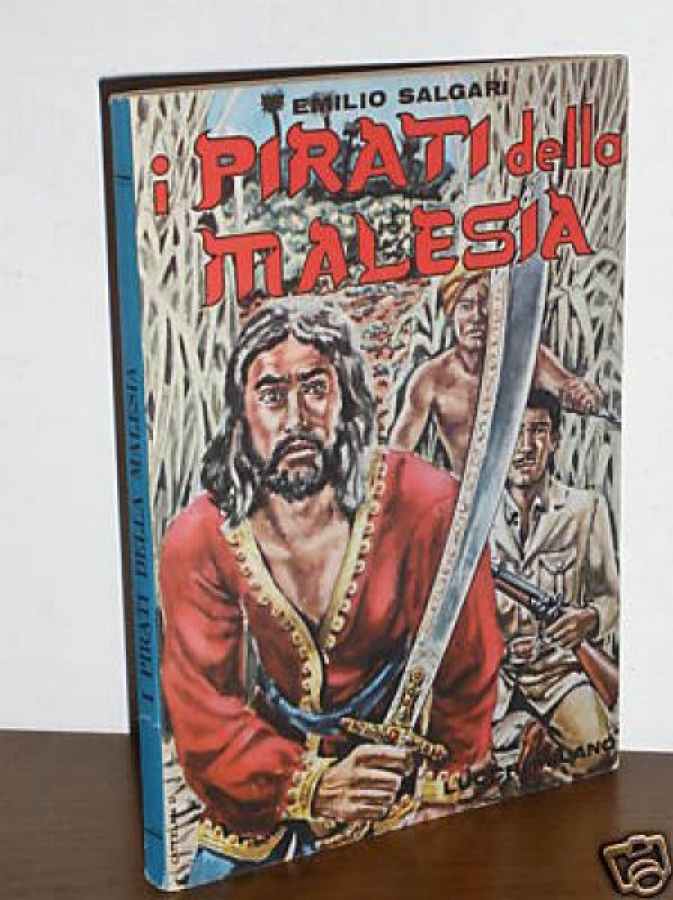
The Pirates of Malaysia
The pirates of Malaysia attack a ship aboard which Kammamuri is traveling with a young girl, mad. Kammamuri’s courage convinces Sandokan to spare his life and help free the girl’s fiancé, who is held prisoner by Rajah James Brooke. A series of intense adventures unfolds, leading to Sandokan’s victory over the Rajah, the liberation of the girl’s fiancé, Tremal-Naik, and the recovery of sanity by the girl herself. The book is characterized by fundamental narrative elements: the setting, the forests of Borneo and the maritime world, described with swift, evocative brushstrokes aimed at crafting an atmosphere that is both fascinating and somber. It is an engaging yet perilous context, far removed from the Western world, concealing not so much a taste for the exotic, but a desire for discovery and an awareness of nature as hostile to man; the heroes, in that all the characters, even the "mad" girl, seem to harbor no doubts and move without hesitation. Loyalty, courage, pride, dignity, and contempt for death are the sentiments that drive and define the novel's characters. In this sense, Salgari expresses a "will to power," a conception of the superman typical of his era. The characters have pre-defined roles: Sandokan, the fearless hero yet capable of weeping at the memory of his lost love; Yanes, the cunning and cold calculator; Kammamuri, the devoted and skilled servant, and so forth. There are no nuances or ambiguities in these figures; the narrative pace is relentless, characterized by rapid dialogues, concise descriptions, continuous moments of suspense, and sudden scene changes, even if it must be said that the final chapters appear rushed to the point that the Rajah's defeat seems scarcely consistent with the intelligence and strength displayed in other chapters by Sandokan's adversary. Magnificent is the chapter describing the revolt of the convicts up to their massacre by the savages. Salgari’s narrative pace anticipates the structure of cinematic screenplays and confirms the modernity of this author, beyond his style—at times elevated and rhetorical, typically nineteenth-century. The modernity and originality of Salgari’s narrative style emerge from two peculiarities: the artificial device of accumulation, whereby, for instance, within a few pages and in a single forest a multitude of fearsome or bizarre animals can converge, which answers > not only to the need to keep the reader in suspense, but also to offer within a limited space the world as spectacle and wonder (*Introduzione a Salgari*, Bruno Traversetti, p. 42); the method of the eternal return (a sort of search for lost time), whereby the heroes have always lost a state of stability (for example, Sandokan was a prince) and tend to return to that state, even distinguishing themselves from ordinary characters (for example, Sandokan is pleased that his wife’s uncle, an English lord, recognizes him as a nephew). The reference is always to a "conventional society" that has been destroyed by an extraordinary event. These devices are widespread in modern adventure cinema, and it is precisely the pursuit of this equilibrium, never fully recovered, that makes Salgari an extremely contemporary author, and from certain viewpoints, an unsettling one.
Spring of Beauty
The novel is set in 1943, during the dramatic months that led to the fall of Mussolini—replaced by Badoglio—the Armistice of September 8, and the king's flight from Rome. In this brief span of time, Italians came to realize what the Fascist regime had truly been, and into what disaster it had plunged them. Like the novel's protagonist, the officer cadet Johnny, Italians were seized by an indignation that > loaded them like a shell into the mouth of a cannon: murderous swine, filthy bluffer! . The novel recounts, precisely, this tragic coming-of-age, narrating it from the perspective of young soldiers left to their own devices, as was the entire country. The novel opens in a barracks in Piedmont, where Johnny is attending an officer cadet course. The military environment is slipshod, marked more by hollow rituals than genuine training. In truth, no one, not even the highest-ranking officers, believes in Italy's victory or in the war's justification. Discouragement and pessimism prevail. A disconnect exists between reality and the repetitive, futile drills to which the young recruits are stubbornly held. > Exhausted by that excess of freedom and oblivion, he had to lean against the trunk of a poplar; he felt the soft, warm bark, and failed to hear the distant trumpet sound the cease-fire. This by the river was reality; the morbid dream was the Italian army . How unreal appear the slogans painted on the walls, «Vincere», when the Italian troops, «greasy, down-at-heel, gypsylike», are transferred to Rome: it seems the American army has landed in Sicily. The officer cadets' hope of seeing combat swiftly fades. They are stationed in a barracks in Montesacro, resuming their pointless drills. > It wasn't so bad after all, an entire, fairly close-knit squad idling in the delightful quiet of a nearly deserted barracks.... it felt like being in a clinic . The armistice catches them completely unprepared. Johnny, with a group of comrades, is guarding an ammunition depot in the Roman countryside when he sees droves of soldiers arriving, half in civilian clothes and half in uniform, fleeing Rome. The king, Badoglio, and the senior officers have abandoned the capital without leaving orders on how to act: > resist the Germans, do not resist, kill the Germans, do not open fire on the Germans, do not surrender your weapons, self-disarm.... hurry up and find yourselves some civilian rags, too . Resignation and flight prevail; after all, «it had to end somehow». «Full of misery, with no room left for fear», Johnny too resolves to return home to Piedmont. A journey begins aboard trains overflowing with fugitives, while at the stations Germans round up Italian soldiers to dispatch them to concentration camps in Germany. Often, some of the Italians are shot on the spot when attempting to escape. > The stench of that Italian multitude, bowed, attempting to do the smallest and most necessary things with an air of absolute harmlessness and submission. Often beneath the shed roofs a brutish German call rang out, and then those little soldiers, so trim and solid, cut irresistibly through the suspended Italian mass toward mysterious appointments and duties . These few lines render magnificently how Italians had been reduced by an improvident and cowardly ruling class: an abandonment mirrored by the aimless efficiency of Hitler's army. Two nations in disarray, albeit in markedly different ways. Johnny miraculously manages to reach Piedmont, just a few kilometers from home, when he encounters a detachment of soldiers who have resolved not to surrender and to fight the Germans. He decides to join the partisans, certainly not out of political conviction, but out of an emotional impulse, so as not to feel > too inferior to a spit... because it repels him to come out of it like that (like a fugitive) . Johnny's fate is sealed during an assault on a convoy: > the German was coming, a young face and an old uniform, and now lowered the already-aimed machinepistol. Johnny perceived an infinitesimal click . The splendor of this novel does not reside solely in Johnny's tragic and emblematic story. Its exceptional nature lies in the language used: rich, imaginative, and inventive. It is as if Fenoglio sought to transfigure history, refusing to reduce it to a dry and cold report. The Italian language is molded to forge a suspended, unreal atmosphere, as though everything that happened to Johnny had not truly occurred, but belonged to a nightmare—both personal and national. Reading this marvelous book, one feels overcome by an intense melancholy, for what Italy was, but also for what our language might have become, had it not withered into a hasty, impoverished, and sterile narrative style. Why read it? It is the account of a momentous juncture in our history, and a captivating read.
That Awful Mess on Via Merulana
This is a highly singular book, not only for the language employed (a blend of Romanesco and Italian) and its style, but also for its narrative, which, while framed within a typical detective plot, seems to serve as an occasion to reconstruct the social milieus of 1920s Rome. Two crimes occur on Via Merulana in Rome, in an apartment building of the Roman upper-middle class: several pieces of jewelry are stolen and, the following day, a woman is murdered. Thus unfolds the judicial inquiry, conducted partly by the police and partly by the Carabinieri. This investigation serves as the framework within which a series of social and individual portraits are developed. The settings consist of the Roman bourgeoisie and apartment-building life, the world of the police with its bureaucratic mechanisms and petty rivalries, and the Roman periphery with its poverty and desolation. The characters are embodied by Inspector Don Ciccio, the married couple—one of whom is the murder victim—the women of the Roman outskirts, as well as numerous minor figures. Beyond their differences, the author brings to the fore the weary resignation of life, devoid of novelty or change, the paltriness of human feeling (the primacy of money and petty jealousies), and a pervasive mediocrity: all tempered by a gentle irony and an overt understanding of life's tribulations. The language represents one of the novel’s most significant features: it is characterized above all by the use of Romanesco and, consequently, by an attempt to transcend the artificiality of literary prose, which renders the dialogues and conversations remarkably vivid. From this perspective, the lengthy police interrogation of a woman (Ines) is magnificent. Outside the dialogues, the author employs an invented language, rich in Romanesco terms, standard (even classical) Italian, and, in my view, neologisms as well. A D'Annunzian pursuit of sonority and effect emerges, which at times weighs the prose down and contributes to a sense of artificiality and formalism. As written in the *Enciclopedia della Repubblica*, > Gadda's work stems from an extremely fraught and violent relationship with reality, conceived as intimately convulsed, deeply and irremediably misshapen, disordered, upheaved, so much so that to it one can apply only a word that rivals its deformity, urging it to reveal itself fully.... the blending of dialects... as a divergence from the more orderly and mystified forms of language; then the metaphorical strainings, pushed to extreme tensions, of technical jargons; the intricately branched and labyrinthine syntax, through which the intention to thoroughly corrode the customary organization of things is manifested .
A Private Affair
The book is set in the hills of Alba during the Resistance. Milton is a partisan who returns to the house where he used to visit, and secretly love, Fulvia, and learns that she allegedly had a relationship with Giorgio, who has also become a partisan. To uncover the truth, he sets out in search of Giorgio, who has meanwhile been captured by the Fascists and faces execution by firing squad. Milton attempts to capture a prisoner to have a hostage to trade with the Fascists; failing in this endeavor, he returns to the villa, only to be pursued by the Fascists, who had set an ambush in the house. The narrative can be interpreted from multiple perspectives: Milton’s love story for Fulvia, which transcends political passion, a > novel of amorous madness and chivalric pursuits like *Orlando Furioso*, and at the same time there is the Resistance just as it was, inside and out (Italo Calvino, preface to *Il sentiero dei nidi di ragno*, 1964); the partisan war as an existential tragedy that "is born in the woods, along the rivers, on the hills, among the ravines, the rivulets, the paths of his Piedmont" (Geno Pampaloni); the raw and objective depiction of violence as the sole meaning of human relations, a theme already present in the short story collection *I ventitré giorni della città di Alba*. All of these interpretations are plausible, because, as Italo Calvino further wrote: > it is an absurd, mysterious book, in which what is pursued is pursued to pursue something else, and this other thing to pursue yet another, and one never arrives at the true why . I, however, like to think that one of the book’s central themes is the coexistence of the life typical of peacetime with a climate of war, manifesting both in the survival of the emotional realm (jealousy, friendship, practical jokes, grudges between neighbors) and in the acclimation to the conditions imposed by violence and precariousness. From this perspective, one need only think of the episode in the stable, where a group of partisans rests while an old woman knits and a young boy does his homework. > By the kitchen doorway an old woman sat on a child's low chair, spinning from a distaff. Her hair seemed made of the very same material as the yarn. "Good evening, ma'am," Milton said to her. Beside the old woman, a boy kneeling on a layer of sacks was writing his homework on an overturned tub . War is violence and cruelty, yet human beings must continue to survive; they must strive to live with it. This is the deepest violence of war. The novel is magnificent: the style is spare yet at the same time evocative and suggestive, above all in its rendering of the landscape and atmosphere.
The Short Stories of Franz Kafka
Kafka’s stories are generally brief writings, characterized by a paradoxical plot and cryptic, scarcely accessible content. Undoubtedly his most important story is *The Metamorphosis*, which can be regarded as a masterpiece both from a strictly literary perspective and in terms of its thematic substance. Gregor, a model employee, awakens transformed into a large insect, likely a cockroach. At first, the family is stunned; then they feel a stir of pity and compassion toward him (particularly the sister), and finally indifference and contempt set in. Ultimately, Gregor lets himself die, and his parents and sister do not even care where his body has been discarded. The story lends itself to multiple interpretations. First of all, what is the cause of this transformation? Is it, perhaps, the revolt of a young man compelled, at an early age, to support his family (the debt-ridden, idle father; the sister who aspires to be a violinist) under the rigid, oppressive control of an office manager? Following the night of the transformation, in the morning Gregor ought to depart early as usual, and the fact that he remains in his room is regarded by all as a display of indolence—itself already a defiance of social rules. > "Chief Clerk," Gregor cried out, "be patient for just a moment! Yet I am already feeling much better. How can such a thing happen!" . It is the theme of a bureaucratic, oppressive society that in no way tolerates the breach of rules. Yet there is, for me, another theme that is even more universal. What happens when a person falls prey to a serious illness? At first, everyone stands by him, full of compassion and kindness; then, little by little, people begin to alienate the patient, altering his habits and his furniture because he is no longer needed, until abandoning him to indifference. This is what happens to Gregor. At first, his sister cares for him, unlike his father, who from the very beginning rejects him to the point of grievously wounding him. Then the mother and sister decide to clear the room of furniture so as to make it easier for Gregor to crawl along the walls (a clear demonstration of a kindness that disregards the patient’s wishes). Gregor does not want this, because it signifies relinquishing his nature as a man, as a healthy person, and he reacts to the point of clinging to a picture to prevent them from taking it away. Then one day, as his sister plays the violin, Gregor, the large insect, is entranced by the sound and longs to draw near to his sister, to embrace her and have her play for him alone. Instead, he is cruelly repelled because he is a monster. Nothing remains but solitude and death. Alongside Gregor’s transformation, a change takes place within his relatives. The father goes back to work and struts around in his uniform, the sister works as a shop assistant and wears open collars, and the mother works as well. When Gregor is gone, a new life begins, wholly forgetful of the kinsman who had nonetheless helped them so much.
The Tales of Rainwater Pond
We are in Wexford, a county located in the north-eastern part of Ireland and depicted by Billy Roche across numerous theatrical works. The setting common to all the stories is the Rainwater pond: > a dark and treacherous place. You could drop a coin in and watch it enter the murky water, go home, have your tea, go to the cinema, return home a second time, (...) and that coin was still sinking as you walked back in for dinner . The dark allure of the pond led the protagonist of one of the most evocative stories, *One Is Not a Number*, a poor cripple marginalized and tormented by the other boys, to believe that “the place had magical properties that could somehow cure him,” if only he dipped his poor foot in the water. And lingering further on this splendid tale, magical indeed this pond must be if at a certain point a doppelgänger appears—the boy the wretched cripple wished he could have been: > he was the other me, the real me, the one who lived inside me, (...) handsome, strong, and healthy, with wheat-coloured hair and not a single freckle, (...) an elegant bearing, I thought, and he possessed a deep voice he never overused . And Evelyn, the girl loved in vain by the cripple, “walked home, floating an inch or two off the ground,” looking like a fairy. Has the ugly toad transformed into a graceful white swan? As in all the stories, the individual lives fade away, at times without a definitive conclusion, into the banality of existence—as though we were all trapped in our fate, in a prosaic, narrow, and stagnant everyday life; and Rainwater Pond is simultaneously a physical place and a metaphor for our suffering consciousness, powerless to break free. As the protagonist reflects in the final story, tellingly titled *A Quiet Place*, all that fretful striving to have a life of one’s own had merely been > a mysterious twist of fate that had ultimately worked for his own good; and at that moment it was all over, the actors had packed their costumes back into their suitcases and returned to everyday life . Across the sequence of stories, a rupture emerges, dividing the collection into two parts. Up to the tale of the cripple and his desperate loneliness—a long, intricate story—an ancestral magic realism holds sway, recalling Elsa Morante’s *Menzogna e Sortilegio* and Anna Maria Ortese’s *Il mare non bagna Napoli* and *Il Cardillo addolorato* (see the reviews on this site); at times, a yearning for love emerges that is meant to compensate for physical flaws (as with fat Maggie) or to help escape an unhappy condition: consider the splendid ending of *The Northern Lights*, where the protagonist returns home to find her husband disappointed to see her, without a trace of suspicion or jealousy: > she sighed to herself. Everything was clearer to her now. That night, after tea, she would go upstairs to paint a portrait of him: a solitary man seated at the window, before a silvery night sky . Incidentally, this is a very different reaction from that of Alba de Céspedes’ protagonist in *Da parte di lei*, who kills her husband because he is indifferent and bored (see the review on this site). In the second part, the narrative pace becomes brisk; the characters seem to be on a stage performing a play; the reading flows swiftly, intriguing and effortless, but the fantastical atmosphere of the earlier stories slowly disperses, and even the pond dissolves into the background, losing the uncanny and mysterious presence that lent the narrative its charm. We are far removed here from other Irish writers, with their captivating, evocative, at times impenetrable vocabulary, characterized by an intricate, often challenging syntax: neologisms, cadences that seem to stem from languages other than standard English, long sentences, digressions, and parenthetical clauses. Here, the sentences are short, with extensive punctuation, as is often the case in contemporary American fiction. The translation succeeds in conveying the deeper meaning of the stories, though one wonders whether it might have simplified the diction, as so frequently happens. Perhaps the prose and narrative structure reflect the author’s predominantly theatrical background. Why read it? A meditation on the human condition, viewed through a microcosm.
The Boys of the Massacre
It is chilling to read this novel in light of a recent news story, in which a boy stabbed his French teacher, unleashing upon her a hatred and violence one would never wish to see harbored in an adolescent. We are in the 1960s, in an “old and poor Milan,” yet already convulsed by traffic that was “unpleasant, irritating; drivers glared at one another with hatred, the traffic lights were always red, (...) and outside nothing could be seen, only the fog.” In this city so different from today's, a heinous crime has been committed: eleven boys have raped, beaten, tortured, and ultimately murdered a frail night-school teacher. True, they are already petty criminals: some the children of “honest parents,” others with fathers in prison and mothers working as prostitutes, but all of them known to the police for acts of violence, petty theft, and alcohol abuse. For the chief inspector, it is a straightforward case: they are all guilty, and the essential thing is to get rid of this “rabble” as quickly as possible, handing the matter over to the investigating magistrate, the reformatory, and prison. Not so for Duca Lamberti, the protagonist of Scerbanenco’s detective novels (see the review of *Venere Privata* on this site): an unusual policeman for whom “truth was the only thing that mattered (...), even if, in the end, it was of no use.” It arouses his suspicion that they all say the exact same thing: “namely, that they hadn't done anything, that they had been forced to stand in a corner while the others did everything.” It is too clever a defense, and maintained by all of them, as though prearranged. “This line of defense was concocted before the crime, and by someone smarter and not drunk like those boys,” Duca Lamberti concludes. From here unfolds a police investigation made not of deft, subtle reconstructions designed to trap the suspects and force them into confession; nor does the inquiry dissolve into sociological analyses or excuses to narrate the protagonist's life. Everything remains in the background. Only occasionally are there brief brushstrokes of a Milan that longed to remain that of the late nineteenth century, with its taverns, still *trani* and not yet bars, where the drunkards “still fell asleep, as in the days of Porta, their heads resting on their arms, and there were the aging prostitutes, (...) and there was the tired, kind flower seller, limping gently. (...) The row of parked cars stretching the entire length of the street took nothing away from this innocence: they were the intruders.” And feelings appear fleetingly, timid, conveyed through small gestures: “‘Sleep,’ she said, ‘and keep me warm.’ They would make love another time, she knew. He warmed her, but did not sleep; he tickled her neck with his stubbly, unshaven cheek, and his breath was a warm whisper on her breast that kept her from sleeping.” Duca Lamberti’s approach stems from the empathy he feels for these boys, or at least for some of them. He attempts to forge a relationship of care with them, encouraging them to open up not out of fear of the police, but so that they might understand the evil they have committed—an evil devastating first and foremost to themselves. Not that he fully succeeds: the first boy, frail and young, a homosexual, kills himself, destroyed by guilt; the other, fourteen-year-old Carolino Marassi, an orphan and petty thief, comes close to being killed. Duca Lamberti makes mistakes; he is often depressed when confronted with such cruelty, and dispirited when Carolino runs away, betraying the trust placed in him. “‘He’s a good boy,’ Duca said, ‘but you’ve never been in a reformatory or in prison or an orphanage, and you cannot understand what freedom means to a boy like that.’” Confined to a literary genre, Noir, traditionally regarded as second-rate, Scerbanenco is rarely counted among the great Italian writers of the second half of the twentieth century. Perhaps his dry, concise, unadorned style, often mistaken for literary poverty, contributed to this as well. Far from it: Scerbanenco’s style is the result of a deliberate pursuit of essentiality, mirrored in a plot admirably stripped of redundancy, as well as in his prose and vocabulary. There is no need for distractions or idle digressions: the story and the “boys of the massacre” speak for themselves. They reveal more about our society, and about abandonment, than any number of sociological analyses or moralistic reflections. The writer’s sole task is to recount their despair, shouldering its weight. Why read it? A splendid noir, an intense social novel.
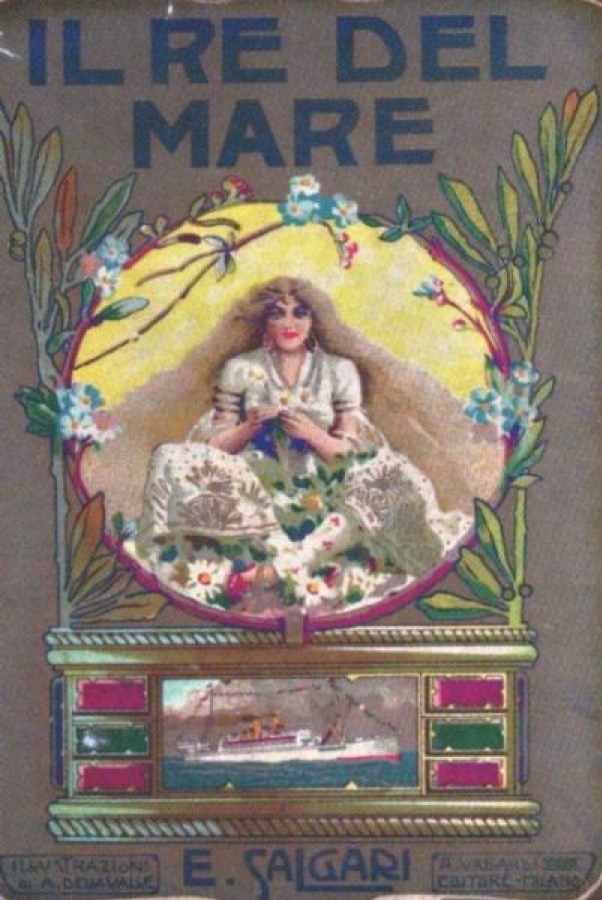
The King of the Sea
The book is structured in two parts. The first part recounts the adventure of Yanes, who sets out to rescue Tremal-Naik and his daughter Darma. The setting is Borneo, rich in strange fauna and an exotic atmosphere. Plot twists follow one after another, yet a certain artificiality and repetitiveness emerge, rendering the reading tedious. This section of the book closes with yet another surprise: the terrible leader of the Thugs had a son, who now seeks to avenge his father’s death and has allied himself with the British to defeat Sandokan. The island of Mompracem has been conquered, and the pirates of Malaysia decide to declare war on England. In the second part, the true protagonist emerges: the cruiser *Re del Mare*, aboard which the Tigers roam, fight, and conquer. Seascapes return—a tempestuous sea and rugged, inaccessible coastlines. And an impossible love story unfolds, between Darma and the son of the terrible Thug. The narrative becomes more intricate, as combat episodes alternate with conversational interludes, gradually forging a kind of friendship between the son of the Terrible Thug and the pirate chieftains. As in *The Black Corsair*, one would expect an unhappy ending; indeed, here matters reach the point where Sandokan and Yanes could well be defeated, killed, or taken prisoner. Sandokan, in particular, is weary; he is no longer the man he once was, far less marmoreal than he appeared in the other novels. Yet in the end comes the plot twist: love triumphs, and out of love, the son of the terrible Thug realizes that vengeance is pointless, not least because by pursuing it he would lose his beloved. The pirate chieftains are freed. Unlike the other books in the Malaysian cycle, here one faces a flagging narrative momentum (so much so that the author leans heavily on his well-worn techniques without any innovation), and even the depiction of the setting (the sea and the jungle) seems marginal to the tale. What does emerge, however, is a theme absent from the other novels: technology, embodied in the cruiser's sheer power and the introduction of an inventor capable of triggering remote explosions. Technology renders Sandokan and Yanes obsolete: their life cycle has ended because the world has changed; it is no coincidence that they are defeated by four cruisers, likewise powerful and swift. Yet technology has its frailties: the *Re del Mare* sails under the constant dread of finding no coal to feed its boilers, and the inventor perishes, struck down by a mere shell. The age of sail fades away, but the new technologies grant the "heroes" far less autonomy and independence.
The Queen of the Caribbean
The novel is the continuation of *The Black Corsair*. The pirate is still in pursuit of the hated Duke Wan Gould, and the book unfolds across a series of combats and adventures, interspersed with long, captivating descriptions of the Caribbean forest. The Duke perishes with his ship, and in the end the pirate is reunited with his beloved Honorata, who has become queen of the cannibals. The book displays a highly complex structure and develops across several planes, with the introduction of new characters. At the center of the novel lies the fatalism of the Black Corsair, now convinced that he is condemned to unhappiness and destined to bring grief to others as well. In a conversation with Yara, the young Indian woman who will be killed by the Spaniards, the pirate confesses his conviction of being predestined to bring misfortune to women: > One cannot love the Black Corsair, maiden. I bring misfortune to the women who draw near me. You have seen it! and again, after Yara's death, > I am fatal to all – he said in a somber voice – take care of this maiden, Marchioness . On the other hand, the thirst for vengeance overwhelms the Black Corsair, constituting a destiny from which he cannot escape, even should he wish to. In his conversation with the Marchioness of Bermejo (a splendid new character of Salgari’s), when asked what he would do with the Duke if Honorata were alive, the Black Corsair replies > do you believe, Madame, that the souls of my brothers have been appeased? When the sea turns phosphorescent, the Red Corsair and the Green, the Duke's victims, resurface: they demand vengeance. When the hurricane sweeps in from the East, amidst the howling of the wind, I hear a voice that comes from the shores of Flanders: it is that of my elder brother, treacherously murdered by the Duke, and that voice demands vengeance as well . Even at the moment he meets Honorata, whom he is finally free to love since the Duke is dead, the Black Corsair yearns for death ("Yes, death, oblivion!") and his dark despair is such that he seems to see the dead calling to him ( > Look at them, Honorata, look at them... There is the Green Corsair... there is the Red... there is your father... and my other brother, too, slain on the lands of Flanders... ) and the pirate wishes to join them ("I am coming!... Brothers!... I am coming!"). Only love saves him, and to the Black Corsair's question of whether to choose between life and death, Honorata whispers, "Your love." Alongside this struggle between hatred and love move the secondary characters surrounding the Black Corsair, who are in fact central to the novel: in particular, his companions, Carmaux, Wan Stiller, and Moko, who tend to the Black Corsair with fraternal devotion and lend the novel a sense of brio by tempering its dramatic intensity: an extraordinarily modern device, essential in giving the book rhythm and reading pleasure. Nature, too, emerges as a major protagonist: a lush nature, teeming with fantastic fauna, especially birds and reptiles, which Salgari describes with meticulous precision and a desire to seek distraction and forget the despair that dominates the figure of the Black Corsair. To claim that this is merely an appetite for exoticism is to overlook the contrast between the surrounding setting and the pirate’s emotions: the description of the environment carries the tone of escape and repose. The final theme of the novel consists of combat, particularly naval battles and shipwrecks; the sea is yet another protagonist, and splendid are the pages depicting the clash between the *Folgore* (the beloved *Folgore*!) and the Duke’s ships. The book is flawless, both in terms of its rhythm and with respect to its characters and plot.
Queen of Flowers and Pearls
The first-person narrator is a young girl, then an adolescent, and finally a young woman, who recounts how she became the “cantora” of the history of her people (Ethiopia) and of the Italians, when the latter conquered her country. The book opens with the great-grandfather’s account of the birth of the girl’s grandmother during the resistance against the Italians and the violent death of her parents, an Italian man and an Ethiopian woman. The book thus takes as its starting point an act of great love that binds the two peoples together, yet the cruelty of the racial laws, which forbade an Italian from marrying an Ethiopian woman, surfaces from the very beginning. The old man makes the girl promise that she will tell these stories, so that a memory may endure for the future. The girl grows into an adolescent, forgets her promise, and decides to go study in Italy, in Bologna. Now twenty-three, she returns to Ethiopia upon hearing news of the old man’s death, but arrives too late to take part in the collective mourning that traditionally accompanies a funeral. She is thus left suspended in an unspoken, internal grief, and with a sense of estrangement from the others, who now perceive her as an outsider. The great-great-grandfather had left as a dying wish that the girl go pray at an important sanctuary. The central section of the book unfolds, then, over six days during which the young woman travels to the monastery, meets an elderly hermit, and above all, as she waits, listens to the stories of women—tales concerning the tragic and complex encounter between Ethiopia and Italy. Gradually, she manages to process her grief and realize that her destiny is to fulfill what her elders had asked of her: “you shall be our cantora.” One of the central themes of the book is undeniably Italian colonialism, its cruelties and aberrations: particularly tragic are the pages recounting the massacre perpetrated by the Italians in the wake of the assassination attempt on Graziani. It would be reductive, however, to limit the book to this theme alone. In reality, the narrative structure of the work is remarkably complex, revealing at least three distinctive features: its choral nature, derived from the collection of stories that form the heart of the book. The narrator says little about herself (even though she is the first-person narrator), for what matters is neither emotional introspection nor existential anguish; rather, the book aspires to be a progressive point of accumulation for the history of two peoples; the richness of its themes, which span from the processing of grief to the loss of roots experienced by those caught between two cultures, to the opposition of communal values against the loneliness of modern man. In this sense, the true setting of the story is Italy, interpreted through the vantage point of someone who comes from another culture: what emerges is a country defined by autumn colors, greyness, soliloquy and abandonment, and regret for the past; the narrative style, lean despite its rich vocabulary, which stands out favorably against the verbosity of many Italian writers.
Clash of Civilizations Over an Elevator in Piazza Vittorio
The Italian edition is a revision, also undertaken by the author, of the original Arabic publication of 2003, which bore another title: “how to be suckled by the she-wolf without her biting you.” The two titles, in Italian and in Arabic, constitute two possible interpretive keys to the book. The setting is Piazza Vittorio in Rome, the multicultural venue par excellence, and specifically an apartment building inhabited by a diverse cast of characters: from the Neapolitan concierge to a melancholy university professor from Milan, to a young Dutchman passionate about Italian Neorealism. Revolving around the building is a multiform humanity that, despite mutual misunderstandings and cultural and linguistic differences, shares a single conviction: their esteem and trust in Amedeo. He appears, and strikes us, as the Italian we would all wish to be in a multicultural society: cultured, kind, polite, tolerant, and ready to help regardless of skin color, religion, or country of origin. These are the reasons why everyone rejects the idea that Amedeo could have committed a murder—and what is more, in the building’s elevator, which he avoided using out of respect for the concierge. > He looked at me with a smile and said: I’ve changed my mind, I’ll take the stairs. I couldn’t believe my ears and asked myself: are there still men who respect women in this country? . Yet what is even more incredible is that everyone, Italians and foreigners alike, is astounded that Amedeo is not Italian. After all, foreigners are all ill-mannered and ignorant. But who is Amedeo? And this is the second interpretive key. Amedeo, with his flawless Italian and his vast knowledge of Rome, is in reality Ahmed, an Algerian who fled his homeland after his fiancée was brutally murdered. His is a flight from the horrors of the past, from a world he wishes to leave behind, in mind as well as in body. In Rome he found Stefania—naive, idealistic, and curious—and fell in love with Piazza Vittorio, with its clash of civilizations. > Rome has Termini Station. Termini means the journey is over. There is something strange about this city. It is very difficult to leave. Perhaps the water from its fountains has been mixed with some peculiar substance of sorcerous origin . Yet Rome can also wound you, with its bureaucratic red tape, with the coldness and violence of a society in decline, bereft of human solidarity. Ahmed, deep down, wants to be neither Italian nor Algerian: he would like to simply be Ahmed. Moreover, the memory of the past belongs to him alone, its wounds to be tended in solitude. > Oh my open wound that will never heal! I have no solace except in howling . The book’s fundamental merit lies in its writing. To begin with, an inspired choice is the alternation between the unfolding of events as related by the various characters—thereby foregrounding their differing points of view—and the autobiographical, diary-like notes of Amedeo/Ahmed. These are introspective, reading almost as the narrative of a personal journey of liberation from the past and discovery of the future. Furthermore, the affectionately ironic style does much to prevent the narrative from lapsing into moralizing or pseudo-sociological analysis when depicting the latent racism among Italians (structured along the classic hierarchy: North – Southern Italy – Global South), the despair and nostalgia of the foreigners, and the coldness and harshness of Italian life. The characters are sketched with such close attention to the individuality of each, whether Italian or foreign, that a multitude of lights and shadows emerges, rather than that binarism (Italian – foreigner, good – evil) that so much of the media seeks to impose upon an Italian society that, though resistant, is subjected to it. Why read it? Light, entertaining, yet profound.
The Casket of Sequences
The book is set in the year 900 and recounts the story of a young man raised by a countess. Unwittingly, the young man kills his father and, at the countess’s bedside, reads letters that shed light on his life. The book is thoroughly enjoyable; the harsh medieval milieu is depicted with great skill, complemented by scenes of family life and domestic settings.
The Secret of the Old Woods
At the beginning of the story, Dino Buzzati imagines that a nineteenth-century abbot, «with concise and very clear accounts», speaks of «a wondrous vision» upon beholding the old wood; in a footnote, the author observes how some men grasp the secrets of the woods, perceiving them by «nature», while others will never possess this sensitivity, > and will pass impassive (...) alongside the tenebrous forests, without even suspecting what goes on inside . Communion with the trees, the capacity to grasp their magic, belongs to children; as Bernardo explains—the tree-genie who took upon himself the burdensome task of conversing with adults— > at a certain age all of you, men, change. Nothing remains of what you were as children. You become unrecognizable . Adulthood causes one to lose the quality of feeling part of the whole, of playing in the woods alongside the animals, of understanding the birdsong, of perceiving and distinguishing the grand, multicolored orchestra of the forest’s sounds. Since adults will never love nature, the genie Bernardo became friends with the old owner, persuading him to leave the old wood untouched. What an ordeal to spend evenings in long games of cards, in tedious conversations, while > through the window, along with the scent of most precious resins, drifted the deep voice of his brothers, singing carefree ! The situation changes when the old owner dies and the new master arrives. Procolo, a retired colonel, is a rigid, somber, solitary man, impervious to any communion with the woods, which he views merely as an opportunity for exploitation. It is not that he is greedy; he is simply a petty soul, and how can one who lacks generosity ever find pleasure in the rustlings and scents of the woods? He allies himself with the wind Matteo to bend the tree-genies and force them to work for him in exploiting the forest; he kills the magpie that stands sentinel over the house, only to plunge into the silence of the night, locked within his nightmares. Wretched and wicked, he seeks to rid himself of young Benvenuto, the heir to the wood and his ward; with the aid of the wind Matteo, he does not hesitate to abandon the boy in wild tracts of the forest, where Benvenuto surely would have died. He fails, believing that no one knows of his murderous intent. But when he ventures into the depths of the forest, > the birdsong fades, the squirrels and dormice flee, silence settles upon the boughs, and at times ominous storm clouds even appear in the sky. (...) Evidently he struck a discordant note in that joyful corner of the woods; evidently trees and birds could not endure him . Even his shadow abandons him, so disgusted is it by the barrenness of its lifelong companion. Procolo is alone. And yet, little by little, reluctant and surprised, during a sleepless night Procolo recognized the sounds of the forest. He counted fifteen of them, meticulously noting down each one. > But two or three times, that night, there was also true silence, the solemn silence of ancient woods, incomparable to any other in the world, which very few men have ever heard . And the goodness that dwells in all human beings is finally liberated from the performance of self, from that «false self» that had accompanied him throughout his life. Procolo dies, yet he is saved. Buzzati’s tale can be interpreted as a fascinating metaphor for the human soul, where the woods are not Dante’s «dark wood» but a kind of Shinto paradise in which trees are benevolent genies and the winds are hostile, dark forces: a depiction, in short, of the intricate tangle of consciousness. I prefer to interpret *The Secret of the Old Woods* literally, as a great fable of the forest, devoid of ulterior meanings. Raised by parents who loved the mountains and made me spend long summers amidst the greenery of the Alps, walking among the trees was always part of my life, without my understanding why. Reading Buzzati’s tale made me understand my passion. And it is precisely for this reason that I juxtapose it with Petrarch, fully aware of how daring such a connection is. When Francesco Petrarch recounts his walks in Provence and Tuscany, I recognize the feeling that stirs within me as I, too, make my way through the forest: the longing for detachment from the frenzy of the world, finding oneself again, solitary, silent, immersed in physical activity, permeated by the vitality of the trees, conscious of the bond connecting all living beings. Often, wandering freely and aimlessly amidst the lights and sounds of the forest, the lines of Canto XXXV of the *Canzoniere* come to mind: > alone and pensively the most deserted fields/I pace and measure out with slow and tardy steps,/and keep my watchful eyes alert to flee/wherever human imprint marks the sand .
The Path to the Spiders' Nests
It is Calvino’s first novel. The protagonist is a young boy, Pin, who undergoes an experience that makes him grow up rapidly. The setting is the Ligurian Riviera during the partisan war. Pin lives with his sister, who works as a prostitute and collaborates with the Germans. The boy frequents the tavern and keeps company with the adults, who talk about women and drink wine. The men at the tavern convince Pin to steal a pistol from a German who frequents his sister. The boy hides the pistol near the burrows that he imagines spiders build. He is imprisoned, escapes, and joins the partisans, where he continually witnesses the affairs of adults: violence, betrayal, love, lies. He flees the partisans and encounters one of them, Cousin, who once took him by the hand when Pin was alone and abandoned. He trusts him and reveals where his sister lives. In reality, Cousin wants to know so he can go and kill her. Pin is betrayed once again and finds himself alone, abandoned by all. Despite its apparent realism, it is a “fantastic” novel. The real story is that of childhood and its encounter with the adult world. Pin talks like a grown-up, but he is still a child, searching for affection and friendship. Yet in truth, he finds it only in the landscape, in the spiders’ nests, in a fantastic world.
Serpents in Paradise; Rites of Death
Set in Barcelona, the novels center on Inspector Petra Delicado, who tackles a series of police investigations alongside her partner, Deputy Inspector Fermín Garzón. The two officers display little investigative prowess, chasing multiple leads and frequently overlooking crucial clues. In reality, personal affairs always take precedence. In *Death Rites*, an investigation is finally entrusted to Petra Delicado, who, still under the strain of two failed marriages, projects onto the inquiry such aggression that it frequently compromises her interrogations, while often operating with a distinct lack of lucidity. In *Serpents in Paradise*, it is instead a longing for a different life (defined by an orderly domestic ménage, a beautiful home, and above all, children) that leads Petra Delicado to become ensnared by the culprit, to the extent of abandoning any line of inquiry and missing an important clue. Ultimately, the detective plot is merely an occasion to portray events and situations invariably marked by profound solitude and a fundamental falseness in personal relationships. These are, after all, two facets of an existential dilemma that appear mutually contradictory: to experience sincere and honest relationships, one must live in solitude. Barcelona remains merely in the background, almost nonexistent. The author relies on dialogue and brief descriptions of the settings in which the characters move, but lacks all those sociological references and digressions so characteristic of Montalbán’s books. Certain settings, the narrative pace, and the depiction of the characters recall the American detective novel, particularly that of Raymond Chandler.

The Emerald
In New York, the author meets a strange character, a gemstone expert or perhaps a magician, who convinces him to go to a French village, where he will find an emerald that will reveal his future. The author is persuaded, partly intrigued by what this strange character tells him, partly because he hopes to track down an old flame, Mariolina, and present himself with a jewel of great value. Arriving in the French village, he takes lodging in an old hotel, where he falls asleep and seems to enter a strange dream. He sees the village where he lives, Tellaro, near La Spezia, vastly different from what he remembers, and he no longer recognizes the people: > it is as if they were all new: others. And it is as if I myself were someone else . In the dream he is actually a painter named Andrea Tellarini, living in an isolated house with a dog. A visitor brings him word that in a French village (the very one where he is actually staying), he has received an inheritance and must therefore go there. He becomes increasingly aware that he lives in an uncanny world, where, following the Third World War, the globe is divided into two confederations: that of the North, dominated by the Russians, technological and technocratic, and that of the South, dominated by the Arabs and the Chinese, Levantine and agrarian. Both confederations are dictatorships, two police states dominated by military forces and the secret services. Between the two confederations runs a Line, roughly traversing Southern Tuscany and Rome, which cannot be crossed because it is contaminated and therefore lethal. The painter lives in the North within a dictatorial state, where everyone is on the state payroll, travel is forbidden, and cinema no longer exists. He obtains permission to go to the French village, where he inherits a large emerald, which he resolves to use in order to search for Mariolina. She, however, lives in the South, and so he must cross the Line. He sets out on the journey together with his son (in the dream, he discovered he had a son). The Line is no longer contaminated, and in Rome he encounters some gypsies who salvage treasures from the abandoned city and sell them to a truck driver (in reality, a spy), who transports them South, to Naples. The painter manages to reach Naples with the truck driver, with whom he is enticed into a homosexual encounter. In Naples, he meets Mariolina again, but also discovers that the emerald is fake. His scheme of growing rich and winning back Mariolina has failed; instead, he is dragged into a power struggle between Mariolina's allies and her enemies, for whom the truck driver is a spy. Mariolina herself proves to be an avaricious woman, thirsting for power. Captured by Mariolina's enemies, he is brought to Rome and gets caught in a firefight with the gypsies: the dream breaks off abruptly as his wife, summoned by the innkeeper, wakes him. In fact, he had allegedly not been sleeping and dreaming, but had been writing the dream down for fifteen days without sleep and without food. It is a fantastic novel, built entirely around the device of the dream as an occasion for an unleashing of nightmares, desires, and fears regarding the future. > I was constructing this dream, complicating it, entangling it, splitting it: a captious, adventurous, fantastic, faerie dream: I was dreaming this dream solely to touch a fragment of my petty reality, of my little self. Who knows, perhaps it was not even a dream: but a delirium fraught with insurmountable and agonizing contradictions . The dream was, in any case, the discovery of a boiling life. > In my dream of discovery I did not wish to go any further. Better to stop here, I told myself. Better to wake in time and sleep again, afterwards, dreamless or with bland dreams that are forgotten and not worth remembering . Several themes run through the novel: a cruel future, dominated by military or bandit dictatorships: technology has ultimately led to the destruction of the Western political system and its collapse into states lacking the rule of law. This upheaval may herald the beginning of a new renaissance, precisely because it has destroyed a culture that was already decaying. In this regard, the reflections on cinema are illuminating. > All that layering of techniques, that paste, that elaborate concoction of acting, dance, drama, scenography, lights, colors, moans: that colossal manneristic, advertising, vulgarly scientific swindle has revealed itself today as a typical—indeed emblematic and exclusive—product of the defunct industrial and consumerist society . > If there is any hope of peace and brotherhood with the South, that hope lies in our reborn and unwitting sense of art ; the recovery of a primitive and simple world, namely that of the gypsies. It is no coincidence that they inhabit a Rome that is ghostly yet alive. > I stopped on the edge and looked all around, near and far, at other valleys and other hills; I contemplated, frightened and fascinated, those horrible alps with their riddled walls, that strange nature, and that matter... They were shells of old mollusks, empty eye-sockets of skulls from which the softness, mobility, and intelligence of life had withdrawn forever. And suddenly I understood. They were the hollows where the desire for life entered and from which life itself emerged: dead, however, now, dead; material images of a final sarcasm . In a D'Annunzian style, the author reflects upon the transformation of life, finding in nature's destruction of the city, in its abandonment, the starting points for rebirth. Yet it is not society that will revive it, but that of simple men, of a people—the gypsies—who have rejected industrial and consumerist society; the diverse dimensions of life. In reality, the author is inhabiting another dimension—not so much what he would have wished to be, but the reality and the persona he could have been. Does the possibility of another life exist? Are there other worlds within us, where nightmares but also aspirations might be realized? The author's dream is the construction of that other world, of the other life the author could have lived. The dream broke off precisely > so as to see no more, so as not to know what lay at the bottom of my whole story . For Paolo Pasolini, Soldati's writing > is devoid of all viscosity, which is to say, of clinging to the reader, of possessing him, of exerting an unacknowledged authority over him . Pasolini speaks of lightness and a relentless reference to something else, to an alternative. The dream device allows the author to play without explaining: for example, what did the emerald signify? What purpose did the entire affair serve in relation to the opening of the tale? As his friend Enzo Giachino wrote in a letter to Soldati, > I am convinced that a more cultured and subtle reader would be able to unravel the hidden meaning of so many episodes, which eludes me .
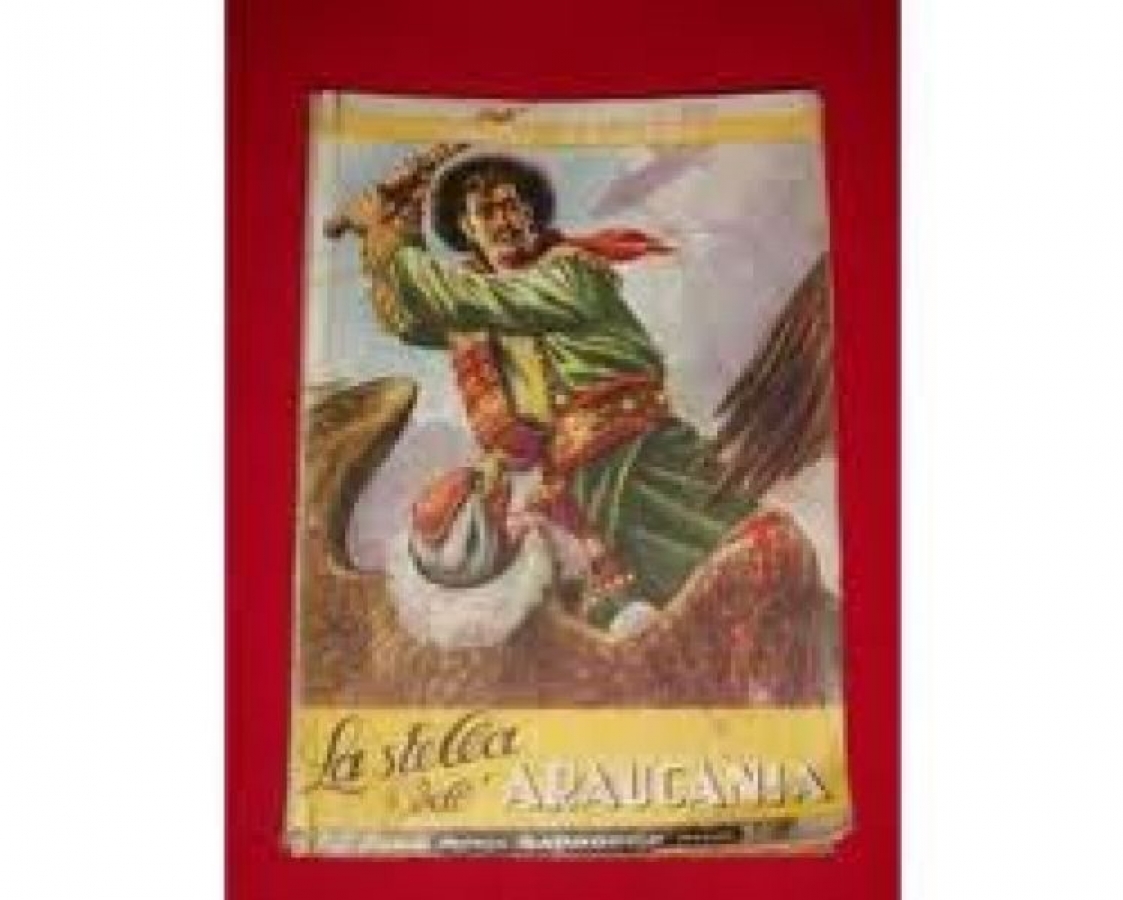
The Star of Araucanía
The star of Araucania is the young Mariquita, “of marvelous beauty,” who, between the two cousins, Piotre and Alonzo, chose the latter—more gentle and elegant than his coarse, brusque counterpart. Fate dictates that Alonzo is shipwrecked in the wild lands of Tierra del Fuego, and only Piotre’s ship can brave the sea during the terrible winter of the Strait of Magellan. In a dramatic encounter, taking place no less during a condor hunt, Mariquita is forced into a painful bargain: to promise to marry Piotre if he provides his ship and his skill as a captain to go and rescue Alonzo. The expedition originates in an act of blackmail, Piotre’s coercion of the young woman, who lives in deep anguish because Alonzo’s salvation will compel her into an unwanted marriage. Her feelings change radically once Mariquita discovers Piotre’s courage and rectitude: first while navigating stormy seas and colossal icebergs, then during the furious clash with the cannibals who inhabit Tierra del Fuego. As in all of Salgari’s books, plot twists follow in rapid succession, but this tale also features an intriguing inversion of personality, emblematic of how distance from civilization unveils man’s true character. Alonzo has become the chieftain of the cannibal tribe and condones the slaughter and consumption of Piotre’s sailors by the savages. Indeed, he would even be willing to offer up his own cousin as food, so as to rid himself of his rival. > “I no longer recognize the Alonzo of old,” said Mariquita,... “one would say that constant contact with these wretched savages has hardened his heart!... Alonzo, you frighten me!” . Evidently, Mariquita’s choice to break the engagement and marry Piotre is now justified as well by Alonzo’s villainy, whose fate can only culminate in death during a dramatic duel with his cousin in the frigid Antarctic waters. In truth, Mariquita remains perpetually in the background, swept along by events and by the shifting of passions. The novel’s true protagonist is Piotre, whom Salgari introduces in such a way as to accentuate this man’s inner conflict: > steel-colored eyes that held a certain wild flash and betrayed an indefinable roughness, but also sadness . Pride would urge him to reject Mariquita, yet love compels him to accept marrying her even without being loved in return. And it is the perils they must face together (in which Mariquita too proves herself a bold and vigorous woman) and their increasingly frequent physical proximity that soften Piotre’s spirit, laying the groundwork for a love no longer bred of pride and resentment. During the flight from the cannibals, Salgari pens lines reminiscent of D’Annunzio’s sensuality: > and he pressed Mariquita ever tighter to his chest, with a kind of frenzy, running desperately... when the hair of the young Araucanian woman, undone in that mad dash, whipped against his face or coiled around his neck, he lifted his eyes and looked at her, smiling, overjoyed to hold against his breast the woman he had loved so dearly . On the other hand, > Mariquita, resting against the whaler’s broad chest, her hands clasped around his powerful neck, looked at him with admiration . The narrative of this falling in love, rooted in Piotre’s valor and rebirth, would be trite and mawkish were it not set against Tierra del Fuego. In this novel, the environment does not simply serve as a backdrop to the adventures; it forcefully bursts forth, becoming a protagonist in its own right. It offers more than just the occasion for thrilling pages—among the finest being the passage of Piotre’s ship between two gigantic icebergs converging with destructive force upon the vessel. The depiction of Tierra del Fuego gives rise to a fantastical, incredible, compelling chronicle of a world teeming with a multitude of birds, grassy plains, “mostly covered with moss,” vast forests, and rugged, inaccessible coasts. Even the inhabitants are extraordinary—either towering giants or stunted dwarfs, but invariably grotesque. Why read it? I am not entirely sure why it is considered one of Salgari’s minor novels. In reality, it is a breathless read that introduces startling lands and characters.
The Cold Stars
This is a highly complex book, in certain respects difficult to interpret, with pronounced philosophical undertones. The protagonist, an advertising executive, decides to abandon his job and the city to change his life, returning to the countryside where he owns a house. At the moment of making this decision, his attending physician introduces him to a young girl—entirely normal and very bright—who is nevertheless convinced that “she moves, but everyone else stands still.” When the protagonist asks whether he is alive or dead, given that in the girl’s eyes he does not move, the answer is unequivocal: “dead.” This encounter sets the plot of the novel in motion, charting a path toward the pulverization of the boundary between life and death: only the world is motionless, while living beings drift in a kind of limbo, in a state of perpetual transience. Upon arriving at the country house, the protagonist sees once more a cherry tree, which > radiated a great, almost boundless energy, transmitting an invisible vibration like ethereal waves reaching the stars; it was the energy of gods, of animals, and of the dead . As long as the cherry tree was alive, a certainty emanated from it, an “immense vocabulary”; but when the cherry tree is uprooted, the boundary between life and death collapses, making possible > the intrusion of another world into our habitual one, and our slipping into it from one moment to the next . A trajectory begins: first, the protagonist attempts to detach himself from the world; then, Dostoevsky’s return from the realm of the dead, channeled through the uprooted roots of the cherry tree, makes him realize that the only certainty is the world itself, cataloging and photographing everything, while living beings are nothing but illusion and transition: > I looked at the photographs of the cherry tree, and I understood that I too was a photograph, preserved in some archive. I was like a planet tracing an orbit with all its inhabitants, its cities, and its landscapes. The memory of the world had recorded everything and remembered everything . In this immutable world > nothing and no one exists that does not fall into it: person, thing, sound, smell, thought . The Self is lost in the immensity of the universe, in an enormous tree whose entire vocabulary is impossible to decipher, yet “the tangle of its branches permeates everything with its whiteness.” The descriptions of the landscape are magnificent, as are the dialogues, whereas the narrative frequently loses itself in philosophical digressions, at times redundant and prolix.
Stories of the History of the World
It is a book for young readers written in the early twentieth century. It recounts the Trojan War, blending episodes from the *Iliad* with others drawn from Greek tragedies. Though aimed at young readers, it is written in a clear language, yet remains rich in terms of both syntax and constraints. The intent is also moralistic, conveying a society grounded in simple, common-sense values: friendship, loyalty, but also the understanding of error and a disdain for war. The book is very fine.
Earth and Germinal
These are two naturalist novels of a pronounced sociological stamp: almost social inquiries. In *La Terre*, Zola depicts, ruthlessly and without the slightest concession to idealism or optimism, the economic and social reality of French agriculture at the close of the nineteenth century. Nothing is spared; in particular, the family and human relationships are shattered by the greed for property and an ingrained habituation to violence. In *Germinal*, which portrays the plight of the miners and one of the earliest workers' strikes, the style remains strictly realistic, yet idealistic notes emerge, tied to the conviction that one is witnessing the first steps of a great movement—the labor movement—destined to achieve social and political gains. Although the novel’s conclusion is tragic, the reader comes away with a certain optimism. Contemporaries favored *Germinal* over *La Terre*, but today it is undoubtedly the latter that stands out with greater validity, particularly for its narrative pacing (that of *Germinal* is somewhat tedious) and its depiction of the French countryside. These are two great social novels that place Zola among the greatest writers of this genre.
Things Fall Apart (things fall apart)
The novel forms part of a trilogy alongside two other works, *No Longer at Ease* (1960) and *Arrow of God* (1964): an expansive fresco depicting the impact of colonialism on African society. In this narrative, the setting is established across the nine villages of Umuofia, in Nigeria; the historical period is that which immediately precedes the arrival of the colonizers. *Things Fall Apart* recounts, precisely, the demise of an agrarian civilization, shaped by the cycle of the seasons and governed by immutable, perennial codes. It is a realm forged of certainties yet inherently magical, teeming with elusive and mythical figures; its people are immersed in a living natural world, accustomed to accepting its benevolence alongside its wrath. A person's existence > unfolded from birth to death through a continuum of transitional rites, drawing them ever closer to the realm of their ancestors . Achebe depicts this society through exquisite and stately elegiac forms; he does so without self-indulgence or nostalgia, for those certainties also stemmed from the collective acceptance of an unyielding hierarchy and an inertia that entrapped human beings. The arrival of the white conqueror and his religion does not shatter an idyllic world; it also dismantles laws and customs that were often brutal and inscrutable, leaving > Umuofia bewildered like a startled animal, ears pricked, scenting the silent, ominous air without knowing which path to take . It would be reductive, however, to read the novel solely through its social and political dimensions; it chronicles the story of a man, meditating on power and its eventual fall. Okonkwo is a formidable warrior whose renown reaches beyond Umuofia, to the extent that the elders regard him as > among the bravest champions since the clan's founder wrestled a wilderness spirit for seven days and seven nights . His extensive properties and grand compound, his numerous wives and many children enable Okonkwo to aspire to the highest ranks of society. For him, this represents redemption from the legacy of his father, who had squandered everything and brought dishonor upon the household. It is an honor of high standing when the village elders resolve to place in Okonkwo’s charge a boy from another tribe, surrendered as compensation for the killing of an Umuofia maiden. Ikemefuna is resilient and robust, swiftly earning Okonkwo’s esteem and affection. Ah, if only he were his eldest son, instead of Nwoye, who is so frail as to recall Okonkwo’s own father! A deep bond also forms between Ikemefuna and Nwoye, the former assuming the role of an elder brother, at once protective and vigorous. The Oracle of the Hills and the Caves hands down Ikemefuna’s death sentence; he must be slain in accordance with an unbending, immutable law governing those given in retribution for a crime. > This boy looks to you as a father. Take no part in his death , an elder cautions, conveying the village’s decree to Okonkwo. Okonkwo would be excused from taking part in the gruesome execution; yet he cannot bring himself to withdraw, bound by a social standing he feels driven to maintain. And so Okonkwo follows Ikemefuna on his unsuspecting path toward death. The unfortunate boy recalls the tunes his mother used to sing to him: > he felt like a child all over again, comforted by the thought of returning home to his mother . He is struck down and cries out: > Father, they are killing me! Seized by terror, Okonkwo unsheathed his machete and dealt the finishing blow, terrified of being perceived as weak. (...) Nwoye had heard rumors that twins were cast into clay vessels and abandoned in the forest, yet he had never crossed paths with them until now. A sudden shudder had coursed through him and his mind seemed to grow dim, like a solitary wanderer encountering a sinister spirit upon the road at night. Something had broken within his spirit then. That very tremor fell upon him once more when his father walked through the door that evening after putting Ikemefuna to death. With this episode begins Okonkwo’s downfall; after all, what he has done is > the sort of transgression for which the deity obliterates an entire lineage . During a funeral gathering, Okonkwo accidentally slays a youth of Umuofia: custom dictates that he must go into exile for seven years, accompanied by his entire family. He resigns himself to this destiny; clearly his personal guardian spirit, his *chi*, was not forged for greatness. He knows, too, that once he returns to his village he will no longer be able to aspire to the summit of society, no matter how immense his valor and wealth might be. Yet while Okonkwo bows to ancestral mandates, he can in no way reconcile himself to the colonizer's rules, particularly when they strike at his own flesh and blood: his eldest son Nwoye converts to Christianity, renouncing family, tradition, and the ancient gods. Then, upon realizing that Umuofia is capitulating without resistance, he commits an individual act of rebellion: he strikes down the white man’s messenger, a traitor to his own people. Nothing remains for him but to end his own life, hanging himself: his world has collapsed. Much like in Aeschylean tragedy, Okonkwo seems driven solely by the divine, by his *chi* > , by ancestral decrees, by ageless rituals: at bottom, he carries no guilt for participating in Ikemefuna's execution. Achebe is too accomplished a writer to lapse into stereotypes: a pivotal strength of the novel lies precisely in the psychology of its characters; they maneuver within their human contradictions, caught between social strictures, affections, and ambitions. Ezinma, Okonkwo’s favorite daughter (ah, if only she were a boy!), is carried off by an ecstatic priestess to the shrine of the cave deity. Her mother trails behind in despair, yet lacks the courage to cross into the cavern, such is the awe commanded by the ancient faith. Okonkwo arrives with his machete, the consummate warrior, prepared to defend and, if necessary, tear his beloved daughter away, even against the divine will. Yet we must ask: why was he not willing to make that very same choice for Ikemefuna, or for Nwoye? Out of ambition, or simply because he did not love them enough? Furthermore, why do the gods strike him down, even when he complied with the cruel ancestral laws? And why does he resort to suicide, fully aware that one who takes his own life may only be buried by strangers, bringing ruin upon his entire house? As observed in the introduction, Achebe's characters do not seek our consent to be human; they offer no apologies for their complexity (or for being African, or human, or so extraordinarily alive). The setting, narrative, and characters captivate because they are rendered in prose that approaches perfection: unadorned, fluid, capable of interweaving English with vernacular idioms, conveying both the ambiguous allure of a civilization and the profoundly authentic, layered feelings of its protagonists. It is true that the subject is Africa, yet the refined craft and narrative pacing—with its deliberate suspensions and its oscillation between quietude and catastrophe—lead us into a universal dimension: the underlying subject is the enduring fate of the human condition, transcending both time and space. Why read it? Mesmerizing, a masterpiece.
I'll take you and carry you away
It is a book that complements the previous one. Set in the provinces, it recounts a squalid context inhabited by characters marked by a profound sadness over the bleakness of their dead-end lives: the group of violent youths predestined for crime or for an opaque existence like that of their parents; the family of Pietro, the protagonist, defined by the mother’s depression, the father’s violent alcoholism, and the brother’s mediocrity; Graziano Biglia, a squalid provincial *vitellone* who does not even realize he is in love with Flora; and Flora herself, who leads a hard but orderly life caring for her sick mother, until she meets Graziano, becomes pregnant with his child, and is subsequently abandoned, sinking into a state of depression and neglect: “didn’t you know, perhaps, that promises are made to be broken?”. So Flora says on the terrible evening when Pietro kills her. In this provincial setting, a friendship develops between Pietro and Gloria, who, despite coming from very different social backgrounds, forge a bond that cannot help but blossom into a love story. Yet Pietro cannot endure it, and the murder of Flora constitutes, essentially, a way of escaping such a desolate environment. > I understood why he had done it. To fight an evil thing inside us that grows and turns us into beasts. He cut his life in two to be rid of it... I didn’t want to end up like Mimmo... I didn’t want to become like them . Only murder, a violent and irreversible act, shatters a situation that feels destined only to worsen. The desolation lies not only in the present, but above all in the impossibility of a better future and a world devoid of prospects. The style is highly effective, shaped by an ensemble of episodes and characters moving within the realm of chance and unpredictability. The narrative pace is intensely sustained, making it a thoroughly compelling book to read.
Three Crosses
We are in Siena in the early twentieth century: a city "wholly gathered within itself and unapproachable," where one lives gladly because it is possible to "know what one desires of others." Three brothers, Giulio, Niccolò, and Enrico, are sliding into poverty and attempt to save themselves by forging a friend's signature to discount promissory notes at the bank. It is a short-lived expedient, of which they are well aware, yet to which they cling in order to go on living in abundance. What interests the author is not so much the underlying social issue as the psychology of the three brothers, so distinct yet complicit in their fraud. Giulio > was the most melancholy of the three brothers... the most intelligent, and the only one who felt like working . It was he who had proposed the idea of forging the notes, yet he needed a justification capable of clearing his conscience: > no one can expect of me that I not be as God brought me into this world. I have never willingly done harm to anyone. I forged the signatures only because my real signature would have counted for nothing . Niccolò > was always disposed to good cheer, but so mercurially that he would insult anyone who said one word more to him than he cared to hear. Outside, he walked with his head held high, right down the middle of the street, playing the grand gentleman; he barely replied if greeted, striding past as though he despised everyone . Enrico > had been one of those cheeky, brazen boys of whom it is said that nothing good will ever come . Niccolò and Enrico would like to boss around and impose themselves upon Giulio, but then—one out of laziness, the other because he is less intelligent—they leave it to their brother to get them out of trouble. Yet there are endless quarrels and disputes, joined also by friends, which unfailingly end in bouts of heavy eating and drinking. The novel unfolds through a series of domestic sketches, largely set in the old, dusty bookstore—the three brothers' failing business. And life might have carried on amid chatter, squabbles, and feasts, when the bank, presented with yet another promissory note for discount, grows suspicious and alerts the unwitting friend. It is bankruptcy, disgrace, and destitution. And it is Giulio who grasps the full extent of their ruin, both financial and moral. To Niccolò, who insists he will certainly not lose his appetite over having swindled a friend ( > if we had half a dozen roasted woodcocks tonight, I’d clean the bones dry ), Giulio replies that > my will consists precisely in realizing my collapse. It is a sort of inverted pride; but pride all the same . Suicide is Giulio's inevitable fate. With a lapse in style, giving way to a lachrymose pietism, the novel closes with the deaths of Niccolò and Enrico as well. The novel is dedicated to Luigi Pirandello, and never was a reference more fitting. Indeed, of the realism so often invoked by critics, the narrative retains only the backdrop—the pretext for a psychological exploration into the impact of fraud and its inevitable exposure upon the behavior and conscience of its perpetrators. Furthermore, that this investigation centers on three brothers, bound to one another by affection as well as family dynamics, makes the narrative all the more compelling. Certainly, there are distinctively Tuscan idiosyncrasies, but they form merely the setting for a drama universal in both time and space. The account of Giulio’s suicide is a passage of startling modernity, in which objects themselves master the character's will: > on the chest, all those faux-antique objects told him: you are just like us. It is pointless for you to try to avoid us! He answered aloud: Wait, I’ll sign. And he saw his forged signature hopping along the floor. he bent down to catch it; he thrust his head beneath the shelves.... Then he turned out the light. And, in the dark, without realizing he was killing himself, he put his head inside the noose . With this passage, Tozzi surpasses Pirandello himself, establishing himself as one of the most original writers in Italian literature: social issues, regional milieu, psychological mechanics, and postmodern symbolism all merge in this novel. Why read it? If we read without prejudice and beyond clichés, we can discover wondrous, and overlooked, masterpieces within our literature.

Three Meters Above the Sky
The book recounts a love story set among the youth of the Roman upper-middle class. Babi falls in love with a wayward boy, clashing with her parents over him and allowing herself to be drawn into a series of episodes—some even violent—that are entirely foreign to her disposition as a sensible, poised young woman. In the end, however, her social milieu prevails, and Babi leaves the boy for someone closer to her own upbringing and traditions. It is a romantic story whose primary merit lies in its depiction of the world of upper-middle-class youth, their violent values, the indifference of school and parents, and the pursuit of intense, unconventional thrills. In truth, it all concludes in the most predictable fashion, with the characters returning to a “quiet bourgeois life” that, in reality, they never genuinely left. The book is very well written, in an ironic and detached style that is simultaneously capable of eliciting feelings of both sympathy and antipathy, yet always framed within a context of lightness and pleasantness. Aspirations, heartaches, happiness, and loves are rendered in a lean, highly effective tone. Yet an upbeat tone consistently prevails, which at times renders the whole work somewhat contrived and artificial, particularly in the novel’s concluding section.
Baba Dunja's Last Love
> She has a small, wrinkled face and narrow, dark-brown eyes. She is tiny and round, barely reaching a meter and a half . This is Baba Dunja, and this is how a journalist describes her; but the name the author gave her would suffice: *baba*, synonymous with old woman, and *dunja*, an affectionate diminutive that in South Slavic stands for "quince." Unlike Baba Yaga, the witch of Russian fairy tales, Baba Dunja is good-natured, ready to shoulder the burden of her small community, Chernovo, the village of death. Only further into the reading do we discover that Chernovo is near the Chernobyl power plant and lies within a radioactive zone: an abandoned village inhabited by a sparse handful of exiles in search of solitude and death. > The village has a story of its own, intertwined with mine, like two locks of hair in a single braid . There are the living, few in number: Marja, the fat and lazy neighbor ( > her former beauty has not entirely vanished; it still lingers in this room like a ghost ), Sidorov, a mad old man in love with Marja, Petrov, a young man with little time left to live, Lenochka, "who from behind looks like a young girl and from the front like a doll," and the Granilovs, husband and wife, "walking past their land one can smell honey and rose oil." And there are the dead: > the old liquidator in the striped shirt, (...) the baby stillborn in my hands, (...) the mother lifted a corner of the towel and smiled. (...) Soon she would follow him. (... The young girl with the red braid....(...) These are my dead who followed me to Chernovo, and there are still others who passed before my eyes, by the dozen, along with their cats and dogs and goats . In this landscape suspended between the living and the dead, time seems not to flow, in the serene anticipation of death. Then a man bursts into the small community with a little girl, the latter inevitably destined to die from the effects of radiation on her fragile immune system. When Baba Dunja urges him to leave quickly, the man reacts violently, throwing the old woman to the ground. Petrov intervenes in her defense, killing the man. At this point, all the inhabitants are arrested or summoned as witnesses. It would be enough to say that it was Petrov, but once again the benevolent fairy-tale witch shoulders the burden of Chernovo's small group of the living: she alone claims guilt for the crime. Baba Dunja of the village of the dead becomes famous; she saved a child—let the poor old woman die in peace! Send her to Germany to her daughter! Pardoned by the president, the airplane awaits to take her to her daughter, far from the village of the dead. > In the end, I learned too (Baba Dunja tells her daughter). (...) In fact, I learned to smile after returning to Chernovo. (...) I walk for more than three hours. It is as if the road had lengthened, as if Chernovo had receded during my absence . (...) The houses of Chernovo loom on the horizon, like sparse, crooked teeth inside a mouth. (...) Hopefully at least someone is there, I think; if no one is, it will mean I'll live alone, with all the spirits and the animals. "Baba Dunja recalls the protagonist of a recent novel by Alina Bronsky:" *My Grandmother's Braid* > (see review on this site): here, however, the grandmother is exceedingly sweet, steeped in love for all living beings and for the dead as well. One wonders why Baba Dunja did not channel such inner strength into helping her daughter and granddaughter, lost in the loneliness of big cities. To me, the reason is clear: Baba Dunja can only be at peace with herself and with others in Chernovo, in her own place. True, the factory is abandoned, no one has worked the fields for decades, above all, lush green weeds and large-leaved plants grow, with faint purplish reflections > , but Chernovo is where she got married, raised her children, where they ate the chocolate treats given by the factory for New Year's Eve. One can grow up in Capri or in the Tamburi neighborhood of Taranto, right against the toxins of the massive steel mill, spend one's childhood or raise children in a gorgeous or a wretched place, yet one always longs to return to one's own place. Chernovo, precisely because it is the village of death > , through its extreme conditions is a metaphor for how important our physical space is to us: the landscape, the smells and sounds, the streets and squares, the inhabitants and animals with their everyday faces, so familiar as to become parts of ourselves. In no part of the earth can I settle, (...) I seek an innocent land," so sings Ungaretti in *Girovago* (from the collection *Allegria*). At first, the writing is made up of short, rudimentary, almost truncated sentences, giving the impression of an unsteady hand. Then the narrative style takes flight: the landscape emerges, memories and emotions deepen in intensity, characters are sketched in muted yet striking tones that leave a lasting impression, and the dialogue sets the narrative pace. If one criticism can be leveled, it is that towards the end the story takes on melodramatic, cloying notes that could easily have been spared. Why read it? Fascinating in her sweetness, the figure of Baba Dunja is a fine metaphor for the importance of place
Like a fawn is my love
In a 2011 book (*Falling Out of Time: A Novel in Voices*), Grossman observes that the grief over the loss of a child is so immense as to render a father > capable of conceiving him... whoever loses a child is inevitably a woman . It would therefore be easy to conclude that the author wished to adopt the mother’s point of view in writing this novel. Orah fears losing Ofer, her younger son who has gone off to war, and hopes never to forget him. She takes advantage of a long hike to recount Ofer’s life as well as her own (her love for her men, the childhood and gradual detachment of her sons) and thereby rip through > all those visible and invisible threads... that were moving around her and above her at that moment, (and that) wove together into a dense, gigantic web.... (but) how can one describe and bring a person back to life using only words? My God, using only words? Yet Grossman himself notes that the novel was largely written before the death of the author’s son, who died in August 2006. On the other hand, Orah’s narrative is so steeped in existential anguish and epochal pessimism as to transcend the theme of mourning, however devastating the loss of a child may be for a mother. What Orah speaks of is the story of Israel, a country in which there is no future for individuals, for familial and romantic bonds, or for the people as a whole, caught in endless conflict with the Arab nations > There, the sweet illusion in which they had lived until that moment had shattered, their clandestine cell had been discovered. For twenty years they had walked suspended in mid-air, on the edge of a precipice, conscious of doing so, and now they were falling into it. They would fall endlessly . Orah has just separated from her husband and is about to embark on a trek with Ofer, who has just completed his lengthy military service, mandatory for all young Israelis. Yet another war breaks out, and the young man decides to return to combat. Orah refuses to wait at home for the news of her son’s death and sets out on the hike anyway, accompanied by an old friend, Avram. Across an enchanted landscape, brimming with light, flowers, and forests, unfolds Orah’s slow, dense narration. It can be read on four levels. On the first level is the adult world, comprised of Orah herself and her two men, Ilan and Avram. Ilan is tall, vigorous, confident, and positive. Avram is short, pudgy, something of a poet and writer, in love with words. Orah loves them both. She marries Ilan, with whom she has Adam, but conceives Ofer with Avram, even though the latter refuses to act as a father. He is broken by the torture endured at the hands of the Egyptians, who took him prisoner in one of the many wars. The long trek provides Orah the opportunity to introduce Ofer to his real father, and also to revitalize the deep bond that unites her with Avram. Reaching back into memory unearths painful events, deep wounds, nightmares, ever spawned and fed by continuous, unending wars. Speaking of Ofer allows them to rediscover their old love, mutual affection, and an attraction never forgotten. A phone message, in which Avram’s new partner announces the “false alarm” of a possible pregnancy, shatters the rediscovered connection. Orah > sprang to her feet, planted herself before him, incredulous: and maybe you’ll have a daughter, Avram, a baby girl... You will remember... you will remember Ofer, his life, his whole life, won’t you? The second level is the world of the young, represented here by Adam and Ofer. The theme is unmistakably that of detachment, so often experienced by parents watching their children become adults. Gorgeous is the description of the embrace between Orah and Ofer, conveying a sense of growing physical distance. > I could embrace him only if he wanted it... Ofer used to hold her cautiously, carefully keeping his body at a distance from her breast, leaning down toward her in a ridiculous arch . But there is something more. The two boys are ready to serve their country enthusiastically, even unto the ultimate sacrifice. One episode tears an unsettling rift in this apparent certainty. When Orah accompanies Ofer to the military muster, she and her son are briefly filmed by Israeli television. The boy is swaggering; the mother, startled and uncertain. But as soon as the camera moves away, Ofer whispers to his mother: > if I get killed, get out of Israel. Just leave. You have no business being here... if this curse passes from generation to generation, then you have nothing to seek here . And then there is the third level: the childhood of Adam and Ofer. The pages dedicated to the two sons’ early years are the finest. With an entirely maternal sensitivity and delicacy, Grossman manages to fully capture the profound bond between a mother and her offspring. The rearing of the “two shoots” is also the pivot of the relationship between Orah and Ilan, as happens with all parents. > They delighted in splinters of memory and little moments that took on importance only between the two of them, turning golden, precious: the goldmines of their life . Yet small details—such as Adam’s nervous tics and Ofer’s decision to be an Englishman (a naive subterfuge to shield himself from the hatred of the Arabs that oppresses and terrifies him as a child)—show how the nightmare of endless wars intrudes into childhood itself, denying it any true serenity and marking the gradual estrangement of the sons from a mother who could not save them. > The memory of the flash of fear that had flared in her younger son, the dread that she might devour him, was carved into her mind like an ancient graffito. Go explain a moment like that between mother and child to Avram, she thought. And yet she did, she described it to him in detail, so that he would know, suffer, live, remember . And finally, there is the loss of human dignity: the fourth level of the narrative, the one that overwhelms everything. Ofer’s patrol forgot that they had locked a man in a cold storage room. “How could you just forget a human being?” It was useless for her to realize rationally that it could not be the responsibility of Ofer, a mere soldier; the idea that inhumanity had gripped her son as well, rendering him indifferent, completely overwhelms her, and > cracks and fractures widened and spread with great speed through the most delicate, intimate tissues... their family was disintegrating at an incredible speed, overwhelmed by a crushing force that seemed to have been lying in wait inside them all those years and was now assailing them with an incomprehensible fury, even with a strange, vengeful joy . Even in wartime, one would wish to live > a private, quiet life. Do you understand? A small, unheroic existence, keeping ourselves out of this damned fray as much as possible : to carry out, as Tolstoy puts it in *War and Peace*, “the real life of people... independently” of political and military upheavals. It is not possible. War invades peace, destroying even the most intimate feelings, the deepest relationships. Grossman’s novel is a kind of Israeli *War and Peace*, with a significant difference: there is no solution for Israel, it is impossible to drive away the enemy (they are too numerous, the hatred and the dead on both sides now too deeply entrenched); they are condemned to fight forever. Faced with such an atrocious fate, the reader would like to lose himself, and withdraw, into the novel’s marvelous imagery, so sweet and delicate, revealing a subtle, affectionate, and empathetic knowledge of both the world of childhood and that of womanhood. Why read it? A great masterpiece!
The Mortal and Immortal Life of the Girl from Milan
It is difficult to find a common thread in this short novel, with its slender plot, its characters merely sketched because yearned for, and its misleading title. Yet there is an anchor: the figure of the grandmother, around whom unfolds the coming-of-age journey of the protagonist, the first-person narrator of this story. > Far too short in stature, plump and hunchbacked, rather homely with her red face and tiny purplish veins on her cheeks.... treated like a servant in her daughter's house, only the grandmother loved the young protagonist with an affection that expected nothing in return: > as a newborn I had been a little thing of living alabaster, a tiny sip of cherry julep, a *franfellik* made of sugar, vanilla, and cinnamon who, even if he pissed, pissed holy water. (...) And now look what I had turned into, wouldn'tstaystillforasecond, let me comb your hair. To her, the grandson possessed qualities "that no one, except her, could notice." What influence could such a grandmother have on a dreaming boy, brimming with impressions fueled by reading far too much? His head is crammed with disorderly fantasies, with too many roles to play: > the cowboy, the orphan, the cabin boy, the castaway, the hunter, the explorer, the knight-errant, Hector, Ulysses, the tribune of the plebs and finally Orpheus, who had gone to reclaim his bride Eurydice from the underworld. To make his fantasies real, the boy had to find his Eurydice and the entrance to the realm of the dead. The former is a little girl from Milan who lives in the apartment building opposite and whom he watches every day as she dances recklessly on the balcony. *Careful not to fall!* the boy would like to shout to her, *you might end up like Eurydice, killed by a snakebite, leaving Orpheus heartbroken.* The entrance to the realm of the dead, where he must rescue the little Milanese girl, is a manhole in a courtyard near his house—a manhole beneath which strange noises can be heard, perhaps the cries and laments of the dead. It is a happy childhood, protected by the grandmother, steeped in a world of fantasy: our protagonist is Aeneas in search of Anchises (even if the journey into the underworld is merely the discovery of a photograph of his grandparents looking happy and handsome on their wedding day); he has his Laura (the little Milanese girl) and is even Lancelot dueling enemies before his fair lady; and what does it matter if the enemy is a childhood friend and the weapons are a bicycle and an umbrella rigged up as a sword? As his studies progress, our protagonist discovers that his grandmother's tongue—so enchanting and affectionate—leads him to make numerous spelling and syntactic errors, preventing him from freeing himself from Neapolitan to speak and write correct Italian. The magic dissolves. > As if, from the age of twelve or thirteen, I had miraculously grown older than her, she had also developed a kind of deference toward me. (...) At nineteen, I still had no desire to recall childhood. (...) Deep down, I would have preferred coming into the world at around seventeen, sparing myself the foolishness of the first sixteen. The final step toward detachment occurs when our protagonist uses his grandmother's strange, despised tongue to pass his university linguistics exam with flying colors. I had to, the protagonist reflects, "demonstrate that I knew how to approach, in the prescribed manner, the uneducated who spoke" dialect. > I was taking advantage of her gullibility as if she were a child. (...) Cornering her, keeping her there in a corner for a couple of mornings, (...) and prodding her into telling me (...) whatever came to her mind from her world of a grandmother-servant who knew more Neapolitan words than anyone else. With the grandmother's disappearance, the now-adult protagonist writes with resigned melancholy, > I unequivocally lost the drive to achieve great things (...) knowing by then that what little is truly alive in what we do while living remains outside of writing; signs are constitutionally insufficient, vacillating between commentary and dismay—and thank goodness for that. I allowed myself only one small mitigating circumstance, and even today I still grant it to myself: the pleasure of the word that in the moment seems right, and then does not . We return to Pasolini, for whom only the *ragazzi di vita* grasp the essence of reality, unmediated, because they use "the language of speakers." And so all this writing, century after century, is nothing more than a form of narcissism, a pursuit of pleasure, the eternal mirroring ego. And the word is nothing but a useless filter between ourselves and the essence of life and death. The novel's chief merit lies in its writing. One is left admiring and captivated by the stylistic balance between simplicity and complexity in the sentences, by the fluidity of the narration, and by the masterful use of words, particularly adjectives. It may well be that the pleasure of writing is fragile, as Starnone says, but such fragility is more than welcome. In the end, the relish for language takes precedence over the story: delving into phonetics is intriguing and instructive, yet it proves an excessive digression that deprives the narrative of its compactness. Why read it? It is stylistically flawless, and the figure of the grandmother is magnificent.

We need new names
The author was born in Zimbabwe and has lived in the United States since the age of eighteen. The novel unfolds across these two worlds, so different yet fundamentally similar, because in both the individual is torn apart and oppressed by the violence of circumstances and of men. The first part of the narrative, undoubtedly the most accomplished, is set in a Zimbabwean village: > Paradise is a cluster of tin cans spread out in the sun like wet sheepskin pegged to the ground to dry; the shacks have the muddy color of dirty puddles after the rains. The shacks themselves are hideous, but from here they look much better, almost pretty even, as if looking at a painting . Darling, protagonist and narrator, guides us through a succession of episodes, scenes of the country’s material and moral devastation. It is a story told through the eyes of a gang of children, who reenact through play the dramatic circumstances they are forced to witness. When two BBC reporters ask with astonishment what they are doing among the graves of the village cemetery, simulating death and burial, the leader of the little gang replies with equal astonishment: “Can’t you see this is reality?” On the other hand, through play, the children manage to rid themselves of the anger that oppresses the helpless adults like “a big, terrible, toothless dog.” At a certain point, nothing remains but flight. > Look at them leaving in droves, the children of the land, just look at them leaving in droves. (...) Moving, running, emigrating, going, abandoning, walking, leaving, flying, fleeing; everywhere, to countries near and far, to countries never heard of, to countries whose names they cannot pronounce. (...) Look at them leaving in droves despite knowing they will be received with suspicion in those strange lands to which they do not belong, knowing they will have to sit on one buttock because they must not sit comfortably, so as to be ready to get up and leave, knowing they will have to speak in whispers because their voices must not drown out those of the natives . Darling goes to America, taken in by an aunt. It is still she who tells us the story of a young girl becoming an adolescent in a world that is not hers, but inevitably must become so. It is not the America she had dreamed of when she lived in Zimbabwe. > This place doesn’t feel like my America, it isn’t even real. It is as if we were in a terrible story, as if we were in some crazy part of the Bible where God is busy punishing men for their sins and making them miserable. (...) In America the streets are like the devil’s hands, like God’s love, reaching everyone, only the sad thing is that these streets don’t really take me home . The young Darling grows up like any Black American teenager: she integrates seamlessly, yet the events involving her, the friendships and the people she encounters, continually draw her back to her childhood, to her playmates, to her native land. One day, to return home—if only via the internet—she connects via Skype with her mother in Zimbabwe; instead, a childhood friend answers. Darling adopts the typical attitude of Westerners toward Africa, expressing our solidarity from afar, comfortably and complacently, with the suffering of these peoples. > But you are not the one suffering (her friend reacts). You think watching on the BBC means you know what is happening? No, you don’t; (...) it is us who are here who truly feel the suffering, so it is us who have the right to say something (...) If it were your country, you would have loved it enough to live in it and not leave it. You had to fight for it (...) You left it, Darling, my dear, you left the house burning and you have the nerve to tell me with that stupid accent (...) that this is your country? (...) Her sarcastic tone (...) slaps me in the face, catching me by surprise. I am so shocked that I don’t know what to say . One must belong somewhere; one cannot remain suspended between too many worlds, as an outsider. We must have new names, live new experiences intensely, become involved, feel part of something. > When someone speaks about their home, you have to listen carefully because that way you know exactly who they are . This complex and profound book conveys something else as well. In the final pages, Darling remembers (or perhaps merely dreams of) when, as children, they used to play at catching Bin Laden. It was not a very amusing game, so at a certain point the little gang turned their attention to an old dog, solitary and cantankerous, standing in the middle of the road. Suddenly a truck came along and ran over the animal, crushing it to a pulp without killing it instantly. And it is with this terrible image—of laceration and incomprehensible death—that the author closes the book. Then we understand what the novel’s title means: we need new names to speak of displaced peoples, to integrate with other cultures and customs, but we also need new words to narrate the blind violence that oppresses and divides us all, Westerners and non-Westerners alike, binding us to a common destiny. The prose is the fundamental triumph of this splendid book. The author moves across two worlds that are distinct from a stylistic standpoint as well. In the first part, the English language is interwoven with vocabulary and idioms from the native tongue, leading the reader to identify with the places and the people not merely through the story, but above all through the use of language. When she turns instead to Darling’s adolescence in America, the author frequently resorts to youth slang, without overlooking the linguistic hybridity of the diverse ethnicities that comprise the vast immigrant populace. There is, moreover, a stylistic nuance that reveals the meticulous craft of the writing. When Darling speaks in America of her homeland, she no longer uses that creative blend of English and native words: her gradual estrangement from her land is mirrored in her language, increasingly detached and sterile. It is reflected, ultimately, in her consciousness. Why read it? It is a book of exceptional caliber, truly beautiful.

Aunt Julia and the Scriptwriter
Vargas Llosa defined the writer's work as > two things at once: a reconstruction of reality and a testimony to the dissent (of the writer) from the world. Indissolubly united, these two ingredients will appear in the (writer's) work, one objective and the other subjective: the reality with which (the writer) finds himself at odds and the reasons for this enmity; life as it is and what he would like to suppress, add, or correct in life . Outwardly, the novel expresses precisely this conflict. In the odd chapters unfolds the story of an eighteen-year-old who dreams of becoming a writer and who, in 1950s Lima, falls in love with his aunt—Aunt Julia, to be precise. Family relations (grandparents, countless aunts and uncles, cousins), the working environment of the radio station, dive bars and disreputable neighborhoods, Peruvian villages—all form the backdrop for a lively and engaging narrative, yet one that is essentially conventional, leading as it inevitably does to falling in love and the complications bound to afflict a romance between a minor and a much older woman. In the even chapters, by contrast, a writer of radio serials (the scriptwriter) invents incredible, marvelous, and catastrophic tales: entirely fantastical stories, which are without doubt the most captivating part of the novel. The trouble is that imagination runs away with him: the scriptwriter can no longer govern his own stories and, above all, his own characters. One day, the scriptwriter confesses to the aspiring writer that > something embarrassing is happening, I don't remember the scripts very well, I have doubts and slip-ups occur The characters "get mixed up." > When I realize it, it's too late. You have to perform acrobatics to put them back in their places, to explain their transformations . With exceptional mastery, chapter by chapter Vargas Llosa injects into each story broadcast over the airwaves ever-increasing elements of confusion, building toward a pyrotechnic finale. Yet is this conflict between odd chapters (the realistic ones) and even chapters (the imagined ones) truly genuine? The young eighteen-year-old’s story begins like a classic nineteenth-century novel, but it too subsequently loses itself in improbable events—one need only consider the two lovers' wanderings through the Peruvian countryside in search of a mayor willing to marry them. And when, many years later, the young writer—now established in Europe—returns to Peru, he discovers that the vicissitudes of life mirror the fate of old radio scripts: > the humidity had effaced the lettering, mice and cockroaches had nibbled and shat upon the pages, and the scripts had become intermingled with one another. There is no way to choose: at best, one can try to discover some legible text. Was the scriptwriter right, then, when in his delirium he declared: > what is realism, gentlemen, what is this much-vaunted realism? The interweaving of imagination and reality (the true guiding thread of the book) is achieved not so much through the narrative structure (rich in characters and episodes though it may be) as it is rooted in a language and syntax that marvelously fashion a sense of evanescence and fantastical suspension. Consider the opening of the twelfth chapter, undoubtedly one of the finest: in the dusty center of the city, halfway down the jiron Ica, there is an old house with balconies and shutters whose walls, mottled by time and uncouth passersby (sentimental hands carving arrows and hearts and scribbling women's names, perverse fingers sculpting genitalia and swear words), still allow one to glimpse, as if from afar, faint veils of what had been the original paint, that color which in the Colony adorned aristocratic residences: indigo." Why read it? It is a wonderful book that reads in a single breath, an escape from reality. It is the work of a truly great writer.