Finished reading on: September 03, 2022
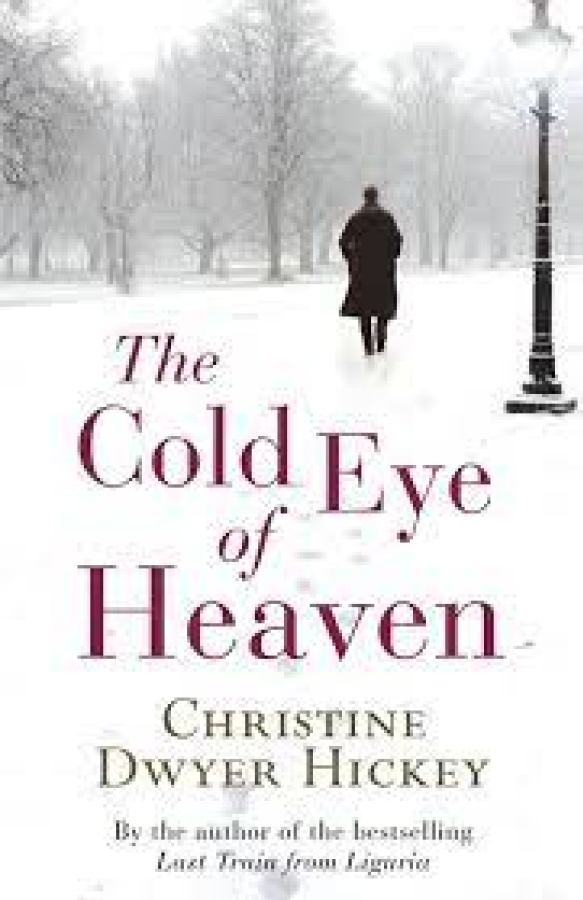
The cold eye of Heaven (Farley)
AI Translation Notice: This review was translated from the original Italian using artificial intelligence. Book quotes and excerpts are translated interpretations and will not match the author's original English phrasing or official published translations.
When drawing near to the end of life, one feels the urge to retrace one's existence through memory. Great men may indulge the illusion of leaving behind a remembrance through a biography teeming with characters and events: a grand narrative, of sorts, of their role in history. But when one is an ordinary man leading a banal existence, what meaning is there in chronicling one’s life? Nothing remains but that remembrance which sees us "in the fixity of a portrait," the fruit of a mingling of real facts and imagination (see Salvatore Satta's The Day of Judgment on this site); or, to put it in the words of Italo Svevo,
the most intense life is summarized by the most rudimentary sound, that of the wave of the sea, which, from the moment it forms, changes at every instant until it dies
(see Zeno's Conscience reviewed on this site). Christine Dwyer Hickey undertakes a venture even more daring than that of Zeno and Satta. On the surface, the author retraces Farley's existence as though it were a reverse chronicle of the most significant events of his life as an unassuming clerk: now in his seventies and alone, he anxiously waits to catch sight of his young neighbor who might "make him feel a little younger, just a little less old"; he frets over purchasing a suit suitable for his employer's funeral—a funeral to which, moreover, he has not been invited; we see him at his retirement reception wondering whether he will miss anything about office life, with
the stupid wisecracks and the arrogance of youth, the Monday morning trivialities and the smell of cheap aftershave, the too many annoyances and the senseless spites, the teachers' pets and those who couldn't care less about anything
Moving back through time, we see Farley caring for his mother, who always favored his intellectual, selfish, and absent brother; then with his mistress (his employer's wife), making the reckless decision to finance the firm he works for without demanding any formal record of the loan; and further back still, the devastating grief over the loss of his wife, the choice to go to work in order to marry, abandoning dreams of travel, the news of his father’s death when he was just twelve, and finally, at five years old in a hospital, the futile wait for his parents to visit. To be sure, Farley is the quintessential petit bourgeois; if he has flattened into a routine devoid of ambition and dramatic turns, it is ultimately his own fault: he has always made the least demanding choices, placing himself almost willingly at the disposal of others—be it his employer, his wife, his mistress, or his mother, his brother, and even the girl next door, yearned for in the erotic remnants of a poor old man. Yet if we place Farley "comfortably reclining in a Club armchair," as Svevo would have said, we realize how Farley's life revolved around a single waiting: that for his father. Take, for instance, two passages from the novel. Farley is five years old; his mother and brother finally arrive at the hospital, and he asks where his father is. Is he out fishing? To the woman's reply that he is at work and could not come to see his son, Farley perceives
the sound of gently flowing water. He sees himself now on a riverbank. (...) He is wearing the waders that reach up to his thighs: boots he recognizes from a box on a shelf as belonging to his father. (...) He is alone. Alone on the bank. A man, a boy, a child, a baby, a man again, all of a sudden
. Now he is old, at the end of the book. He watches his neighbor run to catch the bus, but cannot recognize the face.
Then his own father invades his mind. Face unfortunately clear. Died of a heart attack.. (...) In any case, certainly a bastard who never had the time or a word for anyone. A snarler. He snarled at the newspaper, snarled at the radio, snarled if you spoke to him while he was having lunch
. And at the funeral, so many fine speeches about a man he and his brother had never known.
A great conversationalist. An intelligent man. (...) Passionate about fly-fishing
.
The novel is a masterpiece. It is not merely the clever device of a reverse narrative. In each of the events of his life, Farley moves like Bloom in Joyce's Ulysses: a rambling yet captivating journey through the streets and shops of Dublin, among minor characters who evoke the sense of a solitary yet superficially sociable life (Farley is always in control of himself), among lateral, seemingly marginal reflections. What emerges is a sprawling path of the protagonist's streams of consciousness and of how the arduous manifestation of the self is rooted in places and relationships, rather than abstractly on a psychoanalyst's couch. Moreover, the prose is magnificent and vibrant: a deluge of marvelous words, of untranslatable phonemes in which one takes pleasure through the ear rather than the eye, of a lexicon crossbred with everyday speech, set within an overwhelming syntactic architecture—even if not immediately transparent to the Italian reader, and undoubtedly difficult to render into our language.
Why read it? It is splendid; the author is Joyce and Rushdie combined.