Finished reading on: March 09, 2016
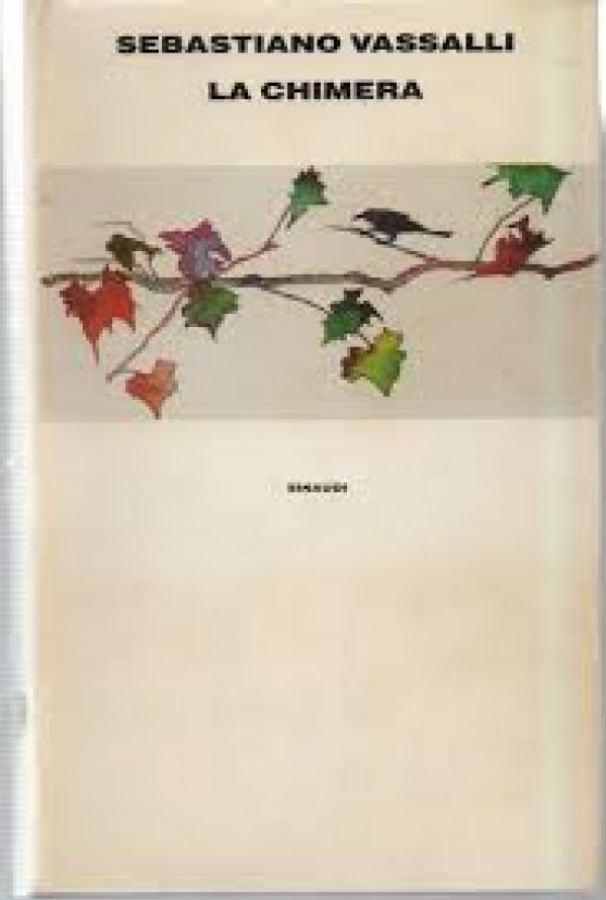
The Chimera
Title of the original version reviewed: «La chimera»
AI Translation Notice: This review was translated from the original Italian using artificial intelligence. Book quotes and excerpts are translated interpretations and will not match the author's original English phrasing or official published translations.
Before me, on my desk, as I write, lies a color photograph...
The photograph of Antonia
, or rather of one of the many Madonnas, all so alike, painted by an itinerant painter in the early years of the seventeenth century.
Those eyes, black as night and bright as day; that mole on her upper lip; those full, red lips, and then that rebellious curl escaping from the drapery onto her left cheek
....
it was a faithful copy of the portrait of Antonia, the fifteen-year-old witch of Zardino.
We may assume it was this photograph of an adolescent girl—«a state of grace, even before an age»—that prompted Vassalli to narrate
a grand tale, of a girl who lived between 1590 and 1610..., and of the people who were alive alongside her, during the very years she lived, and whom she knew; of that era and of those places
.
The places are Novara and a small village, now vanished.
Zardino
was a village like those others visible down there, a little to the left and slightly beyond the second overpass; beneath the greatest and most imposing mountain in this part of Europe, Monte Rosa.
(...) A chimera! From up there, from the summit of the chimera
today one sees
a hazy plain with a few scattered trees and a highway emerging from the mist
; back then, in the seventeenth century, one gazed upon
a landscape of vineyards and woods stretching toward the marshes and the riverbanks; of meadows and baragie (wastelands, heaths) (...); of fields of maize, wheat, and rice paddies
and a settlement which
between the houses was grey, cramped, primitive, and yet, in the fair season, all abloom with bindweed and climbing wild roses
.
In this era and in these places Antonia spent her brief life: abandoned at birth, having survived infancy, adopted by a peasant family of Zardino whose modest prosperity aroused envy and rancor, the girl was too beautiful, proud, and independent not to become the focus of gossip and spite among the village crones: she, «a foundling», what did she think she was, a fine little lady! Perhaps she might have grown into womanhood, married, and had children, had circumstances not dragged her toward a ruthless death.
She becomes infatuated with a «camminante», that is, one of those «anarchists of the countryside» who wandered in hatred «of all servitude».
Enamored precisely of his free spirit, of his tales of travel and cities, Antonia commits the imprudence of meeting him at night, at dusk, beneath an ancient oak tree that local lore held to be a haunt of evil spirits, the dwelling place of the Devil.
A fanatical young priest denounces her to the Holy Office, accusing her of witchcraft.
As chance would have it, a power struggle is underway between the Inquisitorial Court and the Bishop’s Curia, and poor Antonia becomes the unwitting victim of this political clash.
A scorching heat, a prolonged drought, and the dread of epidemics fuel the search for a scapegoat: and who better than a wretched peasant girl, far too reckless and spirited?
The flames crackled high, night became bright as day, tongues of fire merged into a single blaze.
(...) The witch’s hair could be seen vanishing into nothingness and her mouth opening in a soundless scream.
(...) Antonia was no more.
The crowd’s jubilation erupted.
(...) Then, at last, the celebration began
.
In the preface, entitled «Nothingness», Vassalli offers us a metaphysical interpretation:
to search for the keys to the present, and to understand it, one must step out of the noise: go to the depths of night, or to the depths of nothingness
.
If one steps away from the clamor and passion of our time, one realizes that history, and our very existence, are nothing more than a purposeless, meaningless flux—nothingness, precisely.
Why was Antonia sent to the stake? Why was she not granted the right to live? To prevent time from closing in upon us, to keep nothingness from reclaiming us, perhaps only a God could intervene, but
he is the echo of all our vain shouting.
(...) He who knows the before and the after and the reasons for everything, and yet, alas, cannot tell them to us for this single, utterly futile reason: that he does not exist.
With all due respect to the author, we must say that the novel’s enchantment does not reside in its philosophy of history; what captivates are the characters and the setting.
To be sure, they have all vanished, yet to us readers they still appear so profoundly alive in their feelings, in the petty and momentous motives that stir them and drive them to love, to believe, to survive, even through suffering.
And what of Antonia, a seventeenth-century figure yet so modern in her naive yearnings and wonder? Here she is arriving in Zardino, still a child.
The foundling, huddled between two sacks, watched it (the Novara countryside) flow past her wide-open eyes; and who knows what crossed her mind, seeing for the first time the mountains reflected and shattered in the mirrors of the rice paddies, and the long rows of pollarded willows, and all the rest.
(...) Perhaps, indeed probably, she was thinking of nothing; letting herself be lulled by the swaying of the cart and distracted by the novelty and variety of the sights (...) a heron standing motionless in the midst of a paddy, a flight of ducks...
Never mind metaphysics—this is true love for one’s protagonist!
Vassalli is a great writer from a stylistic standpoint as well.
The syntax is rich and articulate, marked by a masterful use of punctuation.
The detailed descriptions of the landscape, the nuanced depiction of characters—even the most odious among them, such as the executioner or the grand inquisitor—and the deft deployment of adjectives are all elements that render the narrative fluid and engaging.
Its only limitation, perhaps, is the excessive reliance on quotations from historical documents, almost as if striving to confer reliability upon the narrative.
Why read it? Beautiful, enjoyable, compelling, and profound.