Finished reading on: September 19, 2016
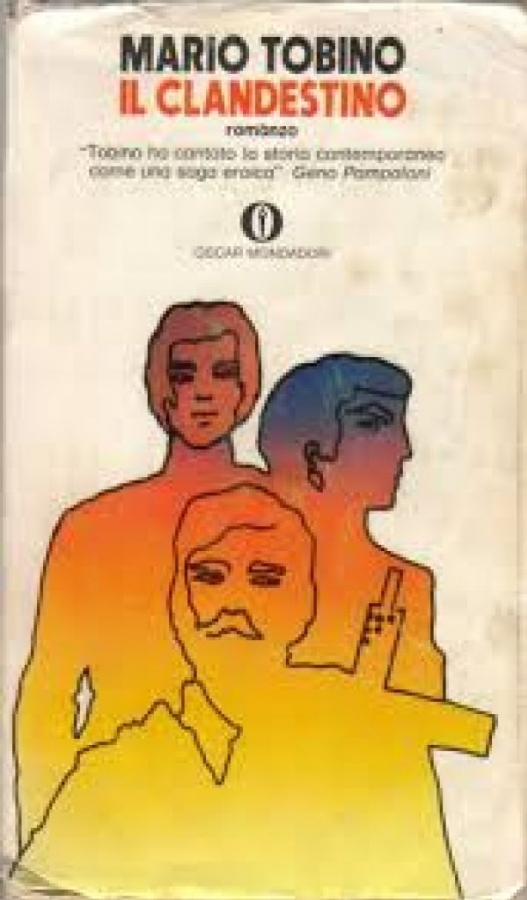
The Clandestine
Title of the original version reviewed: «Il Clandestino»
AI Translation Notice: This review was translated from the original Italian using artificial intelligence. Book quotes and excerpts are translated interpretations and will not match the author's original English phrasing or official published translations.
In the Resistance (the war of liberation between 1943 and 1945), the decision to take up arms against Nazi-Fascism rarely arose from a deliberate, mature reflection; more often than not, it was an act of unconscious bravado, oblivious to the risks being run.
As Luigi Meneghello wrote in I piccoli maestri, it was
a cry, (...) a collective (...) intoxicating feeling: one sensed the overwhelming power of things that rise from below, spontaneous things
.
Mario Tobino, too, explores the choice of the partisan struggle in depth, doing so in his signature style, that of one who "studies men and loves them."
Anselmo is a young medical officer, recently returned from Libya.
He was still dazed by the war, the soldiers’ groans still in his ears, having been a spectator to cruel deeds.
Like the protagonist of Cesare Pavese’s novel (La casa in collina), he yearns for "a lethargy, an anesthetic," in order to
rediscover the goodness, the tenderness that, beyond all ugly violence, must still exist in the world
.
One day, after September 8, a woman stops him in the street.
I was waiting for you, I wanted to ask you, since you fought in the war.
(...) Who did this? Who are we with now? What did they make us believe? Whose fault is it? And all those who died, poor souls? (...) I saw them die, it was all for nothing...
replies Anselmo, and "felt he was stupidly on the verge of tears."
For the young man it is a jolt, an awakening; he must shake off his torpor, spring into action.
In his hometown, Viareggio (called Medusa in the novel), a group of youths has established an underground organization: they style themselves Marxist-Leninists, profess to be communists, even though they have never read Marx or Lenin and have not yet had any contact with the resurrected Communist Party (though they yearn for it ardently).
Then there is an old admiral who longs to act; he was retired by the Regia Marina for his anti-fascist stance.
yet he is fueled by a boyish urge to fight, to show the Fascists and the Germans what he is made of.
Anselmo soon becomes the liaison officer between "the clandestines" and the admiral; he is entrusted with delicate and difficult missions, which he always manages to carry out exceedingly well, thanks to his poise and his gift as a subtle weaver of human relationships.
Tobino guides us through the early steps of the partisan struggle as though it were an escapist novel; perilous situations, recounted nonetheless in an exhilarating, ironic vein, intertwine with the depiction of the growing bond forged among the young conspirators—youths not yet adults, of profoundly different temperaments, varying social backgrounds, and unequal levels of education, yet forever animated by a zest for life and a mutual understanding that transcends their shortcomings and divergent dispositions: action leads to friendship, and friendship to unity.
The clandestines, just like the admiral, live on the brink of the abyss as though it were a game—risky, certainly, but undoubtedly bound for a happy ending.
The cruel face of war emerges, belying our wish for a serene adventure: this is not the cinema, as one of the book’s protagonists daydreams! Searches, roundups, and arrests begin.
Anselmo takes part in the killing of a Fascist in La Spezia; he himself kills a squadrista who had brutally murdered the admiral.
They must leave Viareggio and head into the mountains to fight the partisan war, where Anselmo will meet his death.
He closed his eyes (...) and at once dreamed he was in a wood dense with foliage; he lay stretched out, fledgling birds flew around him, brought their beaks close, opening them as if laughing, like children content after a meal
.
Anyone expecting Fenoglio’s Il partigiano Johnny cannot help but be disappointed: here there are no solitary heroes.
The novel is constructed linearly, without bombast, an open chronicle rich in endless possibilities, capable of humor because it is lucid, transparent, and yet affectionate toward its characters—even toward the Fascists.
But why do the Fascists do this? Anselmo asked himself in a murmur
.
The resolve of the "clandestines" takes shape from events; it is events that make them adults, mature them politically, turn them into fighters, convinced all the same that, just as ships can sail through calm waters as well as rough seas, even among the trees, where
death whined, (...) there was nevertheless happiness, gladness, in the face of the present solitude
.
Why read it? A splendid book by a regrettably forgotten author.