
The Master and the Infanta
In Canto XVII of the *Paradiso*, in verses 43–45, Dante recounts that his ancestor Cacciaguida turns to music to explain his vision of the poet's impending exile: > thence (from the divine mind), even as to the ear comes / sweet harmony from an organ, so comes / to my sight the time being prepared for you . The sound of an instrument's strings, together with the sweetness of the voice, is a divine gift granted to humankind to soothe the wounds of both body and soul—and, for Dante, to endure the prophecy of his sorrowful wandering. Is this true, or is music merely a palliative? If we probe Alberto Riva's novel beneath the surface, we must conclude that while music induces a kind of wondrous bewilderment, it can do nothing to heal loneliness, depression, and madness. We are in the eighteenth century, between 1720 and 1758; Domenico Scarlatti, son of the more renowned Alessandro, arrives in Lisbon to become a musician in one of the wealthiest courts of Europe at that time. Domenico > is a man in his late thirties who looks a few years older, with a prominent knobby nose and eyes of a shifting hazel, distant, perhaps flawed by a slight squint: his skin is exceedingly pale and his clothes black, a resolute, mournful black. (...) For years, his father kept him bent, almost kneeling over the keyboard for hours on end every day, especially at night . Shy to the point of rudeness, he is certainly neither the classic cicisbeo nor a man of polished manners, as the elegant and vacuous society of the eighteenth century would demand. And perhaps precisely because of his sullen and independent nature, he is unwilling to endorse the sovereign's wish to stifle the musical inclinations of the Infanta, the plump and rather plain Maria Barbara. Instead, Domenico becomes her tutor, refining and exalting the girl's natural gifts; a bond is forged that will endure over time, even after Maria Barbara marries the heir to the Spanish throne and subsequently becomes queen. Any composer of the age, from Vivaldi to the singer Farinelli, would have seized upon such circumstances to secure fame and wealth. Not so Domenico Scarlatti; driven by a somber frenzy, he vanishes into taverns, where > he listens to imaginative arrangements transposed onto the strings, carried by female voices . In Inquisition-era Spain, he frequents the world of the gypsies, where he discovers that > within that Andalusian folk lay a buried civilization, and that civilization was music. That the guitarra is the unwritten book through which a history is handed down. But it is not just the guitarra: it is the hands, the voices, the fingers, even the feet. (...) They ask us why our singing is deep (explains the old gypsy). They ask us for the secret of cante.....And we answer: our singing is the search, our singing is the journey. (...) a mysterious drama, a drama without an ending . All his life Domenico pursues something indefinable, and finds it, perhaps, by wandering through the poorest, most disreputable quarters. > Anyone who had caught the maestro unawares on one of those nights would have seen him slightly slumped, an elbow on the table, one leg stretched out, a certain look in his eyes. (...) He looks at his hands: his relationship is with the instrument. (...) His relationship with the instrument is one of interrogation. Of progressive unveiling . Had it been up to Domenico, the musical exercises—the famous Scarlatti Sonatas—would have been lost: perhaps the musician deemed it futile to leave behind compositions incapable of soothing his *male oscuro*. It is to Maria Barbara's credit that we know them today. The novel's framework is something poised between historical reconstruction and an introspective inquiry into the two protagonists: Domenico Scarlatti and the Infanta Maria Barbara, as well as the idiosyncrasies of their relationship. Music, and the mysterious allure of the Sonnets, have prevailed over a narrative that might have placed the two protagonists on equal footing: Maria Barbara remains in the background, flattened by the duties and demands of her station; beyond the fascination of the musical exercises composed by the maestro, what truly bound Maria Barbara to a man so withdrawn and discourteous? The only significant element is Maria Barbara's stubbornness, her determination to preserve Scarlatti's work and bring him renown. Could a repressed love for the man have driven her? We shall never know, because the musical and biographical genesis of the Sonnets took precedence, consigning Maria Barbara once more to the oblivion from which the author had sought to rescue her. The prose is plain and flows placidly, neither attracting nor repelling. Only when the author depicts glimpses of Lisbon do impressions rich with vivid colors emerge. Here is Lisbon, perhaps frequented and beloved by the author: > something grim, that smell of dissatisfied souls, of unhappy men, (...) and then the city, opening onto an estuary that is already the sea, composed of shifting colors, of ascents and descents, of sudden azures, turquoises, ultramarine blues. > And the City understands/And kindles/ And the flame titillates and absorbs/ The magnificent remnants of the sun/And weaves a shroud of oblivion/ Divine for weary men . (Dino Campana, *Genova* in *Canti Orfici*).

The House by the Medlar Tree
The setting is a fishing village in late nineteenth-century Sicily. The Malavoglia are a family of fishermen, owners of a boat (the *Provvidenza*) and a home with a small plot of land (the house by the medlar tree). Life unfolds serenely and with dignity within a community that respects the Malavoglia because they are economically self-sufficient. In short order, a succession of misfortunes plunges the family into poverty and grief: the *Provvidenza* is shipwrecked, claiming the life of Bastianazzo, the son of Padron ’Ntoni, and a cargo of lupins is lost. The family is forced into debt to repair the boat and repay the loan contracted to purchase the lupins. Then one of the sons, Luca, dies as a soldier, and a second shipwreck forces the sale of the house by the medlar tree as well. ’Ntoni, Padron ’Ntoni’s other grandson, turns to smuggling; surprised by the police, he severely wounds an officer in the ensuing scuffle. To spare him a life sentence, the defense lawyer invokes the officer’s pursuit of one of the Malavoglia daughters, who, consumed by disgrace, flees the village. Following this series of catastrophes, the novel appears to conclude on a positive note: Alessi, Padron ’Ntoni’s other grandson, manages to repurchase the house by the medlar tree. In reality, this positive note bears witness to the cyclical nature of history, the perpetual struggle for survival composed of positive moments and negative ones—the latter far more frequent. Alongside the Malavoglia family, the book’s other primary subject is the community itself, embodied by a gallery of characters, their mutual entanglements, and their utilitarian logic, but also by a continuous intertwining of economic concerns with gossip, the hunt for husbands, moral hypocrisy, and, ultimately, indifference toward misfortune. No one aids the Malavoglia, save for fellow unfortunates, while the propertied families—or those who perceive themselves as such—abandon them, as misfortune is, at bottom, regarded as evidence of guilt. It is a complex work, layered with manifold themes. In the background lies an absolute fatalism, reflecting a destiny already sealed by social hierarchy and economic utilitarianism: > What ails you? he would ask him. Nothing ails me, only that I am a poor devil. And what can you do if you are a poor devil? We have to live as we were born . "When a man cannot catch good fortune, he is a fool, as everyone knows." It would be reductive, however, to limit the novel to a mere mirror held up to society, or to subsume it under a kind of philosophy of history. In truth, the vitality of the various characters, the narrative tempo, and above all the language—highly idiosyncratic in that it is non-dialectal yet profoundly representative of its milieu—are all elements that elevate the narrative into a realm that is non-realistic, imaginative, and expressive of universal sentiments. If one compares Verga’s work with those of Émile Zola, particularly *La Terre*, a profound difference clearly emerges. Verga’s novel seeks neither to sensationalize nor to incite revolt or desolation; instead, it operates on the terrain of "lightness," steeped in irony toward a society locked within its own rigid codes and incapable of comprehending the heroic spirit that animates the Malavoglia. The clash between individual (and familial) heroism and the narrow-minded conservatism of society constitutes an inherently Italian theme, and is thus emblematic of a culture and a country.
Malombra
Benedetto Croce panned this novel, Fogazzaro’s first, observing that it lacked “the central intuition that dominates all others,” offering instead an irritating confusion. One is tempted to agree with him if one allows oneself to be led merely by the plot, with its innumerable secondary episodes. If, however, the book is read from the perspective of one of its protagonists, Corrado Silla, it becomes evident that one is faced with the narrative of a troubled spiritual journey, unfolding amid existential unrest and the quest for faith—the only thing capable of providing balance and serenity. Silla, behind whom the author conceals himself, is an > intellect lacking lucidity, mystical in its tendencies, powerful through certain fleeting intuitions rather than by any steady, inherent vigor.. he had vague, unpractical ideas, an ardent spiritualist.... he loved, even in slight matters, to lean upon some grand general principle . He has written a short story, ignored by both the public and the critics, which has nevertheless aroused considerable interest in Marina di Malombra, a young aristocrat, orphaned and penniless, taken in on that account by a wealthy uncle. The writer portrays her before the mirror: > from the ample dressing gown emerged, as from a white cloud, the slender, elegant neck, and between two torrents of dark-blonde hair, wherein shone two large, piercing eyes, fashioned for dominion and for voluptuousness... with a toss of her head she cast behind her shoulders the two torrents of hair and who knows how many turbid thoughts . Silla and Marina share many affinities, above all a restlessness that manifests in impulsive actions and in disordered, hallucinatory meditations; yet poor Corrado, weak and insecure, is overwhelmed by the woman, who banishes him, seeks him out, desperately summons him, professes her love, and ultimately kills him. Marina, on the other hand, is ruled by the phantoms of the past—specifically, by the mad determination to avenge the murder of an ancestress, the first wife of her uncle’s father. She sees in Corrado the reincarnation of the murderer and, despite loving him, must nevertheless punish him with death. The relationship between Silla and Marina has no rational, psychological foundation; it belongs entirely to the realm of the magical, the fantastic, and the dream. Silla’s fault lies in succumbing to the dark allure of a spiritualism unanchored to faith, to rationality, and to the order of the Catholic religion. Conversely, the other narrative thread, the pairing of Silla and Edith, develops around the search for faith. Edith is a German girl who has come to Italy to be reunited with her father, an aging exile who had found refuge with Marina’s uncle. > She was graceful in her black dress, exceedingly simple, short but not excessively so, with a small bunch of violets at her waist.... in her delicate, faintly rosy face, the mouth and eyes bore a more pronounced expression of firmness. It is strange how those eyes expressed an understanding of real life, tempered with goodness..... as though another spirit infused into hers, a melancholic spirit, were somewhat revived by her gaiety . Faith governs Edith’s personality and directs her feelings and conduct. “Edith’s elegant, dark figure, which he clothed in poetry,” captivates Silla, who yearns to find in her the balance he so desperately needs. > And he felt within himself a serene light, a warmth so distant, it seemed to him, from indifference as from passion, a rising of some indefinable faith . Yet the summons of Marina’s dark allure proves too potent for Silla, just as Edith is too confined within a religion of sacrifice and duty to fight with the necessary passion for the love she nonetheless harbors for Corrado. And “the demon of somber voluptuousness” leads Silla to his death. Edith is left with nothing but the memory of what her life might have been, a destiny she accepts with Christian resignation. Meager consolation and a thoroughly hypocritical justification for a bloodless love, incapable of fighting for the beloved! And what kind of religion is it that leads to timid passivity, to being mere spectators of one’s own life and that of others? Beyond the lack of cohesion underscored by Croce, the fundamental flaw of the book lies in the purely literary treatment of the characters, who rarely take on real life. Moreover, the entire novel is steeped in, and weighed down by, lengthy philosophical and religious digressions, as abstract as the depiction of its protagonists. The most compelling feature of the book is its landscapes. Nature is painted in bold strokes—at times somber and tempestuous, at others luminous and serene. Above all, nature possesses “a soul,” one that is indeed living and real: a soul that reflects and amplifies the characters’ emotions, thereby bestowing upon them at least a semblance of vitality. Like mankind, nature is fraught with contradictions, admirably synthesized in descriptions of the landscape such as this: > a lake modest in size and fame, passionate, changeable; now violet, now green, now leaden; at times, toward the plain, even azure . The contemplation of the landscape captures the eternal yearning of the human soul: > oh amorous fury of blossoms reaching toward the omnipotent sun, exultant grasses, drunken with wind, what solace to be you, to live your single-day life, to feel memory fall silent, and the heart, and that wearying tumult of thoughts relentlessly battling together, making and unmaking the future . Why avoid reading it? It is a tedious, prolix, inconclusive book.
The Manuscript Found in Saragossa
The best introduction to this strange book is the figure of its author: Count Potocki, who lived between 1761 and 1815, when he died by suicide. A great traveler, ethnographer, archaeologist, geographer, and philologist, Potocki was the quintessential exponent of the eighteenth-century Enlightenment: his curiosity and immense erudition were placed at the service of a rational approach to reality. A keen observer of religions and customs, Potocki was likewise drawn to esotericism, spiritualism, and the realm of the fantastic in general. The complex interplay between reason and mystery is the guiding thread of the manuscript, whose own history is no less obscure and unbelievable: written in French, it was lost, resurfaced in a translation from an alleged Polish version, and finally what may be the original French text was recovered. Constructed in the form of the *Decameron*, as a series of novellas divided into days, the novel recounts the adventures of Alfonso, who must cross the Sierra Morena to reach Madrid. In fact, the young protagonist—and narrator—makes very little headway, as he finds himself sucked into an infernal and mysterious loop between the gallows of two hanged men and an abandoned inn: in the morning he awakes among decomposing bodies, by day he travels toward the inn, and at night he is visited by two splendid women who claim to be his cousins. In this continuous shuttling back and forth, he encounters other characters who tell him their stories, fraught with apparitions, skeletons, and supernatural retributions. Despite situations that obsessively defy rational explanation, Alfonso continually attempts to find a rationale for them and refuses to accept the existence of mystery. > Perhaps at the inn I had been given a draught to put me to sleep, after which nothing could be easier than to transport me during my slumber beneath the fatal gallows. Pacheco (a madman or demoniac whom Alfonso encounters) might have lost an eye in an entirely different accident than through his amorous liaison with the two hanged men, and his frightful tale could well be a fable.... But slowly he is overcome by a sort of «annihilation of all my faculties».....( he begins to realize the existence of a powerful cabal) > which seems to have no other purpose than to conceal who knows what secret, or to bewitch me with sorceries that I sometimes partially manage to penetrate, but which then, through other circumstances, soon plunge me back into doubt. It is clear that I, too, am part of this invisible chain . Reason wavers before the inexplicable, and vast erudition can be, at best, «agreeable company,» yet it risks ending up like the hundred volumes of another character in the novel: gnawed and destroyed by rats. The narrative structure is founded upon the singular repetition of the same prophecy: an ever-identical situation, reproduced and multiplied through a series of fantastical combinations that seem to have a single aim: to assault the stability of rational interpretation. This repetitiveness, which might otherwise render the reading tedious, is sustained by an explosion of narrative invention and by a style that is pleasing, imaginative, and often ironic. Thirsting for experience and knowledge, Potocki meant to tell us, with this unfinished novel, that life is wondrous. Why read it? It is an enjoyable and fantastical book.

The Maintenance of the Senses
> They whisper among the neon lights/under the canopy. They want/me to strain my ears/and recognize them one by one/as the night trains arrive/at the station of memory. Who are you?/Where do you come from? I would like to ask,/but my shadow swerves/on the platform of so many sudden/departures, my heart shrivels,/air runs short...: Is my wife with you?/Let me hear her voice once more/I plead, flinging my arms open/in a dream now extinguished (Stefano Simoncelli, from *Terza copia del gelo*, 2014). The protagonist/narrator is a reporter, perpetually abroad; and so he was when his wife Chiara died suddenly. > I wasn't there. I was far away, on an assignment. Photographs of Chiara are everywhere, almost as though he wanted her still present, yet he never speaks of her, > the pain has self-fertilized, has expanded. Burdened by loss and guilt because he was absent at the moment of his wife's death, he lets himself go, neglects his work, abandons friendships, feels like > a usurer of feelings. It is into this state of existential crisis that Martino bursts: an eight-year-old boy with Asperger's syndrome, one of the many forms of autism. His daughter Nina brings him to him, leaving the father to manage the child on his own. It is an unusual encounter: a man who let himself drift with the flow of existence, and a boy for whom it was enough to sit nearby, turn on a computer, without necessarily having to converse or get involved, > always without exchanging too many confidences, but also without distress. From this stems a slender story, in which an adult and a child help each other discover a bond that transcends the dimension of responsibility, solidarity, and sentiment. There is no striking, salvific ending, nothing that offers us a moral, a lesson: the story concludes with an embrace. > I would have liked to embrace him, raise my hand and then my arm, and finally gently take him by the shoulder and hold him tight. (...) "What are you thinking about?", he had asked me, just as my thought was about to be filed away in the drawer of resignation. "About the fact that I'd like to hug you." (...) He hadn't answered, keeping his lips pressed together for a while. Then he had leaned into me, burying his head under my armpit and starting to tap gently. And so the dead can return, > leaving behind only fragments that no longer have a place in memory. What gives us the strength to move forward is not remembrance, but caring for others: call it Love. The novel's title does not reflect the meaning of the story: rather than *maintenance of the senses*, it ought to be titled *discovery of the senses*—not those we habitually think of today: sex or romantic relationships (in truth, the protagonist stumbles into a few fleeting affairs); I refer to that physical bond that employs the entire spectrum of our senses without expecting anything in return, be it play or gratification. It is a pity that Faggiani addressed such an important topic, that of the discovery of the senses, by framing it within an escape from the city, in an exceptional setting such as the mountains. Which of us can afford to go and live in a chalet in the woods? And who can afford to live > as we wanted to live , free, watching > the Earth turn without hearing its noise?. It is not clear whether this is an autobiographical story; what is certain is that the context is too flimsy to give depth to the narrative, beyond some interesting, yet fragmentary and sporadic insights. The writing is the novel’s fundamental merit, even if the style is at times journalistic, with an overabundance of periods, gerunds, and verbless clauses. Take this example: > But he hadn't answered me (already Word's grammar checker would have marked as an error the "but > after the period), probably he was negotiating, reassuring, supporting someone. Someone else, instead of yours truly. Wasn't a comma sufficient before someone else"? And aren't three gerunds in a row too many? The narrative develops slowly, without twists; the characters remain suspended, without their inner turmoil ever truly being understood: so many feelings crowd in, yet always on the surface. Why not read it? Too fragile.
The Marquis of Roccaverdina
The setting is the Sicilian countryside of the second half of the nineteenth century. Rabbàto is a small town, long awaiting rain to put an end to the drought that is driving the entire community to destitution and hunger. The Marquis of Roccaverdina is a wealthy landowner who lives as though the world were immutable and acknowledged his boundless power over things and people. He had long taken a peasant woman, Agrippina Solmo, as his mistress. To keep up appearances, he decides to give her in marriage to his bailiff, on the condition that the marriage must remain unconsummated. Jealousy drives him to murder the bailiff and then to orchestrate the conviction of a poor peasant, who will perish in prison. He feels no true remorse for these outrages (the abandonment of his mistress, the murder of the bailiff, and the condemnation of an innocent man), since, after all, they are merely common folk and to the Marquis of Roccaverdina everything is permitted. Rather, he senses a creeping fear, “the usual apprehension of perils lurking in the shadows.” The abandoned mistress and the murdered bailiff “would suddenly appear and just as suddenly vanish,” and > he felt the strange sensation of walking upon unstable ground that might collapse beneath his feet at any moment . It is cowardice that acts as the catalyst driving the Marquis—previously so confident in himself and his social standing—to doubt, to reflect upon the very existence of God and the validity of religion, upon mankind, and upon himself. In vain, he seeks solace in feverish activity, throwing himself into politics, launching an enterprise to modernize wine production, and marrying a local noblewoman. Only the sight of the countryside, bathed in rain, affords him a measure of peace: > let us leave this subject, for now. Look. The countryside looks like a garden! An immense expanse of green, in a thousand shades of green, from tender to somber, almost black; a triumph, a frenzy of vegetation even in the most unyielding soils, which had never borne a single blade of grass! The suicide of a peasant, from whom he had extorted land through threats and abuse of power, unleashes the madness that leads the Marquis into dementia and, ultimately, to death. In his final illness, only his mistress remains at his bedside to attend to him, a testament to a love that transcends social hierarchy. Yet appearances prove stronger than affection: the poor woman cannot remain at the moment of the Marquis’s passing, and she > let herself be dragged away, offering no resistance, humble and resigned as she had always been, convinced herself that she could no longer remain there, because her destiny had willed it so! It is a complex novel: on the one hand, a rigid and immutable social order within which the characters move according to predetermined roles; on the other, the figure of the Marquis of Roccaverdina, who seeks to break these social moulds, both from an economic standpoint (new crops, modern processing methods, technical innovation, cooperative models among producers) and in the realm of personal affections and feelings. The Marquis has no love for his own social milieu; he feels far more at ease among the peasants, with the old servant woman who raised him, and with the mistress for whom he killed. His madness stems precisely from the contradiction between an unfettered, almost “superhuman” will, and the inability to shake off cultural and social conditioning, superstitions, and the dread of divine retribution. Why read it? It is an absorbing read and a strikingly modern novel. The figure of the Marquis of Roccaverdina is emblematic of an inner conflict typical of our own time.

The sea does not bathe Naples
Anna Maria Ortese returns to Naples, a city from which she has been absent for many years. Officially, she was commissioned to interview young Neapolitan writers, some already renowned, others destined to become so: Prisco, Rea, Incoronato, and La Capria. A long chapter recounts, precisely, her visits to these authors, and we come to understand how the city’s immediate postwar cultural and political awakening had by then dissolved, leaving behind disillusionment, resignation, and pessimism, and driving an exodus toward Rome and Milan. When she meets Prunas, the guiding spirit of the review *Sud*—by then defunct, yet around which so many intellectuals had once gathered full of ardor and hope—Ortese perceives > an infinite grief and curiosity: you must have pity, those extinguished eyes seemed to say, you must avoid looking. Is it true that we are dead?, he asked, is it true that we have been absorbed by the city, and are now at peace? (...) The city had destroyed him. And why should it not have destroyed him? All had fallen here, those who had wished to think or to act; all tongues had grown confused and had gone to swell the sorrowful human vegetation. This nature (Naples and its people) could not tolerate reason, and against man it mobilized its armies of clouds, of enchantments, so that he might be dazed and submerged. The journalistic inquiry is merely an expedient: the author wishes to lose herself, to become disoriented, to seek out a “vision of the intolerable,” possible only in a city, like Naples, in which everything is > conceived, imagined, dreamed, and even artistically realized, but not real: a disquieting representation . The book opens with several sketches of Neapolitan life, the most accomplished of which is undoubtedly the first, *Un paio di occhiali*. In a putrid, foul-smelling district, the sun touches only the highest balconies, while the rest is nothing but shadow and filth; yet the people joyfully greet the sunny day, as though > that air, that celebration, and all that azure suspended over the paupers’ quarter were also theirs. A poor girl, nearly blind, anxiously awaits the eyeglasses that her family has purchased for her with their meager savings. Yet can someone who has never seen what reality is truly like bear the sight of it? Is it not better to see everything blurred? > Eugenia, still holding the eyeglasses with her hands, walked as far as the doorway. (...) Suddenly the balconies began to multiply (...) the vegetable carts were tumbling down upon her; the voices filling the air, the shouts, the whipcracks, struck her head as though she were diseased. (...) So many holes, so many ants ; a sense of bewilderment seized her, reality was too intense to bear. Following these sketches—brief, elegant, and evocative—comes the account of a visit to a massive tenement building, which houses families who can no longer afford a decent apartment. The author is guided through the long corridors, from the first floor, composed of dark, foul-smelling dens, up to the third floor, where the dwellings are cleaner and brighter. The trajectory of those who enter the building is always the same: at first they reside on the highest floor, only to descend, inexorably, lower and lower. > The children, once neat and cheerful, in that darkness became covered in insects and their faces grew ever more somber and pale, the young women took up with married men, the men fell ill. No one ever climbed back up from down below. (...) There was something calling from down below, and whoever began to descend was lost, but only realized it at the end . The vast tenement is a metaphor for the anthropological, social, and existential condition of Naples, where the plebeians and the bourgeoisie coexist, mutually indifferent, like > shadow, weakness, neurasthenia, resigned fear, and impudent gaiety . In the preface to the 1994 edition, Ortese admits that > the writing of the *Mare* has something exalted, febrile about it; it tends toward a high pitch, borders on the hallucinatory: and almost everywhere on the page it exhibits, despite its rigor, a certain excess: in it, all the signs of an authentic neurosis are manifest . This judgment is the perfect diagnosis of the book: the individual pages, sentences, and words are often magnificent, rich, and capable of fully rendering situations and emotions; yet the whole remains disordered, confused, and unresolved, such that any conclusions must be drawn from the author’s own words. It is an outcry, a desperate indignation against a reality that is, for Ortese, “incomprehensible and hallucinatory”: the demise of the dream of Naples’ rebirth, and therefore a defeat. Why read it? It is exceptionally well written, and above all, the visit to the vast tenement possesses an astonishing vividness: a true masterpiece.
Mastro Don Gesualdo
The novel is set in Sicily in the first half of the nineteenth century: an ancestral, arid land, > a sun-scorched expanse, hills upon hills, tumbling over one another, bare, parched, stony, scattered with rare and stunted olive trees, with dusty prickly pears . Ever since his youth, Mastro Don Gesualdo has toiled relentlessly to amass wealth and > defend his property against everyone, to pursue his own interest, with not a single person in the town who was not his enemy, or a dangerous and dreaded ally . Moreover, as a commoner outside the circle of local landowners, he must therefore > always conceal the fever of profit, the blow of bad news, the surge of joy; and always keep a closed face, a watchful eye, a grave mouth! He has the opportunity to escape the marginalization to which his peasant origins condemn him: he can marry Bianca, a member of the ancient yet decadent aristocratic Trao lineage. At a reception hosted by an exponent of the local nobility, Don Gesualdo ( > freshly shaven, dressed in fine cloth, with a brand-new hat between hands eaten away by lime ) makes his entrance among the town's notables, only to realize that marriage will not allow him to lower his guard. And it is precisely to take revenge for the icy, contemptuous reception of his marriage by his wife’s relatives that Mastro Don Gesualdo flouts all local traditions by taking on the lease of the communal lands entirely alone, and at an exorbitant rent. The description of the auction is one of the finest passages in the novel, depicting the landowners as they attempt to repel Don Gesualdo’s assault, then seek to invalidate the auction, and finally try to broker a deal—exerting pressure on Bianca as well, and thus appealing to the very kinship ties they had previously repudiated. Yet our protagonist presses onward along his path, steadfast in his position > with his foolish little smirk, the only one who did not lose his head in that bedlam . Don Gesualdo’s victory—first and foremost a social one—concludes the first part of the novel, undoubtedly the most accomplished, owing to the detachment with which Verga narrates, through brisk and rapid dialogue, the dynamics of money and relationships within the local petty aristocracy. The characters seem like puppets trapped within their social roles: there is no psychological introspection; instead, the cold facts speak for themselves. Subsequently, an ideological and stylistic shift takes place: the novel descends into a sugary sentimentalism, taking on the characteristics of a serialized feuilleton. Bianca proves to be an obedient yet distant wife, who shows neither affection nor intimacy toward Don Gesualdo, thereby reaffirming the disparity of their social origins. Their only daughter, Isabella—perhaps the product of an earlier liaison of Bianca's—grows up spoiled and contemptuous toward her father, whom she too regards as a coarse peasant, failing to grasp his sacrifices and toil. Don Gesualdo, now aged and ill, sees the estate he accumulated with such hardship squandered by his daughter and son-in-law, and dies amidst indifference and solitude. And yet, even on his deathbed, he commends to his daughter > his property, to protect it, to defend it.... He explained what his estates had cost him... he reviewed them all lovingly.... he described them minutely, clod by clod, his voice trembling, his hands trembling, the blood still flushing his face, tears welling in his eyes . Only out of a pang of conscience does he implore his daughter to give something (“you will consider it a gratuity”) to the illegitimate children he had by a servant woman—the only person who ever truly loved him. Numerous critics consider the novel to be the > demystification of the social climber.... implicitly aimed at striking at the core values of bourgeois society itself (Romano Luperini 1968) and the chronicling > of the rifts induced in the fabric of an archaic economy and a peasant society by a capitalist-bourgeois economy and society, governed by a brutal, exclusive economic code, by the alienating logic of wealth and possession (Vitilio Masiello 1972). This interpretive approach is superficial and reductive when set against the complexity of Verga’s pessimism. While it is true that the author has his character state that “everyone in the world pursues their own interest, and goes their own way,” it is equally true that the accumulation of property is perceived by Don Gesualdo as a calling—one about which he can only lament, but from which he cannot escape. Likewise, the other characters are all trapped in a social destiny that forces them to live in existential—and at times physical—misery. One need only consider the figure of Bianca herself—among several others in the novel—who is forced to marry a man she does not love and spends her entire life frail and ill. And so, perhaps, the true interpretive key to the novel lies in the impact wrought upon the human personality by an immobile, static social structure that permits neither ascent nor escape. One of the earliest commentators on the novel observed that Verga never reveals > his characters through the internal workings of their soul: he makes them act, he does not show them in the act of thinking (Guido Mazzoni 1890). This authorial approach lapses into superficiality and obscurity in the second half of the novel, where the narrative pace becomes relaxed, fluid, yet conventional. In the first part, up to the magnificent auction scene for the lease of the communal lands, the predominance of dialogue over narration and the reliance on brief character sketches are remarkably original literary devices designed to distance the author and capture the protagonists, highlighting their total surrender to their social roles and effacing the inner stirrings of thought: they are not conscious subjects, but societal marionettes. Why read it? It can at times make for demanding reading, but the novel’s first part is well worth the effort.
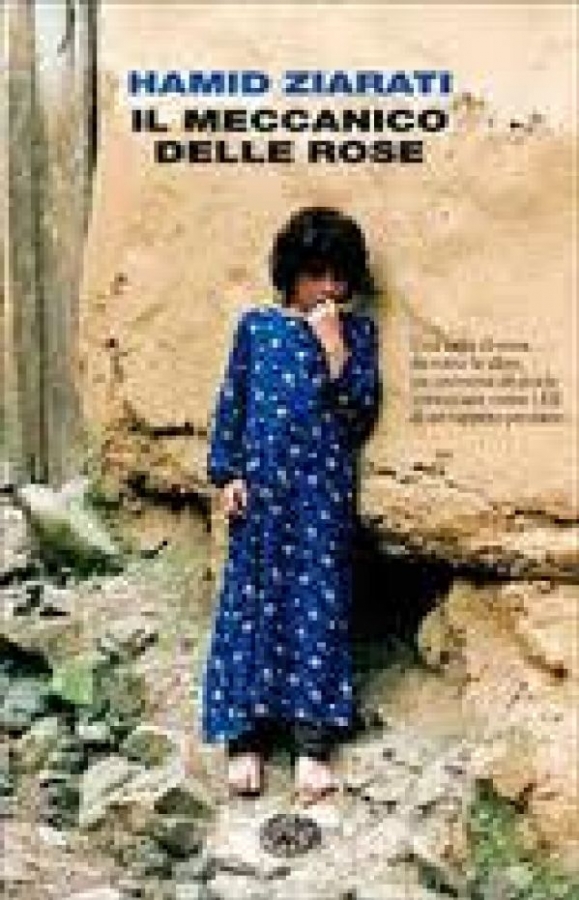
The Rose Mechanic
The novel, written in Italian, is set in a country never named, yet readily identifiable as Iran, before and after the Khomeinist revolution. There is perhaps a protagonist, Reza, but he is a figure merely "brushed upon," about whom we know little because his character and fate are determined by the circumstances and personalities of the other characters. Or perhaps he has no need to express himself because "he > is steadfast, with just the right dose of opportunism and selfishness to survive, while those around him are too fragile to endure in a harsh and cruel world. The novel is structured into five chapters, corresponding to the characters who shape Reza's fate. In the first chapter, Akbar takes advantage of the people's credulity to replace his stillborn son with an infant, Khodadad, abandoned on his doorstep. To do so, however, he must cry miracle, thereby offending faith and sealing the fate of Khodadad, who from that moment on will be marked as one favored by God, as one capable of raising the dead. Akbar then commits another sin: he makes love to his sister-in-law, who will later give birth to Reza. The entire narrative thus originates from a dual deception, and it is as though a curse hangs over all subsequent events. In the second chapter, Khodadad, no longer able to bear the role of the miraculously saved > , flees together with Reza to seek a new life in the big city. To convince his friend to follow him, Khodadad leads him to the cemetery, where there is an empty grave, already dug so as not to be caught unprepared by God's inevitable summons. Going to the city, the boy says, is the only way we have to save ourselves from that end there." Yet the practical and prosaic Reza rightly replies to him, "if it's not there, it will be elsewhere > . Life in the city proves far more difficult than they had anticipated, though it must be said that Reza adapts much better than Khodadad. During an altercation with their master, who refuses to pay them, Khodadad is mortally wounded while Reza kills the man. The two boys flee, deciding to part ways. And so Khodadad fades away alone, with the sole consolation of the angel of death, Ezrail, who swayed him, singing in his ear, in a whisper, the lullaby of oblivion, the only one he knew > . In the third chapter, the novel recounts the sad tale of Donya, which, it must be said, hews a bit too closely to the plots of many a nineteenth-century tearjerker. After a wretched adolescence brought on by a cruel stepmother, the girl falls in love with the classic gentleman > of good family and is forced to marry a man she does not love—namely Reza, who has in the meantime become a skilled and prosperous mechanic. Between the two there is neither love nor, even less, passion; yet while Donya suffers deeply from an incomplete, comfortable marital life, brightened by a daughter but emotionally barren, Reza seems content enough, accepting—perhaps with excessive submissiveness—his wife's coldness. Donya's only moment of relative happiness consists of visiting the cemetery of a nearby shrine, where the woman imagines praying over her dead mother's grave: she sits on the ground, and with a small stone knocks three times to draw her mother's attention and let her know she is there to pray for her soul > . Donya's life might have drawn to a prosaic close in a resigned yet peaceful marriage (Reza is, after all, a decent man), were it not shattered, driving her to suicide, by the tragic end of Mahtab, her beloved daughter. The fourth chapter is without question the most dramatic, in many respects harrowing. The girl is arrested by the Khomeinist police, tortured, and strangled. Her only fault is being engaged to a lawyer who defends his clients—often impoverished prostitutes—with excessive fervor. And at the moment of death, Mahtab takes refuge in wonderful childhood memories, imagining she hears her father's words. The darkness and the crack-free silence cradled her. A warm, gentle voice soothed her eardrums with words that reached her liquid, light > . In the final chapter we discover that Reza has had a long relationship with a prostitute, Laleh. It is in fact she who financed Reza's business, enabling him to become a wealthy mechanic. On the verge of death, she longs for Reza to come and say goodbye to her—she who had always helped him. Yet he does not come. If she recovers, he will come and take her away, so he told her. So much pain? He doesn't come. Yet she does not resign herself. The night still seems very long. Sleep does not cradle her. Will the end ever arrive? > For many commentators, the meaning of this book lies in the quotation of verses by a great Iranian poet, which read we played amidst this for a while, then we ended up, one after the other, in the basket of oblivion > . We are not the ones who forge our destiny, which is, in any case, a trifling thing before God. Without doubt, the novel is steeped in a profound religiosity, a sort of existential resignation that finds peace only in the notion that all of life is God's will. Yet one also senses, throughout the book, an abiding desire to escape from the prose of existence: an escape that ultimately can be achieved only through death. To be resurrected lighter and with wings, she tells herself. She must become lighter, with wings, and fly far away. Far away from there. Up high. But then? How to find one's bearings? Which compass to look to? Which qibla to trust? And what if she gets lost all over again? The book's principal virtue is its prose: simple, elegant, delicate. The numerous dialogues do not thin out the narrative; on the contrary, they allow for a deeper exploration of the characters. The complexity of Iranian society emerges vividly, caught between a deep-seated religiosity and modern aspirations. Lingering too extensively on detail, drawing out the various characters' stories, causes the tension to slacken and works against a sharp focus on the fundamental themes, which are neither easily discerned nor fully developed. Why read it? Splendid prose, an intriguing and at times gripping narrative.
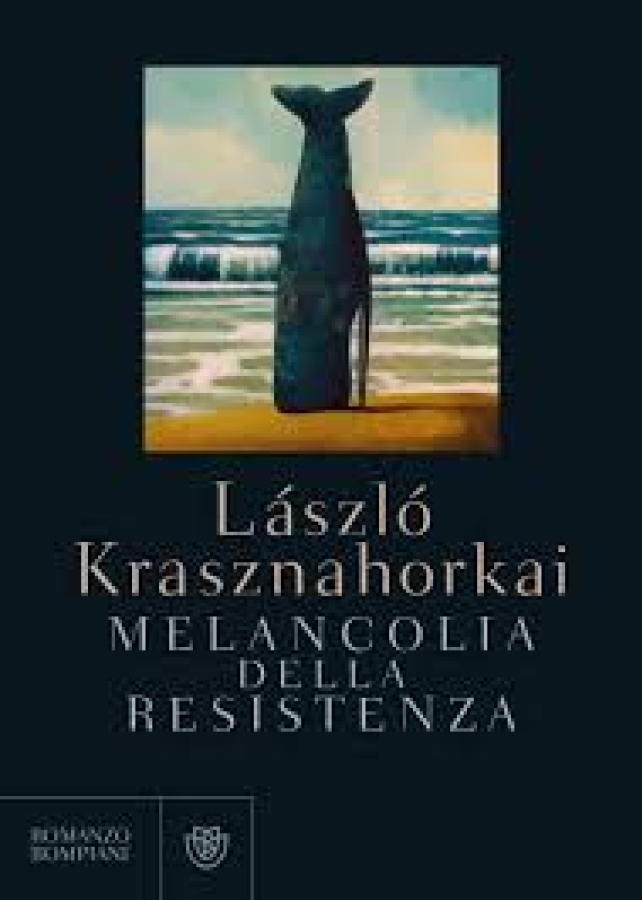
The Melancholy of Resistance
It is singular to open the review of a Hungarian novel by invoking Hideo Fukukawa's *Tokyo Soundtrack* (see the review on this site). It is precisely the geographical and cultural distance that makes the comparison compelling. While the Japanese narrative chronicles the environmental and social unraveling of Tokyo, here the same theme unfolds in a Magyar provincial town swept up in a slow, inexplicable disorder, as if > that lethal, utterly down-to-earth reality seemed irreversibly destined to evaporate. Numerous were the unmistakable signs: the garbage piling up in the streets without anyone collecting it, the increasingly frequent power outages, centuries-old trees collapsing, public transit in chaos, few and frightened people about, even hordes of cats, > enormous beasts, gone feral, (...) returned to the primal instinct of predators, witnesses and emperors of an announced twilight—yet apparently postponed indefinitely— , akin to the dogs and crows of *Tokyo Soundtrack*, and to the wild boars, coypus, wolves, and other wild animals that now roam our streets, alongside the triumphant rat population. > A quagmire over the swamp (...) was the ideal foundation for the situation, [with] the feeling that houses, trees, streetlamps, and advertising pillars were sinking into it. It is a prophecy, if we think of our world seeming to slide into an insidious future, with us living in "a hopeless waiting." It is no easy task to identify the narrative threads of a tale steeped in magical realism, deliberately confusing and fragmented (and how could it be otherwise, when what happens is no longer rational?), marked by extensive, even philosophical digressions, by an ironic and paradoxical tone reminiscent of Kafka. I shall attempt to do so by starting with the protagonists, who, as the great German scholar Erich Auerbach remarked of Dante's characters, are a "figural representation": human beings, with their personal destiny, and allegories of timeless ideas of decline and disorder. Let us take the first character, Mrs. Pflaum; we meet her in a hilarious scene: traveling on an overcrowded train, beside dirty and uncouth people, she herself so neat and orderly. Equally amusing is the description of the small house amid > the immaculate objects of the apartment, and everything seemed to her perfectly in order, (...) it was utterly clear that all those who, like her, lived in their quiet little nest , would avoid the terrible things happening outside. How many Mrs. Pflaums do we know who are certain that tending to plants, polishing furniture, and small daily routines protect them from devastating misfortunes! Then there is Valuska, > this exceptional artist of ecstatic life , convinced that he has found harmony in the perfection of the constellations; he gazes up at the sky so as not to see what happens on earth. He does not notice—or is quite content with the fact—that his drinking companions mock him when he reconstructs the Moon's rotation around the Earth with living bodies. How many of us seek refuge in abstract ideals to avoid grappling with reality? There is also the musician Etszter: he resigned as Director of the Conservatory upon realizing that piano tuning flattened sounds into an abstract and unnatural harmony, and now lives shut away in his apartment, playing an out-of-tune piano, pontificating on the irrationality of the real with his only pupil: the kind, simple-minded Valuska. How often are we forced to listen to authoritative philosophers on the crisis of the West, or rather on the Apocalypse awaiting the earth, because our European "City of Light" cannot defend the values of the Enlightenment and Christianity! And finally, there is Mrs. Etszter, with her enormous, sensual body, > feeling herself mistress of the future, she looked upon the town with the eyes of a bold heiress, convinced that she stood on the threshold of a radically new era, fraught with promise, which would sweep everything away. But just as occurred in the first decade of the twentieth century, when many signs portended the end of a world seemingly joyful and secure, yet it took the eruption of the First World War to overwhelm that golden age, so too the arrival of a circus displaying the mummified carcass of an enormous whale shatters the fragile, declining equilibrium; and nothing is ever the same again. To halt the looting and brutalities, directed perhaps by a mysterious figure known as the Prince (the devil, the personification of Evil?), one can no longer beat around the bush, take shelter in modest domestic peace, daydream about distant worlds, or philosophize about whether "the real is rational"; what is needed is the firm, energetic hand of one who knows how to command. The town readily yields power to Mrs. Etszter, the personification of authoritarian rule. We might sorrowfully stop here: it seems undeniable that only dictatorship can grant us that craved tranquility, our cherished little domestic habits. Yet, perhaps, > the workmen of destruction (commanded by the Prince?) are still at work. As in Thomas Mann's *Buddenbrooks* (see the review on this site), the final chapter is devoted to the body's dissolution in death: a detailed and precise description reminding us how man, in his long evolution, has seen > billions of restless things, poised for continuous change; he had seen how they engaged in stern dialogue with one another, without head or tail, each on its own; billions of relations, billions of stories, billions, yet reduced to a single one that contained all the others: the struggle between that which resists and that which attempts to overcome resistance. In a recent interview (*La Stampa*, October 25, 2025) Orhan Pamuk states that > too much ethics kills literature. (...) Literature is not meant to make moral judgments. It is an art of connections, of understanding. It allows us to enter the minds of people we do not like . And I would add: it answers humanity's need to listen to and tell stories, to become passionately invested in characters, to love and despise them; literature teaches us the complexity of the human being. All of this is missing in Krasznahorkai. To be sure, the characters are described as human beings, with their weaknesses and characteristic traits; but there is no psychological depth—they are treated ironically, without empathy, the prerequisite for understanding. This holds particularly true for Valuska, who is ultimately the protagonist. His description always remains on the surface, never going beyond a paradoxical depiction of him: > the postal greatcoat, along with the leather shoulder bag, cap, a pair of boots. But who is this young man, already destined for the asylum like the village idiot? What are his feelings? Why his trusting bond with the Conservatory Director? Everything remains unresolved. The novel's paramount merit is its writing: long periods, dense with parenthetical clauses, unfolding without interruption—a flow of words and sentences that grips the reader. It is an exhausting read; one must read many pages at a stretch to enter the narrative style, allowing oneself to be guided by the author through the narrative's numerous threads; yet after fifty pages or so, one must pause, catch one's breath, and summon the strength and willpower to continue. In the end, fatigue prevails, and, it must be admitted, one cannot wait to reach the end. Why read it? The writing is intoxicating, at times thoroughly amusing.
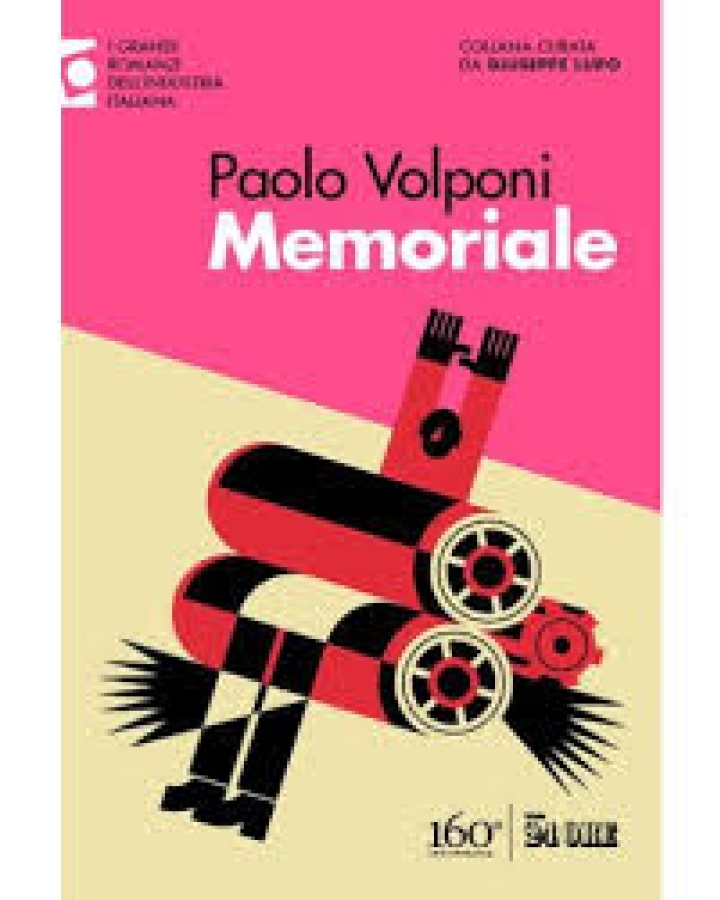
Memorial
Albino is a young peasant who lives above a lake with his mother, an alcoholic, taciturn, and emotionally detached woman. From the sparse details of his past life, we learn that he spent his childhood in France, lost his father as soon as the family returned to Italy, served as a soldier in World War II, and was held in a prisoner-of-war camp, where he likely contracted tuberculosis. Within Albino dwell a nostalgia for a happier time, a need for points of reference (his mother, religion), and an unshakable conviction that he is being persecuted (by officers, by doctors, and later by factory foremen), coupled with a confused anarchism rooted in the peasant world in which he was raised. The lake stands as an allegorical representation of a solitary disquiet. > Blue mists hung over the lake, neither high nor low; only over the lake, like smoke. The sky was clear, and already high up, beneath the veils of day, was a small moon: > see, Albino, I thought, if only all your troubles were like those mists that the moon will surely have consumed by midnight. (...) I touched my shoulders as I had as a boy during my illness, tasting the flavour of myself, a thread of my youth. It is 1946 when Albino presents himself at the Personnel Office of a large factory to be hired as a milling machine operator. From this point two narrative strands branch out, developing in an intertwined fashion: one sociological, the other existential. Volponi, with his experience as an industrial manager, portrays the alienating factory environment with great precision: before their workstations > everyone had a taut muscle, or clenched lips, or squinted eyes, or furrowed brows. It means everyone had a thought pounding inside their head, ricocheting throughout the factory and still pounding. (...) The work itself offered no relief; it required no accompanying thought, it went on by itself pulling our hands along, because inside the factory nothing else was possible. Unlike what emerges from Ermanno Rea’s novel ( *La dimissione* > see the review on this site), there is no discernible sense of belonging to the product, to the machines, or to the organization of labour: the factory is a hostile body; Albino stands apart, feeling no solidarity with the others, nor does he accept the corporate hierarchy, which even suggests he act as an informant. A trade unionist friend tells him, > but you always keep to yourself. Was I under attack, then, because I was alone? , Albino wonders. Despite his illness and his accusations against the factory doctors, Albino is protected by Management (who knows why?), who assign him a quiet job as a gate guard. It is right from the factory gate that Albino witnesses one of the first post-war strikes and rushes to warn the canteen staff to refrain from work, in order to support the workers' struggle (today, it is difficult for us to grasp the importance of the canteen). This act of insubordination is unacceptable to Management, and they fire him. Were this the whole story, the novel would merely be a fresco of 1950s industrial Italy. But Volponi seeks to convey an existential malaise that transcends the historical context and the theme of alienation—a topic pervasive in the Marxist commentary of the 1960s. The author imagines Albino writing a kind of confession, through which he seems intent on definitively coming to terms with his state of abandonment. > As always, I watched the lake gradually swell beneath my eyes on the climb toward home. In the clarity of the afternoon, the lake had no subtleties of tone, no arms reaching out toward the countryside and the trees; locked within its shores. And its colour neither shone nor spread outward. (...) At that point I realized that no one could come to my aid: not the factory, not my comrades, not the doctors, scoundrels or not, nor much less my mother: > I am a drop/the first or the last of a downpour/fallen from the gutter/when in the air/no rain was expected,/not even that drop./my drop is lost, /no one enjoyed it. In his fine preface, Giuseppe Lupo regards the novel as an elegy for the factory, for a world set to the rhythm of machines that has savagely displaced the cycle of seasons and agricultural labours that once defined rural life. Of this transition, Giuseppe Lupo seems to suggest, Albino is both victim and bard; hence the solemn, dreamlike rhythm of the novel. It is remarkable that an industrial executive at Olivetti, such as Paolo Volponi, should have written a work at once so realistic and existential, with tones that seem to verge on psychoanalysis. If we consider that *Memoriale* is Volponi’s debut work, we must forgive its narrative confusion, needless repetitions, or digressions; and we must do so because Albino's malaise seems to mirror Volponi’s own, caught between managerial rationality and poetic tension. Written in the form of a confession, the first-person narrator is Albino himself. The extensive reading in the sanatorium and the leisure time spent in the library must have taught the poor peasant a great deal, given how well the novel is written: fluid, if at times convoluted, phrasing, tight dialogue, and descriptions of the rural landscape steeped in symbolism (echoes of Pascoli resonate throughout), contrasted with an oneiric realism when depicting the factory. What the novel lacks is plot: it stretches out needlessly over many pages, losing concision and growing prolix. Why read it? The marriage between industrial rationality and the magic of the peasant world is compelling.
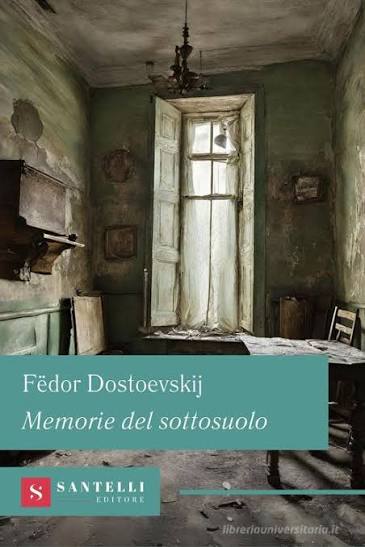
Notes from Underground
In the preamble, the author himself divides the tale into two parts. In the first, entitled "Underground", > the character presents himself, his views, and seems to wish to elucidate the reasons why he appeared, and was bound to appear, in our midst, that is, how in the era of positivism and dominant reason, it was necessary to acknowledge a primordial force within man—one rising from the underground, driving one to be wicked, to debase oneself in abjection, making one cry out with self-satisfaction: > I am a sick man... I am a wicked man. It is thus a philosophical manifesto, a nihilistic culmination concerning human nature. In the second part, "Apropos of the Wet Snow" (a title one might expect from a Japanese novel), the protagonist narrates an episode from his life meant to explain the ideas and impressions voiced in the first part. It is as if the protagonist, forty years old at the moment he expounds his theories, returns in memory to when he was twenty and to an encounter that altered his life. If we liberate ourselves from the framework cunningly proposed by the author, we realize that Woman lies at the heart of the tale. A clear hint is already present in the verses quoted by Dostoevsky at the opening of the second part: "when, out of the darkness of error, /(...) you told me the story of what had been before me/and suddenly, covering your face with your hands,/overcome with grief and shame,/indignant and appalled,/ you wept..." (Nikolay Nekrasov, 1846). Here it is a young prostitute, Liza, whom the protagonist meets in a brothel and urges to turn her life around, offering his help. He had been captivated by her > fresh, young, rather pale face, with straight, dark eyebrows and a serious, somewhat astonished look. In making her this reckless promise of redemption, our protagonist is not moved by genuine empathy. > A sordid thought was born in my mind and crept through my whole body like an unpleasant sensation, akin to descending into a damp and musty cellar. (...) Now, however, the absurd idea—loathsome as a spider—of depravity became clear to me, which, without love, in a brutal and vulgar way, begins precisely with that: the crowning of true love. There is, as it were, a faint boundary between subjugation, the pleasure of humiliating, and sincere, pure affection for a Woman; between love as lust and Love without ifs or buts. And when Liza arrives at the protagonist's home, he pursues a cruel game of insults and spite, almost as if it were the poor girl's fault for having caught him in a shabby dressing gown— > filthy, wretched, disgusting, (...) a scoundrel, a rogue, a loafer, no longer the hero of their encounter at the brothel. And then *a strange thing happened*. Humiliated, insulted, in the face of abasement, Liza > had understood, above all, what a woman always senses before anything else, if she is truly in love: namely, that I was unhappy. (...) I had not even imagined that she had not come to hear pitiful words, but to love me, because for a woman all resurrection, all salvation from whatever ruin, and all rebirth lie in love alone, which cannot manifest itself except in love. Unfortunately, > we are stillborn, and for a long time now we have not been fathered by living fathers, and we like it more and more. We do not know how to recognize and accept Love. The tale is an existential, introspective, and philosophical analysis of an antihero, or rather of a split within the Self, between our self-representation in fantasy and literature and concrete life, in which we are no longer great men, but petty and wicked beings. I do not know whether D'Annunzio ever read *Notes from Underground*, but without doubt the novella's protagonist seems to foreshadow the characters of our writer's novels and plays: supermen in art and abject in life. It is not the protagonist-narrator who remains etched in our imagination; on the contrary, we ultimately grow weary of the redundant flood of words behind which he takes refuge. It is Liza who gradually emerges—from a wretched prostitute into a woman wounded in her betrayed love, in her proud refusal of a payment brutally thrust upon her. She is a dynamic, non-stereotypical figure, the only one to evolve within a static narrative where situations and characters seem pinned down in their functions, beginning with the protagonist. It is no accident that *Notes from Underground* did not achieve critical or popular success, precisely because it lacks plot and the development of human figures in their psychological and spiritual dimensions. Why read it? It is of great interest for understanding Dostoevsky's "philosophy".

Memoirs of an Ethiopian Princess
> When I was four years old, in my father's house, life tasted of true happiness, and before my siblings and me lay the opening of a fairy-tale existence . Memories, nostalgia, and a sense of one's own rank are the distinctive traits of this autobiographical novel, set in Ethiopia and Italy between 1925 and 1946. The author is the daughter of Dejazmach Nasibu Zamanuel, a prominent figure of the feudal aristocracy, a hero of the resistance against Italy, who was poisoned to death by mustard gas—a weapon the Italian army deployed extensively during the 1935 invasion. Martha was driven to write the novel “by a sense of duty”: to shed light on the events that devastated her family and to convey the > astonishing atmosphere that emanates from my country, evoking its colors, flavors, and customs, as well as the vitality of a refined, generous people who deeply respect the dictates of the Christian values upon which they founded their very existence (book presentation, Rome, July 17, 2006). The book is divided into two parts. The first recounts the author's childhood through her mother's stories and the wonder-struck eyes of a little girl. What emerges is a dazzling, sumptuous, magical world, remote from our time and from the reality of Ethiopia itself. These are vignettes of life centered around the figure of the father. At a grand social gathering of the feudal aristocracy, in the presence of the Emperor, Dejazmach Nasibu appears > draped in a diaphanous shamma with broad red silk borders, his broad shoulders cloaked in a blue velvet cape embellished with gold trim, (...) in the saddle of his magnificent white horse harnessed with rich trappings gleaming with gold ornaments. (...) In the cloud of dust kicked up by the tumultuous gallop, a young woman riding sidesaddle drew alongside him . She is Martha’s future mother, the daughter of a Russian prince, and love seems to blossom from the splendor of these two nobles and Ethiopian high society. It is pointless to ask inopportune questions, such as inquiring into what brutal exploitation lay behind such magnificence; we too, like Martha, are captivated by “very distant memories,” when one feels sheltered by parental love, games can go on indefinitely, and > no one would ever have foreseen that anything could disturb the course of our lives . On October 3, 1935, Italy invaded Ethiopia with a well-armed army of 350,000 men, supported by aviation. After a glorious yet futile resistance, ground down by the spraying of nerve gas, Ethiopia surrendered. The magic dissolves. > Memory, as if erased, fails to bring forth even the faintest recollection of those moments. Of what followed, nothing remained with me but a feeling of numbness . Augusto Graziani, appointed Viceroy of Ethiopia, consents to spare the hated family of Dejazmach Nasibu, but exiles them to Italy. We arrive at the second part of the book. The narrative sheds its fairy-tale qualities to become the painful chronicle of a wandering exile: after a stay in Naples, they are sent to Tripoli, then to an oasis in the Libyan desert, where Graziani perhaps hopes they will perish from hunger and disease. Brought back to Tripoli, they are sent to Rhodes, subsequently to Val di Fassa, and then to Florence, where they live until the city’s liberation amidst hardships, aerial bombings, and strict police surveillance. One might expect hatred toward the Italians; not in the least: not only the Italian populace, but the fascists themselves—the *federali* and government officials—seem to display a singular tolerance toward Nasibu’s family: in short, «*italiani brava gente*!». We cannot discern whether it is the adolescent Martha’s optimistic gaze that views events in a positive light, or if this benevolent attitude was genuine, perhaps owed to the family's princely status. It matters little: what is missing is Martha's inner lived experience, as she enters adolescence during exile; there are delightful episodes (such as the evacuation to San Giustino and her camaraderie with the children of the small village) and vivid, painterly depictions of nature through which we understand how the young Martha was captivated by Italy’s beauty. Our country must have left an indelible mark on the young princess’s maturation, given that, once back in Ethiopia, she would leave again for a new exile—because her deeply loved native land, in the end, felt too confining. On the other hand, “life is a story”: we remember only that which contributes to the depiction of ourselves. Let us detach ourselves for a moment from Ethiopia and from the crimes of Italian colonialism, rightly recalled by Angelo Dal Boca in his passionate preface to the book: let us dwell instead on the theme of remembrance. In a regrettably forgotten novel (*Il Giorno del Giudizio* > , reviewed on this site), Salvatore Satta, as death approaches, retraces the Nuoro of his youth through a gallery of portraits, and distant faces reappear (...) and perhaps as I think of their lives, because I write their lives, they feel me to be a ridiculous god who has summoned them on the day of judgment, to free them forever from their memory > . Martha's memoir is entirely different: even amid so many calamities, both of her country and her family, the characters and events resurface as if bathed in a bright, clear sky, beneath a canopy of stars, in vivid shades of bright azure. "How beautiful this world is, Mama, (...) It looks like paradise to me!," the child Martha exclaims at the sight of Naples from the sea. It is truly regrettable that the narrative failed to preserve in its second part the vividness and magic of the first. The drop in tension, the inability—or unwillingness—to evolve the narrative into a *Bildungsroman* and, why not, a work of social and political reflection, are all factors that compromise the overall quality of the story, ultimately rendering it verbose, banal, and tedious. Why read it? The first part is a splendid fresco of Ethiopian society, a magnificent cavalcade of memories.
The Almond Picker
> We know next to nothing about her, and that's that. The fact is she was good at her job and liked being in charge, and that’s where everyone’s troubles began. Masters like having good workers, but they don't like being bossed around. If they had listened to her, they’d be richer still, but we always remain poor and slighted, even in death . This is how Don Paolino, former chauffeur to the Alfallipe family, sums up the fate of Maria Rosalia Inzerillo, known as the Mennulara, who died at the age of fifty-five. The novel opens with the woman’s death and slowly unravels the mystery of this «criata» (servant): born into utter poverty, she was forced from childhood to work harvesting almonds (hence her nickname); taken into service in the Alfallipe household, she became the shrewd administrator of an ailing estate; and ultimately took the helm of the family, ensuring its financial survival. This is how Orazio Alfallipe describes her, recalling the day he fell hopelessly in love with her. > I saw her, slender and petite. (...) She wore a pale slip, wet from splashes of water. I trained the binoculars on her, spellbound by the rhythmic sway of her body, her small, pointed breasts, and her youthful, harmonious arms. She was beautiful. (...) She watched me circumspectly, yet without fear. What is that?, she said, pointing to the binoculars. (...) Teach me how to look, she said. (...) A sense of wonder welled up in my chest, overwhelming me... The Mennulara’s death upends the small town of Roccacolomba, in a timeless Sicily: people pass judgment, often harshly critical, on the woman’s life, gossiping about the funeral and especially about the Alfallipes' conduct. The latter are convinced that the Mennulara harbored substantial hidden funds; they expect a rich inheritance, but find no such testamentary provisions. Growing increasingly exasperated, they fail to comply with the woman's directives regarding the obituary and the funeral. Yet even from the grave, she continues to direct the family, forcing them to do her bidding; in particular, she leaves precise instructions to retrieve ancient Greek ceramics and have them appraised by an expert. Because these artifacts had been purchased from grave robbers—and thus could not be legitimately traded—the Mennulara had commissioned copies, and it was these that were submitted for appraisal, securing a certificate of forgery that would allow the pieces to be taken abroad and sold. Blinded by greed and foolishness, the Alfallipes cannot conceive of so clever an expedient; their disdain for the Mennulara, a mere «criata», leads them to suspect some obscure deception. Yet hadn't she served them all her life, salvaging their estate? She was a servant, nonetheless. Upon reading the appraisal, they believe they have been duped; overwhelmed by rage and hatred for the woman, in a fury they shatter both the counterfeit copies and the authentic originals. Before the astonished and amused town, they divest themselves of their long-awaited inheritance and squander the last vestiges of their respectability. In devastating the ceramics, they also obliterate the «mute witness» to the relationship between Orazio and the Mennulara, and to their shared passion for art and history. Must the feelings of a «criata» be respected in a timeless Sicily? Certainly not. The question is whether the Mennulara is a positive figure, an engine of social change, or if her story is, once again, the testimony of a defeat, the acceptance of an inevitable and immutable destiny. Indeed, the Mennulara believed she could elevate herself («she had estranged herself from people of her own station») without altering social hierarchies; she renounced everything, endured a clandestine affair with her master, bore the contempt of the Alfallipes—for whom she was the cornerstone—and, in the end, failed to preserve her spiritual legacy, the collection of ceramics, the testament to an existence. The Mennulara is a defeated figure. But so too are the numerous characters of Roccacolomba: they gossip, at times they seem to rebel, at others they voice wise and benevolent reflections, yet they invariably yield to power and social immobility. This is the profound meaning of the novel, as well as of the figure of the Mennulara: there is no civic future for Sicily. The novel is nearly flawless up to page 152, up to the scene of the ceramics' destruction. Then, for reasons unknown, the author felt compelled to lay bare the Mennulara’s life, resorting to lengthy explanations rather than relying on the plot and the interplay of characters. It was needless, detrimental to the overall pacing of the narrative. It was a pity, as it drained the tension from the story. Why read it? It is enjoyable, engaging, «a majestic entertainment» (Aldo Busi)
Lies and Sorcery
Elisa wanders through the rooms, in silence and solitude, and when she unexpectedly catches sight of her own reflection, she seems to see > a shape moving in these funereal, solitary waters, (...) like a jellyfish , not a saint: “rather a witch.” It is precisely to explain the sorcery that led her to shut herself up in a few rooms that Elisa offers us the tale of her family: and it is “an appearance of shadows,” a “fantastic malady” that speaks of love and death, as in fairy-tale books: “with thee, Fiction, I gird myself, fatuous raiment.” The novel can be divided into two parts. In the first, Elisa has not witnessed the events and characters she narrates: everything is filtered through the reminiscences of those who were still living when she was a child, or through clues, papers, and places. On the other hand, > the past and the future are two fields of mist and vertigo, which the living cannot explore except through fantasy and memory. (...) What is the use of plumbing this palace of death? The mere attempt to plumb it produces anguish and nausea, as when one looks out over a precipice . We will never know whether what she tells us is true, not least because it reads like the narration of a grand deception, of lies meant to cloak the beloved in “fire and splendor.” Thus the maternal grandfather is a scoundrel and a sluggard, yet he captivates his daughter Anna with wondrous tales of travel, jewels, honors, and glory; and Anna forgets that she lives in poverty, venting her rage on her mother Cesira, a petty and desperate woman. The paternal grandparents are hardworking peasants and could have been an anchor of solid substance: their son Francesco, however, was born of the mother’s fleeting affair with a rogue, himself a fabulist and a peddler of "smoke > . One should not be surprised if Francesco, upon going to study in the city, introduces himself as a baron, and one with revolutionary ideas to boot. And what of Edoardo, the wealthy cousin of the destitute Anna: charming, with feminine features, vacuously intelligent, enamored of himself, ready to love, beguile, and betray anyone, purely for the ambiguous pleasure of amusing himself. Anna and Francesco are too naive not to fall into his tempting coils: Anna falls in love with her cousin, dreaming of a bond that can never materialize due to the difference in social standing and, above all, Edoardo’s character, far too superficial for an enduring and responsible relationship; Francesco believes he has found a true friend in Edoardo, unaware that he is being led by the hand from a genuine love (that of the prostitute Rosaria) toward a yearned-for and idealized one, his passion for Anna. And so Anna and Francesco find themselves married, as if under a spell: Anna loves Edoardo and binds herself to Francesco out of despair, while the latter has deceived the woman, masquerading as a wealthy landowner and a young man on the rise. At this point Elisa steps onto the stage, no longer merely the narrator. Henceforth ended is my privilege of attending, a solitary spectator, a comedy of spirits. (...) A lucid insomnia takes hold of me, and in this taciturn and deserted room, henceforth I can interrogate nothing other than my true memory. I can recount nothing, that is, except the things I saw with my own eyes, heard with my own ears, and of which my father and mother, in their differing insanities, made me their confidante and witness > . To be protagonists is an act of maturity, and at the same time of sorrow, because one cannot defend oneself with imaginary remembrance. Memories, like animals that have lain in hibernation, stir at my call, and approach me with velvety, funereal steps > . The experience of the adolescent Elisa is truly extraordinary; she is not merely a party to a toxic and perverse relationship, the cause of her parents’ psychophysical decline; the girl is swallowed into a kind of triangulation with Francesco and Anna on one side, and on the other the ghost of Edoardo, dead of consumption. To humor Concetta, Edoardo’s now-deranged mother, but in reality to gratify herself, Anna invents an epistolary exchange of letters from her cousin. What virtue did this counterfeit correspondence possess? > Dwelling within it, full of feast and fire, was a Thought: (...) it possessed inspired movements, chivalric demeanor, and a coquetry cast, like a bold and light armor, over its bitter voluptuousness. Moreover, its shadowy beauty flaunted adolescent fatuity like an oriflamme, that dear, venial fatuity > . But who was truly the author of this correspondence? The Cousin in his ethereal form as a ghost, or Satan, as might appear from the infernal postmarks > of the letters, or Anna herself, as any doctor would have said, hybrid fruit of a poor, morbid mind”. Were this so, “the counterfeit Epistolary turns within me into a mirror, in which Anna’s beloved face appears to me so disfigured and contorted that memory, will, and fantasy urge me to choose a lie in place of this diagnosis. (...) Of Anna, of this twofold idol of mine, of my sleeping, precious Phoenix, it makes an object of wretchedness and pity. And finally, over the fantastic Epistolary, over our renowned correspondence, it sheds the dismal pallor of insanity, and the shapeless tedium of death > . And then the fantastic Epistolary, just like the novel as a whole, comes to be a stanza of love”, a desperate way by which “the spirit that presides over childish things” seeks to overcome death, “at least in play. The novel has a nineteenth-century architecture: a complex plot, meticulous description of settings, in-depth character analysis, richly vaporous prose of refined elegance. One must not, however, be deceived; if love and death are tightly interwoven—because as soon as one loves, one already knows the beloved will perish—only dreaming, fantasizing, lying to others and to oneself allow us to survive, to keep suffering at bay. The sorcery lies in this: Elisa prefers to shut herself in the solitary rooms, pursuing her own shadows, rather than reckon with reality and retrace the demented aspirations of those who came before her. Does the novel not speak, perhaps, of Elisa’s consciousness? Might it not be the fruit of her diseased mind? Only Alvaro the Cat, Elisa’s faithful companion, knows. When every light is quenched, kindle your pupils in the dark, o torch of my half-sleep, and the solemn truce cracks, a thousand ephemeral torches blaze, childish tigers chase one another in sweet deliria". In reading *Menzogna e Sortilegio*, the mind turns to Thomas Mann. We are in Southern Italy; the colors and characters are those of our South; and yet there is the same demolition of the traditional novel, and one breathes the very same air of decay, of slow decline toward death. Its excessive length is regrettable: we are before a work of great originality, which deserves to be rediscovered and read anew. Why read it? Splendid writing, and long live the imagination!

The Merchant of Cursed Books
The inside back cover likens the book to Umberto Eco’s *The Name of the Rose* and Ken Follett’s *The Pillars of the Earth*. Nothing of the kind: if one insists on finding a literary reference, one might point instead to *The Da Vinci Code*. The setting is the Middle Ages. A merchant arrives at a monastery in the Polesine region. He is in search of a mysterious book, but also of a young novice who was raised among the monks. From here begins a sort of treasure hunt across Europe’s major monasteries (Santiago de Compostela, predictably, could not be omitted) to recover fragments of the mysterious text and piece together, through various clues, a puzzle of meanings and magical formulas. Throughout this quest, the merchant and his companions (the young novice and a valiant French knight) are pursued by the knights of the Sainte-Vehme, a mysterious and powerful chivalric order. What follows is a succession of ambushes, surprises, and dramatic turns. Naturally, the story has a happy ending, yet it leaves the reader disappointed, unable to understand what was so significant about the long-sought book in the first place: could it be just another sham? The novel is clearly a thriller, yet it lacks all the ingredients that could grant it depth and distinctive character. The medieval setting is pointless. Beyond the sequence of monasteries, there is no thorough or evocative world-building rooted in a genuine grasp of the customs and culture of the period. The characters are flat, and even the figure of the merchant, who might have possessed some allure, comes across as cold, incomprehensible, and superficial. The book is packed with plot twists, yet they are never preceded by an atmosphere of suspense; as a result, they remain entirely predictable, both in their unfolding and in their outcomes. It feels almost as if the author focused exclusively on the plot, only to become entangled in a tangle of episodes and circumstances. Why not read it? Unless one is thoroughly exhausted and in need of something requiring minimal concentration, it simply is not worth the time.
Messengers of Darkness
The novel centers on a series of castrations and subsequent murders, which turn out to be the work of a cult. It is an unsuccessful effort, undoubtedly falling short of the author’s other books. The narrative is tedious, flat, and at times contrived (consider the stay in Russia): it lacks the original hallmark of Bartlett’s books, which lies in the depiction of the author’s character, her worldview, and her approach to life.
I like you to death
Monica lives in New York and wants to be a writer; instead, she works in a clothing store. After a series of romantic misadventures, she meets an English publisher (a veritable “Prince Charming”), who not only falls in love with her but enables her to publish a book. This is a novel riddled with clichés (Monica lives with a ditzy Puerto Rican woman who gets pregnant, and a gay man), sappy sentimentality, and banalities. The story could just as easily be set in Rome as in New York, and utterly lacks any depth in its exploration of emotions and events. Yet do such books really find success?

Microcosms
*Microcosmi* is an assemblage of > fragments that little by little coalesce into an orderly novel, whose structure and meaning reveal themselves (to him) at the end, as happens in life . And life is an assemblage of places, > places and things, scarcely separable from beloved persons and from the image of the world that envelops them . The first fragment is the Caffè San Marco in Trieste, setting the keynote for the narrative: a journey where one never moves. > Sitting at the café, one is on a journey; as on a train.... one cannot leave a vain personal imprint on anything, one is nobody. In that familiar anonymity, one can disguise oneself, shed the self like a peel . And what could be more motionless and yet vital than lagoons and great forests? The narrative proceeds with an evocative, memory-laden description of the sea at Grado and the forests of Monte Nevoso. Here, the forest is not a natural or fantastical place, but rather > at once the exaltation and erasure of borders, a plurality of different and conflicting worlds, held within the great unity that embraces and dissolves them . the following chapter, devoted to the Turin hills, creates a placid and gentle atmosphere (perhaps serene and happy years for the author), leading us to think that > even disappearing could be a celebration, like losing oneself among the hills that in the evening resemble a sea, great and calm waves of a long, powerful breath . And one feels the urge to «go up to one's room and let the world manage on its own». The subsequent chapters (The Absyrtides, which concerns the Croatian islands, in particular Lussino and Cherso) and Antholz (a valley in the Tyrol) lead to places (never explicitly stated) where the author spent his vacations. They are the book's less fortunate pages, overburdened with historical citations and settings difficult for the reader to identify. With the chapter dedicated to the «Public Garden» (a true literary gem), Magris abruptly brings us back to his own childhood, evoking it through a child who carries a dying goldfish to the park's small pond in an attempt to keep it alive. The Garden is a place of recreation, but also of prohibitions. Venturing into the garden is, for the child, like plunging into deep water, finding himself «beyond all those doors that usually bar entry to its secret heart». The Public Garden mirrors the complexity and variety of the human psyche. The self, like the Garden, is a dark forest, an assemblage of open clearings, ancient centuries-old trees, and recesses: > the forest is all around, but one is not inside the forest; invisible thresholds bar the way... one is outside, excluded from the woods, which perhaps begin a meter further on, but the door to enter and reach that gnawing and murmuring cannot be found . The child's return home introduces the final chapter, with the mysterious title «The Vault», which finally speaks explicitly of an episode from the author's life, bringing forth the figure of the mother with poignant tenderness. As in a dream, the child remembers an air raid and the flight into a shelter inside a church. The child is frightened, yet he is together with the others («throughout the church, people greeted one another, shook hands, some embraced») and so > he was not surprised to see her beside him... go to sleep, she told him, I'll wake you when the time comes . He is afraid, but he hears voices that reassure him. They are > two voices, almost identical to his own, the children who had filled the house, the days, life itself, telling him not to be afraid . The cycle of life comes to a close, from childhood to old age, among loved ones. *Microcosmi* possesses several virtues: the author's literary device of chronicling the places and people of his life without ever resorting to the first-person “I,” a felicitous choice in an era as narcissistic as our own; the exceptionally elegant prose, which frequently rises to the level of poetry; the depth and acuity of many reflections, tossed off with seeming nonchalance—veritable aphorisms. It is difficult to discern an overarching meaning across these narrative fragments. One might, perhaps, offer a psychoanalytic reading: revisiting the most significant places of his life allows the author to return to his childhood, to his mother, and to forge a link among the disparate moments of existence. Then there recurs the metaphor of the door—that is, the difficulty of entering, but entering where? Perhaps one's own consciousness. The book's virtues are also its flaws: there is no plot, the references and digressions are often tedious, and the narrative style easily slips into erudite mannerism, losing its candor. One senses the learned Germanist, somewhat snobbish and unwelcoming. Why read it? Reading the entire book is a heavy task. It is worth lingering only over the chapters devoted to the Caffè San Marco, the Turin hills, and the public garden—the latter being a genuine masterpiece.

Days at the Morisaki Bookshop
The impetus to read this short novel arises from the desire to understand why we read books, and consequently why we are so enthralled by the bookstore—that singular shop where paper volumes, large and small, yet always charming and inviting, rest upon the shelves. Who among us book lovers would not want to work in a bookstore! In this case, we are speaking of a secondhand bookshop, some volumes valuable, others commercial, in a Tokyo neighborhood where one sees nothing but bookstores on either side of the street. “A playground for book lovers,” murmurs Takako, the protagonist and narrator, after emerging from the subway station. She left a secure job after a disastrous love affair and has spent months shut away at home, sleeping all day. An uncle phoned her—an eccentric character who inherited her great-grandfather’s bookstore—proposing that she lend a hand running the shop, while also offering her a small lodging, crammed with books, dusty, with an overpowering smell of mold: a perfect den for a depressed soul like Takako. There is the risk that daily life will not truly change; after a few hours in the bookstore, she can slip back under the covers to sleep. But there are the books. > Those old books concealed stories unimaginable to me. And I do not refer only to what they recounted. In each one I found traces of the past . In particular, the young woman was struck by a sentence by Kajii Motojiro (a Japanese writer who lived in the first half of the twentieth century): > what does it mean to look? It means transferring onto an object part of our soul, if not its entirety . It is an evident Shinto approach, typical of Japanese culture, which reveals our relationship with the book: in reading, one feels an affinity with the writer and at the same time understands oneself better, in a mysterious involvement nourished by the words as well as by the scent and touch of ink and paper. The book is like a tree, like flowers and their insects, like animals, a landscape, a work of art: it is something that speaks through physical signs. Soon, however, Takako perceives the limits of the book. > In the bookstore I had found warmth and serenity, but I could not settle for that, or I would never have grown. I would have remained fragile. I had to leave, to take back the reins of my existence . We are at page 59; up to this point, the story is intriguing: from here on, it slips into a banal, saccharine tale of a girl in search of herself. To be sure, it would have been an exaggeration to expect a book on literature like Azar Nafisi's (*Reading Lolita in Tehran*, see the review on this site); we would have settled for Sosuke Natsukawa's *The Cat Who Saved Books* (see the review on this site), a verbose and at times banal tale, yet captivating in its hazy, mysterious atmosphere. Treating our indecipherable bond with books and the bookstore as the author has done stirs in us both disappointment and indignation. Why not read it? It is superficial.
The Better Life
The novel is set in a small Istrian village, spanning a period from the early twentieth century to the 1970s. The narrative charts the momentous events of the century just past: the final years of the Austrian Empire, the First World War, annexation to Italy, the partisan war, and ultimately integration into Yugoslavia following the 1947 peace treaty. These historical events had a profound impact on a border community composed of Croats and Italians: the former in the majority and generally poor peasants, the latter a minority of wealthy landowners. Yet it is not the social theme that interests the author, even though it naturally surfaces throughout the narrative, especially in the frequent blending of Croatian and Italian—one of the book's most compelling features. The theme of the story is entirely internal and can be distilled into a single subject: religion and its function for the individual and for a small community. Tomizza envisions an elderly sacristan recounting his life, and that of his fellow villagers, through the succession of parish priests over the years. > How many priests had I not had to deal with: priests with mothers, with sisters, with housekeepers, and priests on their own. During sleepless hours they revolved before my eyes like a carousel reflecting myself and at the same time the political circumstances of their era. I pondered in the dark that each could have appeared better to me, and each worse, depending on the times, but also by virtue of my own changing way of being and assessing them. (...) Why did I stay? It is hard to answer today, for it is hard to be believed. I felt I was serving the church, and through it the community, not the priests, who were all destined to pass away. I had wedded myself to that service, to that duty, even before Palmira, and everything else came second, Palmira included. Yet I was resolved to forge another path for our son, and this commitment partly redeemed me, even in her eyes . This quotation encapsulates the long journey of the protagonist-narrator, which leads him to drift away from religion as he witnesses the decline of the parish he serves throughout his life. > The church is a building like any other; it will end, as is predictable, without making much of an impression: atop the hills one can still see the walls of small churches from centuries past, engulfed by briars. Yet back then there was a recovery, and people returned to the fields as well. Will it happen again? I doubt it. Born to a sacristan, he becomes one while still young. The priests who follow one another are profoundly different: some ignorant and coarse, others overbearing and arrogant, still others frail individuals, quick to sin with wine and women. Only one, a young Croatian priest, seemed to embody what is expected of a man of the cloth. Yet later, when he sees him again as a bishop, he realizes that he too has become false and hypocritical. > From him I would have expected to hear, or at least read upon his face, the disillusionment, the wounds that could not fail to have been inflicted. (...) In earlier times, would he not have been prouder, if not more compassionate? . And so, left without a parish priest to serve, the old sacristan has no choice but to become the chronicler of his people. In the book's final, deeply evocative pages, the protagonist recounts the lives of some of his fellow villagers, such as *gnagna* Zvana Zuncolin, a "stooped, dark little woman," or Michelin, once "a handsome, dark man with gypsy eyes," who spent a lifetime as a drunkard to forget the woman he loved: he remains famous for the phrase, "there are no spare parts for man." The narrative style is not always effortless, yet the reading moves briskly because one remains captivated by the story of a community—first isolated and hidden, then increasingly caught up in momentous events. In Tomizza's narrative, never folkloric or nostalgic, religion intertwines with ancestral pagan customs and new, ostensibly secular and anticlerical mores. And the church is always there, "somehow simply present," with its registers of births and deaths, written partly in Croatian and partly in Italian, in hands both clear and obscure: a presence from which the protagonist wishes to escape, yet cannot, because > it adhered perfectly to that which I had always learned to know and, for convenience, am accustomed to calling ordinary (life), yet it did not completely coincide with it, while still enchanting me, while still helping me discover hidden or unnoticed facets of real life . Yet by thus contenting itself with "its own full power," religion does not resolve the mystery of death, leaving the individual alone and questioning at life's most solemn moment. > Does the void of the heavens descend upon the earth, or does the better life open wide above us? This I did not know, that the world dies with every death of a man . Why read it? Allow yourself to be enchanted by the story of an ordinary life in a small Istrian village, between Croatia and Italy.
Miguilim
> A certain Miguilim lived with his mother, his father, and his siblings, very far from here, (...) in the Mutùm. In the middle of the Campo Gerais, but in a hollow within forest country, black earth, at the foot of the mountains. Miguilim was eight years old . With this fairy-tale incipit, Guimarães Rosa narrates an extended peasant family through the eyes of a child. > Miguilim had no desire to grow up, to become a grown-up; grown-ups' talk was always the same dry things, with that need to be violent, frightened things . In a family plunged into poverty (the father > shouted that he was poor, on the verge of becoming destitute, of having to beg for alms ), Miguilim lives at the heart of a complex social nucleus made of people and animals: the violent father, the uncle carrying on an affair with the mother, the eccentric grandmother possessing a severe and atavistic wisdom, the witch-servant, "so pitch-black, as Death must be," the cowherds and the village folk, the farmyard animals, and so much more; yet none is like his brother Dito—self-assured, protective, capable of standing up to their father. > All at once, it burst. (...) And then came the thunder! It thundered tremendously, again and again; everyone covered their ears, closed their eyes. Then Dito held Miguilim close. Dito wasn't trembling, only he was more serious. (...) Dito was clever and peaceful. (...) Dito never truly quarreled with anyone, (...) Miguilim always wanted not to quarrel, yet ended up quarreling with everyone. How wonderful to be like Dito: suited to all people's hours... . Miguilim is fragile, unsuited to peasant labor, afraid to venture alone into the forest to bring lunch to his father working in the fields; nothing comes of the cowherd's reassuring words when Miguilim asks if he is deformed, nor of the hugs and kisses of the witch-servant, nor even of the purring rubs of the cat Sossoe, > eyes of a green so much less empty --- it was a light inside another inside another, inside another, without end . It is as though Miguilim lived in a world of his own: magical, incomprehensible, wondrous, and terrifying. It is no wonder that Dito's death shatters the boy; he nearly loses his mind, can no longer hide behind his brother's reassuring certainty, and must himself go to work in the fields, grueling hoeing beneath the sun. As in an exquisite fairy tale, a knight on horseback arrives to save him; he addresses little Miguilim directly and hands him a pair of spectacles. > And Miguilim looked at everyone, with such intensity. (...) He looked at the dark forests on the mountain crest, here the house, the hedge of wild beans and sao-caetano; the sky, the cattle pen, the yard, the round eyes and the high windowpanes of the morning. (...) The Mutùm was beautiful. Now he knew it. If in Anna Maria Ortese's *Il mare non bagna Napoli* (see the review on this site), eyeglasses unleash an unbearable reality upon an impoverished girl from the slums, here, instead, the lenses possess a salvific power, as though only the true knowledge of reality could make it bearable. A fairy-tale ending brings little Miguilim's childhood to a splendid close, foreshadowing the great social narrative of João Guimarães Rosa's masterpiece (see the review of *Grande Sertao* on this site). The extended peasant family characterized the social fabric of our country until the 1950s. And yet there are no great novels chronicling the sharecropping and tenant-farming world. *Pinocchio* is the son of an artisan, the Malavoglias in *I Malavoglia* are fishermen, Giannino in *Il giornalino di Gian Burrasca* is the quintessential bourgeois lad, the stories in *Cuore* are too edifying to mirror a social reality; perhaps only the splendid chapter "The Four Seasons" in *Il mulino del Po* investigates the dynamics typical of the peasant world (for *Pinocchio*, *I Malavoglia*, *Il mulino del Po*, and *Il giornalino*, see the reviews on this site). Here, however, Guimarães Rosa retraces a child's early years within the intricate web of relationships of an impoverished reality, entirely geared toward survival, yet one in which emotions churn and dreams remain possible. The relationship between Miguilim and Dito denotes an informal hierarchy in which the more fragile child seeks the support of the stronger personality, forging a privileged and steadfast bond that offers security—one that only the fairy-tale conclusion can replace. In his intense preface, Antonio Tabucchi defines the novella > an operetta with a Mozartian timbre, performed on the magic flute of an uncommon narrator . It is a particularly apt definition: it is the fluctuating cadence between hyperrealistic moments and fantastic ones, of "non-story," that imparts the sense of ambiguous allure that characterizes the narrative. Behind the easy screen of the fairy tale (but is it truly one?), the story > stirs unease and always retains an unattributable valence, on the margins of (or beyond) speculative formulation. Something reminiscent of the savage mind, bound to the mystery of Being . (Tabucchi's Preface). Why read it? Magnificent!
The Milanese Kill on Saturday
The novel is set in 1960s Milan. A police inspector is called to investigate the disappearance of a young woman, strikingly beautiful yet mentally impaired. He discovers her body, burned at the side of the road, and uncovers a prostitution ring. Through a series of inquiries into the criminal underworld and brothels, he identifies the killers, but arrives too late: they have already been murdered by the girl’s father. The latter, a decent man, is driven to commit a crime by the sluggishness and incompetence of the police in solving the case. It is a heavy, thoroughly bitter noir: a violent, unscrupulous city and a negligent police force. The story is well constructed, with an engaging narrative pace, even if the plot twists feel somewhat predictable. The author’s interest seems to lie more in the depiction of the milieu than in the construction of the plot.
Been Here a Thousand Years
Time fills up "with interminable, communicating galleries," a labyrinth that is by no means guaranteed to lead anywhere. At the heart of the book lies an existential premise: life is a succession of unpredictable crossroads, able to find solidity and certainty only in the pursuit of one's roots, one's land, and one's ancestors. Gioia is a young woman from Matera who has fled in search of a freedom that neither her mother, nor her grandmother, nor she herself would ever have been able even to imagine. She traverses > a brief season of freedom and belonging, lost in the crowd, in the Italian piazzas, Rome, Bologna, Florence Ponte Vecchio, sleeps with a Swiss boy with skin as smooth as a girl's.... shouts the slogans P38 a hole blooms in your mouth, is moved by the sight of red flags, uses their poles as clubs, pulls the red kerchief down over her face, thinks she has the future in her hands . Inadvertently entangled in terrorism, she flees to Paris, where she works as an actress, takes a job in an erotic call center, and loses herself among many men, more often than not allowing herself to be used. Ma quando > she had become a young woman as perfect as inorganic matter, removed from the unpredictability of time she wonders > what is the point?, to whom would she answer? Now that she could be anyone, she was no longer anyone . Then she feels the urge to retrace backward, > moment by moment, everything that had led there. And so, without realizing it, you lose yourself in history . Gioia traces the history of her ancestors back to Grottole, a small town in Basilicata. The starting point is 1861, the year of Italian Unification, and from there she sets out to narrate the fortunes of her family—in particular, of the women who were decisive through their strength and character. The result is at once a social and familial narrative: a fresco of an impoverished and neglected Italy, stagnant for a century before rapidly transforming during the economic boom years after 1960: the dissolution of family ties, of a communal life that represented both the cage and the strength of peasant society. Emblematic, in this respect, is the bleak everyday existence of Gioia’s parents, Rocco and Alba, who watch the same television program in separate rooms, when such incommunicability is contrasted with the lives of their grandparents and great-grandparents, who worked, ate, quarreled, and lived entirely together. That world, once so steadfast and serene, is no more. Gioia, departing anew, sees from the train that > the rolling countryside that had cradled her nostalgia, nostalgia for a cherished sorrow, for tears, for unfulfilled curiosities, for imprisonment, had now lost its virginity. She, who had kicked against it, now mourned its loss and silently held a tearless funeral for it . The book can be divided into two parts. The first, set in Grottole, is a reconstruction—almost a historical investigation—of a social and familial structure. The narrative pace suffers precisely from this descriptive approach, which only in flashes elevates itself toward the transfiguration of history and the deepening of the characters. The second part, describing Gioia’s life through the 1960s and 1970s, displays a modern style, at times disjointed yet effective in conveying the sense of the character’s "derailment." Particularly compelling are the pages in which the author pursues a sort of parallel history: the Gioia who could have been a respectable girl, university-educated, well-married, and with children, versus the real Gioia who has lost herself in the search for her own identity. The compulsion, perhaps, to say too much in too few pages leads to a cluttered narrative, a kind of haphazard jumble of actions and situations. The reader is left disoriented, unable to fully grasp Gioia’s story. Why read it? It is an enjoyable read, compelling in its historical reconstruction, and provides an effective contrast between modernity and tradition.
The Thousand and One Nights, Volume I
*The Thousand and One Nights* is an Arabic manuscript likely dating back to the Abbasid Caliphate, between 750 and 900 AD: the setting is the fabulous empire of Baghdad, stretching from North Africa across the Arabian Peninsula to Central Asia and India. Its discovery is credited to Antoine Galland in the early eighteenth century, and from that moment the text spread throughout the West, sparking wonder and scandal: Orientalism was born. Owing to the many versions of the work, it should be clarified that this review refers to the text established from the original manuscripts by René R. Khawan. Let us begin with *The Weaver of Nights*. The king has been betrayed by his wife: a Moor “lifted her legs in the air, slipped between her thighs, and penetrated her.” From that moment on, the sovereign resolves to take a maiden as his bride each night and execute her at dawn. The vizier's daughter, Shahrazad, who “had read books and writings of every kind,” asks her father to arrange her marriage to the king, saying: > either I shall rise in the esteem of my fellows by freeing them from the peril that threatens them, or I shall die or perish with no hope of deliverance, sharing the fate of those who have died and perished before me . Her father attempts to dissuade her with tales urging a prudent, unassuming life, but the daughter, obstinate and self-assured, replies that she could offer him other stories leading to entirely different conclusions. And herein lies the crux of *The Thousand and One Nights*: the word. Through literary invention, fabulation, and poetry, one can confront the direst straits, vanquish evil spirits, and even bend the will of God to one’s favor. According to the widely accepted interpretation—though not strictly corroborated by the work’s architecture—each night Shahrazad tells a story to the king: enthralled, the sovereign spares the maiden's life out of the desire to hear another tale, ultimately making her his lifelong bride. A miracle of the word! The work follows a recursive pattern: a frame narrative within which other stories unfold, all designed to persuade and astonish the listener. The prose narrative is interspersed with verses in a style characteristic of Abbasid civilization. One does well to surrender to its spell; nevertheless, certain common threads can be traced. In the celebrated *The Fisherman and the Jinni*, the central motif is cunning. A fisherman frees a demon imprisoned for centuries inside a jar at the bottom of the sea. Once liberated, the Jinni seeks to kill the poor man. The fisherman preys upon the demon's vanity, challenging him to demonstrate how he could possibly fit into such a small vessel; it is a ruse to seal the Jinni away once more. To the creature's pleas and promises, the fisherman replies with tales displaying the wisdom of poetry: > they might have remained just and pure,/but they abused their power/ and the world in turn oppressed them/(...) behold them restored to their squalor... One would gladly sink into the allure of the tales of the *Fisherman and the Jinni* (echoing the line “if you return, we shall return”), yet we must hasten to illuminate another magnificent tale: *The Porter and the Ladies*. Here the theme is clemency, itself the fruit of love. A porter finds himself in the house of three ladies of consummate beauty, which prompts the poet to say: > inviolate...when I beseech her to grant me/the embrace. Beauty advises her/to show herself generous,/ but Coquetry forbids her to yield . Three one-eyed mendicants arrive, and presently even the sultan and his vizier. A banquet ensues in which the guests are bound by an oath: > whatever you see us do, whatever you observe around us...do not seek to understand the reason . Yet the strangeness of what they witness is too great for the guests to refrain from questioning. Ten Moors appear, poised to behead the reckless intruders who failed to honor their pledge. To appease the wrath of the three ladies, the mendicants recount their life stories and plead for mercy: it will be granted to all the guests, so profound is the wonder inspired by the tales and the pleasure derived from them by the three magnificent maidens! How can one punish when love is being sung? > The woman took the weapon and advanced until she stood before me. (...) I looked at her for a long time. (...) Her cheeks then expressed the feelings that occupied her soul, and the verses of the poet came to my mind: if my mouth is silent, my glances speak/and they will tell you what I cannot say,/for love makes manifest/the feelings hidden within me.(...)/the one is a writer of genius, though his rhetoric is beholden only to the play of eyelids;/the other is no less fine a man of letters/though he expresses himself solely through the eye . We grasp from these lines how the bewitching word is also the fruit of oral and gestural performance, all within delightful company amidst pleasing music, sweet perfume, and the bliss of embrace, consummate > only if supplied with these four elements/youthful age, wine,/a beloved body, gold coins... One may investigate the myriad underlying themes of the work, from the philosophical to the depiction of a society centered on beauty, art, wealth, the supernatural, and magic, set against a prevailing backdrop of sovereign violence and tyranny. Let us not ask too many questions; let us lose ourselves in the tales, in their astonishing plots, in their incredible deeds and figures, the harvest of an exuberant and irrepressible imagination; let us indulge in the pleasure of the many verses, as seductive and mysterious as the following: > the oath that binds me, I have sworn/by the intoxication stirred within me by the flutter/of her eyelid, by the curve of her hips,/by the bewitched arrows she looses at me/(...) the sorrows have fled as at the radiant rising/of the sun, leaving the moon perplexed./Was the star of day ahead of time?/Did it perhaps already wish to put her to flight?... Why read it? Astonishing, magnificent, spellbinding, an explosion of the imagination.
The Thousand and One Nights, Volume II
If the tales of the first volume (see review on this site) have a fairy-tale quality, transporting us into a world populated by spirits and magical inventions, here the novellas have a realistic cast; the reading is less enthralling, but we derive from it a portrayal of Abbasid society, of the power of the caliph and his emirs, of court intrigues, and of the resigned obedience of the subjects. In the tale *The Power of Love*, the wretched Ghanin is severely punished on the false accusation of having seduced the caliph's favorite. Blind jealousy drives the "Commander of the Faithful" to persecute the young man and his family. When the caliph realizes his terrible mistake and asks what he can do for him, Ghanin replies that > the servant cannot in any way reproach the master for how the latter saw fit to behave toward him. (...) The servant remains the servant, and the master remains the master ; it is the young man's mother who courageously urges the caliph to reflect upon how fragile human nature is, > how often it is prone to deception and dissimulation. And think of how these wicked inclinations can be exacerbated by jealousy, to which women are all too susceptible. One must not believe that we are dealing with a sort of Arabic *Decameron* or Gogol's *Dead Souls* with a Middle Eastern flavor (see reviews on this site); in the novellas of this second volume as well, prose is interwoven with poetry, the tales interlock with one another, the beauty of men and women prevails, and one flees from reality into the implausible. Is what we recount an illusion? In the opening of the immensely long tale *The Faces of Love*, which depicts a fabulous, boundless world reminiscent of Salman Rushdie's *The Enchantress of Florence* or Abdulrazak Gurnah's *Paradise* (see reviews on this site), the beauty of the young prince is sketched with verses steeped in narcissistic desire: > He is the fawn of the gazelle with a hesitant gait!/He need only take a mirror in hand:/faithful and flattering, it will reflect/the absolute idea of beauty that his dream casts upon it. The finest novellas are those featuring Caliph Harun al-Rashid (who reigned between 766 and 809). It seems that this ruler was > fond of anecdotes, current news, and gossip ; so, disguised as a common citizen, he would go out to discover how ordinary people lived and to play pranks at their expense. How dreadfully dull life must have been in the palaces of Baghdad! In *The Sleeper Who Does Not Sleep*, the caliph, posing as a merchant, makes his way into the home of the honest Hasan; after getting him drunk, he makes him drink a potent sleeping draught; taken to the palace, Hasan spends a night as caliph, believing it to be reality: he is taken for a madman and locked in an asylum. When he comes out, he continues to live no longer knowing whether he is in a dream or in reality. > Why did you instill confusion in my mind, why did you turn my brain upside down?. And "the successor of the Prophet" candidly replies that he does it for pleasure. In the novella *The Caliph and the Madman*, al-Rashid wants to understand whether a person locked in an asylum is truly mad; what emerges is a series of interlocking tales, in a Pirandellian atmosphere, in which the wit of the grand vizier—an ever-present figure in *The Thousand and One Nights*—tests the poor lunatic; it will later turn out that, rather than wit, one should speak of deceit, for the grand vizier wished to prevent the marriage between his daughter and the alleged madman. We leave it to the reader to discover the plot of *The Persian Sage*. Here we shall merely say that a remarkably handsome "cookshop keeper," > he is the stallion/of every grace , manages to win over the splendid princess thanks to a love potion concocted by the wise sorcerer. Let us revel in these delightfully erotic verses: > Side by side, close together, with my own eyes/I saw them, I would have loved/to see them sleep together/upon my very eyelids./They were two gazelles of the desert,/and two radiant stars in the night,/two morning stars, perfect boughs,/and two incarnations of divine Beauty. René R. Khawam, the editor of this edition of *The Thousand and One Nights*, concluded after extensive research that the two books in this second volume, *Wandering Passions* and *The Taste of Days*, complement the better-known ones presented in the first volume: *Illustrious Ladies and Gallant Servants* and *Inhuman Hearts*. Naturally, I am in no position to contest the editor's choices, particularly on an issue so fraught with ambiguity due to the difficulty of imposing order upon this crucial testimony to the Arabic poetry of the Caliphate of Baghdad. It is difficult to believe that we are facing a succession of nocturnal tales, both because of the length of the novellas and because of their realistic framework; poetry too loses weight compared to prose, and the narration no longer possesses the brisk pace of the tales in the first volume. One senses a certain weariness, a certain formalistic and repetitive quality, as though the political and military decline of the great empire were reflected in its song, both nostalgic and despairing. While in the tales of the first volume there is always an ending pointing toward a happy future, here every novella concludes with an invocation of Death, of > the Destroyer of Pleasures and Severer of Gatherings, (...) May God be merciful to us on the day of that appointed meeting. Why read it? It is wordy at times, it takes effort, but it is well worth it.
The Alaskan Miners
The true title of *The Miners of Alaska* ought to be *The Great Crossing of the Plains and the Rocky Mountains All the Way to Alaska*; indeed, the search for gold is marginal to the overall story, serving merely as an occasion for Salgari to depict the North American environment as it was related in the nineteenth century. To gain insight into the true history of the American West, and of the United States, I recommend Massimiliano Galanti’s book *La questione indiana* (Odoya, 2016). The formula is classic Salgari. There is the protagonist, Bennie the Great Hunter, described thus: > tall, muscular, with powerful arms, a broad chest, a forceful head covered with long, ringleted black hair that was already beginning to turn grizzled, with piercing eyes and a goatee trimmed to a point . In short, Buffalo Bill! Serving as sidekicks, in keeping with the traditional Salgarian mold, are: a Mexican companion of Bennie's ( > very dark-complexioned, chubby, (...) with pitch-black eyes, the true Hispanic-American type ) and two Italians, survivors of an Indian raid. Falcone has been scalped and miraculously survived; he has an intimate knowledge of the gold-rich mines of Alaska and possesses a crucial instrument for seeking the precious metal: a special sieve that allowed one to separate the gold from the dirt without wading into the water. Armando, Falcone's nephew, has only recently arrived in America, but will prove to be a skilled marksman and an excellent companion to Bennie in hunting and in clashes with the Indians. This group decides to set out for Alaska to capitalize on Falcone's knowledge and his useful implement. The long journey is a succession of adventures: not only escaping treacherous Indians, but also measuring oneself against a wild and mesmerizing nature. The pattern repeats itself with a certain monotony: Bennie and Armando wander away from camp to scout the surrounding area and track down game; they encounter treacherous terrain and must battle terrifying beasts, such as the great brown bear, wolf packs, and stampeding herds of bison. Everything is here: from mysterious dancing plants (tumbleweeds swept along by the wind) to accounts of cannibalism, all the way to the discovery of prehistoric animal remains. It is easy to smile at the travel accounts of nineteenth-century explorers, narratives from which Salgari drew copiously, naturally superimposing his own feverish and inexhaustible imagination. We must allow ourselves to be carried away by a fabulous century, steeped in prejudice and brimming with evocative charm: let us read our beloved author's descriptions of nature with relish. > The moon had set by then, and a dense darkness had fallen across the immense plain. (...) Bennie (...) gazed in all directions, tracking with his eyes the capricious fiery trails of the fireflies, and listening to the monotonous chirping of rejoicing crickets, the distant cries of coyotes, the lowing of cattle . If this reminds us all too much of our own landscape, what can be said of the > meadows formed of tiny mosses of a splendid emerald hue (...) the clearings were covered with expanses of stony, tenacious lichen, resembling dried mushrooms, or tall, pitch-black mosses, soaked with moisture . And from whom did Salgari draw this raw portrayal of the Alaskan miners? > More than human beings, they seemed beasts brutalized by hard labor and privation. They were all ragged, filthy, their shirts blackened by campfire smoke or soiled by mud from the pits, their trousers patched in a thousand ways, their boots worn through and leaving their toes exposed, hats defying description or hoods that had long since lost their fur: yet all wore belts bristling with revolvers and gleaming bowie knives . Were they not armed, they might well be our own miners from Mount Amiata or the mines of Porto Empedocle. What a contrasting attitude Salgari displays toward the redskins compared to the wretched souls prospecting for gold! The former treacherous, cruel, and superstitious; the latter greedy and desperate, yet not devoid of a kind of justice. A child of the nineteenth century, our beloved author could hardly avoid a touch of racism! Within Salgari's vast output, we are dealing with a minor novel, albeit sustained by the brisk pace of its adventures and the pursuit of the marvelous. Plot twists and gear shifts are lacking: the enemies are bound to succumb, pretty much all in the same manner—whether they be Indians, outlaws, or ravenous wolves: a rifle shot, an audacious and unexpected stunt, a prudent and shrewd strategy. Nor is there any dynamic between the characters: Bennie is a hero devoid of passion (did he ever have a sweetheart? did he suffer injustices?), and those who ought to serve as his foils are faded figures, lacking that vibrancy and irony that distinguish so many of Salgari’s minor characters. Why read it? It is packed with adventure; I particularly recommend the chapter recounting the wolf attack.
My Name Is Red
The book unfolds across multiple plotlines, difficult to trace back to a single narrative thread. A first path concerns the decline of the miniature painting technique, which had flourished in the sixteenth century under the influence of Persian and Chinese art. Ottoman miniature art justified the depiction of images to accompany books on the grounds that real individuals were never portrayed and no personal style existed; rather, figures and landscapes represented the world through the eye of God, constantly reiterating images and styles codified by the old masters and thus legitimized by the authority of the past. In truth, this approach served both as a justification and an ideal, since the miniaturist and the workshop to which he belonged would inevitably introduce subtle variations or innovatively assemble the iconography established by the great masters of the past. The Sultan decides to commission a book illustrated in the European style, introduced to the Ottomans via Venice. Given the sensitivity of the request—which risked provoking a fierce backlash from the orthodox—the execution of the book is not entrusted to the court workshop, but to an elderly artist, Uncle Effendi, who assigns individual illustrations to the workshop’s miniaturists themselves. The account of how the illustrations are executed is rendered by the author in a unique manner: from the perspectives of the various subjects depicted—the dog, the tree, the coin, the horse, Death, the color red. Through this narrative device, the author charts the history of miniature art, which has reached its twilight: following the Sultan’s death, it will be abandoned, deemed non-compliant with Islamic precepts. The history of this art form also opens up glimpses into the history of Islamic civilization (notably the Mongol invasions and the Ottoman-Persian wars) and into its predominant narrative themes, most notably the love story of *Khosrow and Shirin*. A second narrative arc takes the form of a murder mystery. One of the miniaturists murders a colleague and Uncle Effendi. Multiple motives intertwine: jealousy and envy, career ambition, and the conviction that a blasphemous book was being forged and had to be stopped. Here too, the author employs the device of narrating events from the viewpoints of different characters. The manner in which the investigation unfolds is striking: the Sultan entrusts the master of the miniature workshop with identifying the murderer among his own disciples, under penalty of torture and death for all of them. The master detects a peculiarity in the rendering of a horse—a distinctive trait that identifies the illustrator—and subsequently requests the Sultan’s permission to enter the treasury to study the antique manuscripts, thereby tracing the historical lineage of that stylistic mark and identifying the miniaturist through knowledge of his life and artistic development. In truth, the master has little concern for the investigation itself. Resolute in his desire to punish his disciples for betraying him by agreeing to collaborate on the book, his true interest lies in beholding the Sultan’s magnificent treasury one final time. An artistic heritage on the brink of vanishing, along with a history of struggles and creative breakthroughs, unfolds before the master, who resolves to blind himself in accordance with an ancient ritual of the great masters. A third narrative thread follows the romance between Black, returned to Istanbul after many years, and Shekure: a somber tale, for the woman does not truly love Black, consenting to marry him merely to secure her position and provide a father for her sons. These three narrative strands intertwine, drawn together into unity less by their plotlines than by a pervasive atmosphere of nostalgia and sorrow: a world is fading away. It is the great Ottoman Empire, and the confluence of civilizations and cultures rooted in the Islamic faith. Miniature painting cannot withstand the twofold assault of Western culture—which captures “the real” and asserts the artist's individuality—and religious orthodoxy. The master deliberately chooses to dismantle the workshop, realizing he can no longer rein in the aspirations of his disciples. The city’s streets and houses are desolate, love is reduced to mere expediency, and the children themselves appear as pale imitations of childhood. Black, who risked his life to unmask the killer out of love for Shekure, is destined to lead a somber, solitary existence beside a woman who does not love him. Why is it that we either do not change, or we change too fast, relinquishing what was handed down from the past? As the master says: > now I understand that thousands of miniaturists, drawing the very same designs in delicate secrecy for centuries, had drawn the secret and delicate transformation of the world into another world . It is not the plot events that engender this atmosphere of melancholy and decline, but the author’s style, which succeeds—through the juxtaposition of themes and the deliberate choice of adjectives—in creating a lingering sense of suspension and tender melancholy.
In Our Own Way
The novel opens with the arrival in Paris of Xie Qing, an unassuming and unambitious man, a truck driver who has spent his entire life in Wenzhou, a provincial city near the East China Sea. He finds himself in France having been called to identify the body of his ex-wife, Yan Hong, who died in a car accident. The French police would like Xie Qing to diligently complete the paperwork, collect the insurance payout, and leave the country as soon as possible. Xie Qing refuses, partly because he wants to understand what really happened (his wife made a mysterious phone call before dying), and partly because he wishes to truly know Yan Hong. Ever since their separation, sudden and inexplicable to him, Xie Qing > had never managed to rid himself of the resentment of one who feels cheated . For the reader, the premise seems to herald a tale of intrigue, bordering on a thriller, enriched by the quest for a bond severed yet rooted in childhood and youth. Unfortunately, the novel takes a turn. A wealthy and powerful Chinese woman, who has taken the naive and disoriented Xie Qing under her wing, convinces him to radically change his life. > You didn't ask to go abroad, you didn't even run the risk of leaving as an illegal migrant; you had the opportunity to leave China only because your wife died. And an opportunity like this was your good fortune! (...) A man who embarks upon no enterprise has come into this world in vain . Thus, the unambitious truck driver finds himself involved first in human trafficking, and then in major real estate speculation in his hometown. He partakes, by chance and with no great merit of his own, in the “great enrichment,” built upon criminal acts, corruption, and contempt for the old China, which is nonetheless yearned for with a false nostalgia. > Like a caterpillar that, having painstakingly crawled among leaves and shrubs, turns into a butterfly, Xie Qing felt profoundly different from when he first arrived in Paris. His metamorphosis had been completed when the ship laden with illegal migrants sank in the Strait of Otranto, sacrificing dozens of lives in the prime of their youth . The tragedy, for which he is partly responsible, accelerates the process of enrichment while transforming the protagonist into a cynical businessman. What emerged was no butterfly, but a blowfly! Alongside Xie Qing’s story, and his metamorphosis, the novel recounts the life of Yan Hong. > She was solitary, friendless; outside of work she read, wrote, or simply sat there reflecting. Xie Qing had never managed to discover whether the deepest darkness or an invisible light reigned in that mysterious inner world of hers . Through her painful tribulations, we readers know that within Yan Hong lies a yearning for authentic values, constantly nurtured by the memory of her father—an upright man and revolutionary who took his own life rather than betray the trust placed in him by a high-ranking Red Army general. Splendid verses give voice to Yan Hong’s inner world, her bond with her father, and, at the same time, the strength of her values. > But one alone loved the pilgrim soul and the torture of your changing face. Bend down, then, over this grate of glowing embers and murmur to yourself softly: Love, see how you flee to the mountains and hide your weeping in a swarm of stars. This ever-renewed yearning for the authentic impels Yan Hong to volunteer for the re-education camps for “educated youth” during the Cultural Revolution; to stubbornly seek out her father’s secret documents to hand them over to the general’s children so as not to jeopardize their careers in modern China; to accept, surprised and intrigued, the offer to move to Paris (mother of all revolutions!) from a “pathetic” yet powerful club of revolutionary nostalgics; and ultimately to refuse to live in a villa, choosing instead to work as a laborer in a textile factory and later as a street vendor on the Atlantic coast. She wants to live like her compatriots, immigrants and undocumented workers! And like *Anna Karenina*, Yan Hong refuses to be the Parisian mistress of a high-ranking Chinese government official, demanding love for herself and for the son she had with him. And, like Anna, in her quest for an authentic life, she meets her death. The novel narrates two stories, divergent ways of conceiving modern China: unscrupulous enrichment and the desperate refusal of that life choice, the assertion of different, ethically potent values. It is the search for a new moral vision, one that cannot take root in the old revolutionary tenets that once underpinned China's liberation and rebirth. In the background, the author recounts the plight of undocumented migrants, how they made their way to Europe, and how they live and work on our continent. At the same time, there is a continuous reference to the old China: a tender melancholy for a society that now exists only in the imagination. What compromises the novel—which is otherwise well-written—is the excessive space granted to its seemingly more captivating thread: that of human trafficking; not because it lacks interest, but because it remains on the surface, bearing the hallmarks of crime fiction and detective narrative, without delving deeply into the stories of the protagonists: namely, the undocumented migrants themselves. It is a section that feels contrived rather than lived. Why read it? The figure of Yan Hong is compelling, fascinating.
The Moncalvos
Il romanzo è ambientato a Roma alla fine dell'Ottocento. E' ancora forte la rottura tra la Chiesa e il nuovo Stato italiano, ma la frattura si va lentamente ricomponendo nel crescente clima di affarismo e nazionalismo che pervade la classe dirigente. Di umili origini, un tempo rinchiusi nel ghetto, «all'ombra delle nostre vecchie sinagoghe, isolati in un mondo ostile», i due fratelli Moncalvo, Giacomo e Gabrio, si sono affermati nella società, seguendo però strade differenti: Giacomo ha fatto una brillante carriera in campo scientifico, ottenendo riconoscimenti accademici anche se non economici, Gabrio si è arricchito enormemente in Egitto per tornare a Roma e divenire un esponente importante dell'alta finanza. Sono diversi approcci alla vita, ereditati da Giorgio e Marianina. Il primo è il figlio di Giacomo e, come il padre, è dedito allo studio e all'insegnamento, indifferente alla ricchezza, morigerato e intriso di valori morali. Marianina, figlia di Gabrio, è ambiziosa, amante del lusso e dei salotti dell'alta borghesia, pronta a tutto pur di ascendere nella scala sociale. Domina un comune «indifferentismo» religioso. I Moncalvo si sentono ebrei più per tradizioni familiari che per fede e pratica. E' un tratto ricorrente in molta borghesia ebrea, desiderosa di integrarsi e influenzata dai valori positivistici, nazionalisti e affaristici di fine Ottocento. A pregiudicare la fragile unità familiare è la conversione di Marianina al cattolicesimo per poter sposare un esponente dell'aristocrazia "nera > , so designated for its ties to the Vatican, and thereby attain the rank of princess, entering the ranks of high society. It is her parents' design, yet it is the young woman who pursues it with a determination and awareness astonishing for a spoiled, wealthy heiress. Over the course of the novel, Marianina is described as a Lucifer," a "Sphinx > , a personality both mysterious and baffling even to her own parents. To attempt to understand her character, one must dwell on an exchange between the two cousins. Giorgio is distraught with passion: she would have given him an hour of intoxication, and he, the rigid scientist, swept away by a gale of madness, asked himself whether, to attain this hour, it was not worth sacrificing his entire life." In his presumption, Giorgio believes he is offering with his love "a lifeline" to prevent his cousin from casting herself "into an abyss of cowardice and deceit," buying "a wretched coat of arms at the price of your body and your soul." > She shrugged her shoulders. You are raving (she said). (...) My heart belongs to no one. (...) We should have grown up in the old town from which our families originate, within the old enclosure that penned in the people of our race, (...) narrow in ambitions and ideas, trusting only in the mission of our people.... Then, yes, we could have married and been happy.... Today it is impossible . The emblem of a daring feminism, Marianina is a personality of the future, a modern and liberated figure. The novel ends with Giacomo's bitter reflections on late-nineteenth-century Italian society as a whole. > Almost everywhere there was a debasement of character (thinks the austere professor), a shipwreck of convictions, a cynical contempt for the heroic virtues of renunciation and sacrifice, a frantic scramble toward ephemeral honors and sudden riches... This was likely Castelnuovo's objective in writing the story of the Moncalvos, and this moralizing stamp has led many critics to label the novel as "ideological": a juxtaposition between the heirs of Risorgimento values, by then unraveling, and the new, cynically upwardly mobile social class; all steeped in melodramatic tones (witness the figure of Giorgio) and D'Annunzian inflections (how remarkably Marianina resembles Sibilla Aleramo!). It is an engaging depiction of Giolittian Italy; moreover, the novel illustrates the Jewish bourgeoisie's inclination to embrace dominant values to the extent of turning a blind eye to the racial components of Fascism. For this alone, the book would be worth reading. The enigmatic figure of Marianina offers something more, granting us a glimpse into a complex and fascinating character. The literary style is spare, distinguishing itself from the prevailing rhetoric of late-nineteenth-century Italian literature. It is a virtue not to be underestimated. Why read it? Historically compelling, with a magnificent portrayal of Marianina.
Death in Venice
The protagonist is a renowned man of letters. > He had never known idleness, never the carefree negligence of youth . He had led > a life of self-conquest and of "in spite of all," a harsh, tenacious, and temperate life, which he had shaped into a symbol of a delicate heroism commensurate with the times . Yet deep within him there had always been an inner restlessness, “a strange expansion of the soul,” channeled by an unyielding daily discipline toward ideal perfection in art and the representation of elevated moral values. Now in his sixties, at the pinnacle of his fame, during a walk through the city streets he happens upon a foreigner whose gypsy-like, exotic features leave a deep impression on him, stirring within him > a youthful thirst for distant lands, a longing so intense, so new, or at least so long set aside and unlearned... he questioned his heavy, weary heart to discover whether a new enthusiasm, a new perturbation, a belated adventure of the sensibilities might still be in store for the indolent traveler . It is therefore not merely a desire to travel, but a dream-like vision of > all the wonders and horrors of the multiform terrestrial globe . With this “enigmatic desire,” his destination could only be Venice, > the flattering beauty, the city, half fairy-tale, half foreigner’s trap, in whose miasmas art once bloomed in voluptuous profusion, and which inspired musicians with lulling, caressingly languorous notes . He takes up lodging in an elegant hotel, frequented by the wealthy and variegated bourgeoisie of early twentieth-century Europe. He spends his days contemplating the sea, visiting “on warm nights” St. Mark’s Square and the *calli* of that marvelous city. > The pleasantly constant rhythm of that existence had already held him in its thrall, the soft and luxurious sweetness of that way of life had swiftly seduced him . When, as he lost himself in the “vast expanses of the sea,” > the horizontal line that marked the boundary of the earth was suddenly intersected by a human figure... he saw the beautiful boy pass before him on the sand and from that moment > mind and heart were intoxicated; the demon that delights in trampling human reason and dignity guided his steps . He, an aging man, a man of letters acclaimed for his classicism and for the rigorous rules of his art, becomes infatuated with, and ultimately falls in love with, the splendid youth, and > his soul savored the lust and the frenzy of dissolution . After all, > what value could he still ascribe to art and virtue, faced with the advantages of chaos? Falling in love is accompanied by the draining of energy in an already frail body, by “an ever more violent anguish,” by a “sense of the absence of any way out and of all hope”: he moves toward a voluptuous death. Before the expanse of the sea and the beloved boy gazing at the horizon, “an absolutely isolated and unrelated figure,” the protagonist lets himself die, as if absorbed in a deep slumber, “hovering into an immensity full of promise.” The novella, clearly autobiographical, can be interpreted in three distinct ways. The first interpretive key is the simplest. An elderly gentleman discovers, at the end of his life, his own homosexual orientation, perpetually repressed to conform to narrow-minded bourgeois norms. The author seems intent on lending this revelation the sense of a moral dissolution, yet in truth the protagonist willingly lets himself be carried away by passion, seeing it even as a liberation. > Joy, surprise, admiration could openly depict themselves there when his gaze met... the beloved image . And he was overcome by the desire > to kiss the sweet lips of his shadow, coquettish, curious and faintly anguished, seduced and seducing . It is an explicitly erotic and sexual desire. The second interpretive key, conversely, regards the novella as a spiritual construct, a sort of meditation on the author’s artistic journey. We will never know whether Thomas Mann was homosexual, but it is clear that the dichotomy of “reflection and restlessness,” “order and eros,” constituted the undercurrent that gave life to a literary oeuvre outwardly nestled within the riverbed of the typical bourgeois novel. In this sense, the boy embodies this contradiction between classical beauty and decadent disorder: the failure of that civilizing mission (we are, after all, on the eve of the First World War) which the writer entrusted to Germany. Yet this was also a phase in which the bourgeois novel was opening itself to new ventures, searching for innovative forms capable of narrating the European conscience, now in crisis. > The face, pale and gracefully impenetrable, framed by ringlets of honey-colored hair, with its straight-descending nose, charming mouth, and expression of sweet and divine gravity, recalled Greek sculptures of the golden age , but > care had been taken never to touch with scissors his beautiful hair, which curled over his forehead, above his ears, and even more thickly at the nape of his neck . And finally, the last interpretive strand, undoubtedly the most complex, is the oneiric, composed of dreams and imagery. Here the author abandons himself to fantastical visions, which find their transposition into reality through the description of Venice. And what if Venice were the synthesis of these three interpretive strands? Voluptuous decay, forms both classical and unbound at once, dreamlike wonders—these are the traits that make the city the mirror of the poet’s disheveled soul. Venice is not merely a background context, but the dominant protagonist of the narrative. Why read it? It is magnificent, above all for its writing—alluring, baroque, multiform, yet wholly consistent with the novella’s aims and its overarching narrative design. A true masterpiece!
The Monster of Casoretto: Six Stories from the Casa di Ringhiera
I read Recami’s *La Casa di Ringhiera* in one breath (see review on this site), finding it one of the finest noirs in the vast panorama of Italian literature: the felicitous conjunction of a comedy of manners with the pacing typical of the best detective fiction. That is why, as soon as I read the review of *Il mostro del Casoretto*, I rushed out to buy it, anticipating the pleasure I had experienced with *La Casa di Ringhiera*. Perhaps because my expectations were so high, the disappointment proved all the more painful. The book is a collection of short stories which, with the exception of the last, feature the pensioner Amedeo Consonni, the grandfatherly detective. In the first story, *Il mostro del Casoretto*, Consonni is accused of sexually molesting a young girl; to punish him, the child’s relatives lock him in an abandoned farmhouse to make him pay. Consonni manages to break free, but is persuaded by Angela—whom we discover to be his aging sweetheart—to return to the scene of his captivity so the police can catch his tormentors red-handed. It is a flimsy plot, relying on salacious situations rather than narrative twists and social atmosphere. The second story, *Chi ha pane non ha denti, chi ha denti non ha pane*, is undoubtedly the most pleasant of the collection. Here we find the return of several characters and situations already familiar from *La Casa di Ringhiera*: Mr. De Angelis holds a grudge against a neighbor’s dog that keeps urinating on the wheels of his BMW, and decides to lock the animal inside an abandoned cold-storage unit in the building’s basement. It will be Gianmarco and Margherita, two children from the tenement, who inadvertently free the little dog, sparing De Angelis an indictment for pet theft and animal cruelty. It is a light and wry tale, in which Consonni returns to being the kindly grandfather figure. Later, perhaps at a loss for how to further develop the world of the tenement, Recami departs from the Lombard setting, moving the stories to Florence and Sardinia, with Consonni cast as the victim of misunderstandings. It is pointless to dwell on these stories. The verdict cannot be anything but harsh. The stories lack both plot and character development. Consonni emerges reduced to the figure of a lecherous, rather foolish old man who takes Viagra to engage in sexual intercourse, with the sole result of being caught in his underpants with an erect male member (why insist on such vulgarities?). His girlfriend Angela is a stout woman still in pursuit of sex, and the relationship between Amedeo and the lady bears none of the grace found in the poems of an elderly Ungaretti, still capable of falling in love: > you appeared at the doorway/in a red dress(...) it was on a Monday/to hold hands/and speak happily/no refuge was found/save in a sad garden/of the convulsive city . (September 12, 1966, from the collection *Ungà 1966-1968*). How difficult it is to chronicle the affections and dreams of us old folk! Why read it? It is a disappointment.

Mrs. Dalloway
The novel unfolds in London over the course of a single day, in the years immediately following the First World War: for most of the time, the characters move, reflect, and dream in the streets and parks of the British capital, readily recognizable locations. One’s mind immediately turns to Joyce’s *Ulysses*, a comparison valid only due to the "anti-novel" nature of Woolf’s book, just as with that of the Irish writer. While the latter intends to write an "Homeric poem"—and thus a mythic one—grounded upon a fiercely realistic premise (Dublin and its inhabitants are flesh and blood before Bloom), Woolf operates within a stream of consciousness in an interior space and time, transcending external context, present, and past. As the writer remarked in a 1919 essay > life is not a series of gig lamps symmetrically arranged; life is a luminous halo, a semi-transparent envelope surrounding us from the beginning of consciousness to the end . (from the introduction by Sergio Perosa, Oscar Mondadori Edition, 1979). It is > a magical suspense like that of a swimmer before diving into the deep, bright sea beneath him, with waves threatening to break, yet gently parting only the surface, stirring it, hiding and covering it as if spreading pearls over water lilies. We should not expect a plot; we must instead look for flashes of suggestion and poetry within a story that is simple, mundane, and intense all at once, because it speaks of the recognition of oneself. There is a first core, consisting of Clarissa Dalloway, an English noblewoman in her fifties, well-married with offspring, who awaits the return of an old flame from India. Is it the moment to reflect on her past, on missed opportunities? Only in part; in truth, Clarissa, entirely absorbed in her role, is particularly disturbed that her husband has left her at home to attend Lady Bruton's renowned gatherings. Walking through London’s noisy and crowded streets—so deeply loved by her for that very reason—Clarissa > felt the oddest sense of being invisible; unseen; unknown; there being no more marrying, no more having of children now, but only this astonishing and rather solemn progress with the rest of them, up Bond Street, being Mrs. Dalloway, not even Clarissa any more, only Mrs. Richard Dalloway . In those moments, a contradictory feeling overcomes her: of estrangement from life and, at the same time, immersion in it, in its background noise without the filter of imagination and poetry: in this frame of mind, locked within her own consciousness in a baffling autism, Clarissa recognizes herself, her prosaic contentment in a solid and socially accepted life. Ultimately, what has she suffered? The absence of an erstwhile presumed lover. Far more dramatic is the second core, unfortunately merely sketched out. It is the tale of Septimus’s madness and the desperate love of his wife, Rezia. The man fought in the First World War, witnessed massacres, was present at the death of his closest friend. He suffered profoundly; what point is there in living on? > Rezia put on her hat, and ran through fields of wheat, where could it ever be?, up a hill, somewhere near the sea, for ships could be seen, gulls and butterflies; and they were sitting on the top of a cliff, (...) and the caress of the sea, which seemed to cradle them in the hollow of a shell, and murmured in her ear; and she lay upon the beach, strewn it seemed to her she was, like flowers scattered over a grave. He is dead, she said, smiling at the poor old woman watching over her . The narrative style is highly poetic and constitutes the novel's defining feature. Plot and characters dissolve within consciousness, serving merely as an occasion for a richly evocative prose, abundant in metaphors and heavily reliant on reverie. Woolf fails to give realistic depth to the narrative, and whenever she abandons the poetic style, she easily lapses into melodrama, as in the cited conclusion of Rezia’s ravings. The writer rejects involvement; she pursues, regrettably, philosophical and psychological aims prevalent in her time, seeking detachment from her characters and their story, and in doing so, she pulverizes and renders sterile the entire narrative. Why not read it? Boring, prolix, inconclusive.
The Mill on the Po
*Il Mulino del Po* is defined by its author as a historical novel, chronicling the fortunes of a family of millers from Ferrara between 1815 and the First World War. Bacchelli’s aim is to narrate the history of Italy from the perspective of the humble, > to win for poetry a century, a moment of the mighty humility of the common people, civilized in Italy with a civilization of their own, at times evasive and secret, yet always unmistakable and never crushed by so great, so illustrious, and yet so heavy a burden of history . In the first volume, *Dio ti salvi*, Lazzaro Scacerni finds himself, despite himself, swept up in the great rout of Napoleon's army in Russia. During the disastrous retreat, a dying Italian officer reveals how to recover a cache of precious sacred objects looted from the churches of Ferrara during the Jacobin era. Having returned to Italy, Scacerni uses the proceeds from selling these objects to build a watermill, the *San Michele*, thus becoming a miller of the Po. Until 1860, the Po served as the border between the Papal States and Austria, a hotbed of smuggling frequented by thieves and scoundrels. Scacerni is blackmailed by a fence and gang leader, the Raguseo, to whom he had sold the precious items. Just as he resolves to kill the Raguseo, the latter is murdered. Scacerni saves both himself and his soul. > The question arose explicitly during the long, brooding hours beside the millstones of white and yellow flour, as he reflected on all that God had wrought to save him: and why did He do it? Yet he understood there was no answer, save in an act of grace . The second volume, *La miseria viene in barca*, centers on Giuseppe—nicknamed Coniglio Mannaro—son of Lazzaro, and Cecilia, daughter of the Matto di Paneparso, another Po miller. On a stormy day, Cecilia’s mill is swept away by the tumultuous current and saved by Lazzaro, who virtually takes the girl in as his daughter. Coniglio Mannaro rejects his father’s trade and, greedy for money, embarks on a career as a broker, often by dishonest and unscrupulous means. Cecilia, by contrast, is rugged, wild, and upright, devoted to the mills and the Po. Coniglio Mannaro tricks Cecilia into marriage, and she bears him seven children. The two spouses remain forever estranged, deeply divided by their values and allegiances: Cecilia bound to the river and the children, Giuseppe to the land and to money. Above all, she is revolted by her husband’s dishonesty in personal relationships and business dealings. But retribution > would come from the river; of this she was certain, born as she was in a land where everything—the land itself, good and evil alike—was given and taken away by the river, so that river and fortune were one and the same . Indeed, during the great flood of 1872 (among the book’s most gripping pages), Coniglio Mannaro loses his lands, swallowed forever by the waters of the great river. In a dramatic scene, amid the height of the storm, Cecilia rescues her husband, who, driven mad, had lingered on the embankment and was about to be swept away by the raging waters. In the third volume, *Mondo vecchio sempre nuovo*, Cecilia, battling poverty and hunger, is forced to send two of her daughters into domestic service. One of them, the fair and virtuous Berta, goes to work for a peasant family, where a young man, Orbino, has long been in love with her. In a magnificent chapter, *I giorni della ghirlanda*, which ought to be read in every school, Bacchelli retraces the cycle of rural life throughout the year up to the harvest festival. These pages reveal the author’s profound love for the countryside and the life of the peasantry. Yet alongside the passage of the seasons, the love between Berta and Orbino matures—a modest, well-guarded love, for the two youths have resolved to "fare la prova" (as consummating love before marriage was called back then) only once their union has been sanctioned by their families. A curse weighs upon the destiny of the Scacernis, born of an original sin. It is an era of struggle in the Ferrarese countryside between landowners and the peasant league. Cecilia sides with the masters, solely because she is a woman of the river, bound to tradition, who refuses to take orders from the peasants. Not only must the two young lovers part, but the hatred toward the Scacernis leads to slander against Berta to such a degree that, in a moment of madness, her brother murders Orbino. As in a Greek tragedy, on the banks of the Po, one witnesses the ritual purification of the poor youth's corpse by his unconsummated, chaste bride. For Bacchelli, this is a metaphor for life and death. > The world is no more than misfortune, against which rebelling is even more futile than suffering. To be born is nothing other than to come here to die, as vain as the flowing of the river.... like the river giving up corpses, man's hour dissolves into the time that bears it. There hope falters, charity dies, faith is lost . Just as the saga of the Scacerni family comes to a tragic close, so too ends the history of the mills of the Po, supplanted by steam mills. And with them dissolves the hope of Bacchelli the man and of his world, that of the peasantry. > A family, a people, a land: I did not invent them, I came upon them.... he who has told their tale suddenly feels the void . It is a great book, open to multiple readings. First and foremost, there are the great river and the Ferrarese landscape. This is the most compelling aspect, not merely as a historical testimony, but for the author's ability to depict both the world of the waters and that of the peasantry. Secondly, Bacchelli creates an expansive historical fresco of Italian history, grounded in the contrast between the waning values of the Risorgimento and the resilience of the Italian people—a strength the author traces back to the Catholic faith. And here Bacchelli’s nostalgia emerges unmistakably for a world that modernity has weakened, engulfed, and radically altered: that temporal realm of the popes, which may have been hypocritical, antiquated, and rife with privilege, yet allowed poor folk to survive without being crushed by an extortionate landlord, by taxes, and by the trade union leagues themselves, which the author sharply criticizes. Finally, there is the religious theme: God’s mercy is mysterious, yet it unfailingly operates to grant the righteous their due. Why read it? Reading the work in its entirety is very heavy going, as Bacchelli struggles to sustain the narrative momentum; nevertheless, certain passages, particularly those bound to the natural environment, are strikingly beautiful and insightful. It is best read as a curated selection of excerpts.
White Musk
To comprehend this literary "gem," one must return to an earlier novel by the author: *Aniko*, a review of which can be read on this site. Aniko has abandoned her people, the Nenets, to live far away, leaving behind Aleska, her childhood companion, and her father, Petko. The tale begins with the decision of Aleska’s mother to find a wife for her son. > Her husband had died, (...) yet the hearth had not gone out after the master's departure. There remained another task to accomplish (...): to engender a living current that would not scatter or dry up like a puddle in spring, but would continue to flow like a river within its banks. At twenty-six, her son was not yet a true man. (...) He had to be married at all costs. Aleska's heart, however, is weighed down by his love for Aniko. If as a child he felt > like a defenseless fledgling with wings not yet formed , now he is > a spiteful, wounded vulture. He felt like a bird of prey that, spreading the talons of self-regard, leans against the deaf wall of life without anyone being able to understand his sorrow. At night he dreams of Ilne (as Aniko is called in the book), of her seductive smile, and he possesses her. (...) When he realizes that it is merely a dream and not reality, he is consumed by longing. Longing is like a black, hairy spider. The touch of its legs poisons the soul. The novel recounts Aleska's liberation from awaiting Aniko's return, and it does so within a society—that of the Nenets—now in dissolution, yet still anchored to old values, to the stubborn determination to preserve its own culture. At the center of this world lies the hearth, the fire kept perpetually alight—the woman's duty and prestige; hers is the task of bearing and raising children, hers the burden of preserving and passing on Nenets culture. Hence arises the enormity, for the old mother and the entire community, of a man who refuses to marry, obstinately bound to a "distant" love. The two narrative planes, the individual and the collective, overlap, alternating oneiric moments with choral tales. In the dream, > Ilne stared at him and smiled. She was no longer the same Ilne who had invited him to follow her. A sly, knowing smile, which he had never seen on her face and which for some reason unsettled him, never left her lips. (...) He realized that he wanted to wipe that smile from her face; (...) hers was an invitation to a game of love that was nothing but an illusion. If Aniko turns into a painful remembrance before fading from Aleska's heart, with the surrender of her sledges old Petko declares before the community that Aniko will never return; there is no need to keep the dowry, > ten abandoned sledges (...), like orphans, guilty before men and life. (...) The chum was silent, as though immersed in sleep. Yet the young man knew that, motionless, the two women (the mother and the young bride) awaited him, kneeling before the fire. (...) Parting the tent behind his shoulders with a wide gesture, he entered. Thus enters a boy who has become a man. There is a hidden protagonist, and it is Aniko. She appears suddenly, unexpected, with a sort of declaration of love in which Nerkagi seems no longer able to restrain her own "I," in a novel where the narrator is "omniscient." > I love old trees, says Aniko, (...) I love them for all the summers gone by, for the mystery of life they conceal, for the murmur of the leaves that might be mistaken for a song or a lament, a confession or a tale. Ancient trees resemble the old. And it would be wonderful to be certain that they, indeed, are still the keepers of that Golden word of truth, forgotten by mankind heaven knows when. Moreover, in this deceptively simple narrative—much as Dante stands behind the figures of the *Commedia*—there are certain characters behind whom Nerkagi conceals herself. To be sure, one of these is Aleska's mother, the emblem of a stubborn attachment to tradition; yet there is another figure, so delicate as to seem superfluous to the plot. It is the young bride rejected by Aleska, reverent toward the mystery of her husband's soul. Through a splendid simile, Nerkagi thus sings the sorrowful and resigned plight of an unreceived bride: > the girl's world was like that of a tiny flower blossomed by the will of fate at the bottom of a ravine, where the rays of the sun penetrate only in the early morning and the hostile stones exude cold. Covered in a slimy moss, they emit a foul stench and envy the beauty and sweetness of the flower's petals, blind to the light that its corolla radiates into the darkness. I have remained silent for too many years, the author confesses, and now it is time for the moss to turn white. The style is a gentle flow of words, at times elegiac, at others lyrical, rich in similes drawn from the natural world, from trees and animals; a seemingly motionless nature that contrasts with the shifts in the Nenets world and the enigmas of the human soul. Such is the sweetness of the prose that a kind of metamorphosis takes place within the reader, allowing one to measure oneself against the mystery without deciphering it. Why read it? Outside of time and space, it is a hymn to our human condition.