Finished reading on: May 04, 2012
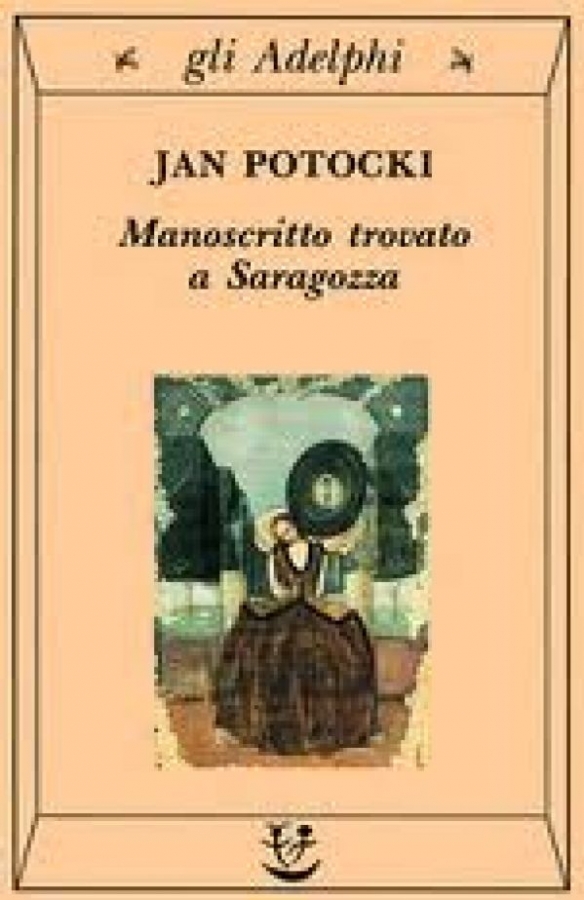
The Manuscript Found in Saragossa
Title of the original version reviewed: «Manoscritto trovato a Saragozza»
AI Translation Notice: This review was translated from the original Italian using artificial intelligence. Book quotes and excerpts are translated interpretations and will not match the author's original English phrasing or official published translations.
The best introduction to this strange book is the figure of its author: Count Potocki, who lived between 1761 and 1815, when he died by suicide.
A great traveler, ethnographer, archaeologist, geographer, and philologist, Potocki was the quintessential exponent of the eighteenth-century Enlightenment: his curiosity and immense erudition were placed at the service of a rational approach to reality.
A keen observer of religions and customs, Potocki was likewise drawn to esotericism, spiritualism, and the realm of the fantastic in general.
The complex interplay between reason and mystery is the guiding thread of the manuscript, whose own history is no less obscure and unbelievable: written in French, it was lost, resurfaced in a translation from an alleged Polish version, and finally what may be the original French text was recovered.
Constructed in the form of the Decameron, as a series of novellas divided into days, the novel recounts the adventures of Alfonso, who must cross the Sierra Morena to reach Madrid.
In fact, the young protagonist—and narrator—makes very little headway, as he finds himself sucked into an infernal and mysterious loop between the gallows of two hanged men and an abandoned inn: in the morning he awakes among decomposing bodies, by day he travels toward the inn, and at night he is visited by two splendid women who claim to be his cousins.
In this continuous shuttling back and forth, he encounters other characters who tell him their stories, fraught with apparitions, skeletons, and supernatural retributions.
Despite situations that obsessively defy rational explanation, Alfonso continually attempts to find a rationale for them and refuses to accept the existence of mystery.
Perhaps at the inn I had been given a draught to put me to sleep, after which nothing could be easier than to transport me during my slumber beneath the fatal gallows.
Pacheco (a madman or demoniac whom Alfonso encounters) might have lost an eye in an entirely different accident than through his amorous liaison with the two hanged men, and his frightful tale could well be a fable....
But slowly he is overcome by a sort of «annihilation of all my faculties».....( he begins to realize the existence of a powerful cabal)
which seems to have no other purpose than to conceal who knows what secret, or to bewitch me with sorceries that I sometimes partially manage to penetrate, but which then, through other circumstances, soon plunge me back into doubt.
It is clear that I, too, am part of this invisible chain
.
Reason wavers before the inexplicable, and vast erudition can be, at best, «agreeable company,» yet it risks ending up like the hundred volumes of another character in the novel: gnawed and destroyed by rats.
The narrative structure is founded upon the singular repetition of the same prophecy: an ever-identical situation, reproduced and multiplied through a series of fantastical combinations that seem to have a single aim: to assault the stability of rational interpretation.
This repetitiveness, which might otherwise render the reading tedious, is sustained by an explosion of narrative invention and by a style that is pleasing, imaginative, and often ironic.
Thirsting for experience and knowledge, Potocki meant to tell us, with this unfinished novel, that life is wondrous.
Why read it? It is an enjoyable and fantastical book.