Anna Maria Ortese
Books by this author (2)

The sea does not bathe Naples
Anna Maria Ortese returns to Naples, a city from which she has been absent for many years. Officially, she was commissioned to interview young Neapolitan writers, some already renowned, others destined to become so: Prisco, Rea, Incoronato, and La Capria. A long chapter recounts, precisely, her visits to these authors, and we come to understand how the city’s immediate postwar cultural and political awakening had by then dissolved, leaving behind disillusionment, resignation, and pessimism, and driving an exodus toward Rome and Milan. When she meets Prunas, the guiding spirit of the review *Sud*—by then defunct, yet around which so many intellectuals had once gathered full of ardor and hope—Ortese perceives > an infinite grief and curiosity: you must have pity, those extinguished eyes seemed to say, you must avoid looking. Is it true that we are dead?, he asked, is it true that we have been absorbed by the city, and are now at peace? (...) The city had destroyed him. And why should it not have destroyed him? All had fallen here, those who had wished to think or to act; all tongues had grown confused and had gone to swell the sorrowful human vegetation. This nature (Naples and its people) could not tolerate reason, and against man it mobilized its armies of clouds, of enchantments, so that he might be dazed and submerged. The journalistic inquiry is merely an expedient: the author wishes to lose herself, to become disoriented, to seek out a “vision of the intolerable,” possible only in a city, like Naples, in which everything is > conceived, imagined, dreamed, and even artistically realized, but not real: a disquieting representation . The book opens with several sketches of Neapolitan life, the most accomplished of which is undoubtedly the first, *Un paio di occhiali*. In a putrid, foul-smelling district, the sun touches only the highest balconies, while the rest is nothing but shadow and filth; yet the people joyfully greet the sunny day, as though > that air, that celebration, and all that azure suspended over the paupers’ quarter were also theirs. A poor girl, nearly blind, anxiously awaits the eyeglasses that her family has purchased for her with their meager savings. Yet can someone who has never seen what reality is truly like bear the sight of it? Is it not better to see everything blurred? > Eugenia, still holding the eyeglasses with her hands, walked as far as the doorway. (...) Suddenly the balconies began to multiply (...) the vegetable carts were tumbling down upon her; the voices filling the air, the shouts, the whipcracks, struck her head as though she were diseased. (...) So many holes, so many ants ; a sense of bewilderment seized her, reality was too intense to bear. Following these sketches—brief, elegant, and evocative—comes the account of a visit to a massive tenement building, which houses families who can no longer afford a decent apartment. The author is guided through the long corridors, from the first floor, composed of dark, foul-smelling dens, up to the third floor, where the dwellings are cleaner and brighter. The trajectory of those who enter the building is always the same: at first they reside on the highest floor, only to descend, inexorably, lower and lower. > The children, once neat and cheerful, in that darkness became covered in insects and their faces grew ever more somber and pale, the young women took up with married men, the men fell ill. No one ever climbed back up from down below. (...) There was something calling from down below, and whoever began to descend was lost, but only realized it at the end . The vast tenement is a metaphor for the anthropological, social, and existential condition of Naples, where the plebeians and the bourgeoisie coexist, mutually indifferent, like > shadow, weakness, neurasthenia, resigned fear, and impudent gaiety . In the preface to the 1994 edition, Ortese admits that > the writing of the *Mare* has something exalted, febrile about it; it tends toward a high pitch, borders on the hallucinatory: and almost everywhere on the page it exhibits, despite its rigor, a certain excess: in it, all the signs of an authentic neurosis are manifest . This judgment is the perfect diagnosis of the book: the individual pages, sentences, and words are often magnificent, rich, and capable of fully rendering situations and emotions; yet the whole remains disordered, confused, and unresolved, such that any conclusions must be drawn from the author’s own words. It is an outcry, a desperate indignation against a reality that is, for Ortese, “incomprehensible and hallucinatory”: the demise of the dream of Naples’ rebirth, and therefore a defeat. Why read it? It is exceptionally well written, and above all, the visit to the vast tenement possesses an astonishing vividness: a true masterpiece.
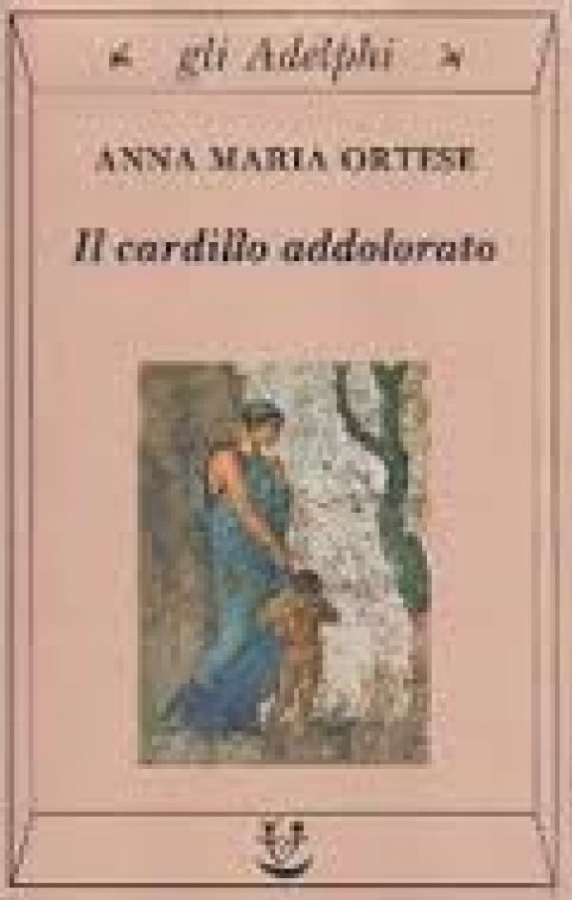
The Lament of the Linnet
The novel revolves around a question to which the reader cannot find an exhaustive answer: who is the "Cardillo Addolorato", and what role does this omnipresent and obscure figure play among so many characters? And what is the meaning of the verses that recur throughout the tale, up to its seemingly tragic conclusion: «e vola vola vola lu Cardillo! e vola vola vola... oh! oh!»? To answer, one must venture into the reading of the novel, letting oneself be enchanted by the mystery of narration, which, like life, resides in the > freshness, fluidity, flow and precipitous fall, the continuous vanishing and resurrection of its infinite forms . We are at the end of the eighteenth century, in the midst of the Age of Enlightenment. Three friends—Prince Naville, the merchant Nodier, and the artist Albert—arrive from the cold North in Naples, a "strange city, wretched yet rich, softly colored," alternating "days of a purest, glittering azure" with others rainy and somber. The three young men, > radiant with a gaiety, an excitement, a pride justified by their age and, we might add, by being in a city so full of mirages, pay a visit to a well-known glovemaker. It is in the merchant’s house that the events determining the fate of the three friends unfold. First of all, they meet Elmina. "Full, yet delicate forms, stunning arms," a gaze > grave and reserved... a coldness... a distance, an abyss... that could be conquered (thinks Naville)... that could never be bridged , so it seems to Albert. The impression is so breathtakingly intense as to produce "a bewilderment of the soul"—more mundanely, causing the three young men to fall in love suddenly and like a bolt of lightning. Their lives are marked forever. Yet precisely at this moment of enchantment, a disturbing episode occurs. Elmina's little sister compares Albert to "their old goldfinch," left to die of neglect, without fresh water or millet. From a twofold and contradictory emotion, of ecstatic wonder and gratuitous cruelty, unfolds an apparently senseless story. As in an eternal return, the characters remain the same, events seem to repeat themselves identically, yet continually take on new forms and meanings: the only constant is the presence of the Cardillo, the mysterious bird, "entirely invisible and hidden." After all, is it possible to bestow > a legitimate name on the people and things of this world, all so unclear... and slowly slipping away ? Albert marries Elmina, who has undertaken a mission transcending all love and human bonds, even maternal ones: she must care for a child who might be her secret brother, but, naturally, is not. An imp, an evil spirit, or an innocent soul? In this predicament, poor Albert, a fragile and defenseless soul, cannot but succumb. Nodier, for his part, also in love with Elmina, after daydreaming of marrying her, being the pragmatic and superficial man he is, beats an orderly retreat once the incomprehensible mission the girl has set for herself becomes clear. Naville cannot accept this easy way out; he too is infatuated with Elmina, but, an Enlightenment thinker and cosmopolitan, he stubbornly attempts to find an explanation for incredible and mysterious events, to offer Elmina a definitive and fitting arrangement, showering her with gifts that are always refused, planning to marry her and take her away from Naples. All his efforts are futile, not only because events unfold in an increasingly indecipherable manner (characters are never who he thought they were; even the dead resurface to have their say...), but above all because, at decisive moments, the voice of the Cardillo bursts forth, that agonizing refrain: > Oh, had he never abandoned his home and the dull worldly life of the wealthy, solid, cold, reasonable, and thoroughly respectable society into which he was born! A kind of destiny dragged him to Naples, and against it poor Naville desperately fought, only to end up defeated. The prince returns to his homeland, to his majestic palace in Liège. To anyone who "boasted of that famous, though still newborn Progress," the prince—no longer worldly, no longer amused—would ask whether they > had heard the absolute silence of the world, the imperial joy of dawn.... the presence of the avenging Cardillo . Until one evening, just as he is about to set out once more for Naples, the Cardillo is announced to him. The familiar refrain echoed everywhere, and the prince > (blessed) the Cardillo who was arriving, and would finally explain everything to him. The madness and the separation, the grief and this joy that now arrived with him: all calm, cold, infinite . Who, then, is the Cardillo Addolorato? It is the underworld, the magma bubbling beneath ordering rationality. To grasp the meaning of the goldfinch’s voice, one must be a > patient reader, bereft of common sense and endowed instead with a private antenna to catch the glacial silence of the Universe, the quarrels of the underworld’s children, the spitting, the tears, the nein... nein of their imploring . Only in a Naples both fantastical and sorrowful, generous and cruel, could a book narrating the defeat of Reason take place. The novel’s chief virtue is its style, mesmerizing if not easy. The reader is immersed in an intricate syntax, rich in parenthetical clauses, representative of life’s complexity and vagueness. It is a prose that heralds dream, mystery, a world that refuses to be reduced to overly simple and linear narrative schemes. Its flaw lies in the confusion of the plot and character system. At first, the author manages to maintain order and logical progression; beyond a certain point, disorder bursts in victorious. The reader loses their way, and annoyance and tedium set in. Why read it? Its allure lies in the writing, but one must have the patience to press on through the final hundred pages.