Finished reading on: January 13, 2014
The Lament of the Linnet
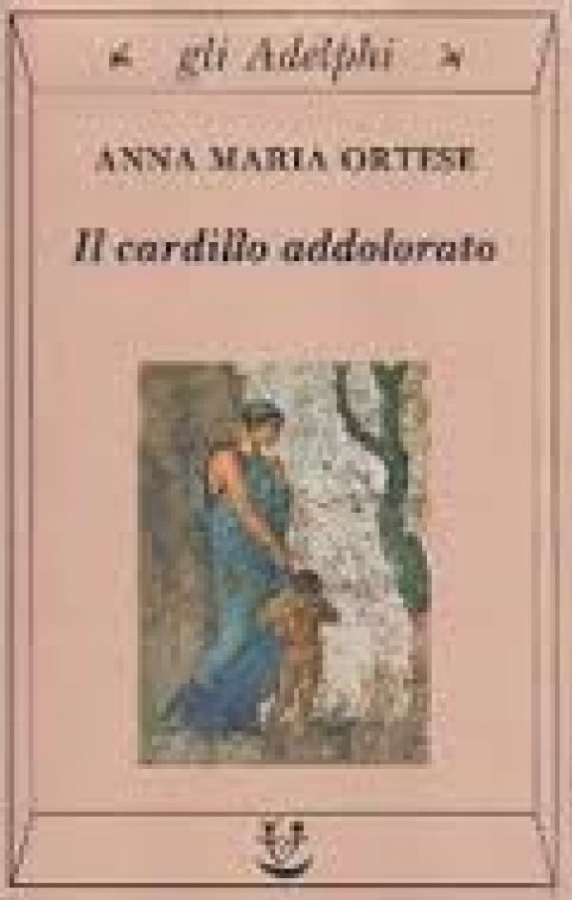
Title of the original version reviewed: «Il cardillo addolorato»
AI Translation Notice: This review was translated from the original Italian using artificial intelligence. Book quotes and excerpts are translated interpretations and will not match the author's original English phrasing or official published translations.
The novel revolves around a question to which the reader cannot find an exhaustive answer: who is the "Cardillo Addolorato", and what role does this omnipresent and obscure figure play among so many characters? And what is the meaning of the verses that recur throughout the tale, up to its seemingly tragic conclusion: «e vola vola vola lu Cardillo! e vola vola vola...
oh! oh!»? To answer, one must venture into the reading of the novel, letting oneself be enchanted by the mystery of narration, which, like life, resides in the
freshness, fluidity, flow and precipitous fall, the continuous vanishing and resurrection of its infinite forms
.
We are at the end of the eighteenth century, in the midst of the Age of Enlightenment.
Three friends—Prince Naville, the merchant Nodier, and the artist Albert—arrive from the cold North in Naples, a "strange city, wretched yet rich, softly colored," alternating "days of a purest, glittering azure" with others rainy and somber.
The three young men,
radiant with a gaiety, an excitement, a pride justified by their age
and, we might add, by being in a city so full of mirages, pay a visit to a well-known glovemaker.
It is in the merchant’s house that the events determining the fate of the three friends unfold.
First of all, they meet Elmina.
"Full, yet delicate forms, stunning arms," a gaze
grave and reserved...
a coldness...
a distance, an abyss...
that could be conquered (thinks Naville)...
that could never be bridged
, so it seems to Albert.
The impression is so breathtakingly intense as to produce "a bewilderment of the soul"—more mundanely, causing the three young men to fall in love suddenly and like a bolt of lightning.
Their lives are marked forever.
Yet precisely at this moment of enchantment, a disturbing episode occurs.
Elmina's little sister compares Albert to "their old goldfinch," left to die of neglect, without fresh water or millet.
From a twofold and contradictory emotion, of ecstatic wonder and gratuitous cruelty, unfolds an apparently senseless story.
As in an eternal return, the characters remain the same, events seem to repeat themselves identically, yet continually take on new forms and meanings: the only constant is the presence of the Cardillo, the mysterious bird, "entirely invisible and hidden."
After all, is it possible to bestow
a legitimate name on the people and things of this world, all so unclear...
and slowly slipping away
? Albert marries Elmina, who has undertaken a mission transcending all love and human bonds, even maternal ones: she must care for a child who might be her secret brother, but, naturally, is not.
An imp, an evil spirit, or an innocent soul? In this predicament, poor Albert, a fragile and defenseless soul, cannot but succumb.
Nodier, for his part, also in love with Elmina, after daydreaming of marrying her, being the pragmatic and superficial man he is, beats an orderly retreat once the incomprehensible mission the girl has set for herself becomes clear.
Naville cannot accept this easy way out; he too is infatuated with Elmina, but, an Enlightenment thinker and cosmopolitan, he stubbornly attempts to find an explanation for incredible and mysterious events, to offer Elmina a definitive and fitting arrangement, showering her with gifts that are always refused, planning to marry her and take her away from Naples.
All his efforts are futile, not only because events unfold in an increasingly indecipherable manner (characters are never who he thought they were; even the dead resurface to have their say...), but above all because, at decisive moments, the voice of the Cardillo bursts forth, that agonizing refrain:
Oh, had he never abandoned his home and the dull worldly life of the wealthy, solid, cold, reasonable, and thoroughly respectable society into which he was born!
A kind of destiny dragged him to Naples, and against it poor Naville desperately fought, only to end up defeated.
The prince returns to his homeland, to his majestic palace in Liège.
To anyone who "boasted of that famous, though still newborn Progress," the prince—no longer worldly, no longer amused—would ask whether they
had heard the absolute silence of the world, the imperial joy of dawn....
the presence of the avenging Cardillo
.
Until one evening, just as he is about to set out once more for Naples, the Cardillo is announced to him.
The familiar refrain echoed everywhere, and the prince
(blessed) the Cardillo who was arriving, and would finally explain everything to him.
The madness and the separation, the grief and this joy that now arrived with him: all calm, cold, infinite
.
Who, then, is the Cardillo Addolorato? It is the underworld, the magma bubbling beneath ordering rationality.
To grasp the meaning of the goldfinch’s voice, one must be a
patient reader, bereft of common sense and endowed instead with a private antenna to catch the glacial silence of the Universe, the quarrels of the underworld’s children, the spitting, the tears, the nein...
nein of their imploring
.
Only in a Naples both fantastical and sorrowful, generous and cruel, could a book narrating the defeat of Reason take place.
The novel’s chief virtue is its style, mesmerizing if not easy.
The reader is immersed in an intricate syntax, rich in parenthetical clauses, representative of life’s complexity and vagueness.
It is a prose that heralds dream, mystery, a world that refuses to be reduced to overly simple and linear narrative schemes.
Its flaw lies in the confusion of the plot and character system.
At first, the author manages to maintain order and logical progression; beyond a certain point, disorder bursts in victorious.
The reader loses their way, and annoyance and tedium set in.
Why read it? Its allure lies in the writing, but one must have the patience to press on through the final hundred pages.