Hamid Ziarati
Books by this author (1)
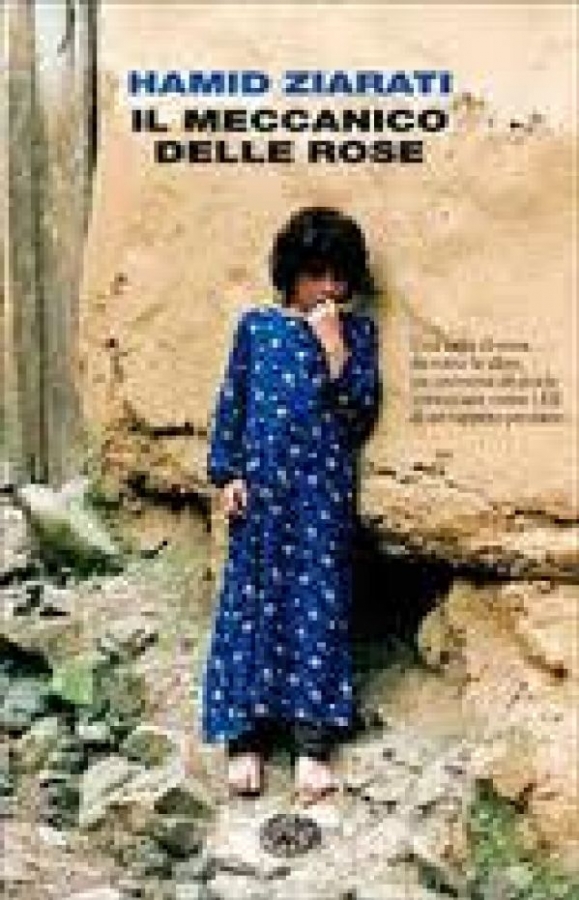
The Rose Mechanic
The novel, written in Italian, is set in a country never named, yet readily identifiable as Iran, before and after the Khomeinist revolution. There is perhaps a protagonist, Reza, but he is a figure merely "brushed upon," about whom we know little because his character and fate are determined by the circumstances and personalities of the other characters. Or perhaps he has no need to express himself because "he > is steadfast, with just the right dose of opportunism and selfishness to survive, while those around him are too fragile to endure in a harsh and cruel world. The novel is structured into five chapters, corresponding to the characters who shape Reza's fate. In the first chapter, Akbar takes advantage of the people's credulity to replace his stillborn son with an infant, Khodadad, abandoned on his doorstep. To do so, however, he must cry miracle, thereby offending faith and sealing the fate of Khodadad, who from that moment on will be marked as one favored by God, as one capable of raising the dead. Akbar then commits another sin: he makes love to his sister-in-law, who will later give birth to Reza. The entire narrative thus originates from a dual deception, and it is as though a curse hangs over all subsequent events. In the second chapter, Khodadad, no longer able to bear the role of the miraculously saved > , flees together with Reza to seek a new life in the big city. To convince his friend to follow him, Khodadad leads him to the cemetery, where there is an empty grave, already dug so as not to be caught unprepared by God's inevitable summons. Going to the city, the boy says, is the only way we have to save ourselves from that end there." Yet the practical and prosaic Reza rightly replies to him, "if it's not there, it will be elsewhere > . Life in the city proves far more difficult than they had anticipated, though it must be said that Reza adapts much better than Khodadad. During an altercation with their master, who refuses to pay them, Khodadad is mortally wounded while Reza kills the man. The two boys flee, deciding to part ways. And so Khodadad fades away alone, with the sole consolation of the angel of death, Ezrail, who swayed him, singing in his ear, in a whisper, the lullaby of oblivion, the only one he knew > . In the third chapter, the novel recounts the sad tale of Donya, which, it must be said, hews a bit too closely to the plots of many a nineteenth-century tearjerker. After a wretched adolescence brought on by a cruel stepmother, the girl falls in love with the classic gentleman > of good family and is forced to marry a man she does not love—namely Reza, who has in the meantime become a skilled and prosperous mechanic. Between the two there is neither love nor, even less, passion; yet while Donya suffers deeply from an incomplete, comfortable marital life, brightened by a daughter but emotionally barren, Reza seems content enough, accepting—perhaps with excessive submissiveness—his wife's coldness. Donya's only moment of relative happiness consists of visiting the cemetery of a nearby shrine, where the woman imagines praying over her dead mother's grave: she sits on the ground, and with a small stone knocks three times to draw her mother's attention and let her know she is there to pray for her soul > . Donya's life might have drawn to a prosaic close in a resigned yet peaceful marriage (Reza is, after all, a decent man), were it not shattered, driving her to suicide, by the tragic end of Mahtab, her beloved daughter. The fourth chapter is without question the most dramatic, in many respects harrowing. The girl is arrested by the Khomeinist police, tortured, and strangled. Her only fault is being engaged to a lawyer who defends his clients—often impoverished prostitutes—with excessive fervor. And at the moment of death, Mahtab takes refuge in wonderful childhood memories, imagining she hears her father's words. The darkness and the crack-free silence cradled her. A warm, gentle voice soothed her eardrums with words that reached her liquid, light > . In the final chapter we discover that Reza has had a long relationship with a prostitute, Laleh. It is in fact she who financed Reza's business, enabling him to become a wealthy mechanic. On the verge of death, she longs for Reza to come and say goodbye to her—she who had always helped him. Yet he does not come. If she recovers, he will come and take her away, so he told her. So much pain? He doesn't come. Yet she does not resign herself. The night still seems very long. Sleep does not cradle her. Will the end ever arrive? > For many commentators, the meaning of this book lies in the quotation of verses by a great Iranian poet, which read we played amidst this for a while, then we ended up, one after the other, in the basket of oblivion > . We are not the ones who forge our destiny, which is, in any case, a trifling thing before God. Without doubt, the novel is steeped in a profound religiosity, a sort of existential resignation that finds peace only in the notion that all of life is God's will. Yet one also senses, throughout the book, an abiding desire to escape from the prose of existence: an escape that ultimately can be achieved only through death. To be resurrected lighter and with wings, she tells herself. She must become lighter, with wings, and fly far away. Far away from there. Up high. But then? How to find one's bearings? Which compass to look to? Which qibla to trust? And what if she gets lost all over again? The book's principal virtue is its prose: simple, elegant, delicate. The numerous dialogues do not thin out the narrative; on the contrary, they allow for a deeper exploration of the characters. The complexity of Iranian society emerges vividly, caught between a deep-seated religiosity and modern aspirations. Lingering too extensively on detail, drawing out the various characters' stories, causes the tension to slacken and works against a sharp focus on the fundamental themes, which are neither easily discerned nor fully developed. Why read it? Splendid prose, an intriguing and at times gripping narrative.