Reeds in the Wind
The case of Grazia Deledda was a singular one: the only Italian Nobel laureate honored as a prose writer (Montale and Quasimodo were poets; Pirandello and Dario Fo essentially dramatists), Deledda’s oeuvre unsettled our literary establishment, which puzzled for a long time over the reasons behind the prize. As had already happened with Matilde Serao, critics sought to pigeonhole Deledda within literary schools, denying her autonomy and originality: a failed *verista*, the very accusation leveled at Serao? A corollary of Verga and D’Annunzio? Of Federico Tozzi, to whom she was bound by deep friendship? Lyric–visionary and symbolist? It would have sufficed to read her without prejudice to discover how unique Deledda is in Italian literature: an ancestral author, she speaks of sorrow as destiny, of life as a journey toward an elusive haven of stillness (death?), of a living, magical, and indecipherable nature, indifferent to the suffering of mankind. > The red twilight glow, overcome near the altar by the gleam of tapers, covered the crowd as if with a veil of blood, but little by little the veil turned black, faintly illuminated by the gold of the candles. The crowd could not bring itself to leave. (...) It was like the distant murmur of the sea, the stirring of the forest at vespers; it was an entire ancient people moving on, moving on, chanting the naive prayers of the early Christians, moving on, moving on along a dark road, intoxicated with sorrow and hope, toward a place of light, yet distant, unreachable . If we limit ourselves to the plot, one cannot but share the judgment of Benedetto Croce, for whom Deledda’s novels were > all equally plausible, and none fashioned in such a way as to leave a deep impression on the hearts and imaginations of readers . To grasp the emotional and spiritual power of *Canne al vento*, one must let go, surrendering to her prose, beyond the storyline. The novel’s protagonist is Efix, the old servant of three women, once well-off landowners and now reduced to living off the yield of a “smallholding,” tended by the man. The narrative opens precisely in this corner of the world. > The moon rose before him, and the voices of the evening warned the man that his day was done. It was the rhythmic call of the cuckoo, of early crickets, an occasional bird's cry; it was the sigh of the reeds and the ever-clearer voice of the river: but above all it was a breath, a mysterious panting that seemed to rise from the earth itself; yes, the working man’s day was over, but the fantastical life of elves, fairies, and wandering spirits was beginning. (...) Efix heard the sound the *panas* (women who died in childbirth) made washing their clothes down at the river, (...) and believed he caught a glimpse of the *ammattadore*, an elf with seven caps inside which he keeps a treasure, leaping here and there under the almond grove, pursued by vampires with steel tails. Nature, inhabited by malignant spirits, mirrors and feeds the terrible secret Efix harbors within: he killed his mistresses' father, an authoritarian and violent man; he did so to allow the other daughter to flee, to find freedom on the mainland. It is also for this reason that Efix has dedicated his life to the three women, to whom he is bound by a deep tie, as servant, friend, and protector. He wishes for them to be well; he fears dying before seeing them safe, delivered from poverty, with another man to protect them. When Giacinto arrives—the son of the sister who fled to the mainland—Efix hopes he might be the right person, capable of restoring prosperity and peace to his mistresses. He is mistaken: Giacinto is a petty rogue, who flirts with a local girl and flatters Noemi, the youngest and proudest of the women. What is more, Giacinto loses substantial sums gambling, pledging as collateral the “smallholding,” their sole source of income. Efix was unable to defend them, to protect them; thus, he flees, leaves the village behind, and embarks on a prolonged wandering across the Nuoro region, keeping company with beggars and asking for alms at the numerous village festivals. It is a journey that leads nowhere. > A nightingale sang on the solitary tree still suffused with smoke. All the cool of the evening, all the harmony of the serene distances, and the smile of the stars to the flowers and the smile of the flowers to the stars, and the proud joy of the handsome young shepherds and the pent-up passion of the women in red corsets, and all the melancholy of the poor who live waiting for the scraps from the rich man’s table, and the distant sorrows and the hopes beyond, and the past, the lost homeland, love, crime, remorse, (...) the laughter and weeping of the world, trembled and vibrated in the notes of the nightingale atop the solitary tree that seemed taller than the mountains, its crown grazing the sky and the tip of its last leaf driven into a star. And Efix began to weep. He did not know why, but he wept. He felt as though he were alone in the world, with only the nightingale for a companion. (...) All the elves and monsters had stirred and were dancing in the shadows, pursuing and surrounding him . Efix will return home and die in peace, because Noemi has agreed to marry a cousin of hers, a wealthy landowner. The happy-ending narrative, steeped in religiosity, drains the novel of its tension: it is an awkward and affected attempt to give meaning to Efix’s life, to offer us hope. Yet that is not how it is. Like the grieving parents in David Grossman’s *Falling Out of Time*, we all walk in a sacred procession toward that mysterious place that is the hereafter. Yet our march grinds to a halt before a wall. All is silence. "A yellow point shone behind a castle (...). Slowly its light illuminated the entire mysterious landscape, and as if at the touch of a magic finger everything vanished; an azure lake flooded the horizon (...) In the silence, the stream beat like the blood of the sleeping valley. And Efix felt death drawing near, slowly, as if climbing silently up the path, accompanied by a cortege of wandering spirits, by the beating of clothes by the *panas* down at the river, by the gentle fluttering of innocent souls transformed into leaves, into flowers.... Why read it? No one in our literature has sung of living nature with such depth.

Captain Tempest
We stand before one of Salgari’s most astonishing novels. The events of *Capitan Tempesta* are set in 1571 during the Turkish conquest of the island of Cyprus, which until then had been in Venetian hands. But who is Capitan Tempesta? > He was a remarkably handsome youth, indeed too handsome to be a warrior, somewhat tall, slender, elegantly proportioned, with two pitch-black eyes like glowing carbuncles, the mouth of a maiden with superb little teeth... all in all, he seemed more a most graceful maiden than a soldier of fortune . This very introduction by Salgari brings forth the underlying motif of the novel: the disguise of a splendid Neapolitan noblewoman in search of her betrothed, who has been taken prisoner. The plot unfolds around the ambiguity of Capitan Tempesta. A skilled swordsman and valiant combatant, he/she triumphs in duels over the finest opponents, both Christian and Turk, who then fall in love with the courageous maiden. After fighting in the defense of Famagusta and defeating in single combat one of the most renowned warriors of the Saracen army, the Lion of Damascus, Capitan Tempesta rushes to the castle of Ussif, where her beloved fiancé is held captive. Through cunning subterfuge, she manages to enter the good graces of the cruel Haradja, who becomes infatuated with the handsome youth, unaware of her true nature. Capitan Tempesta succeeds in freeing her betrothed and flees by sea, but is overtaken and captured after a typically Salgarian naval battle. She is freed, however, by the Lion of Damascus, who, hopelessly captivated by the young woman, flees with her to Italy (in the meantime, her beloved fiancé has been murdered). All the quintessential ingredients of Salgari’s novels are present, yet with something more. Not only does the narrative skillfully play upon the dual nature of Capitan Tempesta, but the other characters also rebel against the roles to which society seeks to confine them. Take, for example, the surprising and magnificent figure of Haradja. Fate would have her relegated to a harem, among the many wives of a pasha. Yet > I had the blood of a pirate in my veins, and woman though I was, I felt all its savage impulses . She could not help but fall in love with warriors, with a passion that, once spurned, turned into ferocious hatred. Even the opposition between the Christian and Muslim faiths, which at the outset of the book seemed an irreconcilable conflict, gradually tempers as one reads on, because it becomes evident that everyone moves along a ridge where rules and ideologies lose value and substance. Finally, the character of El-Kadur, Capitan Tempesta’s slave, is magnificent. Smitten with the maiden himself ( > I see you again when, on the sandy beach, you held out dripping seawater before me and rested in the shade of the palms, happy to look upon me ) he suffers terribly because he can never make her his. This unrequited love, of which Capitan Tempesta is fully aware, and his longing for “the vast, luminous horizons and the sand dunes” overwhelm the man to the verge of madness. In forms distinct from those of *Il Corsaro Nero*, where all is gloom and sorrow, here too Salgari operates on a psychoanalytic plane, wherein the characters and events are the iceberg of a subterranean world, forged of fantasies—even erotic ones—and of desires for a different life. Why read it? To adventure, it adds the complexity of the characters.
The House of Jasmine
> I know a city / that every day fills with sun / and everything is enraptured in that moment (Giuseppe Ungaretti, *Silenzio*, from *L'allegria*). The city is Alexandria, Egypt: > here is the sky, free of black clouds; here are the little white clouds scattered in the air like children skipping with joy across the immensity of space. Thank you, God! Here you are, you who never abandon your son Shagara Muhammad Ali, this strange name that caused him so much trouble during childhood and adolescence, and which your discontented servants still do not know well. God, please let me finish what I am doing... Shagara is a petty crook: he works in a factory, in a dusty office cluttered with paperwork, and is often assigned the task of organizing rallies and trips for workers chanting praise for Sadat, who succeeded Nasser in Egypt. Shagara skims off this assignment, pocketing a portion of the money given to him to pay the workers and bus drivers. Everyone knows it, but it is par for the course in a corrupt country. He moves through a city that is surreal, turbulent, and ever identical to itself, and > that old feeling came back with a vengeance: that I owned it, that I had built it myself, that I had traced its boundaries and erected the buildings along its sides . Is Alexandria real or merely Shagara's delirium? Strange, inexplicable, and unsettling things occur: a corpse was found in a sack, yet when they opened it, a breathtaking woman emerged; drunken dogs wandered all alone, shouting, "to hell with the British Empire on which the sun never sets"; a bird had seized a child in its talons and flown off "toward the seventh heaven where God reigns." And there were other incredible events that left the people stunned, even as they carried on living just as before. Rising prices, rampant corruption, peace with Israel after so much bloodshed, and the arrogance of a technocratic government set fire to the revolt. Alexandria is engulfed by an irrepressible, furious popular uprising. > But why, at this very moment, do I fix my gaze on the faces of women and young girls? (...) Perhaps because things drift past before my eyes and I take no notice at all? What is the source of our indifference? Is it perhaps that mysterious "house of jasmine," repository of enigmas no one can fathom, becoming a metaphor for the dark, unfathomable human soul; or is it rather "that dark mass stretching into infinity"? > That foolish water, for millions of years, knew nothing but low tide and high tide, alone, with itself, never anyone sharing anything with it . Just as the house of jasmine is demolished to make way for a hideous real estate speculation that destroys the splendor and allure of the ancient city, so nothing remains for us but to be annihilated in a bleak existence, shackled to petty bourgeois routines. > Where is God, how could he have abandoned us? He gave us a paradise; how is it possible that it all vanished in such a short time? What a fool I am! So much time has passed and I didn't even notice . Of this splendid novel, one could say anything: surreal, realistic, cruel, and ironic. Undoubtedly, the author chronicles the transformation of Alexandria in the wake of Sadat's savage, uneven modernization—a man lauded by the West, yet bereft of charisma and utterly estranged from the "religious heart" of the Egyptian people. And yet, the novel rises above historical contingency, developing in an admirable and captivating manner a discourse that is at once social and intimate: social, because it reveals how deeply the detachment of a cosmopolitan ruling class wounds a people, only to resort—after so many lofty proclamations—to the heaviest repression (and thus ends Alexandria's great uprising); intimate, because through the metaphor of the house of jasmine and the boundless sea, it speaks to our impenetrable inner world and urges us not to lose ourselves in the mundane, nor in futile invocations of God. Only understanding ourselves can save us from indifference. Reading this novel was an intense pleasure, an immersion into fantasy and sublime impressions, rendered through incisive prose characterized by brief sentences woven into an articulate, fluid syntax. Why read it? To afford oneself pure aesthetic pleasure.
The Balcony-Access Tenement
Amedeo Consonni, the novel's protagonist, has been retired for many years and lives in Milan in a *casa di ringhiera*, built at the beginning of the twentieth century around a rectangular courtyard and now housing twenty flats. It is a «curious microcosm» bearing traces of industrial architecture, today severely deteriorated: crumbling stucco, dilapidated plaster, window frames—traditionally wooden and now replaced by others in anodized aluminum, in silver and brass tones—not to mention the numerous TV satellite dishes mounted on the railings, imparting a sense of globalized «squalor» > . On the surface, Consonni’s life is typical of a retired widower: tidying his small, comfortable flat each day, going to the supermarket and cooking his meals alone, reading the newspaper accompanied by an afternoon nap, exchanging a few words with the neighbors, and looking after his young grandson on Tuesdays and Thursdays. But Consonni harbors a strange hobby: he loves collecting crime news, cutting out any article concerning murders from the papers and archiving these clippings in binders meticulously ordered by crime. Over time, he has begun investigating in the field unbeknownst to the police. Alongside Consonni’s pastime, somewhat perverse yet harmless, Recami depicts the other inhabitants of the tenement: in particular, a family of four (father, mother, and two boys), where the man is frequently drunk and violent, the eccentric and noisy couple next door, and the octogenarian madly devoted to his old car. From reading this detailed and fascinating portrait of this microcosm > one might think we are in the presence of a novel of manners in which the detective plot is merely a device; Consonni’s investigation into a recent, savage, and mysterious crime is intriguing, yet the narrative seems aimed more at describing the character than at offering us the suspense and intrigue expected of a noir novel. When, suddenly, the murder of a female tenant sets off a shocking and astonishing sequence of events, entangling the inhabitants of our microcosm. Without giving away the ending—a genuine plot twist—we can say that the unfolding of events confirms how we Italians, all of us, even children, have, or think we have, something to hide, and in any case want to say nothing to the police. I read the novella in one breath". In the first part, I was captivated by the physical and social setting of the *casa di ringhiera*, almost suspended out of time: one need only think of the minute description of Consonni’s apartment with its nineteenth-century wallpapers, or the rivalries and petty slights over parking in the courtyard. In the second part, the narrative pace gathers speed and we cannot put the book down, eager to read the next episode. The narration is punctuated by suspenseful hints of dramatic twists, skillfully crafted to fuel the desire to press on, much like in a serialized novel. The prose is refined and succeeds in blending everyday speech with dialectal idioms, thereby conjuring the nostalgic atmosphere that pervades the tale. It is a minor gem that marries the novel of manners with noir, alongside a pleasing vocabulary and elegant syntactic construction. Why read it? It is intriguing and well written.
The House on the Hill
The Resistance is most often narrated from the perspective of those who took part in the partisan struggle. Pavese’s novella speaks of those who waited, even while caught up in it. > In essence I was asking for lethargy, an anesthetic, the certainty of being well hidden. I was not asking for world peace, I was asking for my own . Thus reasons Corrado, protagonist and first-person narrator, as the surrounding world is swept away by war. He has taken refuge in the hills, which > for me was not one place among others, but an aspect of things, a way of living. (...) I felt no sorrow; I knew that in the night the entire city could go up in flames and people die. The ravines, the villas, and the paths would wake in the morning calm and unchanged . During the day he often goes into town, to a tavern: here there is music, dancing, and badmouthing of fascism. > Each time I swore to remain silent and listen, to shake my head and listen. Yet that cautious equilibrium of anxieties, of waiting, and of futile hopes in which I now spent my days was made for me, I liked it: I would have wanted it to last forever. The impatience of others could destroy it. For a long time I had been accustomed to staying still, to letting the world go mad . Neither the fall of Mussolini and September 8th, nor the rediscovery of a woman from his youth—with whom he perhaps had a son, now twelve years old—are enough to shake him. > Now I was forty years old, and there was Cate, there was Dino. (...) Was I not being futile and boorish this time as well, hovering around her, half bewildered, half humiliated? The fragile and illusory equilibrium is shattered by Cate’s arrest. Corrado escapes by chance and takes refuge in a monastery, where Dino joins him. > What else to do under the empty portico if not savor once again, morning and night, that ancient dread? The monastery is no longer safe, so he decides to seek shelter at his parents’ home in the Langhe. Meanwhile Dino > has left, and in earnest. At his age it isn't hard. It was harder for the others, who nevertheless did it and are still doing it . The journey from Turin to the Langhe takes him into the very thick of the partisan struggle, yet he manages to save himself. > Despite the times, here on the farmsteads the corn has been husked and the grapes harvested. (...) Now that the countryside is barren, I roam it again; I climb and descend the hill, reflecting on the long illusion from which this account of my life began. (...) Here every step, almost every hour of the day, and certainly every unexpected memory, sets before me what I was, what I am and had forgotten. (...) At times, after listening to the useless radio, looking through the pane at the deserted vineyards, I think that living by chance is not living. And I wonder whether I have truly escaped. Can one go on living after a civil war? > One has the impression that the same fate that struck down those bodies keeps the rest of us nailed there to look at them, to fill our eyes with them And why did they die? > I would not know what to answer. Not now, at least. Nor does it seem to me that the others know. Perhaps only the dead know, and only for them has the war truly ended. Corrado’s failure (he could not even protect Dino) culminates in a meditation on the destiny of humankind that transcends the narrative: from the depiction of historical circumstance and internal existential anguish, it ascends to a cosmic dimension, singularly relevant in light of the civil wars that bleed many parts of the world today. From a stylistic standpoint, the novella is an absolute masterpiece: lean, spare, yet capable of evoking the sweep of history and the destiny of its characters. The writer works deftly with the phonetic juxtaposition of words, so much so that one often feels confronted with a poetic composition rather than a prose text. Equally extraordinary is the author’s ability to avoid fracturing the rhythm despite relying predominantly on the period, and thus on short sentences. The use of the comma to create a suspension between subject and verb (granting autonomy to the latter) is a stylistic gem, requiring an exceptional command of syntax, vocabulary, and the Italian language in general. The fusion of American narrative with classicism yielded exceptional results, rarely matched in Italian literature. Why read it? It is a masterpiece and a meditation on war.
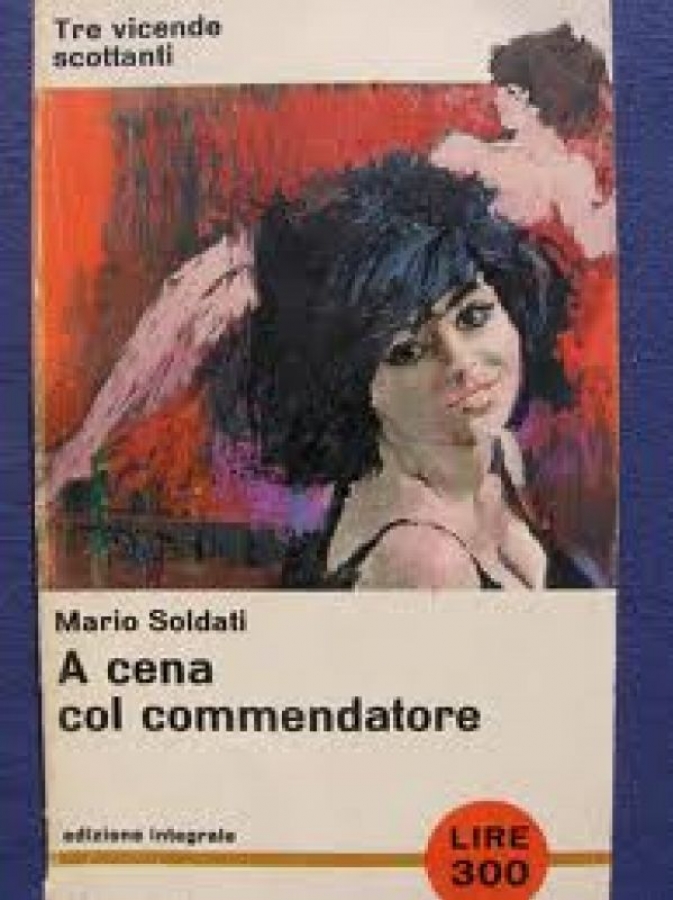
Dinner with the Commendatore
The author imagines a retired opera impresario deciding to set pen to paper so that it might be known who he truly was: > curious about the travails of others... a marmoreal commendatore of an era now bygone . Before his passing, the *commendatore* supposedly managed to compose three stories, which recount actual episodes from his life. In *The Green Jacket*, the impresario has engaged a brilliant conductor for Verdi’s *Otello*. > a man of genius (but) so vain that he is constantly preoccupied with the impression, indeed the effect, he produces on anyone who approaches him . During rehearsals, everything went smoothly until the timpani entrance, when the conductor suddenly asked to halt the performance, pleading a sudden indisposition. The impresario nevertheless managed to draw from him a confession of the true reasons behind the interruption, as well as the musician's decision to break his contract. During the Second World War, the conductor—then young and not yet famous—had taken refuge in a mountain village in Central Italy, where he had befriended the orchestra's timpanist: “a modest, quiet, middle-aged little man with dull eyes,” who had, however, passed himself off as a renowned maestro, earning the esteem and admiration of the local villagers. Yet the young conductor, far more gifted and accomplished than the poor orchestral player, had not disclosed his true identity, presenting himself instead as a humble bank clerk. But why dissemble? > Lightheartedly, out of curiosity, out of habit, I had strayed down the hazy path of jesting.... and seeing that plump little man, with his comical green jacket and skipping gait, coming toward me in the refectory, I had looked above all at the jacket and not at the man . Yet it was not merely shallowness that led him to this futile deception; there was also “an exquisitely subtle, heightened pleasure in no longer being myself.” But in doing so, he had betrayed friendship—the sincere bond between two men brought together at a difficult juncture in their lives. And now the conductor, celebrated yet conceited, prefers flight to confronting the poor player, who remains, conversely, steadfast in his role and his dignity, a modest artisan of music. In the second story, *The Father of the Orphans*, the impresario pays a visit to a former colleague who had abruptly abandoned the business to run an orphanage. When asked the reasons for such a drastic decision, the colleague tells him a moving story: he had met a sick child on a train and had been deeply affected; yet, out of indolence or the press of work, he had delayed offering help, and by the time he finally resolved to do so, he discovered that the child had died because the family had been unable to afford the necessary medicine. A beautiful tale, were it not for the fact that the impresario accidentally uncovers the true story: the colleague had been involved in a homosexual relationship with a young man, who in turn had fathered a child with a ballerina. Though pleaded with for help, the colleague had refused and had, moreover, cast the young man aside out of fear that his irreproachable bourgeois life might be shattered by scandal. > He had repented of many sins, but not of the single mortal one he had committed. He had made a thousand sacrifices, but not that one without which all the others were worthless: the sacrifice of his own vanity to love . The impresario wishes to force him to acknowledge his abjection, but is ultimately overcome by distaste for a hysterical scene, by the weariness of stripping a man of his mask. In the third story, *The Window*, the impresario goes to visit an old English friend with whom he has long been in love. He hopes they might spend the years of their old age together, only to discover that the woman has always loved a scoundrel, a good-for-nothing who deserted her many years ago. The impresario manages to expose the true character of this dandy, but to no avail. Even when confronted with the most glaring evidence, the woman reaffirms her love. For the impresario, it marks the disillusionment of a myth, of a lifelong dream: > when I thought of Twinkle as I had left her twenty years before and as I had always remembered her—forthright, witty, and of tastes so simply noble.... looking around me, I could hardly believe my eyes. And yet, her long solitude, teeming with fantasies and remorse, explained even this corruption to me . With his simple, elegant, and witty style, Soldati confronts the complexities of the human soul, tracing them back to everything within us that is ambiguous and uncertain. The mask behind which we hide is not an artifice, but an intrinsic part of our consciousness. The stories are compact and lean, sustained by a deft, swift narrative structure. The protagonists and settings are sketched with a few vivid strokes, attentive to detail (the hands, the attire, the decor), so as to recall, with delightful surprise, the nineteenth-century novel. Why read it? These are magnificent stories, written with grace and fluidity.
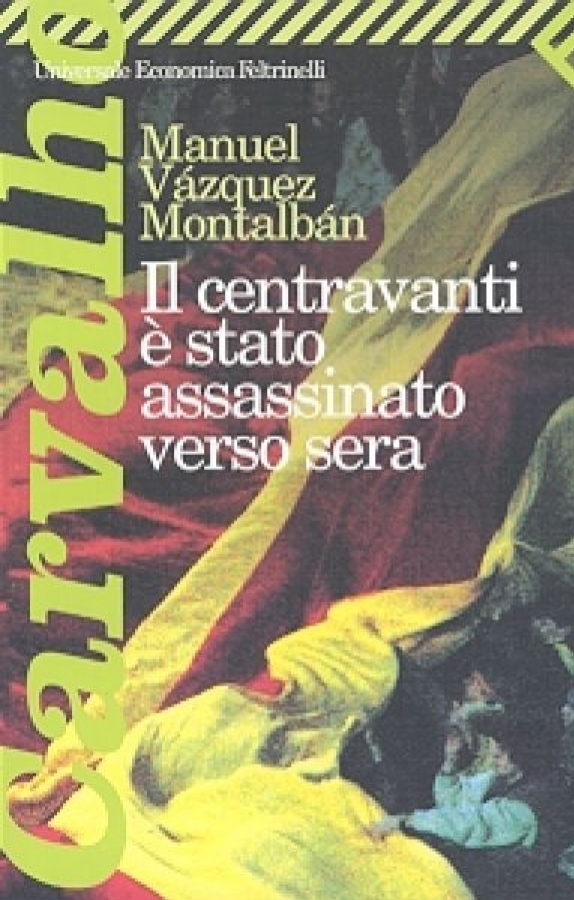
The Centre-Forward Was Assassinated Towards Evening
The novel chronicles the exploits of Pepe Carvalho, a cross between Marlowe and Nero Wolfe, hired to protect a footballer from Barcelona’s leading club, who is thought to be under a death threat. In reality, the detective plot serves as a backdrop to the depiction of a Barcelona milieu in the midst of a construction boom and urban transformation: the characters navigate a landscape in which old Francoist values are dissolving and new ones tied to rampant capitalism are emerging. Counterbalancing the decay of society and the prevailing violence are the small daily pleasures (eating) and the values of friendship, which represent humanity’s final anchors. The book’s greatest strength lies precisely in its portrayal of Barcelona and the characterization of its figures, whereas occasionally certain digressions of an almost philosophical nature slow the narrative pace. The style is richly articulated, bearing the clear influence of the great masters of American crime fiction and Simenon.
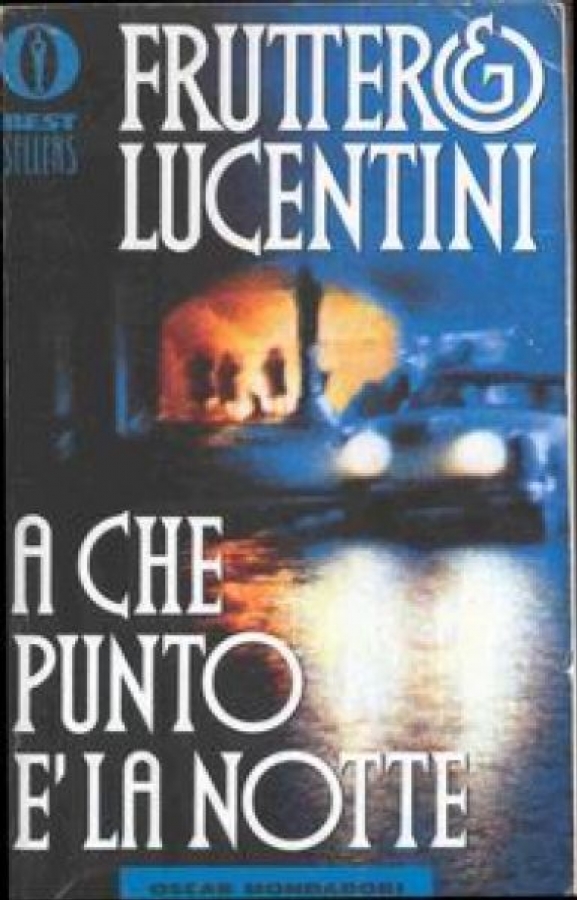
What of the Night
It is a book to be read in a single breath. The setting is 1960s Turin, during its phase of intense industrialization and the expansion of Fiat. Initially, the characters move independently of one another: a pencil vendor, who turns out to be an undercover *carabiniere* tracking down drug-refining laboratories; a young woman of the Turin bourgeoisie whose lover is a mysterious accountant, later revealed to be a bookkeeper for the Mafia; the editorial staff of a publishing house (the occasion for a parody of intellectuals), interested in publishing strange cassette recordings of dialogues by a parish priest who professes heretical ideas and has brainwashed a group of parishioners; a police precinct investigating an alleged assault on the priest; and a Fiat engineer concerned with inventory management. All these characters happen to cross paths at the heretical priest’s mass, during which the priest himself is killed in a bomb attack. A complex and arduous investigation ensues, marked by two further killings: those of the pencil vendor and the Fiat engineer. The story concludes with the uncovering of a fraud perpetrated against Fiat, masterminded by a senior corporate executive, with the priest, the engineer, and the parishioners serving as the material executors. The book is highly complex and multi-layered, yet possesses several remarkable facets: a compelling plot rich in twists and turns; a tight narrative pace that rarely lapses into the superfluous; and the overlapping of storylines and themes—the love affair between the young woman and the mob accountant, the world of Fiat with its corporate hierarchy and rituals, the police milieu and its frictions with the *carabinieri*, the religious realm with its age-old nightmares (the Gnostic sects), and the emotional solitude of Commissioner Santamaria and, more broadly, of all the "adult" characters in the book. In the background emerges an Italy in transition, where traditional values—and even petty thievery itself—are swept away by industrialization and the attendant urban sprawl: it is no coincidence that the novel is predominantly set on the periphery, within an urban and social fabric increasingly degraded and disrupted. Yet will this society be worse than the one that preceded it? The authors seem not to think so: Thea, this young bourgeois woman, prefers her liaison with a mafioso to the social circle of her own class, and her mother considers that this might well be better than marrying a corrupt, paranoid Fiat engineer. The rigid strictures of a hypocritical society are shattered, and only in this way do the characters find their destiny, and love, even if outside conventional bounds. There is, moreover, another theme that surfaces only at the novel’s conclusion. The senior Fiat executive is exposed because he forgets that he is constantly shadowed by two police bodyguards assigned to ensure his safety. The loneliness of power and its indifference toward the humble are also the undoing of those at the summit of society, who deem it thoroughly pointless even to notice others. Is democracy an inevitable process?
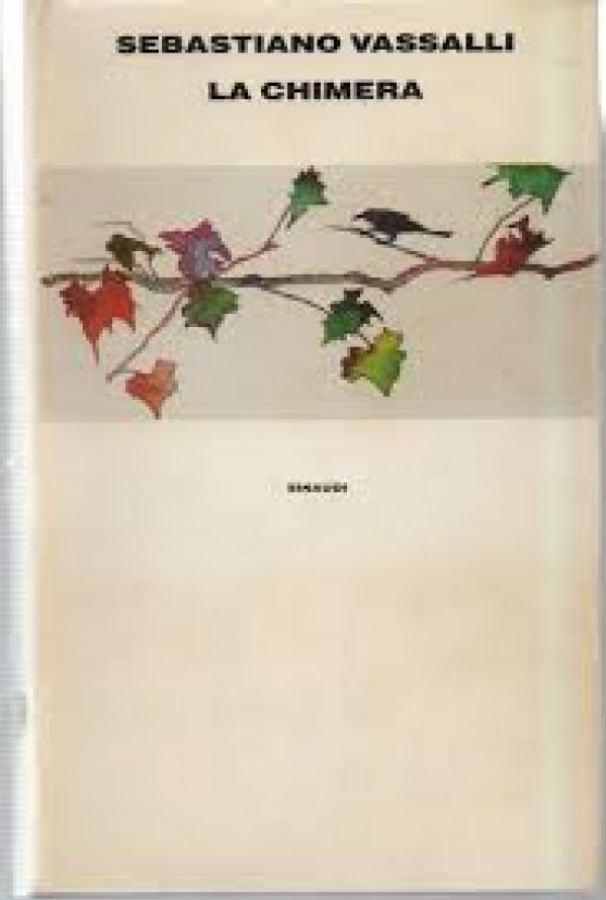
The Chimera
> Before me, on my desk, as I write, lies a color photograph... The photograph of Antonia , or rather of one of the many Madonnas, all so alike, painted by an itinerant painter in the early years of the seventeenth century. > Those eyes, black as night and bright as day; that mole on her upper lip; those full, red lips, and then that rebellious curl escaping from the drapery onto her left cheek .... it was a faithful copy of the portrait of Antonia, the fifteen-year-old witch of Zardino. We may assume it was this photograph of an adolescent girl—«a state of grace, even before an age»—that prompted Vassalli to narrate > a grand tale, of a girl who lived between 1590 and 1610..., and of the people who were alive alongside her, during the very years she lived, and whom she knew; of that era and of those places . The places are Novara and a small village, now vanished. Zardino > was a village like those others visible down there, a little to the left and slightly beyond the second overpass; beneath the greatest and most imposing mountain in this part of Europe, Monte Rosa. (...) A chimera! From up there, from the summit of the chimera today one sees > a hazy plain with a few scattered trees and a highway emerging from the mist ; back then, in the seventeenth century, one gazed upon > a landscape of vineyards and woods stretching toward the marshes and the riverbanks; of meadows and *baragie* (wastelands, heaths) (...); of fields of maize, wheat, and rice paddies and a settlement which > between the houses was grey, cramped, primitive, and yet, in the fair season, all abloom with bindweed and climbing wild roses . In this era and in these places Antonia spent her brief life: abandoned at birth, having survived infancy, adopted by a peasant family of Zardino whose modest prosperity aroused envy and rancor, the girl was too beautiful, proud, and independent not to become the focus of gossip and spite among the village crones: she, «a foundling», what did she think she was, a fine little lady! Perhaps she might have grown into womanhood, married, and had children, had circumstances not dragged her toward a ruthless death. She becomes infatuated with a «camminante», that is, one of those «anarchists of the countryside» who wandered in hatred «of all servitude». Enamored precisely of his free spirit, of his tales of travel and cities, Antonia commits the imprudence of meeting him at night, at dusk, beneath an ancient oak tree that local lore held to be a haunt of evil spirits, the dwelling place of the Devil. A fanatical young priest denounces her to the Holy Office, accusing her of witchcraft. As chance would have it, a power struggle is underway between the Inquisitorial Court and the Bishop’s Curia, and poor Antonia becomes the unwitting victim of this political clash. A scorching heat, a prolonged drought, and the dread of epidemics fuel the search for a scapegoat: and who better than a wretched peasant girl, far too reckless and spirited? > The flames crackled high, night became bright as day, tongues of fire merged into a single blaze. (...) The witch’s hair could be seen vanishing into nothingness and her mouth opening in a soundless scream. (...) Antonia was no more. The crowd’s jubilation erupted. (...) Then, at last, the celebration began . In the preface, entitled «Nothingness», Vassalli offers us a metaphysical interpretation: > to search for the keys to the present, and to understand it, one must step out of the noise: go to the depths of night, or to the depths of nothingness . If one steps away from the clamor and passion of our time, one realizes that history, and our very existence, are nothing more than a purposeless, meaningless flux—nothingness, precisely. Why was Antonia sent to the stake? Why was she not granted the right to live? To prevent time from closing in upon us, to keep nothingness from reclaiming us, perhaps only a God could intervene, but > he is the echo of all our vain shouting. (...) He who knows the before and the after and the reasons for everything, and yet, alas, cannot tell them to us for this single, utterly futile reason: that he does not exist. With all due respect to the author, we must say that the novel’s enchantment does not reside in its philosophy of history; what captivates are the characters and the setting. To be sure, they have all vanished, yet to us readers they still appear so profoundly alive in their feelings, in the petty and momentous motives that stir them and drive them to love, to believe, to survive, even through suffering. And what of Antonia, a seventeenth-century figure yet so modern in her naive yearnings and wonder? Here she is arriving in Zardino, still a child. > The foundling, huddled between two sacks, watched it (the Novara countryside) flow past her wide-open eyes; and who knows what crossed her mind, seeing for the first time the mountains reflected and shattered in the mirrors of the rice paddies, and the long rows of pollarded willows, and all the rest. (...) Perhaps, indeed probably, she was thinking of nothing; letting herself be lulled by the swaying of the cart and distracted by the novelty and variety of the sights (...) a heron standing motionless in the midst of a paddy, a flight of ducks... Never mind metaphysics—this is true love for one’s protagonist! Vassalli is a great writer from a stylistic standpoint as well. The syntax is rich and articulate, marked by a masterful use of punctuation. The detailed descriptions of the landscape, the nuanced depiction of characters—even the most odious among them, such as the executioner or the grand inquisitor—and the deft deployment of adjectives are all elements that render the narrative fluid and engaging. Its only limitation, perhaps, is the excessive reliance on quotations from historical documents, almost as if striving to confer reliability upon the narrative. Why read it? Beautiful, enjoyable, compelling, and profound.
To each his own
The book, set in a small Sicilian town, recounts a murder and the investigation undertaken by a provincial teacher, "out of curiosity and boredom," who discovers the true killer and is murdered as a result. Beyond the setting—characteristic of a society dominated by *omertà*, hypocrisy, and deceit in human relations—the most compelling aspect lies in the figure of the protagonist, Professor Laurana: simultaneously curious and naive, he inhabits a world of his own, outside the conventions of the small community. In reality, he harbors no intention of denouncing the killer; rather, what drives him, and ultimately seals his doom, is an "Enlightenment" faith in knowledge and the pursuit of new emotions. Essentially alienated from the society in which he lives, he fails to grasp its rules, making entirely fitting the book's closing words: "he was a fool." The spare, vigorous style, which leaves no room for rhetoric or baroque redundancies, makes the work an exemplar for all of Italian literature.
Five Novellas
The book comprises five novels (*La strada che va in città*, *È stato così*, *Valentino*, *Sagittario*, and *Le voci della sera*) and four short stories (*Unʼassenza*, *Casa al mare*, *Mio marito*, *La madre*). Written over a thirty-year span, from 1933 to 1961, they mirror the author’s literary and existential evolution, from youth to full maturity. As the writer herself remarks in the 1964 preface, one confronts a stylistic pursuit in which the effort “to no longer write by chance... pretending to know,” led to the discovery > that I still ran the risk of being haphazard. Because it was not a flaw of adolescence, but rather a flaw of my spirit.. I was adept at pretending to love what was in truth indifferent to me . Yet this 1964 note seems itself to be an artifice, for across all the writings in this collection there emerges such a *mal de vivre*, such an acute pessimism regarding the female condition, that it would be disquieting if these existential states were merely a simulation, a matter of “guesswork.” And indeed, the collection also bears witness to a life's trajectory, from the awareness of unhappiness to indifference. To consider solely the three principal novels: in the first (*La strada che va in città*, 1941), the protagonist is an adolescent girl living in the countryside alongside her siblings and her cousin Nini. The city is a place to escape a monotonous life and discover love. The girl is courted by Giulio, yet deep down she is in love with her cousin Nini. Adolescence comes to an abrupt end when the protagonist discovers she is pregnant with Giulio’s child and, though aware she does not love him, agrees to marry him. Yet she longs to return to the time before, when she could > run off to the city every day, and look for Nini and see if he was in love with me, and go to the pine grove with Giulio too, but without having to marry him. Yet all of this was over and could never begin again . With that same passive resignation, she receives the news of Nini’s suicide, and over time “it became harder and harder to think of him.” The second novel (*È stato così*, 1947) is the most unsettling. It opens with the protagonist shooting her husband dead. What follows is the account of how this murder came to pass. A young schoolteacher meets Alberto, an older man, unhandsome but intriguing. > I wondered if he was in love with me and if I was in love with him, and I no longer understood anything. He never spoke words of love to me, and I certainly never spoke to him of that either . Yet she marries him, only to discover that her husband has had a mistress for many years and frequently goes away with her for long periods. The protagonist accepts this life > because I had never been capable of living and now it was certainly too late to learn , but the death of the daughter born of the marriage and her husband’s cold reaction unleash a despair that had been repressed too many times. She can no longer live with this man, nor will she ever know other men, and so “I shot him in the eyes.” In her 1964 notes on this novel, dedicated to her husband, Ginzburg seems almost to downplay its dramatic impact, asserting that “the gunshot was born of chance”—it might just as well not have been there, even though it is precisely the murder that gives meaning to the tale. Does the writer wish to disown a deep and intimate unhappiness by pretending to write by chance? And why, moreover, dedicate to her husband a piece of writing in which resentment and disillusionment resonate so powerfully? In the third novel (*Le voci della sera*, 1961), the narrative moves away, at least ostensibly, from the themes of grief and sorrow, sliding toward the dilemmas of indifference and incommunicability. The protagonist chronicles the Balotta family saga and their gradual dissolution. The various members of a once-vigorous lineage wearily pursue entrepreneurial schemes that never materialize and contract drab, unhappy marriages. The protagonist, too, conducts a relationship with one of the scions, but in secret, like clandestine lovers. When they decide to come out into the open to marry, they stop speaking to and seeking out one another, because > everything has been spoiled... because we have begun to bury our thoughts, deep down, deep down inside us. Then, when we start talking again, we will say only useless things... it means being unhappy, but making sure not to say so to each other, in order to live . Nothing remains but incommunicability, aptly conveyed by the senseless dialogues—full of banal, trivial matters—of the protagonist’s mother, with which the novel concludes. From her earliest work, Ginzburg’s writing is spare, essential, and incisive, and thus strikingly innovative compared to the bombastic, redundant style of the early twentieth century. As one advances through the collection, certain attempts to make the narrative more airy and descriptive become apparent, but the author inevitably returns to concision: her sentences are no longer, however, “a whip-crack and a slap,” as in *La strada che va in città*, but turn into tightly wound dialogues with a distinct theatricality, almost Pirandellian. It is as though the author had attempted an opening, only to withdraw once more into a world where only vacuous communication is possible. Natalia Ginzburg’s narrative overpowers, invading with its “absolute, inexorable, and mortal awareness” of an inescapable unhappiness, of a life that must have endured a profound sorrow, well concealed beneath an intellectually and socially brilliant existence. It is an affliction marked by a deeply feminine character. The female protagonists, who are always the first-person narrators, are plain and ordinary; they cross paths with shallow, selfish men, and their very motherhood is experienced as an obligation, an accident, which often comes to an ill-fated end. The female condition appears as a prison and a foreordained fate within a petty-bourgeois milieu. Why read it? These are literary works of great beauty, bearing witness to a feminine dimension of grief.
The Clandestine
In the Resistance (the war of liberation between 1943 and 1945), the decision to take up arms against Nazi-Fascism rarely arose from a deliberate, mature reflection; more often than not, it was an act of unconscious bravado, oblivious to the risks being run. As Luigi Meneghello wrote in *I piccoli maestri*, it was > a cry, (...) a collective (...) intoxicating feeling: one sensed the overwhelming power of things that rise from below, spontaneous things . Mario Tobino, too, explores the choice of the partisan struggle in depth, doing so in his signature style, that of one who "studies men and loves them." Anselmo is a young medical officer, recently returned from Libya. > He was still dazed by the war, the soldiers’ groans still in his ears, having been a spectator to cruel deeds. Like the protagonist of Cesare Pavese’s novel (*La casa in collina*), he yearns for "a lethargy, an anesthetic," in order to > rediscover the goodness, the tenderness that, beyond all ugly violence, must still exist in the world . One day, after September 8, a woman stops him in the street. > I was waiting for you, I wanted to ask you, since you fought in the war. (...) Who did this? Who are we with now? What did they make us believe? Whose fault is it? And all those who died, poor souls? (...) I saw them die, it was all for nothing... replies Anselmo, and "felt he was stupidly on the verge of tears." For the young man it is a jolt, an awakening; he must shake off his torpor, spring into action. In his hometown, Viareggio (called Medusa in the novel), a group of youths has established an underground organization: they style themselves Marxist-Leninists, profess to be communists, even though they have never read Marx or Lenin and have not yet had any contact with the resurrected Communist Party (though they yearn for it ardently). Then there is an old admiral who longs to act; he was retired by the Regia Marina for his anti-fascist stance. yet he is fueled by a boyish urge to fight, to show the Fascists and the Germans what he is made of. Anselmo soon becomes the liaison officer between "the clandestines" and the admiral; he is entrusted with delicate and difficult missions, which he always manages to carry out exceedingly well, thanks to his poise and his gift as a subtle weaver of human relationships. Tobino guides us through the early steps of the partisan struggle as though it were an escapist novel; perilous situations, recounted nonetheless in an exhilarating, ironic vein, intertwine with the depiction of the growing bond forged among the young conspirators—youths not yet adults, of profoundly different temperaments, varying social backgrounds, and unequal levels of education, yet forever animated by a zest for life and a mutual understanding that transcends their shortcomings and divergent dispositions: action leads to friendship, and friendship to unity. The clandestines, just like the admiral, live on the brink of the abyss as though it were a game—risky, certainly, but undoubtedly bound for a happy ending. The cruel face of war emerges, belying our wish for a serene adventure: this is not the cinema, as one of the book’s protagonists daydreams! Searches, roundups, and arrests begin. Anselmo takes part in the killing of a Fascist in La Spezia; he himself kills a squadrista who had brutally murdered the admiral. They must leave Viareggio and head into the mountains to fight the partisan war, where Anselmo will meet his death. > He closed his eyes (...) and at once dreamed he was in a wood dense with foliage; he lay stretched out, fledgling birds flew around him, brought their beaks close, opening them as if laughing, like children content after a meal . Anyone expecting Fenoglio’s *Il partigiano Johnny* cannot help but be disappointed: here there are no solitary heroes. The novel is constructed linearly, without bombast, an open chronicle rich in endless possibilities, capable of humor because it is lucid, transparent, and yet affectionate toward its characters—even toward the Fascists. > But why do the Fascists do this? Anselmo asked himself in a murmur . The resolve of the "clandestines" takes shape from events; it is events that make them adults, mature them politically, turn them into fighters, convinced all the same that, just as ships can sail through calm waters as well as rough seas, even among the trees, where > death whined, (...) there was nevertheless happiness, gladness, in the face of the present solitude . Why read it? A splendid book by a regrettably forgotten author.
The cold eye of Heaven (Farley)
When drawing near to the end of life, one feels the urge to retrace one's existence through memory. Great men may indulge the illusion of leaving behind a remembrance through a biography teeming with characters and events: a grand narrative, of sorts, of their role in history. But when one is an ordinary man leading a banal existence, what meaning is there in chronicling one’s life? Nothing remains but that remembrance which sees us "in the fixity of a portrait," the fruit of a mingling of real facts and imagination (see Salvatore Satta's *The Day of Judgment* on this site); or, to put it in the words of Italo Svevo, > the most intense life is summarized by the most rudimentary sound, that of the wave of the sea, which, from the moment it forms, changes at every instant until it dies (see *Zeno's Conscience* reviewed on this site). Christine Dwyer Hickey undertakes a venture even more daring than that of Zeno and Satta. On the surface, the author retraces Farley's existence as though it were a reverse chronicle of the most significant events of his life as an unassuming clerk: now in his seventies and alone, he anxiously waits to catch sight of his young neighbor who might "make him feel a little younger, just a little less old"; he frets over purchasing a suit suitable for his employer's funeral—a funeral to which, moreover, he has not been invited; we see him at his retirement reception wondering whether he will miss anything about office life, with > the stupid wisecracks and the arrogance of youth, the Monday morning trivialities and the smell of cheap aftershave, the too many annoyances and the senseless spites, the teachers' pets and those who couldn't care less about anything Moving back through time, we see Farley caring for his mother, who always favored his intellectual, selfish, and absent brother; then with his mistress (his employer's wife), making the reckless decision to finance the firm he works for without demanding any formal record of the loan; and further back still, the devastating grief over the loss of his wife, the choice to go to work in order to marry, abandoning dreams of travel, the news of his father’s death when he was just twelve, and finally, at five years old in a hospital, the futile wait for his parents to visit. To be sure, Farley is the quintessential petit bourgeois; if he has flattened into a routine devoid of ambition and dramatic turns, it is ultimately his own fault: he has always made the least demanding choices, placing himself almost willingly at the disposal of others—be it his employer, his wife, his mistress, or his mother, his brother, and even the girl next door, yearned for in the erotic remnants of a poor old man. Yet if we place Farley "comfortably reclining in a Club armchair," as Svevo would have said, we realize how Farley's life revolved around a single waiting: that for his father. Take, for instance, two passages from the novel. Farley is five years old; his mother and brother finally arrive at the hospital, and he asks where his father is. Is he out fishing? To the woman's reply that he is at work and could not come to see his son, Farley perceives > the sound of gently flowing water. He sees himself now on a riverbank. (...) He is wearing the waders that reach up to his thighs: boots he recognizes from a box on a shelf as belonging to his father. (...) He is alone. Alone on the bank. A man, a boy, a child, a baby, a man again, all of a sudden . Now he is old, at the end of the book. He watches his neighbor run to catch the bus, but cannot recognize the face. > Then his own father invades his mind. Face unfortunately clear. Died of a heart attack.. (...) In any case, certainly a bastard who never had the time or a word for anyone. A snarler. He snarled at the newspaper, snarled at the radio, snarled if you spoke to him while he was having lunch . And at the funeral, so many fine speeches about a man he and his brother had never known. > A great conversationalist. An intelligent man. (...) Passionate about fly-fishing . The novel is a masterpiece. It is not merely the clever device of a reverse narrative. In each of the events of his life, Farley moves like Bloom in Joyce's *Ulysses*: a rambling yet captivating journey through the streets and shops of Dublin, among minor characters who evoke the sense of a solitary yet superficially sociable life (Farley is always in control of himself), among lateral, seemingly marginal reflections. What emerges is a sprawling path of the protagonist's streams of consciousness and of how the arduous manifestation of the self is rooted in places and relationships, rather than abstractly on a psychoanalyst's couch. Moreover, the prose is magnificent and vibrant: a deluge of marvelous words, of untranslatable phonemes in which one takes pleasure through the ear rather than the eye, of a lexicon crossbred with everyday speech, set within an overwhelming syntactic architecture—even if not immediately transparent to the Italian reader, and undoubtedly difficult to render into our language. Why read it? It is splendid; the author is Joyce and Rushdie combined.

The Conquest of America
The book takes as its subject the Spanish conquest of Central America in the sixteenth and seventeenth centuries, a conquest narrated through the trajectories of five figures: Columbus, Cortés, Las Casas, Durán, and Sahagún. To each of these figures, the author matches a distinct stance toward the conquest: in Columbus, the prevailing approach is that of discovery, which leads him to pay close attention to nature and the environment, alongside a fundamental indifference toward the indigenous population, who are essentially assimilated into nature; in Cortés, the spirit of conquest prevails, and with it, knowledge of the language and mentality of the indigenous population in service of military objectives. Cortés quickly grasps the symbolic world of the Aztecs and the Maya, deploying it to great effect to reinforce and project the Spaniards’ invincibility. Indeed, the author argues that one of the reasons for the rapid unraveling of the Aztec empire lies precisely in a belief system rooted in the inevitability of the future—a destiny that could not be altered and could only be deciphered through a series of “signs.” Cortés therefore investigates the indigenous population precisely to comprehend their spiritual world and its corresponding “signs,” thereby turning them to his advantage through a shrewd politics of communication. From this perspective, Cortés emerges as a precursor of semiotics; in Las Casas, a Dominican friar, the guiding thread is love for the indigenous population, grounded in an egalitarian conception and the conviction that the Amerindian people already embodied Christian values and were therefore “good,” in stark contrast to the cruelty of the Spaniards. As the author notes, the Dominican friar’s approach relies on evaluative categories rather than on an understanding of Aztec customs and culture. > If the prejudice of superiority is unquestionably an obstacle on the path to knowledge, one must recognize that the prejudice of equality represents an even greater obstacle, for it leads to identifying the other purely and simply with one’s own ideal of oneself (or with one’s own ego) ; in Durán, a Dominican friar raised in America, the spirit of inquiry emerges, albeit within a mestizo vision of relations with the indigenous population. The later Las Casas, following the famous Valladolid debate against another priest who argued for the inferiority of the indigenous peoples and the right to enslave them, had already discovered the relativity of various ideal positions and the disappearance of any privileged vantage point, thereby renouncing the right to assimilate the Indians. Durán believes that knowledge of the language and culture of the indigenous peoples is the essential instrument for converting them to Christianity. This study leads him toward a kind of cultural hybridization that manifests itself in various, sometimes singular ways: the conviction that the indigenous peoples had already been the recipients of Christian preaching, making their deities akin to the Christian God; the belief that he is fulfilling the role of a historian chronicling a history of heroes (that of the Aztecs); and a narration of the conquest that mirrors bewilderment at the collapse of such a well-organized empire; in Sahagún, a Franciscan friar who wrote no fewer than twelve books in Nahuatl and Spanish detailing the civilization of this people. The author is the forerunner of modern scholars, managing to describe without imposing any interpretation. Of great interest is the comparison between the description of a human sacrifice by Durán and that by Sahagún, which distinctly highlights the latter’s cold, detached account. Sahagún employs questionnaires whose structure reflects his conception of what a civilization can be. In his work, too, knowledge reflects value judgments. The book is deeply complex and multifaceted, yet ultimately seeks to address several fundamental questions: Is it possible to know the other? Is it possible to safeguard difference within equality? Is it possible to avert massacre—both cultural and physical—at the hands of the conqueror? To these questions, the author cannot provide an exhaustive answer; yet the book traces a plausible trajectory, from discovery through massacre to cultural hybridization and relativism, asserting that one must begin from mutual knowledge, which in turn is mediated by communication (the knowledge of language and of “signs”).

Conversation in Sicily
A young worker experiences a feeling of profound dissatisfaction with his life: > the quiet of non-hope. To believe mankind lost and to have no desire to do anything to the contrary, no desire to lose myself, for instance, along with it . This dissatisfaction («these abstract furies») is an intimate matter, but also an awareness of cosmic grief. The young man seeks to escape it through a journey that might constitute both a return to his childhood and, at the same time, an exploration of self, a reflection upon the prevailing values and ideas in society. The journey is structured around several key moments: the acquaintances made on the train, where people are archetypes of social roles; the arrival in the village; the conversation with his mother; the rounds made with his mother among the village houses to administer injections; the encounter with the knife-grinder and the drunken bout in the tavern; the brother killed in the war; and finally «the synthesis» of the entire novel by the village's bronze monument. The development of the themes, the frequent shifts in style and narrative rhythm (at times cinematic, at others lyrical and evocative, rich in symbolism and allegory) make it extremely difficult to provide a single, definitive interpretation, as demonstrated by the critical reception, where each commentator seems to be discussing a novel entirely different from the one read by the others. There are undoubtedly several interpretive keys: the relationship with parents and the native land, the depiction of a crisis of values that finds no answer in political and social forces (personified in the knife-grinder, the upholsterer, and the innkeeper), existential despair, which is not resolved by a return to the maternal womb, and a stylistic search for a cinematic approach to writing. It is probable that the novel is a bit of all of this, so much so that it takes the shape of an open and dynamic system that cannot be enclosed within a single interpretation. I like to think that the true interpretive key to the novel is the context, that Sicily, > a small, huddled Sicily, of medlars and roof tiles, of holes in the rock, of black earth, of goats, with a music of reproaches, receding behind us, and turning into cloud and snow, high above . That setting which frames the continuous rhythm of life («the round of injections»), of illness and death, which make all men alike and equal before suffering and a common destiny. > It was night over Sicily and the calm earth: the outraged world was covered in darkness, men had lamps beside them shut up with them in the rooms, and the dead, all the slain, had sat up in their graves, meditating. I thought, and the great night within me was night upon night. Those lamps below, above, and that cold in the darkness, that ice of star in the sky, were not a single night, they were infinite; and I thought of my grandfather’s nights, my father’s nights, and the nights of Noah; the nights of man, naked in wine and defenseless, humiliated, less a man than a child or a dead man . And so the true theme is, perhaps, identification and the sense of belonging to a collective dimension, constituted by humankind. The central character is that of the Great Lombard, who feels and expresses a yearning for great duties, to do something for humanity. Yet no one knows what to do, and so the worker concludes: > I do not weep within myself. I do not weep in this world... And he walked out of the house, on tiptoe . The novel features deeply evocative pages and reaches its stylistic and narrative peak in «the round of injections» and more generally in the first part: the train journey and the arrival at the village. At other times an intellectualistic approach prevails, which also leads to a fragmentation of the narrative, rendering it at times redundant and prolix.
The Boarding School
The novel is the concluding chapter of a trilogy: *The Road of the Donbas* (2009), *Mesopotamia* (2014), and *The Orphanage* (2017). Just as in Cesare Pavese's novel *The House on the Hill* (see the review on this site) Corrado sought "a stupor, an anesthetic, a certainty of being well hidden" so as not to become embroiled in the Resistance, so Pasha, the protagonist of *The Orphanage*, responds to those advising him to flee that "he was just a teacher, a simple teacher (...) nothing more than a teacher, the rest mattered little to him. Where was he supposed to go, who would be waiting for him, what was there to fear, everything would be fine, he was just a teacher > . And he remained with his elderly father without even following the news on television while war flared in the Donbas between Ukrainians and Russians. No one knows how it happened that the bowels of the earth burst open, spitting out that black grime, (...) everything will catch fire like in a medieval city: house by house, street by street, a matter of a few days, and then there will be nothing left > . What shakes him from his torpor is the remorse over having allowed his sister's son to be shut away in a boarding school; he wants to go and retrieve him, even if he must cross the front line, amidst the fighting. He sets out on a journey, a peregrination that continually brings him back to the very same places, as though he were not advancing in any particular direction, but pacing in circles like a circus bear. (...) For three days I have been walking alongside people I do not even know. As if a spring were pushing me from behind, preventing me from stopping. And the spring pushes them too, in the same way, far from home. Even though at least half of them no longer have either a home or a family. They wander along the ring road without any chance of escaping it. They go round in circles around their own city. And I, too, circle with them, I do not know why > . In a landscape devastated by bombs and violence, where there is mercy for no one, Pasha's wandering becomes a pilgrimage outside of time and space (the 2014 Donbas war): it is like journeying through a nightmare, woven from a medley of characters, destruction, death, and memories of the past. Is it a dream or reality? Why did that soldier, a former pupil of his, spare him? Why did they kill the boarding school’s caretaker, the only teacher who had not fled, staying behind to protect the institution’s young residents? Why will he, so timid and clumsy, be saved? The illustrious doctor asked him to attend to a wounded man, an adolescent of twenty. > Soon he will be gone; now he will close his eyes and it will all be over. (...) Suddenly Pasha senses another presence beside him, unfamiliar, standing there waiting, pertinacious. (...) Who is it waiting for? Whom has it come for? Surely for me, Pasha imagines. It is this presence that hasn't let me out of its sight for three days, it is what gives off this heavy smell of wet dog, it is hunting me, it is taking aim at me. (...) At that moment the wounded man squeezes his hand. (...) He senses that death is bypassing him, moving away and drawing near the other. (...) Don't look, he tells himself, you must not look, just run, run as fast as you can, while you still have the strength and the time, run and do not look back... Giovanna Brogi, the fine translator from Ukrainian, interprets the novel in her afterword as a coming-of-age journey for Pasha, who reflects on his own identity—linguistic included—becomes conscious of his own pusillanimity, and realizes he must choose where to stand. This interpretation clashes with the metaphysical darkening that shrouds the entire narrative, where there is no prospect of salvation or rebirth. Consider a passage near the end, rich in symbolism that contrasts with the tale's apparent hyperrealism. We left Pasha in his flight from death. > There is such an abundance of white that it seems as though all colors have been exhausted. (...) White fields and the black asphalt of the road along which he tries to flee, which ought to save him. (...) And he clearly discerns the dark dogs against the white background. (...) They are drawing closer and closer, fierce and fearless; they know the victim cannot escape, has no way out—there it is, just a few leaps ahead, one more moment, a few more seconds, and you will be able to pounce, sink your teeth into its throat as it tries to break free, to cheat fate . All that remains for Pasha is compassion, the Latin *pietas*, expressed in the final pages by his no longer adolescent nephew: the boy's recognition of his uncle's fragility, perhaps, saves Pasha. The essentiality of the prose, the sparse diction, the driving rhythm accompanied by prolonged suspensions, the narrative ability to shift from an intense realism to an oneiric symbolism are the hallmarks of this masterpiece, a welcome surprise in an often banal literary landscape. Could it be that the stark, essential conditions of existence forge works of true value—something impossible when a soft, parlor-room everyday life prevails? Might European literature need war in order to be reborn? Why read it? It is compelling from a historical perspective, but above all, its literary style is captivating: a masterpiece.
The Black Corsair
We are in the seventeenth century, the age of pirates, > folk made up mostly of misfits, soldiers, and sailors greedy for plunder , roaming the Caribbean Sea > to lay their hands on the rich mines from which Spain drew rivers of gold . Among these “sea robbers” was also an Italian nobleman, the Count of Ventimiglia, the Black Corsair: > he was dressed entirely in black.... even that man’s appearance held, like his attire, something funereal, with that pale, almost marmoreal face . The story begins with the news of the hanging of the Red Corsair, the Black Corsair’s brother, who met the same fate as the other two brothers, all treacherously murdered at the hands of Duke Wan Guld. The Black Corsair resolves to retrieve his brother’s body to give it a proper burial. The expedition to Maracaibo, where the Red Corsair was hanged, serves as a preamble to the book’s central themes: plot twists, duels, cunning, and heroic deeds, framed by a lush and wondrous nature, with vignettes of a typical colonial town inhabited by Spanish merchants and cavaliers. Men fight and kill, yet there is no hatred between pirates and Spaniards: there is only one true enemy, Duke Wan Guld: the treacherous Fleming. We arrive at a turning point in the novel. Having recovered his brother’s body, the funeral takes place aboard the *Folgore*, the Black Corsair’s ship: > the sea still flared around the ship, murmuring dully.... those swells held strange whispers at that moment. Now they seemed the moans of souls, now hoarse sighs, now faint laments . Before a crew moved yet terrified by the ghosts of the dead brothers, the Black Corsair breaks the funereal silence with a terrible oath: > may my soul be damned for eternity, if I do not slay Wan Guld and exterminate his entire family as he has destroyed mine! . Destiny is sealed: there is no longer room for other choices, for an alternative will. The Black Corsair’s life can follow only the path carved out by this oath. The Black Corsair seeks vengeance, yet instead—and unpredictably—encounters love. The *Folgore* comes across a Spanish ship, captured after a bloody battle, where the pirates take a young woman captive, > a beautiful figure of a maiden, tall, slender, supple, with delicate skin of a faintly rosy white . What a contrast between the lugubrious appearance of the Black Corsair and the fair radiance of the maiden! From the outset, one understands that love has blossomed, but this love carries tragedy in its wake. Salgari leaves us in suspense; he does not immediately reveal who the maiden is, yet it is clear that the Black Corsair knows that > the dead can leave the deep chasms where they rest and rise to the surface to shatter any hopes of happiness. For her part, the young woman senses that the traitor upon whom that “funereal gentleman from overseas” seeks vengeance might well be her father. The reader must wait a little longer. The pirates set out to conquer Maracaibo, and then the Black Corsair pursues Wan Guld through the forests and swamps of Central America. Nature, splendid yet merciless, becomes the novel’s protagonist for numerous pages. The adventurous, exotic Salgari writes here some of his finest pages. Wan Guld manages to flee, but unfortunately a Spaniard reveals to the Black Corsair that the maiden is the daughter of the treacherous Fleming. The Black Corsair does not abide by the maxim observed by the pirates, who never demand that their women account for what they have done in the past, but only for what they will do in the future. For the Black Corsair, the past is locked within his inhuman oath: the maiden is cast adrift in a longboat: "the wind blew hard then, and vivid lightning flashed in the depths of the sky, while the roar of thunder joined the crashing of the waves... as the longboat drifted ever farther away... amid the moans of the wind and the roar of the waves, dull sobs could be heard at intervals... Look up there! (says faithful Carmaux) the Black Corsair is weeping! *The Black Corsair* is Salgari’s masterpiece and, without doubt, one of the finest books in Italian literature, not merely of adventure fiction. Only an elitist critical tradition, such as the Italian one, could fail to grasp the novel’s complexity. It is an adventure book, and something more besides. First and foremost, it is an explosion of fantasy, a relish for the marvelous and the gruesome that only the imagination can achieve. One need only consider the rich, meticulous description of the natural setting, the attention to garments—all embroidered, laden with lace, and overflowing with color—and the gruesome, brutal battle scenes. Fantasy also constitutes an escape from an existential anguish, which lies at the foundation of the Black Corsair’s persona. Life’s vicissitudes bring only grief, affections are a source of suffering, and one must flee a reality that yields neither happiness nor peace. In some way, a demon drags man toward his sorrowful fate, and so it is better, while there is still time, to take refuge in the imagination. Why read it? It is an adventure book, Romantic yet also modern in its message of sorrow and anguish.

Zeno's Conscience
We are in Trieste between the late nineteenth century and the early years of the twentieth. The author imagines that a psychoanalyst publishes "out of revenge" the memoirs of one of his patients, who broke off treatment and told a pack of lies. The novel thus adopts the narrative form of an autobiography. "Lying comfortably in a club armchair," Zeno attempts to recall the most significant events of his existence, mindful that > the most intense life is recounted in synthesis by the most rudimentary sound, that of the sea wave, which, from the moment it forms, changes at every instant until it dies . The effort to return to the past is not a chronological journey, but rather a lingering over the crucial moments of life. Indeed, the narrative structure follows the shifting viewpoints from which Zeno observes his own biography. The first chapter centers on smoking—or rather, the last cigarette, that perpetually broken resolution to abandon the habit. The reader immediately encounters the subtle, paradoxical irony that permeates the entire book, but also confronts the novel's central theme: the dread that > finding myself racing through time, I could no longer be reached by love and, more broadly, by what one would wish to be. Returning to the past resurrects the chasm between one's aspirations and what has been attained. A persistent sense of guilt emerges, for which a plausible justification must be found. The awareness of having "lived in vain," as Leopardi put it, "shall embitter me," feeding a mixture of melancholy and anguish. Remembrance is > sweet in itself; but painfully the thought of the present intrudes, an idle yearning for the past, sorrowful though it was, and the saying: I was (*Le ricordanze*). The subsequent chapters develop the same theme within an increasingly complex and articulated narrative framework. Zeno investigates his own psyche in relation to the primary figures of his life. In the second chapter, "death of the father," Zeno is unable to offer the filial affection he desires because his father’s disappointment over his son’s blatant ineptitude as a businessman is too profound. In the third chapter, "marriage," the protagonist fails to attain love, embodied by the beautiful Ada, and marries—without knowing why—Augusta, the plain sister. In the fourth chapter, "wife and mistress," Zeno is neither a good husband nor a good lover, while in the fifth chapter, "partnership," it is friendship that is lost. Zeno, who nevertheless tried in every way to help Guido, Ada’s husband, proves incapable of averting his financial ruin and suicide, to the extent of being accused by Ada, his eternal love, of having betrayed his friend. The autobiography could well conclude at this point. Instead, the doctor’s assertion that Zeno is cured—because he has realized that in his unconscious he loved his mother and hated his father (the famous Oedipal dynamic)—triggers a rationalistic reaction from Zeno, who candidly confesses that he has lied all along, readily offering a justification: > (the doctor) studied nothing but medicine and therefore does not know what it means to write in Italian for those of us who speak, but do not know how to write in, dialect.... if he only knew how we favor recounting all those things for which we have a phrase at hand, and how we shun those that would force us to consult a dictionary . In truth, if we adopt an outside perspective rather than Zeno’s, events could be interpreted quite differently from the protagonist’s view. Zeno is a good son who strives to remain close to his father; he is a good husband despite a few dalliances; he cares for his children; he is generous, ready to help his mistress and a friend in distress; he even reveals himself to be an astute businessman when forced to be one. All his existential dilemmas arise from how he experiences life within his consciousness rather than from actual lived reality. It will take the war to tear away the veil of ignorance Zeno harbors about his own life and to reveal that the protagonist can face adversity and even turn it to financial advantage. Is the book, then, merely facile irony directed at psychoanalysis, and more broadly at psychology?—disciplines that seem intent on contriving problems where a rationalistic approach to life would offer a workable, serene solution. In reality, the novel can be read in concentric circles, moving from external reality to the unconscious and vice versa: the depiction of the deep self’s impact on human consciousness, a true exception to the prose of existence. There exists an interpretive key to every consciousness, which the author must concede, his rationalistic approach notwithstanding. For Zeno, this interpretive key seems to reside in the good–bad dichotomy, nurtured by an episode from his childhood. > I watched without great pain the torture inflicted upon Guido by the balance sheet I had drawn up with such care, and a curious doubt came over me, followed immediately by a most curious memory. the doubt: was I good or bad?... I saw myself as a child, dressed (I am certain of it) still in short skirts, looking up to ask my smiling mother: am I good or bad?.... Oh, incomparable originality of life! How wondrous that the doubt it had once inflicted on the child in so childish a form had not been resolved by the adult who had already marked the midpoint of his life . Why read it? It is a remarkably dense, complex book, brimming with insights. It must be read, though not before falling asleep.
The Crisis of the European Mind
The book traces the development of ideas from 1680 to 1715, a period in which, as the author states > a crisis occurred in the European mind: between the Renaissance, from which it directly derived, and the French Revolution, which it prepared, there was none more important in the history of ideas. Man, and man alone, was becoming the measure of all things . The first part of the book deals with the dismantling of the past, in particular the development of opinions directed against religion. The chapter titles are emblematic of the object of this destructive fury: major psychological shifts, and against rational beliefs. The author dwells both on the great figures (such as Pierre Bayle, Leibniz, Bossuet) and on the cultural currents underlying the major philosophies, such as the denial of miracles, oracles, and witchcraft. What emerges is an incredible fresco of personal histories, of interrelations among figures, of an extraordinary dissemination of books and journals, of a cosmopolitan world whose origins lie in the revocation of the Edict of Nantes, through which the Protestants were expelled from France. In truth, the Reformation lies at the foundation of the new thought, and heretical philosophers, particularly Spinoza, are its inspirers. Of particular interest is the figure of Richard Simon, who seeks to read sacred texts literally and grasps all their contradictions. As Simon says, > I am convinced that one cannot read the Bible fruitfully without first knowing what pertains to textual criticism. As Hazard puts it, they were born rebels…. curt, presumptuous, they likened all of history to a sheet of paper full of bad creases: those creases had to be smoothed away, and a return made to the blank page, that was all!... the world was full of errors, generated by the deceptive faculties of the soul, warranted by unchecked authorities, spread under favor of credulity and indolence…(they) had first and foremost to make an immense clean sweep > . The second part of the book concerns the construction of the future, and specifically the path that will lead to the predominance of Reason, that is, of the scientific method. Here too, the author dwells on the contribution of great men—first and foremost Locke, Newton, once again Leibniz, and Vico—but above all he explores the subterranean changes, what Hazard calls imaginative and sensory values: the picturesque, the psychology of uneasiness, and so forth. What emerges is a fresco rich in suggestiveness, succeeding admirably in depicting the contemporaneity between high thought > , which seeks to trace reality back to a rational approach, and subterranean currents that preserve magical elements within society. Modernity is thus born two-faced, but its engine is fueled by uneasiness, by the desire for exploration, by the pursuit of a happiness that can no longer be deferred to the hereafter. A philosophy that renounces metaphysics and deliberately restricts itself to what it can immediately grasp within the human soul. A morality that fractures into multiple moralities: the recourse to social utility, just to choose one. The right to happiness, to happiness on earth…. Science, which will ensure the indefinite progress of man and therefore his happiness > . Tolerance as a virtue (one need only think of Locke’s *Epistola de Tolerantia*) and then the first traits of Romanticism found in Locke’s concept of uneasiness: and it will not perhaps be useless to observe that uneasiness is the chief spur exciting men's industry and activity > . Uneasiness consists in the longing for what we lack, but also in the hope and confidence of being able to obtain it. What remains of this bubbling of ideas today? The critical spirit has been extinguished in a flood of empty words, the scientific method has shattered into methodologies and techniques; man has consequently lost faith in the future, and the magical > , irrational beliefs have regained vigor. Uneasiness has turned back upon itself. What must be done? Cast books to the nettles (as Olmi’s film *Cento Chiodi* seems to suggest) and plunge into empathy with others and with nature? Or calmly pick up the threads of an interrupted discourse, restoring faith in the scientific method? As Vico said, yet in such a dense night of darkness…. there appears this eternal light, which never sets, of this truth…: that this civil world has been made by men, whence its principles can, because they must, be refound within the modifications of our very own human mind".