Age of iron
The novel is set in South Africa in the mid-1980s, during the era of apartheid. An elderly classics teacher learns that she has incurable cancer. She resolves to recount the final days of her life to her daughter, who left the country many years ago: > I tell you the story not so that you may take pity on me, but so that you may learn how things are. It would be easier, I know, if the story came from someone else, if it were a stranger’s voice resounding in your ears. But the fact is, there is no one else. I am alone, the only one writing. Do not pass it over, do not forgive easily. Read everything with a distant eye . This declaration by the protagonist encapsulates the novel’s multifaceted meanings: the events, and above all the companions, of the old woman’s final days, the loneliness and nostalgia for the past, the exile from her daughter. An alcoholic vagrant and a stray dog find shelter at the protagonist’s home; initially wary, but growing increasingly trusting, she takes them in, finding solace and friendship. Meanwhile, the plight of two Black youths draws the elderly teacher into the grueling living conditions of the Black population and, above all, into the brutal repression of the Afrikaner police. Upended by events that shatter a hitherto tranquil existence, the letter to her daughter changes in meaning: intended as a way to reinforce their bond, the woman instead finds herself swept into turmoil and uncertainty. Her love for her daughter grows more abstract and distant, while her feelings deepen toward those closest to her in suffering and in the face of death: the vagrant, the dog, and the two Black youths. And a plea for love rises from the old teacher: > and this long letter, I say it now, is a plea toward the sunset, toward the west (the daughter lives in the United States) for you to return to me. Come and hide your head in my lap as a child does, as you used to do. I cannot live without a child, I cannot die without a child. What I endure, in your absence, is grief. I produce pain. You are my pain. This is an accusation. Yes, I accuse you. I accuse you of having abandoned me . It is a powerful, ancestral novel, dominated by classical themes typical of Greek tragedy—those of Aeschylus and Sophocles. The relationship between mother and child is explored not in psychological terms, but by tracing it to an ineluctable destiny: the detachment of offspring from their parents. The daughter’s flight from South Africa begets the mother’s exile, her solitude, and with it the awareness that she will not be remembered after death > let me go from myself, let me go from you, letting go of a house still alive with memories: it is a difficult task, but I am learning . > Do not be afraid, says the protagonist, I will not seek you out. It is not my soul that will remain with you, but the spirit of my soul, the breath, the movement of the air around these words, the faintest turbulence traced in the air by the otherworldly passage of my pen across the page your fingers now hold . Why read it? It is not an easy read, not least because the author frequently opens philosophical digressions, but the novel’s cosmic depth and the evocative power of many of its pages are well worth the effort.
The Bottle Imp
*The Bottle Imp*, in Italian *Il diavoletto nella bottiglia*, is a short story that revolves around man’s ambiguous relationship with evil. Keawe, the protagonist, > was a poor man, brave and industrious; he could read and write like a schoolmaster, and was furthermore a first-rate sailor . One day, in San Francisco, he stops to admire a splendid house. When Keawe expresses his desire to possess such a home, the owner tells him that his entire fortune originated from a bottle in which an imp resides. Whoever purchases this bottle will have all their wishes granted. There are, however, drawbacks: one goes to hell if one dies while still in possession of the bottle, and it must always be sold at a price lower than its purchase cost. Keawe is torn, but ultimately agrees to buy the bottle for fifty dollars. His life swiftly undergoes a radical transformation: he becomes a wealthy man and can afford a magnificent home. He manages to sell the bottle and is thus able to live peacefully and happily, not least because he has since fallen in love with a young woman, Kokua, whom he intends to marry. One day, however, he discovers he has contracted leprosy and resolves to track down the bottle once more so that the imp may cure him. Thus begins a search that leads him to discover that the price of the bottle has been steadily falling, down to a mere two cents. Yet the bottle would then have to be bought for one cent—and how could it ever be sold afterwards, given that the cent is the smallest coin available? Keawe buys it nonetheless and marries Kokua, but finds no happiness, knowing that upon his death he will go to hell. Once she learns the terrible secret, Kokua decides to secretly purchase the bottle herself through an ingenious expedient: she travels to a French-held island where coins of lesser value than a cent are in circulation. Yielding to evil has created a sort of “reverse chain letter,” breeding further evil to the point where the two lovers become entangled in a paradoxical short-circuit, wherein the happiness of the one becomes the source of the other’s torment. Then, as in a fine fairy tale, comes the happy ending: Keawe manages to sell the bottle to a drunkard, ridding himself of it forever. The story mirrors the structure of a fable (the presentation of the initial situation, the hero confronting hardships until he successfully overcomes them) and also bears the hallmarks of a maritime yarn, unfolding as it does among ships and southern cities. The underlying concept, however, is the depiction of the trajectory of evil, played out entirely through its progressive loss of value. As if to say: the more one lives immersed in evil, the more one grows accustomed to it, to the point that the imp is worth less and less. Why read it? It is remarkably well written, if at times repetitive, but above all, the moral underpinning the tale remains profoundly relevant. In recent years, Italians have gradually accepted increasingly illegal, immoral, and vulgar behaviors, the cost of which drops ever lower because they have by now become part of the collective ethos. Beware! There is no end to the worst.

Cat on a Hot Tin Roof (La gatta sul tetto che scotta)
The underlying theme is mendacity; the author develops this subject within the context of the family—the very social sphere that, more than any other, ought to foster mutual trust. For years, the members of this family have acted in apparent harmony; when, however, it is revealed that Big Daddy, the family patriarch and “authoritarian master-father,” is suffering from cancer, the impending death overwhelms the protagonists: does truth emerge from this sort of catharsis, or a new lie? As Tennessee Williams explains in the “Notes for the Designer,” the setting is the bed-sitting-room of a great plantation house in the Mississippi Delta; two bachelors, the former owners of the plantation, once lived in this room, and therefore > the room must evoke some ghosts; it is gently and poetically haunted by a relationship that must have involved a tenderness which was not common . It is the appropriate setting for a play > that deals with the deepest extremities of human emotion, and needs that softness as a background . The theatrical work unfolds in three acts. The protagonists of the first act are Brick, a former football player now turned alcoholic, and his wife, Margaret. The man refuses to have any relations with his wife after she betrayed him with his best friend—who died, perhaps by suicide, in the wake of the adultery. The loss of the only person who truly mattered to Brick has driven him to seek solace in alcohol. While Brick pursues the victimhood of “the charm of the defeated,” Margaret refuses to surrender: she is keenly aware that the family is about to fall apart, and she does not want her husband to forfeit his social and economic standing to his brother. Brick, deeply beloved by his parents, faces severe disadvantages regarding any inheritance: he is an alcoholic and, moreover, has not yet fathered any children, whereas his brother has six. In her long conversation with her husband—in truth a soliloquy—Margaret wonders what the victory of “a cat on a hot tin roof” might be: “Just staying on it, I guess, as long as she can...” but then adds that silence does not work, > locking the door and shutting oneself in a burning house in the hope of forgetting that the house is on fire . In the second act, we witness the confrontation between Big Daddy and Brick, between father and son. Here again, it is largely a soliloquy: Big Daddy does most of the talking, and we learn that this man—outwardly strong, resolute, and domineering—is consumed by disgust. > For all these goddam lies and liars that I’ve had to live with, and all this goddam hypocrisy I’ve lived with for all these forty years ; such is his disgust that at times he thinks it far better to have > a goddam blank (...) than all this crap that nature fills it with . Faced with this desperate confession, Brick replies that the conversation is > like all the others we’ve ever had together in our lives! It’s senseless, senseless, it’s, it’s painful (...) you don’t have a goddam thing to say to me! Brick’s passivity suddenly turns into fury when his father voices the suspicion that there was something more intimate than mere friendship between Brick and his friend; and then Brick, cowardly like all the weak, reveals to his father the truth that had hitherto been concealed from him: he has cancer and is dying. With Big Daddy’s desperate cry (“All liars, all liars... lying, dying, liars!”) the second act comes to an end. In the third act, the sons and daughters-in-law inform Big Daddy’s wife, who is also unaware, of her husband’s true condition; Brick’s brother attempts to persuade their mother to place all the estate in a trust, effectively cutting Brick out of the inheritance. Brick remains as detached as ever, while Margaret fights desperately, to the point of telling a blatant lie: she declares she is pregnant and can therefore give Big Daddy a grandchild. There are two versions of the third act. In the original draft, the author imagines the story concluding with Margaret’s declaration of love to Brick, to which he replies with elusive cruelty: “Wouldn’t it be funny if that was true!” In the second draft—the one staged, at the director’s behest—the author has Brick support his wife’s lie and accept Margaret’s unconditional love: “I admire you, Maggie” (says Brick), to which the woman replies: > what you need is someone to take care of you, gently, with love (...) and I can! I’m determined to do it, and nothing is more determined than a cat on a hot tin roof. Has death finally dispelled the veil of mendacity? In the first version, Tennessee Williams answers in the negative: not even the “black thing” that comes “uninvited” frees us from hypocrisy and mutual distrust; human relationships are burdened by an existential condition of emptiness, clogged with too many lies—we are doomed not to communicate. Certainly, this pessimistic vision cannot be dispelled by the conclusion proposed by the director, far too cloying and banal to ring true. Tennessee Williams offers an observation particularly useful for understanding the play: > some mystery should be left in the revelation of character in a play, just as a great deal of mystery is always left in the revelation of character in life, even in one’s own character to himself . And thus we must look at how the characters evolve throughout the story, bearing in mind that “the actors must be allowed freedom on the stage.” It is thus clear how Brick remains locked within his own world; Margaret’s personality, by contrast, emerges with increasing strength, as though she refuses to remain merely the wife of a broken man, standing ready instead to take the reins of the family. Death reveals the true character of the human being. The play is nearly flawless, which accounts for its great success. While the third act, in its final version, is bustling and populated by a large cast, the first two acts suffer from a certain static quality, barely mitigated by offstage background noises and the fleeting appearances of minor characters. On the page, the two acts come across as wordy and redundant; to be sure, that assessment might change under the light of theatrical performance. Why read it? It is a great theatrical work, and the figures of Brick and Margaret possess tremendous fascination; to truly appreciate it, one must experience it in the theatre.
Invisible Man
> All my life I had been looking for something, and everywhere I turned someone tried to tell me what it was. It took a long time and great, painful disappointments of my expectations to realize... that I am nobody but myself! But first I had to discover that I am an invisible man! . The protagonist is a young Black man from the American South. Intelligent and brilliant, he wins a scholarship to a college funded by philanthropists of the respectable white bourgeoisie, where the future leaders of the Black class are educated. The points of reference are, therefore, white values and a social hierarchy that consistently relegates Black people to a subordinate position. The protagonist yearns to integrate, even as he carries within him the last words—still incomprehensible to him, yet prophetic—spoken by his grandfather on his deathbed: "live with your head in the lion's mouth." One day, while chauffeuring a wealthy donor of the college, the protagonist gets lost in the town's outskirts and inadvertently embroils his powerful guest in a sequence of encounters that lay bare the hypocrisy of a social peace between whites and Blacks that cannot exist so long as squalor and segregation prevail. In the novel's finest pages, both in rhythm and irony, the wealthy white benefactor finds himself face-to-face first with a Black man who has raped his own daughter, and then with a cast of bizarre characters in a brothel. And then comes another prophecy, one that ought to shake the young protagonist: an old Black man, speaking to the rich white man, reveals to the youth that he is precisely what whites desire: > you see he has eyes, ears, and a broad African nose, but he doesn't understand the simple facts of life. Already he has learned to repress not only his emotions, but his humanity as well. He is invisible, the living personification of the Negative, the most perfect realization of your dreams, sir. The mechanical man! . The incident leads to the young man's expulsion from college, prompting him to move North, to Harlem. There he finds employment at a paint factory and is forced to witness firsthand the deep fractures within Black society, between petty departmental foremen who wield their authority with spite and a labor union that views the young Southerner as a scab driving down wages for the Northern working class. Following an industrial accident, the young man is dismissed and taken in by a Black woman. The account of the factory episodes and the discovery of Harlem are likewise magnificent pages, strikingly powerful. The protagonist is a gifted orator, and as he wanders through Harlem, he draws the attention of a political group, the Brotherhood, which recruits him into its ranks to harness his talents. It would seem the young man has finally found a compass. Yet he remains merely what others—in this case, the party—want him to be. The initial signs of conflict between his individuality and the organization's discipline emerge in the reprimands he receives from the Brotherhood's steering committee regarding his speeches, which are nonetheless wildly successful: they are deemed insufficiently scientific, overly impassioned and stirring, unaligned with party prescriptions, and liable to inflame the masses. The friction culminates when the killing of a former Brotherhood militant by a policeman ignites an uprising among Harlem's Black populace. Indeed, at the victim's funeral, the protagonist delivers a brilliant speech that is severely condemned by the steering committee. The riot degenerates into violence, looting, and clashes; the young man takes refuge in a subterranean recess of the city, where he realizes that the Brotherhood deliberately orchestrated the revolt to prove that only a "scientific"—and de facto accommodationist—approach with whites is viable. The protagonist understands that he has been exploited by the party and that, once again, "I had simply been a material, a natural resource to be used." With one departure from the past: > I now recognized my invisibility. I believed in hard work, progress, and action, but now, after having been for society and then against it, I no longer assign myself a role or a limit, and such an attitude is strongly against the trend of the times. Yet my world has become one of infinite possibilities. Do I speak for you? . The book is one of the classics of American literature. It is anchored in its historical context—the emancipation of Black people—with references drawn unambiguously from African American culture: the novel can be read as a literary extension of the blues, marked as it is by numerous poetic passages of unmistakable musicality. The theme of invisibility, however, remains universal: which of us is truly visible to those who look upon us? The book is magnificent and enthralling in its first part, up to the events involving the Brotherhood: the writer's mastery in depicting the diverse episodes and figures, shifting from a "learned" style to vernacular African American speech, yields miniature masterpieces that foreshadow subsequent authors such as Fante and Morrison. The second part is prolix, overly encumbered by political concerns (the critique of the party), and consequently slow, repetitive, and given to philosophizing. Why read it? For two reasons: the theme of invisibility as an existential condition of modern man, and its literary style—a classical English that is simultaneously rooted in its specific context, that of African American society.

Midnight's Children
Can "a person's life be the mirror of a country"? To this question Rushdie responds not with a historical-biographical novel (the classic story of a family intertwined with that of a nation), but with a fantastical, imaginative, and astonishing tale. The protagonist is born in Bombay at midnight on August 15, 1947, the day of India's independence, but also of Pakistan's separation: the so-called "partition." And through this coincidence he has been mysteriously "tied to history" both literally and metaphorically, both actively and passively. Duality is the guiding thread of the narrative, of the protagonist's life as well as of the vast Indian subcontinent, characterized precisely by interdependence and diversity at once. The author imagines that the protagonist, Saleem Sinai, narrates his family's story and his own up to 1984, when Indira Gandhi was assassinated. Saleem's grandparents are Muslims originating from Kashmir, the "mother" of Indian Islam. His grandfather, a Westernized doctor, had been called to treat his future wife, permitted to examine only parts of her body, which remained covered out of modesty. He had therefore fallen in love "in pieces." It is a primary metaphor that recurs frequently throughout the narrative: that of fragmentation. Just as the > ghost of that perforated sheet condemned me to see my own life, its meanings and its structures, in fragments as well , the detachment of Pakistan weighed like a curse upon the new nation, leading to an endless conflict with India. Saleem's grandparents have a daughter who, after her marriage, moved with her husband to Bombay in India, where Saleem was born. At the moment of birth, the midwife swaps the couple's real child with Saleem, who thus usurps his place as a well-to-do child, while the other is destined for poverty. Does independence, then, bear the mark of betrayal? On the day of Saleem's birth, a thousand children were born in India. All possess extraordinary powers, and Saleem has the incredible faculty of communicating telepathically with them all: that is, he manages to forge in his mind an interdependence among distant children with entirely different languages and customs. The mystery of this great country is metaphorically fulfilled—constituted, at the moment of independence, by over five hundred states and a religion, Hinduism, made up of thousands of local deities. How can a country so vast and so fragmented hold together? In 1966 Nehru died, ushering in the era of Indira Gandhi, who introduced authoritarian rule culminating in the phase of the so-called Emergency, when she instituted an outright dictatorship. Saleem's family moves to Pakistan, where they hope to be safer from discrimination and violence against Muslims. Here, strangely, Saleem loses his telepathic powers (has Indira destroyed the unity of the country?). He enlists in the Pakistani army and goes to fight in Bangladesh against the Indian army. Having deserted the army, by then in total disarray, and after hiding in the jungle (a metaphor for the abyss into which India had fallen?), he flees to India, where he marries, lives in a village of acrobats and musicians, and takes up political activity, notably alongside a snake charmer. He seems, perhaps, to have found his path, when Indira Gandhi's crackdown erupts and Saleem discovers that he is one of the few surviving children born on August 15, 1947, > because it is the privilege and the curse of midnight's children to be both masters and victims of their times, to have no private life of their own and to be sucked into the cauldron of the multitudes, and to be unable to live and die in peace . Alongside the bond between personal life and national history, the novel also confronts more intimate themes: Saleem's ugliness (afflicted by an enormous nose), his incestuous love for his half-sister, and the nostalgia for childhood, which, nevertheless, "disappears, or rather, is killed." And the pride of childhood is precisely one of the most intriguing and universal themes of the book: the ability to hide and to travel in one's mind, through one's own imagination, creates a unity that does not exist in reality: > Wonderful irony; the Widow (Indira Gandhi), by bringing us here to separate us, has in fact brought us together! Children, something is being born here, in this dark time of our captivity; let the Widows do their worst; unity is invincibility! Children: we have won ! As happens all too often with Rushdie, the pursuit of baroque, wondrous prose overpowers the narrative, which seems to become—especially in the final part of the book—merely an occasion for "special effects." Already lengthy in its own right, difficult to follow—owing also to its references to Indian history—as one advances through the reading, one becomes completely lost in a deluge of words, neologisms, and complex, rhetorical syntactic structures. One must allow oneself to be carried away by the prose, yet at times it is a struggle to read on. Why read it? The core premise is truly remarkable, just as it remains a remarkably timely book for us Italians: the duality between interdependence and diversity, between unity and fragmentation, constitutes a defining trait of every Italian. Having managed to depict this in imaginative terms represents the fundamental merit of the book. As Paolo Bertinetti wrote in the daily newspaper *La Stampa* on August 12, 2017, the novel's greatest merit, > besides a very fine sense of humour and a pyrotechnic gift for linguistic invention, lies in dismantling the criteria of verisimilitude by placing reality and dream, realistic narrative and mythic invention on the same plane .
Moby-Dick
> Oh, the rare old Whale, mid storm and gale, In his ocean home will be, A giant in might, where might is right, And King of the boundless sea . This anthem closes a vast preamble in which Melville, like "a mere painstaking burrower and grub-worm of a poor devil of a Sub-Sub," compiles an extensive catalogue of citations on the Whale, spanning from the Bible to world literature. Self-taught and an insatiable reader, Melville seeks to forestall the accusation of being a mere chronicler of seafaring life. We must not fall into this trap. *Moby Dick* is the greatest sea novel ever written; and it is so because Melville truly lived the experiences he recounts. > I, Ishmael, was one of that crew. (...) With greedy ears I learned the history of that murderous monster against whom I and all the others had taken our oaths of violence and revenge . What misleads the reader is the pervasive, intense religious atmosphere; yet it could not be otherwise. For Melville, as for most of his contemporaries, the Bible permeates every facet of life: hence the metaphors, the reflections, and indeed the anxieties that define the novel. The narrative may be divided into four parts. In the first, the narrator and protagonist is Ishmael: still a youth, he resolves to ship aboard a whaler out of a vague yearning for adventure and knowledge. In the mid-nineteenth century, Nantucket stood as one of the premier American ports for fleets engaged in the sperm whale fishery; with a narrative style suspended between Charles Dickens and Edgar Allan Poe, Melville crafts a portrait of it that is simultaneously realistic and hauntingly evocative. One is captivated by the figure of Queequeg, a cannibal with whom Ishmael forges a profound friendship. The pivotal moment is the sermon devoted to the biblical episode of the prophet Jonah, swallowed by the whale by the will of God and saved by God alone. It is no myth; it is the truth, thundered to the faithful (sailors and the widows of men lost at sea), that they may know that salvation proceeds solely from faith, from the literal, devout reading of Scripture. He who flouts the words of the Lord is doomed to self-annihilation and damnation. > The world’s a ship on its passage out, and not a voyage complete; and the pulpit is its prow . At last, the vessel sets sail on a long voyage. > We found ourselves almost defenseless upon the hostile ocean. (...) Consider the subtleness of the sea; how its most dread creatures glide under water, unapparent for the most part, and treacherously hidden beneath the loveliest tints of azure. (...) Consider, once more, the universal cannibalism of the sea; all whose creatures prey upon each other, carrying on eternal war since the world began . (...) As this appalling ocean surrounds the verdant land, so in the soul of man there lies one insular Tahiti, full of peace and joy, but encompassed by all the horrors of the half-known life. God keep thee! Push not off from that isle, thou canst never return. > The second part introduces the novel's dramatis personae: the mates and the harpooneers, delineated in chapters bearing evocative titles: Knights and Squires > . It is an effective depiction, for what revolves around Captain Ahab, the monomaniac "protagonist," is essentially a feudal system. He looked like a man cut away from the stake. (...) His whole high, broad form, seemed made of solid bronze, and shaped in an unalterable mould, like Cellini’s cast Perseus > . Yet it is not his physical semblance that marks Ahab’s defining trait; it is his soul, shut up in the caved trunk of his body, there fed upon the sullen paws of its gloom > . A scene of mesmerizing power concludes this gallery of characters and constitutes a watershed for the entire narrative. Ahab reveals to the crew that the voyage's true quarry is the white whale: Moby Dick. Amid a crescendo of collective frenzy, only the first mate, the pious Starbuck, dissents, knowing as he does that it was Moby Dick who reaped Ahab’s leg. Vengeance on a dumb brute, that simply smote thee from blindest instinct! Madness! To be enraged with a dumb thing, Captain Ahab, seems blasphemous > . The pious Starbuck is right, the more so because what Ahab seeks is not mere vengeance; the captain repudiates his own destiny, even in defiance of God's will. They think me mad; I am demoniac, I am madness maddened!(...) The prophecy was that I should be dismembered; and—Aye! I lost this leg. I now prophesy that I will dismember my dismemberer. Now, then, be the prophet and the fulfiller one. > The third part chronicles the circumnavigation of the globe's oceans and the pursuit, slaughter, and flensing of the whales. It constitutes a monumental treatise on marine zoology, authored by a scientist enchanted by, if not enamored of, these great cetaceans. Only intermittently does the plot resurface, now narrated in the third person, so that it may cease to be the mere impressions of a boy and become the chronicle of a detached observer. Certain scenes remain indelibly etched in the imagination: the sharks ravenous for blood while the whale is flensed; the valiant Queequeg plunging underwater amidst the sharks to rescue a fallen shipmate who, like the prophet Jonah, has tumbled into the dark cavity of the whale’s cavernous head; and like a divine obstetrician, he, the cannibal, delivers his friend into new life, pulling him forth from the cranial vault. And what can be said of the enthralling Chapter 87, entitled The Grand Armada > , in which the whaleboats pursue a vast pod of cetaceans, complete with nursing dams and their calves? Equally arresting are the gams with other vessels, they too years into their voyages, aboard which one frequently encounters fanaticism and collective lunacy. After all, there is no folly of the beasts of the earth which is not infinitely outdone by the madness of men. (...) For, lurid-like, as the slaughtered monster slues you deeper and deeper into the panics of the herd, our whole panoply of reason falls from us; we live only in a delirious gasp > . At last, one arrives at the final section, an authentic tour de force. The White Whale is finally sighted: the desperate chase commences. A gentle joyousness—a mighty mildness of repose in swiftness, invested the gliding whale. (...) From each soft side, (...) from each bright side, the whale shed charm upon the sea > . With that very elegance, yet within a terrifying vortex, Moby Dick hurls himself upon the whaleboats, and upon Ahab in particular. Oh, Ahab, cried (the pious) Starbuck, it is not too late (...) to desist. See! Moby Dick seeks thee not. It is thou, thou, that madly seekest him > . What hast thou done, Ahab? How couldst thou contend with the great Leviathan? How couldst thou set thyself against the will of God, rather than surrendering to Him as did the prophet? Without ever losing sight of Melville’s principal design (to illuminate the whaling industry, so little understood and appreciated), *Moby Dick* lends itself to diverse interpretative lenses, and herein lies its modernity. One fruitful avenue of inquiry is to examine the novel through the prism of how humanity has depicted animals across literature and art. A fine study by Gianni Valente ( *Dall’arca di Noè a Moby Dick* > , Edizioni Blu 2004) provides compelling avenues of reflection for assessing the work. Ever since the Bible, our relationship with the animal kingdom has been fraught with ambivalence: symbols of vice and virtue > . We are all familiar with the sinister attributes of the biblical serpent, yet in numerous other passages of the Old Testament, animals bear a redemptive image: as the hart panteth after the water brooks, so panteth my soul after thee, O God > (Psalm 42:1). Animals serve as the expression of a wondrous, vital force; thus are they chronicled by Marco Polo, celebrated in *Orlando Furioso*, and delineated in the travelogues and cartography that accompanied the Age of Discovery. Animals are likewise the object of scientific, artistic, and moral inquiry (witness Leonardo da Vinci). Indeed, all these facets (emblems of vice and virtue, wondrous vitality, empirical science, and morality) converge within *Moby Dick*. The White Whale is an extraordinary monster, the supreme beast of Creation, an emblem of enduring fortitude and eternal solitude, a cruel and terrifying presence propelled by demonic fury. Simultaneously, the great sperm whale is anatomized, dissected with fastidious precision, the subject of dispassionate scrutiny. Viewed through the perspective of our relationship with the animal realm, *Moby Dick* is an unfinished project; it demonstrates the difficulty of establishing a harmonious footing toward our fellow creatures and toward nature as a whole. We project onto the animal our own rational constructs alongside our deepest phobias; we fail to apprehend it as an other > , endowed with an autonomous essence. It is an arduous text, and in many stretches, outright tedious. Its architecture is intricate, marked by an incessant shifting of narrative voice (Ishmael, the third-person narrator, the scientist > , Melville the declamatory orator, Ahab as Melville’s tormented conscience), and by an incessant layering of disparate registers—clinical, evocative, allegorical, and picaresque. The dense fabric of quotations, whose provenances are often vexingly difficult to trace, hardly eases comprehension. The prose is, naturally, laden with the nautical lexicon of the whaling fishery; yet this is not what renders the reading so demanding. Rather, it is the syntax—frequently tortuous and punctuated in a manner that arrests the cadence of thought. It must also be said that one has to let oneself go": surrender the impulse to decipher every nuance, abandon oneself to the evocative resonance of the phrasing, and pursue the musicality of its stride. Finally, the scientific and anatomical digressions regarding the whale are so frequent and protracted as to render the reading genuinely cumbersome; a word of advice: just as one did in one's youth with *War and Peace* and *Anna Karenina*, skip the pages outright, without the slightest pang of guilt. Why read it? It is magnificent; do not labor to absorb every word—heed your own instinct.
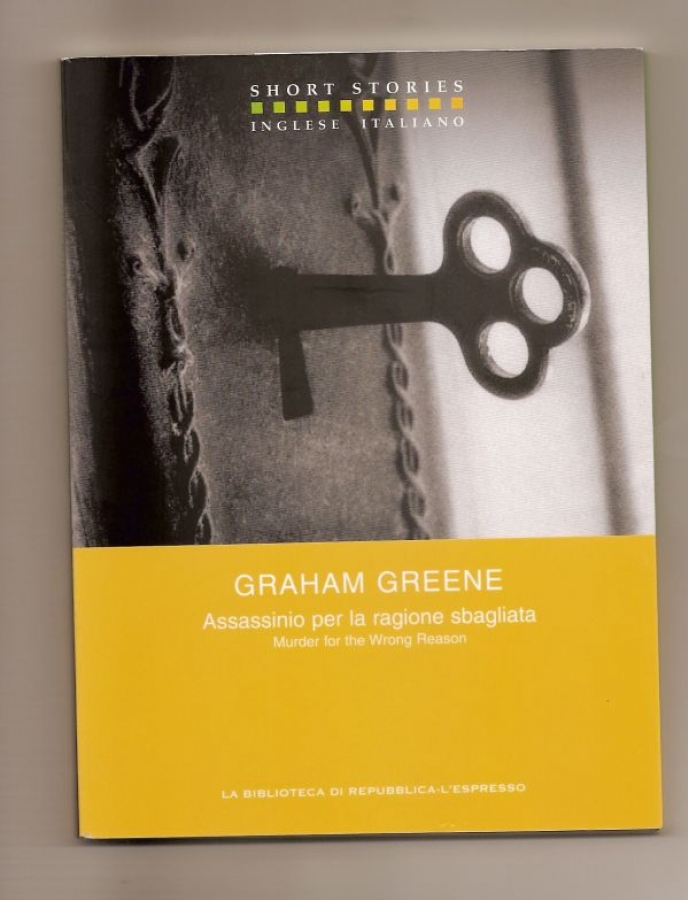
Murder for the wrong reason
This is a short story, divided into three chapters. In the first, the corpse is discovered and, as in classic detective fiction, the inspector arrives with his assistant. The author seems to take pleasure in reconstructing the dynamics, well-tested by crime literature, between the seasoned superior and the young officer. From the outset, however, certain peculiarities emerge. The inspector claims to have arrived too late to save the victim (did he know then that he was about to be killed?), who deserved, according to the inspector, to be murdered, being a blackmailer who had numerous affairs with women. Solving the case is difficult, he then adds, “as there are five hundred men, and other women, with a motive.” It must be said that the reader is left disoriented by the first chapter, sensing something unusual yet not quite able to grasp the direction of the story. The second chapter opens receptive to any development. The inspector visits the alleged killer’s house (and, tellingly, goes alone, without his assistant), and here the narrative turns into a continuous oscillation between past and present. The inspector addresses the suspect, who does not reply, reminding him of bygone events: the man had once been in love with a woman who ultimately chose the victim over him because he was wealthy and powerful. The story now abandons the order and rationality of a detective tale, increasingly becoming a sequence of images from the inspector’s mind. The memory of his life resurfaces: > a succession of images drifted through his mind, of days and nights of great passion, tenderness, and continuous peace. He forgot the days during which he had watched the slow disintegration of his own personality and corruption; he even forgot that he was Detective Inspector Mason of Scotland Yard . Yet the bond between past and present is like a mirror in which one is reflected, and through which one can view the present from the past and vice versa. At this point, the mystery grips the reader, and, as in all detective novels, the solution is simple: the inspector is the murderer. One realizes that the second chapter has conveyed the inspector’s thoughts, and that the entire sequence lasted only a few minutes. The third chapter details the mechanics of the crime as well as the evidence that pins down the murderer. A brief yet fascinating story, albeit a challenging read. First of all, the theme of reality’s ambiguity emerges, which only in death finds a consistency beyond imagination: “after all, everything was reduced to a biological fact.” Secondly, the story is a display of virtuosity, both in terms of narrative structure—capable of generating disorientation and suspense in the reader—and in its writing technique. The author readily resorts to idioms and vocabulary belonging to colloquial speech, which does not always make the text immediately accessible: this contributes to the mysterious allure of the story. Why read it? To appreciate the author’s narrative technique.
Portnoy's Complaint
How is it that a young man from a respectable Jewish family, enjoying an esteemed social standing, seeks out the most sordid and depraved sex instead of marrying young women from good bourgeois society, “with whom to raise intelligent, loving, and sturdy children”? > Dignity, Well-being, Love, Industry, Knowledge, Trust, Decency, High Principles, Compassion! Why the hell do I chase sensational sex? How can I lose myself in something so simple, so stupid, as cunt? The book is a long, entertaining, and hysterical monologue in which the protagonist retraces the events of his life, only ostensibly in a psychoanalytic quest for the origins of his inclinations (voyeurism, fetishism, autoeroticism, oral intercourse), but in reality to assert, to himself and to others, that his was the rightest path in life. To convey the sense of a narrative that defies easy summary or comprehension unless one plunges into its whirlwind prose, overflowing with words and idioms, one might quote a passage in which the protagonist explains why he did not marry one of the good, bourgeois girls he dated. > Well, there was her ostentatious, recurring school slang, to begin with. It was simply unbearable... And then there were her friends' nicknames: there were the friends themselves! Poody and Pip and Peddle... And then my slang caused her distress. The first time I said fuck in her presence (in the presence of her friend Pebble, with her Peter Pan collar and her tight-fitting cardigans, and tanned like an Indian from so much tennis at the Chevy Chase Club), such a look of agony passed over the countenance of the Pilgrim Fathers' heiress that you would have thought I had just branded the four letters into her flesh. Why, she asked so plaintively once we were alone, why must I be so clumsy? What possible pleasure does it give me to be so ill-mannered? What on earth did I prove? Why do you have to be so pus-y? “Where this word,” the protagonist explains, “stands for a ‘disposition to be disagreeable.’” > In bed? Nothing fun, no acrobatics or daring attempts; the way we did it the first time was the way we kept on doing it, I assaulted and she surrendered . If one considers that “ostentatious, recurring school slang” is the rough translation of an untranslatable English phrase such as “cutesy-wootsy boarding school argot,” and that to mean tight-fitting he uses the neologism “cablestitch,” one gets a clear idea of the novel’s prose, which hinges entirely on adjectives and slang expressions. The syntactic structure unfolds without order (like thoughts chasing one another), and the English vocabulary is frequently qualified by the verbal turns of American Judaism. It is an exhilarating read, though the book must be taken in all in one breath. Otherwise, one risks getting lost in the disordered succession of tales and characters. Beyond the obvious vocation for sensational sex, as the author calls it, the overarching thread of the novel can be identified in rules—and the need to break them. > What else, I ask you, were all those dietary prohibitions and rules you started out with (from an early age), what else if not to give us little Jewish children the habit of being repressed? Practice, darling, practice, practice, practice. Inhibition doesn’t grow on trees, you know; it takes patience, it demands concentration, it requires attentive, self-sacrificing parents and an obedient child dedicated to hard work, so as to produce in just a few short years a truly inhibited, tight-assed human being . It is evident that this revulsion toward rules has its roots in Jewish society, toward which the author directs a caustic critique, even if, deep down, one rich in affection and nostalgia. It is no accident that the protagonist’s flight ends precisely in Israel, as if in search of tradition and steadfast roots. The theme of prohibitions is nonetheless a subject of universal significance, considering the incessant appeal to moral codes and behavioral norms made by self-styled, and often hypocritical, spiritual and religious authorities. Why read it? It is an entertaining novel, but it must be experienced through an excellent translation.
The Quiet Game
Penn Cage, a former prosecutor and now a successful author, has recently lost his wife. To find himself again, he decides to spend some time with his parents in his hometown, a small town in Mississippi. It is like finding oneself > on the thin boundary of a universe of vibrant life and mysterious death, of hidden secrets and glittering facades, and of races inextricably bound by blood and tears, geography and religion, and above all time . In the town, long gripped by severe economic decline, silence and complicity prevail, for both Black and white residents wish to be left in peace, to “keep things quiet, lovely, and easy” so as to attract new investments to the area. By chance, Penn finds himself entangled in a crime that occurred twenty years earlier (a Black man was mysteriously murdered), at the very moment a powerful local figure, Judge Marston, accused his father—a respected family doctor—of having committed grave malpractice in the exercise of his profession. Sensing a link between Marston and the murder, Penn resolves to investigate the bloodshed out of a desire for vengeance against Marston’s accusations—false, as it turns out—against his father. In reality, he still feels guilty about what transpired all those years ago: he had had an affair with Marston’s daughter, the alluring Livy, and remains convinced that the judge sought to punish his father because of their relationship. Can the past be undone? > Who among us, if offered the opportunity, would not want to relive the day or the hour when we first tasted love, or made a choice that forever altered our future, denying a life we might have had? But this sentiment is a trap, because Penn > realizes with muffled surprise (that) intimacy with Livy is not a new experience. It is like walking through a checkpoint into a country I visited long ago and to which I return, older and, I hope, wiser . Indeed, as he presses forward with an investigation rife with plot twists and bloodshed, Penn uncovers that the murder of a poor Black man was entangled in national conspiracies (the machinations of the FBI's then-powerful director and the assassinations of Robert Kennedy and Martin Luther King Jr.), and that Marston’s motives were far more prosaic than he had imagined: the eternal lust for money. Above all, he must face the reality that Livy is a hollow, selfish figure, irrevocably trapped in her squalid past. Shattering the quiet of his childhood town allows Penn to unburden himself of the weight and suffering of memory, reclaiming life not by retreating into the past, but by looking toward the future. The novel’s greatest strengths lie in its setting and its style, polished and meticulous in its prose. As an illustration of this writing, one need only note the sweetness, distinctly Southern and rural, of the townscape described by the author: > the tree-lined road is dotted with trailers and small houses, but as I approach the two-hundred-year-old Episcopal church that defines the settlement, the trees recede, and the grounds flanked by splendid plantations stretch out on either side of the road. Beyond the moss-draped cedars and white fences, swans drift majestically across the ponds, so much so that it feels like being in England . The trouble is that this literary refinement comes at the expense of narrative architecture, which is frequently sluggish and weighed down by episodes tangential to the central plot. The progression toward the denouement is so drawn out that it borders on tedium. Why read it? It is engaging, elegant, and compelling in its evocation of place.
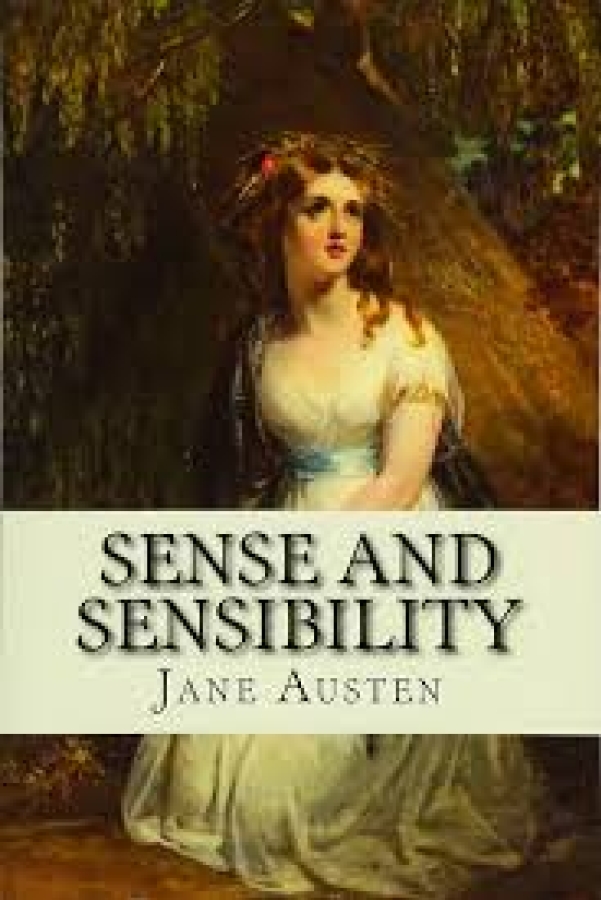
Sense and Sensibility
Jane Austen’s novels appear detached from their historical setting, the years between 1790 and 1815 marked by the onset of the Industrial Revolution and the protracted Napoleonic Wars. This “timeless” profile is corroborated by what Austen herself wrote to her niece: > three or four families in a country village is the very thing to work on (*Austen’s Letters*, page 275, quotation cited by Katie Halsey in the introduction). The author’s statement is at once contradictory and revealing; it is precisely by immersing oneself in provincial society that one can understand how and why “a man changes his manners and a young woman changes her mind,” and thus grasp the impact of the profound transformations in English society at the turn of the century. (Tony Tanner, introduction to *Pride and Prejudice*, page 368, cited by Katie Halsey). Elinor and Marianne are the daughters of the widowed Mrs Dashwood, forced to leave their beautiful home and comfortable life following the death of her husband and the succession to the estate of Henry, born of a previous marriage of the deceased husband. Setting up with incisive efficacy the inheritance issues that serve as a backdrop to the entire narrative is a long, cynical exchange between the stepson and his wife; before dying, the father had extracted a promise from Henry that he would secure an annuity for his sisters; > it is certainly not pleasant to have a yearly drain upon one’s income, (...) a present of fifty pounds (...) will free me, I think, from my promise to my father. Elinor and Marianne must survive by their own resources, pursuing a difficult balance between sentiment and realism. Elinor > possessed a strength of understanding, and coolness of judgment, which qualified her, though only nineteen, to be the counsellor of her mother. (...) had an affectionate heart, a generous nature, strong feelings; but she knew how to govern them. Marianne, still only seventeen, > was in many respects quite equal to Elinor. She was sensible and clever but eager in everything; in her sorrows, as in her joys, she could have no moderation. Elinor has fallen in love with Edward. The young man > was not handsome, and his manners required intimacy to make them pleasing; (...) but when his natural shyness was overcome, his character gave every indication of an open, affectionate heart, (...) all his wishes centered in domestic comfort and the quiet of private life. In a conversation with her mother, Marianne declares what she understands by love, and she does so precisely while discussing Edward and her sister’s incomprehensible attraction to this young man. > Oh! Mama, how spiritless, how tame was Edward’s manner in reading to us last night! I felt for my sister most severely. Yet she bore it with so much composure, she seemed scarcely to notice it. (...) Elinor has not my feelings. (...) Mama, the more I know of the world, the more am I convinced that I shall never see a man whom I can really love. I have been open and sincere where I ought to have been reserved, spiritless, dull, and deceitful. A bitter disappointment strikes both girls. The handsome gentleman who had trifled with Marianne’s affections suddenly marries a wealthy heiress, accustomed as he is to a life of pleasure and money. Marianne retreats into herself, devastated by grief and scandal, almost to the point of death. Elinor also discovers that Edward is already engaged to the sly Lucy, with whom, moreover, she is obliged to associate out of social propriety. The narrative of his betrayal, of Edward’s lie, > was plain and simple; and though it could not be related without emotion, was unaccompanied by violent agitation or uncontrollable sorrow. (...) Elinor was to be the comforter of others regarding her own suffering, no less than in what concerned theirs; and all the comfort that could be afforded relied on her own clear-headedness and self-command. The pledge of confidentiality made to Lucy, who had opened her heart to her, and her affection for Edward, despite everything, compelled her to silence, preventing her from confessing her misery. In a provincial society, bound by rigid social conventions and dominated by pecuniary interests, amidst fragile and hypocritical men and women, Elinor emerges as a heroine through her moral steadfastness, her determination to be of service to others before herself. Austen seeks to provide a happy ending for both girls, yet the novel could well conclude when the mother and Marianne recognize, with surprise and remorse, Elinor’s concealed vulnerability: an epiphany that forms the foundation of deeper familial bonds. The narrative plot unfolds like a musical variation, in which the original theme repeats through constant modulations; Elinor’s and Marianne’s sentiments are charted in their most minute fluctuations, as the social milieu and the secondary characters impinge, often painfully, upon the two girls’ affections and certainties. Only a woman could have executed such an incisive psychological analysis of the feminine emotional landscape, rich in the sensibility and good sense so frequently lacking in men. Consider the figure of Edward—as for the other, he is such a scoundrel that he barely warrants discussion; Edward is a decent youth, but what does he do? He lacks the courage to tell Elinor the truth, namely that he is already engaged; he resurfaces only after Lucy has chosen another man. One might wonder why Elinor welcomed him back, but that is part of good sense and sensibility: Edward is a decent man, fragile yet fundamentally honest, and, after all, it is time to marry. Elinor is neither Emma nor Fanny of *Mansfield Park*, figures of strength and self-possession (see the review of both novels on this site); she is still a tender girl, and perhaps also a victim of the social structure. She recalls the protagonist of Alba De Céspedes’s *Dalla parte di lei* (see review on this site); today, Elinor might perhaps have killed Edward. The enduring appeal of Austen’s novels derives in substantial measure from her prose, particularly the grammatical contours of her English—perhaps slightly archaic, yet so enveloping and finely articulated as to immerse the reader in a seamless flow of subtle narrative developments, psychological insights, and social observations, all delicate yet sharp. Why read it? Sublime in its writing, profound in its analysis of its female protagonists.

Super Sad True Love Story
> Privatization, nationalization, savings incentives, spending stimulus, regulation, deregulation, fixed exchange rates, floating exchange rates, exchange controls, free currency exchange, more tariffs, fewer tariffs. And the net result: bankruptcy . We find ourselves in an imaginary America, governed by an authoritarian, police-state "bipartisan" regime in the throes of full economic and political decline: > zero for our economy, zero for military power, zero for everything that made us proud of ourselves . In a technological world where books are no longer read, but where one endlessly consults one's tablet (with the result that > you know every filthy detail of the world, while my books know only the minds of their authors ), Lenny Abramov is a forty-year-old Russian-Jewish man who works for a genetics firm specializing in extending the lives of its wealthy clientele. The novel opens during the protagonist's final days in Rome, where he has lived for a year drinking, having sex, and indulging in the Italian *dolce vita*, blithely squandering company money with meager commercial results. Just the day before his departure, he meets an American woman of Korean descent, Eunice, and falls madly in love with her. "How can I bring her to reconcile her youth with my decrepitude?" Lenny wonders: > we are such an improbable couple, so implausible because she is gorgeous and I am the ugliest forty-year-old in this place... I know we are living in Rubenstein’s America (the President of the United States)... but doesn’t that make us even more responsible for each other’s destiny? And it is precisely this attentive care and affectionate protection that allow Lenny to win over, step by step, Eunice’s otherwise eccentric and capricious heart. A love story unfolds against the backdrop of a devastated and decadent New York. For Lenny, loving Eunice is also loving his city—a desperate longing to lead a normal life amid the rubble of an empire. > Is it still my city? (Lenny asks himself) I have a ready answer, cloaked in obstinate despair: it is. And if it weren’t, I will love it even more. I will love it to the point that it will become mine again . Yet collapse inexorably arrives. Protest demonstrations are violently quelled by a police force privatized by major corporations. Chinese, Venezuelans, and Norwegians conquer America and divide its spoils, condemning New York to become an enclave for the wealthy and forcibly expelling residents from their homes. Amid this catastrophe, the love story also comes to an end, and with it Lenny’s entire frame of reference, leaving behind nothing but "the complete, black silence." It is a sophisticated novel, built upon a dual narrative structure. On one side lies Lenny’s diary—lexically refined, erudite, and ironic, replete with evident references to contemporary America; on the other are Eunice’s messages, composed in a youth-speak jargon. What emerges is a narrative and stylistic counterpoint that effectively conveys their divergent understanding of affection and events. For Lenny, it is a matter of escaping the fear of death and finding meaning in life before the collapse of his world. For Eunice, the romance is merely a parenthesis, to be navigated opportunistically while prioritizing her family of origin and personal ambitions. A distinctive feature of the novel is its use of words: recherché, caressed, alluring, endowed with unusual meanings. On a windy day, Lenny encounters a weary, elderly woman who > looked up at the looming wind and said one word: Gale. Just one word, a word that meant nothing more than a period of weather marked by strong winds, but it took me by surprise, it reminded me of how language was once used, its precision and simplicity, its power to summon memories.... and a hundred other days of gales appeared before me.... we were communicating with words . Yet it is precisely this preciousness of language that weighs the reading down, hindered by a narrative that is slow, repetitive (due in part to the dual structure), and often long-winded. A certain New York intellectualism prevails, to the detriment of narrative freshness. Why read it? It is a sad love story, a last stand against the collapse of the Western world.
To Kill a Mockingbird (Il buio oltre la siepe)
> As I made my way home, I thought that Jem and I would grow up, but there was not much else left for us to learn, except algebra . With this verdict Scout, the novel’s young narrator, sums up the events of the book. But what has the little girl really learned? Maycomb is a southern town in the United States: > a tired old town. (...) In rainy weather the streets turned to red slop; grass grew on the sidewalks, the courthouse sagged in the square. (...) There was indeed a caste system in Maycomb, but to my mind it worked this way: the older citizens, the present generation of families who had lived side by side for years and years, were utterly predictable to one another: they took for granted attitudes, character traits, even gestures, since they had recurred in every generation and set in time. Scout is a lively, independent, restless little girl. Her "hero > is Jem, her older brother; her moral touchstone is her father. Atticus, addressed by his first name by his children, is an esteemed lawyer and the town’s representative in the state legislature; a widower, he raises his children to respect others and the community, but above all according to authentic values of justice and freedom. They’re certainly entitled to think that, and they’re entitled to full respect for their opinions, but before I can live with other folks I’ve got to live with myself. The one thing that doesn’t abide by majority rule is a person’s conscience > . Scout and Jem spend the long, hot summers constantly exploring the yard next door. In particular, they are drawn to a house where a person lives in hiding, shrouded in mystery. Who is he? Is he a monstrous and dangerous being? Why does he never step outside? The children attempt in some way to uncover this dark secret. And once again, as in so many episodes of the novel, Atticus’s serene wisdom emerges: everyone has the right to live as they see fit; what Mr. Radley (the shadowy figure) does might seem strange to us, but what he does isn't strange to him. “And besides, is it right,” Atticus asks, “to put his life's history on display so that it's at the mercy of neighborhood gossip > ? Atticus treats his children as equals, offering them advice but also accepting theirs: what would I do, Scout wonders, if Atticus didn't feel the need for my presence, help, and advice > ? The story could continue along the lines and rhythms of a childhood tale, when an incident of typically racist nature bursts in. A Black man is accused of having raped and beaten a white girl; Atticus is the court-appointed defense attorney, an assignment he accepts even though he knows it will pit him against the community. If I didn't, (he tells his daughter), I couldn't hold up my head in town, I couldn't represent this county in the legislature, and above all, I couldn't even tell you or Jem not to do something again > . What unfolds in the courtroom confirms Atticus’s great stature, both as a lawyer and as a man. His closing argument is the very epitome of what democracy is. Thomas Jefferson once said that all men are created equal. (...) We know (...) that some people are smarter than others, some have more opportunity because they are born with it, some men make more money than others...(...) But there is one thing in this country in which all men are created equal.(...) That institution is the court system > . Justice is an ideal; justice nevertheless exists because under the law all men are equal. Atticus deludes himself: the young Black man, though clearly innocent, is convicted simply for being Black; he is then killed during an escape attempt from prison. It is a double defeat: the judicial system is not impartial, and the young man did not believe in the justice of the law. The white girl's father decides to seek revenge because during the trial his honor > had supposedly been tarnished by Atticus; everyone understood that he was the one who beat his daughter. On Halloween night, Scout and Jem are attacked by the man. Jem tries to save his sister, and in the scuffle the attacker stabs and kills himself (or is he killed by the boy?). Jem, unconscious and injured, is brought to safety by none other than Mr. Radley, the monster next door. The story could have a happy ending, were it not that Atticus is convinced his son killed the man and wants the sheriff to proceed against Jem. If this thing's hushed up it'll be a simple denial of the way I’ve tried to raise Jem. Sometimes I think I’m a total failure as a parent, but I’m all they’ve got. (...) If I lived with that, I couldn't look him in the eye, and the day I can't do that I’ll know I’ve lost him. I don’t want to lose him and Scout, because they’re all I’ve got. > The sheriff refuses to press charges, standing on his authority, concluding disconcertingly: let the dead bury the dead > , that is, let justice be done, with the death of the one who was the cause of the conviction and killing of an innocent man. A Black man. And so what has Scout learned? She has learned that Justice does not exist, that there is no impartial judicial system; what is right and what is wrong, good and evil, are established by the community in which one lives: it decides, according to ancestral and deep-seated values, when to intervene, when to condemn an innocent man so as not to call into question the distinctions between classes and races, and when, instead, to conceal guilt behind a wall of silence, because prosecuting it would undermine the premises of coexistence and mutual respect. An enigmatic sentence concludes the novel. Atticus turns to his daughter and asks her if she too is convinced that the man killed himself. Scout reassures him by saying: well: it would be like killing a mockingbird, wouldn't it? > My interpretation is as follows: the mockingbird is innocence, which still believes in Justice; pretending to believe that the man killed himself is like acknowledging that capital-J Justice does not exist—family ties and community values alone firmly prevail. Scout is ready to become a young lady. After all, if Aunty could be a lady at a time like this, so could I." Scout has conformed; she has emerged from childhood. Alongside the grand ethical theme, that of Justice, the novel offers a splendid depiction of Southern society, its environment, and its social mechanisms: a narration through the eyes of a little girl, with the bewildered gaze of childhood. Enriching this fresco is the prose: it draws on the vocabulary and syntactic constructions typical of Southern speech, thereby lending freshness to the narrative and stripping it of any potential heaviness that might have arisen from its moralistic underpinnings. Reading it in the original language is obviously not easy, not least because an ordinary dictionary does little to aid in understanding the colloquial words and idioms. The lengthy digressions on town life are interesting, yet they slow down the narrative pace, which is not always gripping. Why read it? One cannot help falling in love with Atticus and his children.
The Twelve Tribes of Hattie
> Fate had brought Hattie out of Georgia to bear eleven children and keep them alive in the North, but she herself was only a child, profoundly inadequate to the task she had been given . She is a Black woman; she left a land of segregation only to find herself in a degraded, impoverished, solitary, and marginalized urban periphery, yet she is determined not to return to the South and to raise her children against all odds, beyond her own strength, beyond her very capacity to love. The story begins in 1928, when sixteen-year-old Hattie has just given birth to twins. The cold, malnutrition, and the lack of medical care and medicine lead to the infants' deaths. > Oh, their skin was so soft! She felt their death like a mutilation in her own body : a wound that leaves her like > a lake of ice, thin and smooth, beneath which nothing could be seen or known or > a long January afternoon, the trees are always bare and there is not a single flower . Had Hattie been capable of loving more, of worrying less about keeping her children alive, would their lives have been better? The novel revolves around this question, and the author explores it with great skill by recounting episodes from the lives of the eleven children over a span of fifty years, up to 1980. After the dramatic episode of the twins' death, the narrative continues: Floyd, the eldest son, discovers his homosexuality; Six, another son, severely burned as a boy, finds his calling as a preacher in a Protestant church, but reveals himself to be a false and hypocritical man. The narrative then returns to Hattie to tell us about the only daughter born out of wedlock, the fruit of a brief and unhappy love affair, and about Ella, whom Hattie decides to give away to a sister in order to offer her a better future than that of her siblings. In the subsequent chapters, Alice's existential void takes center stage: she has married well and lives in an affluent home, but is condemned to a fragile survival due to her separation from Billups, the brother to whom she is deeply attached. Franklin, another son, has been abandoned by his wife and in some way courts death in Vietnam. With the final episodes, narrative tension mounts. Another daughter, Bell, has severed ties with Hattie ever since the latter discovered she had slept with an old lover of hers; yet Bell did so because as a child she had seen her mother with that man and she was so > beautiful and happy that an afternoon full of light was pale by comparison (...) whereas Hattie had always been stern and angry with Bell > . Only in the hospital bed, where Bell is admitted with tuberculosis, do mother and daughter find each other again, but even in this circumstance, Hattie had that same stern expression, in which Bell saw tenderness, Hattie's tenderness, which was always harsh > . Finally, we witness the madness of the youngest daughter, Cassie. Hattie and her husband, now elderly and frail, are forced to have her committed to a psychiatric hospital. As they take her away, Hattie sees in the rearview mirror her granddaughter, Cassie's daughter, running after the car, calling out and trying to stop them. She knew Cassie would not have wanted to be seen by her daughter at her worst. This was Hattie's kindness. With sorrow she parted daughter from granddaughter." The lives of Hattie's children are all in pieces, shattered because they never received that maternal love they so desperately needed. On the other hand, the amount of love a parent can give is finite; in Hattie's case, her social circumstances were far too wretched to leave her with any energy to devote to her children, beyond what was spent keeping them alive and preventing them from dying as the twins did. Too much suffering can only be endured by steeling oneself, by becoming hard and strong! The novel carries a powerful social dimension, yet it assumes a universal significance that transcends the specific plight of African Americans. The author addresses parent-child relationships, the difficulty parents face in understanding that material well-being is not enough, that there is something more that must be given: attention and affection. The failing of Hattie's tribe—and of children in general—is the inability to appreciate parental devotion, the tenderness and love that parents so often cannot or do not know how to express. The book is exceptionally well-written, with a gripping narrative pace and remarkably well-drawn characters. In her fateful misery, Hattie is a figure out of Greek tragedy, an African American Medea, harsh yet protective, difficult to forget. The author acknowledges her debt to Toni Morrison, yet Mathis's style is more straightforward than that of the great African American writer, just as her characters are more firmly anchored in their specific social condition. The novel displays a lucid narrative realism, a rich yet non-idiomatic vocabulary, and a classical, almost textbook syntax. Why read it? Dramatic, deeply compelling..
Toilet
In Hindu tradition, a widow > must remain in perpetual mourning... her head is shaved clean. her ornaments removed... she must eat no cooked food in order to cool sexual energies, avoid worldly gatherings because a widow brings misfortune (having caused her husband's death), and she must remain chaste, devout, and faithful to her husband’s memory . Religious tradition is compounded by economic motives. Through the marginalization of widows, sequestered in dedicated dwellings, the relatives—of both the woman and the deceased—rid themselves of a claimant to the inheritance. Yet > the combination of moral unworthiness and innocence lends (widows) an irresistible erotic appeal. And eroticism is heightened by their vulnerability and availability . The lack of financial means (they are frequently abandoned by their families), loneliness, and social ostracism render widows easy victims of prostitution. The book addresses the lives and destinies of these widows. It does so through the story of a young girl. Chuyia is not yet six years old when she is given in marriage to a man far older than herself. She is still living with her family, waiting to become a woman, when her husband dies. She is cast out mercilessly into a house for widows. Uprooted from her world, abandoned and forgotten by her parents, the child must rebuild an emotional sphere of her own. She finds it in several companions in misfortune, older than she: old Bua, who still reminisces about the sweets and delicacies served at her lavish wedding; Shankuntala, who lives out her fate as a widow with profound devoutness and wonders whether her life is not > an illusion that burst like a bubble and opened into another illusion in which she was a widow , and the radiant Kalyani, who, precisely because of her beauty, has been coerced into prostitution and has learned to “live like a lotus, uncorrupted by dirty water”. Kalyani’s life is, in fact, a series of discrete episodes, of compartments—some opened to the sunlight, others (“the nocturnal calls”) repressed and hidden from herself. In their own way, each of the widows has found a modus vivendi to render life bearable, an existence otherwise intolerable. And this would have been Chuyia’s fate, were it not for two terrible events: Kalyani takes her own life upon learning that the young man she loves is the son of the man to whom she is prostituted; Chuyia, not yet nine years old, is drugged and raped, so as to initiate her into prostitution. How can the pious Shankuntala continue to believe in a religion that justifies such cruel and unjust destinies? Is it truly that God is Truth, or is it not rather, as Gandhi says, that Truth is God? Meaning that we must act out of the awareness of being part of a whole, in which every being possesses equal dignity and the right to live. With this awareness, which finally sets her free, Shakuntala resolves to save Chuyia at least, entrusting her to Gandhi. The happy ending is not an unexpected twist—though a welcome one nonetheless. It is the consequence of a cultural and psychological maturation. It is the sign of liberation. The novel unfolds slowly, with a rhythm that mirrors the inexorability of the widows' destiny. The opening scene radiates a childhood serenity that is prematurely dispersed. > Birds hopped among the tree branches, making the leaves tremble and filling the forest with chirping... All of Chuyia’s senses sharpened in the wild beauty of the forest, her breathing slowed to harmonize with the deep rhythm of the plant world, and her heart was at peace . It is the image of that communion with the “whole,” with Truth—Gandhi’s message: a communion shattered by the cruel rules of society. We then follow the young girl into the house of widows. There is no facile moralizing, no overt social denunciation: things are as they are, and as they have always been. Admittedly, small acts of defiance occur, yet a melancholic resignation to one's fate prevails. The women always return to memory, immersing themselves in prayer and the veneration of the dead. A nostalgic gentleness prevails, reflected in the prose: rich in vocabulary, full of refined adjectives, serene as widows are expected to be. The novel gathers speed in its final pages, when, confronted with the horror of what has occurred, Shankuntala reclaims control of her own destiny, and the tumult of the crowd, the cries of the people, and the headlong rush of events take over. Why read it? It depicts the Indian world, suspended between ancestral traditions and renewal. It also depicts the absurd and oppressive rules of any religion and tradition.
White Fang
*White Fang* is the tale of the birth of friendship between wolf and man, but also the chronicle of a catharsis, of a transition from solitude to sociability. The novel opens with the mortal conflict between the two animal species. Two men, with their dogs, are pursued by a pack of wolves desperately seeking food in the cold North American winter. Patiently, with lucid and ruthless precision, the wolves gradually eliminate the various members of the party before launching their final assault on the sole survivor. In this fateful moment, there is no longer room for the arrogance of the human species, for its intellectual contortions, for its presumed supremacy. The man > cast a terrified glance at the circle of wolves that would predictably form around him, and suddenly the realization struck him that this wondrous body of his, this pulsing flesh, was nothing more than meat, quarry for voracious beasts, to be torn and ripped apart by the ravenous fangs (of wolves) to become their nourishment, just as the mouse and the rabbit had often been nourishment for him . Upon the arrival of some hunters, the wolf pack flees, disbanding. A female and two males depart together. This is the finest part of the book, in which London effectively depicts the wilderness of the forest, the clash of the two males for the female, mating and the birth of the pups, their discovery of the surrounding world, and the famine that decimates the family, sparing only the she-wolf and one of the cubs, White Fang. Nature is fascinating yet brutal; among the various species there is a relentless struggle for food, in which the strongest and most cunning prevails. The competitive vision of the nineteenth century, of a triumphant bourgeoisie, emerges in London’s pages, alongside a romanticism nourished by the richness and mystery of the wilderness. White Fang's mother is a cross between a wolf and a dog. For London, genetic inheritance is an imprinting no being can escape, > because life reaches its summit when that which it is equipped to do is realized to the fullest . The encounter with a tribe of Indians revives in White Fang’s mother her nature as a “dog,” dependent on man. Contact with man is an extremely harsh trial for White Fang, an ongoing conflict between his independent nature and devotion to man’s strength, who in his animal psychology is experienced as a "god > . There is no affection toward man; instead, in White Fang there is fear and admiration. Alongside the men are the dogs. Alone against all, White Fang grows hard, ruthless, a warrior: he never learned to play with (the dogs), he only knew how to fight > . He becomes a cold fighter, but also a solitary and sorrowful animal, having never known the affection and play of other pups. His qualities as a fighter will prove invaluable when, sold to a cruel white man, he is used in dog fights, in which he always emerges victorious. White Fang comes to know the world of hatred to its depths, knowing he can defend himself against it only through strength and cunning: he has no friends and seeks none. And it is during one such fight that White Fang, gravely wounded, is rescued, tended to, and cared for by a wealthy gold hunter. From this point onward, the story becomes trite and predictable. Little by little, day after day, White Fang discovers that he is capable of affection and devotion toward man; he is no longer alone, he is surrounded by an environment full of love, he discovers friendship and, with it, fatherhood: the pup sprawled in front of him. (White Fang) pricked up his ears and looked at him curiously. Then their noses touched and he felt the pup's warm little tongue upon his jaw. White Fang's tongue came out, he knew not why, and licked the pup's muzzle. The first two parts of the book are splendid and clear in their meaning. The wolves’ attack on the men and the expert naturalist’s depiction of the forest are an evident exaltation of wild nature, of the untamed strength of environments where one fights on an equal footing" to survive and not for amusement. Then, instead, the complexity of human relationships takes over: hatred, amusement at the expense of the innocent (animals), the ambiguity of human affection, which demands fidelity and obedience regardless. White Fang is ultimately a victim of man, as are all animals. His instinct must bend to the laws of man, and only in fatherhood does he reclaim his wolfish destiny. From the standpoint of writing, Jack London’s fundamental virtue is his narrative pace, action-packed yet set within an exceptionally compact plot. The author has no need to expand the story, which is instead a continuous deepening of the same theme, entrusted to a rich and multifaceted use of verbs and adjectives. Why read it? It is a pleasure to let oneself be swept away by London’s love for wolves and nature.
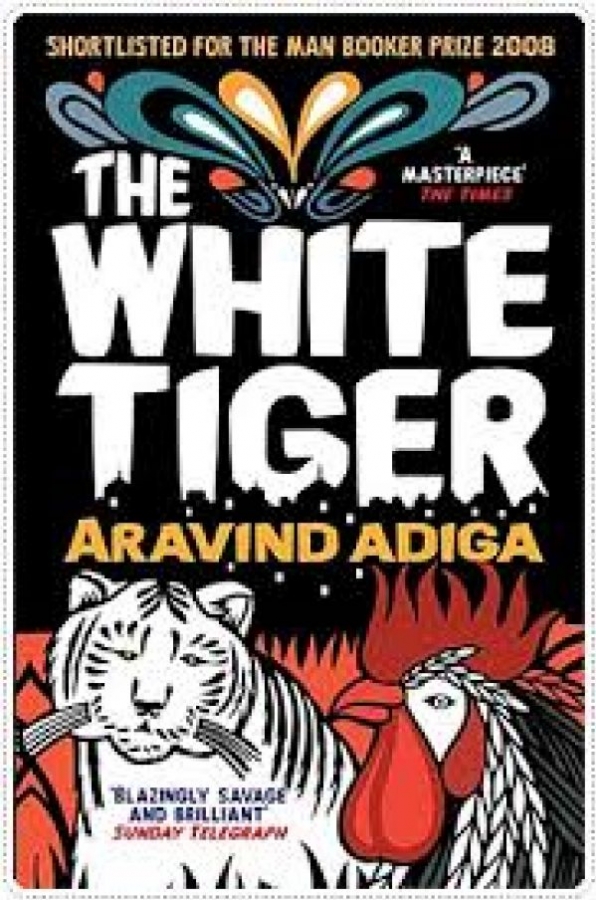
The White Tiger
In the splendid stories of *Between the Assassinations*, Arvind Adiga had developed a pessimistic chronicle of an unalterable social destiny, from which one can escape only through a desperate individual choice. The Indian writer returns to this theme with this novel, which recounts the story of a man's rebellion against the petrification of caste, the exploitation of the poor by the rich, and the social imprisonment forged by tradition and family ties. There are no grand ideals behind the revolt; there is merely the desire to have > the chance to be a man, and for that, it was worth killing . The author imagines the protagonist writing to the Chinese premier to explain how one becomes a successful entrepreneur in modern India, "the centre of technology and outsourcing." One need not have attended university or worn fine clothes: entrepreneurs are made of "half-baked clay," they must emerge from the dark side of society and possess the resolve of those who have nothing to lose, who know that there are "only two destinies: eat or be eaten." The protagonist fits the profile. True, in the impoverished village where he was born and raised, they did not even give him a name, calling him merely Munna—boy—yet, from childhood, he senses that he is not destined to "remain a slave." Only, it is not so easy to "spit out one's past." One must break free from the "cage" in which one has been trapped since birth. To depict this social and psychological condition, the author employs an effective metaphor: the poultry slaughterhouse. > Go to Old Delhi and watch how they keep the chickens there in the market. Hundreds of pale hens and brightly coloured roosters, stuffed tightly into wire cages, packed together like worms in a belly (...). On a wooden table (...) sits a young butcher, smiling complacently, displaying the flesh and organs of a freshly slaughtered chicken (...). The roosters see the organs of their brothers lying around them. They know they will be next. Yet they do not rebel. They do not try to escape from the coop.(...) Because the desire to be a servant has been bred into me; carved into my brain, nail after nail, and injected into my blood, in the same way that waste and industrial poisons have been poured into Mother Ganga. (...) Servants must prevent other servants from becoming innovators, experimenters, or entrepreneurs. (...) The coop is maintained from the inside . The narrative is precisely the protagonist's liberation from this subtle yet unbreakable prison. By chance, he manages to move to New Delhi as a driver for the brother of the village boss. He remains a servant in every sense, at beck and call for any need; yet driving the car grants him access to every facet of his master's life, from intimate matters to shady dealings. It is a kind of unveiling, a discovery of the sins and emptiness of the rich. The obedience and subservience inculcated over centuries would have nevertheless kept him a faithful servant; at most, he might have indulged in some petty, innocent pleasure, as other drivers do: urinating in the masters' flowerpots, slapping them while they sleep, beating their pets. An incident helps awaken his consciousness. The master's wife runs over a poor person, and the boss's family demands that Munna take the blame and go to prison. Even the protagonist's own relatives urge him to make this sacrifice, as though it were the most natural thing in the world. Fortunately, the police, suitably bribed, close the investigation, leaving no consequences; but the protagonist grasps the hollow nature of traditional values of loyalty and the hypocrisy of the benevolent paternalism displayed by his master. He often has to drive the latter, carrying a bag full of cash, to bribe government officials. He decides to seize the opportunity: he murders the master and takes the money, laying the groundwork to become a successful entrepreneur. The caustic irony of the narration must not mislead: the novel is staunchly realist, a cold social accounting and a vigorous political indictment. The whole of Indian society emerges desecrated and exposed in its true nature, both modern (the myth of the world's largest democracy, the headlong and all-resolving economic boom) and traditional, which so fascinates Westerners. The protagonist is a stereotypical figure, as cold and cynical as the master he killed: a true "white tiger," because he is cruel and at the same time rare. Munna achieves success, but this offers no solace to the reader. The hope lies in the fact that he performs two acts of humanity: fleeing after the crime, he risks capture by the police to save a young cousin who lives with him; he compensates the mother of a man struck by one of his drivers. Slight gestures of solidarity, which cannot make us forget that the protagonist failed to warn his relatives of the vengeance of the boss's family, who will indeed slaughter them all. Where what matters is "the size of the belly"—money—there is little room to be "good"! The novel's primary virtue is its narrative style: prose that is spare yet rich. The flaw lies in the plot, which fails to sustain an intense narrative pace, rendering the tale often repetitive, burdened with too many sociological and political digressions. In its execution, the author fails to sustain the expectations raised by the intriguing literary device of the letter to the Chinese premier. Why read it? A strong realist stamp, highly effective prose.