Finished reading on: March 01, 2012
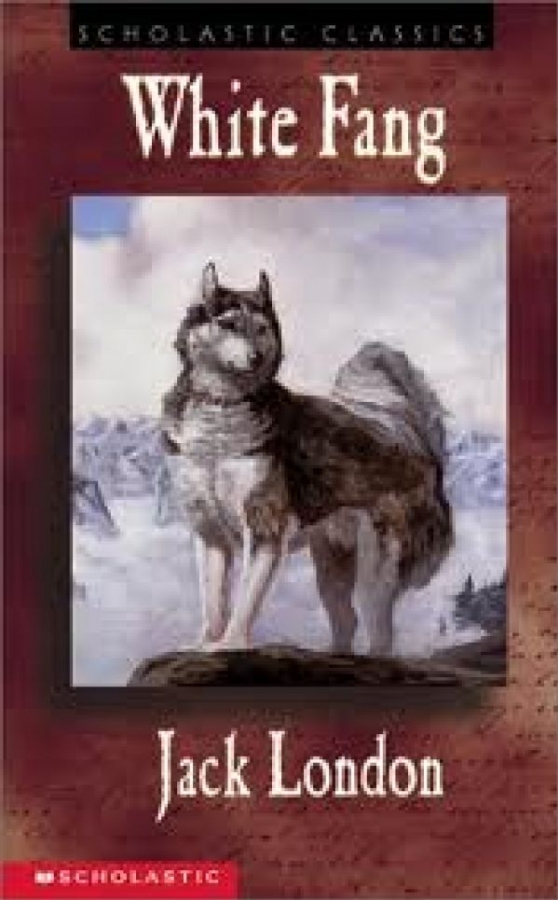
White Fang
AI Translation Notice: This review was translated from the original Italian using artificial intelligence. Book quotes and excerpts are translated interpretations and will not match the author's original English phrasing or official published translations.
White Fang is the tale of the birth of friendship between wolf and man, but also the chronicle of a catharsis, of a transition from solitude to sociability.
The novel opens with the mortal conflict between the two animal species.
Two men, with their dogs, are pursued by a pack of wolves desperately seeking food in the cold North American winter.
Patiently, with lucid and ruthless precision, the wolves gradually eliminate the various members of the party before launching their final assault on the sole survivor.
In this fateful moment, there is no longer room for the arrogance of the human species, for its intellectual contortions, for its presumed supremacy.
The man
cast a terrified glance at the circle of wolves that would predictably form around him, and suddenly the realization struck him that this wondrous body of his, this pulsing flesh, was nothing more than meat, quarry for voracious beasts, to be torn and ripped apart by the ravenous fangs (of wolves) to become their nourishment, just as the mouse and the rabbit had often been nourishment for him
.
Upon the arrival of some hunters, the wolf pack flees, disbanding.
A female and two males depart together.
This is the finest part of the book, in which London effectively depicts the wilderness of the forest, the clash of the two males for the female, mating and the birth of the pups, their discovery of the surrounding world, and the famine that decimates the family, sparing only the she-wolf and one of the cubs, White Fang.
Nature is fascinating yet brutal; among the various species there is a relentless struggle for food, in which the strongest and most cunning prevails.
The competitive vision of the nineteenth century, of a triumphant bourgeoisie, emerges in London’s pages, alongside a romanticism nourished by the richness and mystery of the wilderness.
White Fang's mother is a cross between a wolf and a dog.
For London, genetic inheritance is an imprinting no being can escape,
because life reaches its summit when that which it is equipped to do is realized to the fullest
.
The encounter with a tribe of Indians revives in White Fang’s mother her nature as a “dog,” dependent on man.
Contact with man is an extremely harsh trial for White Fang, an ongoing conflict between his independent nature and devotion to man’s strength, who in his animal psychology is experienced as a "god
.
There is no affection toward man; instead, in White Fang there is fear and admiration.
Alongside the men are the dogs.
Alone against all, White Fang grows hard, ruthless, a warrior:
he never learned to play with (the dogs), he only knew how to fight
.
He becomes a cold fighter, but also a solitary and sorrowful animal, having never known the affection and play of other pups.
His qualities as a fighter will prove invaluable when, sold to a cruel white man, he is used in dog fights, in which he always emerges victorious.
White Fang comes to know the world of hatred to its depths, knowing he can defend himself against it only through strength and cunning: he has no friends and seeks none.
And it is during one such fight that White Fang, gravely wounded, is rescued, tended to, and cared for by a wealthy gold hunter.
From this point onward, the story becomes trite and predictable.
Little by little, day after day, White Fang discovers that he is capable of affection and devotion toward man; he is no longer alone, he is surrounded by an environment full of love, he discovers friendship and, with it, fatherhood:
the pup sprawled in front of him.
(White Fang) pricked up his ears and looked at him curiously.
Then their noses touched and he felt the pup's warm little tongue upon his jaw.
White Fang's tongue came out, he knew not why, and licked the pup's muzzle.
The first two parts of the book are splendid and clear in their meaning.
The wolves’ attack on the men and the expert naturalist’s depiction of the forest are an evident exaltation of wild nature, of the untamed strength of environments where one fights on
an equal footing" to survive and not for amusement.
Then, instead, the complexity of human relationships takes over: hatred, amusement at the expense of the innocent (animals), the ambiguity of human affection, which demands fidelity and obedience regardless.
White Fang is ultimately a victim of man, as are all animals.
His instinct must bend to the laws of man, and only in fatherhood does he reclaim his wolfish destiny.
From the standpoint of writing, Jack London’s fundamental virtue is his narrative pace, action-packed yet set within an exceptionally compact plot.
The author has no need to expand the story, which is instead a continuous deepening of the same theme, entrusted to a rich and multifaceted use of verbs and adjectives.
Why read it? It is a pleasure to let oneself be swept away by London’s love for wolves and nature.