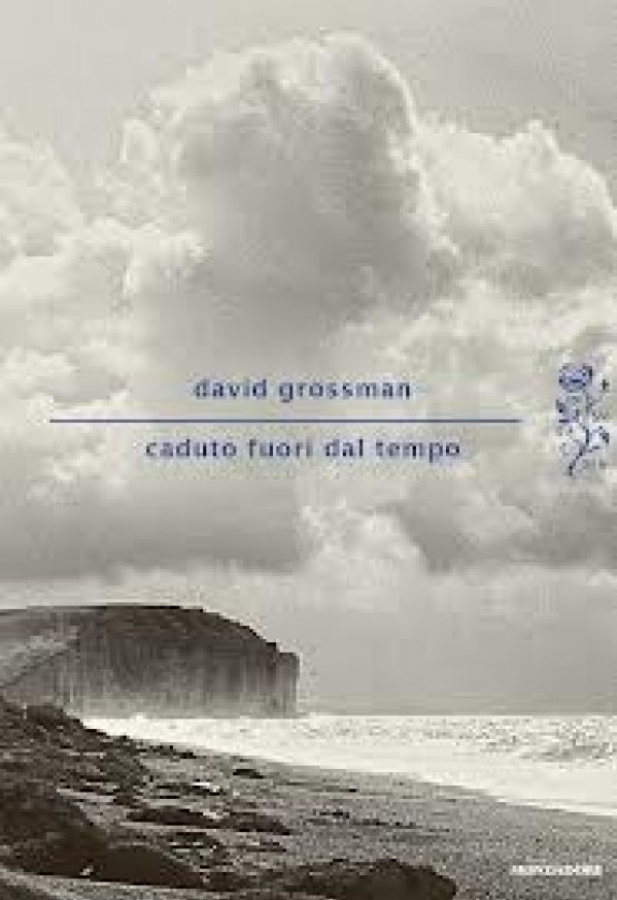
Falling Out of Time: A Story in Multiple Voices
Grossman lost a son, killed during military service. It is a wound so immense that he feels > mutilated in memory.... a prisoner of a remote cell in the penitentiary of my spirit , as though "my life resembled something that never happened." And so he feels the need to create a tale. > That motherfucking thing that happened to me and my son, yes, I must blend it into a story, I must. With a plot, and imagination! And visions and freedom and dreams! Let it burn! A boiling pot!.... if I do not write I will not even be able to understand who he is now, my son, I mean Grossman imagines a village where everyone has lost a child, but they cannot fully express their despair by decree of the duke—that is, of power: > indifferent, slow, sluggish, without a doubt: an exemplary duke . The scribe is tasked with spying on the inhabitants to monitor any violations of the ban. In a way, he performs the function of the external narrator. He transcribes the voices of the grieving parents who, as in a Greek tragedy’s chorus, cry out in a funereal chant—at once sweet and wrathful—their own stories and their yearning to have their child back. Their chant gives voice to all the nostalgia and anguish of a bond between parent and child abruptly severed: the tender memory of birth and of his boyhood, the remorse of not having been a good father, of not having been close to him, the desire to smell his scent, if only for one last time, to touch his skin, to embrace him. > And suddenly, inside us, rises the vapor of his whole body, intact, and for an instant we can imagine: he is here . The immobility of grief could last forever, but it is broken by a man who decides to set out toward "down there," where he believes his son to be. The man’s desperate act sets the other inhabitants in motion as well. As in a sacred procession, they walk toward that mysterious place that is the afterlife. Their march halts before a wall, in front of which they drop to their knees > and each of them, and each of us, whispers their child's name And then Grossman understands that his son is dead: > I recognize the truth of these words. He is dead, he is dead, but his death has not died . Memory detaches itself from pain and, as far as possible, we remember without suffering. Yet then the story, like the ritualization of mourning, allows the son to be distanced: > it is only that my heart breaks, my darling, at the thought that I could find words for all of this . The book is a hybrid of prose and verse poem. Written in prose are the notes of the scribe and the reflections of the Centaur—half writer and half desk—who unquestionably represents the author. The verse structure is used for the chorus, which serves two functions: recounting the dialogues between the various characters, who, rather than speaking to one another, communicate with their lost child; and giving collective voice to the "wanderers," the group heading into the afterlife in search of their deceased children. The narrative form is typical of Greek tragedy, with the significant difference that there is no plot development, no final moment of genuine catharsis. There is no dramatic tension in the overarching plot; in fact, there is no real story. On the other hand, the narrative is introspective, entirely contained within the author's consciousness. The setting is Kafkaesque, surreal, not tragic. It is an interior journey in which the characters are nothing more than instantiations of Grossman’s despair, of his anguish, and of his desperate attempt to accept the death of his son. The lack of a narrative plot allows the detail to prevail over the overarching world of the tale. The narration fractures into poetic fragments, evocative in themselves, yet isolated and sprawling within a narrative context devoid of development. The reader must therefore surrender to the spell of individual words and phrases. Consider the following passage: > as in the moment when a newborn bursts from the womb and from the mother's body, my son's death transformed me into the father I never was, pierced me with a tear and a wound and a sense of emptiness, while filling me with his presence, which has overwhelmed me ever since with an intensity never before seen. His death made me capable of conceiving him. His death made me an empty shell of a father and also of a mother. His death leads me to bare a breast to one who will never suckle, and upon the walls of my womb, formed that day, carves with the nails of an escaping prisoner the tally of days spent without him. Thus, with a transparent chisel, his death carved into me an awareness: whoever loses a child is inevitably a woman . Why not read it? Too many evocations within a story devoid of narrative rhythm. In the end, it is boring.
Morning chant in the grass
> The whole world was full of enchantments brewing in the sprawling mist. The blocks of lava turned into fortresses, the rock peaks into towers.... the mist hovered over the valleys, transforming them into boiling cauldrons, cauldrons of the Norns, and glided over the lava, over sacred places, over distant heights invisible from the beaten horse trails. And the mist pours in. Where do you come from? What are you waiting for? Do you have something ahead of you?, something behind? Or is it just this, just your life, here and now, which is to say nowhere? How, why, you? An unreal atmosphere and existential anguish run through the entire novel. We are in the Middle Ages, in mythical Iceland; Sturla is a historical figure who pursues the ambitious design of unifying the whole island. In the first part of the book—the most evocative, perhaps because it is set amidst the mysterious nature of an island cold and warm at the same time—the easy friendship of youth turns into betrayals, killings, and violence that mark the relentless clan warfare. The opening storm scene is magnificent, where solidarity allows the group of youths to survive: yet it is a bond that can endure only in dreams, within an enchanted castle from which one must emerge to meet one's destiny: > then he was overcome by such a torpor that it was impossible for him to stay awake. And it was as if the halls within were closing themselves into the mountain. It seemed to him that he started awake, and that the landscape vanished into the mist. Then he woke. And never again did he find that castle and its dwellers . The inter-clan feud drives Sturla to commit crimes, even against the Church. In the second part of the novel, Sturla goes on a pilgrimage to Rome to seek absolution: a journey across a medieval Europe torn apart by violence, through a bleak, somber landscape. Remorse haunts Sturla, manifesting in nocturnal nightmares, in terrifying visions of butchered bodies. Great must be his surprise when what greets him is not a holy city, but a picturesque and corrupt Rome, which absolves him in a surreal, Dionysian, Felliniesque scene, amidst masked figures more befitting an orgiastic revel than a ceremony of expiation. On his return from Rome, Sturla stops in Paris to master the arts of black magic, thereby gaining another means to conquer Iceland. The third part of the novel is an epilogue. Sturla embarks on new battles and commits further atrocities: but he is no longer sure of himself; his weakness will ruin him and lead to his death. He is now a two-faced man, like a legendary figure of whom it was said that > on one side his face was ugly and frightening, and so too was his body, while on the other it was as fair and handsome as one could ever desire . The strength and weakness of the novel lie in its fragmentation: a sequence of scenes, formed by an accumulation of episodes and dreams, the character's thoughts, sustained by an evocative prose that in some respects verges on poetry. Although deeply rooted in the Icelandic setting, from which it draws its fascination and inspiration, what truly emerges is the drama of a man moving toward modernity, unable to let himself be confined, or curtailed, by the rules of medieval society. In his doubts and internal conflict, Sturla is truly a two-faced character: the past, and his social role, which demands he be a warrior and clan chieftain; and the awareness of existential futility, of becoming. In the titular chapter, the metaphysical description of the morning crystallizes this suspension and illuminates the allure of the writing. > It is morning. All was still as the sun climbed the mountain ridge, first flooding the pass with light, then hastening to embrace rock faces and crags. It softened boulders and jagged stones, whitening some, gilding others, blunting the harshness of peaks and cliffs. The wind was so faint that the blades of grass stood motionless, mirrored straight and stiff in the small stream, waiting. For what?. For the time to come, once again. And the flowers exulted when the sun embraced them so gently that not a calyx nor a petal stirred. Neither joy nor sorrow held sway; they were one and the same. They were one and the same, it made no difference. Yet if it was sorrow, it was so mild in that newborn glow, in that golden resurrection, that it was not grief; if, instead, it was joy, it was not happiness. But time lay in wait, with the transience inherent to all things within the eternity of the whole, when everything tends to return to the earth, to crumble and dissolve into primordial matter in search of new, unknown forms . Why not read it? The evocativeness of the vignettes, the depth of the concepts, and the beauty of the natural descriptions fail to compensate for the narrative's fragmentation and the frequent incomprehensibility of its content and sequence of events.
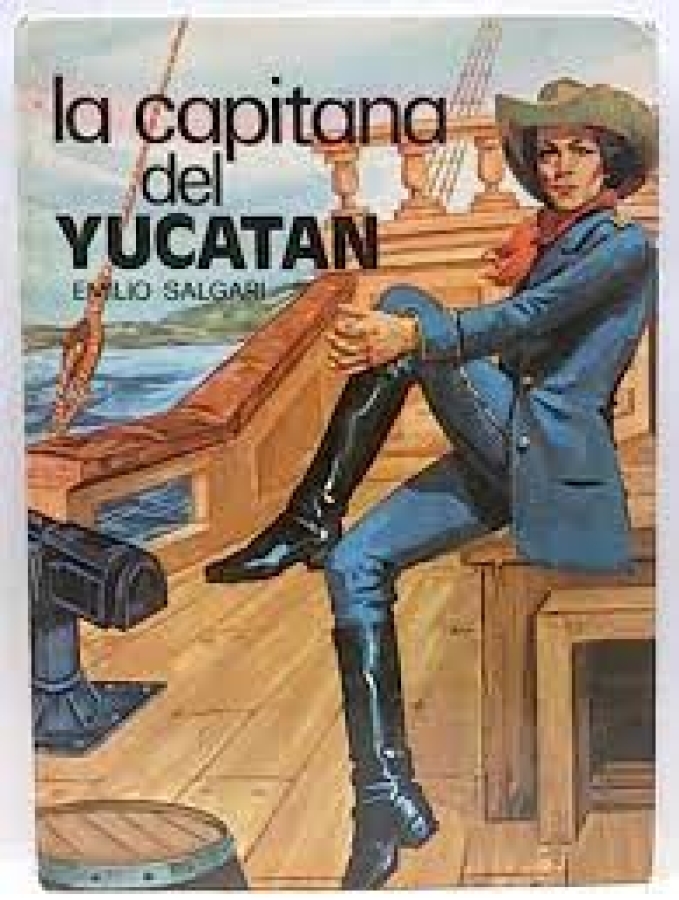
The Captain of the Yucatan
The novel is set in Cuba during the Spanish-American War of 1898, which led to Spain losing its final colonies. A “yacht,” the *Yucatan*, must run the United States naval blockade to bring weapons and provisions to the Spanish troops, who are in dire straits due to the concurrent advance of the pro-independence rebels and the pressure of the mighty American fleet. It is a small vessel, yet a masterpiece of engineering: its engines allow it to reach twenty-six knots, its steel hull is divided into several watertight compartments and fitted with a protective belt made of coconut fibers, rendering it unsinkable. And a marvel of technology! The “yacht” can submerge itself, leaving only its deck visible, so as to appear as a piece of drifting wreckage. Salgari too was dazzled by the wonders of technology, or perhaps sought in this way to emulate the allure of Jules Verne’s *Nautilus*, his direct rival. In command of the *Yucatan* is the Marchioness de Castillo. The Capitana > had a handsome head, crowned with an abundant mane of hair, of a deep, sombre black and wavy like that of Spanish gypsies, (...) she had skin of that lusterless pallor, of a strange hue found only among the Creoles of the Greater Antilles, (...) eyes of a consummate black, (...) long, silky eyelashes, (...) lips as red as a pomegranate. After such a description, we would have expected an enthralling tale like that of *Yolanda, the Daughter of the Black Corsair* or an ambiguous and mysterious one like the story of *Capitan Tempesta* (see reviews on this site); instead, the Marchioness de Castillo remains on the margins, emerging only fitfully and in a supporting role, while the true protagonist is Lieutenant Cordoba, > a sea dog (...) rather short in stature, all sinew and muscle, with an angular face bronzed by the sun of the torrid zone and the brine of the sea air. It is he who leads the *Yucatan* and its crew through a succession of adventures, at sea and on land. In one of these exploits, Cordoba, aboard a small launch, releases torpedoes against a gunboat, blowing it up and clearing the way for the small vessel; in another, the *Yucatan* conceals itself in a sea cave; in yet another, it skillfully slips away amidst a multitude of reefs and shoals. We are on the southeastern coast of Cuba, facing Mexico, riddled with islets and fjord-like sea channels, rich in a luxuriant nature that is consistently depicted in sombre tones, as if to foreshadow the sorrowful conclusion. The sea is inhabited by > splendid jellyfish resembling large lamps of frosted glass, of an exceedingly pale hue ; the flamingos take on a fantastical appearance, with their tails > covered in feathers of a splendid carmine pink, which along the wings turns into a magnificent coral red or fiery red ; in the forests, giant mango trees predominate, with > immense lianas climbing up and down the trunks in a thousand contortions or clinging to an infinity of parasitic plants that formed dense festoons ; and > the air is so heavy with moisture that it corrupts everything , everything spoils, turns moldy, decomposes; over all hangs the terrible yellow fever. Amidst these noxious miasmas, the *Yucatan* runs its final course. The power of the United States is overwhelming! The marvelous vessel cannot be surrendered to the American imperialists; far better to scuttle it with dynamite. > The Marchioness cast a tearful glance upon the smoldering hulk, half-submerged between the water and the sand, and murmured with a sigh: “Our mission is ended!” To a greater extent than in other novels, Salgari the popularizer comes to the fore. Interweaving landscapes familiar to him with the accounts of travelers and geographers (who, in the second half of the nineteenth century, were also possessed of vivid imaginations), the writer depicts the sea and coasts in meticulous fashion, rich in naturalistic and nautical detail. He adopts the same approach in recounting the Siege of Santiago, enumerating American warships and illustrating the various engagements. On one side stand the valorous yet ill-fated Spaniards, and on the other the treacherous Americans, > the financiers' syndicate , the cowardly blacks ( > huge, clumsy hats, gigantic feathers, (...) a frantic trembling) , and the Creoles who lack courage—perhaps, Salgari wonders, owing to the climate or the relentless Spanish oppression. One detects a whiff of racism or, more mundanely, a desire for vindication following Italy's crushing defeat in Ethiopia (the Battle of Adwa took place in 1896). This didactic intent weighs down the narrative pace, fragmented and bogged down by excessive digressions. Moreover, the character ensemble typical of Salgari’s novels, which usually helps leaven the plot, is conspicuously absent: a dark, brooding protagonist flanked by two sidekicks, often lightly ironic and shrewdly pragmatic. Here, Cordoba dominates the scene, a figure far too conscious of his own superiority as an old sea dog to leave room for the other players—even the Capitana herself, who, indeed, professes to be his pupil. Why read it? It is verbose and at times repetitive, yet it offers a compelling glimpse into a little-known chapter of history.
The Cases of Inspector Croce
In the prologue, Ricardo Piglia cites a note by Karl Marx on evil, as > the fundamental principle that makes us social creatures, (...) here lies the true origin of all arts and sciences, and from the moment evil should cease, society would necessarily decay, if not perish altogether . If we consider the history of Argentina—a history the author traverses skipping here and there—violence, the extermination of native peoples, repeated military coups, Peronist populism and ruthless neoliberalism, police repression culminating in the *desaparecidos*, are not anomalies but elements inherent to a capitalist society; and only through a rational approach can a plausible explanation be found. To achieve this end, Ricardo Piglia invented Commissioner Croce, a "brilliant investigator" bearing the name of an Italian Hegelian philosopher, Benedetto Croce. Is it a coincidence? Certainly not, considering that "the true destiny of a Kantian is the police academy," even if > no one is master of their own thoughts. There is no such thing as one's own ideas; thinking is either appropriate or it is not appropriate and also "if we do not destroy thoughts, thoughts destroy us." To range freely, Piglia does not develop a single plot, but relies on short stories, which the author seems to present as random, included without a logical thread. In reality, perhaps stretching the author's intention, we can group them into several strands. *The Film*, *The Exception*, *The Impenetrable*, *The Promise* > , are stories that deal with salient moments in Argentine history. Take *The Impenetrable* > where Croce is tasked with solving the disappearance of engineer Panizza, a well-known industrialist with an obscure past. Croce travels up the Río de la Plata, which was easy for him because he had spent many summers on the vast lagoon (...) to escape routine and lead a philosophical life." And when he meets him, Panizza utters enigmatic words (such as "the organization of time, and not the invention of the steam engine, is the key to capitalism > ) only to slip away for good. Who is Panizza? Is he one of the many Europeans who fled after the Second World War and do not want to be found? And what of the commissioner's weeping at the end of the story *The Film* > , when Croce discovers that the blonde girl starring in the pornographic film is Evita Perón, that woman whom so many had loved as a virgin > . Other stories represent the essential traits of Argentine society: melancholy ( *The Music*), superstition as in *The Astrologer* and in *Tigre*, virility as in the paradoxical and indecipherable *Mrs. X*, the love of risk as in *The Gambler* > . And finally, Piglia dwells on the crime genre, revealing his predilection for detective stories in the vein of Agatha Christie and for the bewildering mysteries of Poe. The stories are a manual of instructions and reflections, from which we discover that Croce's method operates "through metaphorical analogies, combines poetic intuition with mathematical precision" (*The Lecture*, *The Resolution*, and *The Method*). In the background, there is always Argentina: > the streets are deserted, there isn't a soul anywhere, there's no one at the port, everything is dead, something demented, acres and acres of countryside and behind it there is nothing, stray dogs, bones in the sun, and only wind, dust, and solitude. (...) We have been defeated so many times that now we no longer change . One would need to know Argentina and its history to truly appreciate these stories; and yet, these short tales arouse a certain envy, imagining what our own Noir—so successful today—could be if it retraced our recent past, fostering the transmission of Memory. From a narrative perspective, the reading brings to mind Dino Buzzati's *Sixty Stories* (see review on this site): the same sense of paradox and the very same resigned disillusionment. Considering that *The Cases of Commissioner Croce* is Piglia's final book, written when he was already suffering from advanced ALS, we find ourselves before a truly poignant testament, coupled with the desire to bequeath a literary approach and convey a passion for the crime genre. It is a struggle to finish reading; at times the stories are rambling, with numerous narrative digressions, and at times too paradoxical—as happens with Buzzati—making it difficult to remain engaged. Why not read it? It is interesting, but prolix and fragmentary.
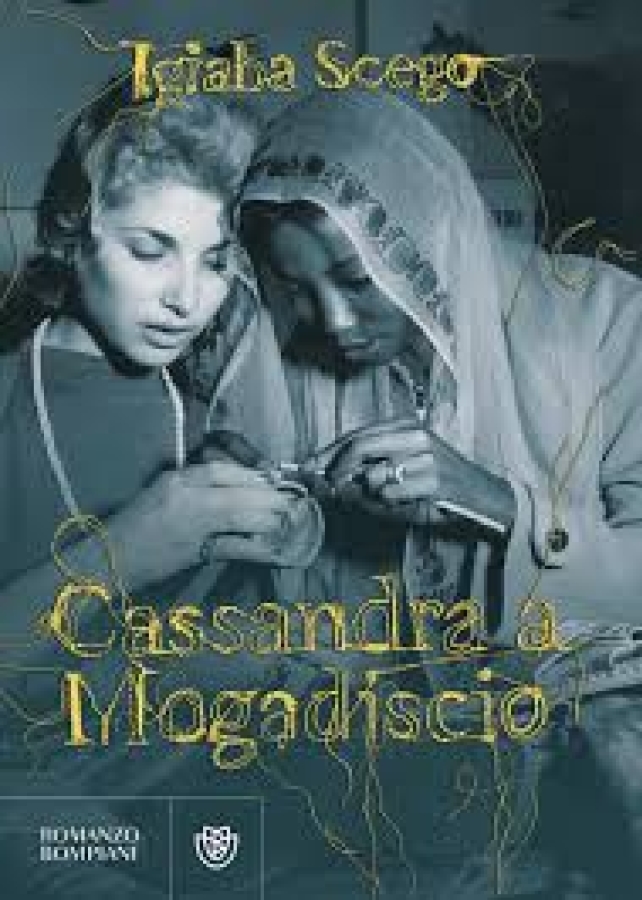
Cassandra in Mogadishu
> In Somali, *jirro* means "illness"—literally so. (...) But for us, *jirro* is a vaster word. It speaks of our wounds, our pain, our post-traumatic, post-war stress. *Jirro* is our broken heart. Our life in precarious balance between hell and the present. This book speaks of this illness, both physical and spiritual, searing and nostalgic; and it does so through an autobiographical lens, constructed > in constant motion. The past is never still; it follows our transformations , as Scego writes in her afterword. The author imagines a dialogue with her niece living in London, and the plot is punctuated by Somali keywords, which, beginning with *Jirro*, progress through a series of stages encompassing personal, familial, and collective history: events, relationships, physicality, memories, prophecy. There are two pivotal events: 1971, when her parents fled Somalia following Siad Barre's coup d'état, and 1991, when Somalia collapsed into the chaos of gang warfare. > "No road will lead us back home, my daughter," she (Halima, Scego's mother) says, with a harshness I had never heard in her before. > The roads have been cut off. The houses have caved in on themselves. We have become beasts. And Mogadishu has been buried by its own inhabitants beneath an endless heap of corpses . Somalia at war, yet ever-present in the heart, tears at the relationship between mother and Igiaba. One day in 1989, her mother crosses Rome for a prospective job as a domestic worker, only to be rejected because she is Black. > She screams in the silence. (...) And with that voiceless scream, with that timeless humiliation, the Mogadishu skyline creeps into a mind flooded with nostalgia. Arriving there, at the center of her sighs, to comfort her. She returns to Somalia; she vanishes for two years without word, swallowed up by the civil war. For Igiaba, still an adolescent, this abandonment has a devastating impact: she begins to suffer from bulimia nervosa. > Dagalka wabu dilai je'eelka. War kills love. (...) I vomit the war. Until every dream inside me is erased. Until every self inside me is erased. Like those relatives of my mother lost in the haze of their discontent. And in the *Jirro* that gave them no respite. Upon her return, Halima begins to speak to her daughter, > woman to woman. If before she had told her of her childhood, in the countryside herding sheep, she now recounts her real life. > The trauma of having lost the homeland—she her country of birth, I my country of origin—united us in mourning. (...) She wanted, on an unconscious level, (...) to pass her life on to me. Because it was no longer just a family story. Halima recalls how she was infibulated, and naturally > she spoke of Dad. She constructed his legend. (...) She, a switchboard operator, and he, a remarkably handsome man, the mayor of a city that smelled of spices. Then, wrapped in her white robe, every now and then (...) she sought me out with her gaze. And in that locking of eyes, I the daughter, she the mother, we thought of the refugee. Of the exile we had traversed together. That eye condition haunting Igiaba today, as she approaches menopause, having neither children nor a husband—does all of this stem, perhaps, from having somatized the rupture of her life, she an Italian in love with Rome, she the daughter of a ruined Somalia? Could the tragedy of colonized peoples, shattered and consigned to oblivion, the sufferings of the world's migrants, the wars, the massacres, the women and children raped and slaughtered—could all of this be a portent of a fate that awaits us too, the wealthy, comforted by our fine laws and air conditioning? A friend suggested Igiaba read Euripides' *The Trojan Women*. At its core is Cassandra, who says: > I hold aloft the torch, I celebrate, I flood the temple with light—behold—with this lamp of mine. Like Cassandra, we too (a torn humanity) carry the torch. (...) Bearing it is our burden. Scego's novels share a common thread: the intertwining of personal stories and overarching history, and the premise that one can only discover oneself, and others, through the unraveling of this entanglement within one's own consciousness. It is therefore indispensable for the author to craft complex narratives with numerous parallel plotlines in a strongly political, rather than psychological, context. In *Oltre Babilonia* (2008), the point of synthesis is language, set in that Arabic school where people of diverse backgrounds study this "Esperanto"; in "*Adua* > of 2015, the author speaks of a betrayal, of a beloved Italy that casts out the migrant, and finally, in that blend of reality and imagination that is *Una linea di colore* > of 2020, two women who actually lived are synthesized into an invented character who bears the wounds of emigration and slavery (see the reviews of these books on this site). In *Cassandra a Mogadiscio*", Scego shifts perspective; more than ever, she speaks of herself, confessing her own physical and psychological fragilities. The brilliant and personable writer, encountered at so many *Internazionale* festivals, reveals herself to be a tragic figure, evoking and internalizing existential and planetary grief: a contemporary Ungaretti. Is she speaking of Somalia? No, she is speaking of her beloved country, Italy, on the brink of fracturing; of her Rome, at the mercy of verbal and physical violence; of her cherished language, Italian, which now seems destined to regress into its ancient local dialects. In short, by narrating her family and her country of origin, Scego reflects upon herself as an Italian. Where is the Promised Land? Or was Ungaretti's merely a desperate utopia? Scego's strength remains her writing; even in simple, immediate Italian, the author evokes sensations that leave a mark on the reader: they are often short, unexpected sentences, not always woven into the narrative thread, as if Scego allowed herself to be carried away by emotion rather than plot. The latter is a weakness; the narrative's richness is not effectively distilled into a synthesis easily traceable by the reader. Contributing to this narrative confusion are the literary devices the author seems so fond of; here, it is the dialogues with her niece and the structuring of chapters around keywords, which often fail to encapsulate the chapters' actual contents. Moreover, in digging as never before into her innermost self and foundational relationships—particularly with her mother—the lack of psychological depth becomes apparent. Scego's works, like those of many non-Western writers, are choral stories, introjections of universal suffering rather than introspections into personal sentiment. Why read it? One discovers an unfamiliar Scego; the reading, however, is demanding.
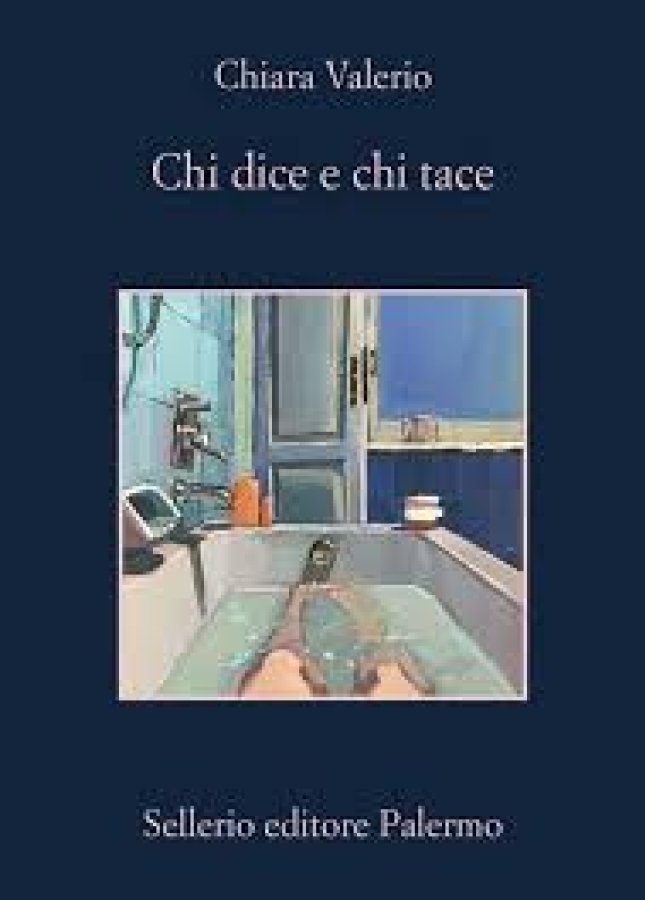
Chi dice e chi tace
The novel is set in Scauri, a town in the province of Latina, where the author was born and raised. > Along the promenade, the beach resorts gleamed in the golden light of sunset. (...) Young couples walked linked together, two women, both wearing chenille tracksuits, walked briskly...(...) The plaster on the houses struggled against the sea salt, danceable music drifted from the Bussola, and men smoked and drank beer, cradling their bellies. (...) Affixed to the walls of the railway workers' club were a faded photograph of Gramsci, a reconstructed portrait of Berlinguer, the front page of the inaugural issue of *l'Unità*... It is in this insignificant and sleepy town on the Lazio coast that Vittoria takes up residence, living in a villa with a young woman. > Eyes not light in color but filled with light, she wore a straw hat that had seen better days, loose trousers, a white cable-knit sweater, (...) Vittoria looked as if she had stepped out of the pages of *Oggi*. (...) She looked like an Arab princess on a Tuscan country estate. Who was Vittoria? Lia seeks to answer this question when the woman's lifeless body is found in the house’s bathtub. In an indifferent and gossipy environment, Lia seems the only one concerned with the causes of death (suicide or murder?) and, above all, with who Vittoria truly was: why she had abandoned Rome and why she was cohabiting with a young woman who certainly could not have been her daughter. And Lia discovers that Vittoria is like > Greek; she had left few traces, and to arrive at a meaning—assuming there was one—one had to proceed by recombining the elements, conscious that a margin for interpretation would always remain or, in the worst-case scenario, that none of the combinations would make sense. It is clear that Chiara Valerio has deeply loved and endured ancient Greek! Beneath the veneer of a noir story, Lia ventures into the labyrinth of that mystery residing within us all—indecipherable, yet one we endeavor to bring order to. To this inner conflict that animates literature, as Ungaretti used to say, the author attempts to provide a resolution through an overly rational approach, turning it into a philosophical or mathematical puzzle that conceals the fear of straying from well-defined and reassuring prevailing values. And what if Lia had been romantically attracted to Vittoria? Along a promenade that is not that of Scauri, perhaps on the banks of the Nile or in a desert oasis, > I saw Vittoria. (...) I drew closer and asked her. Why? Vittoria smiled, (...) took my face in her hands, kissed me. I even closed my eyes. In the dream, I was happy. Another sound, a voice, two voices. I broke my lips away from Vittoria’s and looked around. My daughters were running toward me.... For me, it was an arduous read, abandoned and then taken up again out of a determination to see it through to the end and uncover the enigma and the myth of Vittoria. The two facets overlap: on the one hand, unveiling what lies behind this woman of the respectable Roman bourgeoisie; on the other, understanding why, in the small, provincial setting of Scauri, Vittoria turned into an idealized, mythologized reference point. These would have already been two complex themes to sustain in tandem, vacillating between noir and social novel; yet Valerio also wished to delve into Lia’s lived experience, without, however, fully laying bare her psychology, her frustrations, and her transgressive yearnings. Everything remained on the surface. The prose accentuates the reader's strain: the stark, apodictic sentences, the repeated use of full stops to conclude verbless clauses, the frequent shifts in narrative point of view—I, she, and you—the numerous digressions, the overcrowding of characters, and the sudden shifts in narrative trajectory are stylistic traits that heighten the narrative's fragmentation and disrupt the discursive flow. Chiara Valerio possesses an angular, essayistic style, whereas the strongest passages are precisely those where one glimpses oneiric elements and a subtle nostalgia for her Scauri. Why read it? The figure of Lia is interesting, but it is a taxing novel.
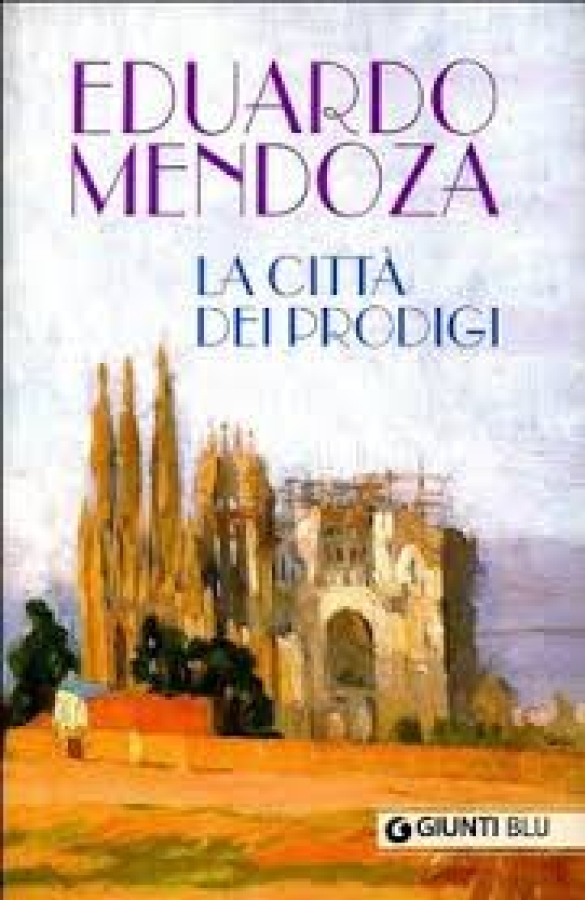
The City of Marvels
The novel recounts the history of Barcelona between 1888 and 1929: a span of time bounded by two world's fairs, which witnessed the urban and social transformation of the city. Mendoza—a Catalan journalist, though not an advocate of independence—narrates Barcelona’s changes through the eyes of a wretched country boy who comes to Barcelona to work on the construction of the facilities for the 1888 Exposition; a young man who, after a brief period in the service of the labor movement, becomes an unscrupulous and somewhat criminal businessman. This is how the author introduces Onofre Bouvila: > short in stature, with broad shoulders, (...) pale and coarse features, ruffled black hair. His clothes were patched, disheveled, and none too clean. (...) There is something in his gaze that makes one uneasy. Yet, there is nothing to fear, > another little sardine that the whale (Barcelona) will swallow without even noticing. It will not be so. Onofre will rise rapidly through the ranks of the anarchist union thanks to his dedication and leadership qualities. He could continue his political activism, likely ending up in prison, certainly remaining poor and exploited. Instead, without apparent regret, he becomes the bodyguard of a speculator who uses Onofre as an unscrupulous enforcer, useful in a city swept up in real estate speculation, corruption, and graft, with a burgeoning bourgeoisie ready to do anything to enrich itself. Like a sort of Catalan *Mastro-don Gesualdo* (see the review of Verga's novel on this site), Onofre climbs the social ladder, cultivates the right connections with the high bourgeoisie, marries a scion of a prominent Barcelona family, and becomes a powerful, immensely wealthy man, devoid of moral qualms, ever determined on his path to success. What drives him? One day, early in his social ascent, he visits a fortune-teller to learn his future. The cards' answer is vague, as always; but the woman sees that neither happiness nor wealth is in store for him: what Onofre pursues is revenge. His father, a businessman, a braggart and a bungler, was humiliated in life; Onofre wants to redeem him by proving that the son will not only become rich and powerful, but will bring to its knees the very bourgeoisie that had so despised and cast out his father. Is he like *The Count of Monte Cristo* or a banal representative of the corrupt system that shaped Barcelona? We will never know; the author does not delve into Onofre’s soul, a character who remains forever in the foggy shadows of a tumultuous city, the true protagonist: in effect, Barcelona has devoured the sardine, even though Onofre believes he commands it. And perhaps, precisely to desperately assert his supremacy, for the 1929 Exposition Onofre commissions the construction of a helicopter—a prodigious contrivance at the time—and in this craft disappears into the sky before a stunned crowd and under the incredulous gaze of Alfonso XIII and the dictator De Rivera. Is it an escape? Has he ascended to Heaven? Or did the helicopter simply explode, killing Onofre? The author does not say, leaving it to us to find the ending to an extraordinary life. What is certain is that by the end of 1929 De Rivera would be forced to resign, and the following year Alfonso XIII would abandon the throne, ushering in the Republic. An era has ended for Spain and Barcelona; another history begins. As often happens with modern novels, the book is lengthy and rambling. The finest section is the first, in which the author recounts Onofre’s arrival in Barcelona, his living conditions, the squalor, the toil, and the odd characters who frequent the boarding house where the boy finds lodging. Particularly intriguing is the figure of Dolfina, a comrade in struggle, always accompanied by a wild, aggressive black cat; a girl who becomes the naive Onofre's first love, in courting whom he already exhibits that cynicism and determination that will accompany him throughout his life: he kills the black cat, eliminating it because it is an obstacle, just as he will dispose of anyone who stands in the way of his goals, irrespective of emotional ties. In the atmospheric construction one senses Charles Dickens (see the reviews of *David Copperfield* and *Oliver Twist* on this site), even if Mendoza treats it all with an ironic and detached touch, free of moralizing. It is a pity that this narrative style dissolves over the course of the novel, along with the ability to construct characters—who grow increasingly banal—forfeiting the historical-sociological approach that had so sharply delineated the opening section. Why is Barcelona the city of marvels? Certainly not for its corrupt system, of which Onofre is merely an exponent; Barcelona is an astonishing city because it has continually reinvented itself in an endless process of creative destruction, fighting, however quixotically, against Madrid and circumstances that were often hostile to it. Mendoza seems to suggest that the total annihilation of the city in the early eighteenth century, at the end of the War of the Spanish Succession, wiped the slate clean and helped foster a future-oriented cultural and social climate, ever poised to overhaul the city from an urban, architectural, and economic standpoint. Why read it? It is historically interesting, but too long.
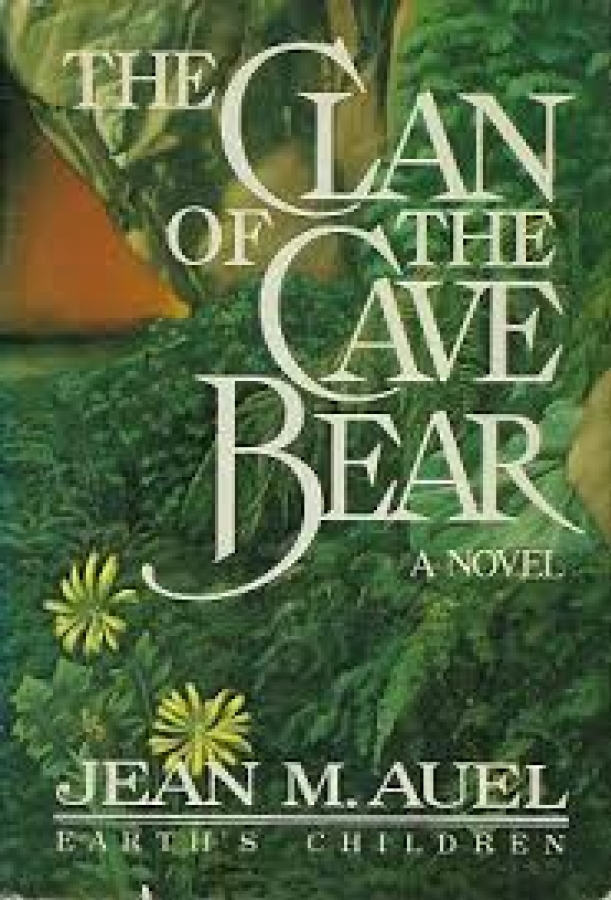
The Clan of the Cave Bear (Ayla, figlia della terra)
The novel is the first in a successful saga centered on a Sapiens woman in a Europe of millions of years ago, when our species coexisted for a long period with Neanderthal man. In the aftermath of an earthquake, young Ayla is left abandoned, indisputably doomed to die. She is taken in by a Neanderthal tribe. Custom would dictate that an individual of the “Others” be killed because > any deviation from usual behavior could unleash the wrath of the spirits. And the little girl is truly different: > she was barely four years old, (...) but walked upright on strong, muscular legs, (...) her low forehead sloped back into a long, wide head that rested on a short, thick neck , she could articulate sounds, she could even laugh. Those who save her are two prominent figures of the Clan: Iza, the medicine woman, and Creb, the shaman. They are moved by a mingled sense of curiosity and solidarity. They are fully aware that Ayla will grow up in a suspicious, if not openly hostile, environment, and will have to learn to behave like the Clan people: adopt the proper posture of a Neanderthal female, respect rigid social roles, master sign language, and suppress any urge toward spoken speech. > There will be time, Iza thought, to teach her manners. She was already beginning to think of the child as hers. (...) Creb was silent, full of thoughts. > Being accepted into the Clan does not change who she is. She was born of the Others, how can she learn all the knowledge you have? You know she has no memory . She lacks the Neanderthals' past, that body of knowledge and values accumulated over millennia that constitutes the backbone of their society. For instance, tradition dictates that females must not hunt, a social function reserved exclusively for males, upon which they have built their power. Restless, inquisitive, and undisciplined, Ayla secretly learns to hunt with a sling, and excels at it. It is the first, but certainly not the last, deviation from the rules. Each time, Ayla’s generosity, her evident desire to integrate into the Clan, and the widespread belief that she is protected by a superior Spirit lead the tribe to forgive her, eventually coming to see her as one of their own. Ayla experiences an inner conflict between integrating into the community and being free, being herself, no longer oppressed by a claustrophobic society. What holds her back is her affection for Iza and Creb, who took her in against everyone’s judgment. Despite her efforts, Ayla has an implacable enemy: Broud, the future leader of the Clan. He is antagonized by the falsely submissive demeanor of this woman of the “Others,” irritated by her growing popularity, and challenges her very inclusion in the Clan as contrary to tradition. He is driven by a mixture of power urges, obtuse adherence to tradition, and an unconfessable attraction to Ayla. As with all males driven into a corner, only rape remains. Broud violates Ayla, who becomes pregnant and gives birth to a boy bearing the traits of both *Homo sapiens* and Neanderthal man. He is a monster! shouts Broud; he must be put to death according to the rules. Yet this does not happen; on the contrary, the Clan females who have just given birth make themselves available to nurse Ayla’s son, after her own milk dries up. Female solidarity proves stronger than tradition! Nearing death, Iza reminds Ayla that one day Broud will be leader, and then > I don't think you should live with this Clan when Broud becomes leader. (...) I think it would be better if you left. Decreed dead while living by Broud, isolated and marginalized, Ayla has no choice but to take the path toward other lands, in search of the “Others.” The author skillfully draws upon anthropology to reconstruct the social mechanisms of the Clan, which are depicted in minute detail. One might easily object that Neanderthal society could have been profoundly different from the primitive societies of *Homo sapiens*. It is an accurate observation, yet irrelevant to the reading of the novel, whose central theme is the welcoming of the other. It must be said that integration fails: despite all efforts, Ayla remains one of the “Others,” yearning for freedom, an innovator and explorer (the pages depicting young Ayla discovering the forest are evocative); the Clan people attempt to include Ayla, but cannot bring themselves to rebel against Broud—they cannot break the rules or defy tradition. The message is pessimistic: in light of contemporary conflicts, will we ever be capable of welcoming those who are different from us? Perhaps, if we liberate ourselves from Memory. The novel is long and prolix, alternating moments of tension with lengthy stretches that add little to the narrative. Constructed around an intricate cast of characters, the storytelling scatters into a sea of names, losing focus on the protagonists and on the depiction of the setting, both social and natural. One reads on, constantly expecting something novel, such as the encounter with the “Others”; instead, nothing disruptive occurs, and the conclusion feels predictable. The prose is straightforward, elegant, and lexically rich: fine English. Why read it? It is very long, but worthwhile in the end.
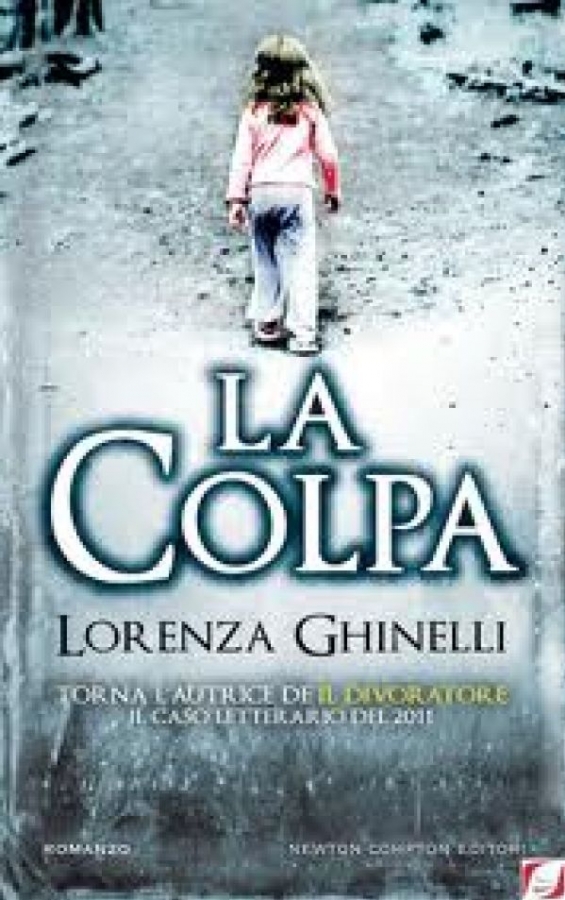
Guilt
Is it possible to escape anguish merely by rummaging through one's own mind, pursuing a > lucid madness of constructing possibilities that are terrible because they are plausible, plausible because possible, possible because thought, thought because present somewhere, in the mind... (like) a Prometheus naked, flushed, dripping, bound by imagination with steel ties to the highest, most exposed peak overhanging the abyss ? Or is an event necessary—even a traumatic, violent one—that forces one out of their nightmares, to rediscover friendship, to reinvent “tenderness and assaults” from “drapes and gutted mattresses”? This novel recounts a rebirth into a new life. In a Marecchia described as a wild land, a “black and barren wasteland,” Estefan is an adrift, disoriented nineteen-year-old, like so many young people. He carries a deep sense of guilt. When he was still a child, his little brother died beside him during the night, without him noticing. Could he have saved him? Or was it he who killed him? From that moment on, Estefan became the > shittiest son, cat in the headlights, punchbag for boxers... better not to exist, sometimes, for others. Better, sometimes, not to exist at all . And ever since, a nightmare has haunted him: he imagines standing at the edge of a pit whose depth reveals no distinct contours and whose colors he cannot grasp, yet he glimpses “children, swings, slide, shrieks, tears” and, above all, > Cardboard-cutout killer Mom... Terrifying Mom, Mom with artery-colored lips, so very thin. Thin enough to cut. She is dressed in torn black poppies.. (and) she laughs, and it is an ugly laugh, a laugh that seems hauled up by powerful hooks that could tear Mom's whole face to shreds . One could easily, and superficially, say that Estefan needs the affection of his parents, and especially of his mother. Yet reality is not so simple, for the loss of the little brother shattered a once-peaceful family, destroyed their relationships, and burdened Estefan with the guilt of having survived. The narrative recounts Estefan’s disordered, aimless life amidst car races, joints and alcohol, nightclubs, constantly away from home and defiant toward school, locked in a perpetual, muted conflict with the adult world. There is, however, a deep friendship—the one with Martino, another troubled youth, who alternates between apparent docility and sudden outbursts of violence. He too carries a wound from childhood: he was raped by his uncle as a young boy (honestly, a useless redundancy for narrative purposes). One evening, wandering through the “wild” Marecchia, Estefan stumbles upon the isolated farmhouse of an old farmer who lives with his granddaughter, a girl orphaned since birth. Her mother was an addict who died giving birth to her. Estefan’s tribulations among the farm animals and his encounter with the little girl are among the story’s most successful passages. Yet the author fails to break free from her indulgence in introspective, hallucinatory references, falling once more into the trap of disturbing imagery without surrendering to the sweetness of the fable. The dung, the hay, the farmyard animals, the equipment become, for both protagonist and author, a > non-place. A place of thought where time is smashed to pieces. There’s the fossil combine harvester, the hay and the spiders, the chicken, and who knows what else. Microbes and bacteria raining down, cobwebs of embarrassing perfection, and a delirium of light play to be savored in silence. Here past and present interpenetrate... (but) the future is fucked . The story is, however, more tenacious than the penchant for self-destructive delirium. An affectionate and singular friendship develops between Estefan and the child: a bond that endures even when guilt resurfaces. Indeed, through a series of coincidences, the girl’s grandfather, having gone out into the night to search for her, kills himself with a gunshot. Estefan flees in desperation after making sure the girl is in good hands. During his flight, he suffers a very serious accident. We find him in the hospital, alone and with “pain occupying his mind,” but Martino and the little girl are there waiting for him. > The boy (Martino) takes his fingers in his own. Estefan opens his eyes, focuses. And it doesn’t seem real to him; for the first time, he does not miss the white . In the acknowledgments, the author observes how > writing this book meant giving meaning to many events for me; it was a painful and magnificent process . Undoubtedly, this internal journey came at the expense of overall lucidity, the plot, and character development. The reader appreciates the narrative premise and the contours—however sketchy—of the characters and setting, but cannot help lamenting the lost opportunity, what the novel could have been had the author refrained from chasing the nightmares and deliria of the mind. The writing is redundant with adjectives and imagery, almost baroque and often cryptic. It needs to be rewritten. Why not read it? Chasing the abysses of the mind is, in the end, boring.
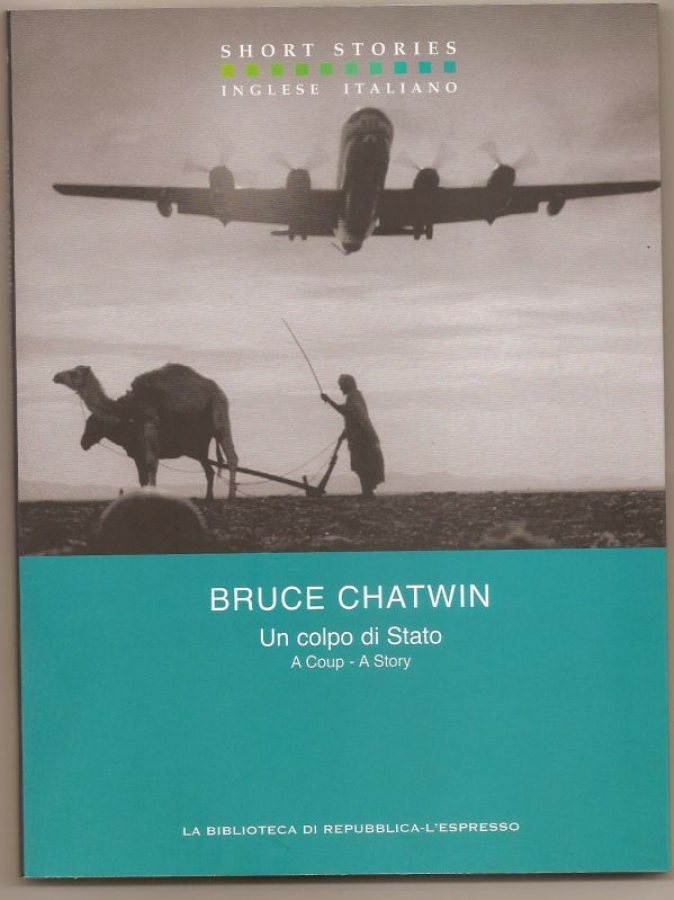
A coup d'état
This is a short story, set in Benin, describing several episodes of a coup d'état. The author finds himself in the African country and is captured, along with a Frenchman, by military forces whose allegiance—whether to the regular army or the putschists—remains unclear. Throughout the narrated events, a general confusion prevails regarding the origins of the coup, the roles played by the military forces, and the very figures encountered. A sense of frustration predominates in the author: he is interrogated, held in captivity without food or drink, struck, and then released with profuse apologies for the misunderstanding. It seems an unreal affair, as if fabricated, and precisely for this reason emblematic of a collective madness. It is Africa unraveling, and the author is its stunned, incredulous spectator. Why not read it? It is a story too slight to prove interesting and engaging.

Confessions of Felix Krull, Confidence Man
What mystery lies behind this novel that accompanied Thomas Mann throughout his entire life? Begun in 1910 and later abandoned, it was taken up again in 1954, a year before the author's death. Thomas Mann imagines a singular character—an enchanter or mere charlatan—recounting his life, and does so beginning with an emblematic episode of his youth. Still a boy, he is taken by his father to the circus, where he marvels at the performance of a renowned clown, whose demeanor, even through varied situations, whether scandalous or comic, > preserved a grace free from all vulgarity and neglect... free and witty, radiating the joy of life, if one can denote by this expression that exquisite and painful sense of envy, nostalgia, hope, and need for affection ignited in the human soul at the sight of what is beautiful and blithely perfect . At the end of the show, the father takes the child backstage to meet the famous clown, and before the boy appears a "revolting sight": a vulgar man, smothered in hideous little pustules, in an atmosphere heavy with ointments and stage paint. > But did the adults, the worldly people who surrendered so willingly, indeed so passionately, to his charms, not know they were being deceived, or, by tacit agreement, did they simply refuse to regard that deception as deceit? Perhaps that was it, when one thinks about it: at what moment does the firefly reveal its true nature—when it glides through the summer night as a poetic spark, or when it squirms in the palm of our hand, reduced to a wretched insect? The theme is thus that of man's dual personality, of his ambiguous and perpetual disguise, whereby one assumes the guise of whatever pleases: life is a deception practiced upon others and upon oneself. Felix Krull is the son of a petty German industrialist, a fraudulent producer of counterfeit sparkling wine. Graceful without being handsome, > fair and dark at once, with the light of blue eyes... the veiled charm of the voice, the silky sheen of the hair , Felix would gladly have prolonged the indolent rhythm of his adolescence, had he not been forced, at the age of nineteen, to seek employment following his father's bankruptcy and suicide. A family friend secures him a post at a grand hotel in Paris. Here the young man leads a dual existence: lift boy and apprentice waiter during working hours, an elegant and refined Parisian in his leisure time, living off the money of the hotel's wealthy female guests, upon whom he bestows his amorous favors. He had attained his deepest aspiration, "permutability": merely by changing his attire and his hair, he could be, at will, either servant or gentleman. It is a life that suits him, until a wealthy young man, infatuated with an operetta singer, proposes that Felix take his place on a voyage around the world, forced upon him by his parents in the hope that he might forget his scandalous mistress. It is the great leap: > I was seized with a thrill of joy at the thought of the reconciliation between being and semblance that life was willing to grant me, of the appearance that it wished to add to being . One might expect a Pirandellian situation; instead, Thomas Mann leads us through philosophical and sociological digressions that overlay the narration of the principal stages of Felix's social conquest. The first leg of the journey is Lisbon, where the protagonist is readily embraced by high society. What attracts him in particular are the wife and daughter of the Director of the Science Museum: the former a buxom and rigid noblewoman ("not pretty, but handsome"), the latter a young maiden, "with lips proudly compressed," possessing the typical austerity of the South. It is the "double image" of feminine allure: haughty nobility alongside graceful, callow youth. Felix would like to savor both; he even dreams of marriage, but it is the noblewoman who urges him not to "seek fortune in childish fancies" and instead allow himself to be swept away by the "whirlwind of primeval forces" unleashed by a regal, mature bosom. And here the first part of Felix Krull's memoirs breaks off, leaving us to assume that the young man abandons any pretensions to a solid bourgeois horizon—which is, in any case, precluded by living under an assumed identity—to press on with his life as an adventurer and a swindler. Yet we shall never know, for the account of Felix's life remains unfinished. The novel is divided into two parts. Up until the substitution between Felix and the wealthy youth, we recognize the style of the great Thomas Mann: the narrative unfolds linearly, the treatment of episodes and characters is brilliant, even mildly ironic, and the "caprices" (the digressions, the chronological disruptions, the analytical elaborations) are functional to an overall understanding. In the second part, the structure of the narrative becomes rambling and disordered. It is unquestionably clever to relate and gloss the events through the letters of the putative son, Felix, to the putative parents—who are, moreover, bewildered by what is recounted, suspecting, quite rightly, that it is a figment of the imagination. This literary device demonstrates Mann's mastery, yet it fails to restore the novel to even a minimum of compactness and lucidity. It seems as though the author is chasing, with the last vestiges of his strength, the completion of a work very dear to him. Yet his momentum gets the better of him, and an excess of themes and reflections crowd together without order. Why not read it? It is simply not worth the trouble.

The Courage of the Robin
> There is no naivety in those who think that a people can truly exist only if there is something, such as a book, to recount them to others . So explains the typesetter Ruben to the young Saverio, urging him to chronicle Carlomagno and its people. We do not know where this village was; perhaps it lay in the Apuan Alps, but it was certainly a community of quarrymen—hard, wild, stubbornly attached to their own brand of Christianity, woven of legends, communal values, and freedom of conscience. And this is what the novel is about: *The Courage of the Robin*. > I would like permission, Your Lordship, to go wherever I please, for I would bother no one, small as I am . Thus the robin asked the king of the woodland birds; and in reply the kestrel broke one of his legs, forcing him to fly with only one wing. Yet the little robin did not surrender, and > flew higher and higher, and a little beyond the place they had assigned to him , until > from above, he began to bombard the head of the king of birds with droppings . To tell of this imaginary village, and of the freedom professed there, the author takes the long way round—perhaps overly so. Saverio lives in Alexandria, Egypt, and is the son of an anarchist baker who, like all his friends, considers Ungaretti to have been an arch-fascist. Upon his father's death, Saverio discovers a collection of poems, *Il porto sepolto*, and is particularly struck by these verses of Ungaretti: > The poet arrives there/And then returns to the light with his songs/And scatters them/Of this poetry/I am left with/That nothing/Of inexhaustible secret . What did the poet wish to express? And why was his father reading this book? A shallow youth and an idler, from that moment on he is seized by a mounting restlessness that not even a journey into the desert can quell. He wants to know his father's village, Carlomagno itself. He travels to Italy and visits Rome, "in the grip of a sensation of fairytale overabundance." He crosses paths with Ungaretti. > The old man, but how old he was! Looking at him so close, he seemed older than a stone. (...) the blazing eyes of a Zulu idol, (...) he seemed unreal to me, made of air like the jinn . The great poet seems to recognize him and slips him a scrap of paper, written in archaic and garbled Italian, stating that a certain Pascal, a "perfidious Lutheran," was burned at the stake. Pascal was his surname; could it refer to an ancestor of his? Saverio fails to reach Carlomagno because the police expel him from the country. He returns to Alexandria and undertakes ever deeper and more perilous dives; perhaps he imagines he will find the buried port of which Ungaretti speaks. Struck by an embolism, he is admitted to a clinic, where he lies for months in an abulic state, stripped of strength and will. To provoke a reaction, he is coaxed into recounting his life, as well as the dreams of his restless nights. And thus, everything we come to know is a story within a story, > a dreamt story, fabricated out of whole cloth, a story from five centuries ago in a place lost to the world . In a Europe devastated by the wars of religion between Catholics and Protestants, Pascal, an aging soldier of fortune, finds himself in Carlomagno, where he is chosen as a husband by Sua (a strange custom, yet the world was turned upside down in that remote and singular village). Sua intends to write the history of Carlomagno; she wishes to be its poetess. She urges her husband, ordinarily cautious and shrewd, to undertake a journey to procure the means to print a book. They secure a Bible in Italian, translated by a Calvinist, read it in secret, and eventually arrive in Val Pellice, the valley of the Waldensian heretics. Yet when they return to Carlomagno, the Inquisition has arrived, determined to normalize the village and its people. Pascal is accused of heresy and dragged to the stake; Sua, pregnant, escapes on her mother's back, "on the back of a demon, make of it what you will." And Sua was able to print her book, and Saverio dreamt it and recounted it, so that it might serve as a "combat robin." Everything was set in motion by a poem, and an obscure one at that. A few words brought to the surface an awareness, a breath of freedom, an irresistible urge to discover one's roots, however tragic. Among the many themes it addresses, the countless evocations, the excessive digressions, the novel speaks of the power of storytelling, of the book written and recounted; and in doing so, it transports us into a free world, into that Protestant Italy that could have been an opportunity for our country, had it not been smothered, condemning us to a destiny of indolence, ignorance, and hypocrisy. It is, therefore, a political book nestled within the shell of a fable. The dream is the finest part of the novel, perhaps also because the author treads on familiar ground. The prose is consistently refined and effective; nevertheless, the narrative is rambling, all too often a bloated potboiler. Maggiani tried to say too much, and in doing so spoiled the core essence, formed by the dream and the imaginary village of Carlomagno. Why read it? It enlivens us with a Protestant spirit.
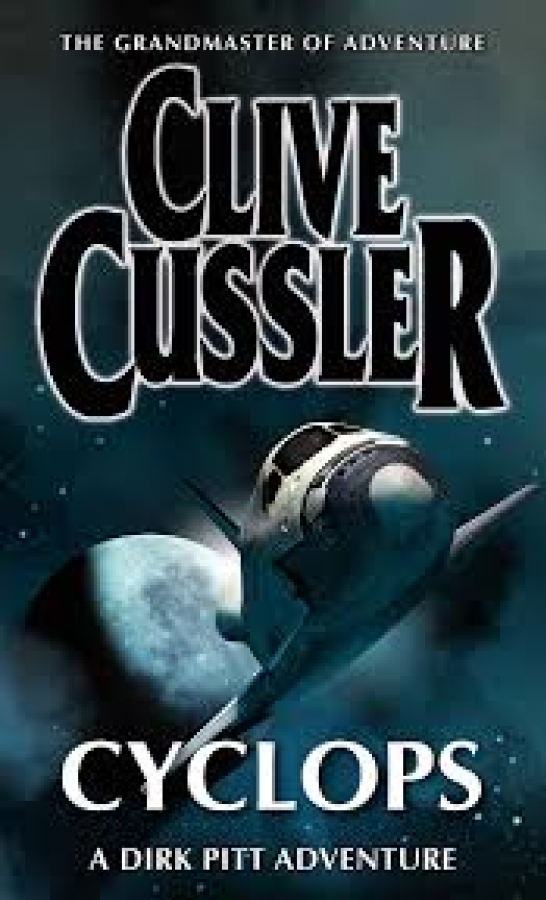
Cyclops
The novel opens with a historical premise: a ship with a mysterious cargo sinks off the coast of Cuba. Immediately thereafter, the scene shifts to a Florida beach in the 1980s. A blimp, > motionless in the tropical air, poised and tranquil, like a fish suspended in an aquarium , awaits an American tycoon to embark on a search for the alleged treasure that sank to the ocean floor with the shipwreck. > What no one knew, or could possibly suspect, was that Raymond LeBaron and his friends aboard the *Prosperteer* had vanished into a mystery that went far beyond any search for treasure. From this moment onward, an incredible and convoluted series of events begins to unfold. After five hundred pages, unraveling the narrative threads is no easy task; let us attempt it. LeBaron is part of a secret circle of capitalists that has established a base on the Moon, where the Soviets have also landed; the latter will attempt to storm the American outpost, only to be wiped out by the valiant defenders in a battle fought on the surface of our satellite—and all this unbeknownst to the President of the United States! LeBaron and his men were not killed in the blimp's crash, but were taken prisoner by the treacherous communists at a secret base in Cuba; what is more, the Soviets intend to eliminate Fidel Castro, who wishes to break free from the Soviet Union. Such a tangle of events already demands a hero to unravel it, and that hero is Dirk Pitt, a sort of Sandokan at the very center of Cussler's literary output. In this novel, we first meet him in a gripping scene on a Florida beach, where our hero prevents the wind-tossed blimp from wreaking havoc among the poor holidaymakers, caught between fascination and terror: > the multicolored sails of the "windsurfer" fleet flashed across the blue-green water like a crazed prism. We then find Pitt, presumably weary after this heroic escapade, > among three dozen gleaming vintage cars, an antique airplane, and a late-nineteenth-century railway carriage. Pitt barely has time to gaze fondly upon a fabulous sports coupé, destroyed by an explosion and which he intends to restore to its former elegance and beauty, when he receives a phone call from LeBaron's wife asking him to help her find the hidden treasure. And yet more adventures follow until our American Sandokan leads "the good guys" to foil the plots of the villainous and bumbling Soviets, even uncovering the mysterious cargo. Overwhelmed, yet glad for such superficiality after having read László Krasznahorkai's *The Melancholy of Resistance* (see the review on this site), I set the book aside, certain that I will not read another by this author. There are thrillers, and then there are thrillers. To judge the novel, however, we must look to the myriad American films that pack cinema halls and flicker across our television screens. The sheer crowding of characters and subplots masks the thriller writer's struggle to lend depth to stories and protagonists. In this novel, Pitt seems indifferent to the charms of the sole female figure, the beautiful widow; there is only a brief and chaste love scene, while he displays empathy and solidarity toward his fellow adventurers in a distinctly camaraderie-driven style. He is not, therefore, a true Sandokan—dark and melancholy because his beloved is his enemy's daughter. To the author's credit, it must be said that the violence is restrained, perhaps because the novel was written in the 1980s. From a stylistic point of view, the novel is well written. The descriptions are particularly striking in their precision and detail. The finest scenes are those on the water, confirming the author's love for this environment. Why read it? It can provide a moment of diversion if one is weary of dense reading. But only once!