Finished reading on: August 04, 2025
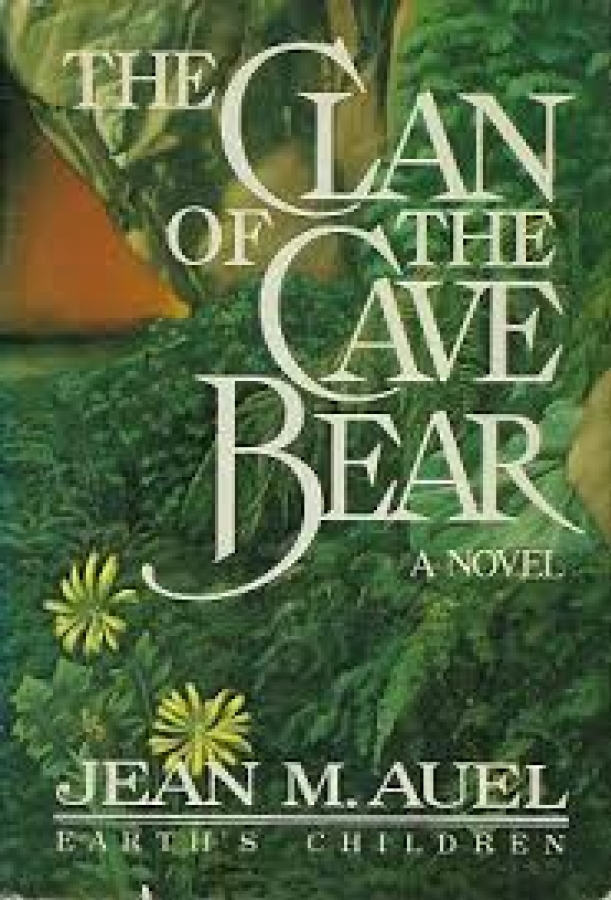
The Clan of the Cave Bear (Ayla, figlia della terra)
AI Translation Notice: This review was translated from the original Italian using artificial intelligence. Book quotes and excerpts are translated interpretations and will not match the author's original English phrasing or official published translations.
The novel is the first in a successful saga centered on a Sapiens woman in a Europe of millions of years ago, when our species coexisted for a long period with Neanderthal man. In the aftermath of an earthquake, young Ayla is left abandoned, indisputably doomed to die. She is taken in by a Neanderthal tribe. Custom would dictate that an individual of the “Others” be killed because
any deviation from usual behavior could unleash the wrath of the spirits. And the little girl is truly different:
she was barely four years old, (...) but walked upright on strong, muscular legs, (...) her low forehead sloped back into a long, wide head that rested on a short, thick neck
, she could articulate sounds, she could even laugh. Those who save her are two prominent figures of the Clan: Iza, the medicine woman, and Creb, the shaman. They are moved by a mingled sense of curiosity and solidarity. They are fully aware that Ayla will grow up in a suspicious, if not openly hostile, environment, and will have to learn to behave like the Clan people: adopt the proper posture of a Neanderthal female, respect rigid social roles, master sign language, and suppress any urge toward spoken speech.
There will be time, Iza thought, to teach her manners. She was already beginning to think of the child as hers. (...) Creb was silent, full of thoughts.
Being accepted into the Clan does not change who she is. She was born of the Others, how can she learn all the knowledge you have? You know she has no memory
. She lacks the Neanderthals' past, that body of knowledge and values accumulated over millennia that constitutes the backbone of their society. For instance, tradition dictates that females must not hunt, a social function reserved exclusively for males, upon which they have built their power. Restless, inquisitive, and undisciplined, Ayla secretly learns to hunt with a sling, and excels at it. It is the first, but certainly not the last, deviation from the rules. Each time, Ayla’s generosity, her evident desire to integrate into the Clan, and the widespread belief that she is protected by a superior Spirit lead the tribe to forgive her, eventually coming to see her as one of their own. Ayla experiences an inner conflict between integrating into the community and being free, being herself, no longer oppressed by a claustrophobic society. What holds her back is her affection for Iza and Creb, who took her in against everyone’s judgment. Despite her efforts, Ayla has an implacable enemy: Broud, the future leader of the Clan. He is antagonized by the falsely submissive demeanor of this woman of the “Others,” irritated by her growing popularity, and challenges her very inclusion in the Clan as contrary to tradition. He is driven by a mixture of power urges, obtuse adherence to tradition, and an unconfessable attraction to Ayla. As with all males driven into a corner, only rape remains. Broud violates Ayla, who becomes pregnant and gives birth to a boy bearing the traits of both Homo sapiens and Neanderthal man. He is a monster! shouts Broud; he must be put to death according to the rules. Yet this does not happen; on the contrary, the Clan females who have just given birth make themselves available to nurse Ayla’s son, after her own milk dries up. Female solidarity proves stronger than tradition! Nearing death, Iza reminds Ayla that one day Broud will be leader, and then
I don't think you should live with this Clan when Broud becomes leader. (...) I think it would be better if you left. Decreed dead while living by Broud, isolated and marginalized, Ayla has no choice but to take the path toward other lands, in search of the “Others.”
The author skillfully draws upon anthropology to reconstruct the social mechanisms of the Clan, which are depicted in minute detail. One might easily object that Neanderthal society could have been profoundly different from the primitive societies of Homo sapiens. It is an accurate observation, yet irrelevant to the reading of the novel, whose central theme is the welcoming of the other. It must be said that integration fails: despite all efforts, Ayla remains one of the “Others,” yearning for freedom, an innovator and explorer (the pages depicting young Ayla discovering the forest are evocative); the Clan people attempt to include Ayla, but cannot bring themselves to rebel against Broud—they cannot break the rules or defy tradition. The message is pessimistic: in light of contemporary conflicts, will we ever be capable of welcoming those who are different from us? Perhaps, if we liberate ourselves from Memory.
The novel is long and prolix, alternating moments of tension with lengthy stretches that add little to the narrative. Constructed around an intricate cast of characters, the storytelling scatters into a sea of names, losing focus on the protagonists and on the depiction of the setting, both social and natural. One reads on, constantly expecting something novel, such as the encounter with the “Others”; instead, nothing disruptive occurs, and the conclusion feels predictable. The prose is straightforward, elegant, and lexically rich: fine English.
Why read it? It is very long, but worthwhile in the end.