Finished reading on: May 20, 2023
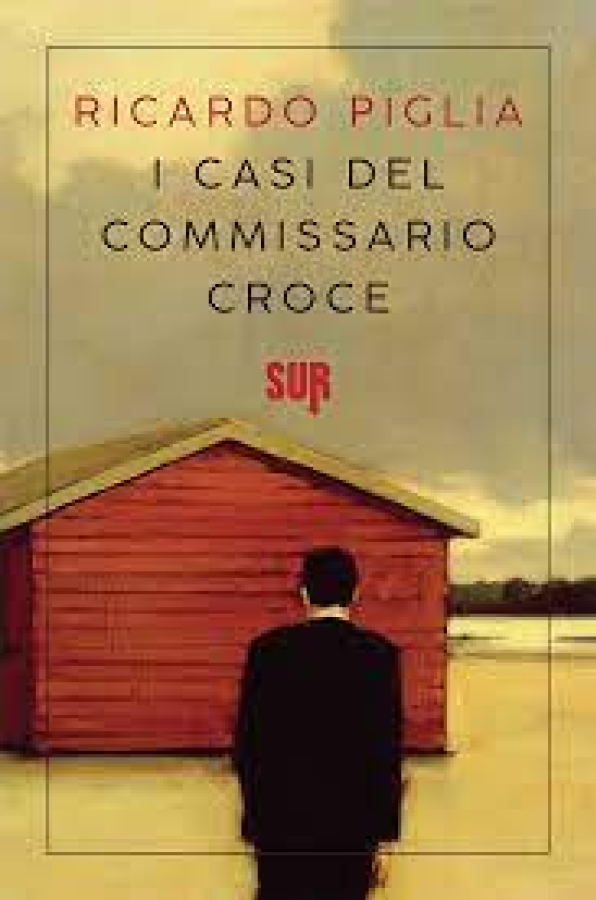
The Cases of Inspector Croce
Title of the original version reviewed: «I casi del commissario Croce»
AI Translation Notice: This review was translated from the original Italian using artificial intelligence. Book quotes and excerpts are translated interpretations and will not match the author's original English phrasing or official published translations.
In the prologue, Ricardo Piglia cites a note by Karl Marx on evil, as
the fundamental principle that makes us social creatures, (...) here lies the true origin of all arts and sciences, and from the moment evil should cease, society would necessarily decay, if not perish altogether
. If we consider the history of Argentina—a history the author traverses skipping here and there—violence, the extermination of native peoples, repeated military coups, Peronist populism and ruthless neoliberalism, police repression culminating in the desaparecidos, are not anomalies but elements inherent to a capitalist society; and only through a rational approach can a plausible explanation be found. To achieve this end, Ricardo Piglia invented Commissioner Croce, a "brilliant investigator" bearing the name of an Italian Hegelian philosopher, Benedetto Croce. Is it a coincidence? Certainly not, considering that "the true destiny of a Kantian is the police academy," even if
no one is master of their own thoughts. There is no such thing as one's own ideas; thinking is either appropriate or it is not appropriate
and also "if we do not destroy thoughts, thoughts destroy us." To range freely, Piglia does not develop a single plot, but relies on short stories, which the author seems to present as random, included without a logical thread. In reality, perhaps stretching the author's intention, we can group them into several strands. The Film, The Exception, The Impenetrable, The Promise
, are stories that deal with salient moments in Argentine history. Take
The Impenetrable
where Croce is tasked with solving the disappearance of engineer Panizza, a well-known industrialist with an obscure past. Croce travels up the Río de la Plata, which was easy for him because
he had spent many summers on the vast lagoon (...) to escape routine and lead a philosophical life." And when he meets him, Panizza utters enigmatic words (such as "the organization of time, and not the invention of the steam engine, is the key to capitalism
) only to slip away for good. Who is Panizza? Is he one of the many Europeans who fled after the Second World War and do not want to be found? And what of the commissioner's weeping at the end of the story
The Film
, when Croce discovers that the blonde girl starring in the pornographic film is Evita Perón,
that woman whom so many had loved as a virgin
. Other stories represent the essential traits of Argentine society: melancholy (
The Music), superstition as in The Astrologer and in Tigre, virility as in the paradoxical and indecipherable Mrs. X, the love of risk as in The Gambler
. And finally, Piglia dwells on the crime genre, revealing his predilection for detective stories in the vein of Agatha Christie and for the bewildering mysteries of Poe. The stories are a manual of instructions and reflections, from which we discover that Croce's method operates
"through metaphorical analogies, combines poetic intuition with mathematical precision" (The Lecture, The Resolution, and The Method). In the background, there is always Argentina:
the streets are deserted, there isn't a soul anywhere, there's no one at the port, everything is dead, something demented, acres and acres of countryside and behind it there is nothing, stray dogs, bones in the sun, and only wind, dust, and solitude. (...) We have been defeated so many times that now we no longer change
.
One would need to know Argentina and its history to truly appreciate these stories; and yet, these short tales arouse a certain envy, imagining what our own Noir—so successful today—could be if it retraced our recent past, fostering the transmission of Memory. From a narrative perspective, the reading brings to mind Dino Buzzati's Sixty Stories (see review on this site): the same sense of paradox and the very same resigned disillusionment. Considering that The Cases of Commissioner Croce is Piglia's final book, written when he was already suffering from advanced ALS, we find ourselves before a truly poignant testament, coupled with the desire to bequeath a literary approach and convey a passion for the crime genre.
It is a struggle to finish reading; at times the stories are rambling, with numerous narrative digressions, and at times too paradoxical—as happens with Buzzati—making it difficult to remain engaged.
Why not read it? It is interesting, but prolix and fragmentary.