Caffè Specchi
The protagonist returns to Trieste to await custody of her son. In an exhausting wait, mingled with encounters and tragic events (the murder of a young woman), the protagonist experiences the sensation of losing herself. > Suddenly, as if that silence had reached its critical point, the air seemed to congeal, shattering into petals that slipped, swaying, along the pale wall. A rapid decomposition, the dust motes fermenting unforeseen transparencies. In that pause, alarmed glances resumed, and a sense of menace took shape in the atmosphere . The sentence I have quoted encapsulates the virtue and the limitations of the book. One is confronted with refined writing, more akin to poetry than to prose, yet the pursuit of preciousness fragments the narrative, leaving the reader in turn disoriented and struggling considerably to grasp the meaning of the whole. Why not read it? It ought to be read in small doses, but I was unable to finish it.

Canada
A teacher at the end of his career, married without children, with a wife who is an accountant by trade, decides to recount two pivotal events from his adolescence. Had he been—who knows?—an astronaut, a Silicon Valley adventurer, or simply a sensitive, and therefore fragile, person, he might have given us a tale less prosaic and intellectualized, yet rich in emotion and feeling; instead, the sprawling novel sets out to demonstrate how > the best thing to do in life, to survive, is to bear losses well. (...) the world changing around us does not care how I feel . The novel is divided into two parts. In the first, the setting is a small Montana town: an ordinary family, husband and wife, fifteen-year-old twins, a girl and a boy (our narrator-teacher). The father is strapping, amusing, the classic charmer: a former army officer who, after leaving the armed forces, chased far-fetched schemes, ending up in petty dealings skirting the edge of the law; the mother is slight, shy, introverted, and a dreamer. > The strange union of their ill-matched physical traits is always in my mind as one of the reasons for their tragic end: they were without question simply wrong for each other and should never have married . To the children, home seems normal, until the parents commit an incredible and unpredictable act: a bank robbery, following which they are arrested and sentenced to many years in prison. Why did they do it? What drove them to commit such an absurd act? Never mind the father, superficial and incurably optimistic, but why the mother, so sensible and on the verge of separating from her husband? > She might have felt not despair or terror or greater alienation (which would have been normal). But freedom. From all the forces that oppressed her. She might have concluded that this uncontrolled sensation came directly from the very qualities that isolated her. (...) This might have made her feel better than she had in a long time. The mother is undoubtedly the most interesting character in the novel, and it would have been worthwhile to investigate her further to grasp the full measure of her reckless act, which will lead her to suicide. Yet > my parents began to recede in my vision, as when you are sick and fever shrinks the world and stretches distances. My parents grew smaller and smaller until I was alone in the dimly lit kitchen, and they were on the verge of vanishing, almost disappearing . And indeed, in the novel's second part, the setting and circumstances are far removed from the still-adolescent world of the first. To escape the clutches of the authorities, a friend of the mother takes the boy to Canada, to a small town where her brother Arthur runs a hotel. Here, the narrative takes on an artificial cast, typical of a contrived armchair literary construct. The boy comes of age in short order (a coming-of-age novel?) and is drawn to the figure of Arthur: a cultured yet violent failed revolutionary who seems intent on assuming the role of mentor to the protagonist—a sort of *Great Gatsby*, a mysterious superhero, a failed and nonetheless arrogant intellectual. The friendship between Arthur and the boy ends abruptly when the youth becomes entangled in a murder. Arthur kills two people, and the boy is used, unbeknownst to him, to create a diversion and deceive the victims. And it is then that the protagonist realizes that the only possibility is to maintain life in a generally acceptable state, regardless of the borders crossed: like a puzzle, like a symphony, like > the game of chess, in which the individual competitors are part of a long, single enterprise that pursues a condition not of adversity or conflict, or defeat or even victory, but of an equilibrium underlying it all . It is a cynical and pessimistic conclusion, according to which, in order to survive—to avoid being overwhelmed and destroyed—one must not get involved; that is to say, one must not truly live. It is a dreadful novel, not merely due to its disproportionate length, but above all because it lacks tension, pace, and genuine psychological depth; the characters are stereotypes, mere pretexts for philosophical reflections that are, moreover, frequently impenetrable. The premise upon which the first part rests held real promise: an incomprehensible event upends everyone’s lives; parents can commit acts that alter their children’s lives, radically and for the worse. How often have we seen this happen! Yet the development of the idea disappoints through its absence of emotion, of real suffering. The second part is a series of clichés, of characters and settings that evoke literature rather than real life. What is Canada to the narrator-protagonist? An escape, an unreal country, the setting for his coming-of-age? We will never know, for the pointless digressions are far too numerous. Why not read it? It is long, prolix, tedious, and contrived.
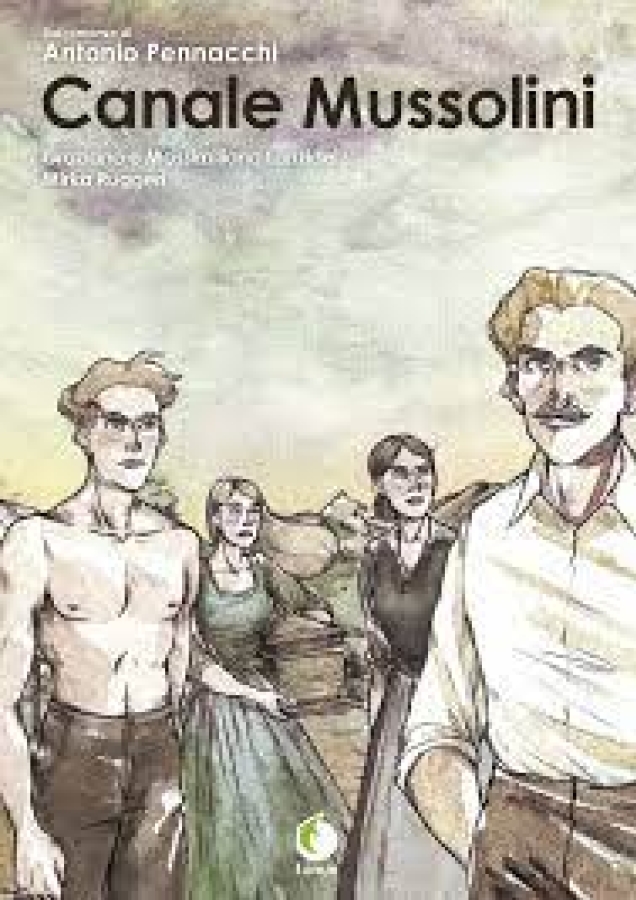
Mussolini Canal
> But look here, my good sir, the two of us cannot go on like this. (...) I haven’t quite grasped what you need, but (...) if I say they did something, they did it, and that is that; you have to believe me, otherwise we might as well drop it. I’m not inventing anything. At most, my memory might fail me . Imagining a dialogue with an interlocutor, Pennacchi adopts a colloquial tone to narrate the saga of the Peruzzis, sharecroppers from the Rovigo area forced to abandon their land under a crushing burden of debt, who travel to the Agro Pontino to colonize the areas reclaimed by the Fascist regime. It is an expansive narrative spanning from the end of the nineteenth century to the early 2000s: a sprawling feast of history and family tribulations that one would wish were a continuation of Riccardo Bacchelli’s *The Mill on the Po*, but unfortunately is not (see the review of Bacchelli’s novel on this site). The Peruzzis are a prototypical large peasant family: anchored by the central figure of the mother and an extensive brood of restless sons and daughters for whom suitable husbands must be found. While in the others the inherited “fury” is tempered by deference to social conventions and expedient cohabitation (with the landlord, the authorities, and fellow peasants), Pericle, the favored second son, cannot contain himself, especially after his experience on the front lines of the First World War. He rebels against the agricultural workers' leagues that still dominated the countryside, throws in his lot with the *squadristi* to the point of murdering an anti-Fascist priest, and, having fallen in love with Armida, a captivating beekeeper, takes her as his own and marries her despite her initial rejection. His active adherence to Fascism enables Pericle to appeal to a powerful *gerarca* to secure a settlement for the family in the Agro Pontino. The Peruzzis' establishment in the still-marshy terrain, the discovery of a different rural reality (with the crucial role played by the cattle), and the founding of Littoria are the most compelling parts of this long novel, not least because it is evident that Pennacchi possesses a thorough knowledge of the region's history, and especially of its reclamation canals, including the Canale Mussolini. Had he explored the colonization of the Agro Pontino more deeply through the perspective of a peasant family, the novel would have attained significant social weight; instead—who knows why?—the author felt compelled to traverse the entirety of modern Italian history: the Ethiopian War, the North African campaign, the partisan resistance, and so forth. The conversational register degenerates into a soliloquy of banal, inaccurate ruminations, a cloud of dust into which Pennacchi dumps his entire ideological baggage; despite the social and political upheavals, the Peruzzis remain frozen like “marble statues,” forever unchanged and deferential to ancestral codes. Even when Armida betrays Pericle, everything is smoothed over beneath the protective wing of the great matriarch, ever vigilant in safeguarding the family’s unity. One detects a sort of nostalgia for a harsh yet orderly world; but perhaps this is merely the reader's yearning to find some genuine sentiment within a narrative that seems to serve only as a pretext for verbose outpourings. The novel has been adapted into a graphic novel by Graziano and Massimiliano Lanzidei alongside Mirka Ruggeri. Setting aside the draughtsmanship, which I am not qualified to appraise, the translation into “comic” form injects dynamism into the plot, bringing several figures into sharper relief: Armida (the carnal passion kindled by her young nephew, the maddened swarm of bees as misfortune gathers), Adelchi, transformed by the Ethiopian War into a racist Fascist, and the young Pericle and Iseo, the designated casualties of an uncritical, opportunistic adherence to Fascism. The graphic novel redeems the book, yet it accentuates the characters’ rigidities—perhaps deliberately—while the Agro Pontino fades, the pencil failing to conjure the atmosphere of the reclaimed lands, much as the author's own pen fails to do. Why skip it? It is verbose; you are better off buying the “comic.”

Quiet Chaos
If the Strega Prize has rewarded the best book of the year, one must conclude that Italian literature is in a truly dire state. The book offers two interesting premises. First, the theme of grief, with the difficulty of feeling sorrow over the death of a loved one. The protagonist has indeed lost his wife, yet he exists in a state of suspended animation (hence the title *Quiet Chaos*), being neither shattered by grief nor capable of resuming normal life. Indeed—and this is the second interesting premise—he decides to spend his days waiting outside his daughter’s school. Within this vigil, his life unfolds through a series of encounters: his sister-in-law and his brother, colleagues concerned with the fallout of an ongoing corporate merger, the company’s owners, the prospective buyer himself, and other minor characters. The protagonist remains indifferent to everything happening around him, continuing to wait for something to break this state of limbo. It will ultimately be his daughter who points out that her classmates mock her for his constant presence outside the school, and that it would therefore be advisable for him to return to normal life. The initial premises are therefore interesting, but they dissolve into the banality and superficiality of episodes that lack any clear connection, rendering the story fragmented, prolix, and inconclusive. The narrative device of a first-person account—a tumble of racing words and clauses meant to convey the illogical flow of thoughts—translates into a tedious, ponderous rhythm that fails to penetrate the depths of the situations and emotions. The themes overlap, ultimately obscuring the central issue: the processing of grief.

Career Move
This is a short story in which two parallel narratives unfold. In the first, an aspiring screenwriter, forced to sell insurance for a living, desperately pursues a script reader to whom he has submitted his work. In the second, a poet, now famous and wealthy, is forced to endure futile meetings with publishing house staff and submit to demands for revisions to his poems. Regardless of the initial premise, the publishing world remains stupid, superficial, and arrogant, and the outcomes can be unpredictable: the aspiring screenwriter manages to have his work accepted in its entirety, whereas the renowned poet is forced to suffer alterations. The story might well have been interesting, but the style is so disjointed—riddled with constant narrative leaps and a spasmodic reliance on colloquialisms and neologisms—as to render the text arduous to read and, effectively, incomprehensible.
The Casual Vacancy
A successful author decides to abandon her genre to venture into other narrative territory. As often happens, this attempt turns out to be a resounding failure. Critics, however, have judged it very favorably: in the magazine *Internazionale*, the novel was awarded top marks, five stars. Did I fail to understand the book’s merits, or are publishing houses’ profit expectations dictating critical judgment? The core premise of the story is intriguing. We are in a small English town, perceived by its inhabitants as a «safe haven», where the respectable bourgeoisie believes it can live comfortably and peacefully, insulated from the problems of the modern world. A pity that, in the recent past, a major landowner sold a parcel of land upon which a council estate was built, whose social problems now negatively impact the town’s presumed well-being. Furthermore, an addiction treatment center is run on municipal property, with all the attendant disruptions that ensue. Well, the sudden death of a councillor—a man of deep social conscience and thus in favor of keeping the center—presents an opportunity to shift the majority on the town council, shut down the center, and transfer the council estate to the neighboring town, which might in turn be keen to alter its own political balance. A race ensues to claim the seat left vacant on the local council. One would have expected a narrative with a strong socio-political edge, replete with intrigue and potential plot twists. This is not the case. The story plods wearily along through the accounts of the various families involved: marital relations, parent-child dynamics, the school environment, and so forth. In the first part of the novel, the reader gets lost among the characters, all of whom seem to carry the same weight in the narrative structure. Later, the book becomes less tedious and more sharply delineated, as certain characters—mostly the «children»—post defamatory emails on the council’s website, not out of political motives, but to vent grudges and a desire for rebellion. It would have been an interesting idea, but this, too, peters out into nothing. Ultimately, the reader is left with a novelized version of *Desperate Housewives*, which wraps up—because every novel must come to an end—in a maudlin fashion, just enough to coax out a few cheap tears. The author writes very well, in prose that is at once elegant and modern. Even if one accepts the novel's psychological approach to social issues, it is baffling how generically such complex themes are handled, such as intergenerational relationships and youth in severely disadvantaged families. The weakest point is the narrative structure. First of all, the plot is scattered, fragmented, and devoid of action. How is it possible that such an experienced author was unable to give unity and momentum to the narrative? Secondly, the writer fails to establish a hierarchy of characters—key figures around whom the story can turn and through whom deeper psychological, existential, and social explorations might be developed. All the characters remain on the same footing, staying superficial and losing the reader across multiple narrative threads. Why not read it? It is tedious, banal, and pointlessly long.
What is to be done?
Chernyshevsky was a nineteenth-century Russian revolutionary, a forerunner of the major ideologies and political currents that led to the October Revolution of 1917. An economist, philosopher, and writer, he was imprisoned at the age of thirty-four in 1862 and remained incarcerated until 1888. Written during his early years of imprisonment by a young idealist, the novel bears an overwhelming moral and political imprint, one that compromises its strictly narrative component. The theme remains strikingly timely: women’s freedom and equality. Vera (meaning "faith" in Russian) lives in a narrow-minded bourgeois family and is destined for a marriage of convenience with a wealthy, vulgar suitor. In a splendid depiction provided by one of Vera’s dreams at the end of the book (an extraordinary foreshadowing of Nietzsche’s oneiric style), Queen Astarte commands the young woman, portrayed as "a reclining woman," to submit to her lord. > Brighten his leisure hours. Love him, for he bought you; and if you love him not, he will kill you . But Vera replies that it is not she > depicted in this scene. Back then I did not exist. That woman was a slave. where equality is lacking, there is no place for me . And indeed, Vera rejects her destiny, rebels against her family, and marries a young doctor. It is no mere rebellion of a resolute adolescent. Vera knows full well that she has emerged from "a damp and dark cellar" to liberate other women, who "still lie captive and infirm." Now independent, Vera sets up a sewing workshop, where the seamstresses not only share profits and decide on business matters and organizational structure for themselves, but also dedicate themselves to their own education and the emancipation of women. The marital relationship between Vera and her husband is modeled on friendship, devoid of emotional and sexual ties. > Listen carefully now: this is how we shall live (...). First of all, we will have two rooms, yours and mine: in a third room we will dine, and receive our mutual friends. Secondly, I shall not enter your room (...) nor will you enter my room . Later in the final dream, Vera imagines this female figure being represented by another queen, Virginity. > Man’s primitive brutality was gradually tamed by womanly beauty.(...) Man loved the pure, inaccessible virgin. Yet woman did not yet possess a consciousness . It appears to be a tranquil situation, but a deep unease pervades Vera. It is a dream that reveals this. The young woman imagines that an artist forces her to read her diary. > It spoke of the two of us (Vera recounts to her husband) and how fond we are of each other, and then all of a sudden, at the touch of his hand, vile words appeared, saying that I did not love you . Vera certainly cannot follow the third queen, Aphrodite, who beckons toward an apparent freedom, pursued as it is by "trafficking in pleasure." She must experience true love, founded upon an equality of intellect, feeling, and sex between man and woman. She falls in love with a friend of her husband, Kirsanov: their affair is fraught, as both wish to disavow it and remain faithful—she to her bridegroom, he to his friend. The suicide of Vera’s husband enables their love story to materialize, bringing about "equality between the two beings who love each other." Thus speaks the fourth queen in Vera’s dream. > Once the equality of the sexes is recognized, man no longer regards woman as his property. They love each other because they wish to do so . (...) If you wish to express in a single word what I am, call me equality. The overriding reliance on dialogue between the characters, particularly between Vera, her husband, and Kirsanov, gives the impression of being faced with a Socratic dialogue, reinforcing the philosophical and moralizing character of the writing. It is always Vera who steers the reasoning, while the two men are stereotypes, figures flattened by the woman's personality. Vera is a complex character; at first, she is simply a young woman still uncertain and frightened; she pragmatically seizes the opportunity of a liberating marriage; with typical youthful confidence, she faces a relationship devoid of that gentle, assiduous caress, the need to cradle oneself voluptuously in a feeling of tenderness«. Then, she experiences »the imperiousness of that gentle feeling > , even if she cannot bring herself to call it love. Her husband’s suicide devastates her, but she overcomes it, defining the ensuing guilt as a pointless melodrama". A little selfishness does no harm! In the end, she becomes a woman thoroughly conscious of her own worth and aspirations. It may be that Chernyshevsky identified with Vera, and that the book is therefore a *Bildungsroman*, or the swan song of a lost youth. From a literary standpoint, it is a mediocre tale; the dialogue-driven narrative style and the glut of reflections, digressions, and declarations make it bombastic, repetitive, and prolix. Only the dreams carve out an innovative rupture within a traditional narrative structure that is ill-suited to plumbing the depths of its characters and situations. Why not read it? It is boring.
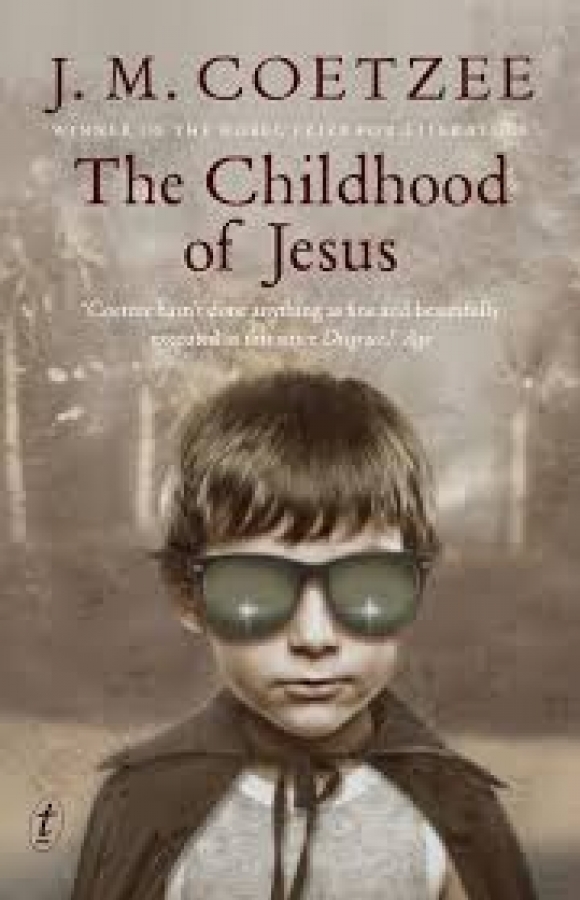
The Childhood of Jesus
In *Age of Iron* (among the reviews), the mother abandoned by her daughter and condemned to solitude cries out in despair, “let me go to myself, (...) it is a hard task, but I am learning.” In *Disgrace* (also among the reviews), the protagonist, a pompous intellectual, moves toward death: > lying on a plastic chair amid the stench of chicken feathers and rotting apples, he feels his interest in the world drain away drop by drop . And what if, instead, we refused to accept death, even if it assumes the shape of Paradise? An adult and a child find themselves in an imaginary world where kindness and friendship prevail, in which everything flows ever identical to itself, where everyone has forgotten their past. > Nothing is missing. The nothing that you think is missing is an illusion. You are living in an illusion. For the protagonist > this life is too placid for his taste, it lacks too much in ups and downs, in drama and tension, it is too much, in fact, like music on the radio. *Anodina*, “is that the Spanish word?” The story itself is nothing but a narrative. Our history is not real. What, then, is our life? A tale? In short, accepting Paradise can only be done by losing oneself. As Dante says in Canto XXXIII of *Paradiso*, > As he who seeing in a dream,/that after the dream the passion impressed/remains, and the other returns not to the mind,/such am I, for almost wholly ceases/my vision, and yet still distills/within my heart the sweetness born of it (lines 58–62). That is to say, only if I surrender to a mystical intuition of God can I dissolve into Paradise and attain a peace, serene and eternal, even if monotonous. Had I continued reading, perhaps I would have understood the role of the child (Jesus accompanying the incredulous Joseph?); I must confess that I abandoned the book by virtue of every reader’s right to drop a story if it is not to their liking. What troubled me was the abstractness of the dialogues and the repetitiveness of the plot. It almost seems as though the author were conversing with Saint Thomas or some other theologian, using the characters not as living subjects rich in emotion, but as feeble stand-ins for concepts. Then again, we are in Paradise. Coetzee has convinced us: with death, it is better to vanish into nothingness. Why not read it? Abstract, boring, and inconclusive.
The children's book
The novel is set in England between the late nineteenth and early twentieth centuries. It is the triumphant era of the bourgeoisie, which would come to a tragic end with the First World War. Technological and artistic innovation—including in the decorative arts and crafts—individual freedom and equality, the role of women and feminism, socialist and anarchist ideas: these are the defining hallmarks of this historical period, providing the backdrop to a profoundly contemporary theme: that of betrayed childhood. At the end of the nineteenth century, > children were different from children before and after. They were neither dolls nor miniature adults. They were not hidden away in nurseries, but were present at family dinners, where their developing characters were taken seriously and rationally discussed, during meals and on long country walks. And yet, at the same time, children in this world had their own separate, largely independent lives, as children. Parents found it hard to do in practice what they believed in theory that they should do, which was to love all the children equally . One should not, however, expect a conventional historical and social novel; it is in fact an intricate narrative in which different planes of storytelling, internal and external, intersect through the fairy tales written by one of the mothers of these large bourgeois families: Olive. Her seven children (who, as will emerge, are not all born of the same mother and father) are each the subject of a story. Yet here lies the first betrayal: the stories are not truly for them, but for the reading public, as Olive confesses at one point: > I don’t really like making up imaginary children. I get frightfully bored with their little quarrels and their innocence. But the readers have an insatiable desire for these clever little people having comical adventures . On the parents' part, there is no genuine attention paid to the children: their utopian ideas about education, about their children’s free will, about an affectionate and stimulating environment in which to bring up the young, are mere words masking a real indifference. And the children grow up regardless of their parents, gradually discovering the lies of their fathers and mothers, their subterfuges, and in some cases even their violence. They adapt by keeping the truth concealed, by not disturbing the prevailing hypocrisy, and by guarding family secrets. Each reacts differently: one takes refuge in the woods, cutting himself off from everyone; another skillfully conceals his true political beliefs; another vents his rage upon his father’s cherished possessions; another remains suspended, waiting, letting life simply roll by. There are also those who flee their parents’ ideological vagueness by pursuing concrete professions, such as medicine or stockbroking. The First World War brings a tragic end to many of the young protagonists' lives and leaves the survivors profoundly altered. Yet the war is merely the epilogue to a tragedy that had already found voice in Olive’s fantastical, almost psychoanalytic tales, all centered on underworld realms, as if foreshadowing life in the trenches. It happens sometimes that writers, even accomplished ones, measure themselves against narratives that vastly exceed their strength and skill. Such is the case with this book, which not only takes on too many themes (children and adults, the interrelated histories of several families, works of art and the emergence of modern museums, feminism, and many others besides) and too many characters, but above all proves redundant due to a rich, overwrought, and baroque prose. Too many words, too many topics, but little capacity to convey tension or foster readerly engagement. The narrative plot, much like the characters, feels contrived, monotonous, and in many instances predictable. Why not read it? It is prolix, and the labor of getting to the very end goes unrewarded by moments of high expressive power.
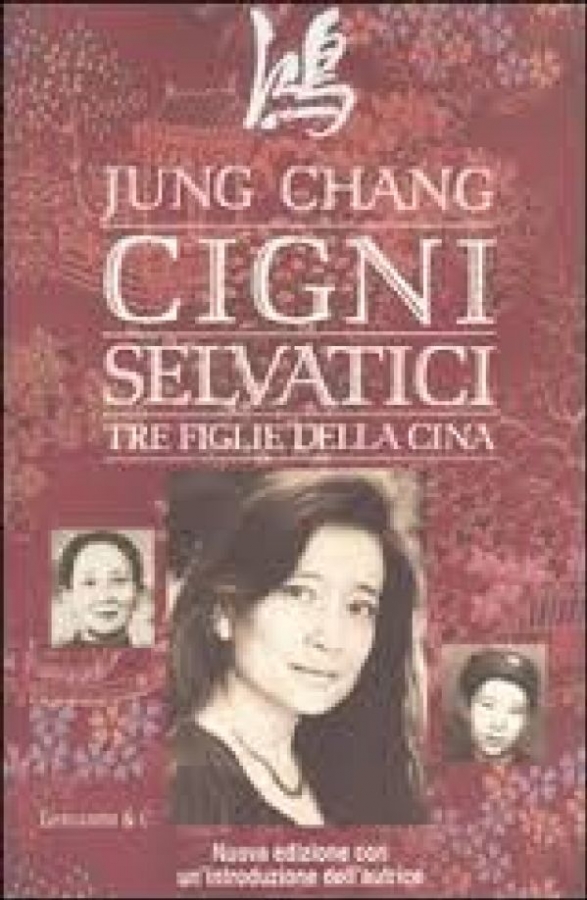
Wild Swans: Three Daughters of China
The book traces the history of China from 1909 to 1978: from feudal and imperial China to the end of the Cultural Revolution, through the Japanese invasion and the struggle for independence, the civil war between the Communists and the Kuomintang, Mao's victory and the birth of the People's Republic, the long years of perpetual revolution waged by the Red Guards, and the ensuing social upheavals. These dramatic events are recounted from the perspective of three women: the grandmother, still a prisoner of traditional society; the mother, who embodies the figure of the emancipated Chinese woman; and finally the daughter, Jung Chang, protagonist and narrator, an expression of the new China. The narrative concludes with Chang’s departure for America. It is a vast historical fresco, so detailed as to become a sort of reportage (neither essay nor novel), with the consequence of flattening individual lives and fragmenting major political and social events, rendering them inexplicable. Summarizing the book is pointless; it is far more worthwhile to dwell on certain fundamental themes. What does it mean to live inside a grand myth that dissolves slowly yet inexorably? The young Chang grew up in the cult of Mao, and until the very end attempts to salvage his figure. > What had turned people into monsters? Why all that useless brutality? It was then that my devotion to Mao began to waver. (...) Doubts about Mao’s infallibility began to creep into my mind, but at that stage, like other people, I blamed mostly Mao’s wife and the Cultural Revolution Authority. Mao, the deified emperor, was still above suspicion . Then, she somehow justifies him. > Mao found the idea of peaceful progress suffocating: he was a restless military leader, a warrior-poet, and he needed action—violent action . And finally, she reaches a definitive turning point: her certainties collapse, shattering her very bond with China. > Now I asked myself: if this is paradise, what then is hell? (...) somewhere in the world there really did exist a place laden with even greater suffering. (...) It was in that frame of mind that I composed the poem. I spoke of the death of my indoctrinated and innocent past as dead leaves torn from a tree by a whirlwind and carried away into a world of no return. What also fractures her deep devotion to Mao is the conflict between familial bonds and communal values. Chang’s mother risked her life for the liberation of China and for the communist ideal, yet because of her independent nature and her regard for life’s authentic values, such as friendship, she is singled out for public disapproval. When she asks what matters she must seek instructions on from the Party, she is answered: “All of them.” There is no individual space. > My mother was eighteen, had just married, and was full of hopes for a new life, yet she felt miserable. (...) She found she could not blame the Party, which seemed to her to be in the right, so she blamed my father—first for getting her pregnant, and then for failing to support her when she was attacked and rejected . Chang’s decision to leave China is also an escape from the fate of her mother, who had so thoroughly internalized the Party’s authority that she failed to realize that the appeal to communal values was hypocritical and absurd, serving only to justify absolute power. In Chang’s detachment from her native country, in her rejection of her homeland and her idealization of the West, her father also plays a part—a man whose devotion to communism is absolute, a man “faithful above all to the revolution.” Yet when he was forced to burn his books, he broke down into a > heart-wrenching, faltering, and wild weeping, the crying of a man unaccustomed to shedding tears . The only response is affection—a “bourgeois” weakness condemned by the Party. > I was so terrified that at first I dared not do anything to comfort him. In the end, I put my arms around him from behind and held him tight, but I did not know what to say. (...) After the bonfire, I had a distinct feeling that something in his mind had changed : Madness is the only outcome of a life wholly consecrated to political faith. The long historical sweep has a happy ending for Chang (she wins a scholarship and is able to go to America), but ends poorly for China: a place no longer loved by the young woman. It would have been a compelling theme had it not been handled by a hybrid book: it is not a work of history because history, to be useful, can only be studied “from above,” so as to provide an overarching view; nor is it a novel, because that would have required a narrative style richer in language and imagery, demanding a deeper exploration of the characters’ feelings and interpersonal relationships, paring back the minutiae rather than merely describing, striving instead to convey and articulate the cultural and social climate. In short, one cannot speak of a place if one no longer loves it. One cannot write history from a microcosm. Why not read it? It is long, flat, prolix; it does nothing to help understand China’s recent history.
The Black Swan
> I went on living and writing. Without enthusiasm, living and writing. (...) With supreme indifference, I watched my young female colleagues, laden with charm and sacred zeal, pass me by without even elbowing me. I myself stepped aside to make way for them . This opening of the novel leads the naive reader to believe they are facing the story of a girl, with “a face like so many others,” searching for herself in the Milan of the 1980s—an up-and-coming, aggressive city greedy for money. A suspicion should arise from the young woman’s improbable name: Arlette, the byline of an advice column in a periodical titled *Dialoghi dʼamore*. All the same, the novel’s clever literary construction would seem promising: the present is narrated by Arlette, while the events that led to today—the 1940s and 1950s—are written in the third person, thereby distinguishing Arlette’s discovery of her life as the fruit of the past from the objective narration of the facts and figures that shaped that past. As one reads on, one realizes that this initial impression is an illusion: we are faced with a missed opportunity. The plot is so far-fetched as to become banal. The setting is the Lombard upper-middle class, forever teetering between Milan and Switzerland. At the beginning of the 1940s, Edison is a shrewd, unscrupulous entrepreneur; with the money of his wife, whom he cheats on repeatedly and openly, he has built a publishing empire. He has an affair with a young female writer, who leaves him when Edison refuses to publish a novel of hers. The wife, instead of following the mistress’s example and leaving her husband, bears it patiently: for the love of her children, like any good mother? out of self-interest, like any good daughter of the bourgeoisie? We will never know, for the novel utterly lacks any character depth. Edison’s wife has a brief affair as well, though not with an ordinary person—none other than a monsignor. When we return to the present, we learn that Arlette is the daughter of Edison’s mistress and has had an affair with Edison’s son. Don’t panic! We are not dealing with incest, because Arlette was fathered by another man; even if Casati Modignani has a penchant for the sordid and the morbid (in one episode, children peek through a peephole at women urinating), there is a limit for a respectable bourgeois writer! From Arlette’s love affair a baby girl was born, heiress to the great publishing empire following her father’s suicide, committed, of course, in an exceptional setting: a suite at the Grand Hotel in Rimini. This brief synopsis offers a taste of a story fraught with intrigue—the kind that ought to surprise us, but instead falls completely flat, because after just a few pages the naive reader realizes that anything is possible. Boredom sets in; but what irks most is the worldview: the male figures are mature, wealthy, powerful men; the female figures are fragile women resigned to a subordinate role, constantly in search of a lover or husband who can provide security and, naturally, a comfortable life. Are there no young men to fall in love with? Marriage is a peaceful harbor, where one sees not > glittering rainbows, but (...) the sweet naturalness of two spouses tested by a life lived together . One dreams of an ordinary life, far from the intrigues of a bourgeoisie ravenous for power and money, while still enjoying its perks. There is nothing wrong with writing about the upper-middle class; what rankles, perhaps, is the shallowness with which the author handles dramatic and momentous events, such as the Second World War and the Resistance—the latter’s depiction steeped in platitudes. What cannot be excused, however, is the vacuity of the characters and the thinness of the settings (the descriptions of drawing rooms and gardens resemble those of interior decorators, cold and impersonal). Casati Modignani cites a nineteenth-century poet and educator: > so on the ocean of life we pass and speak to one another. A look and a voice. Then darkness once again . That may be true, but one must give voice to people, to characters; one must speak of their feelings and their stories, not merely ones fashioned out of intrigue, power, luxury, and money. Why avoid it? It is truly dreadful! Insignificant, tedious, and superficial.
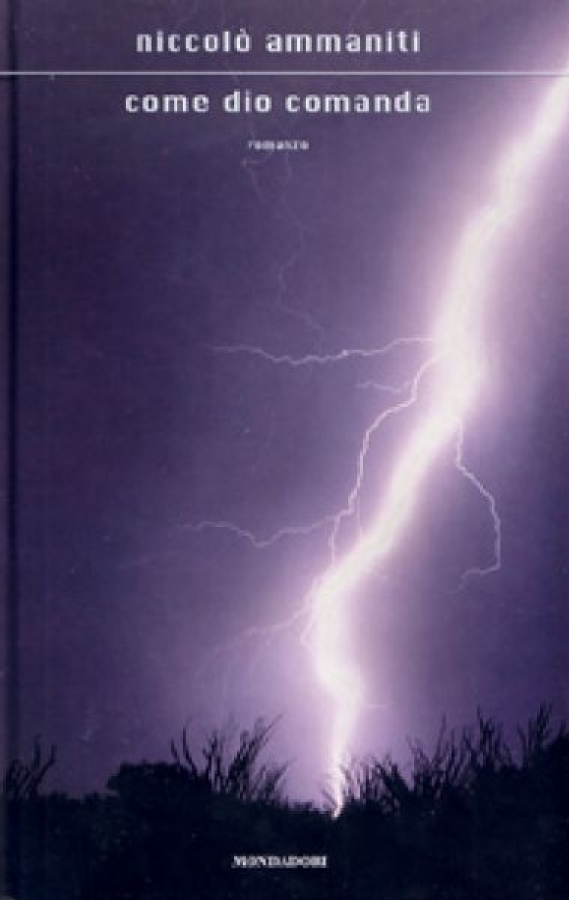
As God commands
A poor book, certainly not on the level of his previous ones. A group of friends live in the provinces, revolving around a young boy who inhabits a bleak and squalid environment. The characters and their stories are pushed to the point of absurdity. The boy's father is a Nazi fanatic, obsessed with brute strength yet fundamentally good-natured and deeply devoted to his son; another friend is an alcoholic, recently separated from his wife, who dies attempting a bank robbery; yet another is mentally disabled and, in a fit of madness, murders a girl before taking his own life. The underlying theme of the book is the strong bond between father and son: an affection that manages to survive and grow even in a squalid environment and among characters seemingly governed by absurd myths. Another positive character is a social worker who helps the boy and eventually finds love. As Francesco Troiano wrote > Ammaniti paints, beyond the plot, the portrait of a country devastated by vulgarity and consumerist flattening: the men have dyed hair and the women designer sunglasses, they vacation at Valtur holiday villages or at the Coral Bay in Sharm el-Sheikh, buy their mobile phones at "Cellulandia," and shop at the "Quattro camini" shopping center > . All around, the misery of those who did not make it, depicted nonetheless without indulging in facile sympathy: the ferocity, perhaps not entirely conscious, of the poor explodes—as it already did in *Io non ho paura* > —in devastating and unpredictable ways that leave no room for justifications of any kind . It is a treacle of episodes, sentiments, and social themes that lapses into the tedious and the predictable.
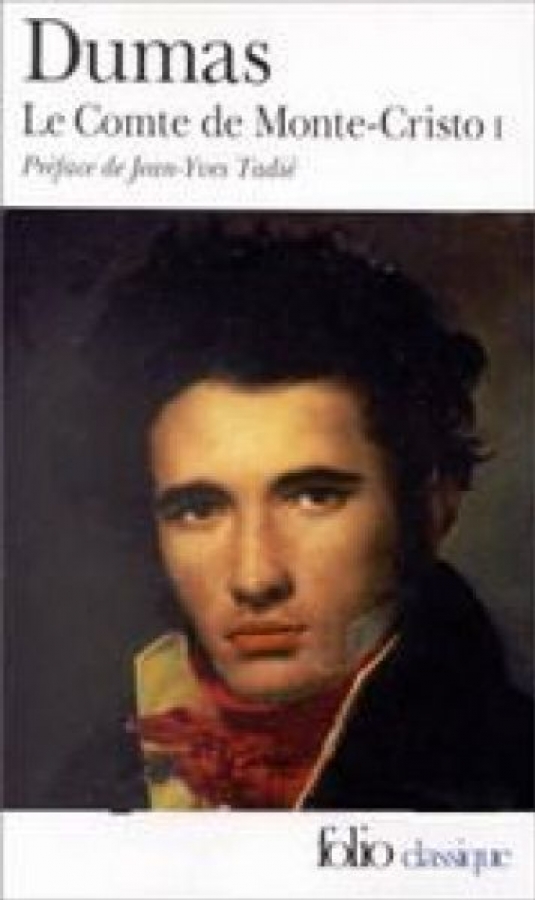
The Count of Monte Cristo
The plot of the novel is well known. Edmond Dantès is wrongfully imprisoned. He manages to escape, becomes immensely wealthy, and consequently devotes his life to vengeance through a series of deceptions and acts of cruelty. The novel appears to have been inspired by a true story. It unfolds across three distinct levels: adventure, sustained only at times by a gripping pace, as in the first part (the imprisonment, the acquaintance with Abbé Faria, and the escape) and at certain subsequent moments. All too often, the novel develops in a slow and tedious manner, even in the face of surprises and plot twists; the setting, which emerges from the description of Rome, of the island of Monte Cristo itself, and of Parisian society. In some instances, it is an effective, if somewhat mannered, fresco (as in the case of Rome); in others, one is confronted with a superficial and hurried description; the superhero, embodied in the figure of the Count of Monte Cristo—a hero who proves to be negative, insofar as he pursues his revenge with a sadism and a voluptuousness that cannot be justified solely by a desire for justice. From this perspective, the novel’s “villains” appear far more vivid and real; they are, in fact, the true characters, endowed with a depth of their own and driven by contradictions that make them human. The novel is repetitive and tedious, and it is truly difficult to make it all the way to the end.
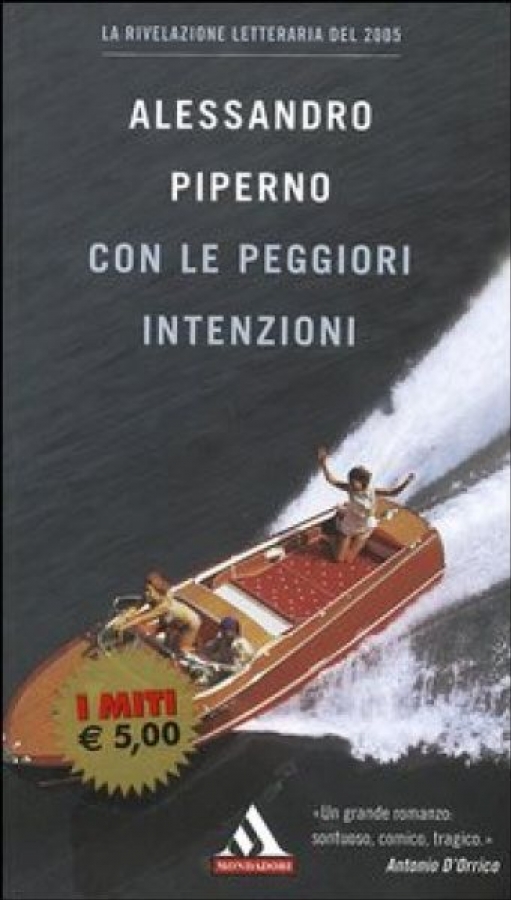
With the Worst Intentions
The book is set within the affluent Roman bourgeoisie (*pariolina*) of the 1970s and 1980s. A Jewish family, the Sonninos, leads an extraordinarily luxurious and lavish life, even as they weather periods of great prosperity, bankruptcy, and eventual financial recovery. The patriarch, grandfather Bepy, lives in absolute dissoluteness, shaping—for better or worse—the fate of his entire family, his children and grandchildren alike. The Sonninos' story intersects with that of the Cittadinis, whose patriarch, Nanni, was once Bepy's business partner before steadily amassing an even greater fortune, ennobling himself through marriage to a princess. Nanni, too, has dictated the lives of his kin: a son who commits suicide, an alcoholic grandson, and a granddaughter, Gaia, with whom Bepy’s grandson, Daniel, is in love. A primary narrative thread running through the book is the saga of the two families, almost a Roman *Buddenbrooks*. Yet these family chronicles merely serve as an occasion to depict paradoxical characters and settings—in the vein of Jeffrey Eugenides’s *Middlesex*—and to stage Daniel’s personal search for lost time, vaguely reminiscent of Proust. The theme of Jewish identity is also present, with touches and echoes of Woody Allen. It is, therefore, a book heavily indebted to other literary influences, and the style itself calls to mind Saul Bellow or *Barney’s Version*. The pacing and structure are engaging at first, only to grow increasingly tedious, repetitive, and predictable. The excessive reliance on the interrogative form and the jumble of idioms and languages fracture the narrative, which is sustained neither by a thorough depiction of its context (the portrayal of the Roman bourgeoisie comes across as superficial and in some respects inauthentic, given the protagonist's cosmopolitan background) nor by an incisive analysis of the characters, their feelings, and their emotional and spiritual evolution. Perhaps the most genuine aspect of the novel is its portrait of youth: an intellectual, ironic take on the coming-of-age tropes of Moccia.
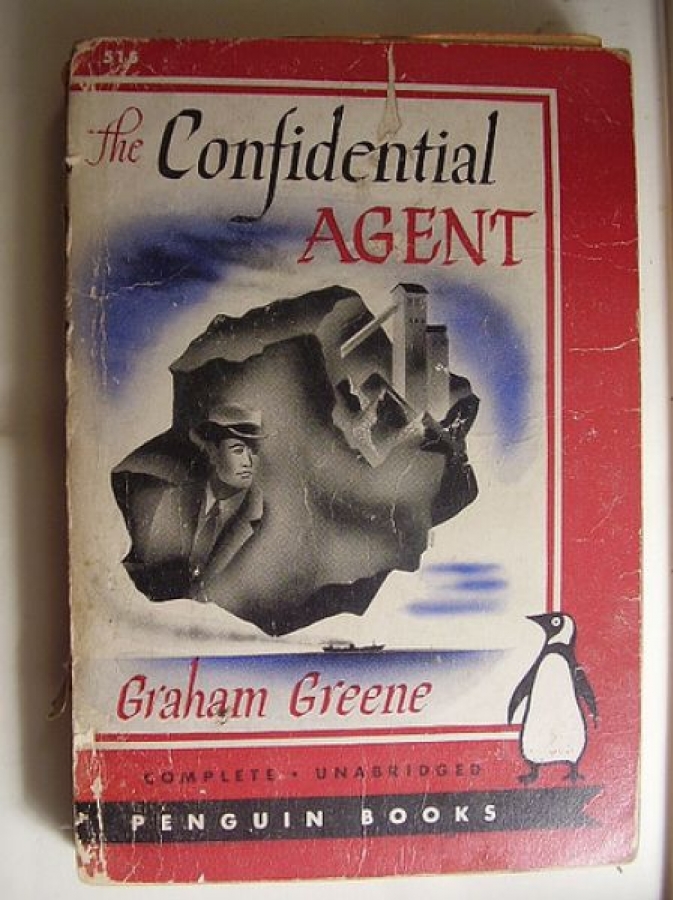
The Confidential Agent
The novel is set in England, where a secret agent must negotiate the purchase of coal for his country at war. The book is dull, perhaps because it is not so different from Greene’s other adventure novels, and in any case it lacks the irony and narrative pace of *Our Man in Havana*.
The context
The book recounts the story of Inspector Rogas, who is called upon to investigate the murders of a series of magistrates. The inspector identifies a lead (a wrongly convicted man exacting revenge), but is diverted by his superiors toward a politically motivated track. Pursuing this line, he discovers a plot to assassinate an opposition politician in order to thwart a potential alliance between ruling and opposition forces. Shadowed, a staged crime scene is orchestrated in which the inspector has supposedly killed the opposition leader, only to be slain himself. A friend of the inspector approaches the new head of the opposition to disclose the truth, but is persuaded to back down for the sake of “social peace”. Written in 1971, the book bears the heavy imprint of the era of the Historic Compromise and terrorism; it reflects all too heavily the political dilemmas of that historical juncture, rendering the narrative sluggish, prolix, and largely unengaging. The author’s fundamentally pessimistic outlook regarding any genuine prospect of change in our country is reaffirmed, yet the narrative drive of his other novels is absent, and the underlying irony drowns in tedious philosophizing.
The Corsairs of Bermuda
The book belongs to the Bermuda cycle. The context is the American War of Independence (thus the mid-eighteenth century) and the protagonist is Sir William, an English nobleman of French descent who has become a privateer to fight his half-brother, the cruel Marquis Halifax, who seeks to take his beloved from him. Unhappy love and the grand poetry of the sea seem to be the novel’s points of reference: > ah! that night! embraced on the sand dunes, we listened to the sonorous rhythm of the waves. It is a divine music, a music worth all those created by instruments of brass, of copper, of bronze . And at the beginning, one witnesses a naval battle, just as in Salgariʼs finest novels. Subsequently, the plot takes another direction. The beloved is held prisoner in Boston, a city in British hands and under siege by the Americans. Sir William, together with his stalwarts, Testa di Pietra and Piccolo Fiocco, infiltrates the besieged city, and they attempt to free the woman. A series of adventures follows, but in the end, the cruel Marquis of Halifax manages to escape with Sir Williamʼs beloved. The narrative pace is sluggish, weighed down by the constant exchange of jokes and banter between Testa di Pietra and Piccolo Fiocco: dialogues dominate, relegating the action to the background. On the other hand, the novel’s true protagonist is Testa di Pietra, his cunning, his peasant wisdom, his nostalgia for his native land. Brittany. Yet Salgari fails to depict sentiment. Deprived of action and of characters who are both brooding and heroic, the narrative loses its allure and turns tedious. Why not read it? The sea, love, and tragic destiny are nowhere to be found: the true Salgari, then, is absent.
Cosmopolis
Eric Packer is a brilliant young financier who loses and makes millions of dollars in a matter of seconds, speculating on currencies and the stock market. The novel chronicles a single day in which Eric travels across the city in his limousine, alternating between fleeting sexual encounters, hurried breakfasts, traffic jams caused by violent protests and the funeral of a music idol, a doctor's examination, and the constant monitoring of the yen's performance—a currency against which he is losing millions of dollars. If at first the narrative seems surreal and ironic in its aim to depict the absurd life of a young man of finance, at a certain point in the novel one realizes it is heading toward tragedy. In reality, Eric's own life, well shielded by bodyguards and his limousine, is threatened by a wave of attacks—some far-off—targeting figures in the financial world. As the day unfolds, the barriers—both psychological and physical—that separate the young millionaire from the violent world surrounding him begin to fall. Eric moves toward death (he will be killed), yet he almost seems to crave and seek it out to escape a life that might become burdensome and unbearable if he can no longer relish the thrill born from the pursuit of money. > He understood what he was missing, the predatory impulse, the sense of great excitement that guided him through his days, the pure and intense need to live . The novel's premise is undeniably brilliant and unfolds on multiple levels: the protagonist’s existential crisis (he wakes up longing to go to the barber like an ordinary man), the depiction of a chaotic and absurd city, the hurried human interactions typical of the business and information age, and ultimately death as an inescapable denouement. The plot as a whole, replete with baffling episodes and characters, along with an exceptionally demanding linguistic structure in terms of both vocabulary and syntax, conspires to make the reading experience cryptic and ponderous. The book is fittingly dedicated to Paul Auster, as the intellectual imprint of this author—a hallmark of many New York writers—predominates.
The Quince of Istanbul
The quince is > the only fruit that with time can make its fragrance grow stronger rather than languish. It is ugly, full of bumps, but with time it grows rounder, softer, more beautiful and feminine . The tale is the chronicle of a tenacious love, for a land and for a woman. The land is Bosnia, “the land of long loves and long grudges.” The woman is Masa, “a Tatar face, eyes like black grape berries.” Fate has it that the woman’s fiancé is arrested just days before the wedding. Masa, > flowing dark copper hair, stubborn as a partizanka and strong-willed as a Bosniak woman , waits for her man for ten years (in fact, in the meantime she marries and has two daughters, but it is an interlude of no consequence in the tale, whose purpose remains baffling). When the man returns, after a few days he is killed by a grenade, and then > for Masa the beautiful... an affair ended that had lasted ten years of waiting—if you catch my drift—and ten days of leave . It is at this point in the story that Max steps in, an Austrian engineer who falls in love with Masa and through her with Bosnia and Sarajevo, because > nowhere can you better understand the destiny of Europe... where the last illusion (of great universal brotherhood) had died, toward the houses around the airport riddled with the marks of Armageddon . Yet Max’s great love for Masa is also destroyed, this time by the tumor that will lead to her death. At the news of Masa’s loss. Max becomes convinced that > only one thing could have halted that cursed fate: it was the fruit he was supposed to fetch, and perhaps had not fetched in time, the mysterious zuta dunja, the yellow wonder of the imperial city. And instead Masa, the belle of Bosnia, with eyes like black grape berries, had died aman aman without ever receiving that quince awaited from Istanbul . And so Max sets off on foot in search of the quince. At this point, the story becomes so muddled that all we can say is that Max dies mysteriously in an Istanbul hotel. It often happens that a writer who is very accomplished in one literary genre seeks to test himself against domains, narrative structures, and modes of writing that are not congenial to him, with failure as the result. Consider Ken Follett, who with *Eye of the Needle* had written a fine thriller, only to then devote himself to massive historical novels, through which it became abundantly clear that he was neither Tolstoy nor Victor Hugo. Such is the case with Rumiz, an excellent journalist who set out to tell a story, already muddled in its own right, in the form of a long ballad. What came out of it is a verbose, fragmented, tedious, irritating singer-songwriter ballad. Relying on suggestive impressions and evocative effects may work well for a song consisting of a few stanzas, but enduring all this for some two hundred pages is truly too much. The truth is that not everyone knows how to craft an epic poem! Why skip it? It is irritating, superficial, and dull.