Finished reading on: July 15, 2007
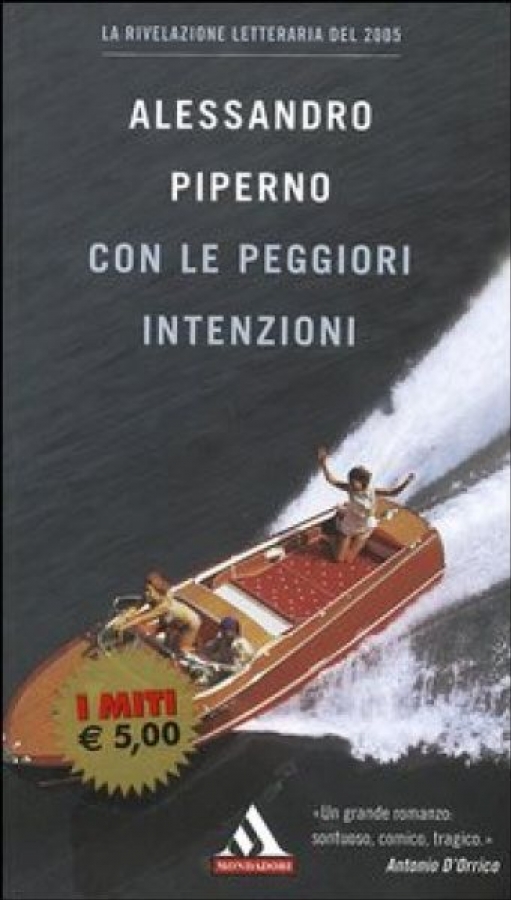
With the Worst Intentions
Title of the original version reviewed: «Con le peggiori intenzioni»
AI Translation Notice: This review was translated from the original Italian using artificial intelligence. Book quotes and excerpts are translated interpretations and will not match the author's original English phrasing or official published translations.
The book is set within the affluent Roman bourgeoisie (pariolina) of the 1970s and 1980s.
A Jewish family, the Sonninos, leads an extraordinarily luxurious and lavish life, even as they weather periods of great prosperity, bankruptcy, and eventual financial recovery.
The patriarch, grandfather Bepy, lives in absolute dissoluteness, shaping—for better or worse—the fate of his entire family, his children and grandchildren alike.
The Sonninos' story intersects with that of the Cittadinis, whose patriarch, Nanni, was once Bepy's business partner before steadily amassing an even greater fortune, ennobling himself through marriage to a princess.
Nanni, too, has dictated the lives of his kin: a son who commits suicide, an alcoholic grandson, and a granddaughter, Gaia, with whom Bepy’s grandson, Daniel, is in love.
A primary narrative thread running through the book is the saga of the two families, almost a Roman Buddenbrooks.
Yet these family chronicles merely serve as an occasion to depict paradoxical characters and settings—in the vein of Jeffrey Eugenides’s Middlesex—and to stage Daniel’s personal search for lost time, vaguely reminiscent of Proust.
The theme of Jewish identity is also present, with touches and echoes of Woody Allen.
It is, therefore, a book heavily indebted to other literary influences, and the style itself calls to mind Saul Bellow or Barney’s Version.
The pacing and structure are engaging at first, only to grow increasingly tedious, repetitive, and predictable.
The excessive reliance on the interrogative form and the jumble of idioms and languages fracture the narrative, which is sustained neither by a thorough depiction of its context (the portrayal of the Roman bourgeoisie comes across as superficial and in some respects inauthentic, given the protagonist's cosmopolitan background) nor by an incisive analysis of the characters, their feelings, and their emotional and spiritual evolution.
Perhaps the most genuine aspect of the novel is its portrait of youth: an intellectual, ironic take on the coming-of-age tropes of Moccia.