Niccolò Ammaniti
Books by this author (3)
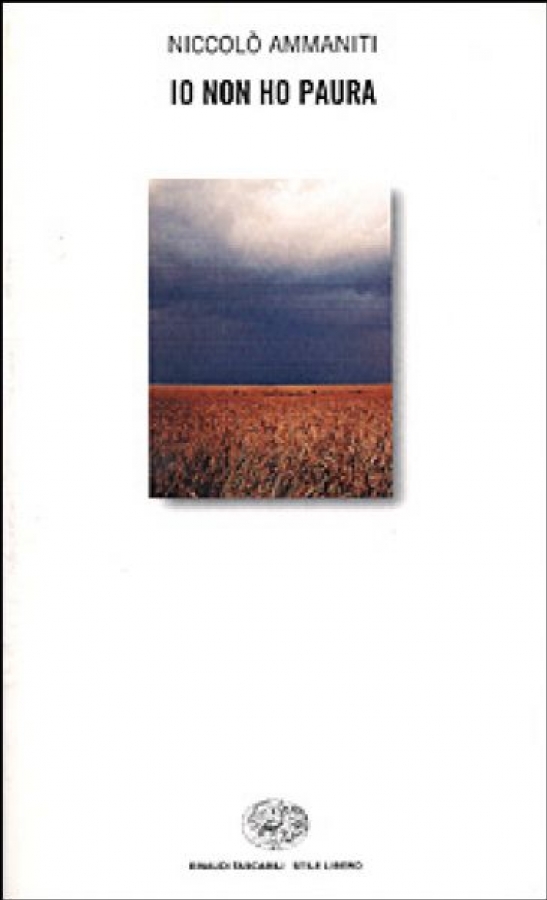
I'm Not Scared
The novel revisits the theme of the author's previous book: the squalor of the domestic and social environment set against the innocence of childhood. Michele lives in a small village, and during an outing with friends, he discovers a child who has been kidnapped and imprisoned by a group that includes his own father. A spiritual and psychological journey thus unfolds, throughout which Michele achieves autonomy from his parents, culminating in a desperate dash to save the abducted child from the threat of murder by his captors. He manages to save him, but is shot by his father, and «now it was dark again and there was Papa and there was me». Unlike in the previous book, the contradiction between familial and clan ties (ever defined by affection and protection) and the immorality of the kidnapping—a collective act implicating the entire village—becomes far more evident. It falls upon a young boy, Michele, to reorder his hierarchy of values, even at the expense of family bonds. It is thus a portrait of Italian society that transcends its immediate setting (the small village) to become emblematic of a broader cultural climate. The sun-drenched landscape and vast horizons, paired with the claustrophobic confinement of the spaces (splendidly rendered by the author), are an integral part of the narrative, articulating the contrast between a closed, desolate world and the yearning for greater freedom and clarity of emotion and values. It acutely reflects a society, and its individuals, poised between a hollow present and a future of greater substance. With this novel, the writer has achieved a greater tightness of style and narrative rhythm, producing a work that is deeply evocative as well as a compelling read. It is undoubtedly a novel of exceptional narrative and thematic caliber.
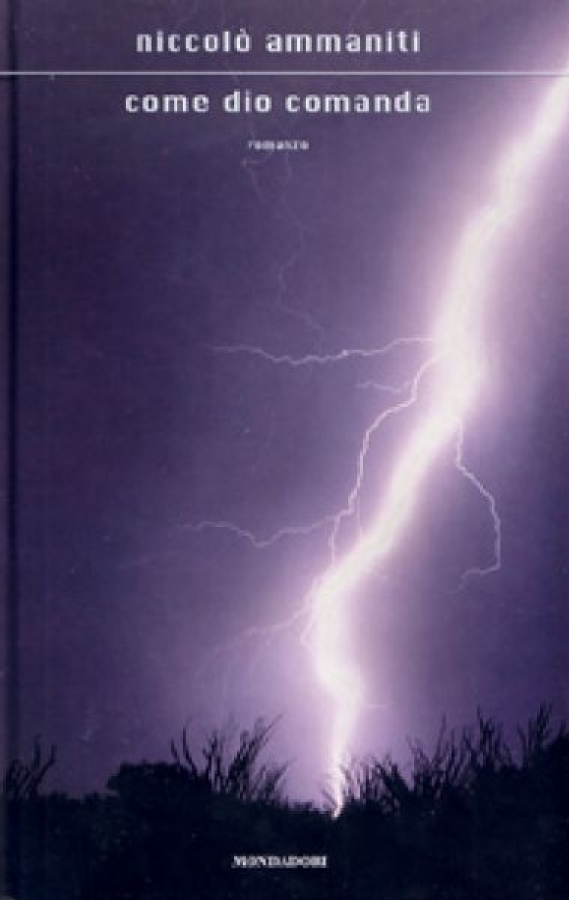
As God commands
A poor book, certainly not on the level of his previous ones. A group of friends live in the provinces, revolving around a young boy who inhabits a bleak and squalid environment. The characters and their stories are pushed to the point of absurdity. The boy's father is a Nazi fanatic, obsessed with brute strength yet fundamentally good-natured and deeply devoted to his son; another friend is an alcoholic, recently separated from his wife, who dies attempting a bank robbery; yet another is mentally disabled and, in a fit of madness, murders a girl before taking his own life. The underlying theme of the book is the strong bond between father and son: an affection that manages to survive and grow even in a squalid environment and among characters seemingly governed by absurd myths. Another positive character is a social worker who helps the boy and eventually finds love. As Francesco Troiano wrote > Ammaniti paints, beyond the plot, the portrait of a country devastated by vulgarity and consumerist flattening: the men have dyed hair and the women designer sunglasses, they vacation at Valtur holiday villages or at the Coral Bay in Sharm el-Sheikh, buy their mobile phones at "Cellulandia," and shop at the "Quattro camini" shopping center > . All around, the misery of those who did not make it, depicted nonetheless without indulging in facile sympathy: the ferocity, perhaps not entirely conscious, of the poor explodes—as it already did in *Io non ho paura* > —in devastating and unpredictable ways that leave no room for justifications of any kind . It is a treacle of episodes, sentiments, and social themes that lapses into the tedious and the predictable.
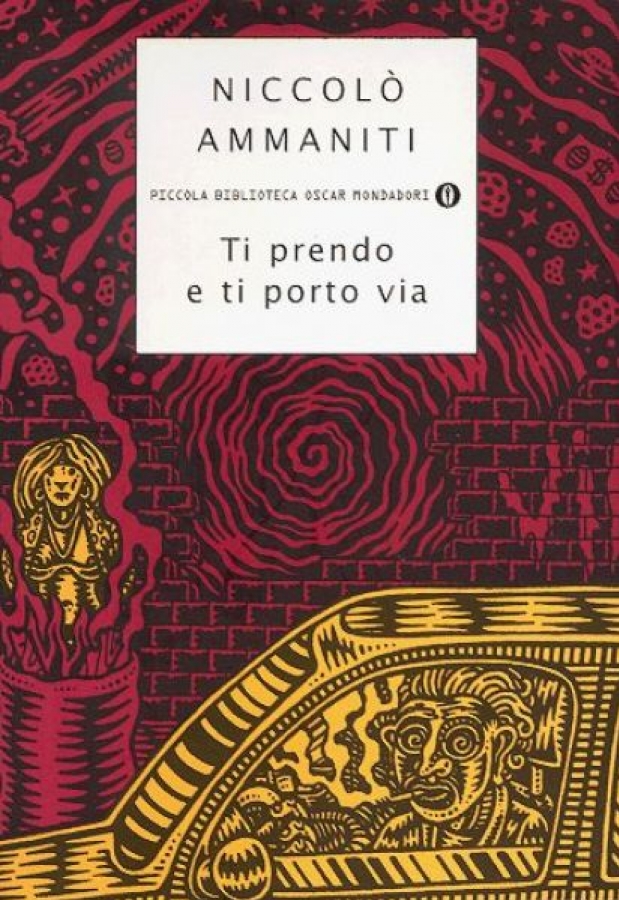
I'll take you and carry you away
It is a book that complements the previous one. Set in the provinces, it recounts a squalid context inhabited by characters marked by a profound sadness over the bleakness of their dead-end lives: the group of violent youths predestined for crime or for an opaque existence like that of their parents; the family of Pietro, the protagonist, defined by the mother’s depression, the father’s violent alcoholism, and the brother’s mediocrity; Graziano Biglia, a squalid provincial *vitellone* who does not even realize he is in love with Flora; and Flora herself, who leads a hard but orderly life caring for her sick mother, until she meets Graziano, becomes pregnant with his child, and is subsequently abandoned, sinking into a state of depression and neglect: “didn’t you know, perhaps, that promises are made to be broken?”. So Flora says on the terrible evening when Pietro kills her. In this provincial setting, a friendship develops between Pietro and Gloria, who, despite coming from very different social backgrounds, forge a bond that cannot help but blossom into a love story. Yet Pietro cannot endure it, and the murder of Flora constitutes, essentially, a way of escaping such a desolate environment. > I understood why he had done it. To fight an evil thing inside us that grows and turns us into beasts. He cut his life in two to be rid of it... I didn’t want to end up like Mimmo... I didn’t want to become like them . Only murder, a violent and irreversible act, shatters a situation that feels destined only to worsen. The desolation lies not only in the present, but above all in the impossibility of a better future and a world devoid of prospects. The style is highly effective, shaped by an ensemble of episodes and characters moving within the realm of chance and unpredictability. The narrative pace is intensely sustained, making it a thoroughly compelling book to read.