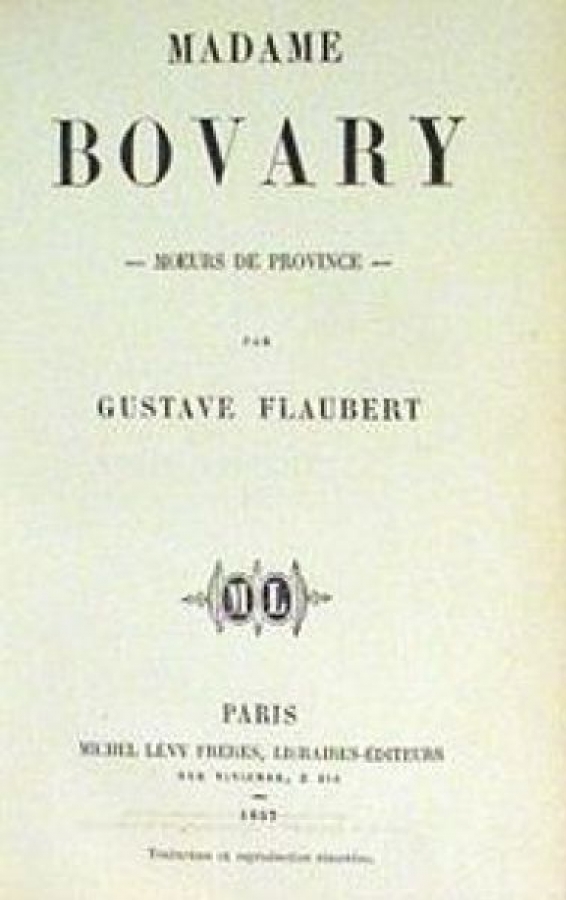
Madame Bovary
The novel recounts the fortunes of Madame Bovary, who, married to a provincial doctor, attempts to escape a prosaic and tedious existence by pursuing a series of affairs and leading an extravagant lifestyle—choices that ultimately lead her to financial ruin, emotional desolation, and, inevitably, suicide. It is a celebrated novel, widely considered the wellspring of nineteenth-century realism, which tackles the theme—subsequently taken up by numerous other authors—of the pettiness of bourgeois morality. At heart, Emma Bovary pursues a dream of happiness, striving not to be trapped within the mediocrity of everyday life. Surrounding her, by contrast, hypocrisy, the pursuit of money, social ambition, and the like prevail. In truth, Madame Bovary is herself a child of her time: there is no genuinely romantic sensibility within her, no sense of guilt, and she is willing to resort to any falsehood to achieve her ends—which are, in reality, modest, such as meeting her lovers, buying elegant dresses, and so forth. The third part of the book, unquestionably the finest, which portrays the events leading to Madame Bovary’s death, is conducted in an almost illustrative manner. The characters, in fact, emerge as cold and flat, devoid of even the slightest introspective probing into their motivations and feelings. Ultimately, this is a social novel that appears to have enjoyed a renown far exceeding its actual merits. It bears the heavy imprint of the nineteenth-century ethos and leaves little room, even in its style and narrative rhythm, for that lyricism so typical of our own day.
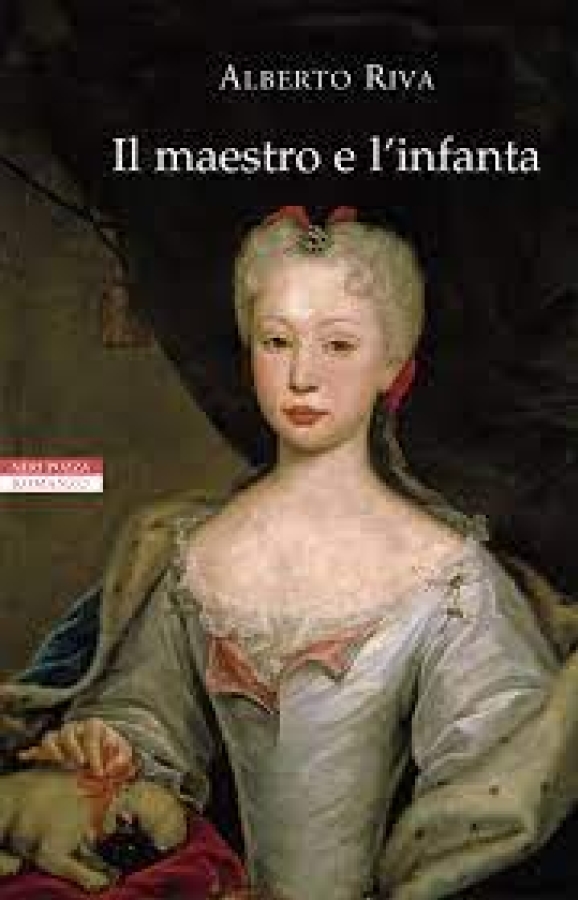
The Master and the Infanta
In Canto XVII of the *Paradiso*, in verses 43–45, Dante recounts that his ancestor Cacciaguida turns to music to explain his vision of the poet's impending exile: > thence (from the divine mind), even as to the ear comes / sweet harmony from an organ, so comes / to my sight the time being prepared for you . The sound of an instrument's strings, together with the sweetness of the voice, is a divine gift granted to humankind to soothe the wounds of both body and soul—and, for Dante, to endure the prophecy of his sorrowful wandering. Is this true, or is music merely a palliative? If we probe Alberto Riva's novel beneath the surface, we must conclude that while music induces a kind of wondrous bewilderment, it can do nothing to heal loneliness, depression, and madness. We are in the eighteenth century, between 1720 and 1758; Domenico Scarlatti, son of the more renowned Alessandro, arrives in Lisbon to become a musician in one of the wealthiest courts of Europe at that time. Domenico > is a man in his late thirties who looks a few years older, with a prominent knobby nose and eyes of a shifting hazel, distant, perhaps flawed by a slight squint: his skin is exceedingly pale and his clothes black, a resolute, mournful black. (...) For years, his father kept him bent, almost kneeling over the keyboard for hours on end every day, especially at night . Shy to the point of rudeness, he is certainly neither the classic cicisbeo nor a man of polished manners, as the elegant and vacuous society of the eighteenth century would demand. And perhaps precisely because of his sullen and independent nature, he is unwilling to endorse the sovereign's wish to stifle the musical inclinations of the Infanta, the plump and rather plain Maria Barbara. Instead, Domenico becomes her tutor, refining and exalting the girl's natural gifts; a bond is forged that will endure over time, even after Maria Barbara marries the heir to the Spanish throne and subsequently becomes queen. Any composer of the age, from Vivaldi to the singer Farinelli, would have seized upon such circumstances to secure fame and wealth. Not so Domenico Scarlatti; driven by a somber frenzy, he vanishes into taverns, where > he listens to imaginative arrangements transposed onto the strings, carried by female voices . In Inquisition-era Spain, he frequents the world of the gypsies, where he discovers that > within that Andalusian folk lay a buried civilization, and that civilization was music. That the guitarra is the unwritten book through which a history is handed down. But it is not just the guitarra: it is the hands, the voices, the fingers, even the feet. (...) They ask us why our singing is deep (explains the old gypsy). They ask us for the secret of cante.....And we answer: our singing is the search, our singing is the journey. (...) a mysterious drama, a drama without an ending . All his life Domenico pursues something indefinable, and finds it, perhaps, by wandering through the poorest, most disreputable quarters. > Anyone who had caught the maestro unawares on one of those nights would have seen him slightly slumped, an elbow on the table, one leg stretched out, a certain look in his eyes. (...) He looks at his hands: his relationship is with the instrument. (...) His relationship with the instrument is one of interrogation. Of progressive unveiling . Had it been up to Domenico, the musical exercises—the famous Scarlatti Sonatas—would have been lost: perhaps the musician deemed it futile to leave behind compositions incapable of soothing his *male oscuro*. It is to Maria Barbara's credit that we know them today. The novel's framework is something poised between historical reconstruction and an introspective inquiry into the two protagonists: Domenico Scarlatti and the Infanta Maria Barbara, as well as the idiosyncrasies of their relationship. Music, and the mysterious allure of the Sonnets, have prevailed over a narrative that might have placed the two protagonists on equal footing: Maria Barbara remains in the background, flattened by the duties and demands of her station; beyond the fascination of the musical exercises composed by the maestro, what truly bound Maria Barbara to a man so withdrawn and discourteous? The only significant element is Maria Barbara's stubbornness, her determination to preserve Scarlatti's work and bring him renown. Could a repressed love for the man have driven her? We shall never know, because the musical and biographical genesis of the Sonnets took precedence, consigning Maria Barbara once more to the oblivion from which the author had sought to rescue her. The prose is plain and flows placidly, neither attracting nor repelling. Only when the author depicts glimpses of Lisbon do impressions rich with vivid colors emerge. Here is Lisbon, perhaps frequented and beloved by the author: > something grim, that smell of dissatisfied souls, of unhappy men, (...) and then the city, opening onto an estuary that is already the sea, composed of shifting colors, of ascents and descents, of sudden azures, turquoises, ultramarine blues. > And the City understands/And kindles/ And the flame titillates and absorbs/ The magnificent remnants of the sun/And weaves a shroud of oblivion/ Divine for weary men . (Dino Campana, *Genova* in *Canti Orfici*).
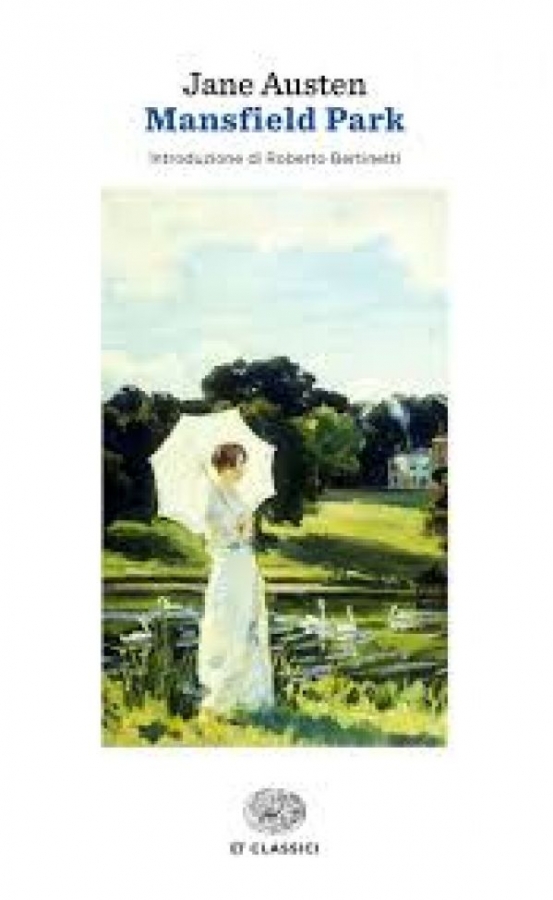
Mansfield Park
A ten-year-old girl, a poor relation, is taken in by her uncle, Sir Thomas Bertram, a wealthy landowner and an influential member of parliament and the community. From the very beginning, the rules must be made clear: > without depressing her spirits too far, to make her remember that she is not a Miss Bertram ; and Fanny Price lives up to expectations: small for her age, without any particular beauty, exceedingly timid, bashful, and retiring, > the consciousness of being a poor relation grew hand in hand with the conviction that for a creature as insignificant as herself it was only right not to be happy . In a conversation with her cousin Edmund, with whom she strikes a chord from early adolescence, Fanny states: > I can never be important to anyone; what should prevent it? (asks her perplexed cousin), everything, my situation, my lack of judgment, my plainness . Yet it is precisely this loneliness, this feeling of being an outsider, of always having to be mindful of decorum and social norms, that helps forge a strong, independent personality, steeped in steadfast ethical values. None of this causes her to lose her "bearings" when the entire family allows itself to be swept away by the allure of the theater; taking advantage of the absence of Sir Thomas, away for an extended period on business in the West Indies, they decide to stage a then-famous play, *Loverʼs Vows* (*Lovers' Vows*). It is a period of "general madness," as Edmund will later call it, in which everyone steps outside the rigid social roles to which they must adhere, to assume the guise of the various characters in a play considered licentious at the time for its plot and dramatis personae. The only one who obstinately refuses to take part is Fanny; this allows her to observe the behavior of the others, and in particular that of Edward Crawford, a brilliant young man who shamelessly courts Fanny’s elder cousin, despite her already being engaged. Upon Sir Thomas's return, everything appears to return to normal, with Fanny more highly regarded by her uncle for the virtuous demeanor she maintained throughout the "general madness." We arrive at a turning point. Up to this moment, Fanny appears as a somewhat prudish girl, still waters, even slightly opportunistic and subservient; her true personality will emerge fully when she must confront a grave danger for someone so independent: a man seeks to decide her fate. Edward intends to "conquer" Fanny; accustomed to being pursued by women, he has found one who keeps him at a distance, and all of this intrigues him. It may be a whim, yet the man appears to have serious intentions: he is generous, affable, and through his connections he has arranged for Fanny’s brother to be made a naval lieutenant; he is an eligible match who would provide wealth and security to the impoverished girl. Yet she, now eighteen, cannot accept him. > She was feeling, thinking, trembling, about everything; agitated, happy, miserable, infinitely grateful, enormously angry. (...) No, no, no, she cried, hiding her face, all this makes no sense, (...) I will not, I cannot bear it. I must not listen to such things. No, no, do not think of me. But you are not thinking of me. I know well that all this is nothing . If she manages to withstand Edward's assault with ease, it is far more difficult to defy her uncle. Sir Thomas, bolstered by his authority, attempts to persuade Fanny; astounded and indeed angered by her lack of gratitude and respect, he runs up against the girl's categorical refusal. > With eyes intently fixed on one of the windows, she listened to her uncle in the greatest perturbation and dismay . And to her uncle’s bewildered question regarding the reasons for her refusal, Fanny's answer is simple yet revolutionary for the era: > I cannot love him, Sir, well enough to marry him. (...) Have you any reason, child, to think ill of Crawford’s character? (asks the uncle kindly). No, sir, (...) and she would have liked to add, but I have of his principles, and her heart failed her to tell the father of Crawford’s misconduct toward her cousin. Fanny’s troubles are not over. First she must face Edmund, and he too attempts to convince her; then she is sent for several months to stay with her parents—a ploy by Sir Thomas to show her the wretched social conditions in which she might live in the future, should her uncle's support be withdrawn; it would be wise of her to accept Edward's offer, a marriage to a wealthy young man. The matter resolves itself: the play was not merely an interlude of "general madness"—it unleashed the forces lurking beneath the rigid surface of bourgeois life. Sir Thomas’s family falls apart; specifically, the cousin abandons her husband and elopes with Edward. For Fanny, the story has a happy ending: she returns triumphantly to Mansfield and marries her cousin Edmund. Approaching the novel from Fanny’s point of view is perhaps an obvious and reductive perspective, given the numerous characters, the underlying social issues, and in particular the role of the theater within the narrative, its demonic and liberating function: a theme that has drawn the attention of most critics, to the extent of claiming that it would be impossible to read the book without being familiar with *Loverʼs Vows*. Beyond the historical context, the question remains remarkably relevant today: how profoundly can an eighteen-year-old’s experience be shaken? Fanny’s tribulations undoubtedly strengthened her, bestowing upon her the character that allowed her to govern her own destiny; but is all this just? Ought the girl not to have been protected, granted the opportunity to grow up peacefully? These are the questions that keep the novel relevant today. The novel is very long and does not always sustain its narrative pace; the prose is typical of Jane Austen, intricate and complex. To be appreciated, the book must be read with care and patience, seeking its value in the details, in the unexpected and ever-incisive insights into character psychology, in the spirit of independence that animates the entire work, and in the sharp, unerring judgments on humanity and society. Why read it? It is somewhat long, but well worth reading, with patience and care.

The sea does not bathe Naples
Anna Maria Ortese returns to Naples, a city from which she has been absent for many years. Officially, she was commissioned to interview young Neapolitan writers, some already renowned, others destined to become so: Prisco, Rea, Incoronato, and La Capria. A long chapter recounts, precisely, her visits to these authors, and we come to understand how the city’s immediate postwar cultural and political awakening had by then dissolved, leaving behind disillusionment, resignation, and pessimism, and driving an exodus toward Rome and Milan. When she meets Prunas, the guiding spirit of the review *Sud*—by then defunct, yet around which so many intellectuals had once gathered full of ardor and hope—Ortese perceives > an infinite grief and curiosity: you must have pity, those extinguished eyes seemed to say, you must avoid looking. Is it true that we are dead?, he asked, is it true that we have been absorbed by the city, and are now at peace? (...) The city had destroyed him. And why should it not have destroyed him? All had fallen here, those who had wished to think or to act; all tongues had grown confused and had gone to swell the sorrowful human vegetation. This nature (Naples and its people) could not tolerate reason, and against man it mobilized its armies of clouds, of enchantments, so that he might be dazed and submerged. The journalistic inquiry is merely an expedient: the author wishes to lose herself, to become disoriented, to seek out a “vision of the intolerable,” possible only in a city, like Naples, in which everything is > conceived, imagined, dreamed, and even artistically realized, but not real: a disquieting representation . The book opens with several sketches of Neapolitan life, the most accomplished of which is undoubtedly the first, *Un paio di occhiali*. In a putrid, foul-smelling district, the sun touches only the highest balconies, while the rest is nothing but shadow and filth; yet the people joyfully greet the sunny day, as though > that air, that celebration, and all that azure suspended over the paupers’ quarter were also theirs. A poor girl, nearly blind, anxiously awaits the eyeglasses that her family has purchased for her with their meager savings. Yet can someone who has never seen what reality is truly like bear the sight of it? Is it not better to see everything blurred? > Eugenia, still holding the eyeglasses with her hands, walked as far as the doorway. (...) Suddenly the balconies began to multiply (...) the vegetable carts were tumbling down upon her; the voices filling the air, the shouts, the whipcracks, struck her head as though she were diseased. (...) So many holes, so many ants ; a sense of bewilderment seized her, reality was too intense to bear. Following these sketches—brief, elegant, and evocative—comes the account of a visit to a massive tenement building, which houses families who can no longer afford a decent apartment. The author is guided through the long corridors, from the first floor, composed of dark, foul-smelling dens, up to the third floor, where the dwellings are cleaner and brighter. The trajectory of those who enter the building is always the same: at first they reside on the highest floor, only to descend, inexorably, lower and lower. > The children, once neat and cheerful, in that darkness became covered in insects and their faces grew ever more somber and pale, the young women took up with married men, the men fell ill. No one ever climbed back up from down below. (...) There was something calling from down below, and whoever began to descend was lost, but only realized it at the end . The vast tenement is a metaphor for the anthropological, social, and existential condition of Naples, where the plebeians and the bourgeoisie coexist, mutually indifferent, like > shadow, weakness, neurasthenia, resigned fear, and impudent gaiety . In the preface to the 1994 edition, Ortese admits that > the writing of the *Mare* has something exalted, febrile about it; it tends toward a high pitch, borders on the hallucinatory: and almost everywhere on the page it exhibits, despite its rigor, a certain excess: in it, all the signs of an authentic neurosis are manifest . This judgment is the perfect diagnosis of the book: the individual pages, sentences, and words are often magnificent, rich, and capable of fully rendering situations and emotions; yet the whole remains disordered, confused, and unresolved, such that any conclusions must be drawn from the author’s own words. It is an outcry, a desperate indignation against a reality that is, for Ortese, “incomprehensible and hallucinatory”: the demise of the dream of Naples’ rebirth, and therefore a defeat. Why read it? It is exceptionally well written, and above all, the visit to the vast tenement possesses an astonishing vividness: a true masterpiece.
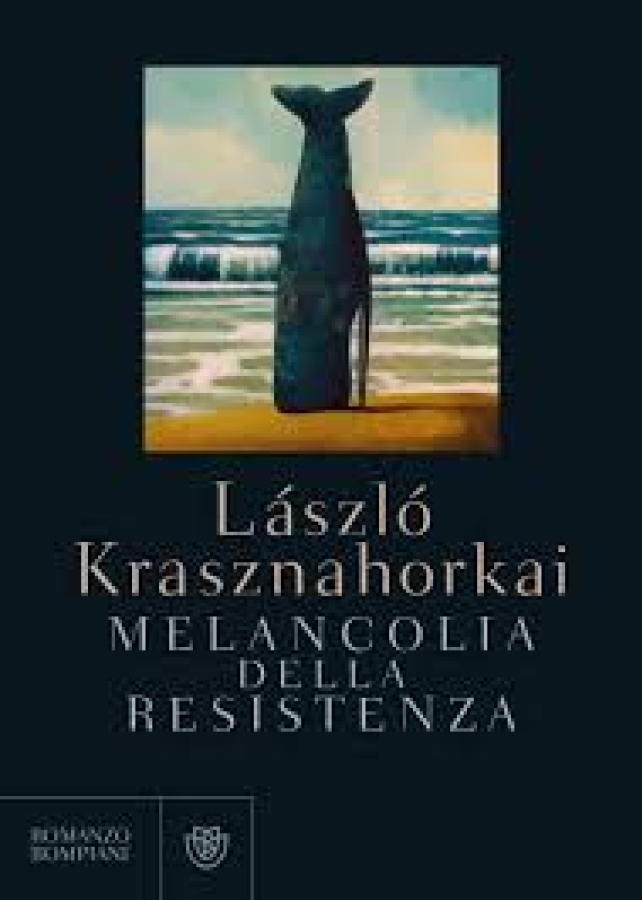
The Melancholy of Resistance
It is singular to open the review of a Hungarian novel by invoking Hideo Fukukawa's *Tokyo Soundtrack* (see the review on this site). It is precisely the geographical and cultural distance that makes the comparison compelling. While the Japanese narrative chronicles the environmental and social unraveling of Tokyo, here the same theme unfolds in a Magyar provincial town swept up in a slow, inexplicable disorder, as if > that lethal, utterly down-to-earth reality seemed irreversibly destined to evaporate. Numerous were the unmistakable signs: the garbage piling up in the streets without anyone collecting it, the increasingly frequent power outages, centuries-old trees collapsing, public transit in chaos, few and frightened people about, even hordes of cats, > enormous beasts, gone feral, (...) returned to the primal instinct of predators, witnesses and emperors of an announced twilight—yet apparently postponed indefinitely— , akin to the dogs and crows of *Tokyo Soundtrack*, and to the wild boars, coypus, wolves, and other wild animals that now roam our streets, alongside the triumphant rat population. > A quagmire over the swamp (...) was the ideal foundation for the situation, [with] the feeling that houses, trees, streetlamps, and advertising pillars were sinking into it. It is a prophecy, if we think of our world seeming to slide into an insidious future, with us living in "a hopeless waiting." It is no easy task to identify the narrative threads of a tale steeped in magical realism, deliberately confusing and fragmented (and how could it be otherwise, when what happens is no longer rational?), marked by extensive, even philosophical digressions, by an ironic and paradoxical tone reminiscent of Kafka. I shall attempt to do so by starting with the protagonists, who, as the great German scholar Erich Auerbach remarked of Dante's characters, are a "figural representation": human beings, with their personal destiny, and allegories of timeless ideas of decline and disorder. Let us take the first character, Mrs. Pflaum; we meet her in a hilarious scene: traveling on an overcrowded train, beside dirty and uncouth people, she herself so neat and orderly. Equally amusing is the description of the small house amid > the immaculate objects of the apartment, and everything seemed to her perfectly in order, (...) it was utterly clear that all those who, like her, lived in their quiet little nest , would avoid the terrible things happening outside. How many Mrs. Pflaums do we know who are certain that tending to plants, polishing furniture, and small daily routines protect them from devastating misfortunes! Then there is Valuska, > this exceptional artist of ecstatic life , convinced that he has found harmony in the perfection of the constellations; he gazes up at the sky so as not to see what happens on earth. He does not notice—or is quite content with the fact—that his drinking companions mock him when he reconstructs the Moon's rotation around the Earth with living bodies. How many of us seek refuge in abstract ideals to avoid grappling with reality? There is also the musician Etszter: he resigned as Director of the Conservatory upon realizing that piano tuning flattened sounds into an abstract and unnatural harmony, and now lives shut away in his apartment, playing an out-of-tune piano, pontificating on the irrationality of the real with his only pupil: the kind, simple-minded Valuska. How often are we forced to listen to authoritative philosophers on the crisis of the West, or rather on the Apocalypse awaiting the earth, because our European "City of Light" cannot defend the values of the Enlightenment and Christianity! And finally, there is Mrs. Etszter, with her enormous, sensual body, > feeling herself mistress of the future, she looked upon the town with the eyes of a bold heiress, convinced that she stood on the threshold of a radically new era, fraught with promise, which would sweep everything away. But just as occurred in the first decade of the twentieth century, when many signs portended the end of a world seemingly joyful and secure, yet it took the eruption of the First World War to overwhelm that golden age, so too the arrival of a circus displaying the mummified carcass of an enormous whale shatters the fragile, declining equilibrium; and nothing is ever the same again. To halt the looting and brutalities, directed perhaps by a mysterious figure known as the Prince (the devil, the personification of Evil?), one can no longer beat around the bush, take shelter in modest domestic peace, daydream about distant worlds, or philosophize about whether "the real is rational"; what is needed is the firm, energetic hand of one who knows how to command. The town readily yields power to Mrs. Etszter, the personification of authoritarian rule. We might sorrowfully stop here: it seems undeniable that only dictatorship can grant us that craved tranquility, our cherished little domestic habits. Yet, perhaps, > the workmen of destruction (commanded by the Prince?) are still at work. As in Thomas Mann's *Buddenbrooks* (see the review on this site), the final chapter is devoted to the body's dissolution in death: a detailed and precise description reminding us how man, in his long evolution, has seen > billions of restless things, poised for continuous change; he had seen how they engaged in stern dialogue with one another, without head or tail, each on its own; billions of relations, billions of stories, billions, yet reduced to a single one that contained all the others: the struggle between that which resists and that which attempts to overcome resistance. In a recent interview (*La Stampa*, October 25, 2025) Orhan Pamuk states that > too much ethics kills literature. (...) Literature is not meant to make moral judgments. It is an art of connections, of understanding. It allows us to enter the minds of people we do not like . And I would add: it answers humanity's need to listen to and tell stories, to become passionately invested in characters, to love and despise them; literature teaches us the complexity of the human being. All of this is missing in Krasznahorkai. To be sure, the characters are described as human beings, with their weaknesses and characteristic traits; but there is no psychological depth—they are treated ironically, without empathy, the prerequisite for understanding. This holds particularly true for Valuska, who is ultimately the protagonist. His description always remains on the surface, never going beyond a paradoxical depiction of him: > the postal greatcoat, along with the leather shoulder bag, cap, a pair of boots. But who is this young man, already destined for the asylum like the village idiot? What are his feelings? Why his trusting bond with the Conservatory Director? Everything remains unresolved. The novel's paramount merit is its writing: long periods, dense with parenthetical clauses, unfolding without interruption—a flow of words and sentences that grips the reader. It is an exhausting read; one must read many pages at a stretch to enter the narrative style, allowing oneself to be guided by the author through the narrative's numerous threads; yet after fifty pages or so, one must pause, catch one's breath, and summon the strength and willpower to continue. In the end, fatigue prevails, and, it must be admitted, one cannot wait to reach the end. Why read it? The writing is intoxicating, at times thoroughly amusing.
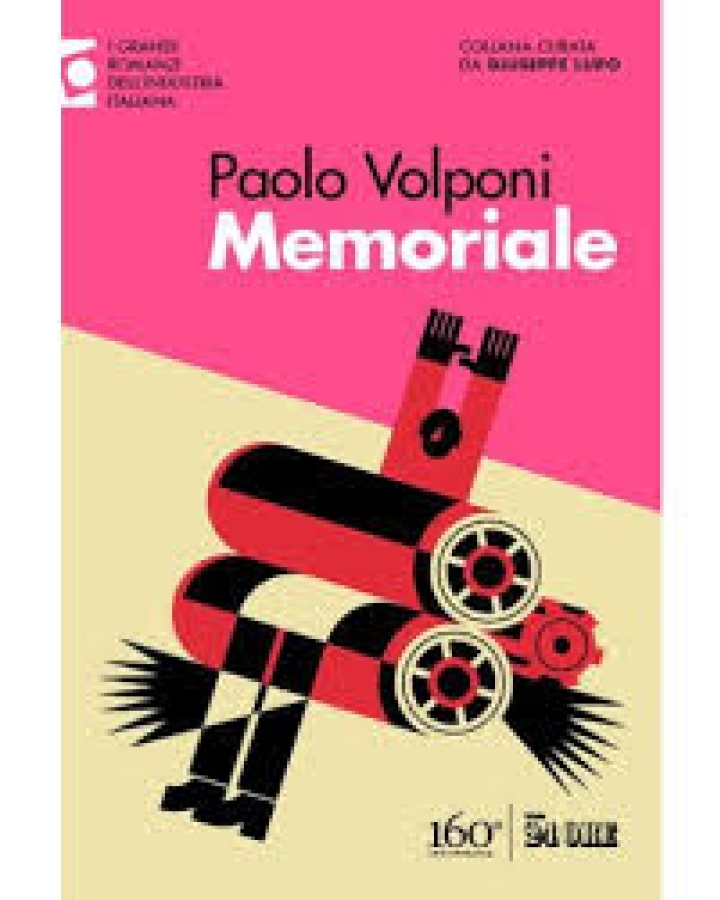
Memorial
Albino is a young peasant who lives above a lake with his mother, an alcoholic, taciturn, and emotionally detached woman. From the sparse details of his past life, we learn that he spent his childhood in France, lost his father as soon as the family returned to Italy, served as a soldier in World War II, and was held in a prisoner-of-war camp, where he likely contracted tuberculosis. Within Albino dwell a nostalgia for a happier time, a need for points of reference (his mother, religion), and an unshakable conviction that he is being persecuted (by officers, by doctors, and later by factory foremen), coupled with a confused anarchism rooted in the peasant world in which he was raised. The lake stands as an allegorical representation of a solitary disquiet. > Blue mists hung over the lake, neither high nor low; only over the lake, like smoke. The sky was clear, and already high up, beneath the veils of day, was a small moon: > see, Albino, I thought, if only all your troubles were like those mists that the moon will surely have consumed by midnight. (...) I touched my shoulders as I had as a boy during my illness, tasting the flavour of myself, a thread of my youth. It is 1946 when Albino presents himself at the Personnel Office of a large factory to be hired as a milling machine operator. From this point two narrative strands branch out, developing in an intertwined fashion: one sociological, the other existential. Volponi, with his experience as an industrial manager, portrays the alienating factory environment with great precision: before their workstations > everyone had a taut muscle, or clenched lips, or squinted eyes, or furrowed brows. It means everyone had a thought pounding inside their head, ricocheting throughout the factory and still pounding. (...) The work itself offered no relief; it required no accompanying thought, it went on by itself pulling our hands along, because inside the factory nothing else was possible. Unlike what emerges from Ermanno Rea’s novel ( *La dimissione* > see the review on this site), there is no discernible sense of belonging to the product, to the machines, or to the organization of labour: the factory is a hostile body; Albino stands apart, feeling no solidarity with the others, nor does he accept the corporate hierarchy, which even suggests he act as an informant. A trade unionist friend tells him, > but you always keep to yourself. Was I under attack, then, because I was alone? , Albino wonders. Despite his illness and his accusations against the factory doctors, Albino is protected by Management (who knows why?), who assign him a quiet job as a gate guard. It is right from the factory gate that Albino witnesses one of the first post-war strikes and rushes to warn the canteen staff to refrain from work, in order to support the workers' struggle (today, it is difficult for us to grasp the importance of the canteen). This act of insubordination is unacceptable to Management, and they fire him. Were this the whole story, the novel would merely be a fresco of 1950s industrial Italy. But Volponi seeks to convey an existential malaise that transcends the historical context and the theme of alienation—a topic pervasive in the Marxist commentary of the 1960s. The author imagines Albino writing a kind of confession, through which he seems intent on definitively coming to terms with his state of abandonment. > As always, I watched the lake gradually swell beneath my eyes on the climb toward home. In the clarity of the afternoon, the lake had no subtleties of tone, no arms reaching out toward the countryside and the trees; locked within its shores. And its colour neither shone nor spread outward. (...) At that point I realized that no one could come to my aid: not the factory, not my comrades, not the doctors, scoundrels or not, nor much less my mother: > I am a drop/the first or the last of a downpour/fallen from the gutter/when in the air/no rain was expected,/not even that drop./my drop is lost, /no one enjoyed it. In his fine preface, Giuseppe Lupo regards the novel as an elegy for the factory, for a world set to the rhythm of machines that has savagely displaced the cycle of seasons and agricultural labours that once defined rural life. Of this transition, Giuseppe Lupo seems to suggest, Albino is both victim and bard; hence the solemn, dreamlike rhythm of the novel. It is remarkable that an industrial executive at Olivetti, such as Paolo Volponi, should have written a work at once so realistic and existential, with tones that seem to verge on psychoanalysis. If we consider that *Memoriale* is Volponi’s debut work, we must forgive its narrative confusion, needless repetitions, or digressions; and we must do so because Albino's malaise seems to mirror Volponi’s own, caught between managerial rationality and poetic tension. Written in the form of a confession, the first-person narrator is Albino himself. The extensive reading in the sanatorium and the leisure time spent in the library must have taught the poor peasant a great deal, given how well the novel is written: fluid, if at times convoluted, phrasing, tight dialogue, and descriptions of the rural landscape steeped in symbolism (echoes of Pascoli resonate throughout), contrasted with an oneiric realism when depicting the factory. What the novel lacks is plot: it stretches out needlessly over many pages, losing concision and growing prolix. Why read it? The marriage between industrial rationality and the magic of the peasant world is compelling.
Messengers of Darkness
The novel centers on a series of castrations and subsequent murders, which turn out to be the work of a cult. It is an unsuccessful effort, undoubtedly falling short of the author’s other books. The narrative is tedious, flat, and at times contrived (consider the stay in Russia): it lacks the original hallmark of Bartlett’s books, which lies in the depiction of the author’s character, her worldview, and her approach to life.

Microcosms
*Microcosmi* is an assemblage of > fragments that little by little coalesce into an orderly novel, whose structure and meaning reveal themselves (to him) at the end, as happens in life . And life is an assemblage of places, > places and things, scarcely separable from beloved persons and from the image of the world that envelops them . The first fragment is the Caffè San Marco in Trieste, setting the keynote for the narrative: a journey where one never moves. > Sitting at the café, one is on a journey; as on a train.... one cannot leave a vain personal imprint on anything, one is nobody. In that familiar anonymity, one can disguise oneself, shed the self like a peel . And what could be more motionless and yet vital than lagoons and great forests? The narrative proceeds with an evocative, memory-laden description of the sea at Grado and the forests of Monte Nevoso. Here, the forest is not a natural or fantastical place, but rather > at once the exaltation and erasure of borders, a plurality of different and conflicting worlds, held within the great unity that embraces and dissolves them . the following chapter, devoted to the Turin hills, creates a placid and gentle atmosphere (perhaps serene and happy years for the author), leading us to think that > even disappearing could be a celebration, like losing oneself among the hills that in the evening resemble a sea, great and calm waves of a long, powerful breath . And one feels the urge to «go up to one's room and let the world manage on its own». The subsequent chapters (The Absyrtides, which concerns the Croatian islands, in particular Lussino and Cherso) and Antholz (a valley in the Tyrol) lead to places (never explicitly stated) where the author spent his vacations. They are the book's less fortunate pages, overburdened with historical citations and settings difficult for the reader to identify. With the chapter dedicated to the «Public Garden» (a true literary gem), Magris abruptly brings us back to his own childhood, evoking it through a child who carries a dying goldfish to the park's small pond in an attempt to keep it alive. The Garden is a place of recreation, but also of prohibitions. Venturing into the garden is, for the child, like plunging into deep water, finding himself «beyond all those doors that usually bar entry to its secret heart». The Public Garden mirrors the complexity and variety of the human psyche. The self, like the Garden, is a dark forest, an assemblage of open clearings, ancient centuries-old trees, and recesses: > the forest is all around, but one is not inside the forest; invisible thresholds bar the way... one is outside, excluded from the woods, which perhaps begin a meter further on, but the door to enter and reach that gnawing and murmuring cannot be found . The child's return home introduces the final chapter, with the mysterious title «The Vault», which finally speaks explicitly of an episode from the author's life, bringing forth the figure of the mother with poignant tenderness. As in a dream, the child remembers an air raid and the flight into a shelter inside a church. The child is frightened, yet he is together with the others («throughout the church, people greeted one another, shook hands, some embraced») and so > he was not surprised to see her beside him... go to sleep, she told him, I'll wake you when the time comes . He is afraid, but he hears voices that reassure him. They are > two voices, almost identical to his own, the children who had filled the house, the days, life itself, telling him not to be afraid . The cycle of life comes to a close, from childhood to old age, among loved ones. *Microcosmi* possesses several virtues: the author's literary device of chronicling the places and people of his life without ever resorting to the first-person “I,” a felicitous choice in an era as narcissistic as our own; the exceptionally elegant prose, which frequently rises to the level of poetry; the depth and acuity of many reflections, tossed off with seeming nonchalance—veritable aphorisms. It is difficult to discern an overarching meaning across these narrative fragments. One might, perhaps, offer a psychoanalytic reading: revisiting the most significant places of his life allows the author to return to his childhood, to his mother, and to forge a link among the disparate moments of existence. Then there recurs the metaphor of the door—that is, the difficulty of entering, but entering where? Perhaps one's own consciousness. The book's virtues are also its flaws: there is no plot, the references and digressions are often tedious, and the narrative style easily slips into erudite mannerism, losing its candor. One senses the learned Germanist, somewhat snobbish and unwelcoming. Why read it? Reading the entire book is a heavy task. It is worth lingering only over the chapters devoted to the Caffè San Marco, the Turin hills, and the public garden—the latter being a genuine masterpiece.
Middlesex
The book recounts the story of Callie Stephanides, born with female characteristics that evolve into distinctly masculine traits with the onset of adolescence. Sexual ambiguity, stemming from a genetic trait, determines the life of the protagonist, who is unable to accept himself—a male with underdeveloped sexual organs—until the very end of the novel, which chronicles several generations of his family. The novel can be divided into three parts: the saga of the grandparents, who fled to America from a Greece besieged by the Turks; the parents' story, followed by Callie’s childhood as a girl and young woman; and finally, the discovery of this sexual ambiguity—in truth, long suspected by the protagonist—leading to the decision to live as a male and the flight from the parental home. The best part of the novel is undoubtedly the first, as the narrative subsequently loses its evocative power and momentum, becoming increasingly tedious and predictable. The novel revolves around two fundamental themes: the ambiguity of individual identity, for we can embody multiple individuals and cultures all at once; and genetic inheritance, in the sense that we are what the evolution—biological included—of our family has somehow determined. Environment, life’s vicissitudes, and the people one encounters are all crucial factors, but what leaves the deepest mark is our history, for which we bear neither responsibility nor blame. In a historical period where every affliction is traced back to behavior, the book offers instead a return to a comprehensive view of the individual’s inherent traits. From this perspective, the novel proves superficial when called upon to describe the protagonist’s turning point, wherein he decides to reject the doctor’s attempt to force his nature toward the feminine and instead embrace a new life as a male. What impels him in this direction? How can he so effortlessly abandon a world of feelings and behaviors that had governed his childhood? Is cutting one’s hair enough? The novel fails to address any of this, and the family saga seems to prevail as the underlying narrative focus, overshadowing the protagonist’s experiences and inner life. Perhaps this is why the pursuit of a cultural identity (the Greek heritage blending with the American) appears far more pronounced than the sexual and individual one, which ultimately feels like little more than an expedient device to render the novel more alluring.
The Milanese Kill on Saturday
The novel is set in 1960s Milan. A police inspector is called to investigate the disappearance of a young woman, strikingly beautiful yet mentally impaired. He discovers her body, burned at the side of the road, and uncovers a prostitution ring. Through a series of inquiries into the criminal underworld and brothels, he identifies the killers, but arrives too late: they have already been murdered by the girl’s father. The latter, a decent man, is driven to commit a crime by the sluggishness and incompetence of the police in solving the case. It is a heavy, thoroughly bitter noir: a violent, unscrupulous city and a negligent police force. The story is well constructed, with an engaging narrative pace, even if the plot twists feel somewhat predictable. The author’s interest seems to lie more in the depiction of the milieu than in the construction of the plot.
Been Here a Thousand Years
Time fills up "with interminable, communicating galleries," a labyrinth that is by no means guaranteed to lead anywhere. At the heart of the book lies an existential premise: life is a succession of unpredictable crossroads, able to find solidity and certainty only in the pursuit of one's roots, one's land, and one's ancestors. Gioia is a young woman from Matera who has fled in search of a freedom that neither her mother, nor her grandmother, nor she herself would ever have been able even to imagine. She traverses > a brief season of freedom and belonging, lost in the crowd, in the Italian piazzas, Rome, Bologna, Florence Ponte Vecchio, sleeps with a Swiss boy with skin as smooth as a girl's.... shouts the slogans P38 a hole blooms in your mouth, is moved by the sight of red flags, uses their poles as clubs, pulls the red kerchief down over her face, thinks she has the future in her hands . Inadvertently entangled in terrorism, she flees to Paris, where she works as an actress, takes a job in an erotic call center, and loses herself among many men, more often than not allowing herself to be used. Ma quando > she had become a young woman as perfect as inorganic matter, removed from the unpredictability of time she wonders > what is the point?, to whom would she answer? Now that she could be anyone, she was no longer anyone . Then she feels the urge to retrace backward, > moment by moment, everything that had led there. And so, without realizing it, you lose yourself in history . Gioia traces the history of her ancestors back to Grottole, a small town in Basilicata. The starting point is 1861, the year of Italian Unification, and from there she sets out to narrate the fortunes of her family—in particular, of the women who were decisive through their strength and character. The result is at once a social and familial narrative: a fresco of an impoverished and neglected Italy, stagnant for a century before rapidly transforming during the economic boom years after 1960: the dissolution of family ties, of a communal life that represented both the cage and the strength of peasant society. Emblematic, in this respect, is the bleak everyday existence of Gioia’s parents, Rocco and Alba, who watch the same television program in separate rooms, when such incommunicability is contrasted with the lives of their grandparents and great-grandparents, who worked, ate, quarreled, and lived entirely together. That world, once so steadfast and serene, is no more. Gioia, departing anew, sees from the train that > the rolling countryside that had cradled her nostalgia, nostalgia for a cherished sorrow, for tears, for unfulfilled curiosities, for imprisonment, had now lost its virginity. She, who had kicked against it, now mourned its loss and silently held a tearless funeral for it . The book can be divided into two parts. The first, set in Grottole, is a reconstruction—almost a historical investigation—of a social and familial structure. The narrative pace suffers precisely from this descriptive approach, which only in flashes elevates itself toward the transfiguration of history and the deepening of the characters. The second part, describing Gioia’s life through the 1960s and 1970s, displays a modern style, at times disjointed yet effective in conveying the sense of the character’s "derailment." Particularly compelling are the pages in which the author pursues a sort of parallel history: the Gioia who could have been a respectable girl, university-educated, well-married, and with children, versus the real Gioia who has lost herself in the search for her own identity. The compulsion, perhaps, to say too much in too few pages leads to a cluttered narrative, a kind of haphazard jumble of actions and situations. The reader is left disoriented, unable to fully grasp Gioia’s story. Why read it? It is an enjoyable read, compelling in its historical reconstruction, and provides an effective contrast between modernity and tradition.
The Thousand and One Nights, Volume II
If the tales of the first volume (see review on this site) have a fairy-tale quality, transporting us into a world populated by spirits and magical inventions, here the novellas have a realistic cast; the reading is less enthralling, but we derive from it a portrayal of Abbasid society, of the power of the caliph and his emirs, of court intrigues, and of the resigned obedience of the subjects. In the tale *The Power of Love*, the wretched Ghanin is severely punished on the false accusation of having seduced the caliph's favorite. Blind jealousy drives the "Commander of the Faithful" to persecute the young man and his family. When the caliph realizes his terrible mistake and asks what he can do for him, Ghanin replies that > the servant cannot in any way reproach the master for how the latter saw fit to behave toward him. (...) The servant remains the servant, and the master remains the master ; it is the young man's mother who courageously urges the caliph to reflect upon how fragile human nature is, > how often it is prone to deception and dissimulation. And think of how these wicked inclinations can be exacerbated by jealousy, to which women are all too susceptible. One must not believe that we are dealing with a sort of Arabic *Decameron* or Gogol's *Dead Souls* with a Middle Eastern flavor (see reviews on this site); in the novellas of this second volume as well, prose is interwoven with poetry, the tales interlock with one another, the beauty of men and women prevails, and one flees from reality into the implausible. Is what we recount an illusion? In the opening of the immensely long tale *The Faces of Love*, which depicts a fabulous, boundless world reminiscent of Salman Rushdie's *The Enchantress of Florence* or Abdulrazak Gurnah's *Paradise* (see reviews on this site), the beauty of the young prince is sketched with verses steeped in narcissistic desire: > He is the fawn of the gazelle with a hesitant gait!/He need only take a mirror in hand:/faithful and flattering, it will reflect/the absolute idea of beauty that his dream casts upon it. The finest novellas are those featuring Caliph Harun al-Rashid (who reigned between 766 and 809). It seems that this ruler was > fond of anecdotes, current news, and gossip ; so, disguised as a common citizen, he would go out to discover how ordinary people lived and to play pranks at their expense. How dreadfully dull life must have been in the palaces of Baghdad! In *The Sleeper Who Does Not Sleep*, the caliph, posing as a merchant, makes his way into the home of the honest Hasan; after getting him drunk, he makes him drink a potent sleeping draught; taken to the palace, Hasan spends a night as caliph, believing it to be reality: he is taken for a madman and locked in an asylum. When he comes out, he continues to live no longer knowing whether he is in a dream or in reality. > Why did you instill confusion in my mind, why did you turn my brain upside down?. And "the successor of the Prophet" candidly replies that he does it for pleasure. In the novella *The Caliph and the Madman*, al-Rashid wants to understand whether a person locked in an asylum is truly mad; what emerges is a series of interlocking tales, in a Pirandellian atmosphere, in which the wit of the grand vizier—an ever-present figure in *The Thousand and One Nights*—tests the poor lunatic; it will later turn out that, rather than wit, one should speak of deceit, for the grand vizier wished to prevent the marriage between his daughter and the alleged madman. We leave it to the reader to discover the plot of *The Persian Sage*. Here we shall merely say that a remarkably handsome "cookshop keeper," > he is the stallion/of every grace , manages to win over the splendid princess thanks to a love potion concocted by the wise sorcerer. Let us revel in these delightfully erotic verses: > Side by side, close together, with my own eyes/I saw them, I would have loved/to see them sleep together/upon my very eyelids./They were two gazelles of the desert,/and two radiant stars in the night,/two morning stars, perfect boughs,/and two incarnations of divine Beauty. René R. Khawam, the editor of this edition of *The Thousand and One Nights*, concluded after extensive research that the two books in this second volume, *Wandering Passions* and *The Taste of Days*, complement the better-known ones presented in the first volume: *Illustrious Ladies and Gallant Servants* and *Inhuman Hearts*. Naturally, I am in no position to contest the editor's choices, particularly on an issue so fraught with ambiguity due to the difficulty of imposing order upon this crucial testimony to the Arabic poetry of the Caliphate of Baghdad. It is difficult to believe that we are facing a succession of nocturnal tales, both because of the length of the novellas and because of their realistic framework; poetry too loses weight compared to prose, and the narration no longer possesses the brisk pace of the tales in the first volume. One senses a certain weariness, a certain formalistic and repetitive quality, as though the political and military decline of the great empire were reflected in its song, both nostalgic and despairing. While in the tales of the first volume there is always an ending pointing toward a happy future, here every novella concludes with an invocation of Death, of > the Destroyer of Pleasures and Severer of Gatherings, (...) May God be merciful to us on the day of that appointed meeting. Why read it? It is wordy at times, it takes effort, but it is well worth it.
In Our Own Way
The novel opens with the arrival in Paris of Xie Qing, an unassuming and unambitious man, a truck driver who has spent his entire life in Wenzhou, a provincial city near the East China Sea. He finds himself in France having been called to identify the body of his ex-wife, Yan Hong, who died in a car accident. The French police would like Xie Qing to diligently complete the paperwork, collect the insurance payout, and leave the country as soon as possible. Xie Qing refuses, partly because he wants to understand what really happened (his wife made a mysterious phone call before dying), and partly because he wishes to truly know Yan Hong. Ever since their separation, sudden and inexplicable to him, Xie Qing > had never managed to rid himself of the resentment of one who feels cheated . For the reader, the premise seems to herald a tale of intrigue, bordering on a thriller, enriched by the quest for a bond severed yet rooted in childhood and youth. Unfortunately, the novel takes a turn. A wealthy and powerful Chinese woman, who has taken the naive and disoriented Xie Qing under her wing, convinces him to radically change his life. > You didn't ask to go abroad, you didn't even run the risk of leaving as an illegal migrant; you had the opportunity to leave China only because your wife died. And an opportunity like this was your good fortune! (...) A man who embarks upon no enterprise has come into this world in vain . Thus, the unambitious truck driver finds himself involved first in human trafficking, and then in major real estate speculation in his hometown. He partakes, by chance and with no great merit of his own, in the “great enrichment,” built upon criminal acts, corruption, and contempt for the old China, which is nonetheless yearned for with a false nostalgia. > Like a caterpillar that, having painstakingly crawled among leaves and shrubs, turns into a butterfly, Xie Qing felt profoundly different from when he first arrived in Paris. His metamorphosis had been completed when the ship laden with illegal migrants sank in the Strait of Otranto, sacrificing dozens of lives in the prime of their youth . The tragedy, for which he is partly responsible, accelerates the process of enrichment while transforming the protagonist into a cynical businessman. What emerged was no butterfly, but a blowfly! Alongside Xie Qing’s story, and his metamorphosis, the novel recounts the life of Yan Hong. > She was solitary, friendless; outside of work she read, wrote, or simply sat there reflecting. Xie Qing had never managed to discover whether the deepest darkness or an invisible light reigned in that mysterious inner world of hers . Through her painful tribulations, we readers know that within Yan Hong lies a yearning for authentic values, constantly nurtured by the memory of her father—an upright man and revolutionary who took his own life rather than betray the trust placed in him by a high-ranking Red Army general. Splendid verses give voice to Yan Hong’s inner world, her bond with her father, and, at the same time, the strength of her values. > But one alone loved the pilgrim soul and the torture of your changing face. Bend down, then, over this grate of glowing embers and murmur to yourself softly: Love, see how you flee to the mountains and hide your weeping in a swarm of stars. This ever-renewed yearning for the authentic impels Yan Hong to volunteer for the re-education camps for “educated youth” during the Cultural Revolution; to stubbornly seek out her father’s secret documents to hand them over to the general’s children so as not to jeopardize their careers in modern China; to accept, surprised and intrigued, the offer to move to Paris (mother of all revolutions!) from a “pathetic” yet powerful club of revolutionary nostalgics; and ultimately to refuse to live in a villa, choosing instead to work as a laborer in a textile factory and later as a street vendor on the Atlantic coast. She wants to live like her compatriots, immigrants and undocumented workers! And like *Anna Karenina*, Yan Hong refuses to be the Parisian mistress of a high-ranking Chinese government official, demanding love for herself and for the son she had with him. And, like Anna, in her quest for an authentic life, she meets her death. The novel narrates two stories, divergent ways of conceiving modern China: unscrupulous enrichment and the desperate refusal of that life choice, the assertion of different, ethically potent values. It is the search for a new moral vision, one that cannot take root in the old revolutionary tenets that once underpinned China's liberation and rebirth. In the background, the author recounts the plight of undocumented migrants, how they made their way to Europe, and how they live and work on our continent. At the same time, there is a continuous reference to the old China: a tender melancholy for a society that now exists only in the imagination. What compromises the novel—which is otherwise well-written—is the excessive space granted to its seemingly more captivating thread: that of human trafficking; not because it lacks interest, but because it remains on the surface, bearing the hallmarks of crime fiction and detective narrative, without delving deeply into the stories of the protagonists: namely, the undocumented migrants themselves. It is a section that feels contrived rather than lived. Why read it? The figure of Yan Hong is compelling, fascinating.
The Moncalvos
Il romanzo è ambientato a Roma alla fine dell'Ottocento. E' ancora forte la rottura tra la Chiesa e il nuovo Stato italiano, ma la frattura si va lentamente ricomponendo nel crescente clima di affarismo e nazionalismo che pervade la classe dirigente. Di umili origini, un tempo rinchiusi nel ghetto, «all'ombra delle nostre vecchie sinagoghe, isolati in un mondo ostile», i due fratelli Moncalvo, Giacomo e Gabrio, si sono affermati nella società, seguendo però strade differenti: Giacomo ha fatto una brillante carriera in campo scientifico, ottenendo riconoscimenti accademici anche se non economici, Gabrio si è arricchito enormemente in Egitto per tornare a Roma e divenire un esponente importante dell'alta finanza. Sono diversi approcci alla vita, ereditati da Giorgio e Marianina. Il primo è il figlio di Giacomo e, come il padre, è dedito allo studio e all'insegnamento, indifferente alla ricchezza, morigerato e intriso di valori morali. Marianina, figlia di Gabrio, è ambiziosa, amante del lusso e dei salotti dell'alta borghesia, pronta a tutto pur di ascendere nella scala sociale. Domina un comune «indifferentismo» religioso. I Moncalvo si sentono ebrei più per tradizioni familiari che per fede e pratica. E' un tratto ricorrente in molta borghesia ebrea, desiderosa di integrarsi e influenzata dai valori positivistici, nazionalisti e affaristici di fine Ottocento. A pregiudicare la fragile unità familiare è la conversione di Marianina al cattolicesimo per poter sposare un esponente dell'aristocrazia "nera > , so designated for its ties to the Vatican, and thereby attain the rank of princess, entering the ranks of high society. It is her parents' design, yet it is the young woman who pursues it with a determination and awareness astonishing for a spoiled, wealthy heiress. Over the course of the novel, Marianina is described as a Lucifer," a "Sphinx > , a personality both mysterious and baffling even to her own parents. To attempt to understand her character, one must dwell on an exchange between the two cousins. Giorgio is distraught with passion: she would have given him an hour of intoxication, and he, the rigid scientist, swept away by a gale of madness, asked himself whether, to attain this hour, it was not worth sacrificing his entire life." In his presumption, Giorgio believes he is offering with his love "a lifeline" to prevent his cousin from casting herself "into an abyss of cowardice and deceit," buying "a wretched coat of arms at the price of your body and your soul." > She shrugged her shoulders. You are raving (she said). (...) My heart belongs to no one. (...) We should have grown up in the old town from which our families originate, within the old enclosure that penned in the people of our race, (...) narrow in ambitions and ideas, trusting only in the mission of our people.... Then, yes, we could have married and been happy.... Today it is impossible . The emblem of a daring feminism, Marianina is a personality of the future, a modern and liberated figure. The novel ends with Giacomo's bitter reflections on late-nineteenth-century Italian society as a whole. > Almost everywhere there was a debasement of character (thinks the austere professor), a shipwreck of convictions, a cynical contempt for the heroic virtues of renunciation and sacrifice, a frantic scramble toward ephemeral honors and sudden riches... This was likely Castelnuovo's objective in writing the story of the Moncalvos, and this moralizing stamp has led many critics to label the novel as "ideological": a juxtaposition between the heirs of Risorgimento values, by then unraveling, and the new, cynically upwardly mobile social class; all steeped in melodramatic tones (witness the figure of Giorgio) and D'Annunzian inflections (how remarkably Marianina resembles Sibilla Aleramo!). It is an engaging depiction of Giolittian Italy; moreover, the novel illustrates the Jewish bourgeoisie's inclination to embrace dominant values to the extent of turning a blind eye to the racial components of Fascism. For this alone, the book would be worth reading. The enigmatic figure of Marianina offers something more, granting us a glimpse into a complex and fascinating character. The literary style is spare, distinguishing itself from the prevailing rhetoric of late-nineteenth-century Italian literature. It is a virtue not to be underestimated. Why read it? Historically compelling, with a magnificent portrayal of Marianina.