He Chen
Books by this author (1)
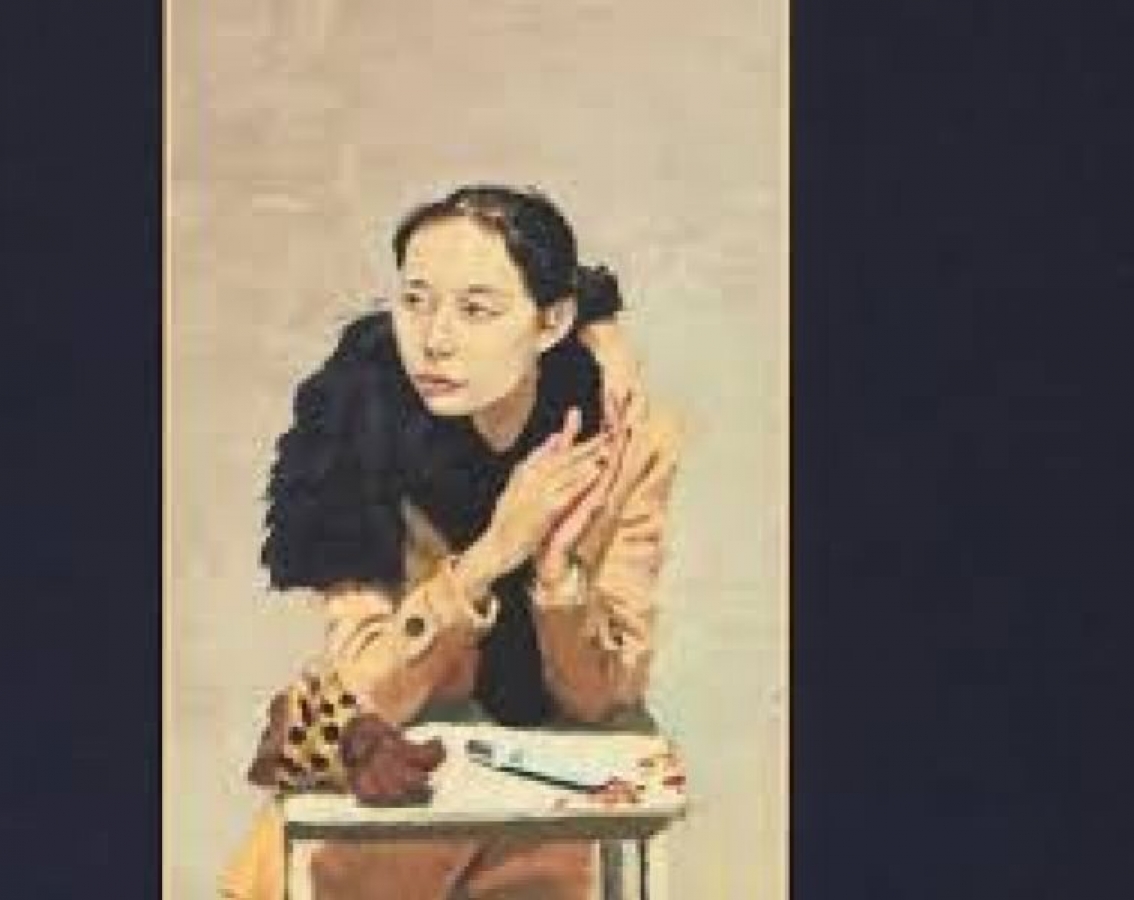
In Our Own Way
The novel opens with the arrival in Paris of Xie Qing, an unassuming and unambitious man, a truck driver who has spent his entire life in Wenzhou, a provincial city near the East China Sea. He finds himself in France having been called to identify the body of his ex-wife, Yan Hong, who died in a car accident. The French police would like Xie Qing to diligently complete the paperwork, collect the insurance payout, and leave the country as soon as possible. Xie Qing refuses, partly because he wants to understand what really happened (his wife made a mysterious phone call before dying), and partly because he wishes to truly know Yan Hong. Ever since their separation, sudden and inexplicable to him, Xie Qing > had never managed to rid himself of the resentment of one who feels cheated . For the reader, the premise seems to herald a tale of intrigue, bordering on a thriller, enriched by the quest for a bond severed yet rooted in childhood and youth. Unfortunately, the novel takes a turn. A wealthy and powerful Chinese woman, who has taken the naive and disoriented Xie Qing under her wing, convinces him to radically change his life. > You didn't ask to go abroad, you didn't even run the risk of leaving as an illegal migrant; you had the opportunity to leave China only because your wife died. And an opportunity like this was your good fortune! (...) A man who embarks upon no enterprise has come into this world in vain . Thus, the unambitious truck driver finds himself involved first in human trafficking, and then in major real estate speculation in his hometown. He partakes, by chance and with no great merit of his own, in the “great enrichment,” built upon criminal acts, corruption, and contempt for the old China, which is nonetheless yearned for with a false nostalgia. > Like a caterpillar that, having painstakingly crawled among leaves and shrubs, turns into a butterfly, Xie Qing felt profoundly different from when he first arrived in Paris. His metamorphosis had been completed when the ship laden with illegal migrants sank in the Strait of Otranto, sacrificing dozens of lives in the prime of their youth . The tragedy, for which he is partly responsible, accelerates the process of enrichment while transforming the protagonist into a cynical businessman. What emerged was no butterfly, but a blowfly! Alongside Xie Qing’s story, and his metamorphosis, the novel recounts the life of Yan Hong. > She was solitary, friendless; outside of work she read, wrote, or simply sat there reflecting. Xie Qing had never managed to discover whether the deepest darkness or an invisible light reigned in that mysterious inner world of hers . Through her painful tribulations, we readers know that within Yan Hong lies a yearning for authentic values, constantly nurtured by the memory of her father—an upright man and revolutionary who took his own life rather than betray the trust placed in him by a high-ranking Red Army general. Splendid verses give voice to Yan Hong’s inner world, her bond with her father, and, at the same time, the strength of her values. > But one alone loved the pilgrim soul and the torture of your changing face. Bend down, then, over this grate of glowing embers and murmur to yourself softly: Love, see how you flee to the mountains and hide your weeping in a swarm of stars. This ever-renewed yearning for the authentic impels Yan Hong to volunteer for the re-education camps for “educated youth” during the Cultural Revolution; to stubbornly seek out her father’s secret documents to hand them over to the general’s children so as not to jeopardize their careers in modern China; to accept, surprised and intrigued, the offer to move to Paris (mother of all revolutions!) from a “pathetic” yet powerful club of revolutionary nostalgics; and ultimately to refuse to live in a villa, choosing instead to work as a laborer in a textile factory and later as a street vendor on the Atlantic coast. She wants to live like her compatriots, immigrants and undocumented workers! And like *Anna Karenina*, Yan Hong refuses to be the Parisian mistress of a high-ranking Chinese government official, demanding love for herself and for the son she had with him. And, like Anna, in her quest for an authentic life, she meets her death. The novel narrates two stories, divergent ways of conceiving modern China: unscrupulous enrichment and the desperate refusal of that life choice, the assertion of different, ethically potent values. It is the search for a new moral vision, one that cannot take root in the old revolutionary tenets that once underpinned China's liberation and rebirth. In the background, the author recounts the plight of undocumented migrants, how they made their way to Europe, and how they live and work on our continent. At the same time, there is a continuous reference to the old China: a tender melancholy for a society that now exists only in the imagination. What compromises the novel—which is otherwise well-written—is the excessive space granted to its seemingly more captivating thread: that of human trafficking; not because it lacks interest, but because it remains on the surface, bearing the hallmarks of crime fiction and detective narrative, without delving deeply into the stories of the protagonists: namely, the undocumented migrants themselves. It is a section that feels contrived rather than lived. Why read it? The figure of Yan Hong is compelling, fascinating.