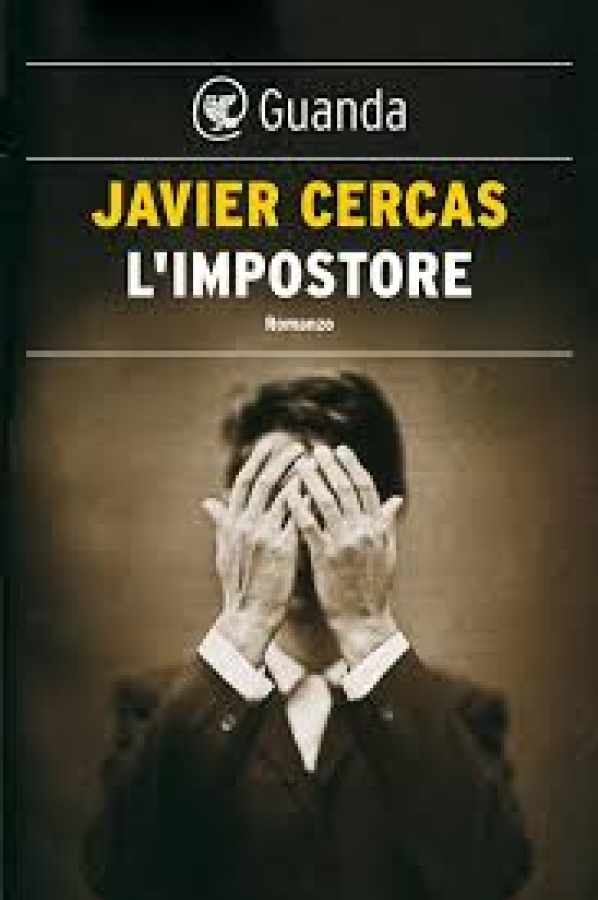
The Impostor
From 1975 to 2005, Spain was deceived by a great impostor. Enric Marco, the obscure owner of an auto repair shop, fabricated a past as an anti-Francoist, claiming he had been deported for it to the Flossenbürg concentration camp alongside eight thousand other Spanish Republicans sent to Germany to die in the extermination camps. Capitalizing on the halo bestowed upon him by his forged past, Marco served first as secretary general of the Confederación Nacional del Trabajo, and later as president of the Amical de Mauthausen. Thanks to an obscure historian, Marco's colossal lie was uncovered just days before he was due to speak at a ceremony in Mauthausen before the Spanish prime minister. Vargas Llosa dubbed Marco «appalling and brilliant». When Cercas meets the man for the first time, he cannot help but cry out > a horror! A genuine horror!. What held him back from writing a book about him were not merely the outrages committed by Marco, from the grief inflicted on other deportees and their relatives to the countless young people who had listened to him, captivated and trembling; Cercas feared becoming ensnared in the tentacles of the sublime liar, wondering whether he was willing > to write a book about Enric Marco without making a pact with the devil. (...) why not attempt to redeem the great impostor and the great damned soul, that consummate scoundrel who has already been condemned more than enough?. Those who have read *Soldiers of Salamis* (see the review on this site) know that Cercas tends to exploit these hesitations of his about excavating the «truth». Here too, Cercas overcomes his moral scruples, easily forgetting what Primo Levi once said—that to understand is already to justify; with the usual dedication of an investigative journalist, he sets out to reconstruct the murky events and insidious deceptions that led Marco to dominate the national stage during the post-Franco years. We leave it to the reader to delve into the details of a convoluted story that traverses Spain's recent history. Let us simply say that Cercas traces the root of Marco's success to a blend of small truths, historical facts, personal charisma, and brazen lies. It is true! Marco was indeed a villain; yet just as Limonov was for Carrère and Don Quixote for Don Alonso Quijano (see the reviews of both books on this site), Marco > gave himself (...) a new identity and a new, heroic life, (...) having passed the zenith of life, he wants to go on living when it is no longer his turn to live, or rather he wants to live on, against everything and everyone, all that he had not lived until then. Is he not like a writer permitted to lie in order to tell the truth? Poor Cercas! Little does he know that this indulgence toward deceit is a breach into which Marco will ruthlessly wedge himself, recalling that the final character in *Soldiers of Salamis*, the obscure soldier-hero, was merely a fiction of the writer; a fiction with which Cercas deceived countless readers who, after reading the novel, wrote to the nursing home in Dijon where the author had claimed the obscure hero lived. And therefore Cercas, too, is an impostor: > you are a player and a liar, possessing all my flaws and none of my virtues, and I am your reflection in a dream, or in a mirror. (...) This is the truth, Javier. The truth is that you are me. The novel's focal point is the interview that the author declares to be imaginary, for once. In a lengthy dialogue between Marco and Cercas, the latter's certainties crumble before the relentless arguments of the impostor, intoxicated by the role of inquisitor assigned to him by the Spanish author. The only explicitly fictional pages seem to upend the entire narrative. Where lies the boundary between invention and truth in historical memory? And why should lies not be accepted if they serve to illuminate the dark chapters of history, forging conscientious minds? But in doing so, as in *The Brothers Karamazov*, are we left merely to bow before the mystery of the past, hoping it to be a just and righteous mystery? (see the review of *The Brothers Karamazov* on this site). The novel's fundamental merit lies precisely in Marco's story, which tells itself, so incredible it is. Cercas layers over it a meandering and prolix plot, one that often turns in on itself, weighed down by digressions that make for heavy reading. Offsetting the narrative's convolutions is the author's characteristically fluid, lucid phrasing: a prose style that smacks perhaps a bit too much of journalism. Why read it? The story is intriguing.
Travels with Herodotus
Kapuscinski is a great reporter who has written numerous travel books. In this case, he recounts how he became a reporter and describes some of his journeys to China, India, and Africa. Above all, however, he speaks of his great literary love, Herodotus. Whenever he travels, he carries Herodotus’s *Histories* with him. Kapuscinski’s travels are simultaneously real journeys and voyages into the world of Herodotus, to the point that it becomes difficult to distinguish present reality from that of Herodotus’s era. > The more time I spent reading Herodotus, the more I felt a sense of friendship and almost affection toward him. It became increasingly difficult for me to do without not so much the book as its author . He fascinates him > for his way of being and relating to others: a person who, wherever he goes, immediately becomes a gathering point . What does Herodotus say to the modern world? > For Herodotus, the world’s cultural plurality is a living, pulsating fabric where nothing is given or established once and for all, but is continually transformed, creating new relationships and contexts . And then > a journey does not begin at the moment we set out, nor does it end when we reach our destination. In reality, it begins much earlier and never truly ends, since the reel of memories continues to play inside us even after we have stopped . > History is an uninterrupted succession of presents, and therefore the world is not the exclusive property of the living, in which the dead hold no market shares . Reading Herodotus allows the author to express his feelings about the world and about history: diversity; travel not as escapism, but as a means of knowing and listening to others; history not as a description of past events discarded in the trash, but as an immanent presence «so that the deeds of men may not be forgotten in time».
The invention of solitude
This is a book about memory, which is like > a place, a sequence of columns, cornices, porticoes. The body inside the mind, going from one place to another, and the sound of our footsteps as we walk, moving from one place to the next . The occasion to address memory arises from the death of the author’s father (the first part of the book): a man who had always lived a solitary life, not physically, but because he was somehow detached from everything taking place around him. The writer recounts his father’s life, evoking various episodes and tracing back as far as the murder of his grandfather by his father’s mother. What emerges is how memory constitutes an assemblage of fragments and images one strives to preserve: “the anecdote as a form of knowledge.” Can writing about a loved one bring them back to memory, enabling us to know them better and to know ourselves better? The book is also the search for a father never truly known to the depths of his being, the chronicle of a profound nostalgia, but also of a discovery. > The rampant, totally mystifying force of contradiction. I understand now that each fact is cancelled out by another fact, that each thought brings with it another and opposite thought. Impossible to say anything without reservation . Like all of Auster’s books, it is written in an elegant and lucid English, set within a paradoxical context that delves deep into emotions and states of mind, verging on philosophy.
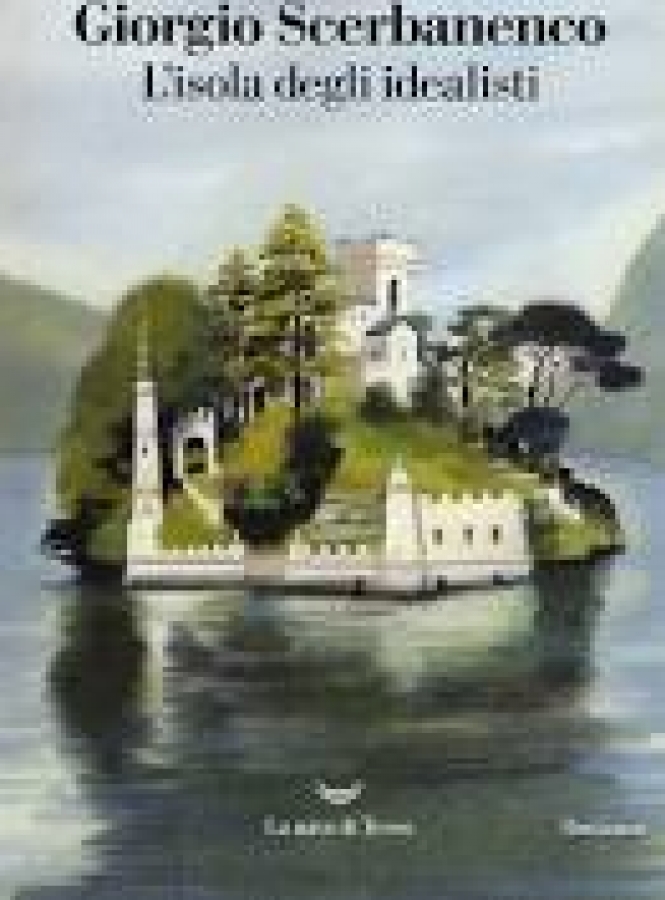
The Island of the Idealists
> Many years ago, on a tiny island in an Italian lake, lived several people whom the present story concerns . Carla > already had hair turned very grey, in this nineteen-thirty, but her face was sweetly fresh, youthful, and getting to know her explained the style of her novels . Her father, old Antonio, often reprimanded her because he disapproved of his daughter's books, despite their great success; he also criticized his son Celestino, “too tall and big and strong.” > You are all intellect, just as famous tenors are all voice. As for the rest, you have nothing; you lack even common sense. There were other guests as well: a cousin and his wife, Jole and Vittorio, poor and young relatives, Giovanni the caretaker and two maids, and the dog Pangloss, whom Celestino desperately tried to teach to recognize numbers. Nothing ever happened. > It was a land, exceedingly rare, devoid of events. One merely lived, and that was already much; (...) yet this story would not exist had a certain event not occurred, beginning on a certain May evening of that year. Two petty rascals arrive on the island seeking refuge, having lived off hotel thefts, gambling, and small-time scams. Guido and Beatrice make no secret of being pursued by the police; yet Celestino decides to welcome them, partly already intrigued by the woman—of a soft, serene, and at times coarse sweetness—and partly because he has an objective: to teach the pair to be honest. Celestino devises a scientific curriculum; after all, as old Antonio remarks, > here things are taken too seriously. Eternity, truth, infinity, mathematics . As was to be expected, the program fails miserably: Guido and Beatrice steal money and jewelry, then, once discovered, depart to resume their usual life. “A year has passed, everything seems as before: but it is not true.” The island is quarantined due to scarlet fever, brought by a young orphan taken in by the family; Guido and Beatrice reappear on the island, but struck by a tone markedly different from the previous time. > The clothes they wore immediately revealed their decline, their misfortune. They must have gone through a truly bad stretch, and they stood before him (Celestino), without shame, but also without bravado. Their manners were no longer as easy as before; they stood almost awkward and conscious of their awkwardness, yet without any will to resist their dejection . This time, Celestino's program seems easier: before him are two pupils, humble, resigned, willing to learn moral values and an honest trade. There is something more: the generosity of Carla and Celestino turns first into compassion, then affection, and ultimately love—Carla for Guido and Celestino for Beatrice. And so we might say that it is neither science nor virtue that transforms humanity, but love. It would make for a fine ending, romantic and reassuring, were it not for another occurrence: Jole and Vittorio, who have spent four years on the island, have systematically stolen from the family that took them in; once discovered, they abandon the island with the stolen goods only to betray everyone, denouncing Guido and Beatrice to the police and plunging old Antonio into legal trouble for having harbored two fugitives. I refuse to reveal the ending. It is a fable, written with elegant lightness, which conveys three important messages: it is futile to retreat into an island of mediocre security, for events are larger than we are and sweep us away; scoundrels hide behind respectable and friendly figures, in a kind of “inverted world”; and finally, without empathy (pity, solidarity, fellow-feeling), one gets nowhere. These are timely messages: I leave it to the reader to judge. The novel bears the date 1942; in truth, it was never published, although it was likely commissioned by the *Corriere della Sera*. This partly explains the fragility of the plot, slender and predictable, and the superficiality of the characters, merely sketched and more stereotypical than fully realized figures (Celestino above all); the narrative also marks a watershed between the numerous stories published up to 1940 (romance fiction bearing the imprint of the fascist climate) and the great postwar detective novels: the author is on his way toward a new, more incisive style. Why read it? Elegant, steeped in sweet melancholy.
Istanbul
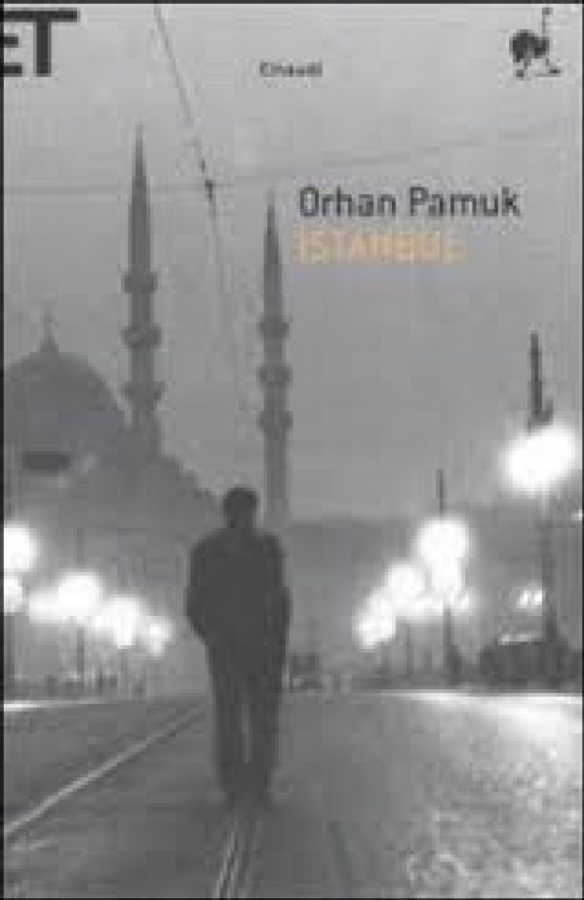
> I know that my inspiration draws strength from my attachment to the same house, the same street, the same view, and the same city... this bond of mine with Istanbul means that the fate of a city can become a person’s character . In this book, Pamuk recounts how he became a writer, yet in doing so he cannot help but speak of his Istanbul—the city of the 1950s and 60s, in full decline, not by chance narrated and photographed in black and white. So tight is the interweaving of the city’s history, enshrined in the “details of the past,” and the history of his own identity as a writer and an individual, that it becomes evident how the convulsive transformation of Istanbul has inexorably aged Pamuk himself, leaving him no longer an interpreter of the contemporary era. The novel has no plot in the strict sense, but is rather an assemblage of microcosms, episodes, reflections, and impressions. To give a general coherence to the narrative, three narrative threads can be identified. First and foremost, the biographical thread speaks of childhood and adolescence, of the extended Pamuk family, of the houses, and of the parents’ marital crisis. Pamuk’s formative journey does not involve the written page. There are neither reckless, childish attempts at writing nor great books that “changed a life.” The books read and reread by the young Pamuk are “the collection of facts and curiosities,” preferably enriched with drawings and photographs, that form > a seductive, terrible, and at times disgusting compendium of curiosities, events, and bizarre characters . From here, the transition to painting is natural: it allows one to contemplate and depict the panorama of Istanbul, initially “unanimously deemed beautiful,” later marked by the signs of decline. > I would draw the small mosques, the ruined walls, the Byzantine arches of which only a part remained visible, the overhanging wooden houses, and the modest dwellings . In painting, Pamuk discovers the pleasure of artistic creation. > Only now did I realize, through a more complex and astute spiritual leap, the desire to escape from myself.... sometimes I lost control of the drawing... and something would sweep me along impetuously, lifting me pleasantly: only when it ended, like a wave that dissolves as it breaks against the rocks, after freeing myself from wonder and sadness, could I rest a little . To understand why Pamuk decides to become a writer, abandoning the faculty of architecture and his passion for painting, one must turn to the second narrative thread: the survey of the great Turkish and Western writers who wrote about Istanbul. It is necessary to know this literature to appreciate the pages dedicated to it. One grasps, nonetheless, how Pamuk looks at his city through the words of Western observers, to the extent that the latter’s descriptions of Istanbul seem like > a personal memory. Naturally, this is also aided by the fact that Istanbul’s population has tenfold increased in the meantime, and certain avenues and squares, despite remaining entirely unchanged, now seem like completely different places due to the crowds. I always feel nostalgia for the years when the city was solitary and empty . One always returns to Istanbul, to > this mingling of history with ruins, of ruins with life, and of life with history . The third narrative thread consists of the description of the city, the contemplation of the Bosphorus, and wanderings among > the remnants of the old urban fabric made of wood and stone . Whoever has had the opportunity to lose themselves in the Armenian and Greek quarters or to walk down from Taksim toward the shores of the Bosphorus can appreciate what Pamuk writes and understand that > perhaps we love the place where we live only because we have no other choice, just as with family. Yet we must discover where and why to love it . It is futile to hope to find in the book a guide for a stay in Istanbul. Too distant and confined is Pamuk’s city compared to today’s—multiform, youthful, dynamic, and gigantic. The book speaks of the profound bond we all share with the places of our lives, which we often take for granted, as an obvious given. It is a reciprocal relationship, one that must be defended and built day by day, sustained by the daily effort to > attune one’s state of mind to the panoramas the city offers. And such an endeavor, if undertaken with naturalness and sincerity, leads one to unite, within memory, the city’s images with one’s deepest and most sincere feelings—with sorrow, with sadness, and from time to time with happiness, the joy of living, and optimism. If we learn to look at a city this way, and if we live in it long enough to find the opportunity to forge a lasting bond between its views and our truest, deepest feelings, after a while... the streets, the images, the landscapes of our city are transformed, one after the other, into realities that evoke certain feelings and states of mind within us . Why read it? Let us set Istanbul aside; let us speak of the bond with our own city, and of memories, and of feelings.
Italy in Giallo
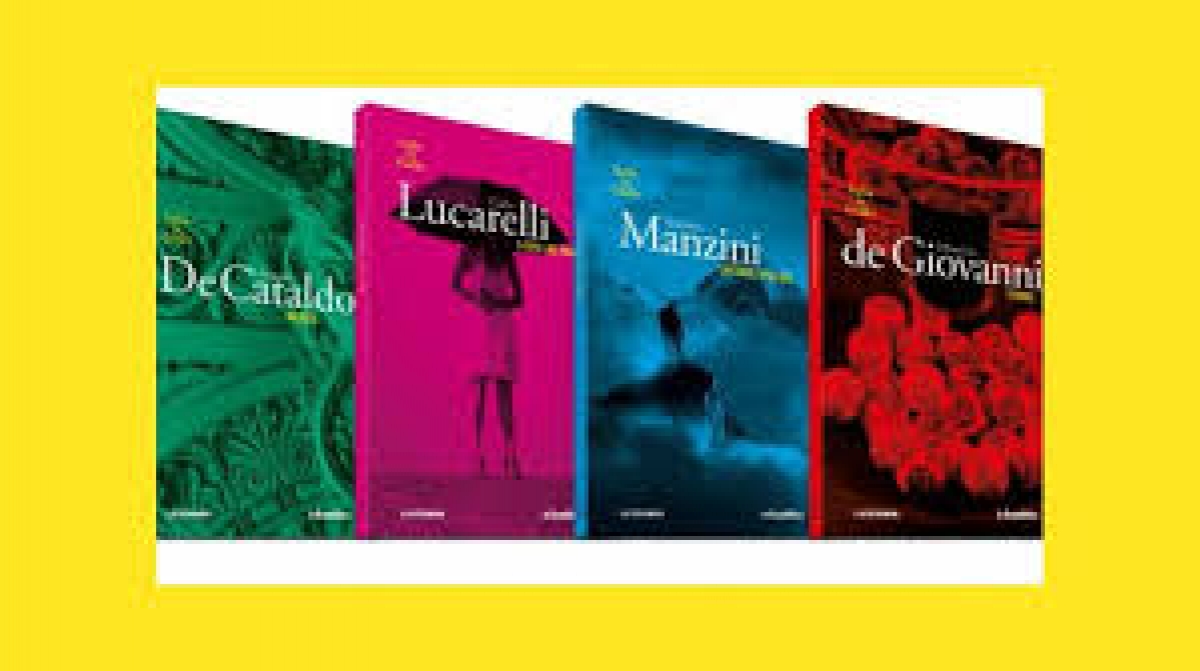
The daily newspaper *La Stampa* offered alongside the paper a series of noir short stories: Macchiavelli, De Silva, Fois, Lucarelli, Manzini, Carlotto, Simi, Robecchi, Malvaldi, Fantini and Pariani, Cassar Scalia, Pastor, Recami, de Giovanni, De Cataldo, and Savatteri. It was an excellent initiative: it provided a survey of the principal Italian writers of the genre. What emerges is that Italian noir is setting-driven, the setting constructed around a character, generally a police inspector; the plot remains in the background and is often predictable. Among Northern authors, the context is realistically raw, a mirror of an amoral Italy devoid of prospects; where the South is concerned, the setting is transfigured into a fantasy of escape from the desolation of Southern society—an aspiration rendered dreamlike by the coquettish use of dialect, in the style of Camilleri. I shall focus on a few of these stories. Maurizio de Giovanni's *La febbre* takes us to Naples, and its very title recalls Matilde Serao's *Il Paese di Cuccagna* (see review on this site). The fever is the lottery game, and the victim is the *assistito*, the medium who provides numbers received from the beyond. One cannot help but feel sympathy for an inspector so intimately affected by the victim’s fate. > In the image that presented itself to my soul's gaze, and whose suffering my soul shared, the blood ran down like a long, unbroken tear, staining the cheek, the neck, and the front of the dressing gown . The story is steeped in Neapolitan spirit: airy, refined in language and syntax, with a well-constructed plot, the brief tale of the *assistito* invites us to explore further works by de Giovanni. In *Romanzo Criminale* (see review on this site), Giancarlo De Cataldo had offered a bleak, resigned fresco of Italy and of Rome in particular, leaving the characters in the background as mere criminal stereotypes. In the story bearing the emblematic title of *Medusa*, the protagonist is the heart of the narrative. Now an elderly, retired teacher renowned for her strictness, Professor Blasi spent her life in a peculiar relationship with a homosexual baron. And when the latter was murdered, > at the Caffè Centrale they spoke of nothing else. And they spoke of it in the Salento manner, with little or no pity , but while > the baron, deep down, could be forgiven anything: he was born that way, and that was how he was bound to end up. But as for her, oh no, that pointless obstinacy of hers would be held against her for eternity . It must be acknowledged: De Cataldo is a cut above other Italian noir authors, in both style and substance. Imagine an elderly man in a Milan "with that yellow sky that boded no good"—what can he possibly think when his doorbell rings? In this little gem, *Ottobre in giallo a Milano*, Francesco Recami weaves a surreal yet plausible tale. The elderly pensioner strikes an intruder, who claims to be a police inspector, with a monkey wrench; gripped by panic over what he has done, rather than turning to law enforcement as a dutiful citizen should, he dumps the bleeding, unconscious body in front of the emergency room with the help of a rogue acquaintance, and then takes refuge in the underbelly of society aided by a scoundrel nephew—part pusher, wholly greedy. What will become of our old man in a Milan, > where it looked as though a nuclear bomb had gone off, or at least that's how they color post-atomic skies in the movies ? I had first encountered Recami in another story, *Progresso-Audace 3-22* (see review on this site under *Il Calcio in giallo*), and had appreciated his elegant depiction of our era's disturbing paradoxes: I believe it would be worthwhile to explore this author through full-length novels. How I enjoy Gaetano Savatteri! The plot is insubstantial, but there is irony to spare! As in *La segreta alchimia* (see review on this site under *Viaggiare in giallo*), the protagonist is an unemployed journalist, relentlessly teased by a devoted friend and an architect who might be his girlfriend, enraptured by works of art, splendid and superfluous. The town is Gibellina, where the Belice earthquake produced a reconstruction made of rationalist urban planning and monuments by celebrated artists; a pity that the landscape is a desert, a surreal abandonment, left behind by inhabitants fleeing to the North and abroad. The subtle irony, the affectionate depiction of the setting, the rhetoric of institutional rituals—the annual conference, the buffet, and the museum visit—the characters confined to their roles: these are all the foundation of a social and political critique, presented with a light touch and therefore never banal. It is a story well worth reading. Why read these stories? They are compelling and thoroughly enjoyable.