Finished reading on: December 06, 2020
Italy in Giallo
Title of the original version reviewed: «Italia in Giallo»
AI Translation Notice: This review was translated from the original Italian using artificial intelligence. Book quotes and excerpts are translated interpretations and will not match the author's original English phrasing or official published translations.
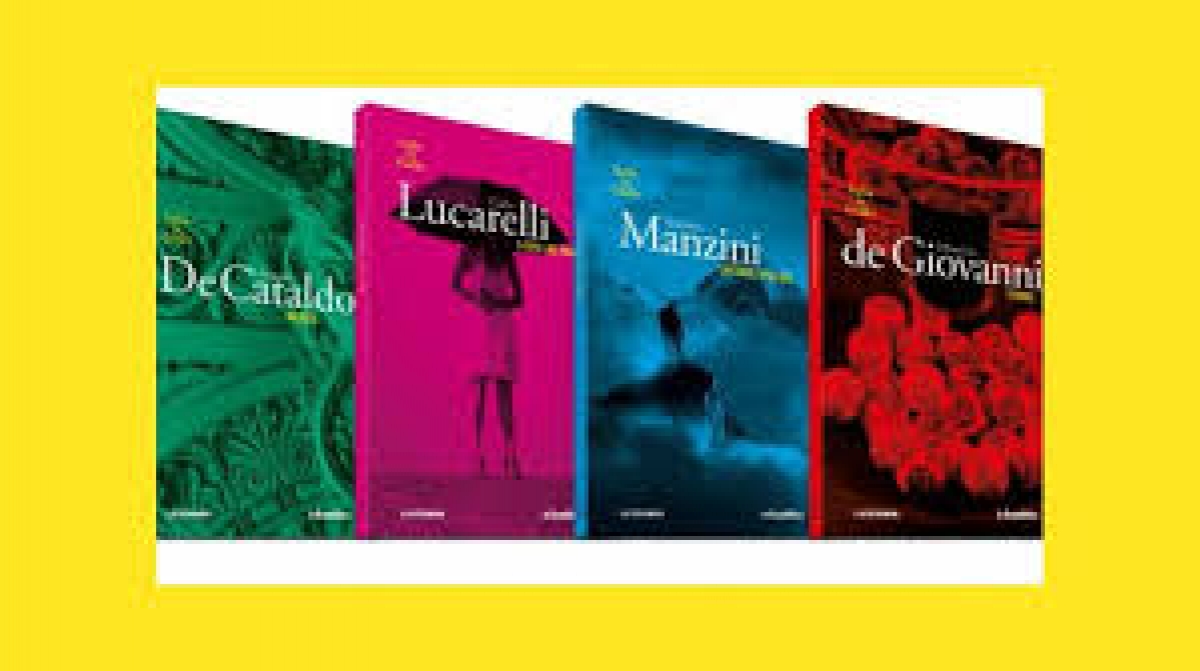
The daily newspaper La Stampa offered alongside the paper a series of noir short stories: Macchiavelli, De Silva, Fois, Lucarelli, Manzini, Carlotto, Simi, Robecchi, Malvaldi, Fantini and Pariani, Cassar Scalia, Pastor, Recami, de Giovanni, De Cataldo, and Savatteri. It was an excellent initiative: it provided a survey of the principal Italian writers of the genre. What emerges is that Italian noir is setting-driven, the setting constructed around a character, generally a police inspector; the plot remains in the background and is often predictable. Among Northern authors, the context is realistically raw, a mirror of an amoral Italy devoid of prospects; where the South is concerned, the setting is transfigured into a fantasy of escape from the desolation of Southern society—an aspiration rendered dreamlike by the coquettish use of dialect, in the style of Camilleri.
I shall focus on a few of these stories. Maurizio de Giovanni's La febbre takes us to Naples, and its very title recalls Matilde Serao's Il Paese di Cuccagna (see review on this site). The fever is the lottery game, and the victim is the assistito, the medium who provides numbers received from the beyond. One cannot help but feel sympathy for an inspector so intimately affected by the victim’s fate.
In the image that presented itself to my soul's gaze, and whose suffering my soul shared, the blood ran down like a long, unbroken tear, staining the cheek, the neck, and the front of the dressing gown
. The story is steeped in Neapolitan spirit: airy, refined in language and syntax, with a well-constructed plot, the brief tale of the assistito invites us to explore further works by de Giovanni. In Romanzo Criminale (see review on this site), Giancarlo De Cataldo had offered a bleak, resigned fresco of Italy and of Rome in particular, leaving the characters in the background as mere criminal stereotypes. In the story bearing the emblematic title of Medusa, the protagonist is the heart of the narrative. Now an elderly, retired teacher renowned for her strictness, Professor Blasi spent her life in a peculiar relationship with a homosexual baron. And when the latter was murdered,
at the Caffè Centrale they spoke of nothing else. And they spoke of it in the Salento manner, with little or no pity
, but while
the baron, deep down, could be forgiven anything: he was born that way, and that was how he was bound to end up. But as for her, oh no, that pointless obstinacy of hers would be held against her for eternity
. It must be acknowledged: De Cataldo is a cut above other Italian noir authors, in both style and substance. Imagine an elderly man in a Milan "with that yellow sky that boded no good"—what can he possibly think when his doorbell rings? In this little gem, Ottobre in giallo a Milano, Francesco Recami weaves a surreal yet plausible tale. The elderly pensioner strikes an intruder, who claims to be a police inspector, with a monkey wrench; gripped by panic over what he has done, rather than turning to law enforcement as a dutiful citizen should, he dumps the bleeding, unconscious body in front of the emergency room with the help of a rogue acquaintance, and then takes refuge in the underbelly of society aided by a scoundrel nephew—part pusher, wholly greedy. What will become of our old man in a Milan,
where it looked as though a nuclear bomb had gone off, or at least that's how they color post-atomic skies in the movies
? I had first encountered Recami in another story, Progresso-Audace 3-22 (see review on this site under Il Calcio in giallo), and had appreciated his elegant depiction of our era's disturbing paradoxes: I believe it would be worthwhile to explore this author through full-length novels. How I enjoy Gaetano Savatteri! The plot is insubstantial, but there is irony to spare! As in La segreta alchimia (see review on this site under Viaggiare in giallo), the protagonist is an unemployed journalist, relentlessly teased by a devoted friend and an architect who might be his girlfriend, enraptured by works of art, splendid and superfluous. The town is Gibellina, where the Belice earthquake produced a reconstruction made of rationalist urban planning and monuments by celebrated artists; a pity that the landscape is a desert, a surreal abandonment, left behind by inhabitants fleeing to the North and abroad. The subtle irony, the affectionate depiction of the setting, the rhetoric of institutional rituals—the annual conference, the buffet, and the museum visit—the characters confined to their roles: these are all the foundation of a social and political critique, presented with a light touch and therefore never banal. It is a story well worth reading.
Why read these stories? They are compelling and thoroughly enjoyable.