Finished reading on: October 08, 2024
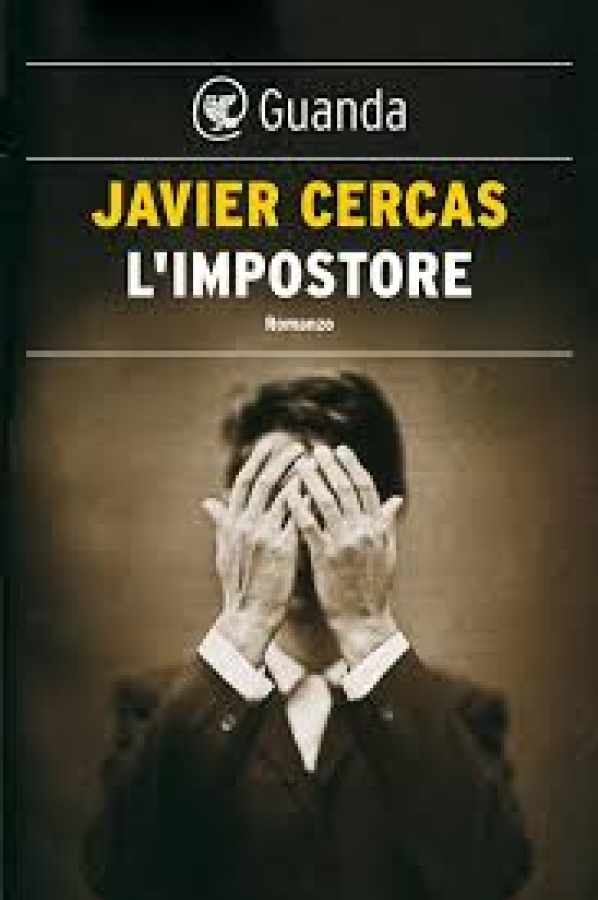
The Impostor
Title of the original version reviewed: «L'impostore»
AI Translation Notice: This review was translated from the original Italian using artificial intelligence. Book quotes and excerpts are translated interpretations and will not match the author's original English phrasing or official published translations.
From 1975 to 2005, Spain was deceived by a great impostor. Enric Marco, the obscure owner of an auto repair shop, fabricated a past as an anti-Francoist, claiming he had been deported for it to the Flossenbürg concentration camp alongside eight thousand other Spanish Republicans sent to Germany to die in the extermination camps. Capitalizing on the halo bestowed upon him by his forged past, Marco served first as secretary general of the Confederación Nacional del Trabajo, and later as president of the Amical de Mauthausen. Thanks to an obscure historian, Marco's colossal lie was uncovered just days before he was due to speak at a ceremony in Mauthausen before the Spanish prime minister. Vargas Llosa dubbed Marco «appalling and brilliant». When Cercas meets the man for the first time, he cannot help but cry out
a horror! A genuine horror!. What held him back from writing a book about him were not merely the outrages committed by Marco, from the grief inflicted on other deportees and their relatives to the countless young people who had listened to him, captivated and trembling; Cercas feared becoming ensnared in the tentacles of the sublime liar, wondering whether he was willing
to write a book about Enric Marco without making a pact with the devil. (...) why not attempt to redeem the great impostor and the great damned soul, that consummate scoundrel who has already been condemned more than enough?. Those who have read Soldiers of Salamis (see the review on this site) know that Cercas tends to exploit these hesitations of his about excavating the «truth». Here too, Cercas overcomes his moral scruples, easily forgetting what Primo Levi once said—that to understand is already to justify; with the usual dedication of an investigative journalist, he sets out to reconstruct the murky events and insidious deceptions that led Marco to dominate the national stage during the post-Franco years. We leave it to the reader to delve into the details of a convoluted story that traverses Spain's recent history. Let us simply say that Cercas traces the root of Marco's success to a blend of small truths, historical facts, personal charisma, and brazen lies. It is true! Marco was indeed a villain; yet just as Limonov was for Carrère and Don Quixote for Don Alonso Quijano (see the reviews of both books on this site), Marco
gave himself (...) a new identity and a new, heroic life, (...) having passed the zenith of life, he wants to go on living when it is no longer his turn to live, or rather he wants to live on, against everything and everyone, all that he had not lived until then. Is he not like a writer permitted to lie in order to tell the truth? Poor Cercas! Little does he know that this indulgence toward deceit is a breach into which Marco will ruthlessly wedge himself, recalling that the final character in Soldiers of Salamis, the obscure soldier-hero, was merely a fiction of the writer; a fiction with which Cercas deceived countless readers who, after reading the novel, wrote to the nursing home in Dijon where the author had claimed the obscure hero lived. And therefore Cercas, too, is an impostor:
you are a player and a liar, possessing all my flaws and none of my virtues, and I am your reflection in a dream, or in a mirror. (...) This is the truth, Javier. The truth is that you are me.
The novel's focal point is the interview that the author declares to be imaginary, for once. In a lengthy dialogue between Marco and Cercas, the latter's certainties crumble before the relentless arguments of the impostor, intoxicated by the role of inquisitor assigned to him by the Spanish author. The only explicitly fictional pages seem to upend the entire narrative. Where lies the boundary between invention and truth in historical memory? And why should lies not be accepted if they serve to illuminate the dark chapters of history, forging conscientious minds? But in doing so, as in The Brothers Karamazov, are we left merely to bow before the mystery of the past, hoping it to be a just and righteous mystery? (see the review of The Brothers Karamazov on this site).
The novel's fundamental merit lies precisely in Marco's story, which tells itself, so incredible it is. Cercas layers over it a meandering and prolix plot, one that often turns in on itself, weighed down by digressions that make for heavy reading. Offsetting the narrative's convolutions is the author's characteristically fluid, lucid phrasing: a prose style that smacks perhaps a bit too much of journalism.
Why read it? The story is intriguing.