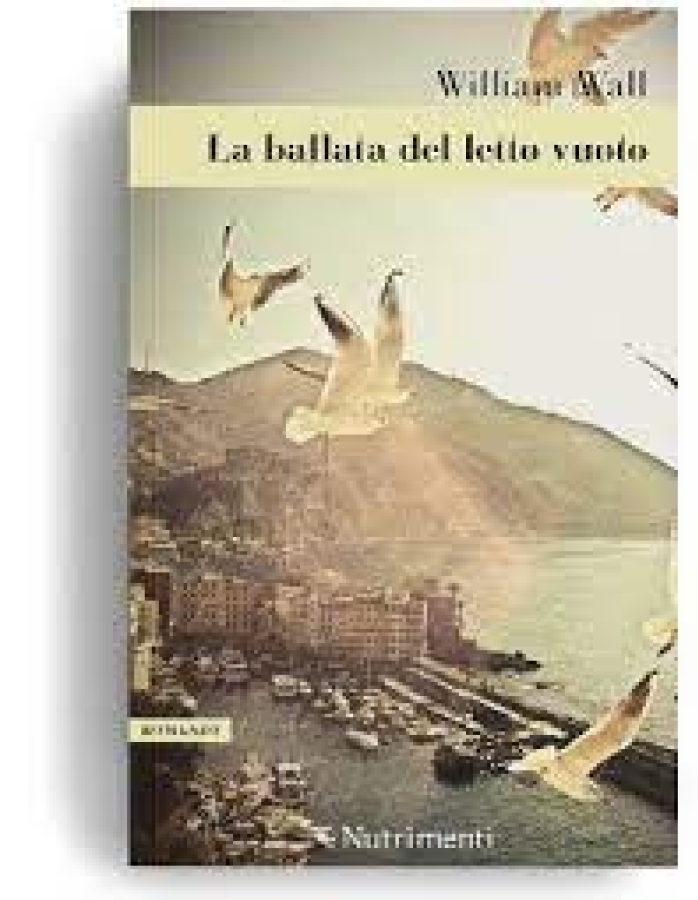
The Ballad of the Empty Bed
Kate lives in Dublin and is a middle-aged university lecturer. One day, she finds her husband dead in the bathroom and discovers herself buried in debt, hounded by creditors and banks. The man with whom she shared most of her life in an increasingly weary relationship was a scoundrel. > I wake up this morning with an awful headache, my new man had just left me a room and an empty bed . It is Bessie Smith's empty bed blues, a blues that echoes in Kate's mind with “the sax groaning in the background” and Bessie’s throaty, sensual voice. This state of stunned despair seems to offer no way out, until a young woman places a set of keys in her hand. From here unfolds a story of multiple narrative threads. Kate tracks down the house to which these keys belong: an apartment above Camogli, where “the sea eats away the land” and where Kate can see > the gleaming smoothness of newly tumbled stones beneath the cliffs of the Portofino sea, mica crystals sparkling in the winter sun, (...) the looming tenement blocks, the medieval arch, the old village, the little bars and restaurants bathed in pale golden sunlight, thin as cardboard silhouettes, (...) capable of radiating enough light and warmth to warm a soul or a heart. Perhaps even mine. In my head echoes the voice of change. Along with the splendid Ligurian harbor, Kate falls in love with Italian—with its musicality, but also its grammatical forms, which seem to reflect our own existence, > so uncertain or so complex that even the verb we use to express it must leap frenetically between different forms and even different roots . There is pleasure in addressing her husband's mistress as a *zoccola*, a sewer rat, only to discover that the masculine ending of the word carries many other meanings, but never that of a prostitute. In short, in Italian only a loose woman is a sewer rat—a subtle, ironic observation that perhaps only a non-Italian could make, accustomed as we so often are to taking the sexist usage of certain words for granted. Kate then meets Anna, an elderly neighbor with whom she forms an increasingly intimate friendship. In sketching this character, the author notes having drawn on Rossana Rossanda; what is certain is that this figure allows Wall to voice his own leftist sensibilities, mirroring himself in the image of a woman born out of the communist and activist traditions of Italian political culture. Yet an image it remains: a stereotype that impedes any genuine deepening of a singular friendship between a middle-aged, lonely, and betrayed Irish woman and an elderly, cultured lady still haunted by abandonment and nostalgia. Thus, the novel's core theme, “this headlong descent into Italy,” is not enriched by the psychological depth of an encounter, but is instead weighed down by reflections far too predictable to evoke wonder or stir our imagination. > Is it true that we can shed our lives just as snakes shed their skin? Or are we, on the contrary, tethered to old places and past times by invisible cables that bind us and thwart our every move . Wall answers these questions through Kate's journey, as she becomes a resident of Camogli and an adoptive Italian. It is striking that this question is posed on Bloomsday. Here emerges a defining trait of Wall's narrative: deceptively plain and straightforward, far removed from the stereotypically Irish idiom, yet replete with profound and evocative philosophical and literary reflections, the latter framed by quotations from Joyce's *Ulysses*. Could it be that the epiphany of the great Irish writer, in its apparent prosaicness, expresses a quest for renewal that remains too steeped in the Dublin world to ever truly succeed? The prose flows smoothly and pleasantly, marred only by an overreliance on rhetorical questions—a literary device that injects movement into the narrative but fractures and weighs down the discourse. The landscape and people of Camogli are depicted with immense affection and communicative vigor; the observations on the Italian language are engaging and gently wry. The plot, however, is fragile and ultimately unravels, and it is a pity that the psychological dimensions of the relationship between these two women—so divergent in history and culture—were not probed more deeply. Why read it? It is the chronicle of falling in love with a place and a language.

The Boy on the Train
All too often we forget the importance of places for our lives, for the shaping of our feelings, for the transmission of an individual and collective memory. As Paolo Casadio observes, walls, objects, and landscapes have the task of bearing witness to the past, of making it outlive ourselves, even if > walls know, but they can never say anything, only bear such a heavy burden in their mute immobility . At times they are not well-known or particularly distinguished sites; they are “non-places,” like the decommissioned station of Fornello on the Florence–Faenza railway line. It is with a “knot of anguish” that Lucia, wife of Giovannino, the new stationmaster, observes it: > that place overlooking the viaduct, that opening of trees and broom around the station, that drop behind the building which could conceal a fissure or a torrent, those marl stratifications that surfaced powerfully amid the garrigue, reflected back to her the image of an exile, the feeling of an invincible hostility . These are the years between 1935 and 1943, and yet, perhaps out of some dark premonition and a naturally fearful disposition, Giovannino experiences this isolation as a shield against the outside world. > Mount Castelpotente watched over the valley, and that mountain had stood there ever since the seabed had risen to form the Apennines. Nothing would happen. And nothing will ever happen, stationmaster. We, here, are forgotten. So spoke the blind man of Piandolci, like an ancient seer. Fornello and the small family—Lucia and Giovannino with the young Romeo—stand as a metaphor for Italian familism, for a life strategy that encloses everything within the realm of affection and familiar, unchanging surroundings; yet we know this to be an illusion, a vain and dangerous hope. With a slow, dreamy rhythm, the novel traces little Romeo’s childhood: the mountain environment, the village school with teachers and classmates unimaginable to us city dwellers, the relationships with peasant families, distant in space yet close in heart. It is a wondrous world for a child, where the few dangers fall within the eternal order of things and events. Nature is ultimately a friend, even when the blizzard rages, or the fields, paths, and houses are buried under snow. Everything changes when the most terrible tragedy of the Second World War bursts onto the scene: the deportation of the Jews. A train laden with poor souls destined for death halts for a night at the small Fornello station. They are permitted to disembark, sleep, and take refreshment with Lucia and Giovannino. Romeo befriends a little girl: a childish infatuation that could have a tragic outcome. > He does not yet know it, but nothing, after all, has any meaning other than what we assign to it, since everything disappears. He has truly grown up, the experience having served as a kind of initiatory ordeal: he has entered the land of loss and regret, and there is nothing more adult than grasping their irremediability and their meaning. And meaning, in that December of 1943, is truly difficult to find . It is a novel about childhood, underpinned by a haunting question for us adults: is it possible to be children? No, if even in an isolated Apennine village a child cannot grow up in peace. It would seem that the blame for this existential unhappiness lies entirely with an outside world gone mad, that it is the responsibility of others, against whom familial affection, friendships, and a benign nature are utterly powerless. Is this truly so? We cannot reveal the ending; we can say, along with the author, that we are all powerless > to alter the course of things, to neutralize the hostile relentlessness of fate, which so often turns into unappealable verdicts . And nothing remains but > the embrace, involvement, meager consolation, (...) communion in sorrow. The fundamental merit of the novel lies in its writing—perhaps somewhat unfashionable in its classicizing Italian, yet so elegant and refined as to satisfy a nostalgia for fine language. What is lacking, unfortunately, is the plot: the narrative pacing unfolds without surprises, except in the final pages: a long wait that is not redeemed by the characters, who are too sketchily drawn, nor by the description of the Apennine setting; and this latter proves a bitter disappointment—the failure to convey the magical, ancient atmosphere of a landscape and a society that have now vanished. Why read it? Beautiful, even if a bit dull.
A Boat in the Woods
Gasparre lives on an island and is the son of a weigher. He excels at school, particularly in Latin, and moves to Turin with his mother to pursue his studies. At high school, he soon realizes that the teachers themselves demand conformity and integration, regarding him with apprehension as a student who is “too good.” Mediocrity is the hallmark of the school system, and Gasparre’s life is defined precisely by his fraught adjustment to this prevailing social value. Disillusioned, he earns a law degree but opens a bar, implicitly rejecting culture and formal education. Yet, in plants, he finds an outlet for his quest for freedom and self-expression, turning his home into a woodland. The opening of the book is thoroughly engaging: the young student’s experiences, the discovery of the school and the metropolis, the encounters with his peers, and the struggle to be accepted. It is a delicate telling of a story that could belong to any young person. The style is linear and simple, highly effective. Then the book veers toward the paradoxical, toward an escape into a New Age ethos—that of salvation through nature—which, though the author may not realize it, is itself a token of conformity. The style, too, grows heavier, and the rhythm becomes prolix.
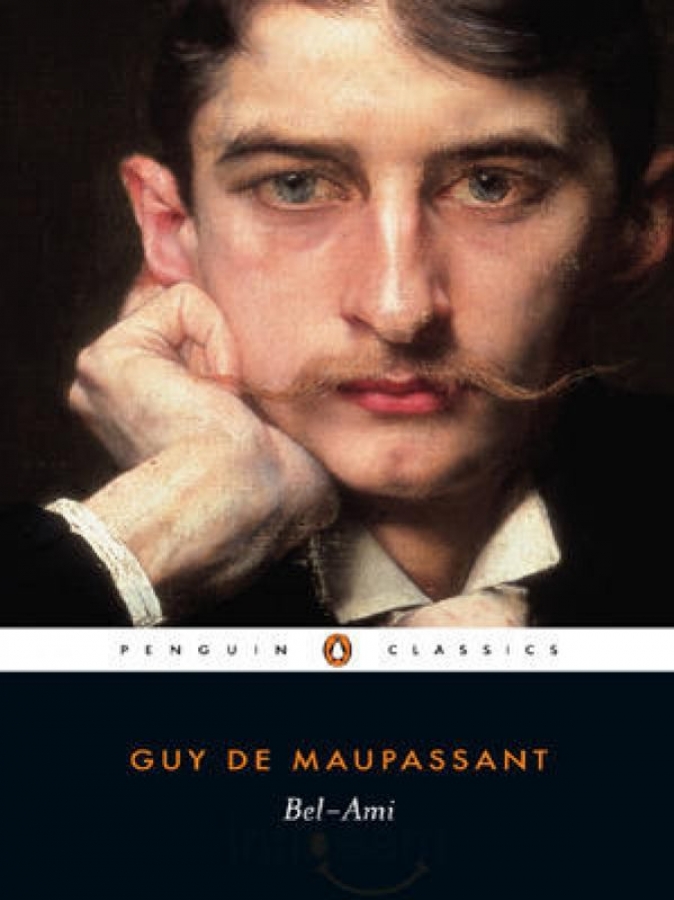
Bel-Ami
The novel is largely set in Paris during the 1880s, the period of the Third Republic following the fall of Napoleon III’s Empire. France, governed by an unscrupulous and corrupt political class, is embarking on its colonial adventure with the conquest of North Africa. Georges Duroy is a young man > tall, well-built, fair, with a reddish-tinged chestnut blondness, upturned moustaches that seemed to foam upon his lips... he looked remarkably like the worst rogue of popular romance . He is a young man from the provinces who has arrived in Paris without any precise aim, save for the allure of > places where _filles publiques_ swarmed, their dance halls, their cafés, their streets; he loved to follow them, speak to them, use familiar address, breathe in their violent perfumes . In short, he is a good-looking fellow, shallow and conceited, who will rightly come to be nicknamed Bel-Ami. Penniless, he can do little more than drift with the crowd until he happens upon a former comrade from his military service, Forestier, who has become the political editor of the newspaper _La Vie française_, owned by Monsieur Walter, an ambitious social climber who entwines business and politics, weaponising the press for his own, often illicit, ends. His friend secures him a post at the newspaper, and thus, despite himself, the young man launches into a journalistic career. Maupassant depicts with subtle irony this nascent world of the press, already by that time a compliant instrument in games of power. Duroy’s swift indoctrination enlightens the young man as to the true nature of journalism. One day, he is dispatched alongside a more seasoned colleague to interview several ambassadors. The two stop at a café; after all, there is no need to gather actual news—it suffices to construct it from secondhand information, even inventing it if necessary, and to cobble together with minimal effort an article containing precisely what the master desires. Are we speaking of nineteenth-century France or of contemporary Italy? Moving in Forestier’s social circle allows the young man to meet two women who will prove pivotal to his Parisian fortunes: Clotilde, "a little brunette, of the sort one calls pretty dark-haired women," and Madeleine, Forestier’s wife. The former shares Duroy’s tastes: she loves pleasure, is unpretentious, and takes life as it comes. She soon becomes Duroy’s ideal mistress, the only woman in whose presence he feels truly at ease and for whom he feels genuine sexual attraction, perhaps because Clotilde is somewhat of a _fille publique_. Madeleine is a modern, independent woman who relishes meddling in political and financial intrigues. As a woman, she cannot expect to play a leading role in the public sphere; she operates instead from behind the scenes through her men—her husband (a mediocre sort), her powerful lover, and Duroy himself, who allows himself to be steered, even as he chafes at her intellectual superiority. For Bel-Ami is vain and frivolous, yet the acute awareness of his own intellectual and moral inferiority breeds in him a vengeful resentment toward the very people from whom he receives aid—often crucial aid—for his career. Upon Forestier’s death, Duroy marries Madeleine; their relationship resembles a business partnership far more than a conjugal bond. Bel-Ami knows full well that Madeleine has several lovers (all men of prominence and power), but he cares little, not least because he too reaps tangible benefits from his wife’s connections: confidential intelligence, money, and honours. Yet he consistently harbours a certain bitterness and disdain toward Madeleine, who endures it patiently, perhaps out of genuine affection for the young man. Out of pure caprice and vanity, Duroy also seduces Madame Walter, the wife of the newspaper’s proprietor; she proves, however, to be a tiresome mistress, having fallen genuinely in love with him and being plagued by guilt over betraying her religious and moral values. How curious—a sincere person in a world of artifice! Life suspended between Clotilde’s eroticism and Madeleine’s intellect might have carried on placidly enough—setting aside the tedium of his liaison with Madame Walter—were it not for Duroy’s decision to marry the newspaper proprietor’s young daughter (and thus Madame Walter’s child). He must rid himself of his wife, and so he arranges for Madeleine to be caught in flagrant adultery, thereby securing a divorce. He then succeeds in marrying the young and wealthy Walter girl, once again through deceit: he persuades the girl (not yet eighteen) to elope with him, creating the necessary pretext for a shotgun wedding. Has Duroy achieved his ends: power, wealth, success? In reality, Bel-Ami’s exploits—the betrayals, the ignominious acts, the abused affections—do not stem from the pursuit of grand ambitions: the young man seeks merely the gratification of his vanity. On the day of his lavish wedding, Duroy > walked slowly down the high steps between two rows of spectators. Yet he saw no one: his thoughts drifted back to the past, and before his eyes, dazzled by the blinding sun, hovered the image of Madame de Marelle (Clotilde), rearranging before the mirror the curls upon her temples, which were always dishevelled when she rose from bed The book may be regarded as a realist novel, insofar as it portrays, with a touch both light and brutal, Parisian high society, power struggles, the role of the press, the enchantment of the boulevards, and even emergent artistic currents. It is a period of monumental upheaval, cultural as well, yet an atmosphere of vacuity pervades the narrative. The social milieu, much like certain existential themes (death, for instance), serves merely as a backdrop to Duroy’s transformation into Bel-Ami, and thence into the wealthy son-in-law of a powerful bourgeois grandee. The young man slips down a moral slope, occasionally feeling revulsion at his own deeds, only to shrug off these fleeting qualms. He is embarrassed when Clotilde suggests he meet her husband—with whom the young man will subsequently become fast friends. When Madeleine inherits a substantial sum from a lover, the young man initially refuses with righteous indignation, as accepting would lay bare his wife’s liaison with the man; yet he soon convinces himself—and seeks to convince Madeleine—that if he pockets half the estate, appearances are preserved, and all is well. It has been called the novel of money, of the press, of politics and careerism; in truth, it is the book of vacuity. And it is noteworthy, whether intentional or not, that it falls to two women (the female sex being a mere instrument for Bel-Ami) to tear through this veneer of bourgeois morality. It falls to Clotilde to fling the truth in his face: > you deceive everyone, you exploit everyone, you take money and pleasure from everyone, and you expect me to treat you like an honest man? Yet what truly enrages him is his mistress’s accusation that he bedded the proprietor’s wealthy daughter before marriage—a girl he had, in fact, respected (out of vanity? or a genuine sense of honour?). "He could endure anything, but this falsehood drove him to distraction." The question remains, then, whether Bel-Ami is entirely incapable of decent feeling, or whether he is fundamentally swept along by circumstance. It falls next to Madeleine to prove that a path through life can be forged beyond the mere chase of petty gratifications. Unlike Bel-Ami, Madeleine possesses a project of her own: to act as a mentor to men, thereby redressing the subjugation of women in nineteenth-century bourgeois society. The greatest virtue of the book lies in the writing of _Bel-Ami_. Maupassant conjures a muted, realistic atmosphere across his settings, admirably capturing the spirit of nineteenth-century Parisian society. His descriptions often seem rendered in pastel, reminiscent of Degas’s portraits. His description, for instance, of the hotel room where Madeleine is caught with her lover succeeds, in just a few strokes, in evoking that sense of the vulgar and the drab one expects from an adulterous rendezvous (within nineteenth-century bourgeois culture): > it was an ordinary hotel room with standard furnishings, where hung that hateful, stale smell peculiar to hotel bedrooms—a smell that emanated from the curtains, the brasses, the walls, the chairs; the smell of all those who had slept or lived, for a day or six months, in this public lodging, leaving behind a trace of their scent, that human scent which, blending with those that had gone before, formed over time a confused, sweet, and intolerable stench, identical in all such places . Why read it? It is a remarkably modern work in its milieu and its characters. The prose is both pleasurable and refined.

The Good Life and Others' Wars of Mr. Pyle, Gentleman
Imagine a Martian sent to Earth to understand what Humans are doing: whether war is to be expected or if we may hope for peace, which would allow interstellar commerce to continue. On the one hand, this visitor, bewildered yet indifferent (Earthlings' problems, after all!), would glean only a muddled impression; on the other, he might be an inquisitive traveler, somewhat horrified by our squalor and somewhat captivated by ancient monuments and beautiful women. Poised between metaphor and history, Barbero recounts the experiences of an American gentleman, Mr. Robert Pyle, traveling through the Prussia of 1806, at the height of the Napoleonic Wars, tasked with sending weekly dispatches to the United States ambassador in London. The first evident reality is that, traveling from Amsterdam to Berlin, he constantly encounters so many borders—some within Prussia itself—as to suggest that > the geography of European states resembles a puzzle left unfinished by a petulant child rather than a product of human reason, and it is hardly surprising that their politics should be guided above all else by fear of their neighbors. Could he be speaking of our own Europe? And then, with > that freedom the traveler enjoys to choose the roads to take, the dishes to savor, the girls to caress , Mr. Pyle can > spend the afternoon in the palace of a grand seigneur conversing in French , and end > the evening in the inn's courtyard, listening to the landlady's chatter and watching the scullery maid wash dishes in the kitchen by lantern light. Our gentleman does not merely observe; whenever possible, he reaps the fruits of fleeting encounters—be they prostitutes, young maidservants, or peasant girls persuaded by a few thalers, or fleeting, Byronic liaisons with noblewomen of the Berlin court. The only thing that holds him back is the risk of contracting some venereal disease. There are other pleasant diversions: conversations with Prussian officers, > capable even of philosophical reflections , card games where our Pyle unfailingly loses a tidy sum of thalers, the elegant salons where French is spoken and one is either for the war or against it, yet always admiring Bonaparte. Our gentleman even manages to meet Fichte and Goethe—the former just as history of philosophy presents him, the latter disappointing: a garrulous drunkard. Is this the mission entrusted to him? Amid brothels, grueling travel between coaching inns, and long conversations, our Robert even manages to meet Prussian ministers, Frederick William III himself, and the drowsy sovereigns of the minor North German states, such as Hanover and Saxony. And when he has no news to report, no matter: it is enough to read the Parisian *Moniteur*, even days old, or fabricate supposed intelligence to be denied or corrected in the following dispatch. For Mr. Pyle, it is an exhausting yet ultimately pleasant journey; for us, a splendid portrait of early nineteenth-century Germany awaiting an inevitable war, for at stake is the pride of a military caste forged by Frederick the Great and the nascent nationalism of the German nation. What shatters this grand tour, rendering all martial pretensions fatuous and reckless, are the disastrous defeats of Jena and Auerstedt, which lay bare the Prussian army's lack of preparation and the strategic backwardness of its generals. With a historian's precision, Barbero exposes the dark underside of war: soldiers marching to their deaths poorly equipped and in disarray, yet driven by the ancestral fatalism of obedient serfs; burned and pillaged homes, with civilians murdered, raped, or desperately fleeing; generals traveling in carriages, sticklers for protocol and mindful of their comforts; officers caught between discipline and solidarity toward their men, whom they cannot even provide with bread—though, after all, the soldiers are peasants accustomed to starvation. > It is all written in a little leather-bound notebook , says Mr. Pyle in the prologue, > which has been yellowing ever since, in the drawer of a wobbly desk, exiled for many years in the drawer, (...) a regrettable account of things done many years ago, and done poorly. Already in *Romanzo russo*, written in 1998 and set in Gorbachev's Russia (see the review on this site), one senses a kind of alienation regarding the moral and institutional dissolution of the Soviet Union; here, that feeling is even more pronounced, perhaps because the events are so distant in time. Robert Pyle is, at bottom, a spectator; even during the bloody Battle of Jena, his primary concern is his own survival, astonished to find himself caught up in this tragedy despite everything. On the other hand, Barbero is first and foremost a historian, and his profession compels him to remain detached, subtly ironic at times, but never emotionally enmeshed with his characters or their painful plights. To be sure, the author's convictions are clear: it is easy to talk of war from afar; one must experience it from the perspective of the humble, only then discovering the vast gulf between crisp, orderly maneuvers on a parade ground and what actually unfolds on a battlefield. Not to be seduced by technology, we must always remember that there are men and women, children and the elderly, and they are the true protagonists of war. Even more than in *Romanzo russo*, an intense ethical dimension shines through—a stern indictment of the fatuity of the ruling and intellectual classes, whether Fichte and Goethe or our American gentleman. One might say Barbero writes as he speaks: fluidly, laden with parenthetical remarks, precise and evocative in his descriptions. It reads smoothly, were it not for the fact that one all too often loses one's way in a repetitive, prolix plot. The extensive description of the Battle of Jena redeems the entire narrative, which had threatened to fray to the point of unraveling into formless excess. Why read it? For history lovers it is a gem—a remarkably timely novel.
Benediction
Dad Lewis and his wife return from Denver > away from the mountains, back out onto the high plains: in the pastures an expanse of buffalo grass, sagebrush, weeds, and blue grama, in the cultivated fields wheat and cotton. On either side of the highway there were dirt country roads running in all directions under a pure blue sky. Holt is a small Colorado town like so many others, a place hardly worth identifying because it is the same everywhere, it is where normal life is lived, > the precious ordinary life: mundane stories, with nothing exceptional about them, stories that could belong to anyone, yet which hold within them love, familial affection, unhappiness, guilt, memories, and the expectation of Death. Dad has just learned he has only a few months left to live, due to lung cancer. We witness the man’s slow, inexorable physical decline. Through frequent flashbacks, the author offers glimpses of what now torments Dad. In the past, as the owner of a supermarket, he fired an employee who had stolen from him; Dad was unrelenting, cast from a single mold, offering no second chances—not even to the man’s wife, who had gone so far as to offer her own body to pay back what had been taken. The man killed himself, leaving his family in destitution. This unyielding attitude led to a rupture with his son. When he caught him, still an adolescent, wearing his older sister’s clothes, he beat him, terrified of scandal and rejecting his homosexuality; the boy ran away from home, leaving no trace behind. With his elder daughter as well, who has returned home to care for him, he was emotionally detached, stern, and distant. Now, he realizes he has never caressed his daughter. > I was too busy. I didn't pay attention. No, she said, You weren't. She put her hand on his cheek, now. Forgive me, he whispered. I missed out on so much. I could have done better. I have always loved you. He wants to see his son again, he waits for him, he longs to reach out to the woman to apologize, he wishes he could turn back time, but now the people of his life, those he has lost, are merely part of a terminal patient’s nightmares. While Dad’s inexorable journey toward Death is the central narrative, other lives revolve around it, all marked by suffering. > Every life passes through some kind of unhappiness, (...) but there is good as well. (...) There are only brief moments. And as in Kader Abdolah's *The Parrot Flew Over the IJssel* (see review on this site), the cycle of the seasons rolls across the Great Plains. > In autumn the days turned cold and the leaves fell from the trees and in winter the wind came down from the mountains and out on the high plains of Holt County there were night storms and three-day blizzards. The novel demonstrates how our lives slip by without us seizing the opportunities to show humanity toward others, to comprehend the suffering of those around us. To be sure, Dad displayed great moral integrity in refusing the advances of an attractive woman; but wouldn't it have been better had he accepted them, had he been more forgiving of himself? Even in our prosaic lives, so far removed from those of great men, we are constantly faced with choices, and these decisions concern our relationships with others. At the end of life, nothing remains but remembrance, yet Death dissolves even that. > If one does not die, one lives, so writes Salvatore Satta in *The Day of Judgment* (see review on this site). > And this truth, seemingly obvious, is instead heavy with consequences, for life transforms everything; nothing can withstand its implacable truth. (...) To know oneself, one must live out one's life to the very end, to the moment one is lowered into the grave. The fundamental strength of the book lies in its prose: crisp, spare, and mesmerizing all at once. Short sentences, taut dialogue, and sparse digressions on the setting follow in succession; the characters are not merely described, but reveal themselves, always wrapped in that aura of mystery, of the incomprehensible, that shadows us throughout our lives. If Dad reveals himself in Death, who are the others? It is a pity that the narrative rhythm, elsewhere so intense, is compromised by an ending of a melodramatic and frankly verbose register. Why read it? Splendid prose.
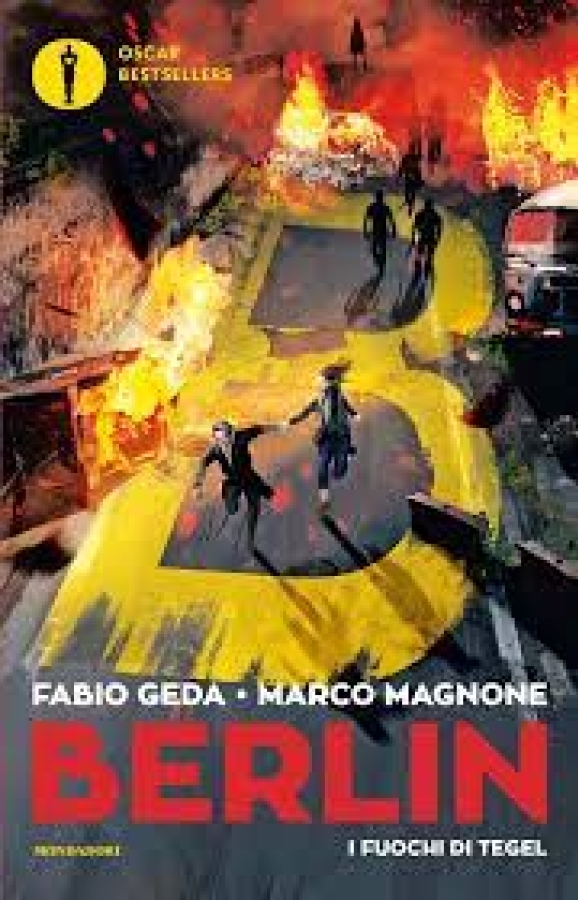
Berlin: The Fires of Tegel
In a Berlin still divided by the Wall, a virus has wiped out all adults. The sole survivors are girls and boys under the age of eighteen; once they reach that threshold, the fate of the grown-ups awaits them as well. > They procured food through hunting: they had learned to build traps for rabbits; to dig pits to snare wild boars and deer. (...) They had taken over urban vegetable gardens, trying to tend them with clumsy, inexperienced gestures. (...) It had not been easy. They had suffered, especially during the first winter. But then they had learned to get by . As Francesco Petrarca wrote, “both remembrance and expectation grieve my heart”; the new masters of Berlin live in a continuous, anguished oscillation between memory—increasingly evanescent and imagined—and reality: a present orphaned of parents. > As for me, when I try to focus on their faces, I see them all blurred. But I hear their voices. And every now and then, in the air, I feel like I catch the scent of my mother’s clothes. As Ryszard Kapuściński writes in the final chapter of *The Shadow of the Sun* (see the review on this site), dissolving the memory of one’s yesterday means turning into > people without a past, which is to say, nobody. Those men would lose what bound them together, scattering each on his own way, alone. In *Berlin*, there is no future simply because they know they will all die upon turning eighteen. The girls and boys live without prospects because there can be no utopia when one is alone. Within the group, they seek that bond which might give meaning to existence, while carefully avoiding interference with the other clans—especially those with radically different values and rules. And it is out of respect for this overarching norm of coexistence that Sven, the charismatic leader of the Gropius, chooses not to aid the girls of Havel in taking back Theo, an infant kidnapped by the terrifying boys of Tegel. > Sven looked at Nora gently; she reminded him of a classmate he had fallen in love with in another life. (...) Cooperation. Solidarity. Weren’t those the rules? Sven dragged his eyes along the stained walls, down to the floor, and finally fixed them on his own feet. He knew those had been his words, just two years earlier. At the dawn of the new world. Was Tegel right, then, when mocking the Gropius kids for trying to replicate their parents’ society? > Young flesh, danger, excess: such was Tegel’s revolution, their response to the cruelty of fate. Their way of denying that the virus had snuffed out an extraordinary season of life, the one in which physical strength gives way to awareness and experience . We stand at a crossroads: we must choose between a world of solidarity and coexistence or slide madly down into the dark tunnel of blind force. It marks the opening of a battle from which a new humanity may yet be born. The reader must not be misled by what I have written. *Berlin* is not a treatise on moral philosophy; it is an adventure novel, a kind of chivalric tale, rich in plot twists and populated by characters, some of whom we will grow to love as the narrative unfolds (the book is the first installment of a saga). Adopting the adolescents’ perspective, Geda and Magnone plumb the forces beneath youth’s turbulence (the perpetual swinging between friendship and anarchy, detachment from and attachment to parents, the lure of risk and the dread of it) and confront us adults with a question: we, the absentees and the indifferent—will it fall to our children and grandchildren to find their own way alone? Will they be forced to fight for a better world without us? One is left with the urge to read on, both for the plot and to see who is right: the madness of Tegel, the solidarity of Gropius, or both. The prose is nearly flawless—perhaps excessively so. No distinct idiosyncrasies emerge, in either vocabulary or syntax, capable of mesmerizing or imparting an unusual rhythm to the narrative. The characters remain suspended within the roles they occupy in the group, lacking distinct personalities and backstories of their own. Why read it? Adventurous, distinctive, and profound.
The Brewer of Preston
The initial premise is a true event that took place in 1875 in Sicily. The prefect of Caltanissetta, a Florentine, insisted that the town’s new theatre be inaugurated with a virtually unknown opera, namely *The Brewer of Preston*. Numerous disturbances ensued, left largely unresolved by the inquiry that followed. Taking this real-life occurrence as his point of departure, Camilleri crafted a novel open to multiple readings, so much so that the chapters themselves could easily be rearranged in an order different from that of the narration. One possible trajectory is undoubtedly the detective plot, centered on the police delegate, Puglisi—the novel’s sole genuinely honest character, who may well be regarded as a precursor to Montalbano. In Camilleri’s imagination, the theatre is set ablaze by Mazzinian agitators on the very night of its opening. Acting as a true investigator, Puglisi uncovers the arson behind the fire, a crime for which the police commissioner is equally culpable, having chosen—out of petty political squabbles, and despite having been alerted by Puglisi himself—not to arrest the Mazzinian agitators upon their arrival in the city. Puglisi’s death at the hands of one of the arsonists proves expedient for many, not least the authorities of the newly formed Italian state. The book’s other interpretive key lies precisely in the corruption and arrogance of the officials dispatched to Sicily, chief among them the prefect himself, who colludes with the local mafia: an unholy alliance that bodes ill for the future of the island. Then there is the world of Sicily itself, and it is here that the author is at his finest, offering evocative, affectionately ironic, and at times paradoxical portraits of a society that watches, from the heights of a millennia-old history, the descent of new conquerors (the Piedmontese): a mix of pessimism, cynicism, pride, and stubbornness in defense of its own *sicilianità*, alongside an ingrained habit of submitting to the powerful and to violence. Further narrative threads and motifs can also be identified, particularly as the author structures each chapter around references to masterpieces of Italian and world literature, which one presumes are among those Camilleri held in highest regard. In this sense, the novel’s table of contents serves as a reading guide to other authors. The novel unfolds through continuous temporal shifts back and forth, with the result of fragmenting the plot into numerous vignettes, thereby compromising the narrative’s cohesion. The recourse to the Sicilian language, both in dialogue and narration, intrigues and at times makes for an agreeable read, yet on the whole it leaves an overriding impression of mannerism and literary preciousness pursued for its own sake. Why read it? It is an engaging read, even if one is ultimately left somewhat disappointed. What was the author trying to say?

The Broken Window
Anyone who has read or seen *The Bone Collector* in the cinema is already familiar with the book's main characters. Lincoln Rhyme is a renowned criminologist who bases his investigative techniques on the rigorous and meticulous use of "physical" evidence, even the most insignificant. Despite having been left paralyzed following a shootout. Rhyme continues to collaborate with the police, assisted by a team of detectives and by Amelia Sachs, a close and capable collaborator as well as his life partner. Rhyme's cousin is accused of rape and murder. All the evidence points to his guilt. Rhyme is quickly convinced that the clues have been fabricated by a serial killer who "knows everything." In the course of the investigation, Rhyme and his team discover the existence of a massive private organization that collects, stores, and processes information on virtually everything, selling it to corporations (for market research, for instance) as well as to public and state institutions. It is a "Digital Big Brother," whose data is seemingly inaccessible, yet which the criminal has managed to exploit and even manipulate. The thriller is skillfully constructed, boasting a plot rich in twists and an unpredictable conclusion. The best part of the book is its depiction of the world of big data processing corporations. Rhyme’s team proves remarkably inexpert (perhaps excessively so, given they do not even know Excel) and ventures into this realm step by step, left stunned, fascinated, and alarmed. Rhyme himself is disconcerted: can access to such vast amounts of information truly supplant the method and intuition that must govern criminology? And the reader, too, begins to wonder. On the surface, possessing powerful databases and sophisticated data collection tools would appear to be a monumental achievement. But is it worth it if a criminal can exploit them to commit rape and murder with impunity? Is the availability of so much information—which even enables the prediction of events—truly helpful in tracking down killers, or do traditional, obsolete investigative methods remain more effective? The premise is intriguing, the prose concise and effective, the plot well-engineered, and the characters—especially Amelia Sachs—compelling; it is a pity that, as so often happens with thrillers, the novel's sheer length renders it wordy and meandering. Are these authors paid by word count, as Salgari once was? Why read it? It is a solid thriller, and the theme is compelling.

Good Conduct
Kosovo is a small Balkan state, nestled between Serbia and Albania: it declared independence from Serbia in 2008 and is inhabited by an overwhelming Albanian majority, alongside a Serbian minority along the border with Serbia. The latter has not recognized Kosovo, and the Serbian community lives in a state of suspension, in constant tension with the Albanians. In Sumor, the small village where the novel is set, > almost everyone had remained to live there, perpetually suspended between choice and damnation. They had adapted to the inclemencies of History, surviving as best they could. Miroslav is the village doctor, esteemed by all, Albanians and Serbs alike: a man who has always sought to keep to the sidelines, quiet and balanced, letting himself drift along with the flow of life. Thus Ludmila, the peculiar sister of his best friend, teasingly mocks him: > Miroslav, Miroslav. With such a name, / will you manage to become a lion? / Or will they sing over your corpse, / oh Miroslav, Miroslav, glory to calm?. But is this very meekness the man’s true nature? Often Miroslav recalls his mother’s last words: > I always thought you had killed someone, (...) the more people spoke well of you, the more I understood you were hiding something. The man’s dark side emerges when he has himself elected mayor of the village, in the hope of mending relations between Albanians and Serbs; he seems the right person, yet he would need to display a courage and determination that he unfortunately lacks. The man dispatched from Serbia to act as shadow mayor, on the other hand, has them to spare. Humiliated and marginalized, Miroslav feels the desire to kill for the first time. In a delirium, aided by a few drinks too many, he dreams of going to the man and shooting him. > The deafening gunshot startles him, he recoils, he fails to register what happens to the man he has shot; he can only discern the splatters of blood on his pajamas. (...) In the darkness before his eyes, the figure of his mother in the hospital bed materializes, along with that final question she had asked him before dying: > have you killed someone? She already knew back then; it was a question coming from the future!. It is only the dream of an anguished man. The plot will take a surprising turn, which I do not wish to reveal. The good conduct > of Miroslav as mayor does not alter the condition of the small village, for better or worse. Everything remains locked in a fragile stillness; the past continually resurfaces with its wounds and rancor; there is nothing left to do but flee or conform. The novel can be read as a metaphor for contemporary reality. Indeed, we all live in a claustrophobic world, waiting for a change that never arrives. We are inundated with apocalyptic reports, with high-sounding declarations, yet nothing seems to alter; everything remains motionless. We dwell in an enormous dystopia, within which we forge relationships, dream of the past with nostalgia, and draft the future without knowing whether it will ever genuinely come to pass. The interpretive key of the metaphor lends the novel a universal dimension that extends far beyond the small village of Sumor; this approach, however, relegates Kosovo and its tragedy to the background. Along with Bosnia and Herzegovina, this small nation has lingered for decades in a state of suspension: sustained by the European Union, opposed by Serbia, its inhabitants live as though in a prison, oppressed by a past that shows no sign of dissolving, within a forgotten and suffering microcosm. The author’s gentle and affectionate irony, her deft narration, and the cast of characters conceal the drama in which the population lives; and while underscoring its universal value, she neglects the claustrophobic plight reminiscent of Dino Buzzati’s tales, characterized by an oppressive dread (see the review of *Sessanta Racconti* on this site). > Taking the pill at the fountain / is better than rum from Havana , hummed the eccentric Ludmila as she tossed back her daily dose of psychotropic medication. The narrative structure centers upon the cast of characters: Miroslav and his wife, with their weary marriage; the homecoming of Zbranko, in search of a center of gravity; the eccentric and intriguing figure of Ludmila (in Serbian, dear to madness") and her romance with Nebojia, the shadow mayor, an ingenuous and ill-mannered petty delinquent. The novel's merit lies precisely in its ability to delineate these figures, skillfully portraying their personalities and their mutual relationships. Sumor remains in the background, a setting for personal histories that do not seem to possess any genuine development. The psychological depth, the oneiric brushstrokes of the narrative, the character profiles, and the lightness of touch are the novel’s fundamental virtues. Why read it? It is well written, yet one comes away somewhat disappointed: one expected it to speak of Kosovo.