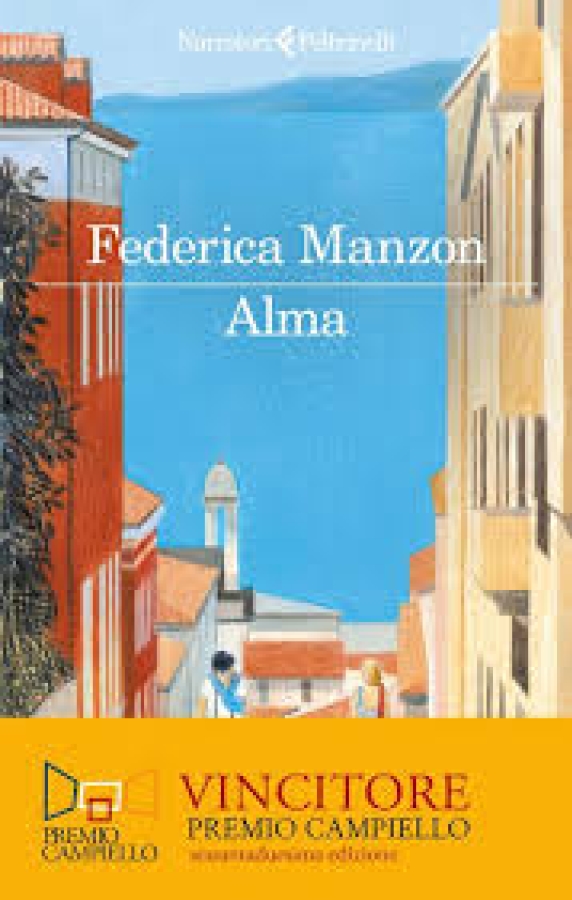
Alma
Questo romanzo riporta la mente ad un altro libro, apparentemente così lontano nel tempo e nei contenuti: *Le Confessioni d'un italiano* di Ippolito Nievo (vedi la recensione in questo sito). Come per Alma, il grande racconto di Nievo è una storia d'amore, che prende le mosse dall'infanzia in quella terra marginale che è il Nord Est dell'Italia. Carlino, il protagonista narrato da Nievo, è innamorato della bella cugina Pisana, che solo nel punto di morte riconoscerà di averlo sempre amato, così Alma rincorre Vili, quel > bambino magro, gli occhi neri e una frangia scura da teppisti , che ha fatto irruzione inspiegabilmente in una famiglia in strano e incerto equilibrio, portandosi via l'attenzione del padre. E come per i protagonisti delle *Confessioni*, la vita di Alma > è sempre stata immersa fino al collo nelle questioni che il passato o la memoria e perfino le ossa sotto terra proiettavano nel presente, e lei non aveva fatto altro che camminare sul filo di una ragnatela sforzandosi di evitare le trappole della Storia, quando invece ci stava camminando sopra. Se, però, la storia d'amore di Nievo si sviluppa dentro la grande e gloriosa cavalcata del Risorgimento, quella di Alma è segnata e travolta dalle tragiche vicende del «di là», quel mondo sconosciuto oltre Vienna e Trieste, quelle terre sempre rimosse dall'immaginario collettivo, il dissolvimento della Jugoslavia tra il 1991 e il 1995, e oggi la guerra in Ucraina. Alma vive ormai da molti anni a Roma, apprezzata giornalista, ricercata dagli uomini per quel fascino che hanno quelli «di là», ma non può confessare, perché non sarebbe capita, che > solo un esule da quei mondi è in grado di suscitare in lei qualcosa di simile a un innamoramento. L'occasione per tornare «di là» è la morte di suo padre che le ha lasciato «una scatola», in cui dovrebbero esserci i segreti della sua famiglia, insieme con quelli della grande Storia. L'attende confuse combinazioni di sensazioni in cui presente e passato si mescolano insieme, ma non c'è mai il futuro: la nostalgia per i nonni materni, per la bella e solida casa mitteleuropea; la villetta sul Carso dove sono andati a abitare i genitori, per stare lontani dai nonni e dalla buona borghesia; gli arrivi e le partenze improvvise del padre, sempre coinvolto nelle grandi vicende; la madre anch'essa distante perché sempre occupata nella «Città dei Matti»; i bagni e i giochi sulla riviera di Barcola; e poi i morti, gli stupri, le stragi delle guerre balcaniche, immortalate dalle foto di Vili: > una fossa piccola, una fossa enorme, una fossa con dei corpi, il viso di una ragazza tenuta per i capelli. Scoprirà che nella scatola non c'è niente d'importante, come nel grande romanzo di Kenzaburo Oe (*La foresta d'acqua*, vedi la recensione in questo sito). Ciò che troverà sarà lo svelamento del mistero di Vili: fotografo delle stragi perpetrate dai serbi per dare testimonianza dei crimini commessi durante le guerre balcaniche. Se questa rivelazione potrà dare sollievo all'animo di Alma, non sarò possibile ritrovare l'amore per chi ha sempre amato. > I loro destini si sono incrociati, pensa Alma. e questo è tanto, i tentativi di fuga non contano. (...) Si guardano. E' così sexy, pensano. La solitudine e le incomprensioni, tutto l'amore e tutti quei morti, (...) quei loro teneri anni, e anche tutti quei pensieri sul caos delle loro vite lontane. Ci sono romanzi che vogliono dire troppo, che mescolano grandi affreschi della storia con le vite familiari, senza però riuscire a approfondire a sufficienza le diverse dimensioni dell'esistenza; e tutto resta in superficie. La relazione privilegiata del padre con Vili (quelle passeggiate insieme che escludevano Alma) non è analizzata nei suoi risvolti psicologici ed emotivi: è come il contenuto della scatola che non dice nulla di intimo. Lo stesso legame tra Alma e Vili, che attraversa tanti anni della loro vita, è trattato con spicchi d'esistenza, certamente meglio nella seconda parte del romanzo, nella Belgrado sotto la guerra, ma mai portato fino in fondo. Chi era Vili, una comparsa della Storia, obbligata, come dice lui stesso, > a essere uno che mente, un falsario, un vigliacco, ad alzare il calice a brindisi disgustandosi illudendomi che così avrei salvato qualcuno? E perché Alma perde sempre l'occasione per rompere il guscio entro cui si appaga Vili? Perché non li dice semplicemente che l'ama e lo porta con sé a Roma, lontano da «di là»? O c'è un mistero indicibile (la rigidezza degli affetti familiari, le stragi e le morti, il mondo dei Matti) che impedisce di dispiegare il senso di umanità reciproca? Troppe domande rimaste senza risposta! Sotto il profilo stilistico il romanzo si avvia faticosamente per salire di livello nella seconda parte, quella della guerra, senza dubbio la migliore. Il continuo avanti e indietro nel tempo e nello spazio confonde il lettore che deve di continuo riprendere le fila della narrazione. E' vero che il flusso dei ricordi e delle sensazioni non ha tempo, e tutto ritorna senza mai andare avanti, ma è pur vero che non seguire una sequenza disorienta il lettore, lo confonde inutilmente. La scrittura è di alta qualità, nei dialoghi così come nelle descrizioni: manca tuttavia di mordente, non lascia il segno, anche per l'uso di un italiano standard, scolastico sotto il profilo lessicale. Perché leggerlo? Interessante la sovrapposizione della Storia con le vicende familiari.This novel brings to mind another book, seemingly so distant in time and content: Ippolito Nievo’s *Le Confessioni d'un italiano* (see the review on this site). As with Alma, Nievo’s great narrative is a love story that has its roots in childhood, in that marginal territory that is northeastern Italy. Carlino, the protagonist recounted by Nievo, is in love with his beautiful cousin Pisana, who will only on her deathbed acknowledge having always loved him; just so, Alma pursues Vili, that > skinny boy, with black eyes and a dark, hoodlum fringe , who inexplicably burst into a family balanced on a strange and precarious equilibrium, capturing her father’s attention. And as with the protagonists of the *Confessioni*, Alma’s life > had always been immersed up to her neck in the issues that the past or memory and even the bones beneath the earth projected into the present, and she had done nothing but walk a spiderweb's thread, striving to avoid the traps of History, when in fact she was walking right over them. Yet, if Nievo’s love story unfolds within the grand and glorious sweep of the Risorgimento, Alma’s is marked and overwhelmed by the tragic events of "over there"—that unknown world beyond Vienna and Trieste, those lands perpetually banished from the collective imagination, the dissolution of Yugoslavia between 1991 and 1995, and today the war in Ukraine. Alma has now lived for many years in Rome, an esteemed journalist, sought after by men for that fascination possessed by those from "over there," but she cannot confess, because she would not be understood, that > only an exile from those worlds can awaken in her something akin to falling in love. The occasion to return "over there" is the death of her father, who has left her "a box" that is supposed to contain the secrets of her family, together with those of grand History. A tangled combination of sensations awaits her, where present and past blur together, but the future never appears: nostalgia for her maternal grandparents, for the handsome, solid Central European house; the small villa on the Karst where her parents went to live to get away from the grandparents and the respectable bourgeoisie; the sudden arrivals and departures of her father, always embroiled in grand events; her mother, likewise distant, forever busy in the "City of the Mad"; swimming and games on the Barcola seafront; and then the dead, the rapes, the massacres of the Balkan wars, immortalized by Vili's photographs: > a small pit, an enormous pit, a pit with bodies, the face of a girl held by her hair. She will discover that there is nothing of importance in the box, as in Kenzaburo Oe's great novel (*La foresta d'acqua*, see the review on this site). What she finds instead is the unveiling of Vili's mystery: a photographer of the massacres perpetrated by the Serbs, to bear witness to the crimes committed during the Balkan wars. If this revelation may bring relief to Alma's spirit, it will not be possible to rekindle love for the one she has always loved. > Their destinies crossed, Alma thinks. and that is a great deal, the attempts to escape do not count. (...) They look at each other. It's so sexy, they think. The loneliness and the misunderstandings, all the love and all those dead, (...) those tender years of theirs, and all those thoughts, too, about the chaos of their distant lives. There are novels that strive to say too much, blending grand historical canvases with family lives, without, however, managing to delve sufficiently into the diverse dimensions of existence; and everything remains on the surface. The father’s privileged relationship with Vili (those walks together that excluded Alma) is not analyzed in its psychological and emotional ramifications: it is like the contents of the box, which reveals nothing intimate. The bond between Alma and Vili itself, spanning so many years of their lives, is treated through fragments of existence—certainly better in the novel's second part, in Belgrade under the war, but never pursued to its ultimate depth. Who was Vili—an extra in History, forced, as he himself says, > to be someone who lies, a forger, a coward, raising a glass in toasts with disgust, deluding myself that I was saving someone this way? And why does Alma constantly miss the opportunity to break through the shell in which Vili is content? Why doesn't she simply tell him that she loves him and take him with her to Rome, far away from "over there"? Or is there an unspeakable mystery (the stiffness of family affections, the massacres and deaths, the world of the Mad) that prevents the unfolding of their mutual sense of humanity? Too many questions left unanswered! Stylistically, the novel gets off to a labored start, only to elevate its register in the second part—that of the war—which is undoubtedly the finest. The constant shifting back and forth in time and space confuses the reader, who must continually pick up the narrative thread. While it is true that the flow of memories and sensations is timeless, and everything recurs without ever moving forward, it is equally true that failing to follow a sequence disorients the reader, causing unnecessary confusion. The prose is of high quality, in the dialogue as well as in the descriptions; yet it lacks bite, leaves no lasting impression, owing also to the use of a standard Italian that is lexically textbook. Why read it? The intertwining of History and family fortunes is compelling.
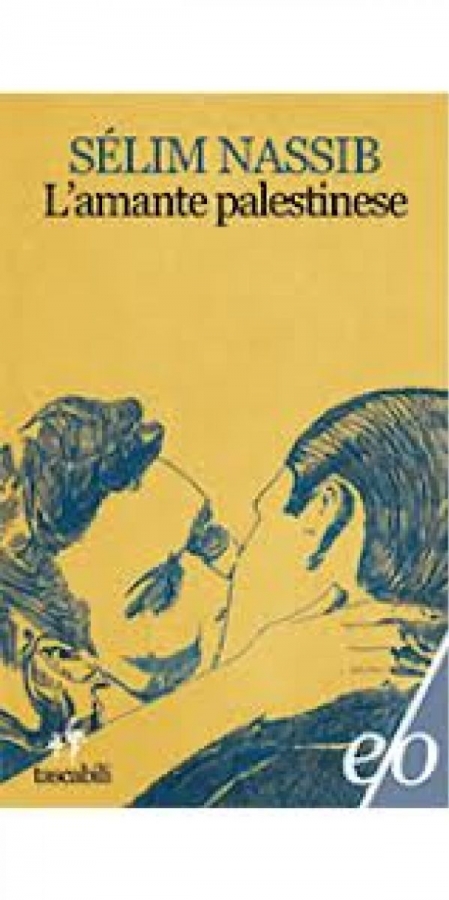
The Palestinian Lover
Can a love story bridge the ineluctable chasm between two peoples? The novel answers this perhaps overly naive question in the negative. And it does so by retracing a bewildering affair: the relationship between Golda Meir, an authoritative Israeli prime minister in the early 1970s, and Albert Pharaon, scion of a wealthy Palestinian family. The book traces the history of the nascent State of Israel from 1917 (the year of the Balfour Declaration, in which the British Empire declared itself in favor of the establishment “in Palestine of a national home for the Jewish people”) through the 1948 war, as a result of which the State of Israel was founded and the exile of over seven hundred thousand Palestinians began. The novel’s opening is remarkably evocative. On one side is Golda, still a young woman, in the kibbutz. The Zionist ideal of a demanding, communal life is admirably epitomized in the vigor and courage of the young Golda: > so luminous, so self-assured and confident, an olive tree flourishing in a barren land . On the other side is Albert, an “exquisitely cultured man of the world” for whom “nothing in social life is enticing enough to tear him away from his sweet idleness.” If Golda personifies the unstoppable force of an idea, fueled by despair and the memory of persecutions, Albert effectively represents a landowning caste who watch the Jewish immigration with stunned disbelief, confounded by their mad determination to forge a state, and are above all alarmed by socialist ideology, which might nurture “strange aspirations” among the perpetually exploited Palestinian peasants. Disparate as they are, Golda and Albert meet, feel drawn to one another, and carry on a clandestine, intensely carnal affair for several years. At the root of their relationship, however, lies a misunderstanding. For Albert, their bond is logical and possible. The fact that one is Palestinian and the other Jewish presents no obstacle to someone who has always lived in a land where numerous communities coexisted without friction. For Golda, the barrier of nationality is insurmountable. In a conversation decisive for the future of their relationship, when Albert urges her to acknowledge that Jews will have to live alongside Palestinians, Golda shouts in fury: > we came here so we would no longer depend on anyone, do you understand? There is no other us but us . The sacred tenets of Zionism (“becoming masters of our own destiny”) prove stronger than any love. And so the two lovers > throw themselves upon each other, collide, clutch desperately, surrendered to an irresistible urge to tear one another apart, so that nothing remains of them or of their impossible relationship . The love story between Golda and Albert stands as a metaphor for the tragic fortunes of two peoples. The most evocative part of the novel is the section leading up to Golda and Albert’s encounter. Up to this point, the narrative remains open to unpredictable developments. The reader expects the author to delve into Golda’s personality: wife, mother, lover of many men, vigorous idealist, political figure, leader of her people. Was the affair with Albert merely the diversion of an intensely sensual woman, or did it answer, instead, an unconscious need to break free from the cultural and social molds of her Jewish identity? Were there contradictions within Golda’s world, or merely the whims of a woman of power? Through Albert, could Golda have been the “Prince Charming” who cast the Palestinian people “into modernity like shrimp into boiling water,” yet paving the way for eventual coexistence? The narrative abandons this potential trajectory, perhaps for lack of documentation or out of reluctance to strain historical reality too far. Instead, it focuses on the figure of Albert—languid, indolent, and inconsequential. And this is a pity, for the narrative loses its allure, turning into the chronicle of a man’s decline whose ending was already written in the preface, in his very character. Why not read it? It is a fragile narrative: it adds nothing to our understanding of the Israeli-Palestinian conflict, and it lacks intrigue because it fails to probe the central figure, that of Golda.

American Pastoral
The book is divided into three chapters, each possessing its own distinct identity. In the first, bearing the evocative title *Paradise Remembered*, the narrator is the writer himself. The idol of his youth is Seymour Levov, “the Swede”: handsome, blond, athletic, a formidable sportsman. The memory of his feats epitomizes a golden era where harmony triumphs. Now in his sixties, the writer is invited to lunch by Seymour under a pretext. The meeting turns out to be mundane and pointless; later, however, at a reunion of old classmates, the writer learns that Seymour was suffering from cancer and had been shattered by the actions of his daughter, who had bombed a general store, killing a bystander. > The gentle man with his delicate ways of dealing with conflict and contradiction, the confident former athlete, responsive and resourceful in any fair-minded struggle with fair-minded foes, is up against a foe who is not fair-minded, a devil rising out of the human feelings, and he is overwhelmed. He learns to live behind a mask . The writer decides to write a book about Seymour, even as he wonders—with a deeply autobiographical undertone—whether the man inside the man is ultimately knowable, whether he is a “jar you cannot open.” Yet does the story he writes conform to reality, or is it merely the author's invention? In the two subsequent chapters, the writer shifts to a third-person narrative. In the second chapter, titled *The Fall*, the dramatic story of Merry is recounted: Seymour’s stuttering daughter who, at sixteen, vanishes after committing a heinous crime, sinking ever deeper into hiding and self-destruction. At the root of the daughter’s conduct lies a hatred for her parents, their orderly home, their life built on bourgeois values—and, by extension, for American society itself. Yet how could > his daughter be so blind as to want to destroy the very system that had granted her family so many opportunities for success? To destroy her capitalist parents as though their wealth were anything other than the product of the steadfast labor of three generations? . Is Merry, then, an inexplicable anomaly? In truth, in the final chapter, *Paradise Lost*—which largely details a dinner party among the Levovs and their friends (a dinner that concludes tragically with the stabbing of Seymour’s father)—it becomes evident that the “moral disease” afflicts not merely the girl, but an entire society in which > what was supposed to exist did not exist. Deviance prevailed. You cannot stop it. Undeniably, what was not supposed to happen had happened, and what was supposed to happen had not. The old system that created order no longer works. All it has left behind is fear and dismay, now concealed by nothing . The themes of this undoubtedly formidable book are essentially two: generational relations and, above all, the agony of a parent who views himself as blameless, who wishes to protect his family and cannot fathom why a daughter so cherished grew up so estranged from his world; and the unraveling of a society built by immigrants who toiled tirelessly to integrate and be embraced as successful citizens, only to watch the foundational values of social cohesion disintegrate. Seymour’s ordeal is that of a father, but it is also the tragedy of the American pastoral. Roth’s narrative structure is exceptionally rich and intricate. It relies neither on a lavish surplus of adjectives, as with Updike, nor on the expansive periodization of Bellow (all chroniclers of the crisis of American society). It is precisely this syntactic framework that constitutes Roth’s strength, yet also proves to be his weakness: the sentences are often overly convoluted, making for an exhausting read and fostering a redundancy of phrasing and, above all, of syntactic constructions. A greater frugality would certainly have served the book’s otherwise compelling themes far better. Why pass on it? It is deeply demanding, particularly the third chapter. It should be taken in small doses.
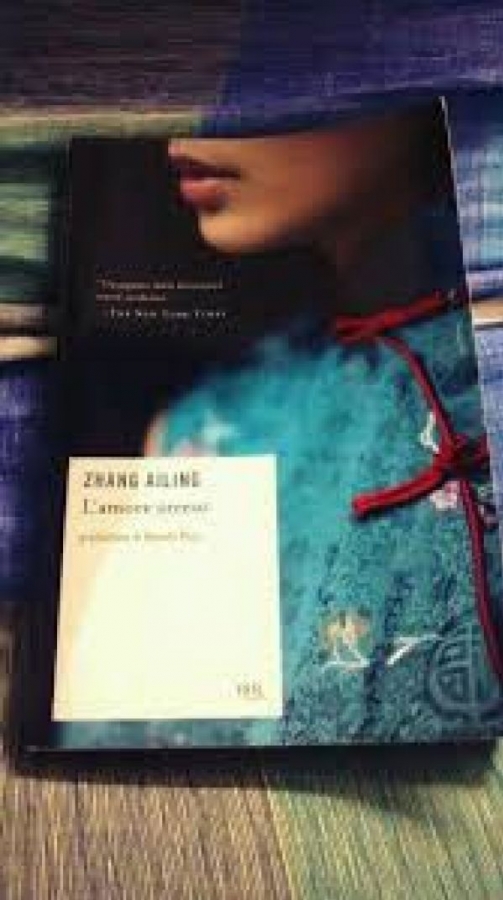
Surrendered Love
In an earlier novel, *The Golden Cangue*, the protagonist fails to escape the mechanisms of her family and descends into madness, bringing ruin upon herself and those around her. In the first of the two stories in this book, *Love in a Fallen City*, Liusu is likewise despised by her relatives, but seizes the opportunity of a chance encounter to escape a house that > had something of a dwelling of fairies and spirits: here, the slow passing of a day was like the lapse of a thousand years in the world. Yet spending a thousand years here was roughly like a single day, because all the days were equally monotonous and senseless . And it is boredom, not passion, that drives her—watchful and almost reluctant—to enter into a liaison with a Westernized Chinese man, a figure of dubious repute: wealthy, cultured, and refined, yet hostile to marriage. From the outset, Liusu knows full well that binding herself to this man means becoming his concubine. While yielding to her lover’s flatteries, she thinks to herself: > if I were a thoroughly respectable woman, you would not have noticed me at all. Yet she smiled, tilted her head toward him, and said, You want me to be a respectable woman in front of others, but not with you . With consummate skill, the author guides us through the unraveling of a relationship in which > both [were] too busy talking about love; where could they find the time to truly love each other? . The conclusion is a foregone one: the wealthy lover accommodates Liusu in a grand, empty house, where she will await his visits like a quintessential concubine. What overturns this destiny is the war. The Japanese bomb Hong Kong, and amid the battered city, the man resolves to marry Liusu. > Hong Kong’s fall had sealed her victory. Yet in this unreasonable world, who could ever tell cause from effect? Who could know? And had an entire city fallen merely so that she might triumph? In the second story, *Red Rose, White Rose* > , the author ponders whether transgression and respectability can coexist within the same personality. Zhenbao is a rational and meticulous sort, through and through the perfect modern Chinese man. Having started out on the right foot from the very beginning, (...) he now held an excellent position in a renowned foreign textile firm > Everything seems beyond reproach: the university-educated wife from a good family, the little daughter for whom funds have already been set aside for college tuition, the devoted care shown toward his mother and siblings, his dedication to work, and his benevolence toward friends. Yet is that truly the case? From the story, we learn that Zhenbao had an intense, fulfilling affair with a married woman. When his lover, genuinely enamored, confesses the adultery to her husband, Zhenbao abandons her because he realizes the scandal would ruin him. Merely crossing paths with the woman many years later is enough to unhinge him and shatter his drab bourgeois existence: he frequents prostitutes, succumbs to drink and gambling, neglects his work, beats his wife. And you. Are you well?, she asked. As he searched for the right words to summarize the perfect happiness of his life in a few simple sentences, Zhenbao raised his head and saw his own face in the mirror to the driver’s right. (...) Suddenly, however, he began to tremble in earnest and saw in the mirror that tears were streaming down his cheeks. He himself did not understand why. In that sort of encounter, it is always she who weeps, not he. (...) Far from consoling him, she fell silent for a long time, then said: Isn’t this your stop? > The author probes the ambiguity of the human soul through a markedly Western lens. While the opening of the first story still evokes the traditional Chinese family, the remainder of the tale could easily be set in any European city. The thematic core and the very prose of the second story echo much of Western literature, from which the author drew extensively. There is little originality. What continues to captivate the reader is Zhang’s mastery in navigating chiaroscuro and plumbing the depths of the human psyche, particularly the female heart. Jiaorui and Zhenbao are in bed: the woman realizes that the man intends to leave her. Lifting her swollen, flushed face, Jiaorui stared at him, then sprang to her feet, almost astonished herself to have been reduced to such a state. (...) She dried her eyes with her handkerchief, blew her nose, and walked out. (...) In his sleep, it seemed to him that someone had lain down on top of him, weeping. (...) He realized Jiaorui had returned. (...) The warmth of that womanly body enveloped him like a down quilt lined with silk, imparting a pleasant, intensely sensual warmth. When Zhenbao was fully awake, Jiaorui slipped away without a word, nor did he utter a sound". Why read it? They are short tales, the prose is fluid and graceful, and certain pages are remarkably evocative.
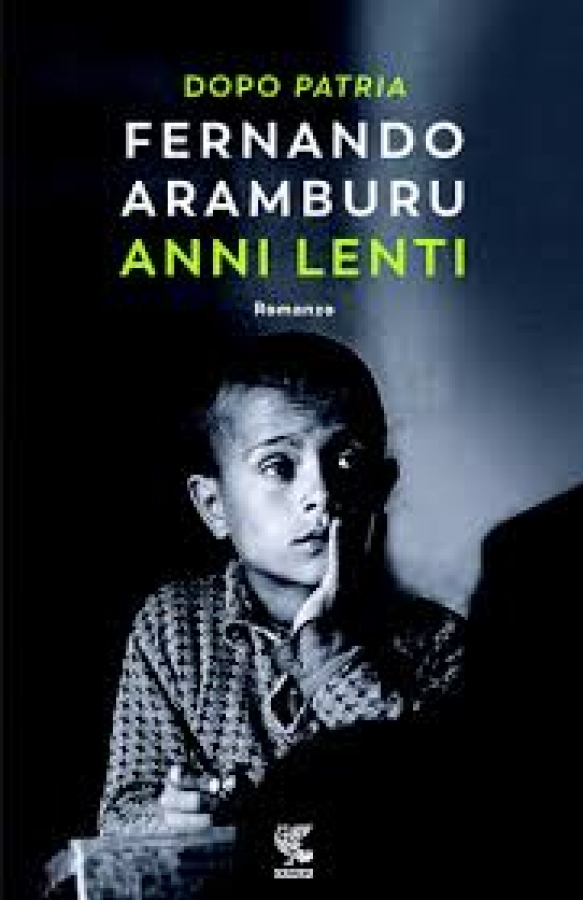
Slow Years
In *Patria*, the author confronts with forceful tones the psychological and existential consequences of the civil war that bloodied the Basque Country from 1968 to 2011 (see the review on this site). With *Slow Years*, Aramburu tackles the same themes, yet with placid, almost dreamlike accents. Then again, > when I pause to review my memories of those years (those of Franco's Spain), an old feeling of slowness returns to me. (...) I am tempted, at least in certain stretches of the novel, to make an effort to convey through a deliberately slow style that sensation of historical stagnation. To give this impression of a history > that dragged on sluggishly , the author imagines that an “informant” provides him with the raw materials to construct a novel, even > if it becomes necessary to stray from the informant's testimony, so be it. Literature first, then, if any room remains, the truth. And so a person, now grown up, recounts to Aramburu his childhood living with relatives in San Sebastián. He, > a little Navarrese shit , as his cousin Julen greets him, finds himself living in a Basque family: an authoritarian, abrupt aunt; a melancholic, absent uncle; an ugly, fat female cousin who sleeps around with all the boys; and Julen, who upon seeing him cry consoles him by mocking him: > if you were Basque you wouldn't cry. Have you ever seen iron weep? But, since you are a soft-boiled Navarrese, what happens happens. Strong, swaggering, self-confident, spoiled by his mother, Julen recalls Joxe Mari from *Patria* and, indeed, his story shares many similar traits: he joins ETA, is forced to flee to France, but, unlike Joxe, Julen cannot endure the loneliness and hardships of underground life; he betrays the organization and returns to San Sebastián, bringing shame upon his family. All of this is depicted through the eyes of a child, who does not fully grasp the dangers surrounding these events and their impact on his aunt and uncle's family. It is true, a shiver of fear ran through him whenever he saw the Guardia Civil pass by, but > those mustaches, do you remember them? Those hard stares, the batons and helmets, the weapons that my adolescent imagination struggled to conceive of outside cowboy-and-Indian movies. In the child’s imagination everything blurs together, creating something like a commedia dell'arte where comical or frightening figures bustle about within the same surreal, comedic atmosphere. Consider the fat cousin who, having fallen pregnant, is forced to marry the village idiot, himself obese and misshapen. Or the grotesquely solemn figure of the parish priest, assertive in inciting young men to join ETA, yet trembling when at risk of arrest. And yet, the subtle, amusing account of the child informant fails to bring peace, to permit reconciliation, even forty years later. The novel concludes with a bitter recollection by the author. On a bus, he runs into Julen’s father, but turns away. > They infected me with hatred. (...) I would like to ask his forgiveness, but he is dead. There are many ways to speak of a country's tragedies, the lacerations of a community, and the grief of people who were scarred by those events. In this novel, Aramburu does so with a reckless approach, perpetually teetering on the thin line between the comic and the dramatic; what emerges is a sense of narrative inadequacy that deepens as one delves further into the tale, where one would expect it to evolve toward a greater depth of exposition and judgment. Perhaps Aramburu chose the wrong informant—what could a child do? He could do nothing but defend his childhood behind a fantastical vision, as if everything were that game of plastic cyclists, the child informant's only toy, which > move forward in turns, by as many spaces as indicated by the die. Aramburu consistently displays remarkable narrative inventiveness. If in *Patria* it was the shifting of the narrator mid-stride (from “I” to “she” within the same sentence), here it is instead the pairing of the child's account with a sort of working outline by the writer on how to develop the novel: the plot, the setting, the deeper explorations, the words. These are “notes” that gradually overshadow the narrative, losing their character as a reflection on himself and the writer's craft to become increasingly another tale altogether, silencing the child's own. At first, this literary device is intriguing because of its novelty, but it eventually proves repetitive, disrupting the linear development of the story. Why read it? Enjoyable, yet in the end the story fades away.
Apartment in Istanbul
The protagonist is a German woman in her forties who lives in Turkey and runs a bookshop specializing in crime fiction. She describes herself this way: > I have a double chin, orange hair, a mobile phone (an older model, though), and a circle of friends on antidepressants. I am always nervous, but I don't know why . Saddened and disheartened following an argument with her boyfriend, she sets out to find an apartment to buy. Among those brought to her attention, she attempts to view one that happens to be illegally occupied. In trying to see it, the protagonist—impulsive and quick-tempered—clashes with the tenant, who refuses to let her inspect the premises. As chance would have it, the tenant is murdered: thus begins a detective story in which the protagonist, partly because she is a suspect and above all because she enjoys playing detective, sets out to find the killer. It must be said that, as a noir, it is hardly compelling, particularly because it lacks twists and turns and everything feels rather predictable. Far more interesting is the sketch of a woman poised between two such disparate societies: the German one (where “people are always in a foul mood, unhappy, and dissatisfied”) and the Turkish one, where > the interiors of the houses and the windowpanes are polished to a shine, but the balconies and streets are so filthy as to disgust anyone who sets foot there . What the protagonist wants is clear—after all, where else could a woman live, if not in a Mediterranean city, when she prefers “a new apartment rather than another man” entering her life? The book possesses one undeniable virtue: offering the prospective tourist a list of Istanbul's most interesting neighborhoods. The protagonist is sketched with hurried, superficial strokes, almost deliberately avoiding any psychological or sociological depth. Life moves quickly, and there is no time to understand why one lives in Istanbul rather than Berlin, why one prefers living alone—with the pleasure of playing detective—over having a husband and the friendships typical of a middle-aged progressive German woman, such as having > peroxide-blonde friends who lived in residential complexes with swimming pools, complained about snoring husbands, wore silver ballet flats, and voted for the Social Democrats . Why read it? It is an enjoyable read, but the narrative is evanescent and flimsy. A translator's labor must cost very little indeed to justify publishing such a predictable book in Italian.
Artemisia and the Colors of the Stars
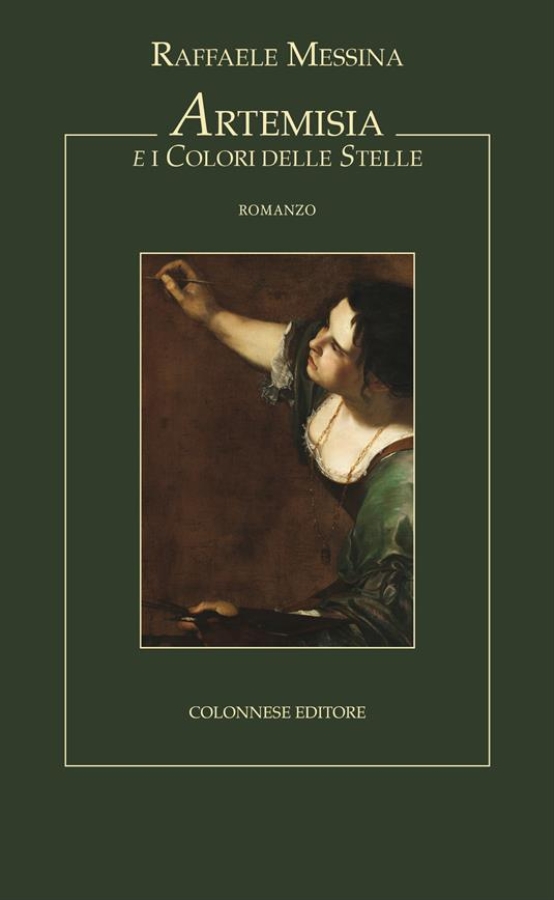
There are artists who remain forever pinned to an idea we hold of them, one that prevents us from truly appreciating them. Consider Dino Campana, the mad poet, and how his poetry was reduced to his presumed madness, casting his stylistic qualities and sources of inspiration into the background (see the review on this site of *La notte della cometa* by Sebastiano Vassalli). The same happened to Artemisia Gentileschi, a painter who lived between 1593 and 1653. Although she produced some fifty paintings and achieved fame throughout Europe, the memory of this great artist remains inextricably linked to the rape and subsequent trial she underwent in 1612. > Yet none of this will be enough to make my worth shine in the eyes of the world. Like a curse I bear upon me, for everyone—collectors and biographers alike—I will always be the paintress of scandal, rape, and revenge. Thus the author of this novel imagines Artemisia reflecting on her life, when she is already an established woman, well integrated into the society of her time. In Artemisia, that refrain they sang to her outside the courtroom, acquitted of all guilt, constantly resurfaces, > amid winking smirks, lewd propositions, merciless jeers, (...) *Paintress, lady painter, take this brush and warm it in your cunt.* And how could it be otherwise when we admire her Judiths, struck by the ferocious realism of the images: the first painting (*Judith Slaying Holofernes* from 1612), in which the biblical episode is transformed into a depiction of the wronged woman’s revenge, and the second from the end of her life (*Judith and Her Maidservant with the Head of Holofernes* from 1650), in which the two women flee with the man’s head after decapitating him. How deep the wound in an abused woman, that it surfaces even after so many years! The luxury of denial is not granted to woman, as Teju Cole observes in *Open City* (see the review on this site). All the more so when the rape was abetted by her father Orazio, who used his beautiful young daughter to curry favor with the powerful and forge business ties; and even more so when, in lodging the complaint that permanently disgraced his daughter, the father did not seek to punish the rapist, but intended to recover a painting the rapist had stolen: a painting whose conception the father claimed as his own, but which was in fact by the twenty-year-old Artemisia. We speak of the first Judith, through which Artemisia took eternal revenge upon man and embodied female solidarity against male society. Thus triply betrayed by her father, Artemisia suffered trial and disgrace in a papal Rome that was corrupt, violent, and lustful. In the novel, Artemisia is no weeping victim; she is a strong, clear-eyed young woman who knows that a woman must fight alone. She defends, desperately and proudly, her future as a painter, acutely aware of her worth. When she returns home after undergoing torture, the insolence of men does not trouble her (she is used to it!); she is concerned instead with her hands, with whether she will still be able to paint. While the first part of the novel recounts the intrigue surrounding Artemisia's ordeal, in the second part, set in Naples in 1648, Artemisia is by now an established woman, and it is difficult to find in the narrative the dramatic tension that characterized the first half. In truth, no significant events occur; the narrative moves along placidly, though Artemisia's restlessness continually surfaces—her inclination toward violent, scandalous, and sordid scenes typical of Naples' plebeian quarters, contrasting with the overt opulence of the Spanish rulers, far from the fine portraits painted for illustrious men, ever sinking into the mire of suffering. We may wish to look beyond the Judiths, yet it is always they who dominate our vision of Artemisia. It is difficult to discern a clear narrative thread in a plot woven from too many episodes loosely bound by the story’s development. The temporal leap itself and the shift in setting—first Rome, then Naples—do not aid the unity of the tale. The novel’s virtue lies, rather, in certain environmental descriptions; scenes rendered in vivid colors, coarse language, and subtle irony, traits reminiscent of Boccaccio that turn the narrative almost into a social novel. One senses the influence of the great post-war Neapolitan writers, such as Domenico Rea (see the reviews of *Spaccanapoli* and *Ninfa plebea* on this site). To give a sense of Raffaele Messina’s style, one might take as an example one of the finest passages in the novel: “At the Tavern of the Fountain,” where the patrons insinuate that it was the father himself who deflowered his daughter. > Tossed out like that, onto that rough board soaked in animal fat, the hypothesis seized the attention of every patron in the room. The dice, thrown amid ceaseless blasphemies, died away inside the overturned mug; the cards, laid face up on the table or still face down, ceased passing from hand to hand. (...) > You Jew of an innkeeper, give us yer take! (...) With a steaming dish of farro soup and pork rinds held aloft in his right hand, he turned slowly toward his interlocutor and answered with a ruddy smile: Fucking is as sweet as drinking wine. Whose hole it may be, or from what vine, is no host's concern, but a lawyer's quibble! > . The prose flows smoothly, interspersed with deft citations from the transcripts of the rape trial or from Artemisia’s own letters; digressions that lend veracity and color to the narrative, though within a typically contemporary style that occasionally slips into journalistic mannerisms, such as the overuse of the period” and the resulting verbless sentence. Why read it? For its fine descriptions of the setting.