Finished reading on: March 26, 2025
Colonnese Editore
2022
163
Italiano
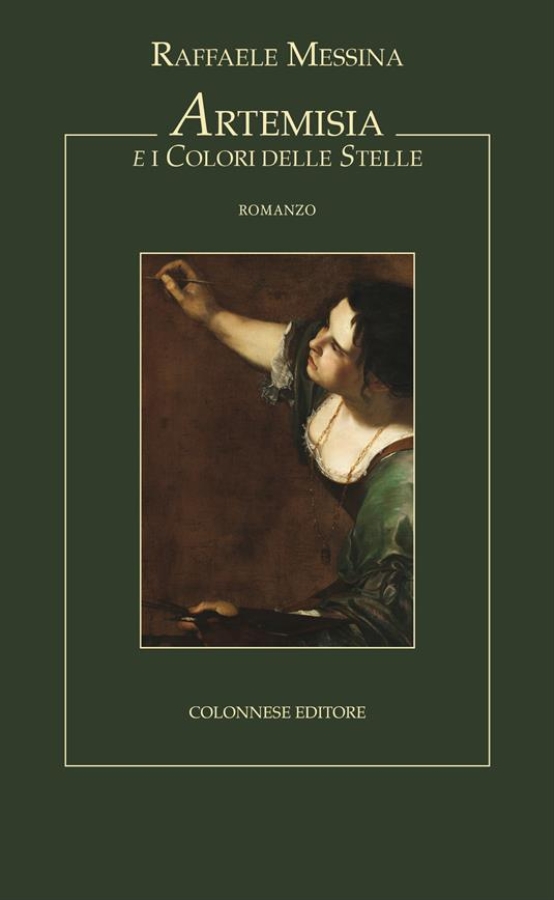
Artemisia and the Colors of the Stars
Title of the original version reviewed: «Artemisia e I colori delle stelle»
AI Translation Notice: This review was translated from the original Italian using artificial intelligence. Book quotes and excerpts are translated interpretations and will not match the author's original English phrasing or official published translations.
There are artists who remain forever pinned to an idea we hold of them, one that prevents us from truly appreciating them. Consider Dino Campana, the mad poet, and how his poetry was reduced to his presumed madness, casting his stylistic qualities and sources of inspiration into the background (see the review on this site of La notte della cometa by Sebastiano Vassalli). The same happened to Artemisia Gentileschi, a painter who lived between 1593 and 1653. Although she produced some fifty paintings and achieved fame throughout Europe, the memory of this great artist remains inextricably linked to the rape and subsequent trial she underwent in 1612.
Yet none of this will be enough to make my worth shine in the eyes of the world. Like a curse I bear upon me, for everyone—collectors and biographers alike—I will always be the paintress of scandal, rape, and revenge. Thus the author of this novel imagines Artemisia reflecting on her life, when she is already an established woman, well integrated into the society of her time. In Artemisia, that refrain they sang to her outside the courtroom, acquitted of all guilt, constantly resurfaces,
amid winking smirks, lewd propositions, merciless jeers, (...) Paintress, lady painter, take this brush and warm it in your cunt. And how could it be otherwise when we admire her Judiths, struck by the ferocious realism of the images: the first painting (Judith Slaying Holofernes from 1612), in which the biblical episode is transformed into a depiction of the wronged woman’s revenge, and the second from the end of her life (Judith and Her Maidservant with the Head of Holofernes from 1650), in which the two women flee with the man’s head after decapitating him. How deep the wound in an abused woman, that it surfaces even after so many years! The luxury of denial is not granted to woman, as Teju Cole observes in Open City (see the review on this site). All the more so when the rape was abetted by her father Orazio, who used his beautiful young daughter to curry favor with the powerful and forge business ties; and even more so when, in lodging the complaint that permanently disgraced his daughter, the father did not seek to punish the rapist, but intended to recover a painting the rapist had stolen: a painting whose conception the father claimed as his own, but which was in fact by the twenty-year-old Artemisia. We speak of the first Judith, through which Artemisia took eternal revenge upon man and embodied female solidarity against male society. Thus triply betrayed by her father, Artemisia suffered trial and disgrace in a papal Rome that was corrupt, violent, and lustful. In the novel, Artemisia is no weeping victim; she is a strong, clear-eyed young woman who knows that a woman must fight alone. She defends, desperately and proudly, her future as a painter, acutely aware of her worth. When she returns home after undergoing torture, the insolence of men does not trouble her (she is used to it!); she is concerned instead with her hands, with whether she will still be able to paint. While the first part of the novel recounts the intrigue surrounding Artemisia's ordeal, in the second part, set in Naples in 1648, Artemisia is by now an established woman, and it is difficult to find in the narrative the dramatic tension that characterized the first half. In truth, no significant events occur; the narrative moves along placidly, though Artemisia's restlessness continually surfaces—her inclination toward violent, scandalous, and sordid scenes typical of Naples' plebeian quarters, contrasting with the overt opulence of the Spanish rulers, far from the fine portraits painted for illustrious men, ever sinking into the mire of suffering. We may wish to look beyond the Judiths, yet it is always they who dominate our vision of Artemisia.
It is difficult to discern a clear narrative thread in a plot woven from too many episodes loosely bound by the story’s development. The temporal leap itself and the shift in setting—first Rome, then Naples—do not aid the unity of the tale. The novel’s virtue lies, rather, in certain environmental descriptions; scenes rendered in vivid colors, coarse language, and subtle irony, traits reminiscent of Boccaccio that turn the narrative almost into a social novel. One senses the influence of the great post-war Neapolitan writers, such as Domenico Rea (see the reviews of Spaccanapoli and Ninfa plebea on this site). To give a sense of Raffaele Messina’s style, one might take as an example one of the finest passages in the novel: “At the Tavern of the Fountain,” where the patrons insinuate that it was the father himself who deflowered his daughter.
Tossed out like that, onto that rough board soaked in animal fat, the hypothesis seized the attention of every patron in the room. The dice, thrown amid ceaseless blasphemies, died away inside the overturned mug; the cards, laid face up on the table or still face down, ceased passing from hand to hand. (...)
You Jew of an innkeeper, give us yer take! (...) With a steaming dish of farro soup and pork rinds held aloft in his right hand, he turned slowly toward his interlocutor and answered with a ruddy smile:
Fucking is as sweet as drinking wine. Whose hole it may be, or from what vine, is no host's concern, but a lawyer's quibble!
.
The prose flows smoothly, interspersed with deft citations from the transcripts of the rape trial or from Artemisia’s own letters; digressions that lend veracity and color to the narrative, though within a typically contemporary style that occasionally slips into journalistic mannerisms, such as the overuse of the
period” and the resulting verbless sentence.
Why read it? For its fine descriptions of the setting.