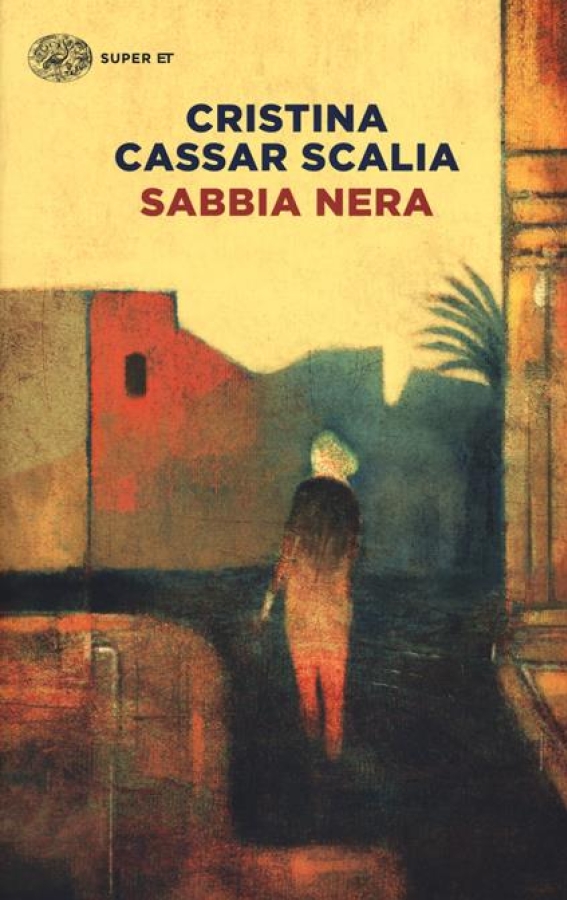
Black sand
> *La Muntagna* had awakened that morning. A dense black cloud of ash loomed over the city, enveloping it. (...) The volcanic sand fell relentlessly, forming a crunching carpet on the ground and sliding off open umbrellas... E as the sky is darkened by the ashes of Mount Etna, so Vice Questore Guarrasi must unravel the mystery of an unknown woman found mummified in a dumbwaiter of a villa on the slopes of the volcano. Transferred from Palermo's anti-mafia squad to Catania's homicide division, Guarrasi possesses that "Palermitan shell," and even as she attempts to assimilate the customs and idiom of the Etnean city, she remains at heart a Palermitana: > and a native of Palermo in Catania is convinced they could never feel at home, even if in truth that is not so . The Vice Questore is a legend within the police force, having saved a magistrate from a mafia hit by killing the hitmen; she is resolute, intelligent, and intuitive, with a penchant for complex, obscure cases that defy easy resolution. The mummified corpse is in many respects an enigma. First and foremost, her identity must be established and the time of death determined. Tracing back the threads of the affair, Guarrasi discovers a link between this body and the murder of Gaetano Burrano, which occurred some twenty years earlier and had been attributed to the mafia—supposedly in retaliation against a man who refused to yield to the syndicate's demands. But "Gaetano Burrano had been described" as someone who *arriminava* (stirred the pot), *macari* in dirty water at times > . Could there have been something more? And why did the widow, wealthy and powerful, abandon the villa following her husband's death, obstructing the investigation at every turn? *Incutto*, one might say in Sicilian of an irritating person like the widow Burrano, "one of the dialect terms that Vice Questore Guarrasi strove to learn, jotting it down in a dedicated note on her iPhone entitled 'Catanesate'." Guarrasi discovers that Gaetano financed a brothel run by the deceased woman, who was also his mistress and by whom he had fathered a daughter whose trail has long gone cold. The scandalous affair had *«i na fatta morta»* (utterly crushed) the widow: could she be the murderer? And > what if the south wind that had cleared the city of the volcanic rain had also begun to dispel the dark haze shrouding that investigation ? The impression is strong that the author intended to emulate Camilleri through Vice Questore Guarrasi, offering a female counterpart set in Sicily akin to Inspector Montalbano. Yet the flaws lie precisely in the setting and in the protagonist's characterization. Catania is sketched superficially: the motif of the ash cloud feels trite, just as the fleeting glimpses of chaotic city traffic remain inconsequential; far more engaging is the recourse to Sicilian dialect, evocative and inscrutable to unaccustomed ears. In delineating her character, the author perhaps had Alicia Giménez Bartlett’s Petra Delicado in mind (see the site's reviews of *Il silenzio dei chiostri* and *Serpenti nel Paradiso: Riti di Morte*); despite the attempt to lend depth to Guarrasi through allusions to her murdered father and her love for the magistrate whose life she saved, and notwithstanding the depiction of a solitary, disordered existence tempered by the care of a neighbor, the Vice Questore’s personality fails to enrich the narrative, lingering in the background and frequently verging on the stereotypical. The plot alone carries the story, and that is simply not enough. Why not read it? It is banal.
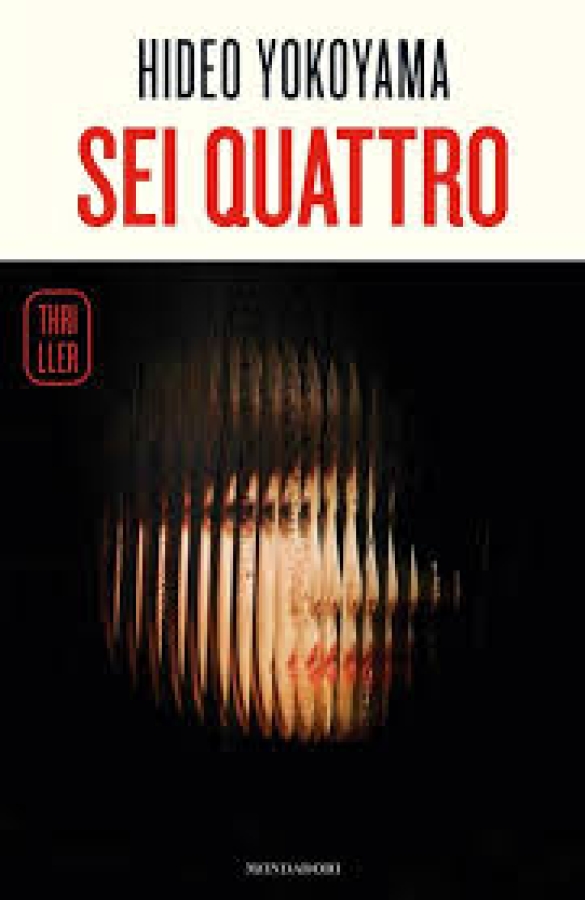
Six Four
Mikami works in the police department of a provincial city, designated generically by the author as D. After many years spent in criminal investigation, Mikami has been transferred to administrative management, put in charge of the press office. Alongside his new post, two events occur that form the cornerstones of the entire story. A visit from Tokyo by the police chief is scheduled to commemorate the murder of a young girl kidnapped fourteen years earlier, whose perpetrators were never found. It was a humiliating setback for D, and officially the police chief intends to reaffirm the determination to catch the killers. It falls to Mikami to organize the press conference and persuade the girl's father to attend: two grueling tasks, given the strained relations with the media and a family aggrieved by the police's failure. Like a true cop who has not lost his appetite for investigation, Mikami discovers that a dense shroud of mystery surrounds the *Six Four* case, as it is known in D's jargon; the detective division covered up a grave blunder by the investigators: having failed to identify the kidnapper's voice due to a mundane technical glitch. Then, Mikami learns that the police chief's visit is merely an opportunity to place D's detective division under administrative supervision, bringing it under Tokyo's direct control. Power struggles, investigative missteps, omertà, a lack of transparency, and fraught relations with the news media are the main threads of a crime novel set in Japan, but one that could easily take place in Italy. Mikami faces a dilemma: is he still a policeman, and therefore part of the detective division, or is he now an administrative official who must dutifully orchestrate the trap meant to ensnare his former unit? Mikami resolves the dilemma in the only way he knows: he reverts to being a detective to uncover what lies behind the blunder of years past and identify the kidnapper who killed the child. Alongside his new assignment, Mikami's only daughter has run away from home and has yet to be found. The author offers us glimpses of a household where the father is perpetually dedicated to his work and the wife fully discharges her duties as mother and spouse; a pity they failed to notice—or chose not to see—their daughter's burgeoning distress. > "Perhaps it was us who were not right," >. Words that every parent should etch into their mind and heart! And then, quietly, beneath a veil of the unspoken, we discover that Mikami has an exceptionally ugly face, so much so that people often laugh behind his back when looking at him, and that his daughter resembles her father, suffering from that very same ugliness. > She refused to go out with her father. (...) she made sure her parents could not see her face. (...) With her head turned away (...) she said: (...) I want to change everything, anything at all. (...) It had felt to him as though she were saying: I am ceasing to be your daughter. There is a mystery here as well, prompting Mikami to wonder why his wife, universally considered very beautiful, ever chose to marry him. To this question the novel offers no answer, for the human soul is far more indecipherable than any detective mystery. The family drama is swallowed up by the narrative of a grand intrigue, where the most compelling element lies in the relations between the police and the news media. The author meticulously describes the fraught management of the press office, caught between the demands of journalists and directives of little to no transparency. A penchant for detail and introspective analysis defines the entire narrative, offering sparse plot twists and lingering in the protagonist's often tortuous ratiocinations. One emerges from it like someone buried beneath a heap of dirt, only occasionally catching sight of a pretty little flower. Metaphor aside, the novel is long-winded and tedious. Why not read it? The story is intriguing, but the narrative is dull.

Separate Flights and Other Stories
*Separate Flights* is part of a short-story collection centered on a single theme: the disintegration of marital relationships within the nuclear family, now typical of the middle class. One need only dwell on the short story that lends its title to the entire volume to grasp the author’s literary traits and flee, as quickly as possible, from the tedious repetitiveness of the situations, characters, and dialogue. Beth cannot sleep and refuses to take sleeping pills: she wants to know why she cannot do something as simple as sleeping. > So night after night she went to bed to lie awake. (...) she was not equipped to solve a problem of this sort, (...) what she needed was to look into herself, and that was a painful, unsuccessful task. For when she looked into herself she found, oh God, she found nothing. There was nothing left to do but fix a gin. Lee, her husband, has to attend a corporate event; as they often do, the two take separate flights to avoid both perishing in a potential plane crash (it’s the portfolio theory of finance: spread the risk!). Beth meets a man with whom she has a casual affair. And it is precisely this fleeting and intense encounter that brings to light the root causes of her malaise: she no longer loved her husband. For a long time > you suspected that something had died in your house, so you looked around and saw it was long dead in everyone else's house too; then you could come back and look under your own bed and find, truly, a corpse. She accepted this death. It was as natural and predictable as a wrinkled face . And indeed, there is no outlet for the marital crisis, for the loss of love, because it is something that "just happens and there is nothing we can do about it." In a society in which everything disintegrates, even love, all that remains is turning to alcohol: loneliness is an existential dimension that cannot be escaped because it is grounded in the stasis of human relations, in our inability to truly love or to overturn our lives. The author’s deep pessimism leaves the stories hanging, deliberately arresting the narrative’s development to create a static plot; the characters are cold, soulless, imprisoned in a flat, lackluster existence. And Beth’s daughter is right to react violently to her mother’s warnings ( > oh my baby, save yourself. (...) it's a farce, love, marriage, fidelity..), and scream: oh why did you come in tonight! Why! Why! Why didn't you stay upstairs and mind your own dirty business!" There is no hope, perhaps that is true; but one would have wished for a better story, with intense dialogue, a few plot twists, and, above all, deeper insight into the characters and situations. Instead, one is confronted with a tedious and oppressive narrative pace; a pity, because the writing is of a very high standard. Why not read it? Oppressive and tedious.
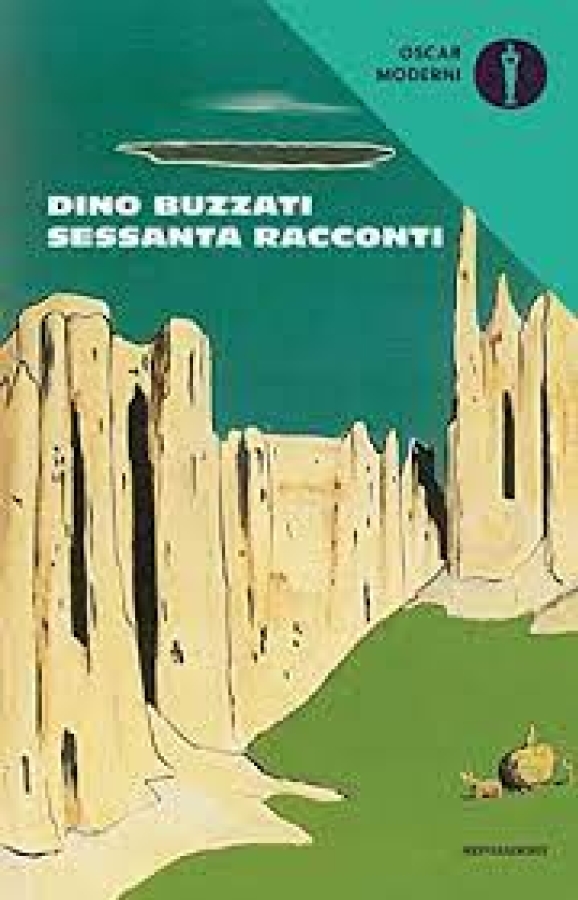
The Sixty Stories
Dino Buzzati is one of the most fascinating Italian writers of the second half of the twentieth century: suspended between the fantastical and realism, he captured the existential anguish of contemporary man, the absence of hope alongside the intense desire to escape into a better world, beyond reality; he is the Kafka and the Philip Dick of our literature, so often prosaic and lyrical. A great writer to be read in small doses, it is a pity that this vast 1958 collection of short stories was republished, for it also reveals the limits of Buzzati's poetic and spiritual world. Let us start with a short story, *A Drop*. In an apartment building, a strange event occurs: > a drop of water is climbing the steps of the stairs. Can you hear it? Lying in bed in the dark, I listen to its arcane journey. How does it do it? Does it hop? Tick, tick, tick, it is heard intermittently. (...) But what is this drop, after all, (...) could it perchance be an allegory? (...) Or is it more subtly intended to depict dreams and chimeras? Or places further away still, at the edge of the world, which we will never reach. No, it is merely a drop. In its banality and strangeness, a hopping drop of water encapsulates the narrative vein of Buzzati's entire work: the bizarre nature of reality, which is not what it should be; the spasmodic need of the human being to take root in something concrete, alongside the anticipation of something else—the whole, however, enclosed in a claustrophobic world from which one cannot escape. Consider another story, an ironic and gentle sketch of the Milanese upper bourgeoisie. In *Fear at La Scala*, we are at an opera premiere; Milan's most elegant and affluent society has gathered in the great theater. A rumor spreads that revolution is about to break out; and so the spectators remain inside La Scala as though it were a diplomatic mission. > Among so many familiar faces, in an environment alien to politics, (...) they felt protected . With keen psychology, Buzzati describes the dynamics of this "joyful, noble, and civilized" world, yet frightened and incapable of reacting. > In the square, a stooped little man appeared, pushing a handcart. With extreme calm (...) the little man began to sweep. Bravo! A few strokes of the broom were enough. (...) Nothing had happened . And what should happen? Recalling a beautiful poem by Caproni (*Farewell of the Ceremonious Traveler*), in *Something Had Happened* the travelers, arriving at the station, found it empty, > until the voice of a woman, piercing and violent as a gunshot, gave us a shudder. Help! Help! she screamed, and the cry reverberated beneath the glassy vaults with the hollow sonority of places forever abandoned . There is nothing waiting for us beyond our dreary existence. The theme of a claustrophobic world from which one escapes, even by resorting to fantasy, runs through the entire collection of short stories. Each of them captivates the reader, despite variations in stylistic and narrative quality; yet the whole becomes monotonous and looming in its existential pessimism. The book should be taken as a breviary, to be read once in a while, a short story here and there, whenever one feels the need to turn to fantasy and the paradoxical, but without any pretense of uplifting the spirit in the face of the world's ugliness. Or perhaps, as in *Seven Floors*, a splendid narration of a hospital stay (who among us has not lived through the fears and loneliness of the sick person at the mercy of doctors?), nothing remains but the mysterious fascination of the landscape. > He looked at the green of the trees through the window, with the impression of having entered an unreal world, made of absurd walls and sterilized tiles, of icy, mortuary entrance halls, of white human figures void of soul. It even occurred to him that the trees he seemed to glimpse through the window were not real either; in fact, he ended up convinced of it, noticing that the leaves did not move at all. To appreciate the stories, one must make generous use of quotations. Indeed, it is not the narrative structure that grips—it is, in fact, repetitive; Buzzati's strength lies in his writing. One is left to wonder how this author manages to blend the fantastical and surreal, even science-fictional style, with a descriptive prose attentive to detail, psychological insight, and context, just as a fine nineteenth-century novel would demand; a narrative that is invariably elegant, fluid, and lexically rich. Why read it? Keep it on the nightstand like a breviary, of fantasy and elegance.

Bet's Outburst
The novel is set in Turin, during these years of economic crisis and social malaise. Elisabetta, who wants to be called Bet, is the first-person narrator of a neorealist story with a happy ending. > We were a family like any other, neither too loud nor too quiet, neither rich nor poor, a working-class family like those in our building and those in the buildings next door : a normal family, until the death of her little sister shatters their precarious domestic equilibrium: the father abandons the family, the mother finds a new partner, and Bet finds herself angry at the world without any clear reason: > I think that I am a girl of my time, and that I am not. That I live in the world, and I do not like the world, and I do not feel suited to it . The first part of the novel, undoubtedly the most accomplished for its freshness, chronicles Bet’s anger: the loneliness, the tedium of the school environment, the conflict with her mother—upon whom she heaps all the blame—the idealization of her father, by whom she is bound to be disappointed, and the unexpected encounter with a young pregnant woman, with whom she strikes up a friendship. Disrupting the gentle, light-footed realism of the narrative, however, comes an unfortunate magical overtone: in the evening, before falling asleep, Bet—if she is at peace and has behaved well (sic!)—sees tiny luminous spheres emerge from her hands and rise toward the sky (the guardian angel? the soul of her deceased little sister?). This alone is a worrying sign that the publishing house’s marketing team has tampered with the story. And indeed, the second part of the novel is replete with mawkish and far-fetched contrivances: Bet rebuilds solidarity with her mother by taking part alongside her in an ill-fated union action (a dash of class struggle is always in fashion); in a fit of rage, she chains herself to the radiator in the principal’s office and becomes famous enough to be invited on television; and, in the story's climax, she finds herself trapped in an elevator with her friend who is about to give birth. The power goes out, yet despite these absurd predicaments, Bet manages to deliver the baby, aided by the little luminous spheres. If one were to stop at the first part of the novel, one might speak of neorealism, as several critics have done. One could appreciate the narrative style—simple yet effective, wry at times—which deftly conveys what sustains today’s youth when confronted with a paternalistic and indifferent society: > the only thing that can keep me alive, present, and alert in the rush of days unfolding before me is not hope, but the curiosity to see how it will end, whether I will pull through and in what way, without trampling on the few principles I have cultivated up to this point . Was it really necessary to spoil everything with a concoction of the supernatural and soap opera? Why not read it? Because we are weary of sentimentality and would prefer a dose of sound, genuine realism.
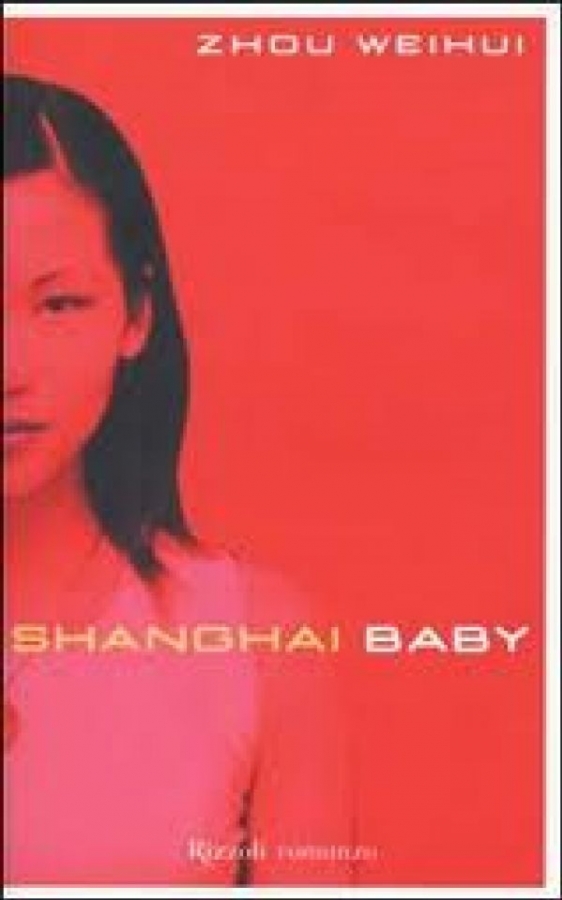
Shanghai Baby
Anyone expecting the China routinely churned out by the mass media—whether to disparage or exalt it—will be disappointed. This novel is set in Shanghai ( > an epicurean metropolis that produced euphoric froth, a new generation of human beings, and was steeped, throughout its streets and alleys, in a frivolous, mournful, and mysterious atmosphere ), but the story could just as easily unfold in New York, London, or any other metropolis. The protagonist, Ni Ke, “though my friends call me Coco,” is a twenty-four-year-old girl who belongs to > a group of wealthy, decadent youths who resort to increasingly hyperbolic and unhinged words to procure unbridled pleasure... we are a swarm of disoriented caterpillars, with fanciful wings more virtual than real, sentimental and dependent on one another; a swarm of larvae clinging to the skeleton of our city, sensual and brimming with a sweet dynamism . When it was published in 1999, the book was banned by the Chinese authorities because it depicted and glorified the lifestyle of “Mian Mian,” the Chinese Beat Generation, branded as “garbage to be swept away,” outlawed, and eradicated. From this perspective, the novel is undeniably dated, as headlong development has standardized > the attire, hairstyle, way of speaking, and manner of lovemaking of Coco, rendering her indistinguishable from affluent, educated young women anywhere in the world. There is, however, one theme that keeps it compelling: can love exist without sex? > Was I supposed to maintain a certain distance between man and woman, with no intimate physical contact? Or were they meant to end up in bed, becoming two inseparable lovers? Coco has just published a collection of short stories that made her famous ( > I received many love letters from male readers, almost all accompanied by pornographic photographs ); she works as a waitress in a bar, where she meets Tiantian, a young man of an > indescribable beauty, which betrayed a weariness of life and a longing for love. We were two diametrically opposed individuals: I was ambitious, brimming with vitality, ready to bite into the world as if it were ripe fruit; while he was taciturn, mournful, depressed, regarding life as a cake dusted with arsenic powder . A love affair begins—a deep bond that would satisfy Coco completely, were it not for the fact that Tiantian is impotent, unable to engage in full sexual intercourse. Coco is “like a caterpillar determined to bore into a big apple”; she wants to live intensely, without missing out on a thing. She meets Mark, a handsome, blond German, with whom she openly cheats on Tiantian. The encounters between Coco and Mark are consistently tumultuous, unbridled, visceral, and violent, counterbalanced by the tender, lascivious intimacies the girl continues to share, to her great satisfaction, with Tiantian. In the background, parties, celebrations, and a cast of characters—all transgressive and over-the-top—chaotically pursue one another across a cosmopolitan, youth-obsessed Shanghai. Everything seems natural: discussing art and literature, having sex—both heterosexual and homosexual—smoking joints, getting drunk, and visiting parents, who are always ready to welcome them into the safety of the traditional family, joyfully and without too many questions, yet laden with anxieties, much like parents the world over. In such an environment, there is no room for guilt in Coco, even when Tiantian lets himself die of an overdose, crushed by his inadequacy as a lover and incapable of shaking off the nightmares that have gripped him since childhood. Behind Tiantian’s persona lies an existential tragedy born of the conviction that his mother, an ambitious Chinese businesswoman, murdered his father. Coco does nothing to save her friend, far too absorbed in living Shanghai’s frantic scene to the full. On her way to deliver the manuscript of her new novel—which recounts precisely her story with Mark and Tiantian—Coco feels thoroughly exhausted. > The taxi sped wildly along the ring road, with me and a friend inside, yawning incessantly . And boredom is indeed the prevailing impression left upon the reader. The narrative unfolds at a sluggish, verbose, somewhat predictable pace. Shanghai feels too distant for the reader to be truly seduced by this great metropolis, just as Coco’s musings and digressions often ring banal, literary, and generic. A profound superficiality reigns supreme. Why skip it? The underlying premise is intriguing, but the novel is dull.
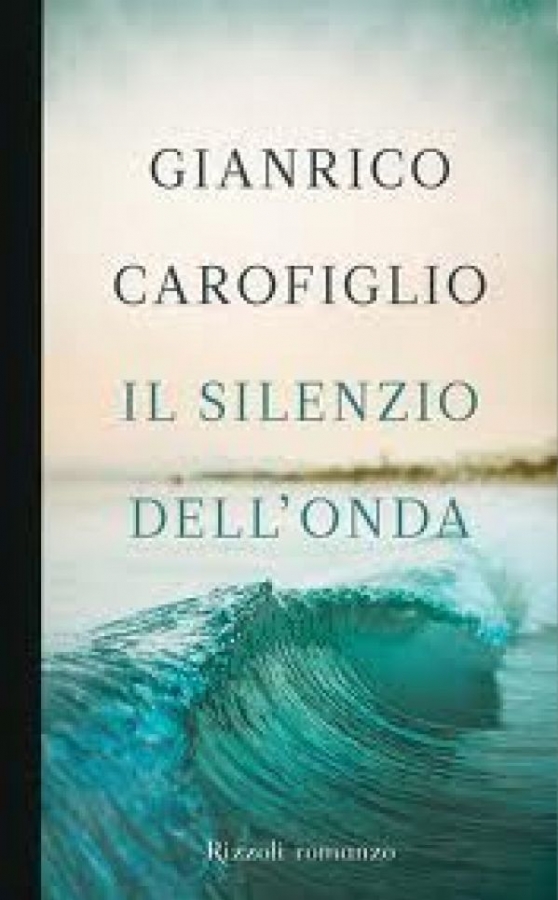
The Silence of the Wave
Roberto and Emma come from two different backgrounds: Roberto is a former carabiniere who spent years working undercover within criminal organizations; Emma is an ex-actress, a single mother to a twelve-year-old boy. Their paths cross because they are seeing the same psychiatrist; both need to free themselves > from thoughts or memories. When they arrive, one must observe them with detachment and let them slip away . The narrative centers on the figure of Roberto. Born in the United States, he returned to Italy with his mother following the suicide of his father (a corrupt police officer). The absence of his father is not the only wound waiting to heal. He enlists in the Carabinieri and is soon successfully deployed in undercover operations. > My job was to be someone else. And it isn’t bad at all to be someone else, from time to time: it makes you feel free.(...) The problem arises when you have to be someone else just to feel like yourself . Deception leads one to tolerate violence, even against young girls, and to betray the trust of the woman one loves, simply because she is the daughter of a crime boss. > I am a coward and a bastard. (...) I was so good at working with criminals because I am just like them : it is a torment that drives Roberto to the brink of suicide. By comparison, Emma’s story is prosaic; after yet another marital row sparked by her infidelities, her husband walks out for several weeks, cutting off all contact and refusing to see their son. The man’s death in a car crash leaves her burdened with profound guilt, as she feels responsible for having denied her son one final meeting with his father. Roberto and Emma approach their relationship with great caution, even if both feel that, at long last, everything around them is beginning to shift. What accelerates their romance and steers it toward a happy ending is Emma’s son, who confides his suspicion that a female classmate has become entangled in a child prostitution ring. Roberto’s intervention is, predictably, decisive in dismantling the criminal racket and rescuing the teenager. Carofiglio is a successful author, blessed with a simple and elegant prose style. One is left wondering why he chose to write a story so vacuous and superficial: there is no real action, the characters are poorly delineated, and the plot is thoroughly predictable. Compounding the already fragile narrative structure is the frequent reliance on dreams—premonitory and revelatory of truths hidden in the unconscious: a “New Age” cliché, far too ubiquitous today in contemporary fiction and countless American TV series. Why skip it? Pointless, hollow, inconclusive.
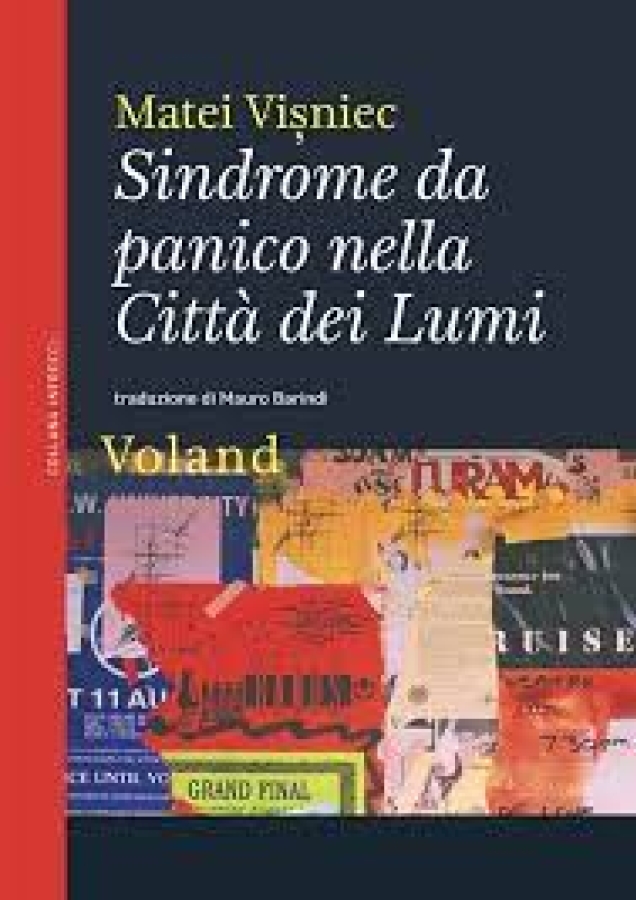
Panic Syndrome in the City of Light
The novel opens with a paradoxical and amusing scene: an eccentric publisher summons his authors to a Parisian café for a "live reading" of their manuscripts. He read them while "expressing himself": > he was capable of biting his tongue, gnashing his teeth, whistling... (...) his lips were in perpetual motion, in a continuous slaughter, (...) even his nose played a role during these readings, (...) he managed to impart a sort of vibration to his nostrils, and even increase the size of his nose as if blowing into a balloon . With such an astonishing beginning, one would have expected a continuation of equal effervescence, an ironic and biting account of the tribulations of an unpublished poet: a Romanian writer who fled to Paris after penning a single successful poem, fiercely caustic toward the communist regime of the time. One would anticipate hilarious scenes of authors vying to see their books published; instead, our poet is engulfed by a chaotic succession of characters and episodes lacking any apparent narrative purpose. At the center, a weaver of invisible threads, stands the visionary and overbearing publisher: he wants to abolish the narcissistic "I" through the mandatory use of the third person (one can only agree with him!), he wants to create a collective book assembled from fragments of each of his authors' work, he roams Paris in search of improbable figures who might be writers, retracing the haunts of famous authors who still inhabit his mind, while their books now languish on dusty library shelves. Books are "dead": all that can be done is to rush to open them and read a few pages to bring them alive, if only for an instant; words overlap in cosmic disarray, and the line between reality and fiction blurs to the point where inanimate objects come alive in a kind of artistic metamorphosis. Perhaps the novel aspires to be a metaphor for a fragmented world, where an epistemological—and consequently narrative—unity can no longer be found; nothing remains but nostalgia for the great nineteenth-century novel. Browsing the reviews on this site, one can find numerous novels in which the book itself is the protagonist. Sosuke Natsukawa's *The Cat Who Saved Books* recounts the journey of a young hero who must overcome various trials to secure a future for books. In Satoshi Yagisawa’s *Days at the Morisaki Bookshop*, a young woman regains serenity among books, only to realize that life is something else entirely. In a devastated and violent Russia, Mikhail Elizarov’s *The Librarian* tells of a group of survivors defending their books as an intangible heritage to be preserved. These are all novels with a positive view of the book and of literature. By contrast, Natsume Sōseki’s *I Am a Cat* casts culture in a negative light, where a stray cat kills itself to escape the idle chatter of humans, literati, and scientists. The novel's theme is therefore hardly original, and it might have been compelling had it been framed within a cohesive narrative plot, highlighting Paris and the splendors of a city that was once the cultural capital of the world. Instead, disorder and arbitrariness predominate, rendering the story incomprehensible, taxing to follow, prolix, and overly intellectual. Why not read it? Intellectualistic and tedious.

The Dream of the Celt
Roger Casement was born in 1864, in the century of the West’s conquest of the world—of that which styled itself as civilization. And the young Roger believes firmly in this civilizing and adventurous spirit, to the point of deciding to go to the Congo, then a land of Belgian conquest. Yet there, reality confronts him in a profoundly different way: > those poor people whipped, mutilated, those children with hands and feet severed, dying of hunger and disease. Those beings squeezed to the point of extinction and murdered on top of that. Thousands, tens, hundreds of thousands. By men who had received a Christian upbringing. I saw them go to Mass, pray, take communion, both before and after committing those crimes. Perhaps in those years I lost my mind. And everything that happened to me afterwards was the work of someone who, even if he did not realize it, was mad . Yet Roger still believes in Western civilization and thus devotes his life to denouncing the crimes perpetrated against these peoples. First in the Congo and then in Brazil, he carries out an investigation on behalf of the British government into the conditions of exploitation and the atrocities being committed. His name becomes famous in Britain and the United States, to the point that he is conferred the title of baronet. Yet it is easy to stand on the side of justice when it concerns distant lands, subject to the dominion of other powers—in this case, Belgium and Peru. It is far harder to confront what lies close at hand, such as Ireland. Roger is Irish, and he decides to dedicate the final years of his life to the struggle for his country's independence, going so far as to pursue the mad scheme of seeking assistance from Germany during the First World War. He is arrested in 1916 and sentenced to death. The life of Roger Casement is recounted in the form of a novel, but here Vargas fails, or refuses, to transfigure history. The result is a well-written chronicle, yet one that neither offers a documented inquiry shedding light on the facts and motives of such a singular and momentous figure, nor manages to impart to the reader the sense of suffering and disillusionment that must somehow have dominated the protagonist. It is, without question, an indictment of colonialism, yet it remains merely that, without ever truly stirring the conscience. Why read it? The sole reason is to discover a truly singular and remarkable figure.
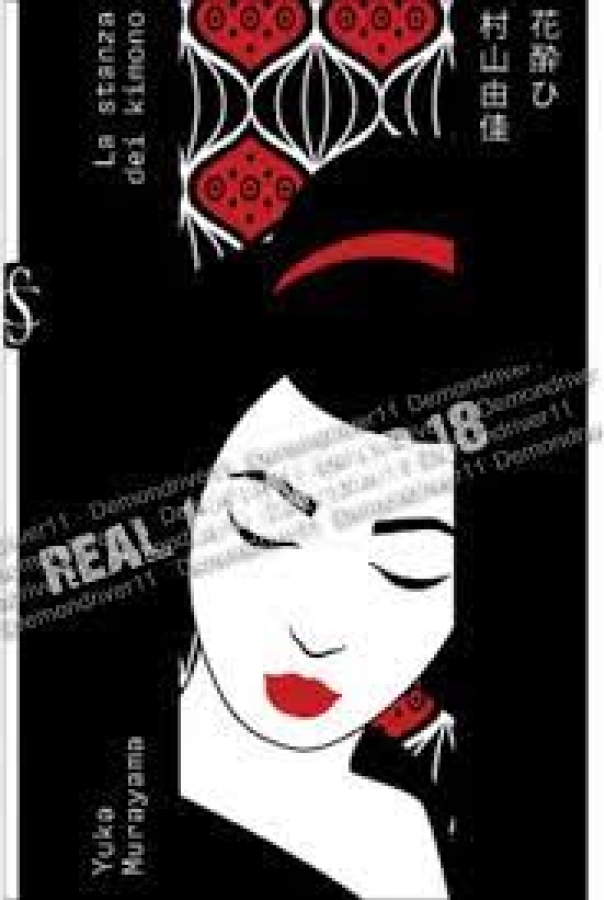
The Kimono Room
Asako works for a company specializing in wedding ceremonies. Her father's illness forces her to leave a well-paying job to devote herself to the family kimono shop. > She had been intimately familiar with kimonos since childhood, but nowadays almost no one wears them, except for the most important ceremonies. An anachronistic folklore, destined in any case for decline, a luxury permitted only to wealthy, idle women; an instrument for putting on airs: that was what they seemed to her . The grandmother shows her granddaughter the collection of antique kimonos, until then hidden away in numerous chests of drawers. Driven by her entrepreneurial spirit, Asako decides to open another shop, specializing in antique kimonos, veritable rarities. The novel shows promise; until, with no apparent connection to the title, the narrative slips into a tale of romantic entanglements, the classic infidelities of weary, monotonous couples. Asako meets the handsome Masataka, a successful real estate agent who puts her in touch with families ready to part with their old kimono collections. The respective spouses also enter the scene: Asako's husband, apathetic and long indifferent to sex, and Masataka's wife, who still suffers from the abuse inflicted upon her in childhood by an uncle. The four weave reciprocal “love affairs,” unbeknownst to their respective partners: relationships that unleash hitherto repressed sadomasochistic fantasies. The kimonos are lost along the way, supplanted by scenes verging on pornography and long, pointless dialogues. The protagonists attain sexual satisfaction; the reader slips into boredom, deciding to abandon the book. The question is as follows: what do kimonos have to do with sex scenes and a banal story of infidelity and weary marriages? One might assume the author intended to suggest that rigid, formal traditions have never truly shaped Japanese society; beneath the ostensible devotion to rules and detail, erotic drives are unleashed, all the more irrepressible for being repressed. *The Kimono Room* is a useless, cruel prison, a cage easily shattered at the first opportunity, from which one can never fully break free; one can only come to better understand oneself and those around them (see the epilogue). This dreadful novel is weighed down by reliance on a literary device all too often overused by writers. Each chapter describes the events and feelings from the point of view of each of the protagonists. As so often happens, the narrative is repetitive and prolix, forfeiting its overall cohesion. Why not read it? Insipid.

A star crowned with darkness
On May 28, 1974, in Piazza della Loggia in Brescia, a bomb killed eight people and wounded one hundred and two. > Eye to eye, she waves to him. Just then, the bomb explodes. A roar. Then smoke (light grey, white, pale blue, pages upon pages of witness testimonies, poignant, grueling...)... Livia must have felt practically nothing. The image she took with her is the smiling blue eyes of her husband coming toward her . The book opens with the dramatic and poignant description of the massacre, to conclude conceptually with the scene—equally turbulent and gripping—of the reading of the verdict by which the Court of Assizes acquitted all defendants on November 16, 2010. Moreover, the judicial saga has not yet concluded: on February 12, 2014, the Court of Cassation overturned the acquittal of two of the six defendants. Forty years have passed, and light has still not been shed on one of the gravest events of the 1970s, confirming what Gianfranco Fini declared on a television broadcast: “the massacres are a mystery.” Yet this is precisely what Benedetta Tobagi cannot accept, and alongside her Manlio Milani, president of the association of victims of the Brescia massacres: not out of a quest for vengeful justice, but “to pass on the memory of what happened” and > to truly understand a period of such mad loves and hatred... and look upon one’s past in a secular light . This undertaking, at once an act of bearing witness and of comprehension, is carried out by the author on two levels. The first, undoubtedly the most effective from a literary standpoint, retraces the lives of four of the eight victims: Livia, Manlio’s wife, the couple Clem and Alberto, and Giulietta. They are four teachers, engaged in education, politics, and social activism. > We have the things that truly matter, (Livia) wrote to Manlio when they were engaged : it was the faith “in being able to reshape the world in one’s own image.” With terrorism, not only were lives lost; the hope of a generation dissolved. A wound was inflicted on the national consciousness that has not yet healed, for the instigators, the facts, and the motives have remained obscure. The book's second level concerns precisely the author’s attempt to unravel, or at least comprehend, the social and cultural world underlying the massacres of the 1970s. Drawing on extensive documentation and resorting also to interviews with key figures, Tobagi probes, perhaps in excessive detail, the history of the subversive right, from *Ordine Nuovo* down to the role played by the *Movimento Sociale*. The reader emerges even more bewildered than before, finding themselves inundated with events and figures, without being guided toward a synthesis. Yet perhaps this is not what the author seeks; she holds neither dogmas nor certainties, but is interested in > breaking the cycle of mutual recriminations and making pity possible, opening a space for genuine human understanding even for the victims of the opposing side, who were trapped in the conflict as scapegoats . This book pursues too many objectives: the chronicle of the victims, of their lives, and of how they unwittingly met their death; the relationship with Manlio Milani and thus the account—regrettably merely sketched—of the bond between two individuals so far apart in age yet both caught up in a bereavement made devastating because it was born of violence: Benedetta, daughter of the journalist Tobagi, murdered by the Red Brigades, and Manlio, Livia’s husband; the impassioned, meticulous reconstruction of the young people who aligned themselves with the subversive right out of an “impulse toward an existential fascism,” through the “cult of physical strength, fascination with weapons,” and pernicious mentors. In this medley of genres and purposes, the journalistic investigation takes over, creating an overlapping clutter of information and considerations that makes for tedious reading. In short, not everyone is Roberto Saviano. Why not read it? In the end, it is tedious and does not help in understanding what took place.
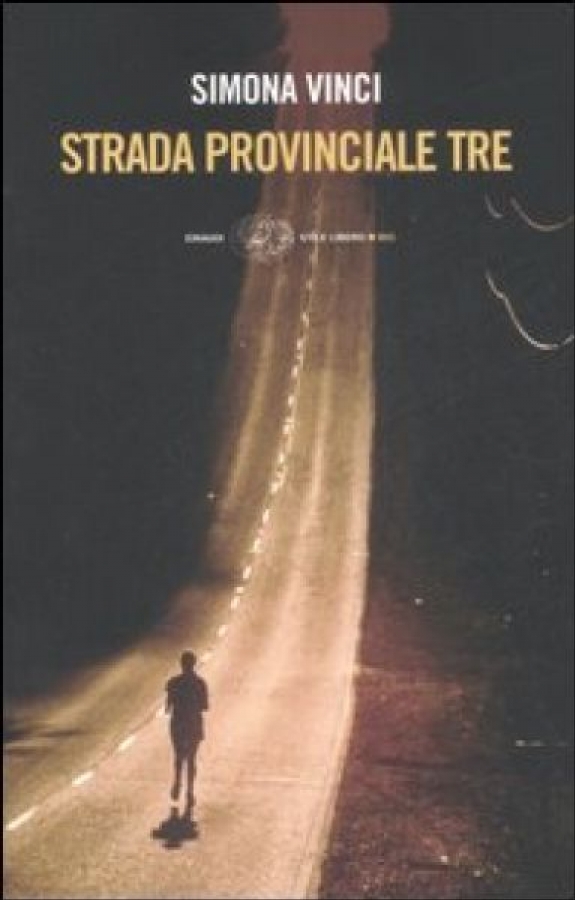
Provincial Road Three
The premise of the book is very interesting. Vera, an apparently happy wife, abandons husband, family, and job. She begins walking down a provincial road: > she started by walking, then picked up speed, her strides growing longer, quicker, tighter. One after the other . > The road is a wide road cutting across a ruined countryside. A precise, geometric destruction . > Beneath her eyes, the road. The cracked, rough asphalt. Pitted with holes, craters, fissures, cigarette butts, condoms, dried dog shit, flattened cats, bird feathers, crumpled cans, fragments of blown-out tires, nails, bolts, scraps of rusted iron, unrecognizable animal carcasses. It is the world seen from below . «You are free, I think. I am free. And I am running. There is no memory». In these opening sentences lies the essence and the finest part of the narrative, which then unfolds repetitively and without any real development. Vera encounters various characters (an old man, a young immigrant) and suffers the violence of the road. Through this rush down the road, Vera actually discovers a world she previously did not know: the poor, the abandoned, the derelict, the violent. Yet this is not a novel with a social theme. In truth, it is an intimist story: a continuous oscillation between memory and imagination. All the characters recall their lives and the dreams they realized. Vera thought she could live on nothing, alone with her drawings, and then dreamed of having twins, two identical children. In reality, Vera wants to escape a nightmare, a dream to which she continually returns: the grief of an abortion, of a child never had. And she begins running again, knowing she will remain forever still, because there is no possibility of escape. > Perhaps she could stay right here, rooted like a tree, watching the seasons pass and return, watching the trucks, the cars, all these passing people who care nothing about her, not a soul wondering who that woman is, standing motionless by the road, and why she is there. Just an insignificant detail of a landscape glimpsed at speed from a car window, out of the corner of an eye. A bush, a tree, a wall, a stone embedded in the asphalt, a fence hidden by the grass . The novel is paced like a series of poems: metaphors and meditations expressed effectively, yet lost in the repetitiveness, in the lack of rhythm and action that characterizes the narrative. There is no narrative development, but rather a constant return to the initial theme, to the representation of an existential and environmental anguish. The conjunction between individual lives (each person’s «story») and a bleak setting, stripped of its identity, constitutes a theme of major significance. The way it is conveyed by the author seems more suited to poetic form than to that of a narrative. And ultimately, it proves heavy and in many respects hermetic.