Finished reading on: January 15, 2008
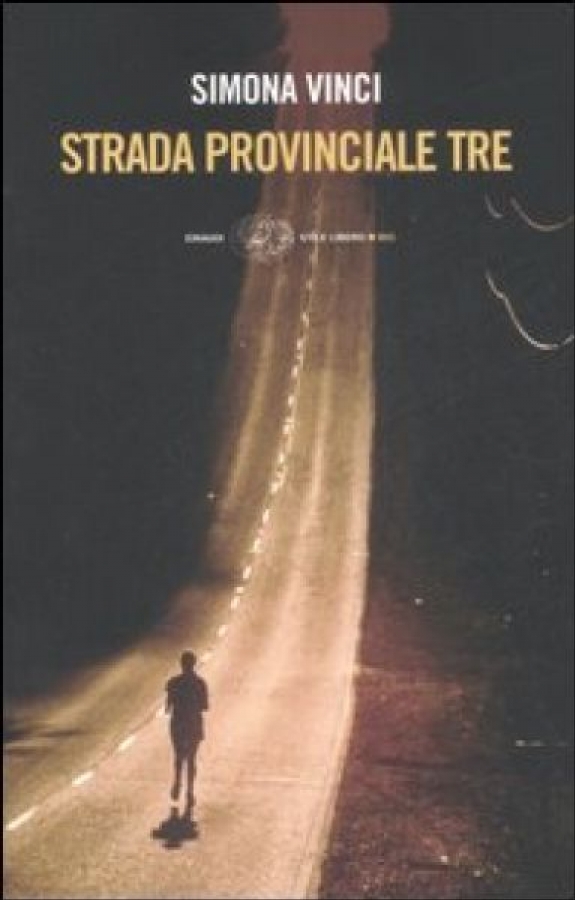
Provincial Road Three
Title of the original version reviewed: «Strada Provinciale tre»
AI Translation Notice: This review was translated from the original Italian using artificial intelligence. Book quotes and excerpts are translated interpretations and will not match the author's original English phrasing or official published translations.
The premise of the book is very interesting.
Vera, an apparently happy wife, abandons husband, family, and job.
She begins walking down a provincial road:
she started by walking, then picked up speed, her strides growing longer, quicker, tighter.
One after the other
.
The road is a wide road cutting across a ruined countryside.
A precise, geometric destruction
.
Beneath her eyes, the road.
The cracked, rough asphalt.
Pitted with holes, craters, fissures, cigarette butts, condoms, dried dog shit, flattened cats, bird feathers, crumpled cans, fragments of blown-out tires, nails, bolts, scraps of rusted iron, unrecognizable animal carcasses.
It is the world seen from below
.
«You are free, I think.
I am free.
And I am running.
There is no memory».
In these opening sentences lies the essence and the finest part of the narrative, which then unfolds repetitively and without any real development.
Vera encounters various characters (an old man, a young immigrant) and suffers the violence of the road.
Through this rush down the road, Vera actually discovers a world she previously did not know: the poor, the abandoned, the derelict, the violent.
Yet this is not a novel with a social theme.
In truth, it is an intimist story: a continuous oscillation between memory and imagination.
All the characters recall their lives and the dreams they realized.
Vera thought she could live on nothing, alone with her drawings, and then dreamed of having twins, two identical children.
In reality, Vera wants to escape a nightmare, a dream to which she continually returns: the grief of an abortion, of a child never had.
And she begins running again, knowing she will remain forever still, because there is no possibility of escape.
Perhaps she could stay right here, rooted like a tree, watching the seasons pass and return, watching the trucks, the cars, all these passing people who care nothing about her, not a soul wondering who that woman is, standing motionless by the road, and why she is there.
Just an insignificant detail of a landscape glimpsed at speed from a car window, out of the corner of an eye.
A bush, a tree, a wall, a stone embedded in the asphalt, a fence hidden by the grass
.
The novel is paced like a series of poems: metaphors and meditations expressed effectively, yet lost in the repetitiveness, in the lack of rhythm and action that characterizes the narrative.
There is no narrative development, but rather a constant return to the initial theme, to the representation of an existential and environmental anguish.
The conjunction between individual lives (each person’s «story») and a bleak setting, stripped of its identity, constitutes a theme of major significance.
The way it is conveyed by the author seems more suited to poetic form than to that of a narrative.
And ultimately, it proves heavy and in many respects hermetic.