Benedetta Tobagi
Books by this author (1)
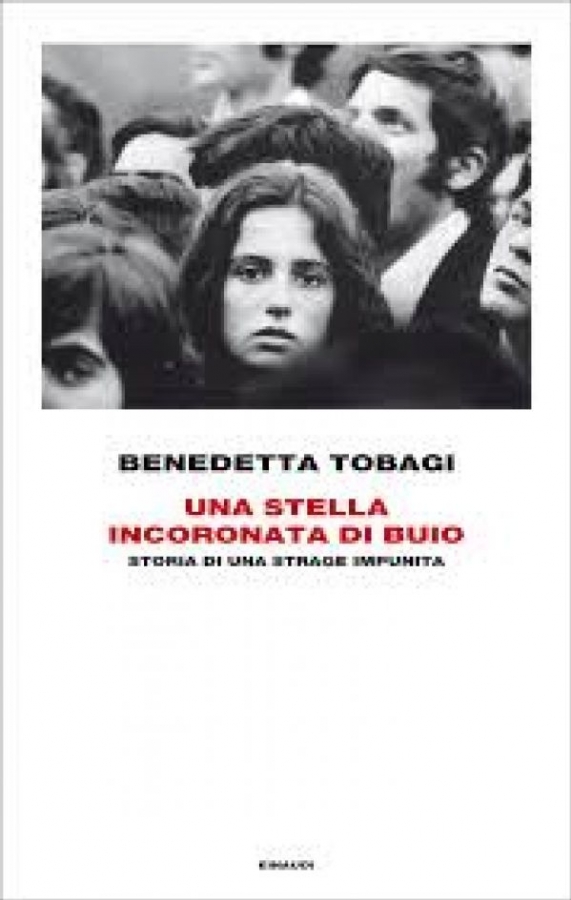
A star crowned with darkness
On May 28, 1974, in Piazza della Loggia in Brescia, a bomb killed eight people and wounded one hundred and two. > Eye to eye, she waves to him. Just then, the bomb explodes. A roar. Then smoke (light grey, white, pale blue, pages upon pages of witness testimonies, poignant, grueling...)... Livia must have felt practically nothing. The image she took with her is the smiling blue eyes of her husband coming toward her . The book opens with the dramatic and poignant description of the massacre, to conclude conceptually with the scene—equally turbulent and gripping—of the reading of the verdict by which the Court of Assizes acquitted all defendants on November 16, 2010. Moreover, the judicial saga has not yet concluded: on February 12, 2014, the Court of Cassation overturned the acquittal of two of the six defendants. Forty years have passed, and light has still not been shed on one of the gravest events of the 1970s, confirming what Gianfranco Fini declared on a television broadcast: “the massacres are a mystery.” Yet this is precisely what Benedetta Tobagi cannot accept, and alongside her Manlio Milani, president of the association of victims of the Brescia massacres: not out of a quest for vengeful justice, but “to pass on the memory of what happened” and > to truly understand a period of such mad loves and hatred... and look upon one’s past in a secular light . This undertaking, at once an act of bearing witness and of comprehension, is carried out by the author on two levels. The first, undoubtedly the most effective from a literary standpoint, retraces the lives of four of the eight victims: Livia, Manlio’s wife, the couple Clem and Alberto, and Giulietta. They are four teachers, engaged in education, politics, and social activism. > We have the things that truly matter, (Livia) wrote to Manlio when they were engaged : it was the faith “in being able to reshape the world in one’s own image.” With terrorism, not only were lives lost; the hope of a generation dissolved. A wound was inflicted on the national consciousness that has not yet healed, for the instigators, the facts, and the motives have remained obscure. The book's second level concerns precisely the author’s attempt to unravel, or at least comprehend, the social and cultural world underlying the massacres of the 1970s. Drawing on extensive documentation and resorting also to interviews with key figures, Tobagi probes, perhaps in excessive detail, the history of the subversive right, from *Ordine Nuovo* down to the role played by the *Movimento Sociale*. The reader emerges even more bewildered than before, finding themselves inundated with events and figures, without being guided toward a synthesis. Yet perhaps this is not what the author seeks; she holds neither dogmas nor certainties, but is interested in > breaking the cycle of mutual recriminations and making pity possible, opening a space for genuine human understanding even for the victims of the opposing side, who were trapped in the conflict as scapegoats . This book pursues too many objectives: the chronicle of the victims, of their lives, and of how they unwittingly met their death; the relationship with Manlio Milani and thus the account—regrettably merely sketched—of the bond between two individuals so far apart in age yet both caught up in a bereavement made devastating because it was born of violence: Benedetta, daughter of the journalist Tobagi, murdered by the Red Brigades, and Manlio, Livia’s husband; the impassioned, meticulous reconstruction of the young people who aligned themselves with the subversive right out of an “impulse toward an existential fascism,” through the “cult of physical strength, fascination with weapons,” and pernicious mentors. In this medley of genres and purposes, the journalistic investigation takes over, creating an overlapping clutter of information and considerations that makes for tedious reading. In short, not everyone is Roberto Saviano. Why not read it? In the end, it is tedious and does not help in understanding what took place.