Yokoyama Hideo
Books by this author (1)
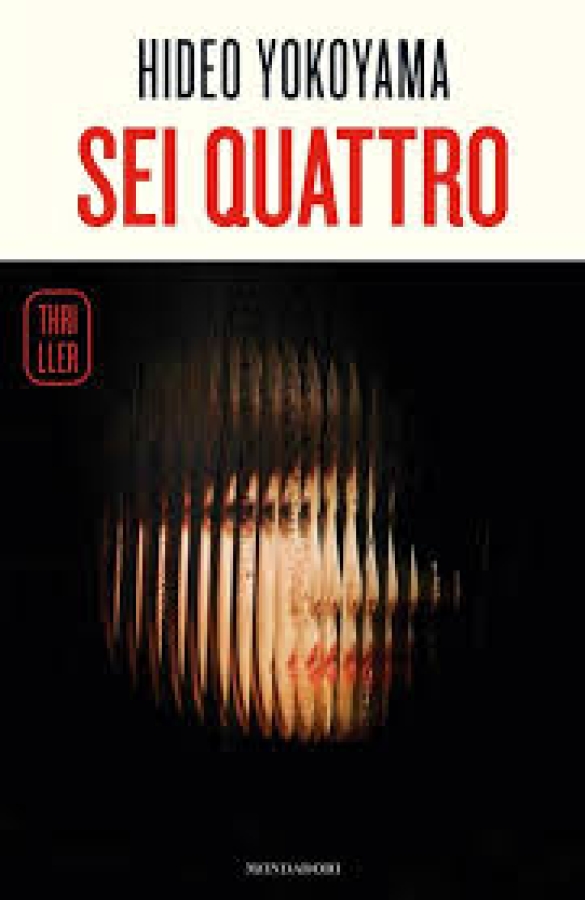
Six Four
Mikami works in the police department of a provincial city, designated generically by the author as D. After many years spent in criminal investigation, Mikami has been transferred to administrative management, put in charge of the press office. Alongside his new post, two events occur that form the cornerstones of the entire story. A visit from Tokyo by the police chief is scheduled to commemorate the murder of a young girl kidnapped fourteen years earlier, whose perpetrators were never found. It was a humiliating setback for D, and officially the police chief intends to reaffirm the determination to catch the killers. It falls to Mikami to organize the press conference and persuade the girl's father to attend: two grueling tasks, given the strained relations with the media and a family aggrieved by the police's failure. Like a true cop who has not lost his appetite for investigation, Mikami discovers that a dense shroud of mystery surrounds the *Six Four* case, as it is known in D's jargon; the detective division covered up a grave blunder by the investigators: having failed to identify the kidnapper's voice due to a mundane technical glitch. Then, Mikami learns that the police chief's visit is merely an opportunity to place D's detective division under administrative supervision, bringing it under Tokyo's direct control. Power struggles, investigative missteps, omertà, a lack of transparency, and fraught relations with the news media are the main threads of a crime novel set in Japan, but one that could easily take place in Italy. Mikami faces a dilemma: is he still a policeman, and therefore part of the detective division, or is he now an administrative official who must dutifully orchestrate the trap meant to ensnare his former unit? Mikami resolves the dilemma in the only way he knows: he reverts to being a detective to uncover what lies behind the blunder of years past and identify the kidnapper who killed the child. Alongside his new assignment, Mikami's only daughter has run away from home and has yet to be found. The author offers us glimpses of a household where the father is perpetually dedicated to his work and the wife fully discharges her duties as mother and spouse; a pity they failed to notice—or chose not to see—their daughter's burgeoning distress. > "Perhaps it was us who were not right," >. Words that every parent should etch into their mind and heart! And then, quietly, beneath a veil of the unspoken, we discover that Mikami has an exceptionally ugly face, so much so that people often laugh behind his back when looking at him, and that his daughter resembles her father, suffering from that very same ugliness. > She refused to go out with her father. (...) she made sure her parents could not see her face. (...) With her head turned away (...) she said: (...) I want to change everything, anything at all. (...) It had felt to him as though she were saying: I am ceasing to be your daughter. There is a mystery here as well, prompting Mikami to wonder why his wife, universally considered very beautiful, ever chose to marry him. To this question the novel offers no answer, for the human soul is far more indecipherable than any detective mystery. The family drama is swallowed up by the narrative of a grand intrigue, where the most compelling element lies in the relations between the police and the news media. The author meticulously describes the fraught management of the press office, caught between the demands of journalists and directives of little to no transparency. A penchant for detail and introspective analysis defines the entire narrative, offering sparse plot twists and lingering in the protagonist's often tortuous ratiocinations. One emerges from it like someone buried beneath a heap of dirt, only occasionally catching sight of a pretty little flower. Metaphor aside, the novel is long-winded and tedious. Why not read it? The story is intriguing, but the narrative is dull.