Finished reading on: December 15, 2013
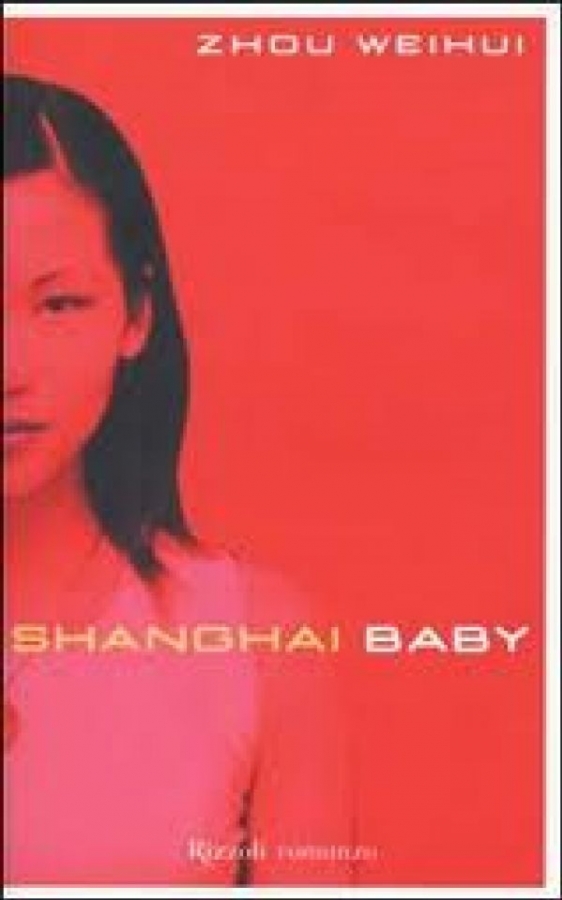
Shanghai Baby
AI Translation Notice: This review was translated from the original Italian using artificial intelligence. Book quotes and excerpts are translated interpretations and will not match the author's original English phrasing or official published translations.
Anyone expecting the China routinely churned out by the mass media—whether to disparage or exalt it—will be disappointed.
This novel is set in Shanghai (
an epicurean metropolis that produced euphoric froth, a new generation of human beings, and was steeped, throughout its streets and alleys, in a frivolous, mournful, and mysterious atmosphere
), but the story could just as easily unfold in New York, London, or any other metropolis.
The protagonist, Ni Ke, “though my friends call me Coco,” is a twenty-four-year-old girl who belongs to
a group of wealthy, decadent youths who resort to increasingly hyperbolic and unhinged words to procure unbridled pleasure...
we are a swarm of disoriented caterpillars, with fanciful wings more virtual than real, sentimental and dependent on one another; a swarm of larvae clinging to the skeleton of our city, sensual and brimming with a sweet dynamism
.
When it was published in 1999, the book was banned by the Chinese authorities because it depicted and glorified the lifestyle of “Mian Mian,” the Chinese Beat Generation, branded as “garbage to be swept away,” outlawed, and eradicated.
From this perspective, the novel is undeniably dated, as headlong development has standardized
the attire, hairstyle, way of speaking, and manner of lovemaking
of Coco, rendering her indistinguishable from affluent, educated young women anywhere in the world.
There is, however, one theme that keeps it compelling: can love exist without sex?
Was I supposed to maintain a certain distance between man and woman, with no intimate physical contact? Or were they meant to end up in bed, becoming two inseparable lovers?
Coco has just published a collection of short stories that made her famous (
I received many love letters from male readers, almost all accompanied by pornographic photographs
); she works as a waitress in a bar, where she meets Tiantian, a young man of an
indescribable beauty, which betrayed a weariness of life and a longing for love.
We were two diametrically opposed individuals: I was ambitious, brimming with vitality, ready to bite into the world as if it were ripe fruit; while he was taciturn, mournful, depressed, regarding life as a cake dusted with arsenic powder
.
A love affair begins—a deep bond that would satisfy Coco completely, were it not for the fact that Tiantian is impotent, unable to engage in full sexual intercourse.
Coco is “like a caterpillar determined to bore into a big apple”; she wants to live intensely, without missing out on a thing.
She meets Mark, a handsome, blond German, with whom she openly cheats on Tiantian.
The encounters between Coco and Mark are consistently tumultuous, unbridled, visceral, and violent, counterbalanced by the tender, lascivious intimacies the girl continues to share, to her great satisfaction, with Tiantian.
In the background, parties, celebrations, and a cast of characters—all transgressive and over-the-top—chaotically pursue one another across a cosmopolitan, youth-obsessed Shanghai.
Everything seems natural: discussing art and literature, having sex—both heterosexual and homosexual—smoking joints, getting drunk, and visiting parents, who are always ready to welcome them into the safety of the traditional family, joyfully and without too many questions, yet laden with anxieties, much like parents the world over.
In such an environment, there is no room for guilt in Coco, even when Tiantian lets himself die of an overdose, crushed by his inadequacy as a lover and incapable of shaking off the nightmares that have gripped him since childhood.
Behind Tiantian’s persona lies an existential tragedy born of the conviction that his mother, an ambitious Chinese businesswoman, murdered his father.
Coco does nothing to save her friend, far too absorbed in living Shanghai’s frantic scene to the full.
On her way to deliver the manuscript of her new novel—which recounts precisely her story with Mark and Tiantian—Coco feels thoroughly exhausted.
The taxi sped wildly along the ring road, with me and a friend inside, yawning incessantly
.
And boredom is indeed the prevailing impression left upon the reader.
The narrative unfolds at a sluggish, verbose, somewhat predictable pace.
Shanghai feels too distant for the reader to be truly seduced by this great metropolis, just as Coco’s musings and digressions often ring banal, literary, and generic.
A profound superficiality reigns supreme.
Why skip it? The underlying premise is intriguing, but the novel is dull.