Finished reading on: September 08, 2014
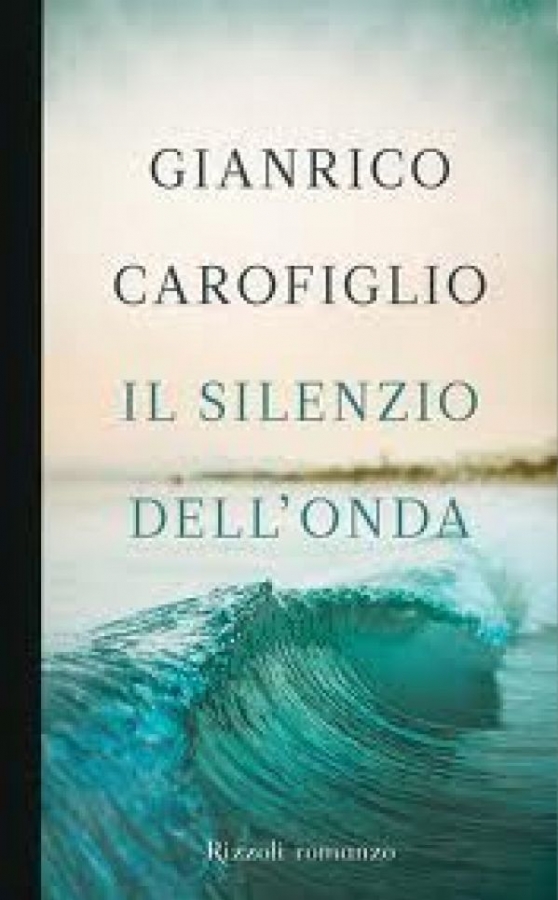
The Silence of the Wave
Title of the original version reviewed: «Il silenzio dell'onda»
AI Translation Notice: This review was translated from the original Italian using artificial intelligence. Book quotes and excerpts are translated interpretations and will not match the author's original English phrasing or official published translations.
Roberto and Emma come from two different backgrounds: Roberto is a former carabiniere who spent years working undercover within criminal organizations; Emma is an ex-actress, a single mother to a twelve-year-old boy.
Their paths cross because they are seeing the same psychiatrist; both need to free themselves
from thoughts or memories.
When they arrive, one must observe them with detachment and let them slip away
.
The narrative centers on the figure of Roberto.
Born in the United States, he returned to Italy with his mother following the suicide of his father (a corrupt police officer).
The absence of his father is not the only wound waiting to heal.
He enlists in the Carabinieri and is soon successfully deployed in undercover operations.
My job was to be someone else.
And it isn’t bad at all to be someone else, from time to time: it makes you feel free.(...) The problem arises when you have to be someone else just to feel like yourself
.
Deception leads one to tolerate violence, even against young girls, and to betray the trust of the woman one loves, simply because she is the daughter of a crime boss.
I am a coward and a bastard.
(...) I was so good at working with criminals because I am just like them
: it is a torment that drives Roberto to the brink of suicide.
By comparison, Emma’s story is prosaic; after yet another marital row sparked by her infidelities, her husband walks out for several weeks, cutting off all contact and refusing to see their son.
The man’s death in a car crash leaves her burdened with profound guilt, as she feels responsible for having denied her son one final meeting with his father.
Roberto and Emma approach their relationship with great caution, even if both feel that, at long last, everything around them is beginning to shift.
What accelerates their romance and steers it toward a happy ending is Emma’s son, who confides his suspicion that a female classmate has become entangled in a child prostitution ring.
Roberto’s intervention is, predictably, decisive in dismantling the criminal racket and rescuing the teenager.
Carofiglio is a successful author, blessed with a simple and elegant prose style.
One is left wondering why he chose to write a story so vacuous and superficial: there is no real action, the characters are poorly delineated, and the plot is thoroughly predictable.
Compounding the already fragile narrative structure is the frequent reliance on dreams—premonitory and revelatory of truths hidden in the unconscious: a “New Age” cliché, far too ubiquitous today in contemporary fiction and countless American TV series.
Why skip it? Pointless, hollow, inconclusive.