
The Secret of the Old Woods
At the beginning of the tale, Dino Buzzati imagines a nineteenth-century abbot who, "with succinct and very clear accounts," speaks of "a wondrous vision" upon beholding the old forest; in a footnote, the author observes how some men grasp the secrets of the woods, perceiving them by "nature," while others will never possess this sensitivity, > and will pass impassively (...) along the shadowy forests, without even suspecting what goes on in there . Communion with the trees, the capacity to perceive their magic, belongs to children; as Bernardo explains—the tree-genie who has taken upon himself the burdensome task of conversing with adults— > at a certain age all of you, men, change. Nothing remains of what you were as children. You become unrecognizable . Adulthood causes one to lose the quality of feeling part of the whole, of playing in the woods alongside the animals, of understanding the birdsong, of perceiving and distinguishing the vibrant and grandiose orchestra of forest sounds. Because adults will never love nature, the genie Bernardo befriended the old owner, persuading him to leave the old forest untouched. What an ordeal it was to spend evenings in long games of cards, in tedious conversations while > through the window, with the fragrance of precious resins, entered the deep voice of his brothers, singing carefree ! The situation changes when the old owner dies and the new master arrives. Procolo, a retired colonel, is a rigid, somber man, solitary and impervious to any communion with the woods, which he sees merely as an opportunity for exploitation. It is not that he is greedy; he is simply a petty soul, and how can one who lacks generosity find pleasure in the rustlings and scents of the woods? He allies himself with the wind Matteo to bend the tree-genies and force them to work for him in exploiting the forest; he kills the magpie that stands sentinel over the house, only to plummet into the silence of the night, trapped inside his nightmares. Wretched and wicked, he seeks to rid himself of young Benvenuto, heir to the forest, of whom he is the guardian; with the aid of the wind Matteo, he does not hesitate to abandon the child in wild reaches of the woods, where Benvenuto would surely have perished. He fails, yet believes no one knows of his murderous intent. But when he ventures into the thick of the forest, > behold, the birdsong wanes, squirrels and dormice flee, silence settles upon the boughs, and at times ominous clouds even appear in the sky. (...) Clearly he struck a false note in that blissful corner of the woods; clearly the trees and birds could not bear him . Even his shadow abandons him, so disgusted is it by the barrenness of its lifelong companion. Procolo is alone. And yet, little by little, reluctant and astonished, on a sleepless night Procolo recognized the sounds of the forest. He counted fifteen of them, meticulously noted one by one. > But two or three times, that night, there was also true silence, the solemn silence of ancient woods, comparable to none other in the world, which very few men have ever heard . And the goodness that resides in all human beings is finally liberated from the representation of self, from that "false self" that had accompanied him throughout his life. Procolo dies, but is saved. Buzzati’s tale can be interpreted as a fascinating metaphor for the human soul, where the woods are not Dante’s *selva oscura*, but rather a kind of Shinto paradise in which trees are benevolent genies and winds are hostile, dark forces: a depiction, in short, of the intricate tangle of consciousness. I prefer to interpret *The Secret of the Old Forest* literally, as a great woodland fairy tale, devoid of ulterior meanings. Raised by parents who loved the mountains and made me spend long summers amidst the greenery of the Alps, walking among the trees has always been part of my life, without my ever understanding why. Reading Buzzati’s tale helped me comprehend my passion. And it is precisely for this reason that I associate it with Petrarch, fully aware of how bold such a connection is. When Francesco Petrarch recounts his walks in Provence and Tuscany, I recognize the feeling that stirs within me whenever I, too, make my way through the forest: the desire for detachment from the world’s frenzy, a reunion with oneself—solitary, silent, absorbed in physical exertion, steeped in the vitality of the trees, conscious of the bond connecting all living beings. Often, as I wander free and aimless amid the light and sounds of the forest, the lines of Canto XXXV of the *Canzoniere* come to mind: > alone and lost in thought the most deserted fields / I go measuring with steps slow and halting, / and keep my eyes alert to flee / wherever human trace marks the sand .

The silence of the cloisters
Petra Delicado, the protagonist of Bartlett’s novels, has married an architect who has no fewer than four children. Petra thus finds herself juggling her duties as a police detective, a marital venture she desperately wants to succeed, and relations with stepchildren backed by her husband’s irascible ex-wives. Into this fraught domestic arrangement intrudes a complex and mysterious case: inside a convent, a friar is murdered and the body of a blessed man, venerated as a relic, is spirited away. Unable to make sense of the crime, Petra pursues numerous leads, assisted—or more accurately, steered—by one of the convent’s nuns, who conceals a terrible secret. The novel moves along sluggishly, somewhat limp, alternating the police investigation with protracted conversations between Petra and the Mother Superior, depictions of life at the precinct, and domestic tensions that gradually give way to a cheerful, serene environment. In the end, the mystery is solved purely by chance, leaving the reader weary and disappointed rather than surprised. As in all her novels, Bartlett tackles themes far beyond the boundaries of the detective genre: in this case, the arcana of conventual life and of the Catholic Church more generally, as well as the tribulations of living together in a complex, blended family. As for her anticlericalism, the author makes her stance immediately clear, defining Catholics as > those who haven’t recovered from the traumas of a Catholic education, those who live perpetually imprisoned by guilt. In a word: poor wretches . As for cohabitation, the struggles of a couple’s relationship are summed up as follows: > Marcos and I were there, united before the law but separated by the incommensurable divide between the worlds in which we moved . Why not read it? As a detective story, it is weak and dull; as an account of social milieus and human emotions, its contents are far too superficial to hold the reader’s interest. Its sole merit is a pleasant prose style, even if it leans too heavily on dialogue—especially between Petra and her colleague Garzón; but then, why don’t the two of them just get married?
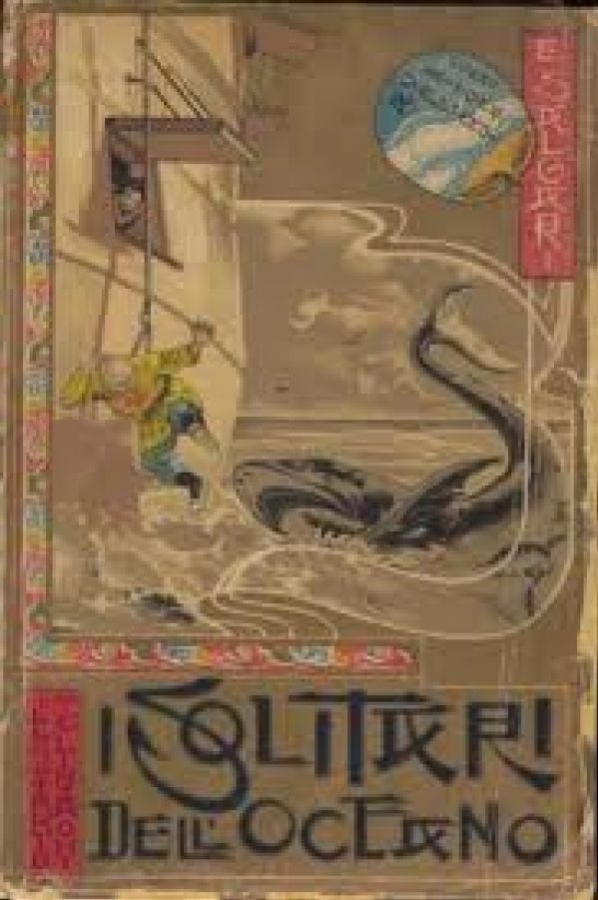
The Solitaries of the Ocean
Salgari wrote over eighty novels, and not all of them possess the same literary quality. In this case, two hallmarks of the author’s pen are absent: the pulse of adventure and the exotic, yet often captivating, depiction of the setting. The opening is promising. In the mid-nineteenth century, the slave trade is replaced by the recruitment of Chinese laborers, who supply South America with cheap labor. The transport conditions endured by these poor souls, deluded into believing they would find dignified work, are even more harrowing than the African slave trade. Indeed, since they are not regarded as chattel, the Chinese possess no asset value, and exorbitant profits lead shipowners to accept an appalling mortality rate. The opening chapters could easily be set today, amid the plight of migrants crossing the Mediterranean. Salgari’s indignation is profound at the perfidy, deceit, and senseless cruelty of those who exploit (recruiters, shipowners, sea captains, and large landowners) the misery and aspirations of the world’s dispossessed—in this case, the Chinese. We find ourselves aboard the *Alcione*, a vessel sailing from China to Peru with a cargo of over four hundred Chinese, crammed into the hold, poorly fed, and forced to survive without access to fresh air. Plague breaks out, and Salgari portrays, with grim power, the corpses of the Chinese, snagged with a hook, hoisted from the hold without being touched by the crew, and cast to the ravenous sharks. It is a harbinger of the book's core theme: the cannibals and their craving for white flesh. A mutiny erupts, and the captain, unable to quell it, abandons ship along with his crew, though not before poisoning the provisions. All the Chinese perish, save for their leader, Sao-King, two Peruvians, and an Argentine officer who had opposed the captain’s cruelty. The four men must navigate the *Alcione* alone through fierce storms, seeking refuge on islands inhabited by cannibal populations, only to be captured at last by pirates, who seize the sailing ship. The adventures revolve around two protagonists: Sao-King and Ioao, the younger of the two Peruvians. The two, evidently formidable swimmers, manage to escape the ship while underway and find safety aboard a naval schooner. With the warship’s aid, and through further heroic feats, they vanquish the pirates and rescue their companions. Salgari repeats a literary formula common to all his books: a hero, Sao-King, accompanied by a less experienced and vigorous sidekick, here Ioao. Displaying great courage and remarkable prowess, the two confront numerous, incredible ordeals. These episodes, however, are not woven into a cohesive narrative structure and unfold sluggishly. It is evident that Salgari is weary, drained, incapable of breathing vigor into the scenes, and perfunctory in his depiction of the setting and characters. Moreover, a true antagonist is missing, as the adversaries to be overcome shift constantly: the cruel captain, whose vengeance one would expect to be a guiding thread, disappears for most of the narrative, only to resurface reduced to a skeleton in the launch with which he fled the ship; the anthropophagi (hideous and treacherous) are too primitive to be considered genuine foes; and the pirate chief, who will end his own life, is ruthless yet benign enough to spare our four friends. The theme of cannibalism—already present in other novels, though never so repetitively—casts a lugubrious pall that spoils any relish of the adventure. Yet perhaps this very motif mirrors Salgari’s psychological decline: moving from the depiction of grand heroes, even if tormented like *Il Corsaro Nero* or ambiguous like *Capitan Tempesta*, to a tragic worldview where, confronted with sheer ruthlessness, one can only defend oneself or succumb. Why avoid it? It simply isn’t worth it.

The Sovereign of the Golden Field
This novel belongs to the Western cycle. Influenced by the figure of Buffalo Bill, Salgari developed a series of stories set against the historical backdrop of the mythical conquest of the West, amidst heroic figures, savage Indians (Apaches and Navajos), and American villains. A young woman (the Sovereign of the Golden Field), whose father has been abducted by bandits demanding a hefty ransom, decides to put herself “up for auction” to raise the sum required to free him. The winner of the auction will take her as his bride. Participating in the auction are a young engineer and a wealthy black man who oversees the crab fishing and trade, controlled by the Chinese; for this reason, he is known as the King of the Crabs. The young engineer lacks the funds to rival the wealthy merchant, yet, with the help of a young clerk, manages to outwit the King of the Crabs, win the auction, and flee into the West with the young woman to rescue her father. Naturally, the villainous merchant sets off in pursuit. Everyone travels by train, the revolutionary conveyance that collapses distances and stands as emblematic of American technological superiority. A sequence of adventures unfolds aboard the train; we witness the passage of an enormous herd of bison; and finally the three youths—the girl, the young engineer, and the clerk—set out on foot through Apache territory to reach the hideout where the father is held captive. Accompanying them are Buffalo Bill and a handful of valiant men. Further adventures ensue, as the wealthy merchant, joined by a band of ruthless Mexicans, remains in hot pursuit. While fleeing the villain, the three youths are captured by the Apaches. We witness a sort of trial convened by the Indian chiefs, in which white society is indicted (this is the novel’s political juncture, where Salgari’s anti-colonialist vision reemerges). The three youths are condemned, but the young engineer and the clerk manage to escape (via a subterranean stream), while the young woman remains a prisoner. The narrative reaches its pivotal moment: a duel between the young American woman and an Indian warrior woman, from which the former emerges victorious. From that point on, the novel slides toward a happy conclusion: Buffalo Bill arrives, the kidnapper's hideout is uncovered—the villain having meanwhile joined forces with the wicked merchant—and ultimately the father is freed and the villains vanquished. The plot is highly intricate, but unlike the novels of the Malaysian cycle and the Caribbean cycle, it lacks narrative tension. First and foremost, the author fails to create that suspense, that sense of anticipation characteristic of the works in the other two cycles: one senses something artificial and contrived, which the plot’s intricacy futilely attempts to replace. Secondly, at the center of the novel stands the figure of a heroine, hardly a novelty for Salgari if one recalls *Jolanda, la figlia del corsaro nero* and *La regina dei Caraibi*. In this instance, however, the heroine is a cold character who remains impassive even in the face of death, betraying no affection toward the enamored young engineer. She is all strength and all courage—perhaps how Salgari imagined the American woman. What constrains the entire novel, perhaps, is an admiration for American society that feels too conventional to lend emotional depth to the characters and their setting. Only the plot remains.
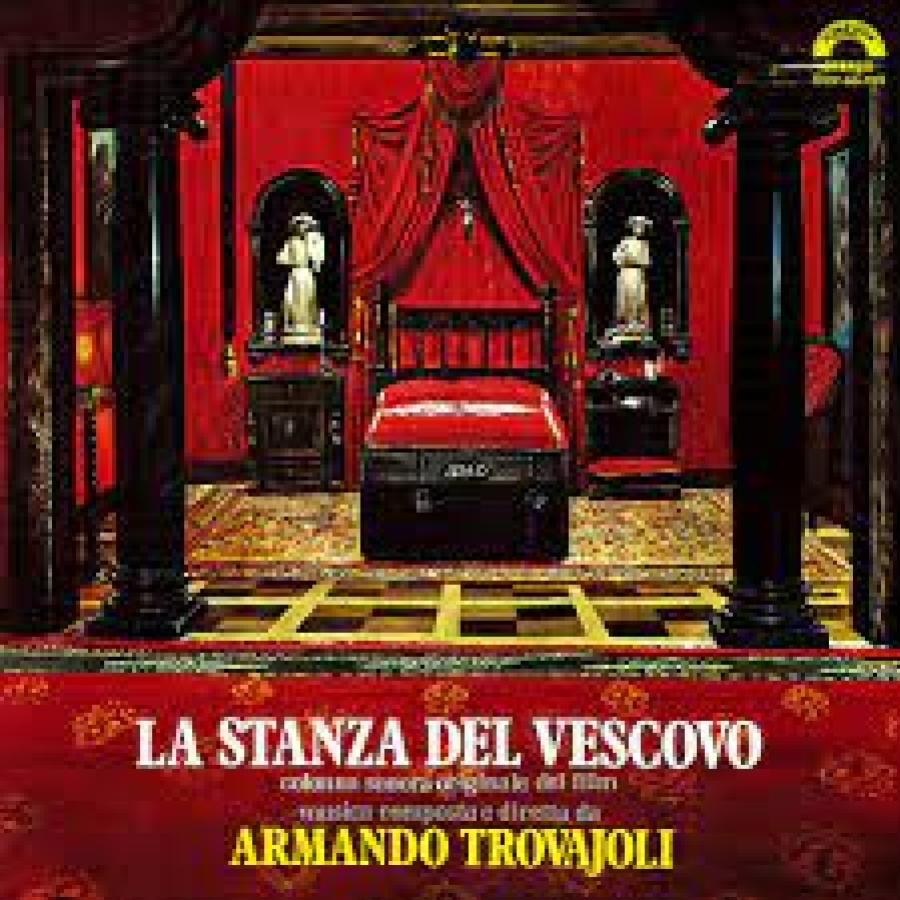
The Bishop's Bedroom
> In the late afternoon of a summer day in 1946, at the helm of a large sailboat, I arrived at the port of Oggebbio on Lake Maggiore . In a few words, the author captures the atmosphere of the entire novel: the immediate post-war period with its yearning to reclaim one's prime years, lost to the war or in prison camps; the freedom of sailing without ever returning home, like modern-day Odysseuses; and the unreal atmosphere of the lake, with its charming coastal villages, light breezes and sudden gales, mist and towering mountains, and «the fragrant olea in gardens of bitterness» (Vittorio Sereni, quoted at the opening of the book). In this suspended realm, within consciences even before the landscape, the first-person narrator and his casual friend, Doctor Orimbelli, attempt to > invent a second youth for themselves, a reclamation, capitalizing on their still-fresh age and a certain bodily vigor . Nor is there any lack of Penelopes: Orimbelli’s wife and sister-in-law—the former having waited for him for ten years, by now disillusioned with her husband; the latter awaiting her spouse, presumed lost in the war. Ithaca is there as well: Villa Cleofe, a sumptuous and decadent estate. Cruising this way and that in the boat, the narrative frays amidst pretty girls and hotel rooms. The author attempts to invigorate the plot by devising a mysterious crime and a surprise ending; it is a futile attempt, for everything dissolves into the languid, cynical climate of an amoral society, such as that of post-war Italy would become. There is something reminiscent of Giorgio Scerbanenco’s *L'isola degli idealisti* (see the review on this site). Just as in Scerbanenco’s novel, Villa Cleofe is a place of suspension, offering safety to men weary of too many harrowing events; except that in Piero Chiara, the resolution does not reside in an idealism that, however naive, remains charged with hope. Rather, serenity is to be found in living day to day, in refusing to see oneself as the hypocrite and scoundrel one fundamentally is. It is no coincidence that the first-person narrator considers himself morally superior to Doctor Orimbelli—a liar and a cad—yet continues to play along, lending himself to his friend's petty and grand villainies, as if ensnared by a voluptuous torpor. Only flight seems capable of saving him: as soon as the boat > began running before the wind, I turned toward the coast and picked out the villas one after the other, interspersed with their grounds, (...) while the wind shifted a quarter and, between Canneto and the mouth of the Tresa, the waters of home opened before me, to be furrowed for the last time. The primary virtue of the book is the writing: everything flows seamlessly; the pen glides light and assured across the blank page. The plot is lacking, and it is at times long-winded, but the reader is captivated by the exquisite prose, capable of concealing the narrative void. Why read it? Beautiful Italian.

The Story of the Lost Child
The story of the friendship between Elena and Lila continues, its conclusion offering us the meaning of this long narrative: in vain do we attempt to bring clarity to the disorderly flow of events and feelings. In the previous book, we left Elena fleeing with Nino, abandoning a prosaic bourgeois life. For many pages—too many, even—Elena remains at the center: a separated mother and, above all, a mistress. To be close to Nino, Elena returns to Naples, dragging her two daughters along with her. She moves into a sunlit apartment on Via Tasso, far from the neighborhood, which she nonetheless frequents often. She fails to > recapture Lila immediately along with all the complications she brings with her or, worse, I allow myself to be caught up in the events of my own life because I dash them off with greater ease . Nino proves to be an evanescent man; with barefaced brazenness he refuses to leave his wife for Elena; he is selfish, vain, wildly ambitious, a natural-born betrayer. Can an intelligent, educated woman accept being the concubine of a scoundrel? > The more I traveled toward Milan, the more I discovered that, once Lila was set aside, I did not know how to give myself solidity except by modeling myself on Nino. I was incapable of being my own model. Without him, I no longer had a core from which to expand beyond the neighborhood and into the world; I was a heap of debris . The spell breaks; Elena catches Nino in a sordid embrace with the maid—the most bourgeois of betrayals. And she discovers that Nino is “nothing alien, then, but rather much that is foul.” She leaves the man and the bright home behind to go live in the neighborhood, right above Lila’s apartment. The narrative develops the friendship between the two women within an unusual context, that of family: both of their careers (Elena’s often taking her far away), five children, two of whom—Tina and Imma—are young girls of the same age, the former Lila’s daughter, the latter Elena’s, fathered by Nino. The story proceeds slowly, steeped in neighborhood affairs, petty domestic conflicts, and the conflicting emotions of the two friends, until suddenly a dramatic turn occurs: Tina vanishes. The “lost child” brings us back to *My Brilliant Friend*: Lila is once again at the center, and with her, Naples. It is not as one might expect. Lila’s grief remains ever in the background. It is true > Tina had become encysted inside her. (...) A way had to be found to set the child’s story flowing again . Yet Lila does so in her own way, setting out to discover Naples: putrefaction and splendor all at once. In what other city has a church (San Giovanni a Carbonara) been built over a ditch known as the Carbonara because the rotting corpses and severed limbs of men and beasts were dumped there? > I often had the impression that Lila used the past to normalize the present (...). In the Neapolitan things she recounted, there was always something ugly at the origin, something fractured, which later assumed the shape of a handsome building, a street, a monument, only to lose its memory and meaning, worsening, improving, worsening again, according to a flow inherently unpredictable, composed entirely of swells, dead calms, sudden downpours, waterfalls . Is life not, after all, a perpetual “dissolving of margins,” > a melting down of heterogeneous matter, a blurring and reshuffling ? Why, then, be surprised by Lila’s vanishing, by her decision to depart leaving behind no trace of herself, save for two fifty-year-old dolls sent to Elena one day? To be sure, Elena is left with the impression of having been deceived, of having been dragged wherever Lila wished. > All her life she had narrated a story of redemption, using my living body and my existence. (...) I have been writing for too long and I am weary; it grows ever harder to keep the thread of the narrative taut amid the chaos of the years, of events great and small, of moods. (...) Unlike in stories, real life, once past, leans out not toward clarity, but toward darkness. Once again, the author lingers far too long over a trite tale of betrayals, domestic trivialities, and social relationships. She seeks to delve into Elena’s soul to probe the reasons behind her submissiveness toward an overtly unfaithful lover, yet the narrative ends up bland, superficial, and dull. There is the life of the neighborhood; dramatic events unfold in succession, such as the earthquake, yet it all feels pasted on, devoid of any sociological analysis. There are Elena’s daughters, astonishingly adaptive to new environments and life changes, yet it defies belief that they could pass through childhood and adolescence entirely impervious to the domestic turmoil, to a mother perpetually occupied elsewhere, and to the neighborhood's endemic violence. The novel takes flight only when Naples enters the scene. It feels then as though one were reading Matilde Serao or Anna Maria Ortese—the great Neapolitan women writers. The credit belongs to Lila, a character capable of taking on a life of her own whenever she is not eclipsed by the excessively bourgeois and predictable Elena. Why read it? It is somewhat tedious, but it is worth reading to see how the grand saga ends.

Those Who Leave and Those Who Stay
> To become. It was a verb that had always obsessed me (...). I wanted to become, even though I hadn't known what. And I had become, that was certain, but without an object, without a true passion, without a determined ambition. I had wanted to become something, that was the point, only because I feared that Lila would become who knows who and I would be left behind. My becoming was a becoming in her wake. I had to start becoming again, but for myself, as an adult, outside of her . This long quotation captures the essence of this third volume in the story of a friendship, that between Elena and Lila. The former has reached > a land of good reasons, governed by rules (...) that gave meaning to everything : already a successful writer, married to a young, brilliant professor, > always guided by a higher order that, while having a familial rather than divine origin, nonetheless gave him the certainty of being on the side of truth and justice. Yet beneath a veneer of bourgeois—albeit left-wing—achievements, a deep and intimate dissatisfaction lurks within Elena. Her visits to the neighborhood are always greeted with deference and admiration, even if tinged with an envious acrimony toward someone who has abandoned her roots; but how to explain the cost of this extraordinary social climb, that > since the age of six I have been a slave to letters and numbers, that my mood depends on the success of their combinations, that this joy of having done well is rare, unstable, lasting an hour, an afternoon, a night? For much of its length, the novel follows a predictable path, with Elena as the judicious, self-assured woman and Lila in her role as the tormented, unfortunate friend. The lengthy account of the misadventures of the “brilliant friend” (Lila), her illness—undoubtedly psychosomatic in origin—and Elena's decisive intervention seem to confirm the predictable roles between the two friends. And the reader expects new literary triumphs for Elena, an intense life from an intellectual and political standpoint, the pursuit of social advancement: none of this comes to pass. Slowly, but inexorably, Elena retreats into an opaque bourgeois life. A mother of two young girls, it seemed to her that daily chores bore witness to her maturity as a woman, > that becoming like the mothers of the neighborhood was not a threat, but the natural order of things. It’s fine like this. I told myself . That a subtle malaise lies beneath this quiet family life is shown not so much by the arid marital relations, accepted with resignation, as by the loss of that authenticity which had sustained Elena as a young writer. And it once again falls to Lila to tell her the truth, as has always been the case. After reading her friend's second book, Lila hurls her rage in her face: > don't make me read anything anymore, (...) the disgusting face of things was not enough to write a novel: without imagination it didn't look like a real face, but a mask . And it is precisely this judgment, inexorable and cruel, through which Lila asserts her “unrivaled power,” that drives Elena to a disruptive act. She meets Nino, the man yearned for in her adolescence and stolen away by her friend; she begins an extramarital affair with him that culminates in fleeing her family. At the news, Lila > began to scream. (...) Why did you study so much? What the fuck was the point of imagining that you would enjoy a wonderful life for me, too? I was wrong, you're an idiot . Yet wasn't Nino the very man who had brought Lila close to self-annihilation? But then, Elena wonders after an intense day of lovemaking with her lover, “we weren't doing, but redoing.” One might hastily say that Lila's verdict on Elena's book applies to this third volume as well. The narrative has lost its vigor; it lingers pointlessly on the clichés of the 1960s, on facile observations regarding the female condition, and on fragile, predictable psychological insights. Lila's figure recedes into the background and, consequently, the novel loses its originality; Elena comes across as a bored, inconclusive, petty-bourgeois woman; the other characters are vacuous figures, beginning with Nino—a capricious and irresponsible lover, for whom the love affair with Elena is a “repetition,” as Elena herself acknowledges. The only truly compelling scene in the book is the one set in a drawing room in Posillipo: the Solaras, neighborhood bosses who have grown rich, celebrate their mother's sixtieth birthday in their luxurious apartment. *Napoletanità* returns to breathe life into the narration, drawing all the characters back into the life of the neighborhood. Ultimately, this lack of energy is reflected in the writing—still fluid, but tired and prosaic. Why read it? To see how it ends.

The Donbas Road
Questo romanzo fa parte di una trilogia, che include *Mesopotamia* e *The Orphanage* (*Il Convitto*), quest'ultimo recensito in questo sito. L'ambiente è sempre il Donbas, una terra dove > tutto scompare -- le città, la popolazione, le infrastrutture. (...) Si stendeva e si levava un vuoto leggero e profondo, dipanandosi direttamente sotto i nostri piedi verso oriente e verso meridione. E' una terra di transito dove si possono incontrare carovane di zingari e pastori con le greggi, abbandonati villaggi di minatori e aeroporti in dissesto dell'era sovietica, sconosciute comunità religiose, camion e treni carichi di merci di contrabbando, bande criminali bramose di denaro e potere; pianure popolate da animali notturni: > i serpenti uscivano strisciando lungo i binari lucidi, (...) i ragni correvano per la sabbia, spingendosi in alto, dall'altra parte della luce della luna. E le fulve volpi, con un ghigno minaccioso, si avvicinavano alla ferrovia cercando di saltare l'ultimo confine che le divideva da terre sconosciute. Il Donbas è una distopia, riecheggiando il mondo perduto di Cormac McCarthy (si veda la recensione di *The Road* in questo sito), o è un luogo di purificazione, verso cui > il popolo devoto con larghi giri si dispiega e stende, e drizza a l'Oliveto il lento moto ? (si veda il Canto XI verso 10 della *Gerusalemme Liberata*, di cui si può leggere la recensione in questo sito). Di certo non lo sa Herman quando riceve da un amico d'infanzia una telefonata, che lo informa che il fratello è scomparso, lasciandogli sulle spalle un distributore di benzina, che con leggerezza Herman aveva accettato di intestarsi. Non sappiamo se Herman fosse già stanco della propria vita; tant'è si convince presto a restare nel Donbas, a cercare di salvare l'attività del fratello, pur tra attentati intimidatori di bande locali che vogliono impossessarsi del distributore. > Mi trovavo fra persone che conoscevo da anni e altre che non conoscevo affatto, che mi guardavano con attenzione, che volevano qualcosa da me, si aspettavano da me un gesto speciale. Alcuni erano amici e amiche della giovinezza, della stessa scuola, degli stessi campi di calcio e delle medesime bevute; altri erano nuovi personaggi e nuovi amori. A Tamara chiede se non volesse andar via dal Donbas ed ella gli risponde che c'è sempre qualcosa che ci trattiene ed è > la certezza di ieri. A volte basta questa a trattenerci. O forse, come succede spesso, sono i luoghi che ci fanno rimanere: > la valle laggiù si immergeva nel buio. A oriente il cielo si copriva di una foschia torbida, mentre da occidente, proprio sopra le nostre teste, fuochi rossi si spargevano per tutta la valle annunciando che sarebbe rapidamente arrivata la notte. (...) Se si sceglie bene il posto, a volte si può sentire tutto questo insieme: per esempio, come s'intrecciano le radici, come scorrono i fiumi, come si riempie l'oceano, come volano i pianeti per il cielo, come i vivi si muovono sulla terra e come i morti si muovono nell'aldilà. Sarebbe un errore interpretare il romanzo alla luce degli avvenimenti successivi, che hanno fatto del Donbas un tragico campo di battaglia. Il tema è la peregrinazione tra gente amica e luoghi amati, un ritorno senza speranza, un girare insofferente nella propria terra. E' un viaggio onirico dentro la propria coscienza, come se si scorresse un vecchio album di foto, dove > uomini e donne, vecchi e giovani, studenti, militari, operai, diplomande in grembiule bianco, morti nelle bare con le monete sugli occhi, bambini con i giocattoli preferiti -- tutti in attesa che qualcuno guardasse di nuovo le loro pupille a colori o in bianco e nero, per cercare di capire cosa li tenesse insieme, cosa li unisce, di cosa erano vissuti e perché erano morti. Il pregio fondamentale del romanzo è la scrittura, che alterna descrizioni di grande efficacia espressiva a dialoghi serrati che riconducono ai personaggi e alle storie. In questo oscillare tra divagazioni oniriche e approccio tradizionale la narrazione si frammenta, diviene prolissa, spesso confusa, tanto che il romanzo non si conclude con un finale definito, perdendosi via via nei puntini. A tratti si percepisce una poesia prosa; aspetto che, se delizia il lettore ( riecheggiando i *Canti Orfici* di Dino Campana), risulta dispersivo e rende difficile ricomporre l'intera storia. I personaggi emergono dal nulla senza approfondimenti, scompaiono e ricompaiono senza se ne capisca veramente il ruolo e la psicologia. Perché leggerlo? Vale la pena ma si fa fatica.