Finished reading on: January 02, 2023
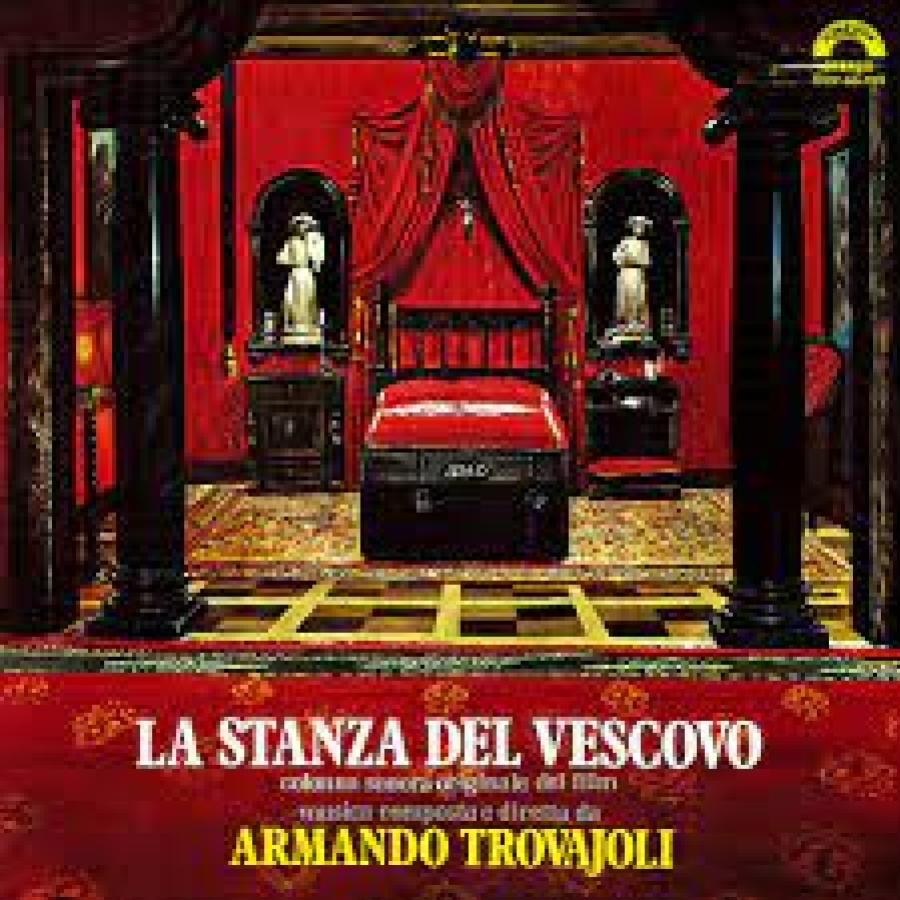
The Bishop's Bedroom
Title of the original version reviewed: «La stanza del vescovo»
AI Translation Notice: This review was translated from the original Italian using artificial intelligence. Book quotes and excerpts are translated interpretations and will not match the author's original English phrasing or official published translations.
In the late afternoon of a summer day in 1946, at the helm of a large sailboat, I arrived at the port of Oggebbio on Lake Maggiore
. In a few words, the author captures the atmosphere of the entire novel: the immediate post-war period with its yearning to reclaim one's prime years, lost to the war or in prison camps; the freedom of sailing without ever returning home, like modern-day Odysseuses; and the unreal atmosphere of the lake, with its charming coastal villages, light breezes and sudden gales, mist and towering mountains, and «the fragrant olea in gardens of bitterness» (Vittorio Sereni, quoted at the opening of the book). In this suspended realm, within consciences even before the landscape, the first-person narrator and his casual friend, Doctor Orimbelli, attempt to
invent a second youth for themselves, a reclamation, capitalizing on their still-fresh age and a certain bodily vigor
. Nor is there any lack of Penelopes: Orimbelli’s wife and sister-in-law—the former having waited for him for ten years, by now disillusioned with her husband; the latter awaiting her spouse, presumed lost in the war. Ithaca is there as well: Villa Cleofe, a sumptuous and decadent estate. Cruising this way and that in the boat, the narrative frays amidst pretty girls and hotel rooms. The author attempts to invigorate the plot by devising a mysterious crime and a surprise ending; it is a futile attempt, for everything dissolves into the languid, cynical climate of an amoral society, such as that of post-war Italy would become.
There is something reminiscent of Giorgio Scerbanenco’s L'isola degli idealisti (see the review on this site). Just as in Scerbanenco’s novel, Villa Cleofe is a place of suspension, offering safety to men weary of too many harrowing events; except that in Piero Chiara, the resolution does not reside in an idealism that, however naive, remains charged with hope. Rather, serenity is to be found in living day to day, in refusing to see oneself as the hypocrite and scoundrel one fundamentally is. It is no coincidence that the first-person narrator considers himself morally superior to Doctor Orimbelli—a liar and a cad—yet continues to play along, lending himself to his friend's petty and grand villainies, as if ensnared by a voluptuous torpor. Only flight seems capable of saving him: as soon as the boat
began running before the wind, I turned toward the coast and picked out the villas one after the other, interspersed with their grounds, (...) while the wind shifted a quarter and, between Canneto and the mouth of the Tresa, the waters of home opened before me, to be furrowed for the last time.
The primary virtue of the book is the writing: everything flows seamlessly; the pen glides light and assured across the blank page. The plot is lacking, and it is at times long-winded, but the reader is captivated by the exquisite prose, capable of concealing the narrative void.
Why read it? Beautiful Italian.