
Land of Shadows
The novel is set in the second half of the nineteenth century in Sardinia, in Norbio, a small town surrounded by ancient woodlands. Angelo was orphaned as a child: > his entire life is a slow transition from the peasant condition to the bourgeois condition, or, as they used to say in Norbio, to the gentlemanly condition . This trajectory, which constitutes the central thread of the book, is not a betrayal of peasant roots, but rather the chronicle of a complex individual's destiny. The protagonist is conscious of the pastoral reality and instinctively integrates himself into bourgeois institutions to turn them to the community’s advantage. Angelo’s life is the pursuit of an uneasy equilibrium between the preservation of the commons (above all, the forest) and property rights. While still a boy, he inherits several holdings, which he manages prudently alongside his mother. As a young man, he earns the trust of a mining engineer and becomes the overseer of the forest logging carried out to produce charcoal. And it is precisely the profound unease provoked by the ruthless exploitation of the woodland that drives Angelo toward a perilous entrepreneurial venture: taking over the management of the timber cutting himself. In the meantime, he establishes his own family, marrying first a young peasant woman—the sole love of his life, who dies giving birth to a daughter—and later the heiress of one of the wealthiest and most prominent local dynasties. A wealthy landowner, esteemed by the entire town, he is appointed Mayor by the local notables. In this role, Angelo proves his caliber as an exceptional administrator and demonstrates his fidelity to the public good: defying the mindset of local proprietors, he accomplishes an extraordinary feat by arranging for the municipality to purchase a vast woodland offered for sale, thereby enabling all citizens to benefit from the riches of the pastoral economy. Paradoxically, Angelo, now elderly yet still Mayor, dies in the midst of his people while attempting to quell the excesses of a local festival—a final scene that encapsulates his lifelong struggle for the emancipation of his community. The narrative unfolds slowly, as though the events bore nothing extraordinary. In a disappointing, post-Risorgimento Italy dominated by misrule and the exploitation of the poor, “only the extras were authentic men.” It is therefore not great men or monumental events that shape history, but the “small” figures like Angelo who, through unrelenting toil, devotion to their land, and a desire to learn, build the hope of a better future. Moreover, human existence opens and closes within an environment (the forests, the countryside, the village houses) that resembles “an hourglass in which one could perceive the slow trickle of sand.” It is in the depiction of this setting, far more than in the character analysis (excessively stereotypical) or the predictable, generic social critique, that the prose achieves its finest results, effectively capturing the attentive listening to and perpetual rediscovery of the surrounding world, ever identical yet ever changing. > But the silence of the countryside was different from that of the day before. Listening closely—and every so often Angelo would pause, ears strained—one could distinguish many subtle sounds, like tiny air bubbles in a glass of clear water: the rumble of carts, distant blows of an axe or a hoe, the rhythmic back-and-forth of a saw, and a breath of human voices, invisible presences within the rustle of the rain. Then the scattered voices merged, and he had the impression of a crowd, of a procession approaching barefoot. Shortly after, around a bend, he came upon the slate-scaled roofs of Norbio.... now the voices sounded clear in the damp air; and one could also hear the dull, continuous thrum of the small stone millstones.... driven by blindfolded donkeys turning endlessly in circles . Why read it? It is read with pleasure primarily for its evocation of the Sardinian landscape. The plot disappoints, proving predictable especially in the concluding chapters, and the characters remain flat and indistinct. Even the figure of Angelo lacks sufficient exploration of his inner contradictions, poised as he is between a peasant vocation and his life choices.
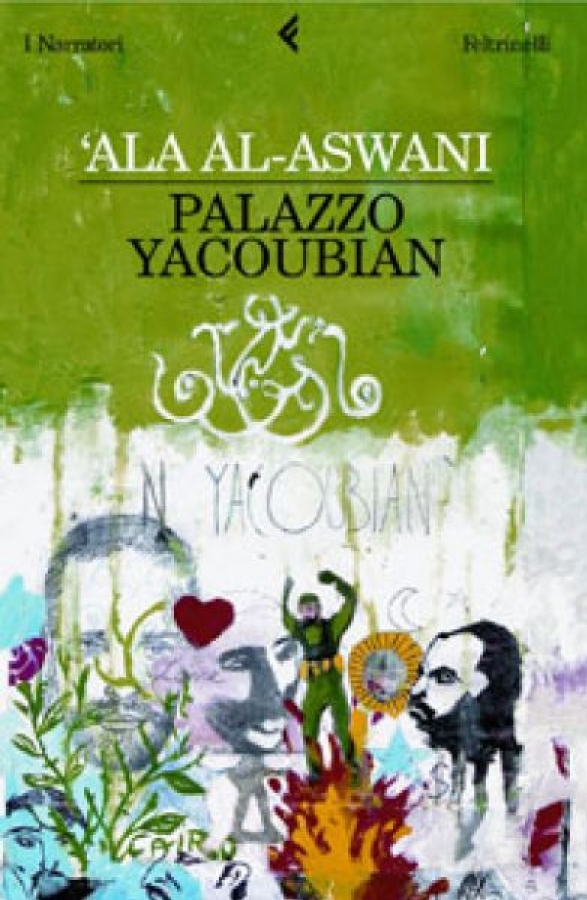
The Yacoubian Building
The Yacoubian Building is an emblematic space of contemporary Egypt, dominated by a corrupt, undemocratic regime where abuse of power, cunning, and deceit seem to be the defining traits. A young woman is forced to endure the advances of her employers, only to fall in love with an aging, depraved landowner on the verge of being driven out of his home by his sister. The girl’s former fiancé is rejected by the Police Academy for being the son of a doorman and, while at university, joins the Muslim Brotherhood. He is arrested, raped, and tortured by the police; once released, he goes to live in a training camp and marries the widow of another martyr. He is killed during the assassination of the police commissioner who had tortured him in prison. A wealthy homosexual falls in love with a young man, who murders him during an argument. A businessman marries in order to satisfy the sexual urges of his old age, but upon discovering that the woman is expecting a child, forces her to undergo an abortion and then repudiates her. In turn, the businessman is forced to pay a hefty bribe to powerful politicians. Beneath a seemingly light, ironic style and the narrative pacing of a "potboiler," the author in fact mounts a ferocious critique of both Egyptian society and the Muslim Brotherhood itself. In an oppressive world, individuals struggle to survive and forge their own path: for some, this leads to ruin (the former fiancé who is tortured and killed, the homosexual murdered by his lover, the woman who marries the businessman only to be cast aside); others are saved, finding affection despite the age gap (the young girl and the depraved old man). The novel unfolds with such lightness that it verges on the contrived, ultimately offering a false representation of Egyptian society. For much of the book, vigor is lacking; instead, the writer seems to capitalize on the most lurid aspects of the narrative. In the final part, the storytelling gains greater strength, allowing authentic, uncontrived feelings to finally emerge.
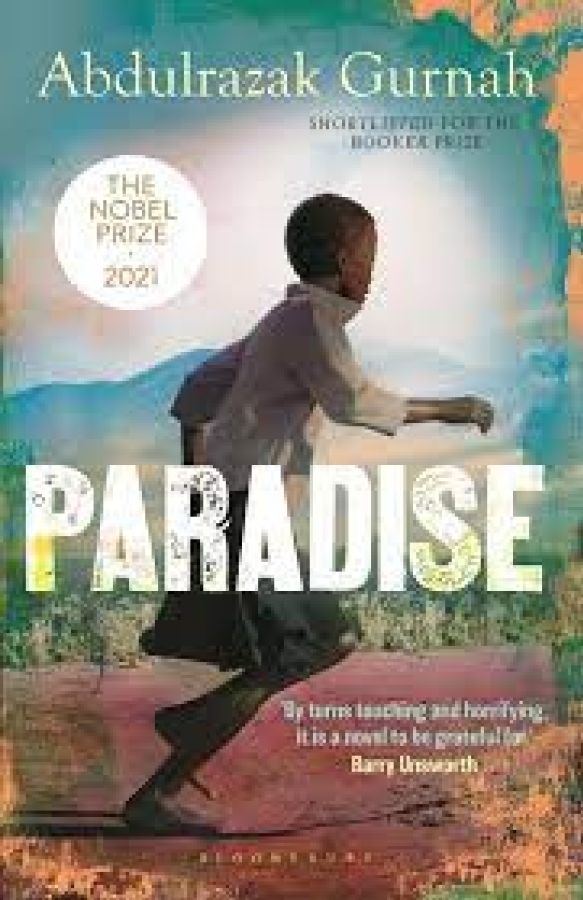
Paradise
The novel possesses two primary narrative threads. The first is a grand historical fresco of the Sultanate of Zanzibar shortly before the partition of East Africa at the 1885 Berlin Conference. As an Indian friend explains to the sixteen-year-old Yusuf, the Europeans > are not interested in trade, but in the land itself. And everything on it... us. (...) We will lose everything, including our way of life . It would have been easy for Gurnah to present the Arab-Swahili civilization—which had controlled the East African coast since the mid-eighteenth century—as an idyllic era prior to European conquest. The coexistence of different languages, sedimented over the centuries, the refined customs of the merchants, the splendor of palaces and gardens, the fragrances, garments, and jewelry of wealthy matrons, the observance of religious tenets: all are factors that might tempt us to extol the pre-colonial world in contrast to European—in this case, German—domination. Once again, Gurnah surprises us, doing so, moreover, in an unpredictable fashion by recounting the merchants' journeys into the African interior, toward the great lakes and mountains, in pursuit of ivory, gold, and slaves. With good reason, many commentators have compared the inland expeditions depicted in the novel to Joseph Conrad’s *Heart of Darkness*, in which the journey into the pestilential river forest is akin to a descent into a shadowy world where man’s primordial drives overpower civilization; in the same way, in *Paradise*, by taking part in these interior incursions, the young Yusuf will become “a wolf-man,” > he felt the thread of life slipping through his fingers, and he let it unravel without resistance. (...) There was nothing he could think of doing that would free him from the shackles of his condition. And here we arrive at the second narrative strand. Yusuf is still a child when he is taken from his family to settle a debt incurred by his father with a wealthy merchant. The uprooting is abrupt and definitive, sealed by the loss of the necklace given to him by his mother. He finds himself growing up in an opulent household, learning trade under the tutelage of a youth who was likewise handed over, along with his sister, to discharge unpaid financial obligations. In his new home, Yusuf is drawn to a magnificent garden concealed behind a high wall: a place so rich in scents and colors that Yusuf > dreamed that at night the fragrances dispersed into the air, disorienting him. In his intense sensation of pleasure, he imagined hearing music . Is it the Paradise described in the Quran? The garden conceals a secret: secluded from the outside world lives the merchant-master's mad wife; she has become infatuated with Yusuf's beauty, which she has observed through mirrors hung from the trees. And it is precisely to remove him from the woman's designs that the merchant enlists Yusuf in the expeditions into the interior, from which the youth will return a man, determined not to be thwarted: he seeks to unravel the garden's mystery to the very end. Thus he will come to understand that Hell and Paradise overlap—they are the selfsame prison: just as in Mozart's *Requiem*, where infernal tones alternate with heavenly ones, magnificence conceals despair. Beneath the veneer of a historical novel, Gurnah tackles a universal and enduring dilemma: that of freedom. The characters are dominated by the Mephistophelean figure of the merchant—ever composed, as quick to protect as he is to cast out, a true emblem of power that only a rival force can supplant. Let us not be deceived by appearances; the essence of power remains ever the same. Yusuf prefers the European's supremacy, harsher perhaps, but devoid of subterfuge. The German officer's face > was the face of a corpse, and Yusuf was appalled by its ugliness and cruel gaze. (...) The marching column was still visible when he heard a sound like a door closing behind him in the garden. He looked around quickly and then ran after the column, his eyes glistening. The prose is more restrained than that of *By the Sea*, reviewed elsewhere on this site; it is as if the author intended to write a chronicle, one in which fairy-tale motifs and digressions are curtailed in order to focus strictly on the essential elements of the tale. The reader does not lose themselves in the text, remaining constantly vigilant of unfolding events; hence, the narrative’s length begins to weigh, only to be cut short far too abruptly by the foreigner's arrival, as though the author felt compelled to wrap up the novel by any means necessary. Why read it? A splendid fresco of a civilization unfamiliar to us.

The Homeland of Celestial Visions
The book brings together 12 stories set in the Libyan desert: > in that desolate, impenetrable expanse, where spirits and mysterious enigmas hovered . The past tense is mandatory, for the primordial world of the desert has by now vanished, destroyed by the cruel colonialism of the Italians, by pervasive drought, and by war. The stories differ in content and style, yet a shared historical and human trajectory emerges—the demise of Bedouin civilization, and with it, an irreplaceable loss for humanity. The title story of the collection is undoubtedly the most captivating, as well as the most mysterious. Father and son advance through the desert: > since they had set out on their journey, the desert had continued to dilate and expand.... ultimately generating a ruthless horizon which, once yet another stretch had been traversed, gave rise to another... and in that limbo stretching between the expanse of sand and the horizon, a mirage shimmered . What was the purpose of a journey that seemed “eternal”? The father took his son, still a child, from the oasis. He did so because he wants the boy to be a “man of the desert,” because “whoever wields a hoe and wounds the earth is a slave,” whereas > the nomad has the star-strewn sky for a blanket, his pillow is the open space, he roams like gazelles and kneels before no place . The journey would seem to be the narrative of an initiation, yet the father is searching for something: his homeland, a return to the dwelling place of the desert nomads. Yet at the end of the story we discover, with surprise, that this homeland is the ultimate land of oblivion: death. > Do not regret the transitory journey you had to make, for remaining in the memory of the arcane is better than slipping into the desert of remembrance . It will be the subsequent stories that reveal the reasons behind such a drastic choice. Gradually, the author leads us toward the war, recounting the harrowing events—which we Italians have erased from memory—of the conquest of Libya by the Fascist army and the heroic, desperate resistance of the Libyans. There is no acrimony; it is a chronicle, yet one capable of conveying the profound sense of a people’s destruction. Where can the Bedouin go now? “A man who has grown accustomed to war can no longer do without it.” It would be inaccurate to say that the subject of the stories is the desert, even if the depiction of the environment, animals, fruits, and plants remains precise, almost naturalistic. In reality, the true theme is nostalgia. > All of us love the horizon and weep with nostalgia, yearning for what lies hidden beyond the desert . Thus the theme becomes universal, for “do you too, like me, feel nostalgia for the unknown?” The prose is remarkably rich and versatile, shifting from an elegiac, poetic register to one that is stark and detached. From this perspective, the most accomplished story is *The Virgin's Vow*. The life of young women in the desert is delineated with sociological precision. The two girls herding the flocks to pasture speak of loves and dreams, of betrothed grooms, like young women of any era and civilization. The sun, the arid dryness, and the heat are so unrelenting as to drive even the young goats mad, turning them unruly and aggressive. One of the two girls does not spend her days waiting for a desert horseman to take her as his bride: she dreams of water; water is her true lover. And when it suddenly arrives, she plunges into the surging torrent’s current and surrenders to its pull: > she began to undress... she knelt down and he held her in his arms. He threw himself upon her naked virgin body and gently submerged it. She drifted freely with the current.... fleeing toward the unknown together with his beautiful beloved . Why read it? One should not look for plot, narrative pace, or detailed social and psychological portraits. It is the chronicle of the end of a civilization, and, implicitly, an indictment.
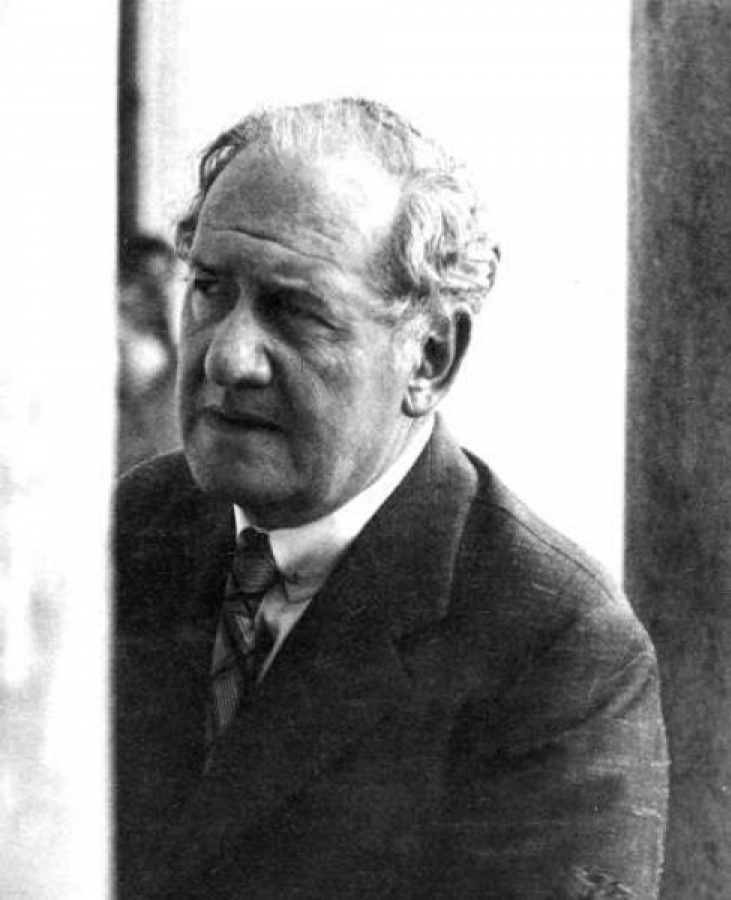
Down the Ancient Staircase
The book is set in an asylum, and the narrator (and protagonist) is a psychiatrist. In the first part of the book, the character of a former hospital physician is delineated—a commanding figure and a man of science. The close examination of his persona reveals a whole series of idiosyncrasies (he never leaves the asylum, fears thunderstorms, never touches the doors leading to the various wards, and so on) that expose a mind riddled with fears, yet driven by a delusion of omnipotence. In the second part, the novel consists of a series of portraits of the mentally ill, which foreground both the ineluctability of illness and the profound humanity of these individuals, who are likewise capable of giving and receiving love, and with whom dialogue can be established if one manages to understand their language. The true protagonist, however, remains the asylum itself, which seems to hold sway over both the sane and the sick. Its enclosed structure establishes impassable boundaries that are psychological before they are physical—so much so that the doctors themselves are often led to live within its walls. Is the asylum not the paradigm of modern life, which, while ostensibly so free and open, is in truth trapped within preconceived molds and a series of constraints? And does not the mentally ill patient, in their delusions and mental wanderings, in fact embody true—and singular—freedom? The style is lean, devoid of any rhetoric, unfolding in a clear, serene manner, marked by a subtle irony and touches of tenderness.
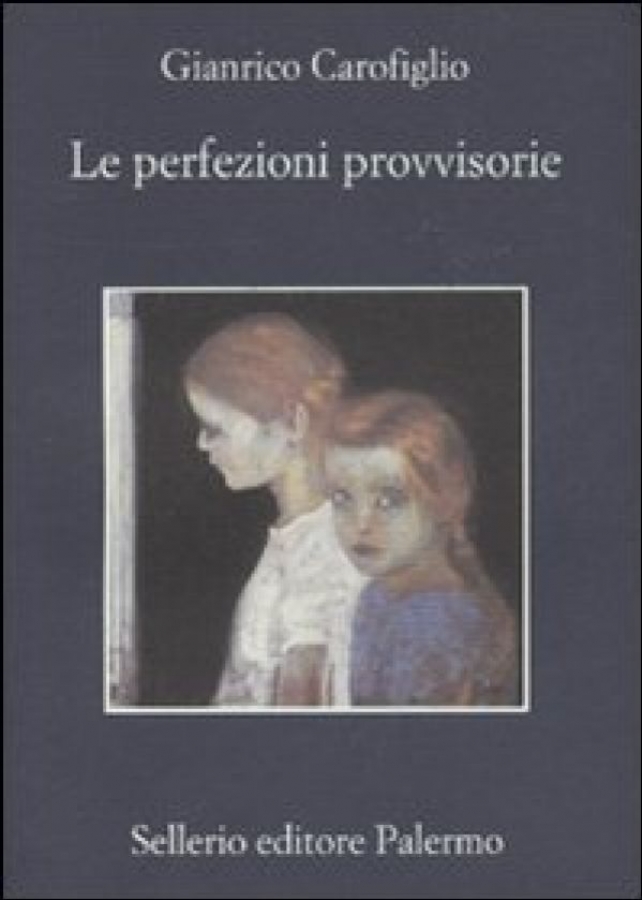
Temporary Perfections
Guido Guerrieri is a criminal defense lawyer asked by a colleague to look into whether an investigation regarding a young woman’s disappearance can be reopened. Albeit reluctantly, Guerrieri turns investigator and uncovers a narrative of drug consumption and dealing to which the girl fell victim. The mystery is well-crafted. The reader is skillfully guided toward the conclusion, which, while not a surprise, is far from predictable; one arrives there with the same curiosity and guilelessness displayed by the author. As in all of Carofiglio’s novels, the detective plot runs parallel to the lawyer’s personal tribulations: a mature man in his forties who lives somewhat “suspended” in the present, with a past fading into oblivion and a love life facing an uncertain future. Yet, deep down, the protagonist feels at home in this suspension, for “only what is provisional is perfect,” and even the past belongs to a “kind of extended, simultaneous, and welcoming present.” The novel’s primary virtues lie in its prose—light and elegant—and in the investigative thread, which is soundly constructed and clearly the product of real, firsthand experience in the field. Its weakness resides in the portrait of the protagonist, who appears somewhat evanescent, his personal affairs—in truth, rather unengaging—failing to interweave effectively with the investigative narrative. It is no coincidence that the character gains genuine depth only when the discussion turns to the law and legal practice. Why read it? The prose and the plot make the book an exceedingly pleasurable read.
The Patience Stone
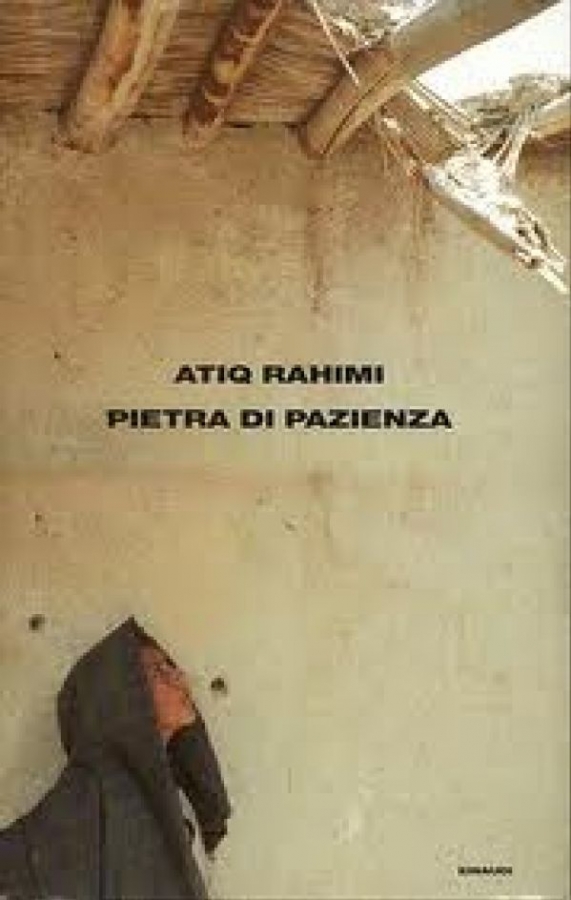
In Afghanistan, a woman finds herself beside the body of her husband, gravely wounded and seemingly in a coma. > Outside, a little shooting, a little praying, a little silence... the room is small. Rectangular. It is suffocating, despite the pale walls... the room is empty. Empty of all ornament . In a claustrophobic situation, isolated from the world and at the same time immersed in the whirlwind of war, the woman, hitherto silent and submissive, begins to speak, to confide her secrets to her husband. And she is able to do so > because you could answer me nothing, you could do nothing against me... I was at peace . A kind of exchange takes place. On the one hand, the woman cares for her husband and thereby takes possession of his body, now entirely dependent on her. On the other, the husband appropriates his wife's secrets > No one can believe it, no one! You don't eat, you don't drink, and you are still here! In fact, it is a miracle. A miracle for me, thanks to me, your breath is bound to the telling of my secrets. She stands up, weightless. Then she pauses in a gesture full of grace, as if to say: but do not worry, my secrets have no end . Outside, the world is shattered: a mad old woman wanders through the rubble, soldiers burst into the house and the woman pretends to be a prostitute to avoid being raped, but then (out of compassion?) gives herself repeatedly to a stuttering adolescent. Inside, within the suffocating enclosure of the room, we learn that the woman was forced to marry while still a child, without knowing her bridegroom, who was always away at war. We learn that she was menstruating when she had her first sexual encounter, and this was fortunate because it proved she had come to the consummation of the marriage a virgin. We discover that the woman, to avoid being repudiated, bore her daughters with another man, because her husband was sterile. > This voice erupting from my throat is the voice buried for thousands of years... if every religion is the story of a revelation, the revelation of a truth, then, my sang-e sabur (my patience stone, who listens), our story too is a religion A religion expressed in the body. We readers would wish that from this extraordinary encounter between a male body and the secrets of a female life, a communion between man and woman might be born, because > when it is hard to be a woman, it becomes hard to be a man as well! . Yet this is not the case. The husband awakens from his coma (or had he been conscious all along?) and hurls himself furiously upon the woman, killing her only to be killed in turn. The fragile unity has shattered into pieces. This tale is not an Afghan story—that is, one conceivable only within that specific social and cultural context. The author addresses a universal theme, in a situation possible, allowing for the necessary differences, across all latitudes: the distance between man and woman, their mutual incommunicability, is bridged only exceptionally, in a moment of profound suffering: beside the bed of a terminal patient, in solidarity over the loss of a child, in the midst of war or destruction. From this perspective, it is a quintessentially Western novel, drawing upon its existential dilemmas, narrative themes, and even literary devices: for instance, the opposition between inside and outside. And it is precisely this intellectualized imprint that disappoints and renders the entire narrative predictable. The narrative style effectively captures the opposition between inside and outside. External events are recounted in an objective, alienating manner, as though the woman were indifferent to them. The recounting of the secrets and of the woman's relationship to her husband's body is entrusted to a prose rich in evocative power, religious resonance, and poetic effect. The divergence in narrative styles reflects the acceptance of violence as a given and, at the same time, the woman's determination to liberate herself by confiding her secrets to her husband's inert body. Why read it? Brief and effective.
La Più Grande
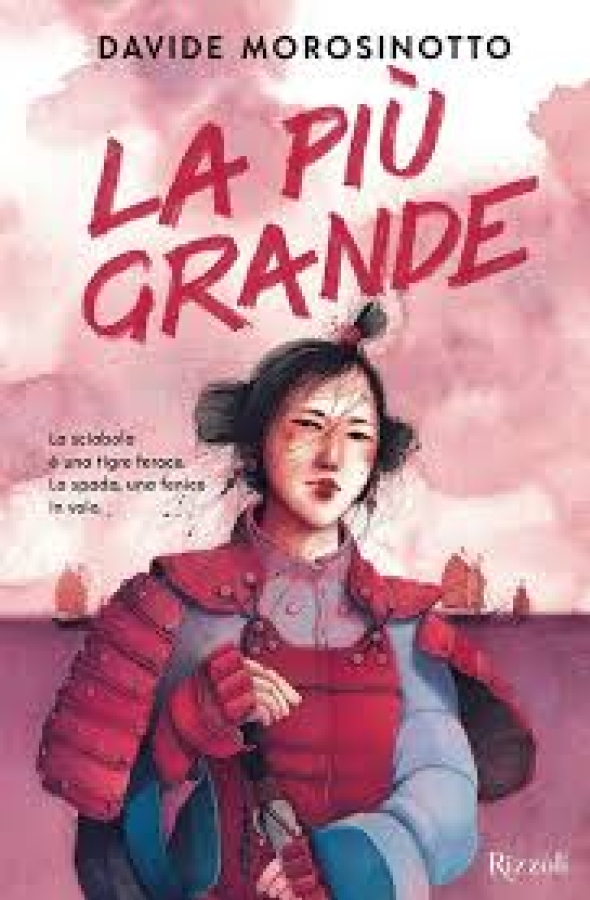
> She who would one day become The Greatest tripped over a stool left in the way. (...) Three bowls crashed to the floor, shattering instantly. The fourth, however, hovered a palm’s width from the ground: a young boy stretched out his leg and managed to catch it, in perfect balance, in the hollow between his foot and ankle. It was thus that Shi Yu saw Li Wei for the first time. In these few clear words are encapsulated the novel's fundamental narrative threads. Like *Oliver Twist* (see the review on this site), Yu is a young orphan girl who, while still a child, works as a servant in a squalid, filthy inn: a place to which she will return in dreams even after becoming a powerful and feared pirate, a longing for the nook where "the ferocious charity of memory" resides, as Giuseppe Ungaretti wrote (from *Ultimi cori per la terra promessa*). > It had been a long time since Yu had returned to the inn that stood deep within her soul. (...) She felt a great ache inside, but could not remember why. There, Yu was still innocent, exploited yet happy; later, she would have to learn to be a pirate commander, enjoying the freedom of the seas, the thrill of combat, yet forced to make difficult, harsh, and agonizing decisions, such as leaving her daughter to die in battle. *La Più Grande* is a coming-of-age novel, paced by the very structure of the narrative, which traces the phases of Yu’s life. Unlike Jim in Stevenson’s *Treasure Island* (see the review on this site), Yu does not need to grow up; she is already an adult at six years old. Instead, she must learn to navigate the stages that will forge her into a leader: fighting enemies and establishing her authority in a man's world, commanding men ( > you will have to learn to put the crew's interests before your own , her cook friend tells her), enduring imprisonment and torture, breaking free, and leading her fleet to victory against the imperial ships, against the Adversary, the powerful eunuch prince. > You must be proud of yourself, Yu, he murmured. (...) Why then did she sometimes feel like running away? (...) What was all this for? (...) I just want to sink. Into the blue. Into the cold heart of the sea. Into peace. As with the characters in *Treasure Island*, the sea, the pirate life, adventure, and the eternal struggle between good and evil compel her to carry on a life of struggle, with neither serenity nor quietude in sight. Li Wei's balancing act holds the third narrative thread: martial arts. The boy is the grandson of a powerful master of the so-called Air and Water style, through which one can leap as if flying and move weightlessly through water. Yu learns these techniques, also gaining access to a mysterious book, the repository of centuries of wisdom in this martial art. Had Morosinotto been writing for early twentieth-century adolescents, or indeed for us, the youth of the 1950s, he would likely have set the novel in fabulous India, among the pirates of Mompracem, or in Caribbean waters, among privateers. Since we are in the twenty-first century and Eastern fighting styles exert great allure, the story's settings are the China Seas, the cities of Shanghai, Macau, Canton, and Hong Kong, and the historical backdrop is the decadent Beijing empire prior to the imperialist aggression of Western powers. Everything is meticulously precise, but everything is also somewhat predictable, to the point that we are neither amazed when Yu skims across the water nor captivated by sequences of movements bearing evocative yet inexplicable names. To find the magic of Eastern martial techniques, we recommend reading Linda Lercari's *Kaijin l'ombra di cenere* (see the review on this site). And finally, there is the reunion with Li Wei, the Love Yu has pursued all her life. "The Greatest" knows she has always loved him, but Li Wei now appears to be an enemy in the service of the Adversary. And just as *The Black Corsair* (see the review on this site) weeps before his crew because he must abandon the woman he loves in a lifeboat, being the daughter of the enemy upon whom he has sworn vengeance, so Yu > wiped her tears with the sleeve of her shirt. A commander cannot break down before her men. > She knew that everyone on the ships was watching her, wondering what had happened. Morosinotto is a master craftsman of plots, as he admirably demonstrated in *Il grande colpo di Crimson City* (see the review on this site); here, however, the sheer length does not help impart rhythm to the narrative, which becomes diluted in repetitions, a multitude of names, and a ceaseless swirl of digressions. Yu and Li Wei remain mere sketches, their love never deepened or enriched by encounters that are not rushed, or by expressions of feeling, however tormented. Having finished the story, the reader cannot help but think how beneficial it would have been to prune some redundant passages and instead explore more deeply the two lovers, eternally bound since childhood, yet eternally kept apart by such divergent lives: Yu the pirate, Li Wei the imperial official. The prose is incisive, composed of short, clear sentences, with a style reminiscent of Emilio Salgari. The dialogue is effective, as are the descriptions of battles and combat. Certain scenes, such as the duel between Yu and the Adversary or the girl’s rides across the sea, are exceptionally evocative and leave the reader breathless. Why read it? Adventurous, albeit at times prolix.

A place called freedom
Ken Follett imagines finding a box buried in the garden of the house where he has just moved. Inside, engraved on a collar, he discovers this inscription: > this man is the property of Sir George Jamisson, year 1767.(...) if the steel collar could speak,(...) what story would it tell? From this opening, reminiscent of the discovery of buried treasure, begins a tale that aspires to be historical and social, in the vein of Émile Zola, but quickly degenerates into a potboiler. We are in mid-eighteenth-century England, though the exploitation of the iron and coal deposits of the "Black Country" in the English West Midlands had already begun by the mid-sixteenth century. Working conditions were brutal, owing to rudimentary mining techniques and the greed of the masters, to whom the miners were even bound by seven-year indentures. Men, women, and children descended into the depths of the earth; casualties were numerous and frequent, caused chiefly by explosions resulting from gas leaks. The miners were left with nothing but dreams of freedom in a life beyond this world. > Look no more with eyes of pity/see our victory/when we build that heavenly city/all men will be free . In these words lie both resignation and redemption, an unshakeable will toward freedom. And it is this very will that impels Mack, a young and charismatic miner, to place himself at the head of his people. Within the nascent bourgeoisie, too, stir impulses toward freedom, though viewed more as an impatience with rigid social codes than as an awareness of the brutish exploitation of the people. Lizzie belongs to a once-affluent, now-impoverished family: she could marry one of the young Jamissons because she is pretty and well-mannered—if overly independent—and, above all, because she owns land particularly rich in coal. This Lizzie is a peculiar character: she likes wearing men's clothes so she can move about more freely, rides astride like a man, and seeks to understand the life of the miners; moreover, she is drawn to Mack's magnetism, to the aura he exudes: > with pride he moved his powerful body, the confidence with which he tilted his head, the intense gaze in his gleaming green eyes. She felt drawn . Lizzie refuses to acknowledge her passion for Mack, even when she descends into the mines and sees the young man at work—untamed and strong, saving lives during a gas explosion; when she admires him for his courage in demanding better working conditions; and when, at last, she sees him emerge naked from the cold waters of the stream during his flight to London. It takes time for Lizzie to recognize her love for Mack, and with it, her own desire for freedom. She will marry one of the two young Jamissons—a mendacious, soft, and obtuse man—and travel with him to Virginia to a coffee plantation, where she will once again cross paths with Mack, transported as a slave from England; and it is with him that she will ultimately find freedom in the Wild West. One cannot help but wonder what Ken Follett truly means by freedom: the independent, transgressive ways of a young bourgeois woman—aspirations closer to our own era than to anything a young woman in sixteenth-century England could have conceived—or the emancipation of a people setting out on the path toward working-class rights and social justice? Considering that the author is a Labour Party sympathizer, the novel bears subtle witness to the devolution of socialist thought: from a working-class movement to left-wing liberalism. Where is freedom to be found? Only in the Wild West, far from the bourgeois constraints of society. Would it not have been better to delve deeper into the social and individual realities of an emerging working-class world within the mining and metallurgical industries, which were to play a decisive role in the Industrial Revolution and the birth of class consciousness? Written, as with all his fiction, in fine, elegant English enriched by period slang, and carried by an intricate, at times gripping plot (such as Lizzie's descent into the mines), the novel nevertheless displays Ken Follett's customary shortcomings: too many overlapping storylines (the exploitation of the miners, the struggle of the London dockers, slavery, and the American colonists' yearning for independence) and thinly developed characters, particularly Lizzie, who is meant to be the linchpin of the entire narrative. What longing one feels for Jane Austen's heroines! Why read it? It is an easy read, even if, ultimately, it proves flat and long-winded.
The Portrait of a Lady
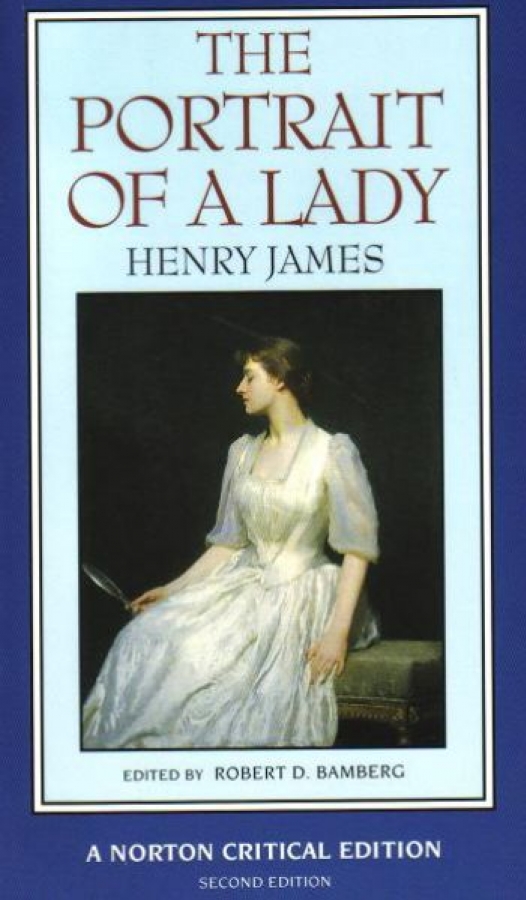
The novel is set in England and Italy. Isabel is a young American woman who, having been left an orphan, moves to England to live with her aunt and the latter's husband, an exceedingly wealthy banker. She befriends her cousin, Ralph, who is, however, an invalid; she also receives two marriage proposals—one from a very wealthy lord and another from a young, promising American entrepreneur—both of which she rejects, surprising everyone, as she intends to remain independent and free in order to discover the world and herself. At Ralph's urging, the uncle leaves Isabel a substantial fortune, which makes her rich and allows her to travel and live with considerable financial autonomy. Upon her uncle's death, she follows her aunt to Italy, first to Sanremo and then to Florence, where she once again meets Madame Merle, a brilliant and well-connected woman who arranges for the young woman to meet and spend time with Gilbert Osmond, an American living in Florence, collecting and studying works of art. Isabel is captivated by Gilbert Osmond, by his culture and refinement, and after a long journey with Madame Merle, she decides to marry him, despite the opposition of Ralph, her aunt, and her best friend, a brilliant American journalist. The marriage proves to be a failure, as Osmond turns out to be a selfish, conventional, and duplicitous man who married Isabel solely for her money. Isabel feels crushed by this man, who seeks to bend her to his will and to his view of life—one founded on hypocrisy and formalism, in stark contrast to Isabel's independent, pragmatic spirit. The latter lives in profound conflict, torn between the commitment she undertook by marrying (conventions, societal rules, etc. ) and her pursuit of happiness and autonomy. Her cousin’s grave illness, bringing him to the point of death, prompts her to return to England, even in defiance of her husband's wishes. Meanwhile, she learns that Madame Merle is the mother of her husband's daughter and that, to secure the girl a prosperous future, she orchestrated Isabel's marriage to Osmond. Isabel realizes she has been betrayed and that her true friends are those from her youth—the American journalist and the young entrepreneur—as well as her cousin. Having returned to England, she attends to her cousin until his death, and then, following a dramatic confrontation with the American entrepreneur, who tries to persuade her to leave her husband, she returns to the latter in their Roman home. Isabel, the central figure, is a disconcerting character, poised between the desire for independence and social duty to such a degree that she sacrifices her own happiness for the sake of the latter: beneath an appearance of strength and autonomy, there emerges a weak character, incapable not only of making vigorous decisions and taking decisive action, but also of truly knowing herself, of being able to admit to herself and to others that she was wrong. Isabel is a defeated figure, moving among strong personalities who seek to control her and impose their will upon her, with the sole exception of her cousin, who, even when mistaken, wishes to help and listen to her until the very end. In truth, all the characters operate within this tension between modernity and tradition: the brilliant American journalist, who champions American society and female independence, ultimately marries an English nobleman; Osmond's daughter is obedient to her father's wishes, despite longing to live with the young man she loves; Madame Merle, who seemed so independent of men, is in fact revealed to be a pathetic woman who commits a series of ignoble acts for the love of a man, Osmond, who does not want her and holds her in contempt. The book's message ultimately appears conservative: a woman cannot find her path without a man and without accepting social rules. In this sense, though very different in setting and style, the novel shares many affinities with *Madame Bovary* and *Anna Karenina*. Another theme of the book is undoubtedly the contrast between American society—full of energy and attentive to essentials—and European society, decadent and frivolous. This contrast is expressed, admirably and with great insight, in the depiction of landscapes and settings, such as the novel’s opening pages (the description of the English estate’s garden), the introduction to the Florentine episodes, and above all, the Roman backdrop. Isabel's house in Rome, with its vast, cold rooms, its relics and antique furniture, and Isabel’s walk among the ruins of Roman antiquity are magnificent pages, clearly revealing the decadence and ruin of a society destined to succumb and destroy, rather than to create. Italy is a simulacrum for Isabel and for American vitality. It remains unclear whether the author intended to grant the relationship between Ralph and Isabel a broader and deeper significance than mere cousinly affection; one is left with the impression that the two failed to express their mutual love, thus introducing another theme of profound interest: the difficulty of communicating genuine feelings and expressing what one thinks and feels with sincerity. Only in the face of death do Ralph and Isabel fully express their love for one another. The author's style is circuitous and complex, demanding intense concentration to follow the trajectory of sentences and paragraphs: it is therefore not an easy read, although one must acknowledge that the narrative structure is profoundly effective and produces, at times, striking impressions and almost pictorial imagery. The character analysis never achieves psychological depth, remaining ever on the surface; yet, in truth, they are symptomatic of a social role rather than fully realized individuals. The themes of feminism, social change, and the clash between societies seem to take precedence over the autonomous life of the characters. The revelation of Madame Merle's motherhood and her affair with Osmond is a lapse in style, bringing the novel close to modern melodrama and providing Isabel’s behavior (the decision to go to England against her husband’s will) with an external motive that weakens her resolve.

The Meadow at the Bottom of the Sea
Stanislao is the great-nephew of Ippolito Nievo: writer, poet, and great patriot of the Risorgimento, who died at the age of 29. To Ippolito we owe one of the masterpieces of our nineteenth-century literature: *Le Confessioni di un italiano*, the review of which is available on this site. On March 4, 1861, the steamship Ercole, having departed from Palermo for Naples with Ippolito on board, vanished in the stretch of sea between Capri and the Sorrento Peninsula. Everyone perished: along with Nievo, the accounting records of Garibaldi's army were also lost, and with them the proof of the financial rectitude of the expedition, which had been the object of slander and accusations by the Piedmontese government. Was it a shipwreck caused by sea conditions, or was it a bomb that put an end to Ippolito’s life and buried documents of vital importance in the abyss? Stanislao reconstructs these events and investigates the mysteries surrounding the ship's disappearance. One must not expect a detective story: it is the search > for someone lost and shrouded in a strange light that sometimes obscured the truth . > Elegant, detached, soft face, brown, exceptionally mobile eyes, (...) romantic, rational in action , Ippolito is a myth; he and his death were never spoken of within the Nievo family, as though only silence could immortalize a figure who desired nothing but oblivion. Stanislao’s quest begins with a vision. Looking at a postage stamp dedicated to his uncle, suddenly > the sea expanded, became enormous, life-sized. The face widened and grew exceptionally clear, then dissolved, reappearing in natural color and receding into the sea that enveloped it. On the stamp, the man had a red mark on his chest. It was a military cap, red. The color remained, but the shape changed and began to throb. (...) Everything vanished into the sea, which had become an azure door . It is a hallucination; it sets the tone for the entire novel, ostensibly built around a rational plot, yet in truth punctuated by a series of portraits, some of them powerfully evocative. Consider the chapter “The Last Minute”—a chapter that alone is worth reading the book. With a realism both unsettling and mesmerizing, the author retraces the shipwreck, even imagining the thoughts of the final minute, when “there appeared to each the old age they would never live to see,” until > a few lights came on. They were deep-sea creatures with electric organs. No one else witnessed the Neapolitan vessel reaching the bottom. It settled with a silent caress, enclosing within its wretched cargo . One is reminded of one of Ippolito's poems (“The Fireflies,” quoted in the book): > my mind resembles a little meadow/Filled with tiny fireflies at the dusk hour/ Where the gleam on this side or that/ Tremulously flits without any rest . The vessel settling to the bottom evokes the final chapters, in which the author recounts the deep-sea dives undertaken to locate the boat, or at least some of its wreckage. It is a realistic, detailed description: amid numerous vessels lying on the seabed (how immense is the sea! and how much humanity lies buried in its depths!), Stanislao realizes how his inquiry was > a wave carrying me without direction and without lightness. Where? (...) Solitude slowly emptied itself of its images. Everything became alien, weightless. I felt like a tunnel where the wind shook the timbers. And it bore me far away, into nothingness. (...) I was cast into the memory of solitude of the shipwrecked man I was seeking. A week before disappearing, Ippolito wrote: “I shall die to die, and everything will be over.” The search is futile: Ippolito Nievo wishes to remain a myth, and his disappearance must remain a mystery. How does one recount the life and death of an uncle, a father, or a grandfather? How does one convey the meaning of devotion? Stanislao offers a disconcerting answer: one does so by searching for oneself, in a whirlwind of portraits and reflections, wherein the memory of the revered figure remains suspended there, in memory and imagination. How did Ippolito Nievo disappear? We will never know, but for a nephew, what does it matter? He does not have to write a biography, nor conduct a historical investigation: he must reconstruct in his mind, relying even on imagination, the essential character of the man. For Ippolito, that was solitude; after all, he used to say: > the fireflies glow in my brain at the dusk hour, scintillating among dense shadows . Like his uncle’s masterpiece, Stanislao’s novel is uneven: chapters of great narrative power and even hilarity (think of the section entitled “The Augean Stables,” recounting his wanderings through the state archives) are followed by muddled and redundant pages, such as encounters with palmists to seek enlightenment on where to find the steamship, or pointless digressions on the efficacy of pseudo-sciences. The prose sustains the novel, with short sentences, tight dialogue, and a sparing yet effective use of adjectives; yet the author cannot prevent the pacing from turning prolix and rambling. If Uncle Ippolito had the excuse of never being able to revise his masterpiece before it went to press, dear Stanislao! You have no excuse: some healthy pruning would have done the narrative a world of good. Why read it? For the chapter “The Last Minute,” and to rediscover *Le Confessioni di un italiano*.
Pride and Prejudice
In early nineteenth-century English society, what matters are the rules of polite society: courteous and amiable manners, marriageable young women of moderate education, and advantageous marriages that offer the prospect of stability and prosperity. Appearance, much like money, reigns supreme. Two characters stand as exceptions to these two golden rules: Elizabeth, the second of five sisters from a modest family, and Darcy, a wealthy young man of high lineage. Elizabeth is a proud and independent young woman who refuses to let her destiny be determined by others: “I am only resolved to act in that manner, which will, in my own opinion, constitute my happiness.” Darcy is a taciturn, blunt, and disagreeable man, concerned only with acting according to his own convictions without answering to anyone. Yet, a society built upon appearances can prove a trap for a proud young woman. The rumours circulating about Darcy are disparaging, driving Elizabeth to reject his marriage proposal with disdain: wealth cannot compensate for the poor opinion she has formed of him! Yet pride can lead to prejudice when substance is overlooked. It is the unfolding of events, the account of the young man’s childhood, and the visit to the estate where he grew up—in short, a deeper acquaintance—that lead Elizabeth to perceive Darcy’s true character and allow her love for him to mature slowly. Yet it will be Elizabeth’s strength of character that enables her to overcome the resistance and pressure of Darcy’s relatives, who refuse to accept an alliance deemed far too modest. Pride and prejudice are two sides of the same problem: wrapped up in oneself, confined within one's own world, one is incapable of understanding others. > She was ashamed of herself. She could not think of Darcy without feeling that she had been blind, partial, prejudiced, absurd. “How despicably have I acted!” she cried; “I, who have prided myself on my discernment! I, who have valued myself on my abilities! who have often disdained the generous candour of my sister, and gratified my vanity, in useless and blameable distrust. How humiliating is this discovery!” It is an exceedingly modern book, one that invites deeper understanding and open, unprejudiced judgment. Written in elegant English, it is nonetheless weighed down by the complexity of its syntactic structure, demanding a close and not always effortless reading. The narrative pace is slow and ultimately predictable. With the exception of Elizabeth, the characters are often stereotypical, flat, and devoid of vitality. Why read it? The book’s charm resides in the figure of Elizabeth: an already modern woman in pursuit of self-affirmation.