Finished reading on: September 07, 2019
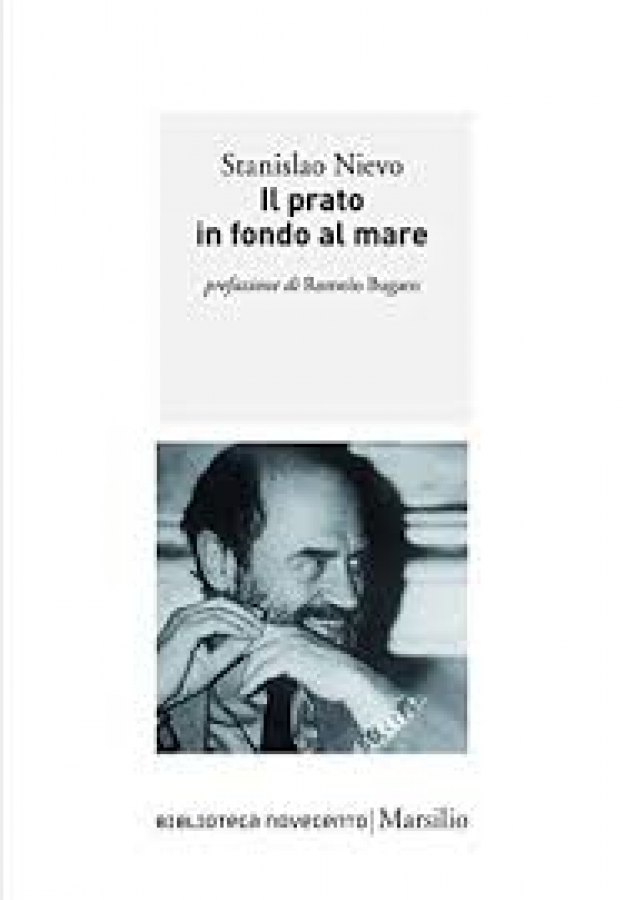
The Meadow at the Bottom of the Sea
Title of the original version reviewed: «Il prato in fondo al mare»
AI Translation Notice: This review was translated from the original Italian using artificial intelligence. Book quotes and excerpts are translated interpretations and will not match the author's original English phrasing or official published translations.
Stanislao is the great-nephew of Ippolito Nievo: writer, poet, and great patriot of the Risorgimento, who died at the age of 29. To Ippolito we owe one of the masterpieces of our nineteenth-century literature: Le Confessioni di un italiano, the review of which is available on this site. On March 4, 1861, the steamship Ercole, having departed from Palermo for Naples with Ippolito on board, vanished in the stretch of sea between Capri and the Sorrento Peninsula. Everyone perished: along with Nievo, the accounting records of Garibaldi's army were also lost, and with them the proof of the financial rectitude of the expedition, which had been the object of slander and accusations by the Piedmontese government. Was it a shipwreck caused by sea conditions, or was it a bomb that put an end to Ippolito’s life and buried documents of vital importance in the abyss? Stanislao reconstructs these events and investigates the mysteries surrounding the ship's disappearance. One must not expect a detective story: it is the search
for someone lost and shrouded in a strange light that sometimes obscured the truth
.
Elegant, detached, soft face, brown, exceptionally mobile eyes, (...) romantic, rational in action
, Ippolito is a myth; he and his death were never spoken of within the Nievo family, as though only silence could immortalize a figure who desired nothing but oblivion. Stanislao’s quest begins with a vision. Looking at a postage stamp dedicated to his uncle, suddenly
the sea expanded, became enormous, life-sized. The face widened and grew exceptionally clear, then dissolved, reappearing in natural color and receding into the sea that enveloped it. On the stamp, the man had a red mark on his chest. It was a military cap, red. The color remained, but the shape changed and began to throb. (...) Everything vanished into the sea, which had become an azure door
. It is a hallucination; it sets the tone for the entire novel, ostensibly built around a rational plot, yet in truth punctuated by a series of portraits, some of them powerfully evocative. Consider the chapter “The Last Minute”—a chapter that alone is worth reading the book. With a realism both unsettling and mesmerizing, the author retraces the shipwreck, even imagining the thoughts of the final minute, when “there appeared to each the old age they would never live to see,” until
a few lights came on. They were deep-sea creatures with electric organs. No one else witnessed the Neapolitan vessel reaching the bottom. It settled with a silent caress, enclosing within its wretched cargo
. One is reminded of one of Ippolito's poems (“The Fireflies,” quoted in the book):
my mind resembles a little meadow/Filled with tiny fireflies at the dusk hour/ Where the gleam on this side or that/ Tremulously flits without any rest
. The vessel settling to the bottom evokes the final chapters, in which the author recounts the deep-sea dives undertaken to locate the boat, or at least some of its wreckage. It is a realistic, detailed description: amid numerous vessels lying on the seabed (how immense is the sea! and how much humanity lies buried in its depths!), Stanislao realizes how his inquiry was
a wave carrying me without direction and without lightness. Where? (...) Solitude slowly emptied itself of its images. Everything became alien, weightless. I felt like a tunnel where the wind shook the timbers. And it bore me far away, into nothingness. (...) I was cast into the memory of solitude of the shipwrecked man I was seeking.
A week before disappearing, Ippolito wrote: “I shall die to die, and everything will be over.” The search is futile: Ippolito Nievo wishes to remain a myth, and his disappearance must remain a mystery.
How does one recount the life and death of an uncle, a father, or a grandfather? How does one convey the meaning of devotion? Stanislao offers a disconcerting answer: one does so by searching for oneself, in a whirlwind of portraits and reflections, wherein the memory of the revered figure remains suspended there, in memory and imagination. How did Ippolito Nievo disappear? We will never know, but for a nephew, what does it matter? He does not have to write a biography, nor conduct a historical investigation: he must reconstruct in his mind, relying even on imagination, the essential character of the man. For Ippolito, that was solitude; after all, he used to say:
the fireflies glow in my brain at the dusk hour, scintillating among dense shadows
.
Like his uncle’s masterpiece, Stanislao’s novel is uneven: chapters of great narrative power and even hilarity (think of the section entitled “The Augean Stables,” recounting his wanderings through the state archives) are followed by muddled and redundant pages, such as encounters with palmists to seek enlightenment on where to find the steamship, or pointless digressions on the efficacy of pseudo-sciences. The prose sustains the novel, with short sentences, tight dialogue, and a sparing yet effective use of adjectives; yet the author cannot prevent the pacing from turning prolix and rambling. If Uncle Ippolito had the excuse of never being able to revise his masterpiece before it went to press, dear Stanislao! You have no excuse: some healthy pruning would have done the narrative a world of good.
Why read it? For the chapter “The Last Minute,” and to rediscover Le Confessioni di un italiano.