Finished reading on: August 19, 2007
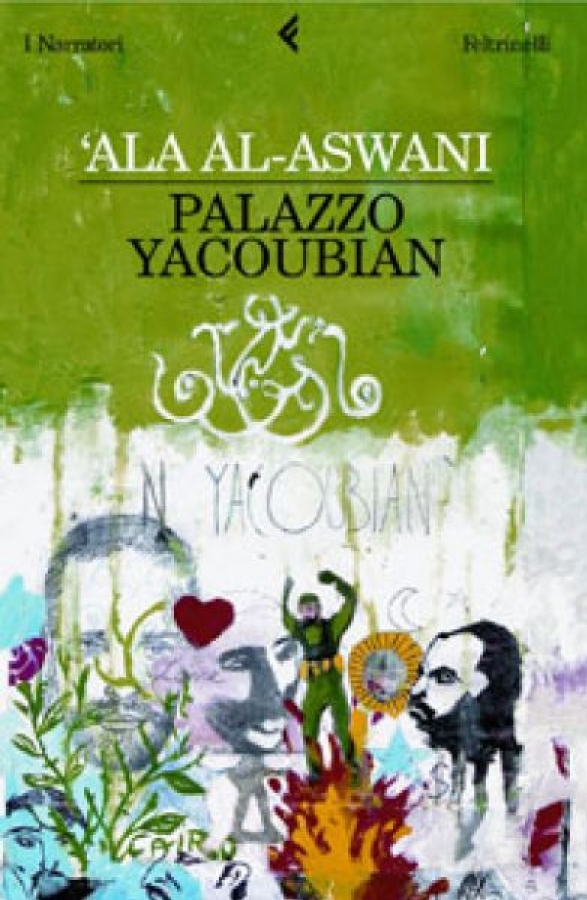
The Yacoubian Building
Title of the original version reviewed: «Palazzo Yacoubian»
AI Translation Notice: This review was translated from the original Italian using artificial intelligence. Book quotes and excerpts are translated interpretations and will not match the author's original English phrasing or official published translations.
The Yacoubian Building is an emblematic space of contemporary Egypt, dominated by a corrupt, undemocratic regime where abuse of power, cunning, and deceit seem to be the defining traits.
A young woman is forced to endure the advances of her employers, only to fall in love with an aging, depraved landowner on the verge of being driven out of his home by his sister.
The girl’s former fiancé is rejected by the Police Academy for being the son of a doorman and, while at university, joins the Muslim Brotherhood.
He is arrested, raped, and tortured by the police; once released, he goes to live in a training camp and marries the widow of another martyr.
He is killed during the assassination of the police commissioner who had tortured him in prison.
A wealthy homosexual falls in love with a young man, who murders him during an argument.
A businessman marries in order to satisfy the sexual urges of his old age, but upon discovering that the woman is expecting a child, forces her to undergo an abortion and then repudiates her.
In turn, the businessman is forced to pay a hefty bribe to powerful politicians.
Beneath a seemingly light, ironic style and the narrative pacing of a "potboiler," the author in fact mounts a ferocious critique of both Egyptian society and the Muslim Brotherhood itself.
In an oppressive world, individuals struggle to survive and forge their own path: for some, this leads to ruin (the former fiancé who is tortured and killed, the homosexual murdered by his lover, the woman who marries the businessman only to be cast aside); others are saved, finding affection despite the age gap (the young girl and the depraved old man).
The novel unfolds with such lightness that it verges on the contrived, ultimately offering a false representation of Egyptian society.
For much of the book, vigor is lacking; instead, the writer seems to capitalize on the most lurid aspects of the narrative.
In the final part, the storytelling gains greater strength, allowing authentic, uncontrived feelings to finally emerge.