
The Idiot
The novel pivots on the figure of Prince Myshkin, who returns to Russia after an extended stay in Switzerland, where he was treated for "idiocy"—that is, mental illness. The protagonist’s trajectory unfolds within a setting crowded with characters, from the somber Rogozhin (virtually the personification of evil) to a succession of opportunists and nihilists, through to two female characters (Nastasya and Aglaya) who, albeit in different ways, vie for Myshkin’s love. The clash between the two women, Nastasya’s flight from Myshkin (who intended to marry her out of pity rather than love), and Rogozhin’s murder of Nastasya ultimately drive Myshkin back into madness. The novel’s central theme is Myshkin’s innocence within a false, devious, and ambiguous world that the protagonist does not comprehend, and whose conventions and rules he tends rather to disrupt through spontaneous and sincere behavior. Myshkin constitutes a disruptive element to which society fails to respond, bewildered and taken aback as it is. The dilemma is the one voiced by Aglaya’s parents: > There was something strange about the matter, and just how strange, exactly? Or was there, rather, nothing strange at all? . Naturally, the parents seek an answer in the opinion of society and its most prominent figures, arranging a reception at which Myshkin will astonish (and partly mesmerize) everyone with his disconcerting behavior. In some ways, Myshkin recalls the figure of Christ in the famous encounter with the Grand Inquisitor in *The Brothers Karamazov*: sincerity, simplicity, a sense of pity, and the will to bestow love are all elements alien to our society, and somehow misunderstood or rejected. Madness is thus not a negative condition, but a different—and truer—vantage point on reality and human relations. The characters seem somehow to grasp Myshkin’s power; they are drawn to it, yet dread it. Nastasya understands him better than the others, yet shrinks from him for fear of hurting him; Aglaya loves him, yet wishes he were different, more compliant with the rules of society; and Rogozhin hates him precisely because he perceives that Nastasya is irreversibly drawn to Myshkin’s nature. The other characters too—and they are countless—act out of the same ambivalent sentiment, wavering between contempt and admiration. Alongside this central theme run innumerable other lines of inquiry, some characteristic of contemporary society (such as the nihilism already explored in *Demons*), others more universal: among the most compelling are the anticipation of death and the anguish that grips humankind, the face as a mirror of the soul and of the observer, and the theme of evil and hatred, embodied by Rogozhin and evoked within the gloomy atmosphere of his house. *The Idiot* is a singular novel. It is highly traditional in its narrative style, which is so overburdened with dialogue as to almost resemble a play, yet it is profoundly innovative in terms of the themes it addresses. The near-total absence of the religious theme (dominant in *The Brothers Karamazov*) allows for the explosion of other concerns closer to an existential dimension, in which the individual must seek selfhood autonomously rather than relying on divinity or metaphysics. Even more than his other novels, *The Idiot* gives expression to the "new man" and thereby opens the door to postmodernism. The narrative pacing is not consistently compelling (closer to *Demons* than to *Crime and Punishment* or *The Brothers Karamazov*), and in strictly literary terms, it is not particularly successful.
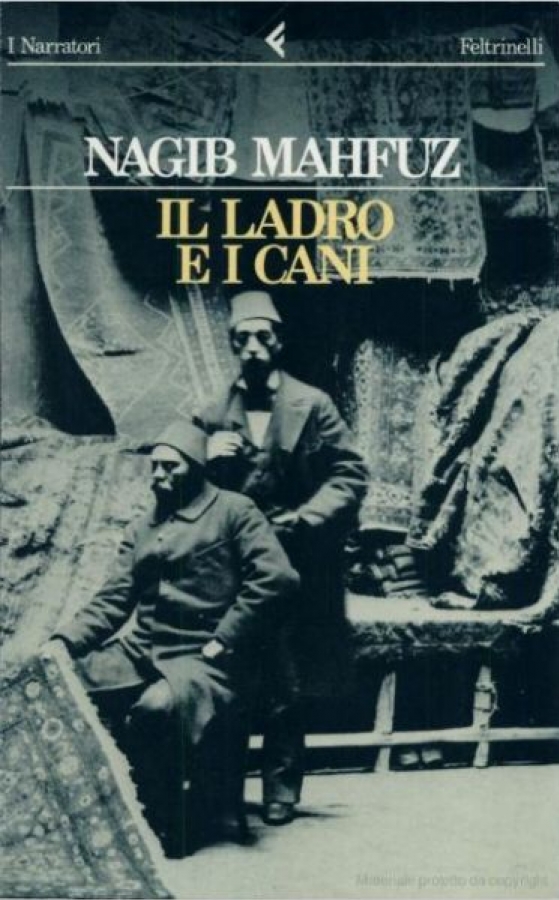
The Thief and the Dogs
The novel depicts the gradual exhaustion of a man who, upon his release from prison, finds himself abandoned by the most significant figures in his life (his wife, his daughter, and his friend) and pursues an impossible revenge. It is a psychological and introspective journey (a sort of inward retreat) during which the protagonist fails even to perceive the love of those around him (the woman who took him into her home), dominated as he is by a delusion of omnipotence and victimhood that causes him to lose sight of genuine feelings in his pursuit of nothing but vengeance. No distinct setting emerges: Cairo and Egyptian society merely serve as a backdrop, but the narrative could just as easily be set in any other city. This is an apt choice, as the story is psychological and therefore common to all human beings, rather than bound to a specific social context. Yet, as an introspective work, it fails to leave a strong impression, and both the plot and the depiction of emotions feel predictable.
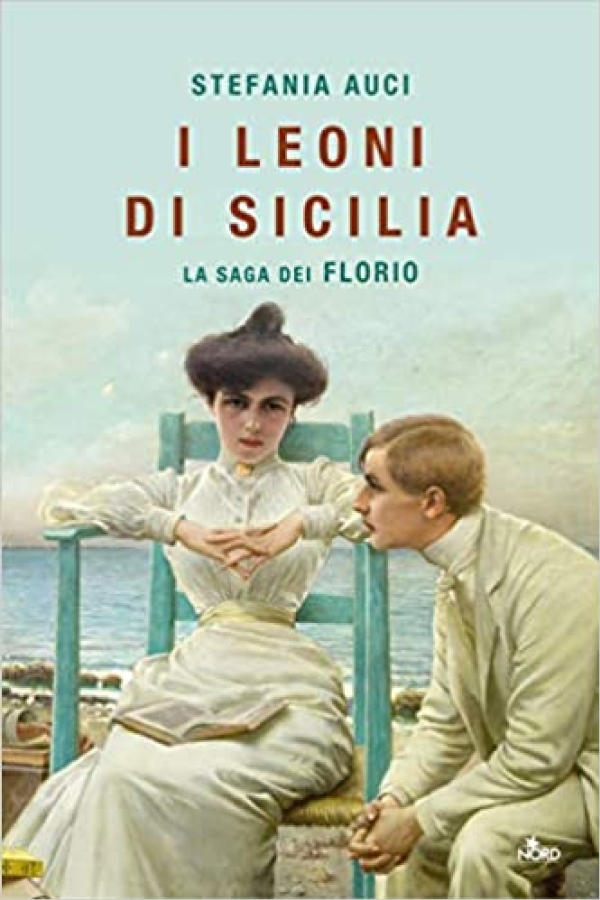
The Lions of Sicily
The novel traces the entrepreneurial and human history of the Florio family across a century, from 1799 to 1869, when economic and social success was fully achieved; and it does so by structuring the narrative around the commodities that laid the foundation for that success: Spices, Silk, Bark (from which quinine is derived), Sulfur, Lace, Tuna, and Sand. Historically speaking, perhaps it would have been appropriate to place greater emphasis on the other cornerstones of their rise: the fleet of steamships and thus technology, the concessions secured from the Bourbons and later from the new Kingdom, the usurious loans extended to the indebted Palermitan aristocracy, and their unscrupulous ties to political power. It is a grand family saga, boasting strong male figures while the female ones are relegated to supporting roles. If one were to seek a single interpretive key, it could be found in the John Milton quotation the author places at the opening: > The study of revenge, immortal hate, / And courage never to submit or yield . The Florios hail from a small Calabrian village, and Paolo's decision to open a spice shop in Palermo creates a rift within the family: a dispute that lies at the root of a ruthless resentment never to be overcome, which shapes the very relationship between mother and son. Another element that hangs heavy over the entire story is Palermo: > strange city, wretched, filthy, and regal all at once, (...) they cannot fathom how the stench of the sewer can coexist with the scent of orange blossoms and jasmine adorning the courtyards of aristocratic palazzi. (...) As much as he might love her and consider himself her son, Palermo treated him as an outsider. He had tried to win her acceptance, had wooed her with wealth, had provided work, had brought prosperity. Perhaps this was what could not be forgiven: the work. The power. The eyes opened wide to the world, while Palermo kept hers firmly shut . The Calabrian roots, as «bagnaroti», weigh on the Florios and lend them a hardness of character in business as well as in human relations. When Vincenzo, Paolo’s son, falls in love with Giulia, he makes her his mistress because the young woman does not belong to the Palermitan aristocracy; after two illegitimate daughters, he will marry her only when Giulia gives him a male heir and no noble daughter will have him as a husband, because he remains a «bagnaroto», wealthy though he may be. Thus Ignazio, Vincenzo’s son, chooses not to pursue the woman he loves, marrying a young aristocrat instead—at long last. In a suspended moment, stepping outside the role to which he is condemned, Ignazio looks at his mother. > And it is in that moment that he notices the dark circles under her eyes, the wrinkles around her lips, the lined forehead. How could she have aged so much? When did it happen? To answer these questions, it would be necessary to unveil the inner world, the domain of feelings between mother and son, between husband and wife. Instead, there is an > ancient rift, which business and the intimacy forged over long years of proximity had been unable to heal. Intimacy, indeed. Not that of feelings... The book could be defined as a fictionalized biography: a reconstruction of the historical context, an examination of the available documentation (how extensive remains unclear, not least because sources are not cited), and a narration of characters and events likely filtered through the author’s imagination. There was ample room to lend depth to the protagonists, especially the female ones. Take Giulia, for instance. She is introduced as a character rich in personality; raised within an entrepreneurial Milanese family, she is educated and well-versed in the dynamics of the business world. How is it possible that she succumbed so easily to the role of mistress and then to that of obedient wife, asserting her strength only in the bedroom? Why not "invent" a more complex, conflictual relationship between Vincenzo and Giulia? In the same vein, a slumberous, alluring Palermo lingers in the background; only rarely do the colors and sounds of a city undeniably known and loved by the author break through. Constrained by the family tree, the writer left no room for imagination, all too often reducing the narrative to a chronicle. For someone like me, who appreciates rich, adjective-laden, almost baroque prose, an initial sense of resistance prevails against a dry, fragmented narrative style, lexically impoverished and simplistic. Then, perhaps because the writer grows more confident in her voice, one begins to appreciate the prose: it becomes evident that the simplicity is deliberate. The aim is to reach the widest possible readership and focus on the story itself, without getting lost in Pindaric and rhetorical flights of syntax and vocabulary. There remains a lingering nostalgia for a more lush and captivating style. Why read it? It reads smoothly and is interesting, even if not gripping.
The Black Book
The novel revolves around two figures: Galip is a young lawyer who has been abandoned by his wife and sets out in search of her, following the clues left behind by the novel’s other character, Celal. The latter is a journalist who has written a column for many years, and is both Galip’s cousin and his wife’s half-brother. The book unfolds across two voices. A third-person voice recounts Galip’s wanderings through Istanbul on the trail of his wife and cousin. Celal, in the first person, draws upon reflections—paradoxical at times, yet always evocative—from his column to develop meditations on existence and Turkish society. It is a deeply dense, complex, and verbose book, with a very slow narrative pace that is, in many stretches, tedious. A primary theme is undoubtedly the context: Turkish society, poised between Europe and Asia, between modernity and Islamic tradition, perpetually on the verge of shedding nostalgia for past greatness, yet somehow pulled back by history. In an interview, the author stated that “Turkish is synonymous with confusion,” and this assertion emerges as the book’s dominant theme, particularly in its first part. From sociological and cultural contours, the focus shifts swiftly to an existential theme: nothing appears as it truly is. The wife’s ex-husband, a far-left militant, deliberately lives a bourgeois life with a wife and children. An old friend obsessively compiles documentation on leftist political movements, from the reading of which emerges a total confusion of names and facts, often fabricated. A former schoolmate married a man simply because he resembled Galip, believing that in this way she could live with him rather than with her husband. Objects themselves carry a double meaning: > what frightened him was the precise feeling that those objects had a different meaning... What is it used for?, he asked... it’s a table leg, replied the other, but some people slip them into the hem of curtains. It could also be made into a handle. What must one do to penetrate the arcane world of second meanings and uncover the mystery? . At this point, a philosophical theme opens up: there was once a felicitous era in which words (“letters”) fully represented the meaning of the object, and thus narrative and life corresponded. > In that Golden Age, the objects we placed in our homes coincided with the ones we dreamed of... everyone knew full well that words and what they described were so contiguous that, on foggy mornings, words and meanings blurred together. Upon waking, people could not distinguish dreams from reality, poetry from life, names from those who bore them. Stories and lives were so real that no one would have ever even conceived of asking where the former ended and the latter began. Dreams were lived, and lives were interpreted to their depths . The split between words and objects, between poetry and reality, between dream and life, leads to loneliness and to the incommunicability between people, as well as between people and objects: > the world he wanted to enter was not this one, but another realm that Celal had spent a lifetime creating. According to him, Celal, by calling things by their name and telling stories, had gradually walled off the world where he had sequestered himself, hiding the keys . Can one be oneself? Can narrative be reunited with life? Yes, but only in the stillness of mannequins, of cold objects that, even more than living beings, succeed in offering the exact representation of life. The key chapter of the book is that magnificent one depicting the visit to the underground workshop of a mannequin maker; in this place beneath represented life (“advertising mannequins”), this man had carried on the family tradition of crafting mannequins that genuinely represented the characters and figures of reality. Yet, if only mannequins allow narrative and life to reunite, is death not the sole moment in which the Golden Age is realized? The book appears in many respects intellectualistic and tedious, locked within philosophical and existential themes that cause the narrative and the characters themselves to lose their luster. Moreover, it feels fragmentary and redundant.
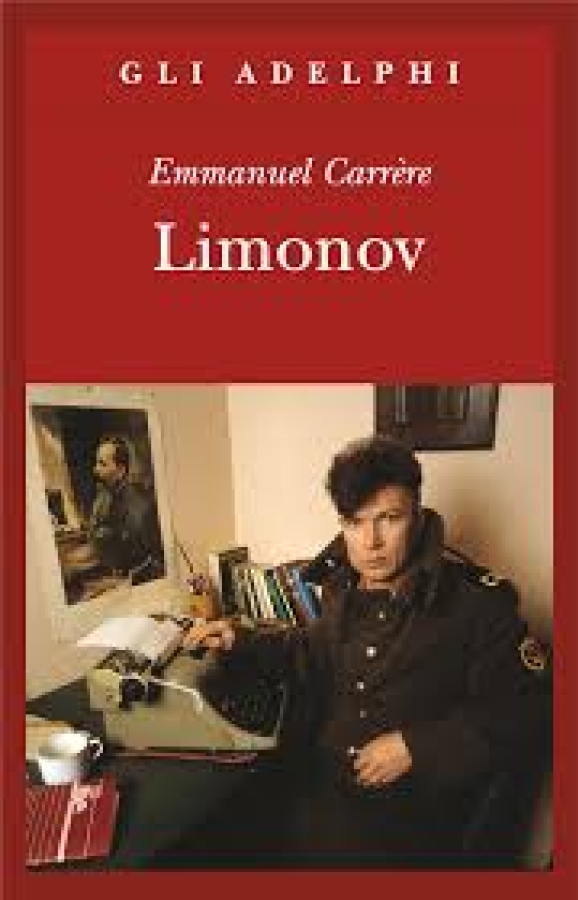
Limonov
In *Diary of a Failure* (2004), Eduard Limonov imagines that > they will all come. The delinquents and the shy (...). The drug dealers and the procurers for brothels. The onanists will come, the lovers of porn magazines and films. (...) The pensioners will come, those who queue at the supermarket in the express lane for customers buying fewer than five items. (...) They will all come, take up arms, occupy one city after another, destroy the banks, the factories, the offices, the publishing houses, and I, Eduard Limonov, will march at the head of the column, and everyone will recognize me and love me. This passage, quoted by Carrère, aptly captures who Limonov (1943–2020) was; this Russian D'Annunzio who moved through the second half of the twentieth century like a superman, seeking not to build anything (be it literature or a political party), but pursuing action solely for action's sake, outside of every framework, driven by an ideal of narcissistic aestheticism. For Carrère, Limonov is what he himself never dared to be (as the writer's sister described him as a boy: > my brother is very serious, he never does foolish things, he reads grown-up books all day long ), and so, to live a little like a superman, Carrère writes a “real” novel that suffers from the major flaw of drawing fundamentally from the character's own autobiographical accounts. And it is fortunate for us readers that the entire narrative is filtered through the halo of imagination. From the very beginning, when Carrère meets him in 2007—a sixty-five-year-old engaged alongside Kasparov in a liberal-democratic movement—Limonov appears an exceptional figure in the eyes of the French intellectual: > he is still lean: flat stomach, adolescent build, smooth and tanned Mongol skin, (...) something of the aging d'Artagnan of *Twenty Years After* (...). Or is he, the bandit, the rogue, amusing himself playing the role of the virtuous democrat...? (...) Deep down, does he relish playing the wolf in the sheepfold?.Carrère lightly retraces the entire life of our protagonist: the myth of the father, an officer in the glorious Soviet army, later shattered by the family's downward social mobility; the wild adolescent, always with a heavy knife in his pocket, yet a young poet nonetheless; the stay in Moscow during the height of the Brezhnev era among intellectuals passively chafing under the regime; and then New York and Paris, where he succeeds in publishing his American novels; and once again the return to Moscow, his association with Aleksandr Dugin, Putin's alleged ideologue, and together they found the National Bolshevik Party, which lands him in prison, from which he emerges triumphant. Bisexual, ever surrounded by gorgeous, sensual women, shifting between scenes of uninhibited sex and subtle intellectual conversations, not without his share of crimes and violence in the former Yugoslavia (after all, D'Annunzio too knew “regenerative” war), Limonov's life unfolds without remorse, like that of a true superman; or is it merely what the trickster Eduard wished to tell us, and the naive intellectual swallowed whole? Whatever Carrère’s intentions may have been, one must wonder why he did not devise an original story, the fruit of his own creativity, choosing instead to chronicle a real-life figure. This approach suffers from two principal shortcomings. First, one falls prey to the self-representation offered by Limonov himself, creating a sort of distorted lens that ultimately exalts such extreme figures—figures the media industry adores because they are simultaneously harmless and magnificent. Second, the narrative follows an uneven course: sharp and incisive when drawing upon Limonov's own novels (the years up to Paris and his imprisonment), only to flatten out into mere chronicle when forced to rely on other sources. It is no coincidence that the dialogues are concentrated where Limonov's autobiographies are used, and it is precisely in those sections that the narrative becomes most vivid. Assuming Carrère wished to depict the decline of Europe and the United States along with the root causes of the rise of Putin and sovereignist movements, why not do so through historical analysis grounded in established methodologies, or set himself a more ambitious goal: to be a new Hugo or Dostoevsky capable of true literature? In our minds, Limonov will forever remain trapped within his own era, never achieving the universality and eternity of Jean Valjean in *Les Misérables* or the characters of *The Brothers Karamazov*. The novel's merit lies in its narrative style—elegant and subtly ironic. Well-constructed, if overburdened with names, the reading flows pleasantly, particularly in the first part, which is undoubtedly the finest from a narrative standpoint. The tension begins to flag during the Parisian period, marred by a certain characteristically French complacency, before declining steadily to the point of inducing a distinct impatience. Why read it? Well-written, and an interesting depiction of the decline of Europe.
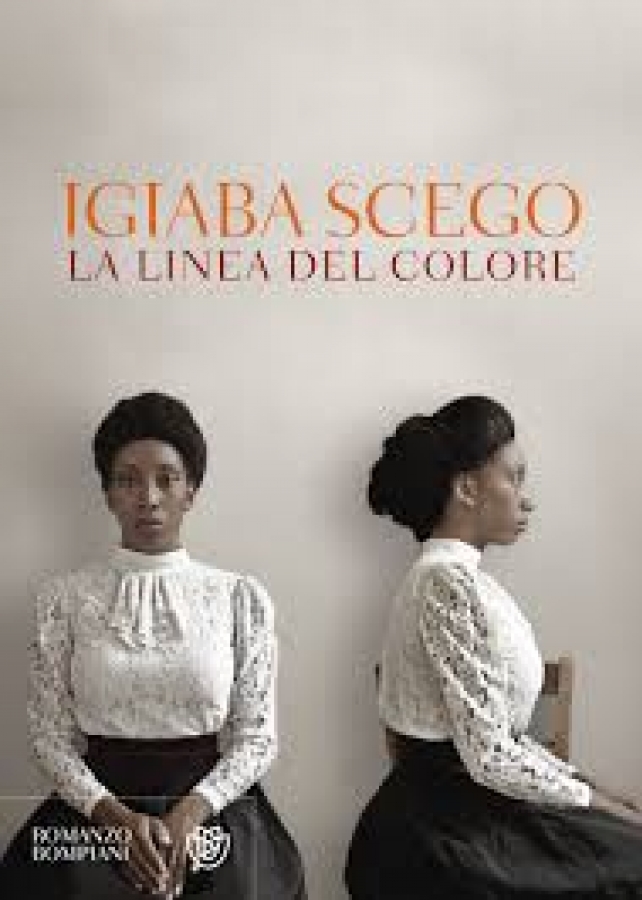
The Color Line
The novel is part of a trilogy that includes two other books: *Oltre Babilonia* from 2008 and *Adua* > from 2015 (reviews are available on this site). And indeed we find the same theme: the Black woman lives in a world of violence and abuse, because she is a woman and because she is Black. Taking up the narrative framework of *Adua* > the author pursues two parallel stories: that of Lafanu Brown, an African American painter who lived in the second half of the nineteenth century in papal Rome, a city soft, welcoming, and roguish, and that of Leila, an Italian of Somali origin who lives in today's Rome, alluring, decadent, and cruel. They are distant eras, yet with a common starting point: the Fountain of the Four Moors in Marino, featured in Rino Bianchi's photographic gallery in the book's appendix—a deeply evocative gallery, fundamental to interpreting the entire story. Thus writes Lafanu, those women, those ancestors of mine, because we descend from the suffering of slaves, want someone to give them a voice. Oh Lizzie dear, I see how they struggle to reach out toward us > . Leila is with a friend in Marino before the Fountain. The friend, an intelligent young woman, open to the world and a student of Arabic, says to her, laughing: did you see that? (...) Don't you find it beautiful? (...) She too, despite her breadth of knowledge, was blind to the pain of those four black-skinned prisoners. Perhaps she hadn't even noticed they were Black > . The two stories, Lafanu's and Leila's, unfold with different rhythms and a distinct narrative style: at the root, there is always violence. Lafanu was raped as a young girl in the abolitionist American town of Coberlin, in 1859. A model student, she attended a college that took pride in having students of color. One evening, Lafanu insisted on going to the theater, wearing an elegant dress rich in color. Every color was stripped from her. All she had left was a faint trace of mother-of-pearl in her frightened eyes and the black of her ebony skin. The black would not leave her. I will never leave you, it promised her > . Where to survive? In a place where color and surface meet. Lafanu becomes a painter; the pursuit of beauty as a lifeline brings her to Italy, to Rome. She painstakingly earns her place as an artist, enchanted by Italian Baroque and Classicism. Nightmares haunt her. She is fascinated by a painting by Lorenzo Lotto, *Santa Lucia davanti al giudice* > , where in a corner of the painting a young Black servant girl holds back an unruly child. Lafanu devotes sketch after sketch to this painting. She erases everything she considers superfluous. Everything disappears, even the child disappears; only the Black girl remains with her anxiety. A scene that Lafanu transforms into her obsession. Into the investigation of a terror > . As though beauty could free us from violence—it is an illusion! Leila, too, is Black and at the same time uprooted from Somalia: an exile from a land that ultimately was never mine > . If you are Black, it is hard to escape violence. Binti, Leila's cousin, in an attempt to reach Italy finds herself in the traffickers' infernal circle, who rape her, just as their white counterparts did to Black people during the terrible sea voyages to America. And now, Binti screams in silence. It is an agonizing sight: her mouth gapes wide, her eyes dilate, you expect a scream... but nothing comes from her lips." Perhaps salvation could be the meeting between color and surface. "I took a breath, steeled myself, and walked up to my cousin. (...) She stopped drawing. I was nearly struck dead with astonishment. There was a woman tied to a stake who was breaking her chains. She was weeping, and in her lap she held a passport. > Lafanu is a fictional character, a composite of two Black women who actually lived in Rome: the first a midwife and activist, the second a sculptor. The blending of reality and fiction gives the narrative a calm and evocative rhythm, like an escapist historical novel. While this diminishes the story's dramatic weight, it stimulates the reader's curiosity without generating anxiety: clearly there will be a happy ending, even if somewhat melancholy and bittersweet. Leila is the author, and the events unfold in the present day. There is of course imagination, but the raw reality of migration and human smuggling looms over the entire narrative: it slips into chronicle and indictment. The wounds inflicted upon our conscience—hypocritical and lazy though it is—are too deep for us to dally. As was already the case in *Adua*", it is truly demanding to sustain two narrative threads without making the story verbose and redundant. The sparse writing does not help create atmosphere and thus fails to support Leila's story, which often has a journalistic slant. Highly innovative, if not always entirely successful, is the blending of reality, fantasy, and the visual arts. Why read it? It is an innovative book that develops a dramatic story
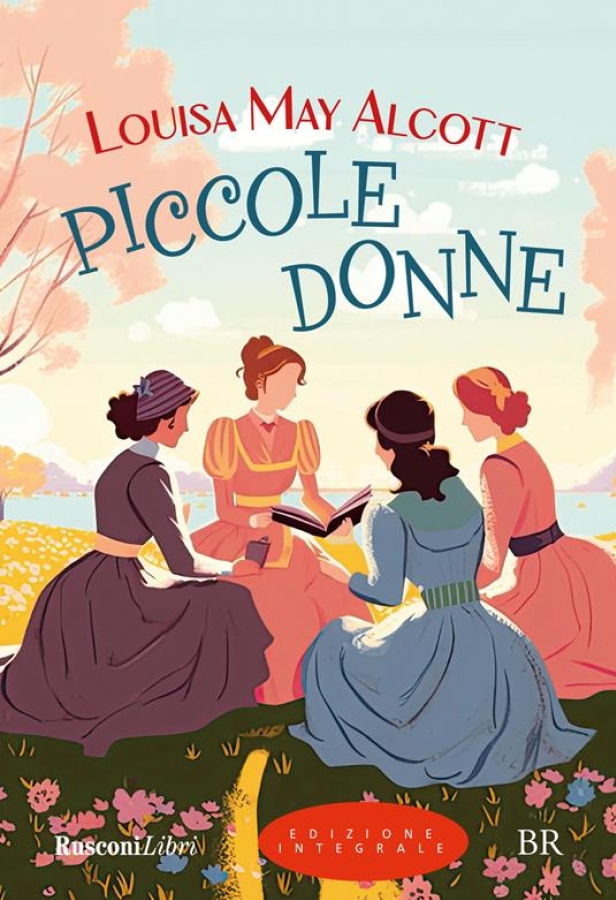
Little Women and Good Wives (Piccole donne and Piccole donne crescono)
> Four little chests all in a row / Veiled in dust, and worn by time, / Four women, who have learned from scars and sorrows, / To love and endure in the prime of life. These lines of Jo's epitomize the meaning of the entire novel, which recounts the passage from adolescence to adulthood, and also tells us how every woman has but one destiny: to become a "good wife." The "four little chests all in a row" are four sisters, whom we meet from the opening pages of *Little Women*: Meg is the eldest, > with fair skin and large eyes, with thick, soft brown hair, a sweet expression, and white hands, of which she was particularly proud, (...) Jo was tall, thin, brown-complexioned, and resembled a colt, for she seemed never to know what to do with her long limbs, (...) grey, observant eyes, which saw everything, and were by turns fierce, amused, or thoughtful; (...) Beth, a rosy girl of thirteen, (...) of shy manners, a timid voice, and a tranquil expression. (...) Amy, though the youngest, was the most important person, at least in her own opinion. (...) Blue eyes, blonde hair, (...) pale and slender, she always behaved like a well-mannered young lady. They live in a modest home, pervaded by > a pleasant atmosphere of peace , governed by a mother > not elegantly dressed, but a woman of noble bearing, and the girls thought that the grey coat and unfashionable bonnet covered the most splendid mother in the world. There is an air of Guido Gozzano's world of "small things," yet stripped of the poet's gentle irony; the whole is pervaded by a pedagogical moralism, rooted in steadfast values and upright customs. The father, a devout man dedicated to teaching, volunteered for the war (the novel is set during the American Civil War); the paternal presence manifests through letters to the family, a decalog of good intentions. The girls grow up sensible and industrious, mindful of the family's financial straits, convinced of what their mother says: that being poor is no fault, but can rather be a virtue. Contentment seems to be the guiding rule of life; on the other hand, sisterhood seems sufficient to enrich and enliven existence, all the more so when spurred on by Laurie, a restless lad, welcomed by the girls like a brother. Anyone raised in a large family recognizes themselves perfectly in the narrative, just as teenage girls in the 1950s, before the explosion of consumer culture, likely still saw themselves mirrored in *Little Women*. As Gozzano writes, > Carlotta sings. Speranza plays. Sweet and blooming, / life unfolds to the romance of a thousand promises (from *L'amica di Buona Speranza* selected from *Poesia italiana del Novecento* edited by Eduardo Sanguineti). In one of the finest episodes of *Little Women*, the four sisters have a picnic with Laurie: five adolescents building "castles in the air," to which they hold the keys, though they know not whether they will ever be able to open the door, as Jo says. Meg > would like a lovely house, (...) I must be mistress of it, and manage it as I like. Jo > wants to write books, and become rich and famous: that would please me, that is my dearest dream. Mine is to stay peacefully at home with Father and Mother, and take care of the family, said Beth happily. Amy > has so many wishes, but the chief one is to be an artist, and go to Rome, (...) and be the best artist in the world. At the end of *Good Wives*, the girls wonder which of these dreams came true. As in Alba De Céspedes's *Nessuno torna indietro* (see the review on this site), life turned out quite differently from their castle in the air. Meg has a small house, a devoted yet poor husband, two darling children; she has known the hardships and deprivations of a housewife. > My castle is very different from what I had planned , says Amy, who had to abandon her aspirations of becoming a great artist, but marriage to Laurie made her > sweeter, deeper, and more tender, while Laurie has grown more serious, strong, and resolute, and both have learned that beauty, youth, wealth, even love itself, cannot keep from the greater part of life its duties and griefs, bereavement and suffering. As Ungaretti says, life > flows ever on as living ever does, / Unexpected gift and grief / In the ceaseless whirlwind / Of vain mutations (from > *Ultimi cori per la Terra Promessa*). Jo is the one who suffered the severest disappointments, not from fate, but by virtue of her own choices: she refused Laurie's hand, simply because she did not love him and regarded him merely as a brother; she ceased writing sensational adventure potboilers, which earned her a living but were unworthy of her moral values and of good literature; she returned to her parents' home to attend Beth's deathbed, after which she inherited the role of angel in the house > , future spinster and mere aunt. Until one day, aided by the rain and an umbrella, she discovers love with a German professor, much older than she, yet wise and eccentric like her father. With him she will open a boys' school, a home for destitute children, where she can pursue innovative pedagogies. To her mother's praise for such a courageous endeavor in raising youth, Jo replies with a shout, > with those impetuous outbursts she could never control, (...) Not half so good as yours, Mother. Here we are, and we can never thank you enough for your patient sowing and for the harvest you have reaped. The book is an autobiographical novel. Jo is undoubtedly the author, just as the father's character mirrors Alcott's own father, who pursued unorthodox educational methods throughout his life, founding schools that were invariably doomed to fail. Ostensibly, the protagonists are the four sisters, whose stories form the plot of the two novels: a family saga that would continue with *Little Men* and *Jo's Boys*. The true protagonist, however, is the mother: grounded, affectionate, of steadfast moral principles, and ever ready to offer the right counsel—advice aimed at helping her daughters accept the realities of life, whether it be marital relations for Meg or Jo's headstrong exuberance. It is she who tells Jo that Laurie is not the right man, because, like Jo herself, he is restless and unpredictable. The irony is that this will become Jo's very argument to justify turning down his proposal! Unlike Jane Austen's independent and willful heroines (see the reviews of the English author's books on this site), the "Little Women" do not rebel; they wearily resign themselves to the destiny of "good wives." They are not who truly interests Alcott: it is American and European society. The former was drifting away from Puritan virtues, swept along by the capitalist transformations of the late nineteenth century; the latter, European society, was vain and evanescent, certainly no model for young American women. The stories of *Little Women*, so immediate to our sensibilities and above all to those of young girls, serve to reinforce and disseminate a Protestant moralism (one utterly detached from Catholicism): an ethic steeped in social idealism, frugal habits, and philanthropy, yet fundamentally conservative. Beyond the plot, which is intricately woven and deftly conducted, the fundamental merit of the two novels lies in the writing. We do not refer so much to the psychological analysis of sentiment (we are far removed from Jane Austen!); the feminine realm is stereotyped, predictable in its dynamics (perhaps the very reason for its success, as girls from every corner of the world can see themselves reflected in > *Little Women*). Alcott's allure stems from her lexical richness, deeply American in character, to the point that many words are difficult to find in a standard dictionary. If in Henry James—a contemporary of Alcott's in the second half of the nineteenth century—the style remains profoundly English, in both vocabulary and syntax (see on this site *Selected Short Stories*, a collection of tales highly representative of this author's literary output), Alcott's robust and proud American stamp leads her to revive idioms, syntactic turns, and vocabulary that are at times archaic (consider the use of *blest* instead of *blessed*), and at times drawn from the vernacular of the triumphant new Nation. We are confronted with a linguistic tour de force that could not fail to leave its imprint on the evolution of United States literature, propelled by the novels' immense popular acclaim. Why read it? The language is beautiful, certain passages are captivating, but it is long-winded and ultimately melodramatic.
The Tenant
Elie Nagéar is a young cosmopolitan who grew up and lived for a long time across many countries, particularly in Turkey. On his journey to Europe, he meets Sylvie, with whom he has a relationship. The young woman works in a nightclub, and in no time the two squander what little money they possess. Seized by desperation during a train journey from Brussels to Paris, Elie robs and kills a wealthy patron of the nightclub. To hide him, Sylvie sends him to her mother, who runs a boarding house. The life of the landlady, of Antoinette, her other daughter, and of the lodgers revolves around the kitchen, where relationships intertwine and where Elie soon becomes the center of attention with the incredible stories of his life and the countries he has lived in: > like the prelude to an orchestra, one could hear the clatter of forks, plates, and glasses rising and intensifying; whenever a voice was heard, it was Elie’s... He was not lying, yet he felt as if he were. He searched his memory for something more to tell, something comforting and flowing like a Neapolitan song . Thus a surreal atmosphere is created, disrupting the house’s mediocre and monotonous existence. All the inhabitants of the boarding house are so fascinated by the new lodger that, once it becomes known that he is the killer, far from reporting him, they actually help hide him in the hope that he might escape. Even when Elie, by then captured and sentenced, is boarded alongside the other deportees onto the ship that will carry him to forced labor, the landlady will be there on the pier to see him off, filled with nostalgia for a young man who, for a brief time, brought novelty to her mediocre bourgeois life. The milieu is the Belgian petite bourgeoisie. The story unfolds slowly, attentive to the details of life in a boarding house, where the tenants can barely make ends meet and where, paradoxically, all concern is devoted to propriety, to upholding a good name: the landlady’s husband is a conductor for the Belgian railways!! Why, then, does everyone let themselves be captivated by the new lodger’s stories? Why do they not turn him in? Perhaps because, Simenon seems to tell us, we all feel constrained by the flatness of everyday life. Why not read it? It reads very well owing to its concise and effective style. Yet the narrative pace is too slow to make for an enthralling read.
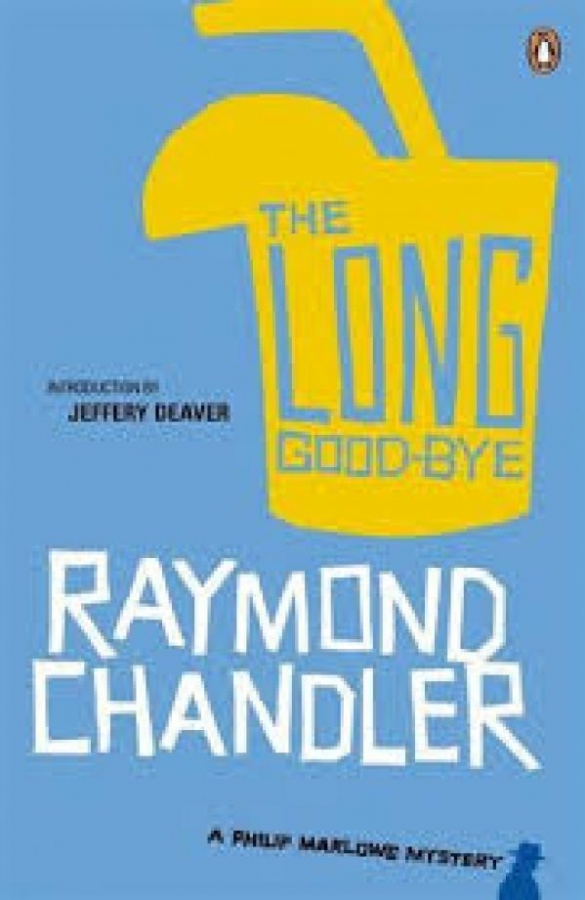
The Long Good-bye
The setting is typical of the “American crime novel”: characters (Terry and Sylvia Lennox, Roger and Eileen Wade) seemingly unrelated yet with intertwined stories, an unseen and overarching power, organized crime, corrupt police, alcohol in abundance; and, what is more, > a city no worse than others, a city rich and vigorous and full of pride, a city lost and beaten and empty . The plot unfolds along a conventional pattern. Terry Lennox is accused of his wife’s murder, flees to Mexico, where he kills himself after confessing to the crime. The case is closed. Philip Marlowe, a private detective, is accused of having aided Lennox’s escape. Released, he continues to investigate because he is convinced the man is innocent and did not commit suicide at all. Several figures urge him to drop the inquiry: crime bosses, Sylvia’s powerful father, and the police themselves. Marlowe takes on the assignment of protecting a well-known writer, Roger Wade, an alcoholic prone to violence. We learn that Eileen is the widow—or so she believes—of Terry Lennox, who fought under another name in England, where he was reportedly declared dead. The story unravels: Terry’s past is vastly different from what it appeared to be. In a succession of plot twists, Roger is murdered by Eileen, who then takes her own life. And Marlowe? He is present at the moment of Roger’s murder, but is distracted by the sound of a boat; he senses that Eileen might commit a rash act; yet he does not intervene. “It just kind of grew up around me,” a phrase that is literally untranslatable; it could be interpreted in the sense that everything happens around him without his wanting it to: a resigned vision of a fate against which it is futile to fight. Besides, it is that way for everyone: > twenty hours a day someone is running, someone else is trying to catch him. Out there in the night people are dying of a thousand crimes. (...) People are beaten, robbed, strangled, raped, and killed. People are hungry, sick, bored, desperate because they are alone or full of remorse and fear, angry, cruel, excited, and shaken by despair . The novel concludes with a surprise, which unfortunately must be revealed, for otherwise the meaning of the entire book would be lost. Before doing so, one must speak of Philip Marlowe; his character, in fact, turns the story into something far removed from a traditional “whodunit.” > I could even have been a rich man (Marlowe thinks), small-town rich, an eight-room house, two cars in the garage, chicken every Sunday, (...) and me with a brain like a sack of cement. It’s for you, pal, I’ll take the big, sordid, dirty, dishonest city . It is not to play the hero; Marlowe is deeply pessimistic, almost cynical. > That’s how human beings are. (...) What do you expect, golden butterflies fluttering over a rosebush? And yet this man, seemingly disillusioned, meets another man, Terry Lennox, and—who knows why?—helps him, stubbornly trying to prove his innocence. > I thought I was tough, but there was something about that man that won me over. I didn’t know what it was, unless it was the white hair and the scarred face and the clean voice and the gentleness . “How naive can a man get, Marlowe?” a cop asks him. And indeed, at the end of the novel, Marlowe discovers that he has been deceived. Terry Lennox is alive; he merely wanted to disappear. And so the cynical and generous detective admits that once Terry meant something to him, but today not even a goodbye. > I’m not judging you. I never did. It’s just that you’re not here any more. You’ve been gone a long time. You’ve got nice clothes and perfumes and you’re as elegant as a fifty-dollar whore . Heir to the great Dashiell Hammett, perhaps the greatest crime writer of all time, as Jeffery Deaver notes, Chandler pushed the crime novel toward new frontiers, opening it up to grand narrative literature: and this is credited to the figure of Marlowe, but also to a singular prose style—elegant and demanding, composed of neologisms, novel syntactic constructions, and above all geared toward creating an atmosphere of suspension, of estrangement from the narrative. The novel is too long, excessively convoluted, with tight and often redundant dialogue. It is therefore not perfect; it is strenuous, and one senses Chandler’s frustration at being unable to fully investigate > the real enemies: expectations, betrayal, the desire for power and wealth (Deaver). Why read it? It is a strenuous read, but well worth it if one wishes to delve deeper into the human soul.