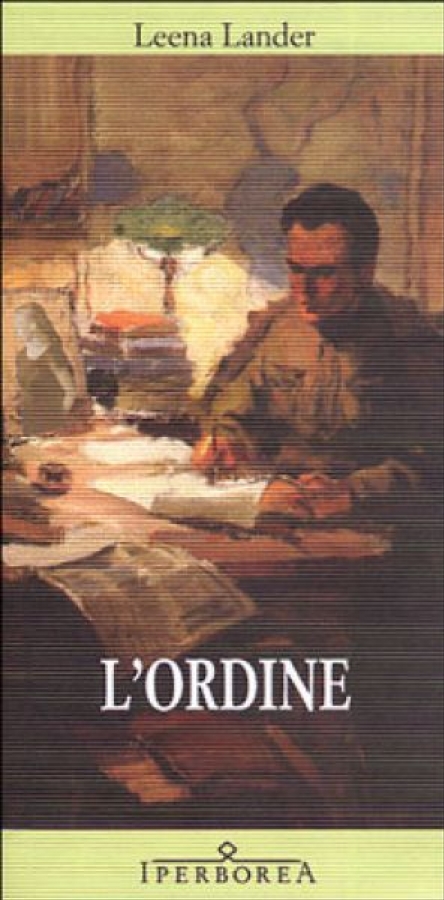
The Order
The novel’s settings are the Finnish winter and spring, while the historical context is the war between the White forces, fighting to defend the country’s independence, and the Red forces, intent on extending the communist revolution to Finland as well. War, intertwined with a wild and pristine natural world, forms the backdrop to the ordeal of an imprisoned woman and her interactions with the judge (an alcoholic, paranoid writer) and the soldier, with whom she lived for eight days on a deserted island and by whom she is expecting a child. The entire story unfolds within a former asylum, where one of the protagonists is a poor madman who believes he is photographing ghosts, laying bare the sheer absurdity of events. Finally, there is also a young boy, the orphaned son of the woman’s friend, who suffers violence at the hands of his grandfather and cousins before ultimately being rescued by her. Alongside the plot and the characters’ trajectories, brief introductions to each chapter depict the behavior of wolves and humanity’s attempts to exterminate them in an apparently endless struggle. It is then, perhaps, that the meaning of the book begins to emerge—a work that remains, in certain respects, cryptic and elusive. The woman is a she-wolf: fierce and determined, yet devoted to her young—both the boy in her care and the child fathered by the soldier. In a hostile environment, pitted against a judge who is both cunning and cruel, the woman, like a she-wolf, moves with calculated shrewdness. By contrast, the soldier (a young man who enlisted to redeem himself both from professional failure and from his father) behaves like “a dog”: time and again he saves the woman’s life, falls in love with her, remains loyal, and dies to protect her. Two heroes, then: the woman is the positive hero, who does not passively endure the absurdities of war, but reacts, confronting them with her gaze fixed on the future; she ultimately prevails, restoring hope to a child and carrying within her the germ of a new horizon. The soldier is the negative hero, a weak man destroyed by war who nevertheless, unlike the others, salvages his dignity through the very act of protecting the woman. The book possesses profound depth and addresses a remarkably timely theme. In a society that is unraveling, the future must be confronted with strength and tenacity.
The Fourth Summer
Following an eventful journey and having lost her luggage, the young doctor Andrea Dalvina Zanardelli arrives in Ravenna to take up work at the Marina di Ravenna sanatorium, where "scrofulous" children from the orphanage are treated. The year is 1943. Dalvina comes from an affluent family on Lake Garda. Her very first encounter surprises her, when at the station she is asked whether she needs to go to Marina or to Abyssinia. Then there is this strange landscape, so distant from her idea of the sea: > a sort of swamp, a pool of rippled water that one sensed was barely deeper than a puddle, and which are called "valli" (or piallasse), like those in her mountains. From the outset, she felt its charm, a > wild charm, (...) burdened by the toil of poor folk, (...) the camaraderie among the sailors, the respectful silence with which they greeted one another while puffing on clay pipes, and because of all this (...) she felt rather at home. For her, the lovely girl *with apricot-coloured hair*, little was needed: > her character demanded frankness, authenticity, for she felt she belonged to simple stories. And so she immediately took to the sanatorium, > the absolute radiance of the place, the ceaseless breaking of the waves, the briny taste clinging to the flesh, (... the orderly simplicity of the rooms and the quiet diligence of the nuns, bearing peculiar names such as Leopola, Nolasca, Zoefe, Benespera, Galizia: a community of religious women devoted to Saint Dalmazia, yet always and above all women, with their secrets and their loves, not necessarily directed solely to Christ. Over the span of a few months, a "simple" story unfolds—a microhistory set against the grand history sweeping across Italy, from the Allied landing to Mussolini's downfall and the German invasion. Up until 8 September 1943, the author recounts these events through the madness of the sanatorium’s previous physician, who was removed and institutionalized because he believes himself to be Benito Mussolini: a deft metaphor for the folly that dragged our country into war. Then, at a certain point, it is no longer possible to hide behind the incurable rhetorical delusions of a poor madman: > the word "bombing" had just entered, with all its disruptive force, into the organized routine of the sanatorium. What had seemed stable and everlasting now wavered, was no more, and by any measure of logic no guarantee, no immunity could be foreseen. For just a while longer, we readers hope to remain immune to the war, able to follow Dalvina as she discovers herself, her body yearning for love, and her maternal side, which binds her inextricably to a poor scrofulous boy—not out of pity, but because > she felt those whispers creep into her flesh, cross barriers and defenses, and reawaken an intimate, indecipherable unease that made her start, and certainly not because of the mysterious origin of the words. Yet destiny looms over us all, its meaning difficult to discern because it pays no heed to Love and Hope: > bombs are hardly obedient, nor are they intelligent. They go wherever they please. (...) Yearning to dream. And so who knows, perhaps she had made up this whole fable of nuns, sea, and children. Her children. These are Dalvina's final thoughts. And had everything remained a dream, might she have been saved? Paolo Casadio possesses the ability to take small, real facts—the fruit of meticulous archival research—and build stories that invariably feature an enchanted "Setting", steeped in mystery and magic. In his debut novel, *Il bambino del treno*, it is a small station along the Faenza–Florence railway line that serves as the backdrop to a true event. In the subsequent *Fiordicotone*, the setting is Lugo di Romagna, although this narrative effort is less successful than the former because the author scatters his focus across too many themes and departs from his smooth, elegant prose—Casadio's quintessential virtue (see the reviews on this site). Here, by contrast, the Romagnol author is at his best: the reconstruction of Marina di Ravenna's atmosphere, so different from what it is today, evokes in the reader indecipherable, fairy-tale sensations, and it is easy to imagine how captivating it must have been for an educated girl from the North; the nuns' personalities are portrayed with affectionate irony, and we seem to see them right before our eyes, in their feminine passions and their nonetheless steadfast faith; and what of the "scrofulous" children, growing increasingly unruly and lively as their health improves (thanks also to the herbs of the pine woods); and then that gem of the delusional patient who believes himself to be Mussolini, amusing yet realistic. Perhaps the only shortcoming concerns the figure of Dalvina, drawn with insufficient psychological depth and constantly relying on hints of past wounds, which remain unresolved and prevent us from fully grasping her personality. And finally, we readers are left disappointed, having expected a happy ending. Why read it? It is a wonderful novel, an enjoyable and compelling read.

The Eternal Virgin
The author imagines a former schoolmate, now a film producer, proposing that he write the screenplay for a film based on *Michael Kohlhaas*, an 1810 novella by Heinrich von Kleist. The plot lends itself to a theme particularly dear to Kenzaburo Oe: that of freedom and rebellion against the abuses of Power. Set in the sixteenth century, Von Kleist's novella recounts the story of a horse dealer who refuses to accept being robbed and humiliated by a powerful feudal lord and, stubbornly and desperately, fights for Justice. It is only natural for Kenzaburo to transpose this tragic tale to the peasant uprisings that shook Japan in the second half of the nineteenth century, which swept through the writer's own native village, as previously described in *The Water Forest* (see the review on this site). Such is the context thus far; yet from the very first pages, one senses that something else lies beneath the plot, as though the screenplay were unleashing primordial forces that well up from the underground of the human soul. Unlike Fyodor Dostoevsky's *Notes from Underground* (see the review on this site), here it is not malice, but that subtle, ambiguous, and shameless desire for erotic fantasies that can still overpower an old man. Indeed, the novel is structured around two distinct periods in Kenzaburo's life: in the first, he is already an established writer, yet deeply depressed and trapped in a severe creative crisis; in the second, he is an elderly gentleman in physical decline. The clue to an "underground" theme beneath the official plot is found in the quotation of a poem by Edgar Allan Poe, written in 1849, the year of Poe's death (how many "allegorical" references abound in the great Japanese author!): "It was many and many a year ago / in a kingdom by the sea / that a maiden there lived whom you may know / by the name of Annabel Lee; / and this maiden she lived with no other thought / than to love and be loved by me". These are Poe's verses, laden with erotic evocations; but who is Annabel Lee to Kenzaburo Oe? She is Sakura-san, a Japanese actress famous in Hollywood whom the producer wishes to cast as the lead in the film on Michael Kohlhaas. As coincidence would have it, Kenzaburo had already seen the young Sakura—and had been "captivated" by her—in a short film on Annabel, where Sakura, then still a child, starred in the final scene in the guise of a > maiden in a flowing white gown, who beneath the purity of the image possessed > something ambiguous and mysterious. The novel's plot unfolds around Sakura's "underground," beyond her calm, self-assured demeanor. First of all, the actress is determined to center the film on the woman who led the peasant revolt in the second half of the nineteenth century and who was gang-raped before being murdered: the ordeal of this woman, known in legend as Meisuke's mother, was the subject of a stage play organized by Kenzaburo's grandmother and mother, in which the writer took part as a young boy. Later, the writer learns that Sakura is known as the "Eternal Virgin": while still a child, Sakura was taken to America by a soldier who became her husband and launched her film career; a man who loved her, yet with whom Sakura was never able to consummate a full sexual relationship. It is from this that a recurring nightmare of Sakura's arises: > in the dream I felt an unspeakable fear, yet I didn't quite know why; I couldn't bring it into focus. And yet in that short film on Annabel Lee, directed by her husband himself, such purity shone through the image of the child Sakura reclining on a tree trunk by the riverbank, just as in Poe's poem. But there was something else, something hideous in the short film's ending—a conclusion kept hidden, and which Sakura unconsciously sought to retrace as the lead in the theatrical staging of the tragic tale of Meisuke's mother. > Thanks to an extremely placid and bucolic passage, I was even able to imagine Meisuke's mother setting out along a mountain path leading deep into the forest. (...) I felt a profound regret, thinking that I had lived so many years without reflecting deeply on what might truly lie hidden beyond this path; I had become a seventy-year-old man who had done nothing but listen to that melody, so simple and pure (Beethoven's Piano Sonata Opus 111, accompanying the short film on Annabel Lee), which dragged me inexorably toward the unknown. I could not, and will never be able to, rid myself of the image of that thick, stubby thumb forcing its way into that small slit.... > I awake in the darkness that precedes dawn, floundering among the agonized shreds of dreams that still linger in my consciousness, in search of a burning sensation of anticipation. (..) I have slept with my arms and legs bent to the side, in the posture of someone who refuses to remember his own nature or the predicament in which he finds himself. So writes Kenzaburo Oe in *The Silent Cry* (see the review on this site), as if to express what we have repressed our whole lives, only for it to return in old age, fiercer than ever. In *The Eternal Virgin*, it is an old man's erotic impulses, in a narrative revolving around a woman who is captivating precisely because of her deepest secrets—so deeply buried in the "underground" of the soul as to be unknown even to herself. Artistic creation is essential to dredge a lifetime of grief back to the surface. The novel is a hymn to literature, to its capacity to interweave historical events, literary references, self-reflection, and therapeutic powers. One senses an undercurrent of regret for what was left undone, and unlived. It is a flawless novel! To be sure, with subtle irony, Kenzaburo pokes fun at his own tendency to lose himself in the narrative, to often be verbose and rambling. That cannot be said of this work: the plot develops seamlessly, steering the reader with a steady hand toward the dark core of the story. The success of the narrative stems, perhaps, from having focused on a single character who grows and asserts herself, slowly but inexorably, throughout the novel, in search of herself and of her determination to remain authentic, like a Japanese Anna Karenina (see the review of Tolstoy's masterpiece on this site). The prose flows with elegance and precision, displaying such stylistic mastery as to leave one astounded. Why read it? It is a masterpiece.
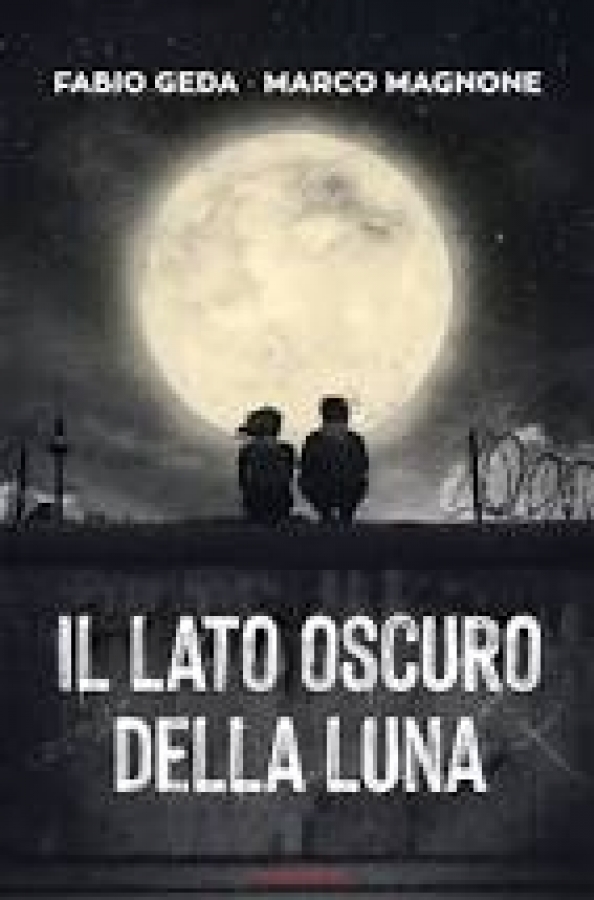
The Dark Side of the Moon
> Come to this wall if you hate your place/and face a taste of cosmic space/where no form of life can exist/and objects do nothing but fall (Joseph Brodsky, *The Berlin Wall Song*, 1983, from the special insert of *Internazionale*, 2019). This poem apt encapsulates the narrative under review, set in Berlin in 1975. It is no coincidence that the opening image is that of a bird falling, as if out of nowhere, at the feet of one of the protagonists, sixteen-year-old Sven. The boy has just fallen in love with a peer: green-haired Cloe. > I wish I could remember what we talked about. I really do. And yet, nothing. What I remember is that Cloe’s right shoe and my left shoe brushed against each other (...); I remember her skin, on her wrist, almost translucent, and her tense arms and her head hunched into her shoulders. Her hair. (...) Every now and then Cloe would turn and give me a strange look . It would seem like a typical adolescent story, and for a long time the narrative unfolds slowly and prosaically around the two teenagers, who alternate as narrators with a somewhat repetitive cadence. We gather from subtle clues that Sven and Cloe’s circumstances are profoundly different. Sven lives in a “normal” family: his parents, small shopkeepers, would still like to control the boy, but are too consumed by arguing and separating. Cloe was abandoned by her mother, has an eccentric, fragile father who drifts through precarious jobs, and must care for her grandmother, who suffers from Alzheimer’s. She survives an attempted rape, is at times seized by suicidal urges, and procures a gun to avenge the assault given her father’s pusillanimous inertia; inwardly, she scoffs at the romantic Sven for wanting to help her. > Trust by the bucketload. In what he does. In who he is. In what awaits him. Probably, he even trusts me. (...) Stomach-turning stuff . But this is Berlin, where a Wall divides the city, and to those who, like Cloe and Sven, live in the West, the East seems a mysterious place, albeit so remarkably similar: > streets and buildings, and more streets and other buildings, just like here. Perhaps, looking closer, it would have been different, but I had never been to East Berlin. There had never been any reason . Kurt, Sven’s best friend, wants to liberate Frida, his childhood sweetheart who lives in East Berlin. The plan fails because Kurt and Frida are taken prisoner by a criminal gang; upon learning this, Sven resolves to go rescue them, and Cloe decides to help him. Why? Does she love him after all? Nothing of the sort. > Berlin is at our feet, burning in the sunset, (...) it is a promise. And the East burns too, where I have never been, yet even just seeing it from here, (...) it is a promise. (...) A promise of adventures like the ones when I was little, but more exciting. And wilder. (...) My hand gripping a gun. Nothing is real. That is why I want to enjoy everything, and I want to suck every moment down to the marrow . In an adventure that tastes of a thriller and lacks a happy ending, Cloe is irrevocably lost, but Sven fails to grasp this and searches for her in vain. One is led to wonder whether this is merely an adolescent story, or rather a tale that speaks of ourselves, of that “no man’s land,” of that > painful time that for me and you and all of us painfully wears away (Arrigo Bertolucci "time wears away" from *Viaggio d'inverno*). And if the poet finds his son again in the crowd at midday Mass, such is not the case for Sven: with a restless, naive gaze he searches for Cloe through a tumultuous and indifferent Berlin, believing that love alone can save her, can redeem us. Bleak is our fate! It is a fine novel: the writing is clear and precise, the protagonists intense, and the plot well-crafted, gripping us from a certain point onward and building suspense. At times one gets the impression of something contrived, deliberately engineered, but this feeling is overcome by the landscape of Berlin—deeply loved by the two authors—and by its steering clear of the expected conclusion, the happy ending. Why read it? Highly compelling; the figure of Cloe is fascinating!

Leo the African
Set between the fifteenth and sixteenth centuries, the novel recounts the life of Hassan al-Wazzan, known as Leo Africanus. Forced to leave Granada following the Castilian conquest, the protagonist leads an adventurous life: first in Fez in North Africa, then in Cairo, and subsequently in Rome; he also undertakes numerous journeys, encountering widely disparate figures and milieus. As with all the author’s novels, the unfolding narrative and the depiction of Mediterranean civilizations serve as an occasion to address the themes of religious and cultural diversity, and to envision a society where coexistence and exchange among different peoples and traditions are possible. What also emerges is a portrait of Muslim society that is markedly more tolerant and open than that typical of Christian nations. A prevailing sense of nostalgia pervades the work for a historical and social context—such as that of Mediterranean societies prior to the sixteenth century—that was destroyed by the fanaticism of the Christian kingdoms, particularly the nascent power of Spain, as well as by the drive for dominance of the Turkish Empire, which was likewise in an emergent phase. From a narrative standpoint, the novel is compelling in its first part (life in Granada and Fez), only to lose its way in an acceleration of events that precipitates a decline in pacing and style. In particular, the fourth part, set in Rome and Italy more broadly, feels rushed: the protagonist's conduct is insufficiently explored, coming across as peculiar and superficial; his embrace of Roman life and of Catholicism itself ought to have been far more thoroughly examined and analyzed.

Letters of a Novice
The book is structured in epistolary form, a collection of letters exchanged among the various protagonists. The central figure is a young girl, Rita, who, on the verge of taking the veil, writes a letter to a priest confessing her lack of vocation. At first, her arguments appear rational and straightforward; gradually, the account given by the girl—and by the other protagonists—turns ambiguous, increasingly laying bare the complexity of the human soul. Rita is a young woman who genuinely wishes to aspire to goodness and clarity, yet is actually ruled by a languid passion, by far more material fantasies and longings. There is in her a sense of grievance against a fate that forced her to live in a convent from early childhood, contrary to her own sensuality and her yearning for life. The contradiction between appearance (the good, devout maiden) and her true being (the desire to seize the pleasures of life, beginning with love) drives her to cunning and deceit: her true personality emerges, however, over the course of the letters, when, confronted with the facts, she is forced into a gradual unveiling. The other protagonist is the mother. Hers is a clearer personality compared to her daughter's. She is evidently a frustrated, fragile woman who wishes to lean on her daughter, drawing her into her own romantic tribulations. When she realizes that her daughter rejects this role—and indeed deceives her—a deep hatred erupts, rooted in the nuisance of having had to look after a child and then an adolescent: hence also the decision to urge her to become a nun. Alongside the story of these two women are the priests and nuns: the ecclesiastical world acts with hypocrisy, seeking to conceal the scandal that gradually comes to light (Rita has killed a man, and the mother superior is aware of it) and, in some instances, allowing itself to be drawn by the girl into an intimacy that seems to suggest a romantic liaison (as in the case of Don Paolo). As the author states in his preface, > the characters in my book possess this inner diplomacy, but turned to an evil end and to the sole benefit of their indolence and selfishness , but, > the fanatical morality of inner clarity is of no use to art, since it combats and destroys the world of feelings, rendering them fictitious, framed as they are within rules foreign to the complexity of the human soul . The plot is very simple. From childhood, Rita is sent to boarding school. Leaving the country house is traumatic, as it separates her from her grandparents and from nature—the Venetian landscape she deeply loves. The girl experiences all this as an act of cruelty to which she must resign herself. On holiday at her mother's home, Rita believes she has rekindled an affectionate relationship with her, only to realize that the latter merely seeks support for her own fragility and romantic sorrows. In the meantime, she meets a young man with whom she falls in love and wishes to run away. When the young man tells her that he has no intention of fleeing with her, Rita, seized by rage, kills him. At this point, the mother, in agreement with the mother superior, decides to make her a nun in order to conceal the crime and the scandal. Yet Rita's refusal to accept this fate, relying on a series of letters—some anonymous—riddled with lies and half-truths, ultimately brings the crime to light. Now abandoned by all, deemed deranged, the poor girl ends up in prison, where she dies of pneumonia. The world's uncharitable judgment is encapsulated by the priest who delivers the news of her passing: > today I have reflected at length and ascertained that Rita was not good, though liked by all. And for this reason we say with special sorrow: May God have mercy on her! . The book may well be called perfect. The epistolary device, the gentle, lucid prose, the gradual thinning of the descriptions of Venetian landscapes—ever moments of serenity and sweetness—and the ability to bring forth little by little the complexity of the characters are all elements that make the reading enjoyable and richly suggestive.

The Free Women of Magliano
Just like *Per le Antiche Scale*, the book is set in an asylum, and the protagonist, who is also the first-person narrator, is a psychiatrist. There is no plot; rather, it is a fragmented narrative composed of descriptions of individual figures—mostly women—within the institution: patients, nurses, nuns, and peasant women from the countryside surrounding the asylum. Some of them, such as Lella, play more than a fleeting role in the tale, yet generally they are all subsumed by madness, as though it were difficult to discern sanity from insanity. > With the mad who communicate their laws I easily settle in, we walk along the same track, and if a sudden onlooker were to judge on the spot which of the two is the sick one, he would find himself uncertain; and this exercise of mine, which on some days I repeat frequently, exhausts me and I return to my corridor in the mist of a vague anguish, almost a convalescent, as if those minutes I spent transferring into the mind of the madman, forsaking my own, were like going into hell, living in the circles, having crossed the cold waters of Hades, and returning to life with my soul still frozen by death . It is, therefore, a series of episodes which, despite their specificity and apparent disarray (almost diary-like), allow several narrative threads to be identified: the tenderness and wonder that emerge from the portraits. It is not the physician writing, nor is there any search for an ideological imprint; the individual characters are described with affection, at times with irony, but always with the acute awareness that there is no escape from madness. The theme of eroticism emerges, clearly revealing how loneliness often lies at the root of the path leading to madness; yet madness is also an inevitable fate, binding together both the poor and the rich. Emblematic is the figure of Lella, who seemed to have emerged from her illness, yet it takes merely another woman showing an interest in the object of her desire (a purely dreamed-of affection) to plunge her back into a depressive crisis and thus into madness once more. The balance is ever precarious. > The woman has a very beautiful face and, strangely, though she implores so, she seems on the verge of laughing, and at moments laughs as if in a blissful intoxication, as though touched in that instant by an amorous joy . Yet madness conceals itself. > Perhaps it was that woman, an ultra-flourishing blonde woman, exuberant and domineering; for several days she had been polite, sweetly accommodating in assisting with every service on the ward; indeed, like a sinless nun, she tended with all piety to another most petulant patient. And this morning I read a letter of hers addressed to her husband where the words declared her spirit lusting for violence and murder ; the serenity of the Tuscan landscape, almost in contrast to the violence and disorder of the asylum. > The plain of Lucca sparkles with harvests from the burst of spring until autumn; it rests in a deep ellipse surrounded by mountains silhouetted clearly against the sky. The Lucchese plain in summer is a shifting-swaying of laughing green, a witty conversation with every fruit and bud, and one’s sight varies and dances and is lost and is refreshed, and by no means do the mountains that distantly encircle it hinder that gladness ; the existential pain of the protagonist, whose anguish stems simultaneously from within himself and from the life of the asylum: the bond between his own existence and the fates of the mad seems the sole reason for overcoming an anguish that would otherwise prove unbearable. > My life is here, in the asylum of Lucca. Here my feelings unfold. Here I reveal myself honestly. Here I watch dawns and sunsets, and time passes beneath my watchful gaze. Inside a room of the asylum I study men and love them. Here I wait: glory and death. From here I depart for holidays. Here, until now, I have returned. And my desire is to make of every grain of this land a calm, orderly, universal speech . Yet there is hope, the love between creatures: all this allows the writer to say that there is, perhaps, a way out of madness and existential anguish. > And of little Lella I hope to say no more, for ample, if heaven has aided me, are the words I have spoken . The book, magnificent, is distinguished by an elegant style—imbued with a classical education—that admirably manages to evoke a dreamlike atmosphere, as though what is narrated were not real but rather the fruit of the author’s imagination and desire. The phrasing, the choice of adjectives, and the diction, often bearing a distinctly Tuscan stamp, make the reading pleasurable while highlighting the dramatic weight of the subject matter.
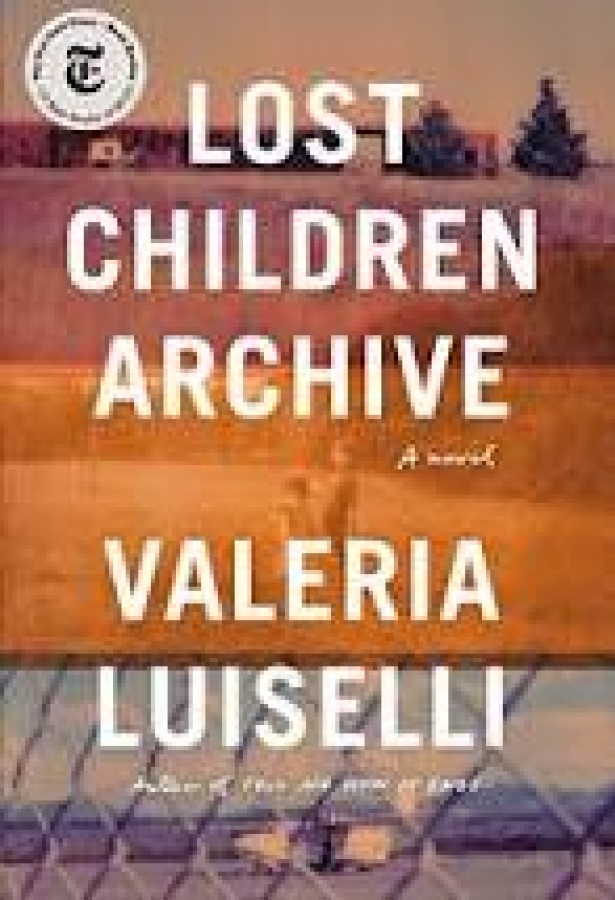
Lost Children Archive
There are books that overwhelm the poor reader with their narrative and stylistic complexity; one feels inadequate and wanders through the pages, fascinated and frightened, without finding the unraveling thread. And then one discovers, or believes one discovers, the path charted by the talented Valeria Luiselli, a Mexican writer writing in English. How can we ensure that the voices of the world do not become mere echoes of background noise? > Memory / day by day disappears / the heart grows ever deafer / to distant, wretched plights (Carlo Vallini, *«Da un giorno»*). The author seems to find the answer in children: in the stories of those who are lost and in the journeys of those who courageously retrace the experience of disappearance. If in Torquato Tasso’s *Gerusalemme Liberata* it is knights who set out in search of the holy sepulchre, of truth and light (see review on this site), here it is children, like the “Eagle Warriors” (Native American child warriors), who venture into a tunnel, fearful yet determined. > Children used to play in this tunnel, they held their breath as the train rushed toward darkness, they allowed themselves to breathe again only once the train car had crossed the entrance vault, returning into the light, and the valley opened wide again, like a terrifying and blinding flower, before their eyes . In the first part, a journalist is the first-person narrator: mother of a four-year-old girl, she is married to a researcher specialized in collecting and archiving the sounds of the city; he is, in turn, the father of a 10-year-old boy. It is a marriage in crisis: love has cooled, and above all the differing interests of the two partners have emerged—the man a dreamer, ever distant in his thoughts; she, instead, practical, attentive to the care of the children and to what is unfolding in society. The husband decides to embark on a journey toward the American South in search of traces of the Apaches; the choice is grudgingly accepted by the journalist, who ultimately agrees to it because she wishes to gather information and testimonies about the “lost children”: having entered undocumented and locked in detention centers awaiting repatriation, all trace of these children is lost. Confined to the cabin of a car, the four travel together the many miles between New York and the South, > looking out the windows at a landscape wounded by decades or perhaps centuries of systematic agricultural aggression: land dissected into quadrangular grids, gang-raped by heavy machinery, fattened with modified seeds and drenched in pesticides, (...) land caged within circles of green crop strips, resembling Dante's Inferno; (...) and land turned into non-land, under the weight of concrete, solar panels, storage tanks, enormous wind turbines... At first, the children are helpless spectators to the crumbling of the marriage and everything happening around them; then, slowly, > our rational, linear, and organized world dissolves in the chaos of our children's words, (...) their thoughts are filling our world... (...) I understand now, perhaps too late, that my children's repetitive games in the back seats were perhaps the only way to really narrate the story of the lost children . The turning point comes from the sight of the young migrants boarding, all in a mournful line, the plane that will take them back to their country of origin. The older boy, imbued with his mother’s civic passion and captivated by his father’s evocation of Echo Canyon, where the voices of the last Apaches dispersed, decided to go in search of the lost children. He sets off, backpack in hand, together with his little sister. At this point, the narrative structure and the writing change. The boy becomes the narrator of this adventure while the story of seven children in search of their families unfolds in the third person: these are the “Lost Children Elegies”: a series of fragments that elevate one of the tragedies of our time into song, recalling David Grossman’s poem in their intensity and evocative power (*Falling Out of Time: A Novel in Voices*, reviewed on this site). If in the first part the style is linear, almost essayistic, it becomes increasingly lyrical, relying on words rather than syntax, lending force to a rhythm so pressing and relentless as to leave the reader’s conscience defenseless. The two stories converge in the desert, in a makeshift shelter, and the children, now together, can tell each other their adventures: the “lost” children can leave a testimony of themselves. By a stroke of fortune, the two runaways manage to find Echo Canyon, and by shouting their names they are heard by their parents. Our children are saved, while the young migrants disappear into the desert, and only their little skeletons will speak of their fate, one day. The happy ending confirms how even the courage of children is futile. After photographing the seven young migrants, > I was looking at them, concentrating hard, when you suddenly came up with an intuition, which was true and smart but also terrifying. You said: look, everyone in this picture is disappearing . And then the echoes are merely incomprehensible words, merely noises, > so strange that I didn't know if they were in my mind or in the air, (...) and I wondered if we were listening to the sound of all the dead in the desert, of all the bones scattered there . “The world is broken,” the author synthesizes. > No one is capable of capturing what is happening and saying why. Perhaps it is just that we sense the absence of a future, because the present has become too oppressive, so the future has become unimaginable. And without a future, time is perceived only as an accumulation. An accumulation of months, days, natural disasters, television series, terrorist attacks, divorces, mass migrations, births, photographs, sunrises . All that is left for us is to > record the sound of the wind, (...) trying to capture their past presence, make it audible, despite their absence today, archiving whatever echo still reverberates of them. (...) Echoes of the echo: mem, mem, mem, mem, wa, wa, wa...cow, horse...bzzzzz, bee buzzing... “As the poet says,” and imagine the boundless number / of perturbed open permutations (like a limitless / lyricist, in an unstable / Scrabble-like kaleidoscope), which thus multiplies us” (Edoardo Sanguineti from “*Senza titolo Glosse 15* > ). It is impossible to express the kaleidoscopic beauty of Luiselli's writing: the richness of the vocabulary, the shimmering style, shifting from traditional prose to sentences unburdened by periods, the continuous and innovative experimentation, the intense engagement of language with the subject narrated, never approached in a bureaucratic or prosaically literary way. It is a masterpiece! We urge the reader to read and reread the Fifth Elegy, magnificent and powerfully evocative, as well as the telephone game of the lost children,” the desperate nostalgia: a page that takes our breath away, to be savored in apnea. Why read it? A masterpiece.