
Ebony
*The Shadow of the Sun* is a collection of notes from journeys across Africa spanning thirty years: from the independence of the continent to its more recent upheavals, such as the Rwandan genocide. The book encompasses both the nature of an essay and that of a memoir of lived experience, profoundly engaging for the author. A penniless reporter for an equally cash-strapped Warsaw daily, Kapuściński falls ill with tuberculosis and explains to the doctor that he cannot return home: “The dream of my life, working in Africa, would have vanished forever.” From this passion for travel and for Africa begins a journey across the continent: from Ghana on the west coast to the island of Zanzibar in the east, through Sub-Saharan and tropical Africa, all the way to the Horn of Africa and the Great Lakes. The reader skips along, and > everything blurs, overlaps, fades. (...) Often our memory is so saturated with names of localities, regions, and countries that we can no longer associate them with an image, a view, a landscape, an episode, or a face. (...) World unity, so difficult to achieve in practical reality, comes into being in our brains, in their layers of lost and confused memory . No differently from the superficial businessman who knows only the world's airports, fine restaurants, and luxury hotels, the inquisitive reporter risks his life to deliver the very same portrait: an Africa unchanged across time and space, and ever devoid of hope, because all corners of the vast continent are united “by the same misfortune, the same fate, and the same uncertainty.” To be sure, Kapuściński raises his voice loud and clear against “the international of predatory rabble,” just as he feels part of the “tormented life, the painful vegetating forever on the brink of death” of an oppressed and violated people, and for that reason perpetually in exile. Yet, after so many years on the road, the splendid concluding chapter, bearing the evocative and elusive title “In the Shade of a Tree, in Africa,” leaves us with a message of bitter resignation. Slavery, rapacious and cruel colonialism, the greed of ruling elites, desertification and environmental plunder, and the death and displacement of entire populations have destroyed the “shade of the tree” under which stories and traditions were once handed down: without this shade, the African > would lose every notion and even the memory of his yesterday, becoming people without a past, that is to say, nobody. Those men would lose everything that united them, scattering each on his own way, alone. Africa spans an area of 30.37 million square kilometers—large enough to contain the United States, China, India, Europe, and several other nations. It has 54 states and 1,500 languages. One cannot help but wonder why we persist in viewing Africa as a monolith, never attempting to grasp its diversity, and with it the changes and potential of this great continent. However well-meaning and observant, Kapuściński falls into the same Eurocentric and exoticizing trap that has long characterized relations between the West and Africa. From this, and not merely from the disjointed structure of the book (travel notes left as they were, without an overarching narrative), arises a sense of repetitiveness: each account seems identical to the last, personal encounters and singular stories rarely break through, while the critical assessments—agreeable though they may be—feel prepackaged. In *Orientalism* > Edward Said argued that the West sees the Orient as a mirror of itself: it seeks what it fantasizes the Orient to be (a cherished idea, sedimented across its history) without genuinely studying the peoples and cultures that make up the Orient of today; through this very same process, we view Africa: it is always *Heart of Darkness*", a land vibrant and fascinating, to be sure, but forever detached from modernity and consequently doomed to subjugation, to endure unspeakable suffering from which it cannot escape. Why read it? It is worth it for the final chapter.
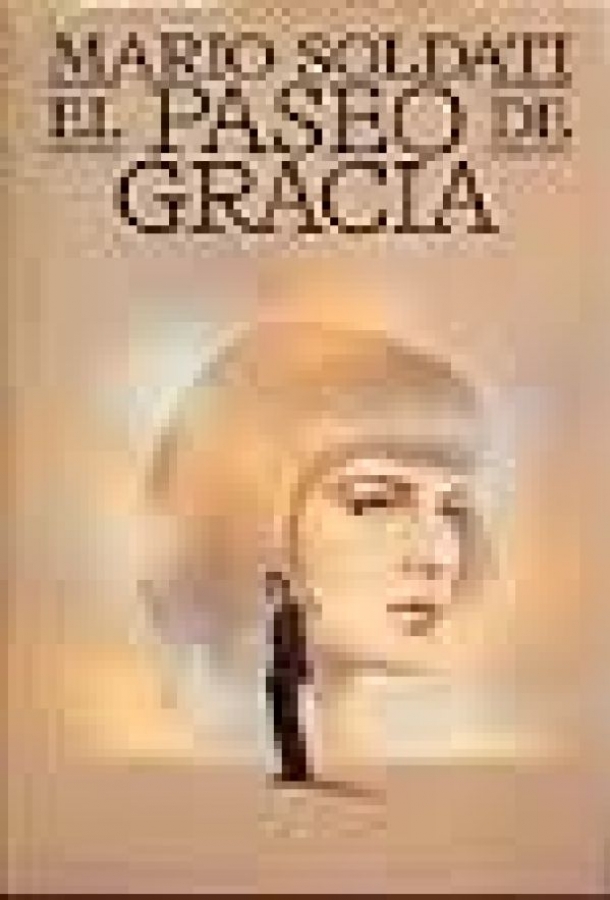
The Paseo de Gracia
Eugenio is a well-known Italian set and costume designer living in Los Angeles. A phone call from Italy takes him back to the origins of his career and to the figure of Olga. Many years earlier, when he was still in Italy, Eugenio had had an affair with a friend of his wife, namely Olga: > petite, pretty, dark-haired, with fringe and kiss curls à la Louise Brooks (...) she had an elusive, ambiguous gaze . Eugenio loved his wife, an intelligent, cultured, and refined woman, yet he was captivated by the repetitive cadence of the encounters with his mistress: a long period of indifference, a furtive, silent, violent, swift coupling, and then indifference once more, as if nothing had happened. What is the appeal of a betrayal so barren of eroticism and sentiment? > Eugenio felt superior to Olga, (...) to the point of taking pleasure only if he risked—oh, with impunity!—the charade of pretending to be inferior and worshipping her as though she were truly his superior (...) (yet) Eugenio always knew that Olga was a wretched slave . It was the pleasure of deceiving himself, even if only for five minutes (the duration of the coupling), that was the trigger of Eugenio’s desire; he who, in his selfishness, relished the thought that Olga deluded herself into believing she was the mistress, knowing all the while that it was merely a game. Naturally, this was not the case: the woman had no desire to be the futile occasion for the man’s outsized ego, for a "double lie" perpetually identical to itself. > Eugenio never noticed, and found it convenient not to notice, or even suspect, that she too might possess a soul, might even, in the long run, begin to care for him . Olga fled, vanishing without a trace, yet she lingered in Eugenio’s fantasy: the aspiration of a subject woman who becomes sovereign for a few minutes. The novel resumes "in the present." Eugenio has returned to Italy to shoot a film, but his stay in Europe is nothing other than a search for Olga. And when he must travel to Barcelona, where the woman is rumored to live, Eugenio repeatedly walks down El Paseo de Gracia in the hope of crossing paths with Olga, who, > strangely, miraculously, would appear to him identical to how she had been fifteen years before: with her sleek helmet of hair à la Louise Brooks, her silly yet sly little face, her pouty smile . And he would have said to her, > with the greatest possible composure: Of course it is all over. But... but perhaps, we could try once more... just once . The backdrop is the marvelous yet hollow world of cinema. The author also develops a series of intrigues, intended to impart at least some narrative pace to a plot composed essentially of sensations and reflections. A primary layer of meaning in the novel lies in the depiction of transgression, all the more captivating the further removed it is from ordinary life. As the author observes, > long periods of abstinence (...). Then, a sudden, subtle awakening of desire, but, for a few days, merely a distracted reminder, a seemingly harmless memento. Finally, all at once, a restlessness that gave him no peace (...) And everything repeated itself more or less as it had the time before . There exists, moreover, a deeper, existential and philosophical key to the text, aptly expressed by the passage on the obsession with tiles. Eugenio sees the same pattern continually repeated across the bathroom tiles, yet with endless subtle variations. Viewing the tiles from different vantage points, two recurring figures emerge: the Bravo, who could be recognized > always in profile, his coarse, heavy hooked nose immediately visible, his cruel mouth, the piercing eye of a stalking beast; and the Soubrette, a small and graceful little face (...) with her delicate little mouth smiling in turn . The Soubrette was the Bravo reversed: the dominator can become the dominated, the violent the docile, and so forth; in varying circumstances, we can all be both at the same time. Already in *Lo Smeraldo*, a visionary novel, Soldati explored the theme of the double by resorting to the device of the dream. Do other worlds exist within us? In the more traditional *A cena col commendatore*, he returns to the complexity of the human soul: the mask behind which we hide is not an artifice, but an intrinsic part of consciousness. In these two novels, the narrative is sustained by the prose; in the former, D’Annunzian and lavishly imaginative; in the latter, simple and reminiscent of the nineteenth century. In this book, by contrast, the style is fractured, laborious, verbose, poorly sustained by a slender and inconclusive plot. Why avoid it? It does not do justice to Soldati the writer. It marks a decline in quality.

Elias Portolu
Upon picking up this novel by Grazia Deledda, one's mind immediately turns to *Canne al Vento* (see the review on this site), hoping to rediscover the same magical atmosphere of the Sardinian author’s masterpiece. The environmental and social context is the same; here too, pain is treated as destiny, life as a journey toward death, yet that living, magical, and indecipherable nature—the hallmark of *Canne al Vento*—is missing. Instead, the Sardinian landscape serves as a counterpoint to a human drama irremediably doomed from the outset. This is how the author describes the *tanca*, the land set aside for pasture. > The lush pastures, as spring drew to a close, took on a luminous, golden green: thistles opened their golden and purple blossoms, brambles flaunted their wild roses. (...) In certain places, the watercourse flowed among groves of elder trees, where the sun barely penetrated, forming mysterious green pools surrounded and intersected by rocks, against which the water broke murmuring . Petrarch’s verses seem to echo here, yet we are not in Provence; we are in harsh, savage, ancestral Sardinia. It may well be that the verdant, luminous *tanca* is not real, but rather a delirium of Elias Portolu, a way to bring solace to a restless soul. Unlike his brothers and his father, "short, sturdy, bearded, with bronzed faces and long black hair," Elias "was tall and slender, with an extremely pale, delicate, clean-shaven face." He has returned from the prisons of the Kingdom, and this experience has transformed him profoundly, physically and spiritually: > the long imprisonment had made his hands and face pallid, (...) his laugh was tired and fractured, his voice faint; (...) he looked like a woman dressed as a man. Furthermore, his language had taken on something peculiar, half Italian and half dialect, with curses that were entirely continental . In prison he learned to read and write; he brought back church books with him, which he studies in secret. "Confused visions" sway through his sleep. In his dreams, it seemed to him that > strange sheep with human faces leaped over the wall that enclosed the *tanca*; and he pursued them, panting . When a man comes toward him. It is Uncle Martinu, a sort of giant whom everyone calls the father of the forest. To him, still in his dream, Elias confesses that he is weak, that he can take no more. And with his mighty voice the giant tells him, "if you don't want trouble, go become a priest!" And it is to Uncle Martinu once again that Elias turns, no longer in a dream, when he realizes he has fallen in love with his future sister-in-law, the beautiful Maddalena; he rejects the old man's counsel to openly declare his love, fearing he might offend his brother, shatter a marriage arranged long ago by the families, terrified of scandal, lacking courage. But > unfailingly, Maddalena appeared to him in dreams. And they were dreams that troubled and painfully aroused him. Above all, the scene of the dance with Maddalena returned incessantly in his dreams, > for his shoulders, his waist, his hand retained intact the physical impression of Maddalena’s body and hand: and his mind, recollecting her words, lost itself once again in a vertigo of pleasure and anguish . His pusillanimity will be his undoing, and it will be up to Death to decide for him. Before the lifeless little body of the child had with Maddalena, he will feel "a tenuous veil of peace and almost joy descend," alone and free from all human passion. If we look beyond the Sardinian context, the figure of Elias is emblematic of those unable to break out of society’s constraints, of unwritten rules of which he is, in fact, a prisoner. How difficult it is to voice one's feelings and be authentic! Reaching perhaps beyond Grazia Deledda’s own intentions, there appear to be three worlds in the novel: the simple world of the common folk who accept death and suffering with resignation, and who would be ready to acknowledge the love between Elias and Maddalena; the hypocritical and superstitious world of religion, which represses feelings while tolerating petty carnal sins provided they remain buried beneath a blanket of silence; and the figure of the wild sage, who does not believe in God and urges courageous choices. It is an interpretation that would make the novel compelling, were it not engulfed by a melodramatic and penitential tone. Why not read it? Melodramatic and mawkish, a disappointment.
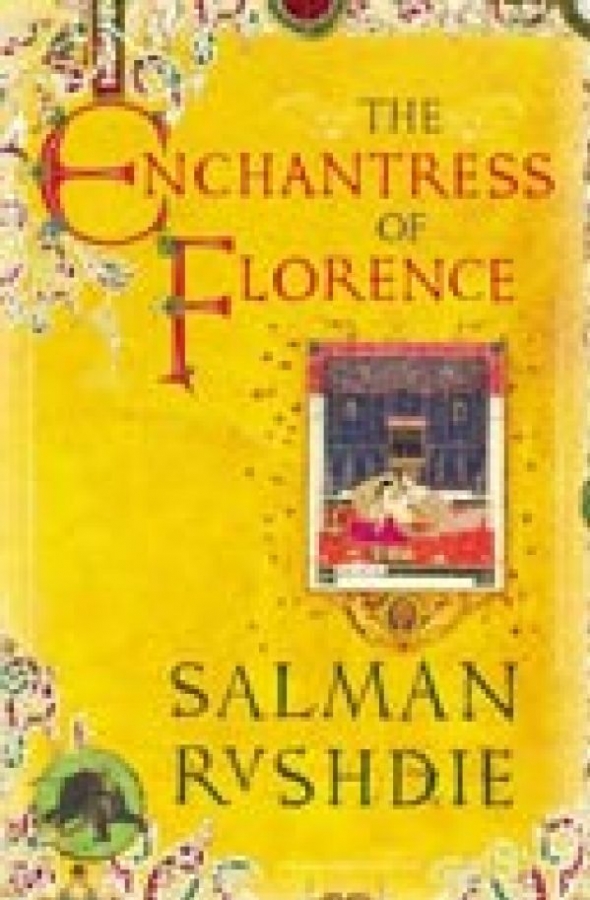
The Enchantress of Florence
We are in the East, in the magical empire of Akbar the Great. > If the war-torn world was a hard truth, then Sikri (the capital of the empire) was a splendid lie . It is a magical world where the mystery of the great sovereign "enchants all the earth, and the future, and all of eternity." Into this wondrous land arrives a traveler hailing from the West, who calls himself Mogor dellʼAmore. He enchants the sovereign and the entire court with tales of an incredible city, Florence: > for him knowledge was of no use, except to remind him of what should never be forgotten: that sorcery requires no potions, familiar spirits, or magic wands. Language made of silver words is enough for enchantment . Mogor dellʼAmore tells of three young Florentines: one of them leaves his native city in search of adventure and becomes a great general in the Ottoman army. In a war against the Persians, he meets a princess who becomes his bride. With this woman he returns to Florence to become the captain of its army. This princess is "the enchantress of Florence," who uses her magical powers to bewitch the entire city. Yet the boundary between sorcery and enchantment is exceedingly tenuous, and soon superstition is unleashed against the woman. What a contrast between the magical world of Sikri and the paltriness of Florence! The princess flees to the New World, but > her magic was no longer strong enough to help withstand temporal forces, just as it was not powerful enough to alter the geography of the earth. No middle passage was found, and she found herself trapped in the new world until she chose to die . Yet even the magical world of Sikri must vanish to yield to the force of reality. > I have returned home after all (said the princess to the great emperor), you allowed me to return, and so here I am, at the end of my journey. End until you are not, said the great regulator of the universe, my love, until you do not exist . Everything can exist within the imagination, even beyond time; nothing can survive in reality. With an imagistic and baroque style, the author narrates an incredible, entirely fictional tale that nonetheless, beneath the tone of a fairy tale, develops three arguments: a) the East is superior to the West, insofar as the East gives expression to the wealth of the imagination; b) fantasy is an enchanted realm that allows one to achieve perfection; c) the movement of history from East to West (from Sikri to Florence, and ultimately to the New World) corresponds to a slow, inexorable decline of civilization. The individual words and the phrasing captivate the reader, yet the events are too implausible and, at the same time, excessively real to enthrall and convince. The digressions—which appear to stem more from a brand of literary narcissism than from the requirements of the plot—encumber the novel, rendering it prolix. Why not read it? Certain pages are delightful, the premise of the book is intriguing, yet it is too fragmented and long-winded to make the overall reading experience genuinely compelling.
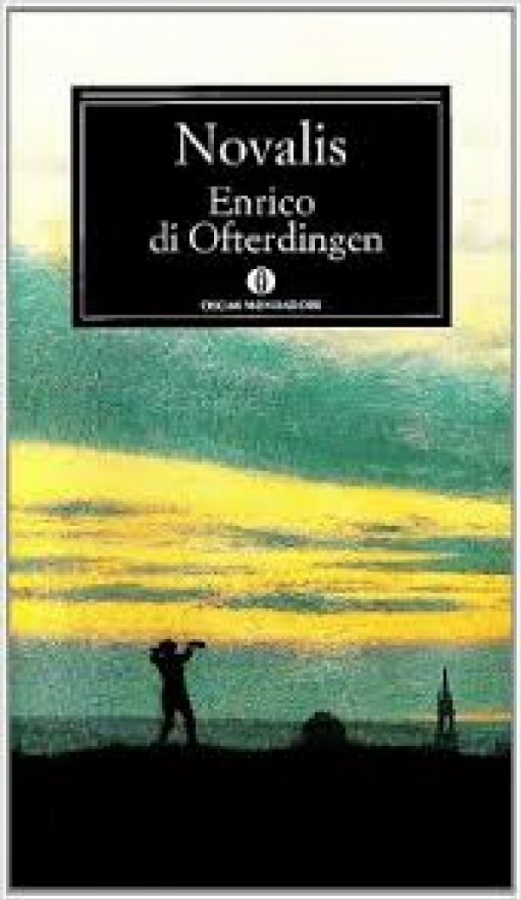
Heinrich von Ofterdingen
> When numbers and figures are no longer the key to every creature, when those who sing or kiss know more than the learned, when the world returns to free life, and returns into the world, when light and shadow unite once more in authentic clarity, and the eternal tales of the world are known in fables and poems, then before a single secret word, absurd existence will vanish . These verses express “in the sweetest way the spirit that animates” Novalis’s book: a spiritual journey, even before a physical one, leads a young man to understand how only poetry can synthesize the dichotomies that trouble the world (good and evil, light and shadow, peace and war, man and nature); at that point “freedom will break through,” yet with it an existence will come to an end—one that holds meaning only in the perpetual search for balance with itself and with the world. A contemporary of Goethe and Kant at the height of the Enlightenment, Novalis is a restless soul who remains unsatisfied by truths old and new alike. To express this longing for something else, the author imagines that in medieval Germany the young Heinrich embarks on a journey from his father’s house to that of his mother's parents—from a cold, industrious, and mundane Thuringia to a warm Swabia, full of allure and passion. In a propitiatory dream, Heinrich finds himself immersed in a magical nature, in which > new images, never seen before, (...) seemed like a dissolution of alluring maidens. (...) A sweet slumber overcame him, (...) What drew him, however, was a tall, luminescent blue flower, (...) this began to stir and transform; the leaves grew more radiant, (...) the flower leaned toward him, and its petals revealed a wide blue corolla in which hovered a tender face . What does the blue flower represent, unattainable yet all-encompassing? An expectation, which can only be defined through the various stages of the journey and its characters: the merchants who accompany him, taking him under their wing and telling him fantastic tales; the crusaders with their exaltation of war; the young Eastern slave girl and the injustices she suffered; the miner who reveals to him the complexity and grandeur of nature; and finally the hermit, whose wisdom demonstrates that inner peace can be achieved only in solitude. In each of these episodes and characters, an ambivalence of opposing sentiments and contrasting situations still lingers: the spirit has not yet reconstituted itself into unity. This occurs upon his arrival in Swabia, where Heinrich not only encounters love—the young Mathilde—but, above all, listens to a long fairy tale. Rich in mythical and symbolic motifs, in oneiric and speculative digressions, the tale begins with the destruction of celestial harmony at the hands of the King’s scribe—a sordid personification of the intellect. The scribe has seized dominion over the world, ridding himself of Sophia (wisdom) and Eros (love). It will fall to Fable, the personification of poetry, to restore peace and order to the world, uniting Eros and Sophia, love and wisdom. > The handsome stranger will not tarry long. Warmth approaches, eternity begins. (...) The cold night will depart from these realms only when Fable claims her ancient right. (...) Founded is the realm of eternity; in love and peace the struggle ends, the long dream of sorrow is passed. Sophia is, for eternity, the priestess of hearts . The work is neither poetry nor prose, but stands at the threshold between the two literary genres; it is an early and unfinished work, as Novalis died in 1801 at only thirty years of age. It exerted a profound influence on German literature as a harbinger of Romanticism, through its intense and evocative style and its near-pantheistic conception of nature. Beyond these considerations, what endures of such a unique work? Precisely its core message: namely, the idea that without deep feeling, it is impossible to bring harmony to the World. For instance, what is missing today from the European Union—a complex yet successful institutional construct, given that it has secured peace for Europe? Precisely the lack of a vision, of grand aspirations—in short, of poetry. Solidarity and wisdom are not enough to tear down nationalistic barriers unless sustained by a powerful idealistic drive. Rich in poetic digressions, Novalis’s work often loses itself in heavily philosophical dialogues and narratives; all of this drains the overall narrative of its momentum, often reducing it to meditations on the world and life. So immense is the urge to say, and so pervasive the reliance on myth, symbols, and even the esoteric, that the lengthy fairy tale—the central pivot of the book—proves difficult to comprehend in all its narrative and expressive ramifications. Why read it? It is brief, fascinating, and offers abundant food for thought.
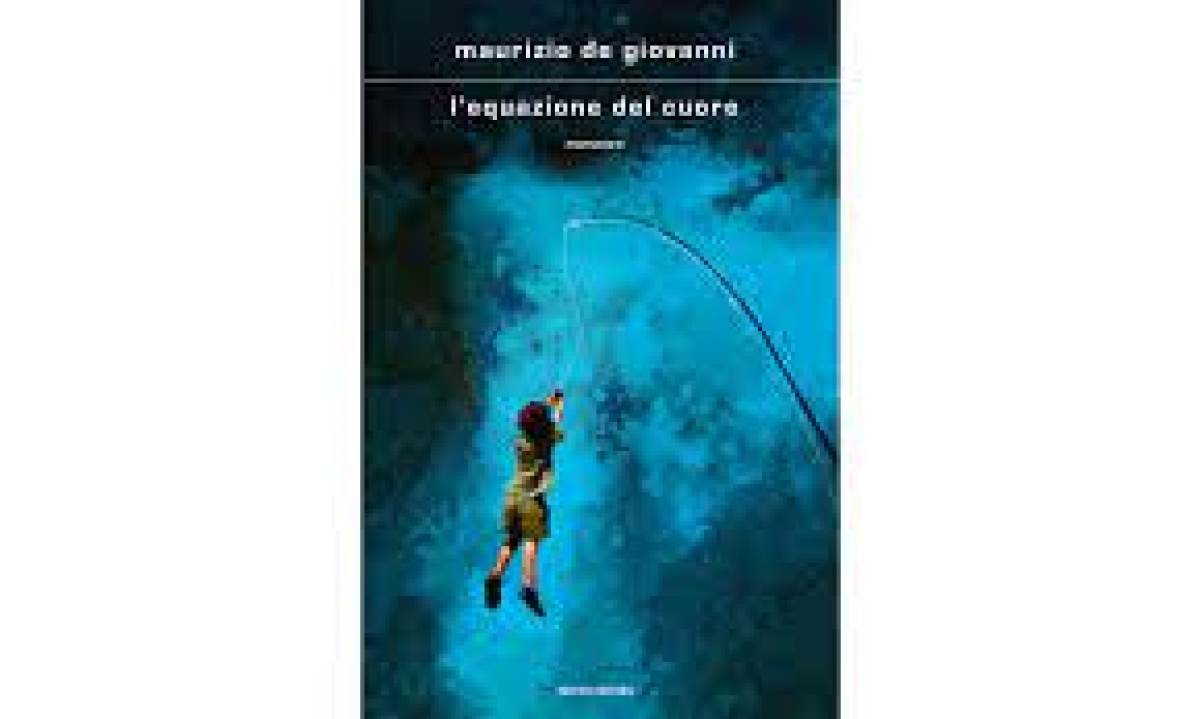
The Equation of the Heart
Massimo, an elderly retired mathematics professor, lives in solitude on an island in the Gulf of Naples: he lost his wife Maddalena a few years ago; his daughter Cristina married a wealthy northern entrepreneur and only returns in the summer for a brief stay, accompanied by her eight-year-old son, Checco. In dreams, Massimo imagines telling his wife about the fruit trees and > that sea bass and grey mullet could be caught from the rocks year-round, whereas striped seabream and gilthead bream only in spring. (...) Maddalena, whose voice was so low that it was strange it could even be heard amidst the blowing of the wind and the cries of the seagulls , would ask him about Cristina, and the old professor would reply that he had so much to do and, above all, could dedicate himself to mathematics, > follow the cyclical waves of the sea and calculate their variables with the wind and the moon ; and Maddalena, before fading away, would remind him that behind a daughter, even an adult one, "one must see a child that never ends." The state of bliss in which the old professor seems to live is abruptly shattered by a telephone call announcing the death of his daughter and son-in-law in a car accident, in which Checco was also involved and is now in hospital in critical condition. Massimo is forced to leave his earthly paradise and travel, reluctantly, to a cold and foggy northern town. For a while, the narrative seems intent on exploring industrious provincial Italy, with its undercurrent of intrigue, gossip, and tedious, fragile affluence; then it takes the path of Noir, albeit grafted onto a story that has little of the classic "mystery" about it. The book's true theme lies elsewhere: how to reconcile rationality and feeling? A rational approach would dictate ending Checco's life when faced with the prospect of the child remaining in a coma or emerging severely disabled. And so the professor would do (he could return at once to his earthly paradise!) were it not for the furious intrusion of Alba, the child's nanny. > Who the fuck are you, useless hermit, not even knowing how much he loves you...? (...) Massimo stood motionless where he was, in the exact same position. Suddenly he felt cold, an immense cold. (...) Yes, perhaps I didn't take something important into account, doctor . Alba's outcry, in its primal and boundless love, compels the old professor to react. He does so in his own way. He must understand why a seemingly flawless order—a constellation of affluence, social prestige, and strong family ties—shattered, leaving Checco on the brink of death. "Tomorrow I leave, if there is nothing for me to understand." It remains unclear whether the old professor wishes to investigate the causes and dynamics of the accident out of genuine empathy, or whether he does so merely to identify a rule that might "render the disorder intelligible," bringing peace to his mathematical mind. Dear professor, there is not always a relationship of cause and effect; at times it is impossible to find a method that lends equilibrium to human beings; often emotions burst in unbidden where reason would have it otherwise. In the final chapter, de Giovanni cites Paul Dirac's equation, erroneously dubbed the equation of love: it supposedly indicates that two particles that have interacted with each other for a certain time will continue to do so even after they have been separated. It is like saying that bonds of love are destroyed and do not evolve, insofar as two people who have loved each other are indissolubly linked. In reality, the physicist Dirac's equation states the opposite: it describes the motion of a free particle that interacts neither with external fields nor with other particles. It is disheartening that a writer like de Giovanni resorts so superficially to an urban legend used to sell tattoos to lovers; nor is it clear why he should do so, foregoing a deeper exploration of the story of an old hermit discovering his daughter's true personality and finally grasping his profound bond with his grandson. The novel is very well written; the narrative flows pleasantly and smoothly. The first fifty pages possess great intensity; thereafter, the plot unfolds laboriously, almost as if the writer had lost his direction. The shifting of the narrative voice, increasingly frequent over the course of the story, and the recourse to conversations with the comatose grandson are devices that demonstrate de Giovanni's storytelling skill, but they also expose the structural weakness of the narrative: it does not hold up if left to its natural evolution, neither as a Noir nor as psychological analysis. Why read it? It is enjoyable.

The Discreet Hero
Don Rigoberto is the director of a major insurance company, has just retired, and is about to embark on his long-awaited trip to Europe. He is a cultured man, a lover of literature: he chose a managerial career "out of cowardice," deciding to > not be a creator, only a consumer of art, a dilettante of culture. (...) How sad to be forced to deal with lawyers and judges, (...) instead of immersing oneself from morning to night in those volumes, those engravings, those drawings, and, listening to good music, daydreaming, traveling through time, experiencing extraordinary adventures, being moved, growing sorrowful, reveling, weeping, being exalted and thrilled . Felicito Yanaqué is the owner of an established transport company: a pragmatic man, a self-made, successful entrepreneur who rose through sheer determination and hard work, he too needs to dream; he has done so by taking a mistress, a young woman—a kept woman, admittedly, but one with whom he has nonetheless fallen in love, without many illusions. Two ordinary lives, until certainties are shattered and everything seems to descend into chaos. The insurance company's owner, an octogenarian widower, decides to marry his maid, young and beautiful; a scandal that Don Rigoberto is forced to confront alone because the "newlyweds" have embarked on an extended trip to Europe. Felicito receives threatening letters and extortion demands. The man, a true "discreet hero," refuses to submit, even though he is terrified and everyone advises him to give in and pay the protection money. He constantly remembers the words uttered by his father before dying: > never let anyone walk all over you, son. This advice is the only inheritance I can leave you . The two storylines develop in parallel, with a narrative pacing that aspires to be that of a thriller, yet falls short; the figure of Don Rigoberto serves as a pretext for lengthy digressions on art and the human condition, all of which weighs down the narrative and sidelines Felicito’s story, whose stubborn moral fortitude fails to emerge as forcefully as it should. The two plots conclude, intertwining, with a series of plot twists: surprises that should not be revealed so as not to spoil the reader's enjoyment of the tale; suffice it to say that this is not about organized crime, but about petty, sordid family affairs. As Don Rigoberto—behind whom the author hides—puts it, > in this country one cannot build even the tiniest space of civilization; barbarism eventually destroys everything . There are no redemptive spaces, which is to say > the idea that civilization (...) survived in minuscule citadels, built across time and space, which resisted the permanent assault of that instinctive, violent, obtuse, ugly, destructive, and bestial force that ruled the world . The contrasts between the two protagonists are the linchpin of the entire narrative: on one hand, Don Rigoberto retreats into aestheticism and individualism; on the other, Felicito, naive to the point of absurdity, fights for his dignity and takes charge of his own destiny. Whose side are we on? At one point, Don Rigoberto’s son notes that his father is always talking about Europe and asks him if there is anything he actually likes about Peru. The answer is disconcerting: > three things, Fonchito, he said, feigning the pomp of a great visionary, the paintings of Fernando de Szyaszlo, the poetry in French of César Moro. And the Majes river shrimp, naturally. How often have we heard the very same remarks from a representative of our ruling class—xenophilic, defeatist, and provincial? Could it be that hope lies precisely within the many "discreet heroes" rather than vain intellectuals? Beneath the surface and with subtle irony, Vargas Llosa’s book speaks to the inadequacy of a ruling elite. It is certainly not Vargas Llosa’s best novel. The prose, the portrayal of the characters and settings, the plotting all remind us of the great author; yet the narrative is lackluster and devoid of bite, as though the hand were tired, longing only to drift into senile fantasies. Why read it? It is enjoyable, but do not expect the great Vargas Llosa.