Finished reading on: September 12, 2017
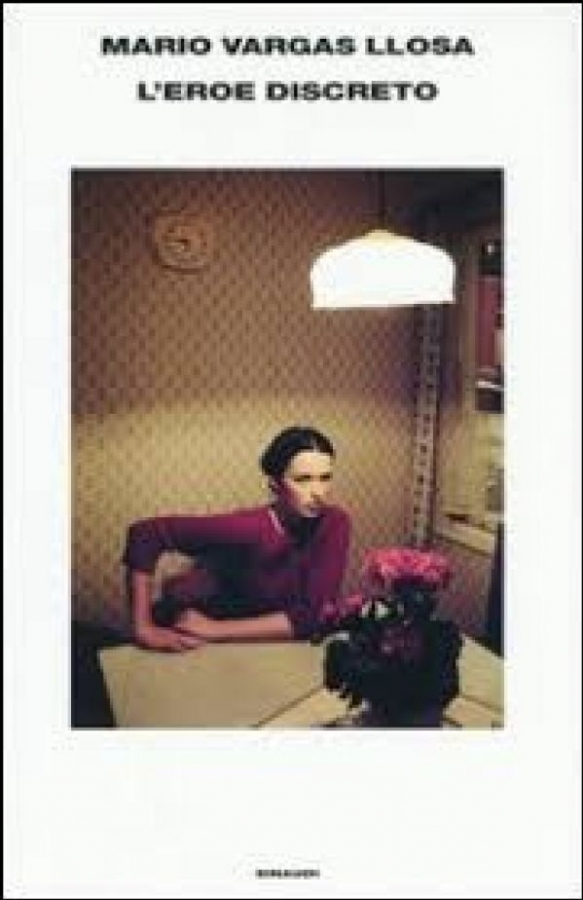
The Discreet Hero
Title of the original version reviewed: «L'eroe discreto»
AI Translation Notice: This review was translated from the original Italian using artificial intelligence. Book quotes and excerpts are translated interpretations and will not match the author's original English phrasing or official published translations.
Don Rigoberto is the director of a major insurance company, has just retired, and is about to embark on his long-awaited trip to Europe.
He is a cultured man, a lover of literature: he chose a managerial career "out of cowardice," deciding to
not be a creator, only a consumer of art, a dilettante of culture.
(...) How sad to be forced to deal with lawyers and judges, (...) instead of immersing oneself from morning to night in those volumes, those engravings, those drawings, and, listening to good music, daydreaming, traveling through time, experiencing extraordinary adventures, being moved, growing sorrowful, reveling, weeping, being exalted and thrilled
.
Felicito Yanaqué is the owner of an established transport company: a pragmatic man, a self-made, successful entrepreneur who rose through sheer determination and hard work, he too needs to dream; he has done so by taking a mistress, a young woman—a kept woman, admittedly, but one with whom he has nonetheless fallen in love, without many illusions.
Two ordinary lives, until certainties are shattered and everything seems to descend into chaos.
The insurance company's owner, an octogenarian widower, decides to marry his maid, young and beautiful; a scandal that Don Rigoberto is forced to confront alone because the "newlyweds" have embarked on an extended trip to Europe.
Felicito receives threatening letters and extortion demands.
The man, a true "discreet hero," refuses to submit, even though he is terrified and everyone advises him to give in and pay the protection money.
He constantly remembers the words uttered by his father before dying:
never let anyone walk all over you, son.
This advice is the only inheritance I can leave you
.
The two storylines develop in parallel, with a narrative pacing that aspires to be that of a thriller, yet falls short; the figure of Don Rigoberto serves as a pretext for lengthy digressions on art and the human condition, all of which weighs down the narrative and sidelines Felicito’s story, whose stubborn moral fortitude fails to emerge as forcefully as it should.
The two plots conclude, intertwining, with a series of plot twists: surprises that should not be revealed so as not to spoil the reader's enjoyment of the tale; suffice it to say that this is not about organized crime, but about petty, sordid family affairs.
As Don Rigoberto—behind whom the author hides—puts it,
in this country one cannot build even the tiniest space of civilization; barbarism eventually destroys everything
.
There are no redemptive spaces, which is to say
the idea that civilization (...) survived in minuscule citadels, built across time and space, which resisted the permanent assault of that instinctive, violent, obtuse, ugly, destructive, and bestial force that ruled the world
.
The contrasts between the two protagonists are the linchpin of the entire narrative: on one hand, Don Rigoberto retreats into aestheticism and individualism; on the other, Felicito, naive to the point of absurdity, fights for his dignity and takes charge of his own destiny.
Whose side are we on? At one point, Don Rigoberto’s son notes that his father is always talking about Europe and asks him if there is anything he actually likes about Peru.
The answer is disconcerting:
three things, Fonchito, he said, feigning the pomp of a great visionary, the paintings of Fernando de Szyaszlo, the poetry in French of César Moro.
And the Majes river shrimp, naturally.
How often have we heard the very same remarks from a representative of our ruling class—xenophilic, defeatist, and provincial? Could it be that hope lies precisely within the many "discreet heroes" rather than vain intellectuals? Beneath the surface and with subtle irony, Vargas Llosa’s book speaks to the inadequacy of a ruling elite.
It is certainly not Vargas Llosa’s best novel.
The prose, the portrayal of the characters and settings, the plotting all remind us of the great author; yet the narrative is lackluster and devoid of bite, as though the hand were tired, longing only to drift into senile fantasies.
Why read it? It is enjoyable, but do not expect the great Vargas Llosa.