Finished reading on: January 14, 2016
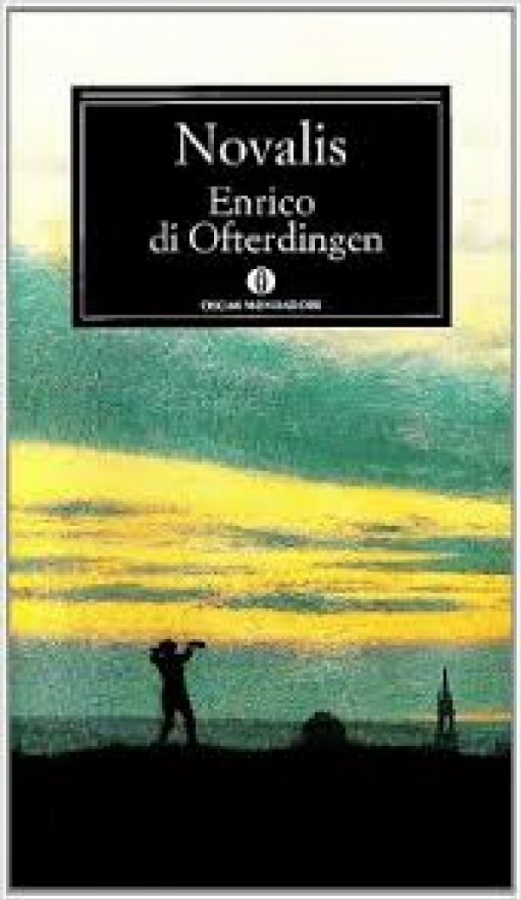
Heinrich von Ofterdingen
Title of the original version reviewed: «Enrico di Ofterdingen»
AI Translation Notice: This review was translated from the original Italian using artificial intelligence. Book quotes and excerpts are translated interpretations and will not match the author's original English phrasing or official published translations.
When numbers and figures are no longer the key to every creature, when those who sing or kiss know more than the learned, when the world returns to free life, and returns into the world, when light and shadow unite once more in authentic clarity, and the eternal tales of the world are known in fables and poems, then before a single secret word, absurd existence will vanish
.
These verses express “in the sweetest way the spirit that animates” Novalis’s book: a spiritual journey, even before a physical one, leads a young man to understand how only poetry can synthesize the dichotomies that trouble the world (good and evil, light and shadow, peace and war, man and nature); at that point “freedom will break through,” yet with it an existence will come to an end—one that holds meaning only in the perpetual search for balance with itself and with the world.
A contemporary of Goethe and Kant at the height of the Enlightenment, Novalis is a restless soul who remains unsatisfied by truths old and new alike.
To express this longing for something else, the author imagines that in medieval Germany the young Heinrich embarks on a journey from his father’s house to that of his mother's parents—from a cold, industrious, and mundane Thuringia to a warm Swabia, full of allure and passion.
In a propitiatory dream, Heinrich finds himself immersed in a magical nature, in which
new images, never seen before, (...) seemed like a dissolution of alluring maidens.
(...) A sweet slumber overcame him, (...) What drew him, however, was a tall, luminescent blue flower, (...) this began to stir and transform; the leaves grew more radiant, (...) the flower leaned toward him, and its petals revealed a wide blue corolla in which hovered a tender face
.
What does the blue flower represent, unattainable yet all-encompassing? An expectation, which can only be defined through the various stages of the journey and its characters: the merchants who accompany him, taking him under their wing and telling him fantastic tales; the crusaders with their exaltation of war; the young Eastern slave girl and the injustices she suffered; the miner who reveals to him the complexity and grandeur of nature; and finally the hermit, whose wisdom demonstrates that inner peace can be achieved only in solitude.
In each of these episodes and characters, an ambivalence of opposing sentiments and contrasting situations still lingers: the spirit has not yet reconstituted itself into unity.
This occurs upon his arrival in Swabia, where Heinrich not only encounters love—the young Mathilde—but, above all, listens to a long fairy tale.
Rich in mythical and symbolic motifs, in oneiric and speculative digressions, the tale begins with the destruction of celestial harmony at the hands of the King’s scribe—a sordid personification of the intellect.
The scribe has seized dominion over the world, ridding himself of Sophia (wisdom) and Eros (love).
It will fall to Fable, the personification of poetry, to restore peace and order to the world, uniting Eros and Sophia, love and wisdom.
The handsome stranger will not tarry long.
Warmth approaches, eternity begins.
(...) The cold night will depart from these realms only when Fable claims her ancient right.
(...) Founded is the realm of eternity; in love and peace the struggle ends, the long dream of sorrow is passed.
Sophia is, for eternity, the priestess of hearts
.
The work is neither poetry nor prose, but stands at the threshold between the two literary genres; it is an early and unfinished work, as Novalis died in 1801 at only thirty years of age.
It exerted a profound influence on German literature as a harbinger of Romanticism, through its intense and evocative style and its near-pantheistic conception of nature.
Beyond these considerations, what endures of such a unique work? Precisely its core message: namely, the idea that without deep feeling, it is impossible to bring harmony to the World.
For instance, what is missing today from the European Union—a complex yet successful institutional construct, given that it has secured peace for Europe? Precisely the lack of a vision, of grand aspirations—in short, of poetry.
Solidarity and wisdom are not enough to tear down nationalistic barriers unless sustained by a powerful idealistic drive.
Rich in poetic digressions, Novalis’s work often loses itself in heavily philosophical dialogues and narratives; all of this drains the overall narrative of its momentum, often reducing it to meditations on the world and life.
So immense is the urge to say, and so pervasive the reliance on myth, symbols, and even the esoteric, that the lengthy fairy tale—the central pivot of the book—proves difficult to comprehend in all its narrative and expressive ramifications.
Why read it? It is brief, fascinating, and offers abundant food for thought.