
The Adolescent
Arkady Dolgoruky, the first-person narrator, is the natural son of Versilov, > a cold and proud man, haughty and negligent toward me, who..., having fathered me and abandoned me among strangers, not only did not know me at all, but never even repented of it . Arkady suffers deeply from his father’s indifference, not least because the latter has taken his mother with him and reduced the young man to a state of acute social distress, as his status as an illegitimate son is known to all. > I was like an outcast... and I had decided to renounce them all and withdraw once and for all into my own life . What draws the young man, who has now completed his secondary studies, out of his isolation is a letter from Versilov inviting him to Petersburg. The first part of the novel recounts Arkady’s encounter with the complex and elusive figure of his father: a fraught relationship, also because > that man was nothing but my dream, the dream of my childhood years. Thus I had invented him myself, whereas in reality he proved to be different, fallen so far below my fantasy . Yet Versilov is not the sole center of Arkady’s life. The young man finds himself caught within a veritable “enigma,” woven of characters, relationships, and events, amid which he feels ill at ease with his rigid, solitary, and proud disposition. Much to his regret, he must acknowledge that people have multiple faces, that interpersonal relationships are often ambiguous, and that there is a “sacrosanct axiom” in Pushkin’s famous verse: “dearer to me than base truth / is the deception that transfigures us.” In the second part of the novel, Arkady appears to have accepted this reality. He leads a dissipated life, devoted to gambling, drinking, and women, while neglecting his mother and sister, whom he has only just met. This might be an ordinary phase in an adolescent’s life, were it not for the fact that Arkady carries a terrible secret: sewn into his coat is a document in which Katerina Nikolaevna, Versilov’s former lover, formulated a plan to have her father declared legally incompetent—a wealthy, elderly prince to whom, moreover, Arkady is deeply attached. The discovery of this document would prompt the prince to disinherit his daughter and would favor the aspirations of Arkady’s half-sister, who wishes to marry the old aristocrat. To complicate matters, Arkady is in love with Katerina and cannot bear to betray her. Furthermore, he is fond of his half-sister, fascinated by her intellect and strong character. Everyone suspects that the young man possesses the document, and so they cajole him with words and gestures that the naive Arkady misinterprets as genuine acts of friendship and even love. It is difficult to navigate this web of intrigue, especially when one lacks a clear perception of good and evil and when people are neither clearly wicked nor purely virtuous. What reigns is “the soul of a spider”—namely, that man > can cherish in his soul the loftiest ideal alongside the greatest baseness, and all in perfectly good faith . Yet Arkady too is seized by “ignominious thoughts”—for instance, using the document in his possession to win Katerina’s love. > Where, then, had all of this come from, already so prepared? And this, because I had the soul of a spider! It means that everything had sprouted long ago and lay in my corrupt heart, lay in my desire . And it is precisely Arkady’s weakness, his yielding to the pull of evil, that precipitates the crisis in the third part of the novel. The young man is himself duped by criminals who secretly steal the document from him and attempt to blackmail Katerina. To his horror, the youth later discovers that they are in league with Versilov.. Versilov’s split personality confronts the young man as a “broken image,” all the more so after an intense, long-awaited conversation in which Versilov had professed to his son his love for Arkady’s mother, only to subsequently send Katerina a formal marriage proposal. Who, then, is his father really? Perhaps merely a man driven by whim, by unchecked vanity, Arkady thinks. The disillusionment with the father figure is complete. Arkady is no longer an adolescent. *The Adolescent* is the author’s most contemporary novel. Several elements contribute to this: the modernity of the father-son relationship, the Pirandellian theme of duplicity, the detective-story elements of the plot, which is full of twists and turns and frequently leaves the reader in suspense as to what will follow. The book’s greatest merit lies precisely in its tight pacing, which leaves little room for philosophical disquisitions, as is so often the case in the author’s other novels. Beyond Dostoevsky’s well-known skill in constructing dialogue, what is striking is the author’s ability to mirror duplicity in the very structure of the sentence: for example, chapters unfailingly close with the image of a contradiction, of an ‘other,’ delineated in just a few sparse strokes. Why read it? It is one of Dostoevsky’s finest novels, insufficiently appreciated perhaps because it does not foreground philosophical and religious themes.
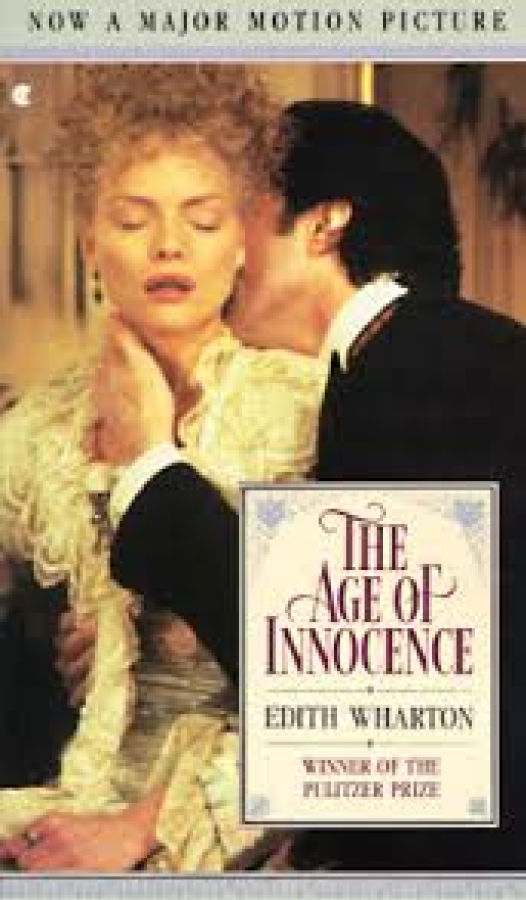
The Age of Innocence
The novel is set in New York at the end of the nineteenth century, when the old New York elite, with its oppressive social rituals, was overwhelmed by a new, upwardly mobile bourgeoisie—prejudiced and aggressive; it reacted by trying to ignore the changes, > until they crashed down upon them. What mattered was preserving the "traditional pleasantness" of social life. It is no coincidence that the tale opens with opening night at the Opera, meticulously described by the author: the arrangement of families in the boxes according to a rigid social hierarchy, the placement of individuals within them respecting family roles, the elegant gowns in the latest Parisian fashion, the hushed gossip that must cease when the solo is sung; an aristocratic atmosphere steeped in American Puritanism, and therefore superior to the frivolous European world. Amidst a crowd of minor characters, the three protagonists appear from the very beginning. Archer is a young lawyer with a passion for literature and a history of typical bourgeois transgressions (a mistress, perhaps a few young ladies), yet well aware that he must make a "good marriage." Reckless reading leads him to make nonconformist statements ( > women ought to be free—as free as we are ), but > he was a quiet young man endowed with strong self-control. Adherence to the discipline of a small society had become almost a second nature to him. Yet a restlessness stirred within him, leading him to feel as > though he were being buried alive under his future. Still at the Opera, in the family box in an unobtrusive position, as rigid etiquette dictates, sits the very young May, who > that very afternoon had allowed him to think there was on her part "an inclination" (the official New York phrase for a girl to declare an interest) ; a consummate representative of wholesome American society, who > would probably go through life facing each experience to the best of her ability, but never anticipating what was to happen by so much as a fleeting glance. Perhaps this heedlessness was what gave her eyes that innocence, and her face the semblance of a type rather than a person. Beside May is > a slim young woman, (...) with brown hair curling in thick locks around her temples, held by a narrow band of diamonds, (...) with a dark blue velvet skirt gathered beneath the bust by a belt with a broad, old-fashioned buckle. Her unusual carriage and attire catch Archer's attention: she is "poor Ellen Olenska," May's cousin, who has returned to America after separating from a Polish nobleman. Being taken in by the family is one thing, but displaying her in public, on opening night at the Opera, before all of New York's foremost families! From this opening scene, so voluptuously baroque, the story branches out: Archer is drawn to the mysterious and intoxicating Countess Olenska, who represents to him the promise of a different life, glimpsed through literature and now attainable through falling in love with the beautiful, melancholic Ellen. If we look beyond the haze of reverie, we discern that the figure of Ellen > had built up within him a kind of sanctuary where she reigned enthroned among his secret thoughts and desires. Little by little, this image became the scene of his real life, of his every rational activity. (...) Outside of this, on the stage of his actual life, he moved with a growing sense of unreality and inadequacy, blundering against family prejudices and traditional viewpoints, much like a madman colliding with the furniture of his own room. And yet, he imprisons himself in a bourgeois existence: he advances his marriage to May, counsels Ellen against seeking a divorce from her husband, leads an ordinary life beside an affectionate and understanding young wife, frequenting New York's customary social venues and fulfilling his duties to May's family. Slowly and silently, a muted curtain of protection forms around him: officially, no one knows of Archer's infatuation with Ellen—a burgeoning love marked by petty lies, abrupt business trips, and fleeting, supposedly clandestine meetings, as happens with all lovers. Then, all at once, May comes out into the open, having previously been eclipsed by the vitality of the splendid Countess Olenska; in a conversation made of insinuations, of truths half-spoken and withheld, May preempts Archer's irreparable confession by declaring that she is expecting a child and that, bold and cynical, she has used this still-uncertain pregnancy to induce Ellen to leave America. Innocent May has revealed herself to be an astute wife—not because she possesses any singular intelligence, but because she adhered to the well-worn patterns of the society to which she belongs. At a farewell reception for Countess Olenska (for appearances must always be kept!), Archer realizes that everyone knew about the affair and acted in solidarity to avert the scandal of a separation: in old New York, everything must proceed > without bloodshed: the way of people who dreaded scandal more than disease, who placed decency above courage. And on the other hand, Archer too shared these values, even if > he seemed to be witnessing the scene in a state of strange weightlessness, as if floating somewhere between the chandelier and the ceiling, nothing astonishing him so much as his own share (as a spectator) in what was happening. Written after the First World War, *The Age of Innocence* recounts the end of an era, narrating the loss of innocence of the American bourgeoisie. If in Alcott's books (see the reviews of *Little Women* and *Good Wives* on this site) the family is woman's natural destination, thus giving concrete form to her social role, in Wharton's novel marriage is a cage, a place of renunciation and duty. From this perspective, Countess Olenska is the longed-for figure, capable of living outside convention, like a butterfly flitting from flower to flower. This interpretation, emphasized by Martin Scorsese's 1993 film, does not encompass the tale's truest meaning. We must look from Archer's vantage point and from Wharton's conservative vision. In her introduction, Sarah Blackwood notes that two alternative endings to the book have been discovered. In both, the marriage is dissolved and Archer is able to go and live in Paris with the beautiful Countess Olenska. Why did the author decide that Archer should instead retreat into a flat bourgeois life, into the social and marital duties of old New York? The novel's primary theme is the weight of social rules, whose strength lies in their internalization within the conscience; they are a prison that charts our destiny, beyond our "secret thoughts and desires." And as occurred with Archer, nothing is left to us but to live in fantasy, to anchor ourselves to dreams and imagination, creating a parallel reality in our minds. Ever-renewed Don Quixotes of Cervantes or Quichottes of Rushdie (see the reviews on this site), we move about, lost and imprisoned in a world we would wish to be different, until, like Archer, we adapt, settled into a quiet life. How long can we keep doing so? Wealthy, influential, and surrounded by artists during her life in Paris, Wharton was also passionately devoted to being an "interior designer"; this accounts for the detailed descriptions of interiors and attire—veritable theatrical stagings, already cinematic, so rich in imagery, resonance, and symbols. It is a meticulous, seemingly realistic prose that radiates a dreamy, suspended, and evanescent charm. Whether Wharton ever knew Joyce or Proust I cannot say; yet behind the superficial nineteenth-century patina, we are clearly in the presence of an innovative narrative, an anti-novel. The lexicon is rich, with a distinctly American stamp, coupled with an articulate and refined syntactic structure; without question, fine English! Why read it? Archer is an interesting and modern figure, splendidly baroque.
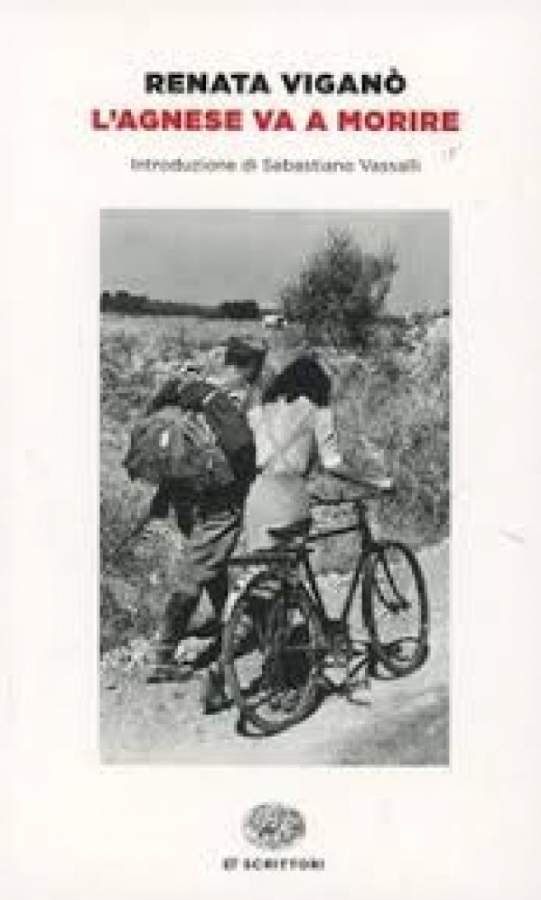
Agnese Goes to Her Death
The novel chronicles the Resistance in the Valli di Comacchio, between the mainland and the wetlands. Unlike the great works on the war of liberation (1943–1945), typically set in the mountains, *LʼAgnese va a morire* tells of the lowland partisan war, where > the Germans did not know that among those men and women, wandering through the snow, many, almost all of them, were partisans. Couriers dispatched with orders hidden in their shoes, leaders heading to meetings in peasant barns, commanders preparing actions where no one expected them. (...) A fire without flame or smoke: a markless fire. The Germans and the fascists walked right over it, noticing only when they were burned. The lowlands, and in particular the marshland environment, form the backdrop to Agnese’s story: a fat, old woman, who until then had been an industrious washerwoman and a rough peasant. > One September evening, Agnese, returning home from the washhouse with a heap of wet laundry on her wheelbarrow, met a soldier on the cart path. (...) His shoes were torn, and his toes could be seen, dirty, the color of mud . Without hesitation, Agnese gives him shelter and later shows him the escape route when the Germans arrive. With this seemingly obvious act, Agnese embarks on a human and political journey that takes her from > a mature, composed yet ruthless hatred towards the Germans, (...) towards the subservient fascists , to becoming > truly responsible for incomprehensible actions and unforeseen decisions . At first, she is asked to carry a parcel and she replies: “if I’m capable”; then she becomes the coordinator of the couriers while securing a safe hideout for the brigade command; finally, she is forced to make solitary, swift, and perilous choices involving the lives of many partisans. All this would remain an abstract tale were it not admirably embedded in the marshland setting and in the conditions of struggle and survival that defined it. Across the seasons, from spring to winter, living conditions grow increasingly harsh, mirrored by an escalating clash between partisans and Germans. > They moved by boat through the green canal, slimy as a slug. On either side the reeds stood tall, yet cast no shade: the sun pierced through the straight, bare stalks as if through an iron grating, burning on the water, on the floating weeds that resembled dead grass snakes. (...) It is a magnificent place, the Commander said, the reeds provide neither greenery nor shade, but they conceal. (...) Agnese knew that sound of the marsh at night: a dull hum, an isolated cry . The partisan detachment has taken refuge in an isolated hut in the wetlands, and here > toward evening they would sing, their voices low so that no one might hear them, and their song would seem little more than the rustling of the reeds... (...) The couriers brought bread, wine, orders, and circulars to the camp... . With winter and the mounting pressure from the Germans, > away, away from the house, away from the prison, prisoners still of that dark, roiled water, choked with weeds and mud, yet already bound for land, where one could breathe one's own air, clean air, not just the breath of the comrade beside you, and where one walked not across a few feet of flooring, but forward, along a road, an embankment, a field, forward toward the world of free men . Hemmed in between the Germans and the Allies, fleeing a hostile and intolerable environment, the partisans go to die, > if only to reach the shore, to be out of the water, to set foot upon ground that did not shake . Agnese dreams of her husband, who died during deportation to Germany: > It’s hard, isn’t it? I know you can’t take any more. But it isn’t time to let go yet, Agnese. (...) Agnese saw him open the door to the cold of the staircase, truly felt that wave of cold against her face. Then she realized it wasn’t Palita (her husband), and behind him was another, and another, and another. The last one quietly closed the door. After so many men as protagonists of the Resistance, here at last is a woman, and certainly not an intellectual! If only for doing justice to women’s contribution to the partisan struggle, the novel deserves a prominent place in the literature of the war of liberation. Yet one must not be confined by this single interpretive lens: the novel contains numerous characters, countless episodes of civilian and combatant life, and an intense narrative pace punctuated by dramatic twists, not least the final one. Criticism has regarded it as a neorealist novel; yet if one allows oneself to be captivated by the writing, particularly the descriptions of the marshland environment, it becomes evident that the narrative possesses a lyrical, even oneiric undertone. One might think of it as a dreamed epic, a modern *Iliad*, dense with myth and heroic figures: precisely what we need. The style is lean, marked by an adroit use of punctuation: the short, concise sentences do not fragment the narrative, but rather lend it communicative power, bolstered as they are by a richness of adjectives and the use of brief, succinct dialogue. Why read it? A masterpiece of substance and style!

Anna Karenina
The novel relates two parallel storylines originating in Kitty’s refusal to marry Levin, favoring the handsome and dashing officer Vronsky. From this act of vanity and levity, immediately undone by Vronsky falling in love with Anna Karenina, Levin’s trajectory begins: his love for the countryside, his rapprochement with Kitty culminating in marriage and the discovery of faith; while Anna’s sorrowful tale unfolds—her affair with Vronsky, the abandonment of her husband, their life together abroad, in the country, and in Moscow, down to her tragic suicide. We are faced with an «official» plot, which would perhaps seek to express Tolstoy’s own thought and message: only an adherence to religious values and Russia’s traditional customs can save man and the nation, whereas vanity and hypocrisy, typical traits of the aristocracy, can lead to nothing other than personal destruction and the moral and social unraveling of a people. The generous, profound Levin finds in the responsibilities of marriage, family, and estate management the answer to his social and existential inquiries. It is not new production techniques, economic theories, or philosophers that provide him this answer; rather, life itself has granted him revelation through the consciousness of good and evil. > I have not acquired knowledge, but it was given to me... because I, by my own strength alone, could not have attained it . The elegant and cultivated Anna, by contrast, having failed to honor ties with the traditional religious and social sentiments of Russia, is driven, in spite of herself, to despair: > how many things, (when I was a child) that seemed beautiful and unattainable to me in those days now seem wretched! And what I possessed then is now lost forever . Yet the contradiction between reason, which leads to death, and faith, which leads to life, persists up to the final moments of Anna’s life: > Yes, everything disturbs me, torments me. Reason is given to us to free ourselves from what torments us. Therefore, I must rid myself of it. Why not put out the light, if one no longer wishes to see anything, if looking at things arouses nothing but aversion?....suddenly the darkness that now enveloped everything for her was pierced and life appeared to her for an instant with all its bright past joys... Lord, forgive me everything! she uttered once more, feeling the impossibility of struggling. The muzhik, muttering something, worked on the foundations . As the novel unfolds, the character of Anna Karenina assumes an autonomous life, one that transcends the author's own aims and endows her with qualities starkly distinct from those demanded by the official plot. It is almost as though Tolstoy falls in love with his own creation, unable to confine her within the role originally conceived. At first, it is clear that Anna is a hollow and vain figure, fully conforming to the false standards of the Russian aristocracy; gradually, however, the complexity of this character deepens as she pursues absolute love and an authentic life, far beyond the hypocrisies of society. Anna is tormented by a profound sense of guilt over abandoning her husband and, above all, her son; yet she senses she is not guilty, for she wishes only to «live her life» in a sincere and genuine manner. From this perspective, she cannot simply be defined as a romantic figure, since the love affair is significant but ultimately serves as the catalyst for a deeper spiritual yearning: the resolve to live out her freedom without hypocrisy and false conventions. Anna Karenina is a tragic character who destroys herself and those around her, as though driven by a demon (the dream of the old muzhik) and by a destiny that surpasses her own will. Over the course of the novel, a kind of «reversal» takes place—a profound shift in perspective that leads to the elevation of Anna’s character, outwardly fragile and culpable, over the duller and flatter Levin and Karenin.
The Army of the Lost Rivers
The novel is set in Friuli in 1944 and deals with an event that actually occurred. In that year, the Germans relocated an army of Cossacks to Friuli, who had sided with Hitler under the illusion that they could defeat the Bolsheviks, their historic enemies. They were a people who had wandered across Europe with women and children in search of a land, spurred by the promise of a victorious return to their places of origin, amid the great rivers of European Russia. The narrative revolves around the figure of a woman, Marta. She arrived in the village with her fiancé and his sister, Anita. Yet she is soon left alone, as her fiancé is dispatched to the Russian border and never returns. Marta lives with a wealthy Jewish widow of Slavic descent, who had fled Russia following anti-Semitic persecutions and sought refuge in a remote village in Friuli. Life unfolds in an apparent serenity, which is shattered by a German raid that sweeps away the Jewish woman and, along with her, a group of Gypsies who were camping with their caravan near the village. Marta is left alone with Anita, who is expecting a child, and an old Gypsy who by chance had escaped. Marta is a strong woman who always looks to the future, confronting adversity with great courage. A young man arrives from the Russian front, Ivos, with whom she has a brief relationship, soon cut short by his decision to join the partisans. Alone in a large villa, Marta, Anita, and the old Gypsy live in a state of suspension, of waiting, striving to lead a normal life amidst an increasingly precarious and dramatic situation. At this point, the Cossacks arrive, overturning village life both materially (first looting, then installing themselves in the houses) and socially, introducing their own customs and forging ties with the locals. In truth, the Friulians seem to accept the arrival of the invaders, not least because they feel united with them by the longing for land and for a definitive resolution to centuries-old suffering. A family comes to live in Marta’s house (a woman, a youth, and a twelve-year-old boy), alongside the two commanders of the Cossack detachment: Gavrila and Urvan. With the latter, Marta embarks on a romantic relationship which, in her mind, might culminate in an escape to America to build a life together. In this section of the novel, the tone is light yet melancholy: the Cossacks are capable of both enjoying themselves and entertaining others, but they carry a profound longing for their native land, their customs, and their traditions. > In Urvan’s soul, deep, deep within, the ghosts of those archaic customs still wandered, like a faded, bleached memory whose roots lay in times worn away and undone for centuries. He had the sensation of having landed who knows where, and of being awaited behind the wall by dark, unpredictable events . Both the Cossacks and the local people delude themselves into believing they can continue living > inside the house, a place set apart from the world, like an unmoored ship gliding across a sea devoid of change and storms . At a certain point, the situation unravels. The embattled peace between Cossacks and partisans turns into open warfare. A sequence of bloody, gratuitously cruel episodes begins. In truth, there is no reason to fight, yet it is as if the fragile bond of coexistence between the two peoples had shattered. The Cossacks, who until then had respected the women and local customs, begin committing acts of violence and murder without even knowing why; it is as though the hope of a safe haven, of a homeland, had vanished. > But above all, it was the mental homeland that had vanished, that order of thought through which a man always felt, within them, to be in a familiar and reassuring place . At a certain point, the Cossacks decide to march again and return to their homeland. It will be a tragic exodus, as many will perish from hardship and disease, others in clashes with the partisans, while the last among them will commit collective suicide to avoid being repatriated to Russia, where certain death awaits them. Marta is left alone once more, yet the novel moves toward a natural conclusion, for the world must go on. Anita’s child is born, and Marta is reunited with Ivos and resolves to live with him: true happiness may remain elusive, but with courage, the struggle to survive will begin anew. The novel develops along two themes: one social and collective, the other more intimate and familial. The social theme, which renders this novel so timely, concerns the encounter between two peoples, framed, however, within the notion that we are forever shipwrecked: > humanity had reached a point where, increasingly, there would be entire populations without a homeland, nomads driven from their lands, crucified by painful circumstances offering no way out, propelled forward by armies and wars . Faced with this resurgence of barbarism, the author finds no socio-political solution, seeking it instead in the strength of intimate and familial bonds, and above all in womanhood. Marta embodies the mother-earth, the figure capable of fostering coexistence. > She was a simple, even elementary woman, who around her, as always, could see nothing but men, only men, all resembling one another, speaking different languages, harboring different thoughts, yet all battered by war and misfortune, all lost in the disorder and darkness of the world . The narrative pace is slow, at times excessively so, yet it is the writing that sustains the reading. One is captivated and enthralled by a calm, expansive prose that manages to draw a sort of mist, a veil over the cruelty of destiny: after all, that is what the characters themselves desire. As the author stated, > I like to view things from afar, to describe events as though they were already history or legend . Why read it? The story is compelling, the book is exquisitely written, and above all, it is a timely novel that speaks of the encounter between two peoples and the inexorable power of our shared belonging to the human race.
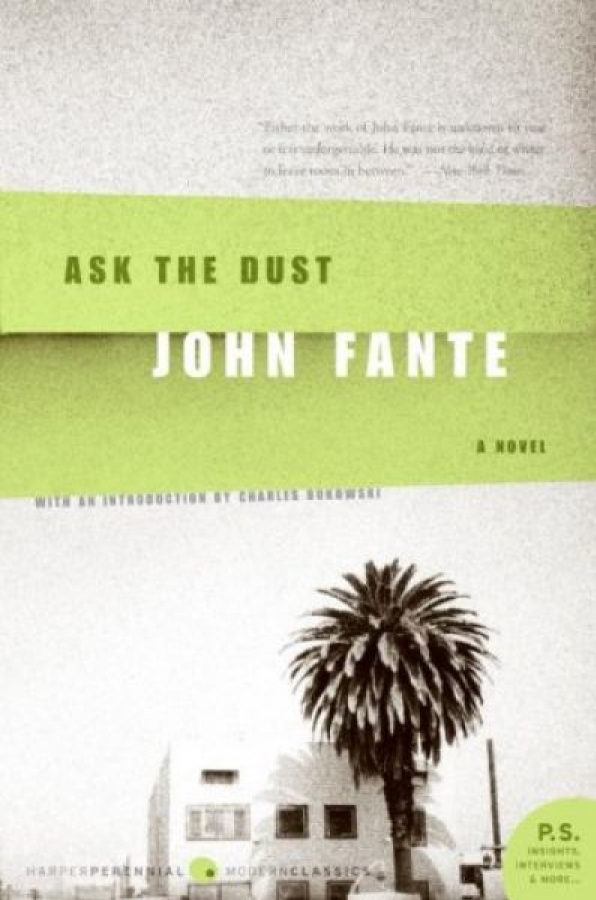
Ask the Dust
The third book of the Bandini saga represents a further transition, both in terms of narrative content and stylistic and expressive aspects. Arturo is in Los Angeles, where he scrapes by, trying to write and get his short stories published. At the outset, the novel retains the defining elements of its predecessor: a strong predominance of imagination, a narrative rhythm still grounded in subjective expression, and a style characterized by strong lyrical accents rich in evocative power. Arturo falls in love with Camilla, a Mexican girl who works in a bar, and embarks on a tormented love affair marked by verbal clashes, written notes from Arturo, and an outing to the seashore, during which the young man fails to translate his feelings into sexual consummation, despite the girl’s expectations. Arturo still lives in a sort of delirium, swinging between phases of exaltation and depressive states. However, an episode occurs (imagined or real?) that seems to mark the turning point in the novel’s narrative and stylistic structure: a woman seeks Arturo out to pursue a romantic affair with him. From this moment on, his relationship with Camilla is inverted: the girl turns to Arturo for help and confesses that she is in love with another man, who nevertheless does not want her. Arturo accepts the situation, not least because he has realized that Camilla is using drugs and he wishes to help her. A complex relationship unfolds, through which Arturo matures, coming of age as an adult. The young man wants to take her to a house by the sea, but Camilla flees and vanishes into the desert: > across the desert was an utter indifference, the rhythm of night and another day, and yet the secret intimacy of these hills, their mystery, secret and comforting, made death of no great importance. You could die, but the desert would hide the secret of your death, it would remain after you, to cover your memory with ageless wind and heat and cold…. I carried the book a hundred paces into the desert, toward the southeast. With all my strength I threw it far out there in the direction she had gone. Then I went to the car, started the engine, and drove back toward Los Angeles . Coming to grips with the reality of emotions, rather than merely the delirium of his own aspirations and fantasies, spurs Arturo’s transition from youth to adulthood. The style also evolves in this direction. It preserves its richness of language, with a sentence structure and a choice of words particularly attuned to phonetic qualities and the evocative power of rhythm. The style, however, becomes leaner, less lyrical and redundant; the narrative structure is distinguished by dialogues, previously virtually absent due to the lack of characters of significant weight.
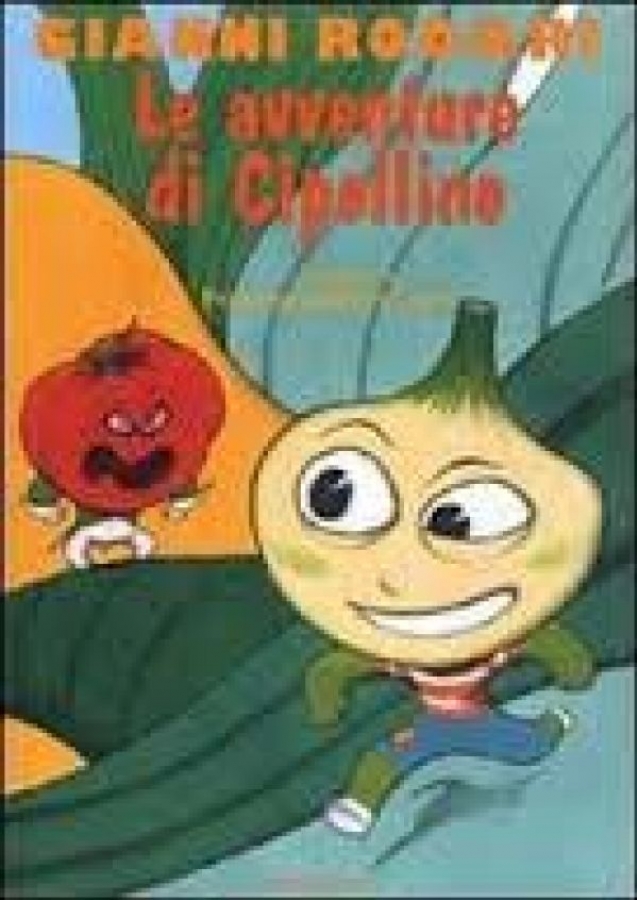
The Adventures of Cipollino
> Cipollino was the son of Cipollone and had seven brothers. (...) Decent folk, it must be said right away, though rather unlucky. What do you expect, when you are born an onion, tears come with the territory . Thus begins the book. In a few simple words, the author introduces the protagonist—Cipollino himself—the world of the novel, where the characters are fruit and vegetables, and the gentle irony that characterizes the entire tale. There are no humans, nor the typical figures of peasant life; with a stroke of genius, the author develops the narrative around the very foods we are constantly urged to eat in childhood and do so reluctantly. In this way, Rodari subverts the question: no moralizing for children; instead, the hated food becomes the protagonist of incredible, magnificent stories, offering an occasion to reflect upon freedom. What do Cipollino and these other extraordinary characters tell us? Freedom means fighting for an authentic life, free of superficial pretenses—a life in which what truly matters are friends, rather than social hierarchies, conventions, or deference to power. It is an invitation to be oneself, yet without affectation, leaving the child—and us adults—the pleasure of pure enjoyment. The story takes off from an act of abuse: Sor Zucchina has built himself a tiny house, where > the right hand is in the kitchen, the left hand is in the cellar, the legs are in the bedroom, and the head sticks out of the roof . Pomodoro wants to confiscate the little house, claiming it was built on the land of the Countess Cherries. Cipollino rebels, and from there the plot unfolds: the village folk (Mister Uvetta, Fagiolino, Pero Pera, and others) hide the little house with Sor Mirtillo, who "lived in a chestnut burr" and had posted a sign inviting the > gentlemen thieves, before entering kindly ring the bell . The narrative then introduces us to the Cherry Castle, where Ciliegino lives, a lonely and melancholic boy because, as Rodari writes, "oh, what an awful affliction it is to have no company." Cipollino and Ciliegino become friends—one among the lowliest of vegetables, the other among the most delectable of fruits. So much for social barriers! Together they fight to free their friends, who have since been thrown into prison, to save Sor Zucchina’s little house, and to defeat the story’s villains—yet without bitterness, almost with commiseration. The adventures are many, and they do not always turn out well. There are two minor characters who, more than others, highlight Rodari’s subtlety. Sor Pisello is the quintessential pettifogger, fearful and servile. Despite having been rescued by Cipollino, he betrays our friends to curry favor with the authorities: is he the archetypal Italian intellectual, ever ready to turn his coat depending on the whims of the powerful? Mister Carotino is a famous detective who, naturally, never uncovers a single thing. Whatever Mister Carotino says is repeated, yet amplified, by his faithful hound, Segugio; for instance: > We are in danger—Carotino noted, without batting an eye, reaching for his butterfly net—We are in great, great danger—echoed the dog . If we think of the police investigations in our own country, which often lead to nothing while generating an immense clamor, perhaps Rodari intended to demystify the police apparatus, as if to say: do not be afraid, they are all just like Carotino! In the end, the good triumph, but above all, the world is turned on its head. > Events rush headlong and we let them rush: days tumble one upon the other like sheets from a calendar, weeks pass seven by seven, and we have no time to see anything at all, just like when at the cinema the projector goes wild, and no sooner does it slow down enough for us to finally see what is happening than everything has changed. With Rodari, it is easy to fall into the trap of hunting for hidden meanings in his characters and stories; yet one is inexorably driven in this direction because the world he depicts is all too similar to our own, all too often mirroring the mechanisms of our society—absurdly oppressive and unjust. Could the world be anything other than a vast matryoshka doll, in which every social and ethical distortion is replicated across all tiers of nature? What pulls us back from this bitter conclusion, reminding us that we are before a splendid children’s tale, is the narrative style: elegant, witty, seemingly simple, light yet profound. Words are Rodari’s true magic, so much so that only by being read aloud does the story acquire its full charm and its true meaning: a flight of imagination, of fantasy where anything is possible, where even onions have a soul. Why read it? Thought-provoking, delightful, intoxicating.

Adventures Among the Redskins
The novel, published under the pseudonym Guido Landucci, is an adaptation of one of the earliest Western-genre tales, written in 1837: *Nick of the Woods: A Tale of Kentucky* by Robert Montgomery Bird. Perhaps for this reason, the novel exhibits several unique traits compared to Salgari’s typical approach. The author’s traditional formula is as follows: a hero, often defrauded of his wealth and social standing, is flanked by supporting characters whose role is to lighten the protagonist's profile, which is most often rigid and unyielding. At times, the author introduces disconcerting and ambiguous elements: as in *La Stella dell'Araucanìa*, where a nobleman turns cannibal through his contact with savages, corroborating the dark side inherent in each of us, even the civilized. In *Avventure fra le pellirosse*, the paradigm shifts: a secondary character reveals himself to be the protagonist, while the narrative—dense with dialogue, as usual—is interspersed with accounts of gruesome, bloody massacres perpetrated by redskins; an element in stark contrast with Salgari’s naive anti-colonialism, which routinely championed oppressed peoples. Let us turn to the plot. Two young people, Rodolfo and Mary, arrive in Texas in search of gold: they have been stripped of the inheritance of an exceedingly wealthy uncle, whose will was contested by the guardian of a young boy named as heir. From the outset, it is evident that the two youths have no grasp of the perils awaiting them: a vast, desolate prairie that turns into dense thickets near the Pecos River—a river that must be crossed if one hopes to reach the areas rumored to harbor gold. Joining the expedition are other characters worth noting: Telie, a young woman desperate to find her father who was abducted by Indians, and Morton the Bloodthirsty, accompanied by his inseparable little dog. He is a Quaker, regarded as “the most inoffensive man on the plain,” armed with an ancient, “almost” ruined rifle and a knife that “had probably never left its sheath to slay an Indian.” Roaming the plains alongside the savage redskins is Scibellok, believed by the Indians to be an infernal spirit: he kills them by crushing their skulls, leaving a cross carved into their chests as his signature mark. We find ourselves squarely in the territory of the classic English Gothic novel! Rodolfo is a valiant youth, yet utterly incapable of leading the small party; indeed, after various misadventures, the two girls, Mary and Telie, are kidnapped by the Indians. In an attempt to rescue them, Rodolfo is taken prisoner as well. At this juncture, we discover that Telie’s father has become an Indian chief and, worse still, is in the pay of the treacherous guardian: the latter intends to marry Mary and murder Rodolfo, since the genuine will names the two youths as the rightful heirs. Morton, too, is captured. > The Black Vulture is not accustomed to sparing his prisoners. I love slaughter, and I do not disdain drinking the blood of white men. (...) Morton (...) had been seized by a nervous trembling so violent that he could no longer stand on his feet. Whether it was the shock, fatigue, or something else, the trembling had turned into a convulsive seizure . The Black Vulture believes Morton to be a great sorcerer capable of leading him to Scibellok, the exterminator of the redskins. Do you want to know the ending? I will not spoil the surprise; suffice it to say that it all concludes with a happy ending. The novel is a miscellany, effectively blending Salgari’s style—typically rational and mechanistic—with Montgomery Bird’s redundant, brooding Gothicism. Morton is the protagonist, and in his figure pacifism and hatred, communal belonging and isolation, strength and fragility converge: conflicting sentiments that cannot coexist for long, foreshadowing a terrifying and harrowing end. There is also a peculiar sidekick: a little white dog—a novelty for Salgari—the faithful companion of a recluse and an extraordinary guide across the vast prairie. Furthermore, all the ingredients that make Salgari so beloved are present: the relentless succession of adventures, the surprises, the cliffhanger chapter endings heralding further action, the compulsive urge to read on. The Italian author does not linger; he charges straight ahead with his brisk, gripping narrative pace. Why read it? It is not entirely Salgari’s own creation, but it is masterfully adapted and an absolute pleasure to read.