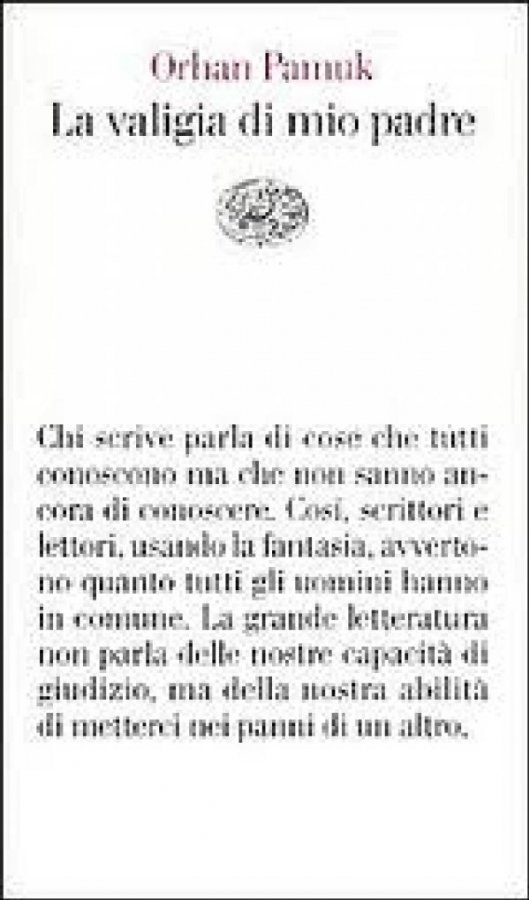
My Father's Suitcase
> The culprit is not just that book, the book that deceived my son, but all books pouring from the printing presses; they are all enemies of our time, of our life . So speaks the protagonist’s father in the novel *The New Life*, referring to the book whose pursuit forms the core of the son’s whirlwind journey across Turkey. And in another passage of the same novel, Pamuk clarifies how > a good book is a piece of writing that explains things that do not exist, a sort of absence, a kind of death. But it is futile to search outside the book for the country that lies beyond words . These are bleak and despairing reflections that seem to lead, by way of literature, to loneliness, to the incommunicability between people and between them and objects, to a world where one shuts oneself away, "hiding the keys" (from *The Black Book*). Can narrative be joined with life, or is this possible only in the immobility of the mannequins so brilliantly fabulated in the final chapter of *The Black Book*? It is with the hope of clarifying what Pamuk truly thinks that one approaches the reading of this short volume, which collects several lectures by the author. And once again, Pamuk surprises us. In his Nobel lecture, the author addresses the theme of literature by recounting an emblematic episode from his life—a kind of metaphor, yet real. He relates how his father had kept in a small suitcase some pages written during a youthful stay in Paris. For a long time, Pamuk was afraid to open the suitcase > and read his notebooks because I knew he would not have tolerated the hardships I had endured, that it was not solitude he loved, but mingling with friends, the crowd, salons, jokes, company... In truth, I was angry with my father because he had not lived as I had, had not suffered anxieties, and had spent his life happily, laughing and joking with the people he cared for... (and only sometimes) my father would stretch out on the sofa before his books, let the volume or magazine in his hand drop, and lose himself for long stretches in his thoughts, in dreams . In the differences between the father, reconciled with the world, and the son, at odds with himself and his surrounding context, lies unhappiness—or rather, the pursuit of an unattainable happiness: > to be a writer is to acknowledge the secret wounds we carry inside us, wounds so secret that we ourselves are barely aware of them, patiently exploring them, studying them, illuminating them, and making these wounds and pains a part of our writing and our identity . Writing is like a medicine that "tastes of ink and paper"; if unable to take it, > I feel unhappiness turning me into a kind of concrete man . Shutting oneself in a room to write is > managing to find the hope to get through the day, or rather being happy and rejoicing if the book or page that takes you into a new world is good . Novels > are shaped to carry with happiness the dreams novelists wish to dream. Just as they bestow happiness upon the good reader, they offer the good writer a solid and secure new world where he can escape and be happy at every hour of the day . Writing and reading are an escape from reality into a world created by ourselves, > patiently, as if digging a well with a needle, it then appears to me more real than anything else . > Now I understand that thousands of miniaturists, in delicate secrecy drawing the very same patterns for centuries, had drawn the secret and delicate transformation of the world into another world (from *My Name Is Red*). Literature is a continual return to the same tender and nostalgic dream: yearning to be happy without truly transforming the world. Why read it? It clearly illuminates Pamuk’s thought.
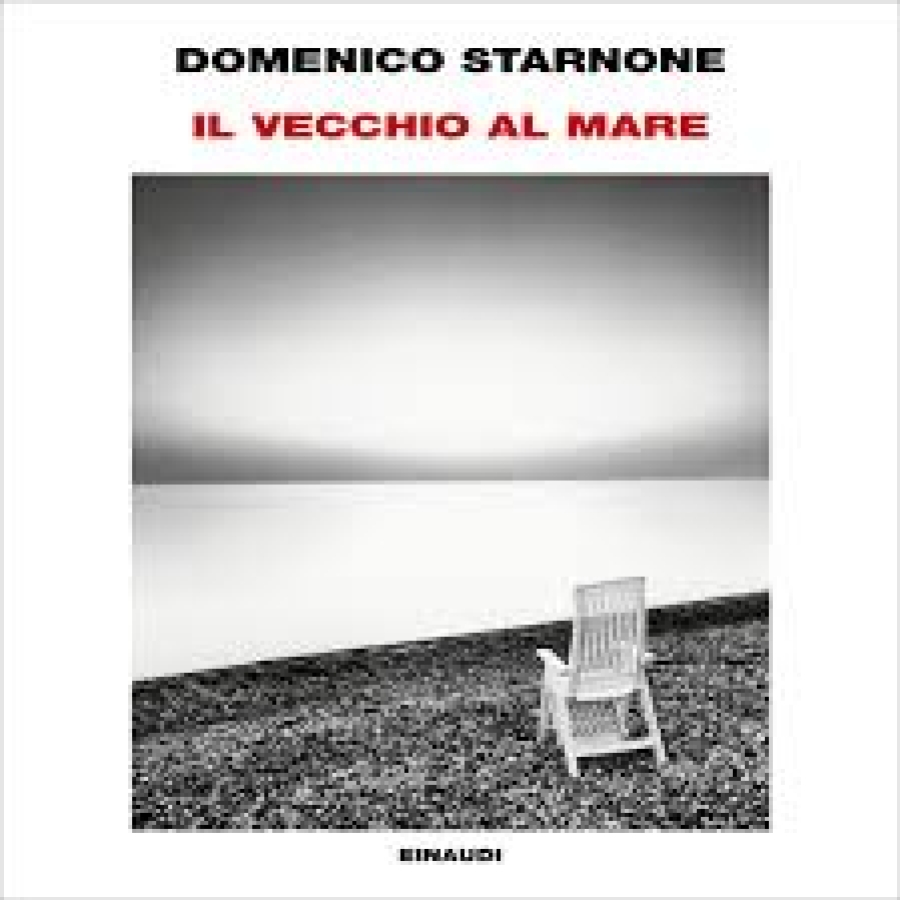
The Old Man at the Sea
> I was heading to the beach, (...) minding my own business, when suddenly everything came to a halt: the wind, the sea, the shrubs, the beating of heart and flutter of eyelashes, (...) and in that moment of disoriented stillness the only thing moving was a small figure outlined in gold: not a body, not a pirouette of dust, not a flicker of light, but a presence that dashed along the wood of the step and slipped into the sand just ahead. For the first-person narrator, the eighty-two-year-old on vacation by the sea, this small figure > emerged from deep within my body , like the "chimera" celebrated by Mario Luzi? ("she sets out between the walls, is prey to the light... / perhaps it was you, now it is an apparition"). Or is she instead one of Giorgio Caproni's girls? ( > girls barely visible / yet acutely sensitive / in the black air that shines / gleaming like a pupil ). Starnone's answer is not unequivocal; he leaves us in suspense. > Of what I know and do not know (...) that I should attempt to write. But it is difficult; it would take energy and confidence, not this present, doubting exhaustion that drifts into a sudden nod of sleep. The old writer nevertheless endeavors to construct a story, slender and elegant as a poem. The small figure is Lu, athletic, full of energy and youthful authority. Then there are other women, from Evelina, the owner of a clothing boutique, to her client-friends: all of them lovers of Evelina's husband, Silvestro the deceiver. Are they real characters or resurfacing remembrances? In Lu, as in the other women, the writer projects no senile erotic desire; instead, he seeks to extract from the girl's body > a mother alive, vividly alive, (...) a mother free of disease, under thirty, of benevolent radiance, capable of arousing envy and then taming it, transforming it into sympathy and affection. (...) Even now, in old age, that is the risk. I start with Rosa (that is the mother's name) and I want more Rosa, ever more Rosa, too much Rosa, so that I lose what little truth there is—a laugh as she fixes her hair with both hands—and slip into falsehood. And as often happens when one lets oneself become enveloped by memory, the mind returns to a recurring fragment of the remembered person's life; so it is for the writer in the most captivating scene of the entire novella, wonderfully poised between reality and fantasy. Rosa was a seamstress and received clients at home in front of her young son. Invited into Evelina's shop, all the sensations of those sessions resurface as he witnesses the client-friends choosing dresses. > I didn't miss a single flutter of an eyelash. (...) I violently caught the vital scent of that dressing and redressing, shaping and reshaping, and I recognized it. It was the very same as that of my mother's clients. The old writer asks to try some dresses on Lu, who until that moment was present only as a sales assistant. It is a crescendo of sensuality and remembrance. > The girl no longer had the eyes of a fatigued servant, but gleaming pupils. (...) Bodies evaporate, there's little to be done, ambitions scatter, possibilities thin out. But at least for now, that is not what is happening to Lu. She has closed herself off once and for all from my dying mother, and dress after dress, pleased gesture after pleased gesture, she has regained a healthy color; she is strong again, radiating the light of someone determined at all costs to take a breathtaking leap right up to the top of the world. The image of a sick old man facing the sea evokes Thomas Mann's *Death in Venice*; and perhaps it is this work that inspired Starnone rather than Ernest Hemingway's *The Old Man and the Sea*, echoed by the novel's title. It lacks the vigor of the American writer's masterpiece, while breathing that sensually decadent atmosphere of Mann's novella. The main theme is certainly the thought of death: nostalgias, remembrances, childhood images crowd the mind, brought to the surface by the regulars on the beach where the eighty-two-year-old spends his days, overlooking the sea. Running beneath the surface is a theme dear to Starnone: the craft of the writer. Nearing the end of life, one realizes that > manipulating the reality of facts, using it to draw out inventions with flashes of truth, was deceptively easy when I was young; in old age, it is a feeble attempt always one step away from dismay. What meaning is left in imagination, in believing oneself alive by making up stories? Starnone is one of Italy's most refined writers. Every single sentence deserves to be taught for its masterly handling of syntax and lexical elegance, all while remaining within a contemporary and universally accessible idiom. Yet this pursuit of detail comes at the expense of the overarching plot, which is slender and inconclusive. The focus on the first-person narrator flattens characters who are potentially interesting, causing the narrative to slip into a kind of narcissistic self-indulgence. Why read it? A masterclass in splendid Italian.
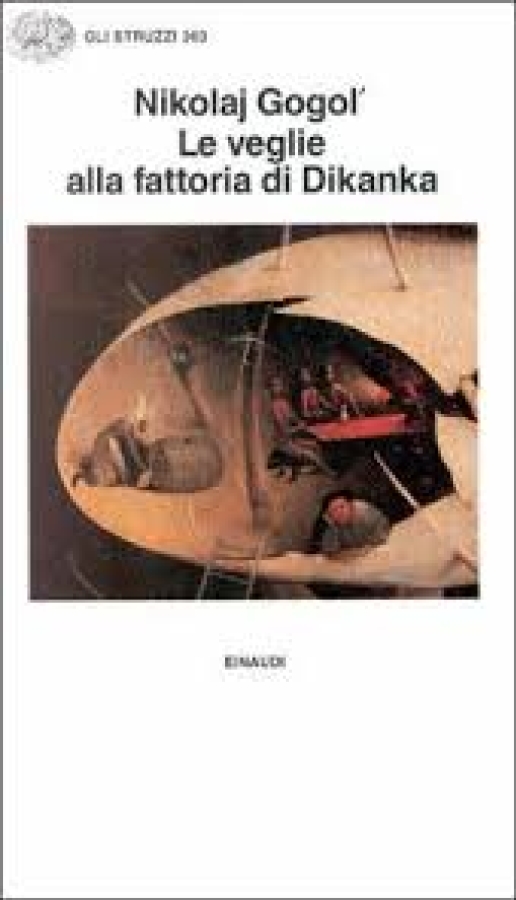
Evenings on a Farm Near Dikanka
> How intoxicating and magnificent is a summer day in Little Russia! (...) The towering oaks stand motionless with a lazy, carefree air, like individuals strolling aimlessly. (...) The variegated gardens are bejewelled with the emerald, topaz, and sapphire of airborne insects, and shaded by slender sunflowers. (...) Splendid is the Dnieper in fine weather: it flows free and majestic, swollen with waters, amid woods and hills, without a rustle or a murmur In this radiant setting, so beloved by Gogol, lies a small village, Dikanka, contented in the eternal cycle of the seasons, living a poor and serene peasant life. During the long, cold winters, it is the tales of the elders, the dances and festivities with pretty girls, and the Cossack revelries that make time pass merrily—"a casual cheerfulness, without mincing or affectation," as Pushkin wrote (see the quotation in Vittorio Strada's preface). Yet, these landscapes so rich in feeling, the brio, and the magic of these little tales are permeated by a subdued sorrow over the disappearance of Cossack society. We are in the second half of the eighteenth century, in the era of Catherine the Great (Empress of Russia from 1762 to 1796), when the independence of the proud Cossacks was subjugated to Moscow’s authority. There is none of the desperate cry of grief of *Taras Bulba*, faced with defeat and the betrayal of his son (see the review on this site); here, the looming destruction is embodied by "demons and witches," traditional figures of peasant lore used by Gogol to lend a shadowy cast to destiny. In the short story *A Terrible Vengeance*, a sorcerer employs all his diabolic power to bring death and bloodshed among the Cossack folk, slaying the noble ataman and his own daughter Catherine; and, echoing the Revelation of John > an unheard-of wonder had occurred near Kiev (...): the horizon had suddenly expanded so immensely that the outermost boundaries of the world could be seen. (...) The clouds lifted from the highest mountain, and upon its summit appeared an individual on horseback in full knightly array, (...) fearful and immense, (...) he hurled the sorcerer into the abyss , and all the dead > threw themselves upon him and seized him, sinking their teeth into him. What cheerfulness there could be in this harrowing prophecy would be good to ask Pushkin, if only one could. Not all the tales bear this apocalyptic stamp, so difficult to interpret. Throughout the stories, however, the petty tales of the people of Dikanka interweave two planes of existence: that of human beings, fashioned from weaknesses, subterfuges, intrigues, and greed, and that of the devils, who operate to disrupt and direct human life. Masquerading as a beekeeper-narrator, the writer seeks to gather the chatter exchanged around hearths on long winter nights, when one grows weary of music, songs, and revelry, as though he were a mere transcriber of oral accounts; and perhaps, therefore, it is I who have concocted who knows what morbidly prophetic fantasies in my head! In the 1842 novel *Dead Souls* (see the review on this site), Gogol writes that he wishes to narrate > the irritating sediment of petty things that clog our lives ; if there the setting is provincial society, here it is instead the humble folk, as in Émile Zola's *The Earth* and Giovanni Verga's *I Malavoglia* (see the reviews on this site). Particularly accomplished is the collection's central story, owing to the complexity of its characters and plot: *The Night Before Christmas*. Take, for instance, the scene in which the village notables are hidden in sacks so as not to be caught with their mistress: one feels as though witnessing a performance of the *commedia dell'arte* or a play by Molière. Or, in this very same tale, the meeting between the Cossack chieftains and Empress Catherine, in the presence of her renowned prince-lover, the founder of Little Russia and the port of Odessa (could he be the sorcerer?). With subtle irony, and without exposing himself politically, Gogol depicts the subjugation of the Cossack leaders; an aspect made all the more striking by the cunning of the humble village blacksmith, who manages to secure as a gift from the Tsarina a pair of little slippers he had promised to the girl he loved. For this tale alone, the book is worth reading. Why read it? It is sweet to lose oneself in a magical, ancestral world.
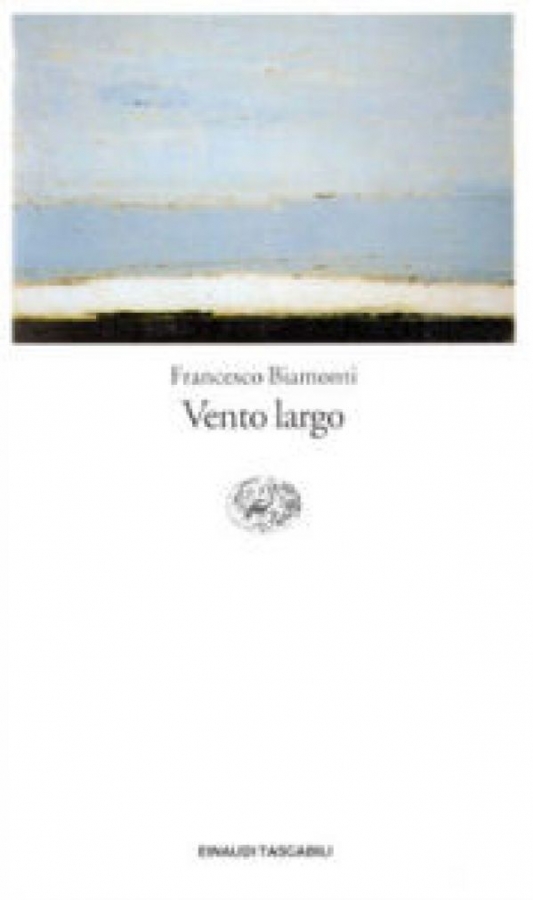
Broad wind
Varì lives in Aùrno, a “dying sandstone village” on the Ligurian coast, near the French border. The olive trees, now old, no longer provide a living, and Varì works as a *passeur*, guiding clandestine migrants into France along mountain trails. In villages steeped in sun and sea salt, amid the wind and the heady fragrance of mimosa, many characters have sought a hiding place, from others and from themselves: an aging Dutch professor, his daughter who takes up with a smuggler, a butterfly collector, a gold prospector. The old peasants, the last inhabitants of these parts, and the newcomers live as if suspended, awaiting love, a different life, death. An old *passeur* is murdered and a young woman loved by Varì, Sabèl, disappears: she has gone to hide on an island near a convent in search of peace and a renewed balance. Was it she who killed the old *passeur* upon discovering she was his daughter? Varì waits for her in vain in his now-deserted village, until he realizes that his destiny is to live and die in hiding: “what life is there on those trails? None.” The subject of the book is presumably the existential angst of modern man, which manifests in solitude and the consciousness of having no future. In truth, however, what captivates about the book is its depiction of a nature that is magical, unreal, unchanged across centuries, and now unraveling. > Aùrno, six houses, had grand flights of terraces, among the rocks... a fountain gurgled all year long.... Aùrno was windy; but the winds, which lashed it, passed over the sea, which tempered them....Aùrno was dead. Luminous on account of the heights, the rocks, and the sun; yet now held in the grip of the lords of darkness . The fundamental merit of the book lies in the landscape, rendered in a style both spare and chromatic, almost like that of a painter contemplating the colors and sensations of nature. The existential anguish of the characters is eclipsed by the pursuit of pictorial effect, and their story remains mysterious, inscrutable, almost metaphysical. Why avoid reading it? To read it with full satisfaction, one would need to be in Liguria, up on those mountains: removed from that context, the story is too slight to be genuinely compelling.
Via delle Oche
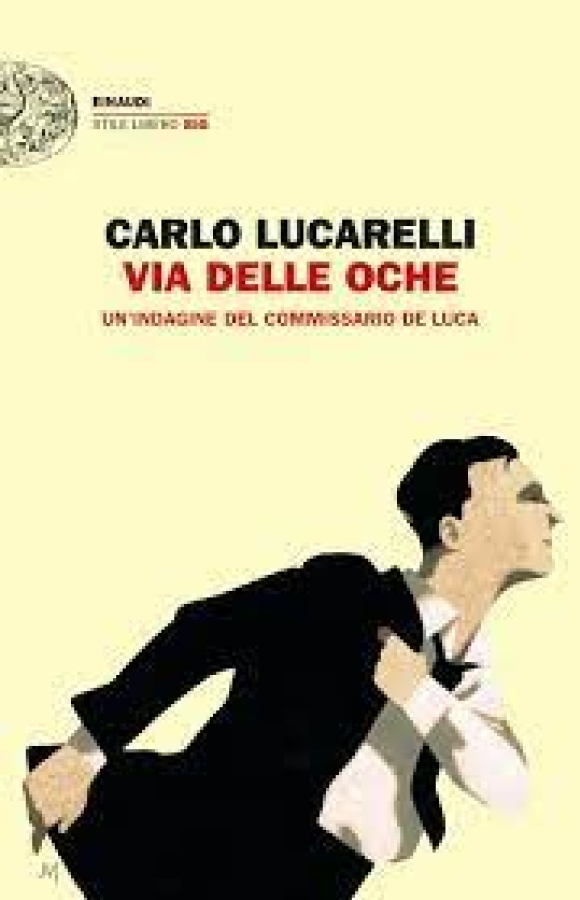
We are in Bologna in the days immediately preceding the 1948 elections, amid a climate of fierce conflict between the Christian Democrats and the Popular Front. Deputy Commissioner De Luca has just been transferred to Bologna to take charge of the Vice Squad—he who had been Italy's youngest commissioner and was renowned for having solved numerous murders. He has been demoted, somehow spared from the purges if not from the firing squad, guilty of having served in the investigative division of the notorious Muti Brigade. He does not know well the «political geography» of the questura, where a Christian Democratic deputy questore and a Communist chief of staff coexist; yet De Luca remains stubbornly wedded to his mission as a policeman, regardless of the context. To Marshal Pugliese, his only friend in Bologna, who urges caution, he emphatically declares that he does not care if they are using him, > I am a policeman, Pugliese, I do police work, and I stand with whoever allows me to do my job! A death in Via delle Oche, the brothel district, allows him to bring his investigative abilities into play. The body belongs to the bouncer of a brothel, and De Luca immediately realizes it is murder. He does not stop even after the crime is downgraded to «intentional suicide» and the deputy chief of staff advises him not to stray outside his remit. > Jurisdictional overreach is not welcomed here. (...) Assistant Deputy Commissioner, keep your mind on the whores—they matter too . He pursues the investigation and stumbles across other murders and the disappearance of a young prostitute, who is likewise found murdered. The key witness is a brothel keeper, «Claudia Tagliaferri, known professionally as Tripolitina, miss and not missus»; De Luca could lose himself in the seasoned prostitute's arms, find moments of peace in the woman's «skin, warm and slightly damp with sweat», but the policeman never forgets his mission. What link connects the various crimes? Why is the deputy questore so intent on a cover-up and the chief of staff so keen on urging De Luca forward? Rebuffed, «with a hard smile that brought back the wrinkles to the corners of her mouth», Tripolitina cries, > you're not so strong, commissario, neither of us is. You're just a cop and I'm just a whore . De Luca knows he is a defeated man, yet, like a «discreet hero», he stubbornly persists in his investigation until he uncovers the connection between the various crimes and the > political geography behind them. The new Italy is just like the old one, made of murky and unmentionable secrets, and like De Luca we would want to run into the bathroom, lock ourselves inside, turn on all the taps, and sob loudly without anyone being able to hear us weep. The past is the present that lives on memory > , as Saint Augustine used to say. In the figure of Deputy Commissioner De Luca, within a political world already cynical, an authority already subservient to the dictates of power, we rediscover the Italy of today: that of covered-up massacres, of subjugation to unmentionable designs, of moral and civic decline. De Luca is vulnerable to blackmail; he would be better off accepting the alluring courtesan's advances, and dreaming himself, like the young Dino Campana, through the inviting streets of Bologna; and yet he sighed and got out of bed«: he slipped into solitude and defeat simply to remain a »discreet hero«. The present is so overbearing that it relegates Bologna, Campana's »turreted city", to the background; yet despite everything, the shadows and the light, the background noise, and the variegated human fauna constantly surface in a fresco of a Bologna now vanished. The plot, which aims to be that of a noir, the often redundant dialogic structure, and the somewhat stereotyped characters—with the exception of De Luca and Tripolitina—do not compromise an evocative, precise narrative style capable of conjuring the novel's underlying atmosphere: perhaps it deserved a broader, more intricate story. Why read it? A fine portrayal of De Luca, an evocative depiction of 1940s Bologna
The Viceroys
*I Viceré* is a nineteenth-century version of the television series *Brothers & Sisters*. The Uzedas are an ancient noble family from Catania, counting even a saint among their ancestors. > The old Spanish stock, mingled over the centuries with island elements—half Greek, half Saracen—had gradually lost its purity and bodily nobility: who, for instance, could have distinguished Don Blasco from a coarse friar spawned by serfs, or Donna Ferdinanda from an old weaver woman? As in the famous television series, the members of this vast family bicker, trade insults, and scheme, yet they always live together, ever returning to the grand princely house. The year is 1850, in the wake of the Sicilian revolution of 1848–1849, which ended in bloodshed. The princess mother, a greedy and wicked woman, dies leaving two heirs: the eldest son, who assumes the title of prince, and the favored son, the young count Raimondo. The prince immediately sets to work seizing the entire inheritance through intrigue and subterfuge. Meanwhile, history marches on, and the “new Italy” allows the family—thoroughly Bourbon and reactionary though it is—to profit from public offices, now elective, and from the confiscation of ecclesiastical property. A conflict inevitably arises between the prince and his son Consalvo, whose transgression is hurting the prince in the “strongest feeling of all,” “his purse.” Yet Consalvo is an Uzeda, too. If > the prince had fought all his life to amass as much money into his own hands as possible, wresting it from his mother, his brothers, his sisters, his wife , Consalvo thought only > of his own individual interest; to satisfy his vanity he was willing to turn anything to his advantage . Ultimately, both were representatives > of those greedy Spaniards solely bent on enriching themselves, incapable of understanding any power, value, or virtue greater than that of money . And this is perhaps the true conclusion of the novel. When Consalvo becomes a member of parliament by posing as a democrat and visits Aunt Ferdinanda, who exclaims in anger: “Disgraceful times... Degenerate race!”, the new prince, and member of the Parliament of the Kingdom, replies with a truth that is profoundly pessimistic, yet often true: > history is a monotonous repetition; men have been, are, and will always be the same. No, our race has not degenerated: it is always the same . *I Viceré* is a choral novel. The individual protagonists are stereotypes of a social role to which they are condemned. The reader fails to become invested in the characters or the events, which are themselves repetitive and often predictable. The novel, like all great nineteenth-century books, flows slowly, devoid of leaps or rapids, like a mighty river. It is easy to read, yet also monotonous. Why read it? Because it is a good read under a beach umbrella.
The Life of Euripides
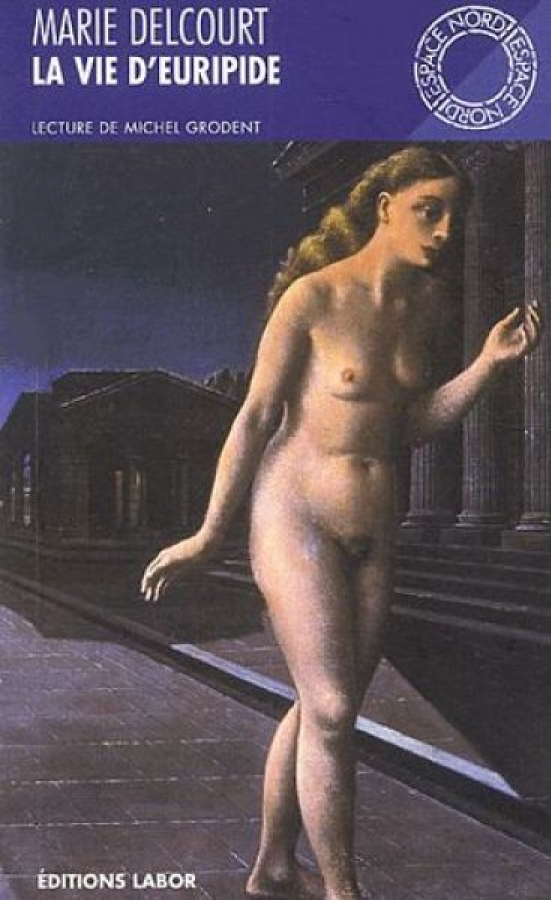
Euripides is one of the three great tragic playwrights of ancient Greece (the other two being Aeschylus and Sophocles) and lived between 480 and 408 B. C. in a historical period characterized by three fundamental phases: the peak years of Athens under the governance of Pericles, the prolonged Peloponnesian War between Athens and Sparta with the consequent decline of the former’s political and cultural life, and the defeat followed by the emergence of Macedonia as a hegemonic power. Marie Delcourt is a Belgian scholar and humanist who belonged to the French literary circles of the 1930s and was particularly influenced by Gide. Her biography of Euripides highlights the link between the evolution of his literary output and three fundamental aspects: the political and civic fortunes of Athens: the author paints a portrait of Euripides as deeply nostalgic for the Periclean era and underscores the constant invocation in his tragedies of the values of civic coexistence, tolerance, and hospitality characteristic of the Athens of that time. It is precisely the quest for a “prince” that drives Euripides to leave Athens and move to the court of the King of Macedonia, where he would meet his death; the philosophical currents of the era: the figure of Anaxagoras (and therefore the influence of his naturalistic views and critical stance toward myth and religion in general), the dialectic of the Sophists as a destructive force against truths and rules, and finally the thought of Socrates, as a search for values no longer rooted in religion but grounded in individual conscience. In reality, this familiarity seems to translate in Euripides into a confused syncretism in which the individual dimension prevails, with difficulty, over the collective one; the innovative and contradictory nature of Euripides, who is perpetually exploring new inspirations and expressive techniques, never willing to settle upon what has already been established and achieved. It is difficult to determine how much of these considerations stems from a critically rigorous reading of Euripides and how much, instead, reflects the existential and cultural milieu of the author. The fact remains that the author succeeds in offering a highly stimulating and engaging profile of Euripides, one that also prompts a series of reflections on the current state of disorientation in Italian society: one is led to think how valuable an author like Euripides would be for our country, capable of interpreting it beyond intimistic readings and sociological analyses. Reading the book is at times demanding due to the relentless historical and literary references, yet it is generally smooth and pleasurable: the style is frequently rhetorical and emphatic, the sentence structure convoluted and ornate, as is the vocabulary.

Villages
Owen, the novel’s protagonist, grew up in a small town, where > sex and religion had distinct, antique smells; families were balanced like frail nests on knobby branches of preceding history . It is a world of vague certainties, which Owen leaves behind to study computer science at university. There he marries Phyllis, a brilliant mathematics student. Owen is captivated by his wife’s intellect and erudition, yet subconsciously senses a kind of detachment, as though she lived in a world of her own, populated by mathematicians and poets, while the real world were a “tedious and insignificant place of exile.” The couple moves to a small town, where Owen, together with a partner, launches a software company that proves to be a major success. Four children follow, Phyllis devotes herself to the family, and with the nineteen-sixties American customs shift, not least as a result of the sexual revolution; computer technology evolves rapidly, confronting Owen with a relentless technological challenge. The couple takes part in local high society, and in this gossipy, hypocritical milieu, Owen begins a succession of affairs—the first ones more emotionally involving, the later ones progressively confined to purely sexual encounters. Owen is an attractive, obliging man, yet scandal and gossip fail to destroy the marriage thanks to Phyllis’s determination to safeguard the family, and above all because she forgives her husband out of love. The marriage unravels when Owen, by now weary of these flings, meets Julia and asks for a divorce. In a confrontation—the only true argument of their marriage—Owen justifies this decision by claiming that Julia, a deeply religious woman, will save him from his own weaknesses. Phyllis rebels, but, disgusted by her husband’s hypocrisy, flees. Whether by accident or suicide, she dies in a car crash, and once again Owen is spared from having to make his life’s choices alone. One of the book’s central themes is undoubtedly the evolution of American society, observed from two distinct vantage points: the revolution in sexual mores (with Owen’s escapades becoming increasingly explicit) and the computer revolution, from mainframes to the personal computer. Another theme is the depiction of small-town American life, which in many respects recalls episodes of the television series *Desperate Housewives*. Then there is the figure of Owen himself—pliable, fragile, yet opportunistic—who merely drifts along with events while taking advantage of a protective cocoon (his mother, his two wives, and his business partner) that allows him to remain an adolescent all his life. It is no coincidence that the novel concludes with a description of Owen’s dreams, reminiscing nostalgically about his mother and the village of his childhood. Updike’s style is lush with adjectives and baroque constructions that lend musicality and expressive vitality to the narrative. Although the book is scarce in incident, it is the prose style that sustains the narrative rhythm, making for an enjoyable read. Yet such verbal redundancy does not favor economy, and the reader easily gets lost amid “so many fireworks.” Why read it? It is a thoroughly enjoyable read, especially in the original language.
The Violinist
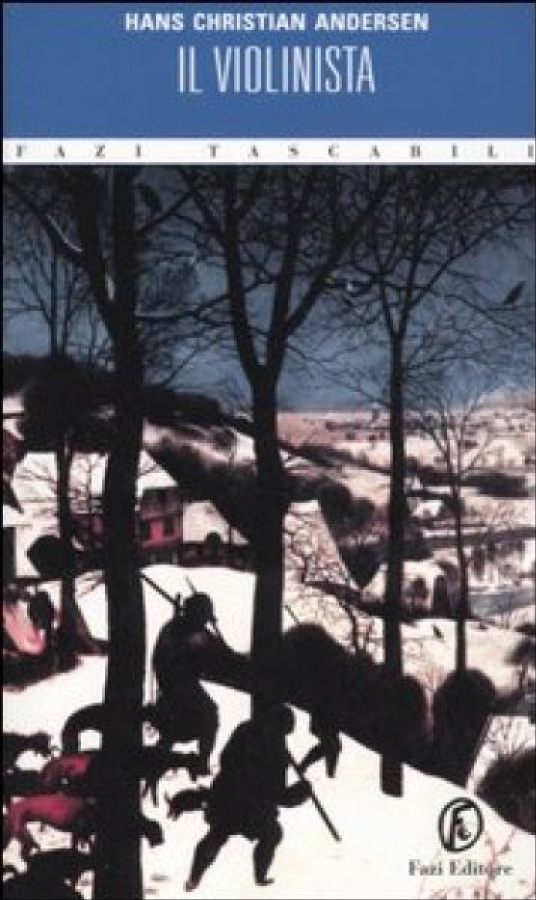
Christian and Noemi are two youths from markedly different social backgrounds (Christian deeply impoverished, Noemi from a wealthy Jewish family), yet both are driven by a fierce ambition and the pursuit of an “extraordinary life.” A dramatic episode from their childhood—the fire and destruction of Noemi’s home—also shatters a tender friendship and irreparably sunders the lives of the two youths. The wondrous garden where they first met is no more: childhood happiness has dissolved. In the first part, the most evocative also for its depiction of Danish rural culture, we follow Christian’s journey: the awakening of his vocation as a violinist, his father’s flight, a new family and solitude, life at sea, and his upbringing within another household. A tragic undertone prevails, yet the boy confronts misfortune with an enduring hope for the future. Particularly striking is the portrayal of the human and natural milieu that develops around a spring whose waters are believed to cure ailments. The relationship with nature takes on magical, animistic, and fairy-tale dimensions, placing animals—birds in particular—on a plane of intimate communion with human beings. How distant Andersen’s society is from our own, and how clear the transition from a rural to an industrial world! Even in the first part, the motif of the South emerges as one of the book’s fundamental touchstones: the migrations of storks and other birds are precisely the bridge between Northern and Southern Europe—a South dreamt of and experienced as a land of sun, warmth, and culture. The final part of the book focuses on Noemi, now a beautiful young woman, first enamored of a jockey and later wed to a wealthy French aristocrat. Vienna, Rome, and Paris provide the settings for Noemi’s life, while Christian remains in Denmark to dream and live in penury. The lives of the two youths diverge markedly, yet their conclusion is dramatically alike. Christian dies weary and disillusioned; Noemi returns to Denmark, wealthy and elegant, yet equally conscious of having fulfilled none of the aspirations of her youth. Was it worth it? Would it not have been better for the two youths to accept a quiet, routine life from the outset; or was there an alternative rooted in feelings far deeper than the quest for something wondrous? Andersen’s moral remains obscure: perhaps the book’s underlying thread is the struggle for survival and self-advancement, in which only the strongest prevails. The stork that was Christian’s companion is killed by its fellow migrants because it is no longer capable of making the long journey South. The narrative pace is highly effective in the first part of the book, only to unravel and become cumbersome and tedious.