Finished reading on: May 18, 2025
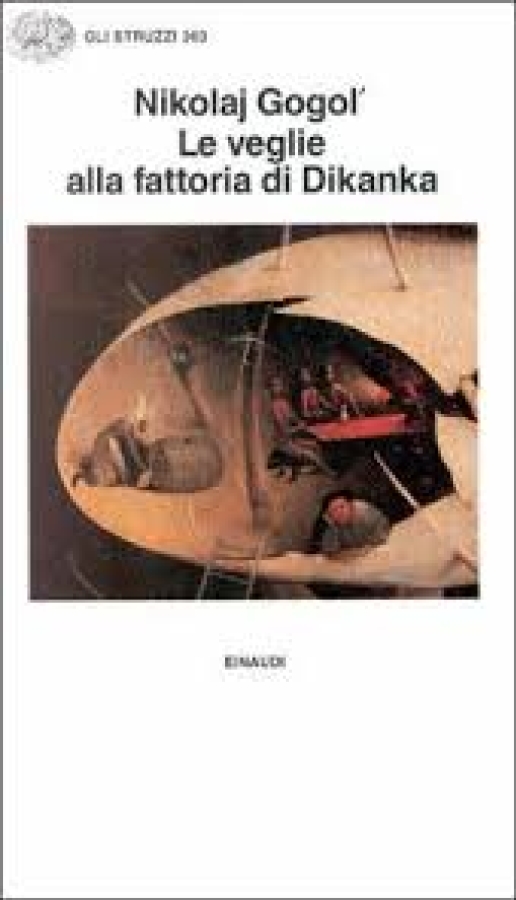
Evenings on a Farm Near Dikanka
Title of the original version reviewed: «Le veglie alla fattoria di Dikanka»
AI Translation Notice: This review was translated from the original Italian using artificial intelligence. Book quotes and excerpts are translated interpretations and will not match the author's original English phrasing or official published translations.
How intoxicating and magnificent is a summer day in Little Russia! (...) The towering oaks stand motionless with a lazy, carefree air, like individuals strolling aimlessly. (...) The variegated gardens are bejewelled with the emerald, topaz, and sapphire of airborne insects, and shaded by slender sunflowers. (...) Splendid is the Dnieper in fine weather: it flows free and majestic, swollen with waters, amid woods and hills, without a rustle or a murmur
In this radiant setting, so beloved by Gogol, lies a small village, Dikanka, contented in the eternal cycle of the seasons, living a poor and serene peasant life. During the long, cold winters, it is the tales of the elders, the dances and festivities with pretty girls, and the Cossack revelries that make time pass merrily—"a casual cheerfulness, without mincing or affectation," as Pushkin wrote (see the quotation in Vittorio Strada's preface). Yet, these landscapes so rich in feeling, the brio, and the magic of these little tales are permeated by a subdued sorrow over the disappearance of Cossack society. We are in the second half of the eighteenth century, in the era of Catherine the Great (Empress of Russia from 1762 to 1796), when the independence of the proud Cossacks was subjugated to Moscow’s authority. There is none of the desperate cry of grief of Taras Bulba, faced with defeat and the betrayal of his son (see the review on this site); here, the looming destruction is embodied by "demons and witches," traditional figures of peasant lore used by Gogol to lend a shadowy cast to destiny. In the short story A Terrible Vengeance, a sorcerer employs all his diabolic power to bring death and bloodshed among the Cossack folk, slaying the noble ataman and his own daughter Catherine; and, echoing the Revelation of John
an unheard-of wonder had occurred near Kiev (...): the horizon had suddenly expanded so immensely that the outermost boundaries of the world could be seen. (...) The clouds lifted from the highest mountain, and upon its summit appeared an individual on horseback in full knightly array, (...) fearful and immense, (...) he hurled the sorcerer into the abyss
, and all the dead
threw themselves upon him and seized him, sinking their teeth into him. What cheerfulness there could be in this harrowing prophecy would be good to ask Pushkin, if only one could. Not all the tales bear this apocalyptic stamp, so difficult to interpret. Throughout the stories, however, the petty tales of the people of Dikanka interweave two planes of existence: that of human beings, fashioned from weaknesses, subterfuges, intrigues, and greed, and that of the devils, who operate to disrupt and direct human life. Masquerading as a beekeeper-narrator, the writer seeks to gather the chatter exchanged around hearths on long winter nights, when one grows weary of music, songs, and revelry, as though he were a mere transcriber of oral accounts; and perhaps, therefore, it is I who have concocted who knows what morbidly prophetic fantasies in my head!
In the 1842 novel Dead Souls (see the review on this site), Gogol writes that he wishes to narrate
the irritating sediment of petty things that clog our lives
; if there the setting is provincial society, here it is instead the humble folk, as in Émile Zola's The Earth and Giovanni Verga's I Malavoglia (see the reviews on this site). Particularly accomplished is the collection's central story, owing to the complexity of its characters and plot: The Night Before Christmas. Take, for instance, the scene in which the village notables are hidden in sacks so as not to be caught with their mistress: one feels as though witnessing a performance of the commedia dell'arte or a play by Molière. Or, in this very same tale, the meeting between the Cossack chieftains and Empress Catherine, in the presence of her renowned prince-lover, the founder of Little Russia and the port of Odessa (could he be the sorcerer?). With subtle irony, and without exposing himself politically, Gogol depicts the subjugation of the Cossack leaders; an aspect made all the more striking by the cunning of the humble village blacksmith, who manages to secure as a gift from the Tsarina a pair of little slippers he had promised to the girl he loved. For this tale alone, the book is worth reading.
Why read it? It is sweet to lose oneself in a magical, ancestral world.