Domenico Starnone
Books by this author (2)
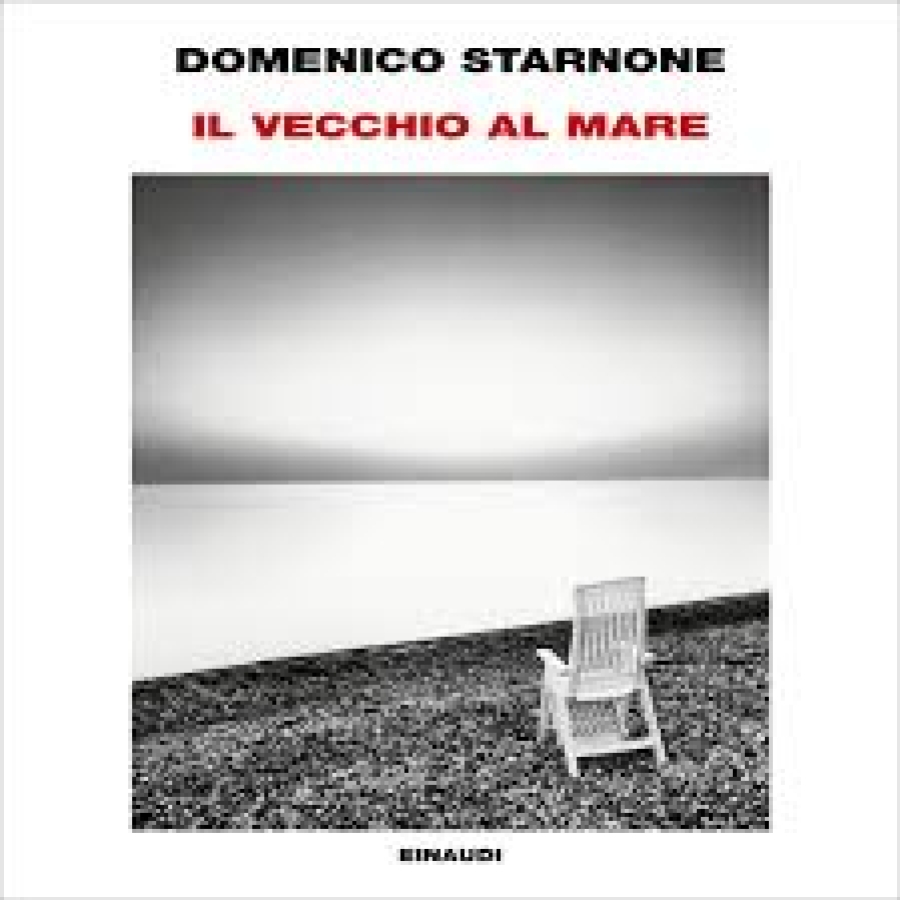
The Old Man at the Sea
> I was heading to the beach, (...) minding my own business, when suddenly everything came to a halt: the wind, the sea, the shrubs, the beating of heart and flutter of eyelashes, (...) and in that moment of disoriented stillness the only thing moving was a small figure outlined in gold: not a body, not a pirouette of dust, not a flicker of light, but a presence that dashed along the wood of the step and slipped into the sand just ahead. For the first-person narrator, the eighty-two-year-old on vacation by the sea, this small figure > emerged from deep within my body , like the "chimera" celebrated by Mario Luzi? ("she sets out between the walls, is prey to the light... / perhaps it was you, now it is an apparition"). Or is she instead one of Giorgio Caproni's girls? ( > girls barely visible / yet acutely sensitive / in the black air that shines / gleaming like a pupil ). Starnone's answer is not unequivocal; he leaves us in suspense. > Of what I know and do not know (...) that I should attempt to write. But it is difficult; it would take energy and confidence, not this present, doubting exhaustion that drifts into a sudden nod of sleep. The old writer nevertheless endeavors to construct a story, slender and elegant as a poem. The small figure is Lu, athletic, full of energy and youthful authority. Then there are other women, from Evelina, the owner of a clothing boutique, to her client-friends: all of them lovers of Evelina's husband, Silvestro the deceiver. Are they real characters or resurfacing remembrances? In Lu, as in the other women, the writer projects no senile erotic desire; instead, he seeks to extract from the girl's body > a mother alive, vividly alive, (...) a mother free of disease, under thirty, of benevolent radiance, capable of arousing envy and then taming it, transforming it into sympathy and affection. (...) Even now, in old age, that is the risk. I start with Rosa (that is the mother's name) and I want more Rosa, ever more Rosa, too much Rosa, so that I lose what little truth there is—a laugh as she fixes her hair with both hands—and slip into falsehood. And as often happens when one lets oneself become enveloped by memory, the mind returns to a recurring fragment of the remembered person's life; so it is for the writer in the most captivating scene of the entire novella, wonderfully poised between reality and fantasy. Rosa was a seamstress and received clients at home in front of her young son. Invited into Evelina's shop, all the sensations of those sessions resurface as he witnesses the client-friends choosing dresses. > I didn't miss a single flutter of an eyelash. (...) I violently caught the vital scent of that dressing and redressing, shaping and reshaping, and I recognized it. It was the very same as that of my mother's clients. The old writer asks to try some dresses on Lu, who until that moment was present only as a sales assistant. It is a crescendo of sensuality and remembrance. > The girl no longer had the eyes of a fatigued servant, but gleaming pupils. (...) Bodies evaporate, there's little to be done, ambitions scatter, possibilities thin out. But at least for now, that is not what is happening to Lu. She has closed herself off once and for all from my dying mother, and dress after dress, pleased gesture after pleased gesture, she has regained a healthy color; she is strong again, radiating the light of someone determined at all costs to take a breathtaking leap right up to the top of the world. The image of a sick old man facing the sea evokes Thomas Mann's *Death in Venice*; and perhaps it is this work that inspired Starnone rather than Ernest Hemingway's *The Old Man and the Sea*, echoed by the novel's title. It lacks the vigor of the American writer's masterpiece, while breathing that sensually decadent atmosphere of Mann's novella. The main theme is certainly the thought of death: nostalgias, remembrances, childhood images crowd the mind, brought to the surface by the regulars on the beach where the eighty-two-year-old spends his days, overlooking the sea. Running beneath the surface is a theme dear to Starnone: the craft of the writer. Nearing the end of life, one realizes that > manipulating the reality of facts, using it to draw out inventions with flashes of truth, was deceptively easy when I was young; in old age, it is a feeble attempt always one step away from dismay. What meaning is left in imagination, in believing oneself alive by making up stories? Starnone is one of Italy's most refined writers. Every single sentence deserves to be taught for its masterly handling of syntax and lexical elegance, all while remaining within a contemporary and universally accessible idiom. Yet this pursuit of detail comes at the expense of the overarching plot, which is slender and inconclusive. The focus on the first-person narrator flattens characters who are potentially interesting, causing the narrative to slip into a kind of narcissistic self-indulgence. Why read it? A masterclass in splendid Italian.

The Mortal and Immortal Life of the Girl from Milan
It is difficult to find a common thread in this short novel, with its slender plot, its characters merely sketched because yearned for, and its misleading title. Yet there is an anchor: the figure of the grandmother, around whom unfolds the coming-of-age journey of the protagonist, the first-person narrator of this story. > Far too short in stature, plump and hunchbacked, rather homely with her red face and tiny purplish veins on her cheeks.... treated like a servant in her daughter's house, only the grandmother loved the young protagonist with an affection that expected nothing in return: > as a newborn I had been a little thing of living alabaster, a tiny sip of cherry julep, a *franfellik* made of sugar, vanilla, and cinnamon who, even if he pissed, pissed holy water. (...) And now look what I had turned into, wouldn'tstaystillforasecond, let me comb your hair. To her, the grandson possessed qualities "that no one, except her, could notice." What influence could such a grandmother have on a dreaming boy, brimming with impressions fueled by reading far too much? His head is crammed with disorderly fantasies, with too many roles to play: > the cowboy, the orphan, the cabin boy, the castaway, the hunter, the explorer, the knight-errant, Hector, Ulysses, the tribune of the plebs and finally Orpheus, who had gone to reclaim his bride Eurydice from the underworld. To make his fantasies real, the boy had to find his Eurydice and the entrance to the realm of the dead. The former is a little girl from Milan who lives in the apartment building opposite and whom he watches every day as she dances recklessly on the balcony. *Careful not to fall!* the boy would like to shout to her, *you might end up like Eurydice, killed by a snakebite, leaving Orpheus heartbroken.* The entrance to the realm of the dead, where he must rescue the little Milanese girl, is a manhole in a courtyard near his house—a manhole beneath which strange noises can be heard, perhaps the cries and laments of the dead. It is a happy childhood, protected by the grandmother, steeped in a world of fantasy: our protagonist is Aeneas in search of Anchises (even if the journey into the underworld is merely the discovery of a photograph of his grandparents looking happy and handsome on their wedding day); he has his Laura (the little Milanese girl) and is even Lancelot dueling enemies before his fair lady; and what does it matter if the enemy is a childhood friend and the weapons are a bicycle and an umbrella rigged up as a sword? As his studies progress, our protagonist discovers that his grandmother's tongue—so enchanting and affectionate—leads him to make numerous spelling and syntactic errors, preventing him from freeing himself from Neapolitan to speak and write correct Italian. The magic dissolves. > As if, from the age of twelve or thirteen, I had miraculously grown older than her, she had also developed a kind of deference toward me. (...) At nineteen, I still had no desire to recall childhood. (...) Deep down, I would have preferred coming into the world at around seventeen, sparing myself the foolishness of the first sixteen. The final step toward detachment occurs when our protagonist uses his grandmother's strange, despised tongue to pass his university linguistics exam with flying colors. I had to, the protagonist reflects, "demonstrate that I knew how to approach, in the prescribed manner, the uneducated who spoke" dialect. > I was taking advantage of her gullibility as if she were a child. (...) Cornering her, keeping her there in a corner for a couple of mornings, (...) and prodding her into telling me (...) whatever came to her mind from her world of a grandmother-servant who knew more Neapolitan words than anyone else. With the grandmother's disappearance, the now-adult protagonist writes with resigned melancholy, > I unequivocally lost the drive to achieve great things (...) knowing by then that what little is truly alive in what we do while living remains outside of writing; signs are constitutionally insufficient, vacillating between commentary and dismay—and thank goodness for that. I allowed myself only one small mitigating circumstance, and even today I still grant it to myself: the pleasure of the word that in the moment seems right, and then does not . We return to Pasolini, for whom only the *ragazzi di vita* grasp the essence of reality, unmediated, because they use "the language of speakers." And so all this writing, century after century, is nothing more than a form of narcissism, a pursuit of pleasure, the eternal mirroring ego. And the word is nothing but a useless filter between ourselves and the essence of life and death. The novel's chief merit lies in its writing. One is left admiring and captivated by the stylistic balance between simplicity and complexity in the sentences, by the fluidity of the narration, and by the masterful use of words, particularly adjectives. It may well be that the pleasure of writing is fragile, as Starnone says, but such fragility is more than welcome. In the end, the relish for language takes precedence over the story: delving into phonetics is intriguing and instructive, yet it proves an excessive digression that deprives the narrative of its compactness. Why read it? It is stylistically flawless, and the figure of the grandmother is magnificent.