Finished reading on: November 15, 2022
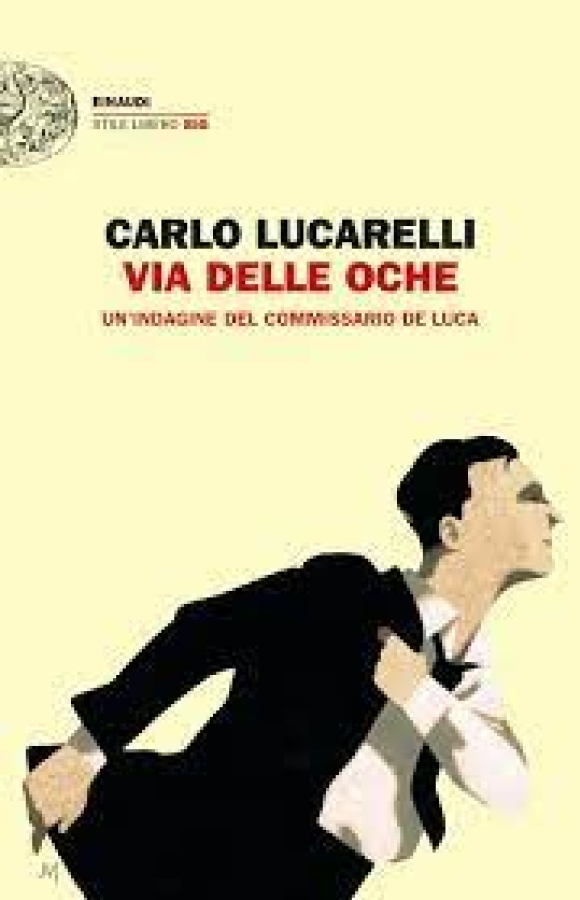
Via delle Oche
AI Translation Notice: This review was translated from the original Italian using artificial intelligence. Book quotes and excerpts are translated interpretations and will not match the author's original English phrasing or official published translations.
We are in Bologna in the days immediately preceding the 1948 elections, amid a climate of fierce conflict between the Christian Democrats and the Popular Front. Deputy Commissioner De Luca has just been transferred to Bologna to take charge of the Vice Squad—he who had been Italy's youngest commissioner and was renowned for having solved numerous murders. He has been demoted, somehow spared from the purges if not from the firing squad, guilty of having served in the investigative division of the notorious Muti Brigade. He does not know well the «political geography» of the questura, where a Christian Democratic deputy questore and a Communist chief of staff coexist; yet De Luca remains stubbornly wedded to his mission as a policeman, regardless of the context. To Marshal Pugliese, his only friend in Bologna, who urges caution, he emphatically declares that he does not care if they are using him,
I am a policeman, Pugliese, I do police work, and I stand with whoever allows me to do my job!
A death in Via delle Oche, the brothel district, allows him to bring his investigative abilities into play. The body belongs to the bouncer of a brothel, and De Luca immediately realizes it is murder. He does not stop even after the crime is downgraded to «intentional suicide» and the deputy chief of staff advises him not to stray outside his remit.
Jurisdictional overreach is not welcomed here. (...) Assistant Deputy Commissioner, keep your mind on the whores—they matter too
. He pursues the investigation and stumbles across other murders and the disappearance of a young prostitute, who is likewise found murdered. The key witness is a brothel keeper, «Claudia Tagliaferri, known professionally as Tripolitina, miss and not missus»; De Luca could lose himself in the seasoned prostitute's arms, find moments of peace in the woman's «skin, warm and slightly damp with sweat», but the policeman never forgets his mission. What link connects the various crimes? Why is the deputy questore so intent on a cover-up and the chief of staff so keen on urging De Luca forward? Rebuffed, «with a hard smile that brought back the wrinkles to the corners of her mouth», Tripolitina cries,
you're not so strong, commissario, neither of us is. You're just a cop and I'm just a whore
. De Luca knows he is a defeated man, yet, like a «discreet hero», he stubbornly persists in his investigation until he uncovers the connection between the various crimes and the
political geography behind them. The new Italy is just like the old one, made of murky and unmentionable secrets, and like De Luca we would want to run into the bathroom, lock ourselves inside, turn on all the taps, and sob loudly without anyone being able to hear us weep.
The past is the present that lives on memory
, as Saint Augustine used to say. In the figure of Deputy Commissioner De Luca, within a political world already cynical, an authority already subservient to the dictates of power, we rediscover the Italy of today: that of covered-up massacres, of subjugation to unmentionable designs, of moral and civic decline. De Luca is vulnerable to blackmail; he would be better off accepting the alluring courtesan's advances, and dreaming himself, like the young Dino Campana, through the inviting streets of Bologna; and yet
he sighed and got out of bed«: he slipped into solitude and defeat simply to remain a »discreet hero«. The present is so overbearing that it relegates Bologna, Campana's »turreted city", to the background; yet despite everything, the shadows and the light, the background noise, and the variegated human fauna constantly surface in a fresco of a Bologna now vanished.
The plot, which aims to be that of a noir, the often redundant dialogic structure, and the somewhat stereotyped characters—with the exception of De Luca and Tripolitina—do not compromise an evocative, precise narrative style capable of conjuring the novel's underlying atmosphere: perhaps it deserved a broader, more intricate story.
Why read it? A fine portrayal of De Luca, an evocative depiction of 1940s Bologna