
Saturday
Henry is a neurosurgeon living in London with his wife, a lawyer, and two children: his son, a musician, and his daughter, a poet temporarily living in Paris. He wakes up one Saturday morning, watches an airplane make an emergency landing from his window, and imagines it to be an act of terrorism. Thus begins Saturday, a day shaped both by broader events (television news reports on the impending war in Iraq, the anti-war pacifist march, the aftermath of the plane's emergency landing) and private occurrences (his relationship with his wife, a squash match with a friend, a visit to his mother suffering from Alzheimer’s, attending his son's gig, preparing dinner for his daughter’s return and the arrival of his father-in-law, himself an eminent poet). The narrative unfolds within this contrast between the catastrophism of the external world and the quest for domestic peace, for a serene existence beyond the external turbulence. This attempt fails, and a minor car accident is enough to let violence and the unforeseen burst into intimate, family life. To avoid the peace march, Henry commits a traffic violation and collides with a car carrying a group of thugs, who attempt to assault the surgeon. Henry nevertheless manages to extricate himself from a perilous situation by destabilizing the thugs' ringleader, named Baxter, recognizing that he suffers from a severe neurodegenerative disorder. Baxter vows revenge for the humiliation and breaks into Henry's home just as the family is celebrating the arrival of the daughter and the grandfather, the renowned poet. Baxter threatens Henry’s wife and orders the young woman to strip: amid extreme tension, she recites lines of poetry, which mollify Baxter; he abandons his violent intent and is subsequently pushed down the stairs by Henry and his son. The novel concludes with Henry’s decision to operate on Baxter, who was gravely injured, followed by a series of existential reflections on the surgeon’s part: > all he feels is fear. He is weak and ignorant, frightened of the unpredictable consequences of an action that has slipped out of control and is generating new events, new consequences, until you are led to a place where you never dreamed of being and would never have chosen, a knife to your throat . The book revolves around deeply philosophical themes: human helplessness in the face of an increasingly inexplicable world, the impact of catastrophism on everyday life, the pursuit of domestic serenity, the fragility of the barriers separating the outside world from intimacy, the burden of heredity and a life beyond our control, and the role of affective bonds. Yet the narrative's most compelling theme is the clash between scientific culture—which strives to impose order and rationality—and literary culture, poetry in particular, which interprets the world through frameworks irreducible to scientific reason and, perhaps for this very reason, succeeds in grasping the innermost meaning of things and resolving crises. It is the poem recited by his daughter that draws Baxter out of his madness, not Henry’s logical reasoning. What, then, is the way out of a situation that can no longer be comprehended through the tenets of scientific rationality? One finds oneself at an impasse, encapsulated by the words of the poet Matthew Arnold: > ah, love, let us be true to one another! For the world, which seems to lie before us like a land of dreams, so various, so beautiful, so new. Hath really neither joy, nor light, nor love, nor certitude, nor peace, nor help for pain; and we are here as on a darkling plain, swept with confused alarms of struggle and flight, where ignorant armies clash by night . The clash between desire (the love that makes us see the world as a land of dreams) and reality, which appears to us only as a bearer of death—is this contradiction not resolvable solely through a rational approach? The heavy philosophical content and the multiplicity of themes do not serve the narrative pace or the cohesion of the discourse. It is, as usual, very well written, yet at times it leans too heavily into intellectualism, and the characters remain flattened within assigned roles that conform more to stereotypes than to any genuine depth of character.
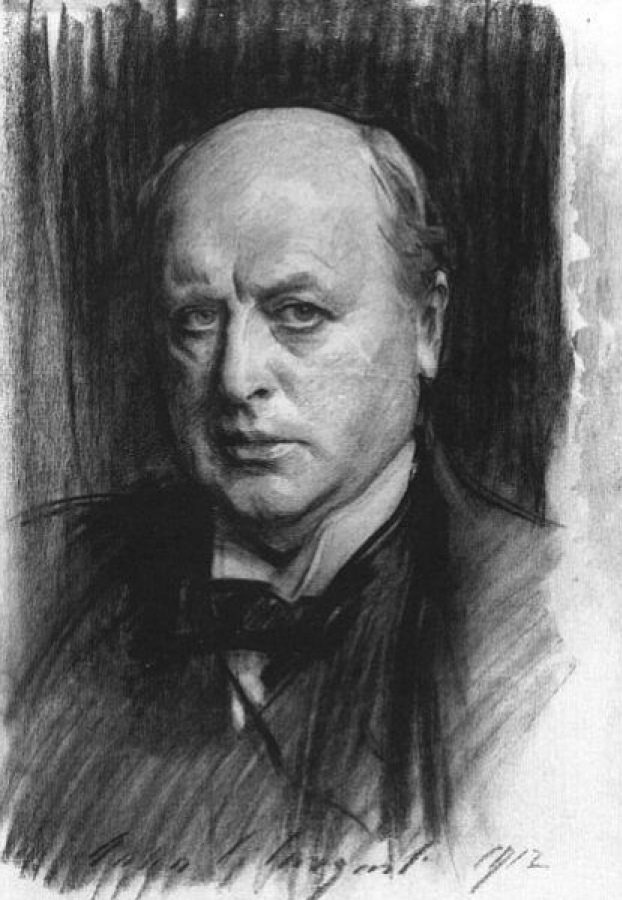
Selected Short Stories
According to the introduction, the four stories encapsulate the author’s style and evolution. The first story revolves around a love of myth and beauty. In *The Last of the Valerii*, an Italian count has married a wealthy and beautiful American heiress, yet falls in love with a statue of Juno unearthed on his estate. The narrative is related by a character who seems to stand in for the author, watching with amusement, wonder, and keen interest as a living being falls in love with a statue. In *The Real Thing*, an artist who routinely works as a book illustrator is approached by a genteel couple fallen on hard times. They ask to serve as models for the artist, who initially agrees, but soon realizes that real life is one thing, and a figure in an artistic representation is quite another. The story is thus entirely constructed around the tension between real life and artistic expression, which is itself the offspring of the imagination. *The Lesson of the Master*, the least successful of the stories, takes duplicity as its subject. A young writer falls in love with a young woman, but is persuaded by an older writer to devote himself entirely to art: marriage or any strong romantic attachment are, after all, disruptive forces, compelling one to confront the prosaic nature of ordinary life. Upon returning from an extended journey to Italy, the young writer discovers that his “master” has married the young woman: it was all a ruse. Finally, the last story, *Daisy Miller*, is set in continental Europe, and specifically in Rome. Several of the author’s signature themes are present: Americans abroad; an independent yet naive young American woman; the corrupting Italian; and the smitten young lover. The settings are those of the upper middle class traveling abroad, and a Rome fraught with malarial fevers, however captivating in the remnants of a great civilization. The contrast between American society—uncouth yet wholesome—and European, particularly Italian, society—decadent yet the heir to a grand culture—is unmistakable. James’s style is invariably fascinating, at times convoluted, yet richly evocative. In particular, it is the descriptions of nature, cities, and settings that constitute the author’s greatest strength, whereas the dialogue often proves tedious and predictable.
Sense and Sensibility
Jane Austen’s novels appear detached from their historical setting, the years between 1790 and 1815 marked by the onset of the Industrial Revolution and the protracted Napoleonic Wars. This “timeless” profile is corroborated by what Austen herself wrote to her niece: > three or four families in a country village is the very thing to work on (*Austen’s Letters*, page 275, quotation cited by Katie Halsey in the introduction). The author’s statement is at once contradictory and revealing; it is precisely by immersing oneself in provincial society that one can understand how and why “a man changes his manners and a young woman changes her mind,” and thus grasp the impact of the profound transformations in English society at the turn of the century. (Tony Tanner, introduction to *Pride and Prejudice*, page 368, cited by Katie Halsey). Elinor and Marianne are the daughters of the widowed Mrs Dashwood, forced to leave their beautiful home and comfortable life following the death of her husband and the succession to the estate of Henry, born of a previous marriage of the deceased husband. Setting up with incisive efficacy the inheritance issues that serve as a backdrop to the entire narrative is a long, cynical exchange between the stepson and his wife; before dying, the father had extracted a promise from Henry that he would secure an annuity for his sisters; > it is certainly not pleasant to have a yearly drain upon one’s income, (...) a present of fifty pounds (...) will free me, I think, from my promise to my father. Elinor and Marianne must survive by their own resources, pursuing a difficult balance between sentiment and realism. Elinor > possessed a strength of understanding, and coolness of judgment, which qualified her, though only nineteen, to be the counsellor of her mother. (...) had an affectionate heart, a generous nature, strong feelings; but she knew how to govern them. Marianne, still only seventeen, > was in many respects quite equal to Elinor. She was sensible and clever but eager in everything; in her sorrows, as in her joys, she could have no moderation. Elinor has fallen in love with Edward. The young man > was not handsome, and his manners required intimacy to make them pleasing; (...) but when his natural shyness was overcome, his character gave every indication of an open, affectionate heart, (...) all his wishes centered in domestic comfort and the quiet of private life. In a conversation with her mother, Marianne declares what she understands by love, and she does so precisely while discussing Edward and her sister’s incomprehensible attraction to this young man. > Oh! Mama, how spiritless, how tame was Edward’s manner in reading to us last night! I felt for my sister most severely. Yet she bore it with so much composure, she seemed scarcely to notice it. (...) Elinor has not my feelings. (...) Mama, the more I know of the world, the more am I convinced that I shall never see a man whom I can really love. I have been open and sincere where I ought to have been reserved, spiritless, dull, and deceitful. A bitter disappointment strikes both girls. The handsome gentleman who had trifled with Marianne’s affections suddenly marries a wealthy heiress, accustomed as he is to a life of pleasure and money. Marianne retreats into herself, devastated by grief and scandal, almost to the point of death. Elinor also discovers that Edward is already engaged to the sly Lucy, with whom, moreover, she is obliged to associate out of social propriety. The narrative of his betrayal, of Edward’s lie, > was plain and simple; and though it could not be related without emotion, was unaccompanied by violent agitation or uncontrollable sorrow. (...) Elinor was to be the comforter of others regarding her own suffering, no less than in what concerned theirs; and all the comfort that could be afforded relied on her own clear-headedness and self-command. The pledge of confidentiality made to Lucy, who had opened her heart to her, and her affection for Edward, despite everything, compelled her to silence, preventing her from confessing her misery. In a provincial society, bound by rigid social conventions and dominated by pecuniary interests, amidst fragile and hypocritical men and women, Elinor emerges as a heroine through her moral steadfastness, her determination to be of service to others before herself. Austen seeks to provide a happy ending for both girls, yet the novel could well conclude when the mother and Marianne recognize, with surprise and remorse, Elinor’s concealed vulnerability: an epiphany that forms the foundation of deeper familial bonds. The narrative plot unfolds like a musical variation, in which the original theme repeats through constant modulations; Elinor’s and Marianne’s sentiments are charted in their most minute fluctuations, as the social milieu and the secondary characters impinge, often painfully, upon the two girls’ affections and certainties. Only a woman could have executed such an incisive psychological analysis of the feminine emotional landscape, rich in the sensibility and good sense so frequently lacking in men. Consider the figure of Edward—as for the other, he is such a scoundrel that he barely warrants discussion; Edward is a decent youth, but what does he do? He lacks the courage to tell Elinor the truth, namely that he is already engaged; he resurfaces only after Lucy has chosen another man. One might wonder why Elinor welcomed him back, but that is part of good sense and sensibility: Edward is a decent man, fragile yet fundamentally honest, and, after all, it is time to marry. Elinor is neither Emma nor Fanny of *Mansfield Park*, figures of strength and self-possession (see the review of both novels on this site); she is still a tender girl, and perhaps also a victim of the social structure. She recalls the protagonist of Alba De Céspedes’s *Dalla parte di lei* (see review on this site); today, Elinor might perhaps have killed Edward. The enduring appeal of Austen’s novels derives in substantial measure from her prose, particularly the grammatical contours of her English—perhaps slightly archaic, yet so enveloping and finely articulated as to immerse the reader in a seamless flow of subtle narrative developments, psychological insights, and social observations, all delicate yet sharp. Why read it? Sublime in its writing, profound in its analysis of its female protagonists.
Shantaram
*Shantaram* is a book of roughly 1,200 pages and, in some reviews, has even been compared to *War and Peace*. In reality, it is a bloated potboiler, an implausible yarn that blends every Western stereotype about India with that inevitable refrain claiming economic backwardness should be celebrated as cultural authenticity. The trouble is that the novel—written, it must be said, in excellent English—is verbose, tedious, devoid of action, and lacking any psychological depth in its characters, whose personalities remain mere outlines, beginning with the protagonist himself. I must confess that my judgment, harsh as it is, rests on less than half the book: exhausted and disheartened, I resolved to abandon the reading, something I almost never do. It may well be that the second half of the novel is splendid, but I leave the burden of proof to other, far more patient readers. The plot purports to draw from the author's own life. The protagonist has escaped from an Australian prison and sought refuge in the vast, multifaceted expanse of Bombay. There he falls in with a circle of Western expatriates living on the borderline between the Indian world and the West. Circumstance, curiosity, and his friendship with a local man (Prabaker, the sole character delineated with any care) lead him to abandon this stance of "spectator": > I suddenly realized that if I wanted to live here, in Bombay, the city I had fallen in love with, I had to change, I had to get involved.... I had to expect it to drag me into the flow of its joy and its rage. Sooner or later, I knew, I would have to leave the safe zones and throw myself into the violence of the crowd, putting my own body on the line . And so he does, going to live in one of the city's many slums. From this point on, the implausibilities begin to mount: he sets up a clinic to provide basic first aid to the slum dwellers, befriends a syndicate of mafiosi who rule the shantytown (gangsters who happen to love debating philosophy), even finds the occasion to embrace a bear, fights wild dogs, and on and on. The episodes follow one another without any coherent thread, assembling every trope a tourist might expect from India. The narrative, which aims to be gritty and realistic, is instead steeped in hypocrisy and contrivance. To be sure, our protagonist is moved by the suffering, the squalor, and the sudden outbursts of violence among the populace, yet he complacently basks in the communal solidarity that permeates the poor, blind to the fact that these values are not rooted in an aspiration for change, but stem rather from resignation—from the passive acceptance of an unjust world. Indeed, change is deemed pointless: > when we act, even with the best intentions, when we interfere with the world, we always risk a new disaster that might not have directly stemmed from our action, but would not have happened without us. Some of the worst injustices are caused by people trying to change things . With such a philosophy, it comes as no surprise that the protagonist feels far more at ease with the mafiosi who run the city and the circle of Westerners idling away their days smoking marijuana. Nor should anyone be shocked when he finds himself embroiled in gang warfare. Yet on that portion I cannot comment because, as I have already mentioned, I put the book down. The sheer elegance and fluency of the prose arouse the suspicion that this book is fundamentally a marketing product—artfully engineered around a tired, overused trope in Western literature and culture: the fugitive who discovers a new lease on life in multifaceted India. > Like all fugitives, the more successful I was, the longer and further I went, the less of my identity I retained. But there were people, some who could reach me, some new friends for this new identity I was learning to inhabit..... such a desperate crowd—the richest and the most wretched, educated and illiterate, virtuous and criminal, old and young—it seemed the only thing they had in common was the power to make me feel something Western egocentrism at its finest! Why avoid it? It is tedious, cloying, and thoroughly exasperating.

Smoke
It is a short story. The setting is the rural society of the American South. An authoritarian father has effectively driven his two sons from the property: the younger because he had demanded the partition of the land, the elder because he can no longer tolerate his father. While the younger lives as a hermit, the elder goes to live with a cousin. The father dies, seemingly killed by a horse, and the judge—the executor of the estate—is also murdered. The prosecutor manages, through his dialectical skill and careful use of words, to drive the real culprit, the cousin, to confess. The contrivance hinges precisely on smoke, which the prosecutor conceals in one of the judge's boxes and whose presence at the crime scene corners the culprit, who turns out to be a heavy smoker. The plot purports to be that of a detective story, but in truth the real subject of the tale lies in the barrenness and harshness of the rural world and of family relations, shaped beneath the desire to possess the land. In contrast with this brutality and a squalid everyday existence unfolds the elegant phrasing of the prosecutor: > he had graduated from Harvard... capable of spending whole afternoons in the company of men squatting against the walls of country stores, speaking to them in their own tongue. He called them his moments of leisure . The rural world is somehow manipulated by language, by the intellectual who speaks well and knows how to devise tricks and traps for naive country folk. The story's style, particularly its sentence structure, develops in a highly complex fashion, and is therefore difficult to read.

Solar
Michael Beard was awarded the Nobel Prize when he was barely in his twenties. He himself cannot fathom the reasons for such a prestigious accolade (perhaps the committee confused him with Sir Michael Bird?), but ever since, > like a castaway, he had clung to this solitary plank, seeing himself as a privileged being . The novel has little to do with science and solar energy; rather, it primarily recounts the tale of a wretched man—lying, selfish, opportunistic—who moves through the affections of those closest to him with sheer indifference. The narrative opens at the moment of Michael’s separation from his fifth wife, who is cheating on him in retaliation for her husband’s numerous infidelities. Michael heads a government research centre tasked with finding solutions to reduce carbon dioxide emissions and thereby combat climate change. In reality, our protagonist does not believe in the catastrophic effects of atmospheric pollution in the slightest; yet, with the very same flippancy that governs his love life, he endorses an absurd project to install small wind turbines on every British home. The brainchild of a young researcher, a renewable energy fanatic, who irritates the cynical Michael with his environmentalist idealism. Returning from an expedition to the Antarctic continent—where he was compelled to take part in an eccentric research party studying melting ice caps—Michael catches the young researcher in his home: he is one of his wife’s lovers. During the exchange that follows the discovery, the young researcher kills himself, tripping over a rug as he rushes toward Michael to beg not to be sacked. Our protagonist is entirely innocent, yet he realises he might be the prime suspect. And so he orchestrates the wrongful conviction of another of his wife’s lovers, a violent and absurdly jealous man. To this first deceit, another is soon added: Michael comes into possession of the young researcher’s papers, which demonstrate the feasibility of extracting hydrogen from water using solar energy. It is the breakthrough of the century, poised to resolve at a single stroke both carbon emissions and the depletion of energy reserves. The narrative then leaps forward many years. Michael—now an obese man, an insatiable gourmand and drinker—has persisted in his cynical, superficial existence. In his private life, alongside casual mistresses, he finds himself burdened with two ongoing relationships: one with an Englishwoman, who bore him a daughter despite his fierce resistance, and another with an American, whom he met in New Mexico where he is overseeing the prototype plant for extracting hydrogen from water, critical to proving the industrial viability of the concept. On the business front, he must contend with investors who are often sceptical of the venture, questioning above all whether it is worth sinking money into such unproven technology when an environmental catastrophe is not even guaranteed—meaning fossil fuels (such as coal, oil, and the like) might not actually need to be abandoned. Confronted by the anxieties of his partner, who has invested several million dollars and cites the opinions of numerous experts denying global warming, Beard, bolstered by his Nobel status, > placed a hand on his friend’s arm, a clear sign that he was overstepping his mark. Toby, listen, the catastrophe is coming . He, who had never believed in global warming! Yet, unlike the theory that earned him the Nobel Prize—which untangles the intricate interplay between energy and mass with mathematical precision—Michael remains ensnared in the tangle of falsehoods and contradictions that define his life. Just as he is on the verge of proving his sheer genius (though is this what truly drives him, or does only momentary gratification matter?), his "women" call him to account for his hollow promises, the wrongly convicted man returns seeking vengeance, and a lawsuit is brought against him for intellectual theft. He realises he has failed, while keenly feeling the cancer that is killing him. Finally conscious of his own wretchedness, he sees his daughter, who loves him unconditionally, running toward him, but > he doubted, as he held her, that anyone would ever believe him now that it was true love . The prose is brilliant, the plot unfolds engagingly in parts, and the characters are sharply drawn: all elements that ought to captivate the reader. Yet, much like the novel’s protagonist, there is a certain flippancy and an excess of irony that renders the narrative evanescent. Everything feels paradoxical; consequently, deceit and cynicism—the core themes of the tale and such emblematic traits of our age—remain addressed only superficially, failing to deliver the revelatory weight one would expect. McEwan is a major author squandering his craft. Why read it? It is exquisitely written, and the premise is compelling.
Stamboul Train
The novel recounts the journey from Ostend to Istanbul of a group of travellers: a female journalist with her lover, a young Jewish merchant on a business trip, a thief turned murderer despite himself (on the run), a famous political fugitive, and a young woman named Coral. During the journey, adventures and love stories intertwine, in particular the romance between the young merchant and Coral, between whom a genuine and lasting relationship seems to blossom. At the Hungarian border, the police arrest the political fugitive (tipped off by the journalist), along with the thief and Coral. The three manage to escape, but during the flight the political fugitive is mortally wounded and Coral stops to tend to him. The young merchant, who was waiting with a car, leaves nonetheless for Constantinople, where he enters into a marriage of convenience. All the characters are driven by selfish interests (money, fame, business, etc. ) with the exception of Coral, who gives up the young merchant in order to care for the political fugitive. The girl is thus the only figure who reflects genuine feelings, unmediated by economic and ideological superstructures, but oriented toward the deeper dimensions of human life, such as solidarity toward a person in distress. This novel, too, belongs to Greene’s “entertainment” vein, yet frankly from this perspective it is undoubtedly disappointing: the pacing is slow by the standards of modern detective fiction to which we are accustomed, and in any case insufficient to generate suspense and drive interest in the plot. The most compelling section is the detention at the Hungarian border, as the contradictions of the various characters finally emerge and Coral’s figure comes to the fore. Unlike *Our Man in Havana*, the novel is marked by a pervasive, profound bitterness: selfishness and vacuity invariably prevail over altruism and sincerity. Interpersonal relationships are dominated by false feelings and by the pursuit of self-interest and narcissistic gratification.
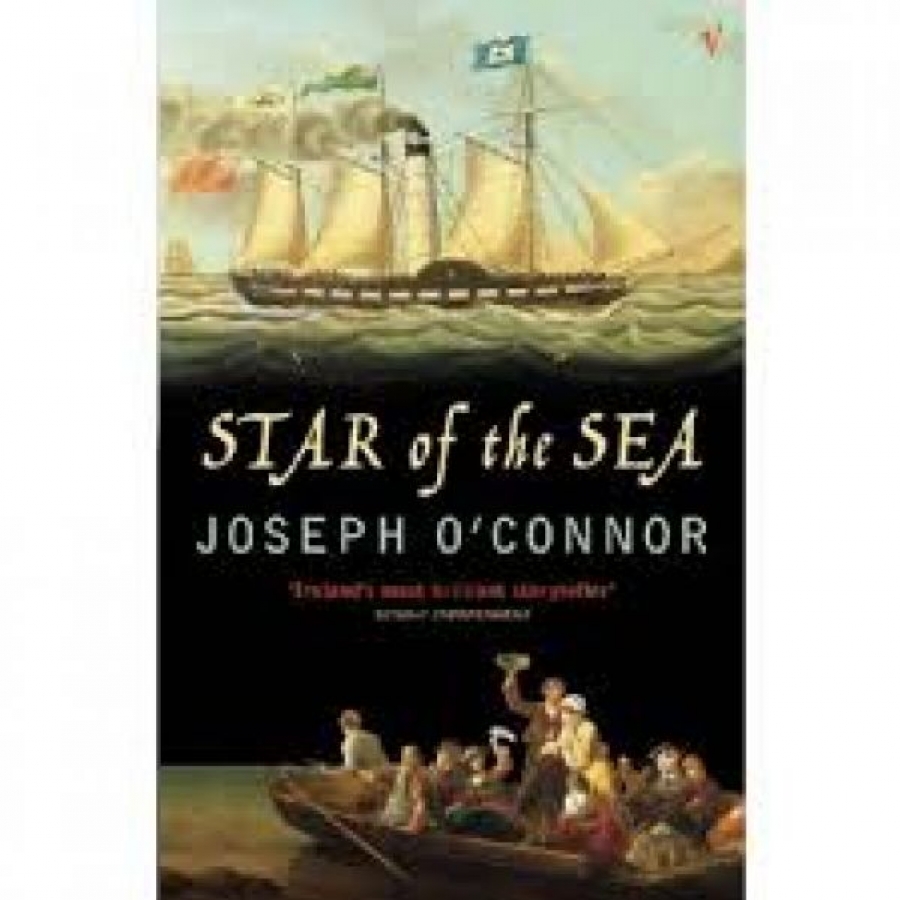
Star of the Sea: Farewell to Old Ireland
Between 1845 and 1849, a famine struck Ireland, giving rise to massive emigration toward Great Britain, the United States, and Canada. It was an enormous mass of people pushed to their absolute limits, malnourished and afflicted by typhus, tuberculosis, and cholera, already reduced to poverty and starvation in previous years by the rapacious policies of the landlords. The novel aims to recount this human tragedy and does so in an original, intriguing way: in the bitter winter of 1847, a ship sets sail for New York carrying hundreds of people fleeing a devastated land. > The ship was not bound for America, but for any country or territory that was not the United Kingdom; no matter how hostile and cold it might be . In tones reminiscent of Conrad, if not Melville himself, the author presents the ship as > a colossal beast of oppressive weight, its vertebrae creaking as if about to snap, dragged by some deity through their final tribulation, its skeletal frame already half-devoid of life and we passengers its parasites. (...) the shattered organ of a once majestic cathedral ; the metaphor, in short, of a ruined Ireland, of a desperate people. The multiple narrative voices are seductive as well, such as the captain’s log, which punctuates the days of the voyage with a roster of those who succumbed to disease and wasting; or the letters of certain passengers, bearing witness to hope, but also to the toil and despair of the emigrants. It is a pity that the plot and characters neither sustain this narrative approach nor reflect the historical and existential tragedy the work intends to portray. Aboard, alongside hundreds of emigrants, are a maid with a devastating secret, a bankrupt landlord with his family, a writer chasing elusive success, and a murderer thirsting for revenge. The lives of these characters are intertwined. Dissolving everything in its wake, the Great Famine shattered conventions and hierarchies, simultaneously releasing latent energies and repressed desires: one is finally free, yet this freedom also leads to self-destruction. At the center of the story stands the figure of the landlord, David Merridith: in love with the maid—whom we discover to be his sister—he must resign himself to a platonic relationship that no longer makes sense in this new state of affairs; drawn to darker, more ambiguous sex, he entered into a marriage of convenience rather than love, and mourns the life he could have had; driven by social aspirations, he has assumed, in spite of himself, the role of the "villain" toward his tenants, so much so that he fuels their hatred and desire for revenge. In the end, David Merridith dies mysteriously (murdered? suicide?), freeing the other protagonists from his now burdensome presence and allowing them to forge a new life in America. Does he embody the old society, and does his demise bear witness to a rupture with the past? Begun with high expectations, the novel soon collapses into yet another hodgepodge: it lingers over the characters' backstories, abandoning the ship and its passengers to recount the premises in exhaustive detail, stripping away any sense of surprise; it dwells at length on lurid, violent scenes, even on the wretched David Merridith’s syphilis; it strains to deliver a broad yet predictable panorama of mid-nineteenth-century Ireland and England. By attempting to pack in too many themes and situations, the author renders the plot tedious and prolix, fraying the narrative style, which sheds its Conradian, imaginative evocations only to become banal and redundant. Why not read it? It is long and boring.
Sugar (in Sugar and other stories)
This is a short story. The narrator’s father is admitted to a hospital in Amsterdam, where he has been diagnosed with prostate cancer, which will soon lead to his death. He is a taciturn and reserved man who opens up to his daughter, the narrator, speaking of the family and the grandfather. One of the themes is his wife’s habit of “telling lies”—that is, inventing family episodes. The narrator thus realizes that “much of my past could have been fabricated by my mother.” The theme of the story is the family myth: the capacity to mythologize, idealize, and imagine a familial memory, which subsequently exerts a decisive influence on the mental, psychological, and cultural development of descendants. > During those extreme weeks in Amsterdam I thought about origins. I thought around my grandfather. I also thought about certain origin myths I had pieced together as a child to explain things that were important, my sense of being from the north, the fear of art, the inevitability of the end . Mythological elaboration is the defining element of this memory, which does not photograph reality, is not history, but allows one to receive a world of values and sensations. The narrator imagines that her paternal family was like the pantheon of Norse gods, “wild, extravagant, harsh, sturdy, and terrifying,” and that > her mother’s lies were to sweeten and soften my father’s stormy, cold world . Invention in storytelling is a way to free ourselves from grief, from the barrenness of life, from the inexorable approach of death: > what is all this, this entire story I am telling you, if not a careful selection of things that can be spoken, that can be brought into the light of day? Alongside this construction stretch the dark shadows of unspoken things, because I do not want to, or do not dare to say them, or else I do not remember them, have misunderstood them, have forgotten them, or never knew them . If life is not what is real, but what is remembered and therefore narrated, then life is literature. It does not restore people to us: “none of these words can bring him back to us.” Only the myth and the story remain. A short story, yet one of profound depth, both philosophical and literary. The style is highly effective, constructed around an elaborate yet lucid syntax that makes reading it both pleasurable and effortless.
Sunset Park
Morris Heller, the protagonist’s father, is on an airplane watching an old Hollywood film (*The Best Years of Our Lives*), which deals with soldiers returning home from the Second World War and having to rebuild their lives; and what an old friend, a well-known writer, once told him comes to mind: > the idea he is toying with is to write an essay about things that do not happen, about the unlived lives, the unbought wars, the shadow world that runs parallel to the world we take to be real, the unsaid and the undone, the unremembered. A hazardous territory, perhaps, but it might be worth exploring . Miles Heller, Morris’s son, has a passion for photographing the belongings abandoned by those forced to vacate their homes in haste following an eviction notice. He has no plans, no hopes; “piece by piece” he has reduced his desires to a bare minimum. Why does a young man in his twenties, once a brilliant student, lead such an empty life? He is fleeing from guilt, from an existential malaise he cannot bring himself to confess: he is convinced he killed his stepbrother by pushing him under a car. What drove him to disappear was an exchange he overheard between his father and his stepmother. > He is a brilliant boy, I admit it. But cold, fragile, desperate, it chills me to think about his future. (...) They were cutting him to pieces. Carving him up with the calm, efficient strokes of pathologists at an autopsy, talking about him as if he were already a dead man walking. (...) Perhaps the best thing for everyone would be to remove himself from their lives, to disappear . His suffering runs so deep that he cannot even open up to a young girl with whom he has fallen deeply in love. He met her by chance because both were reading *The Great Gatsby*, the emblematic novel of a forceful personality. For a few pages, we hope that Miles might find in love the resolution to his anguish, regain his serenity, and be happy. Yet he is forced to leave Florida in a frantic rush and return to New York, as he faces potential charges of statutory rape—his girlfriend has not yet reached the age of majority. He accepts an invitation from a friend (Bing Nathan), who repairs all kinds of objects in a sort of “Hospital for Broken Things” and has taken up residence in an abandoned house alongside two young women: Ellen and Alice. The narrative then shifts its focus to the stories of the other characters, just as it traces the lives of Miles’s parents: his father, his stepmother, and his mother. We discover that each of them harbors an inner suffering, an unsaid and an unremembered: something they are incapable of expressing, acknowledging, or admitting. As the narrative progresses, glimpses of light and prospects of hope seem to emerge: Miles gets in touch with his parents and finally confesses the reasons for his flight, seemingly freeing himself from his feelings of guilt. Then everything plummets once more. During the eviction of the squat by law enforcement, Miles lashes out, striking an officer. Facing prison, he could turn himself in, yet chooses flight instead. > He wonders if it is worth hoping for a future when there is no future, and from now on, he tells himself, he will stop hoping for anything and live only for today, this moment, this passing instant, the today that is here and not here, the now that is gone forever . Why? Perhaps we can never truly rid ourselves of the anguish within us; perhaps existence can only be endured by retreating into the mundanity of everyday life. As in much of Auster’s fiction, an intellectualist imprint prevails; behind the characters’ refined psychology emerges a sense of contrivance, as though they were mere extras in an abstract line of reasoning, sealed within the author’s mind and largely detached from the actual mechanics of life. Indeed, Miles, Bing, Ellen, Alice, and the rest are not the true subject of the tale: in the background lies New York, the cultured and refined milieu of intellectuals—an enclosure beyond which lies the real world, the one of which Auster either cannot or will not speak. The narrative style is marked by sprawling periods in which commas separate clauses that are grammatically complete in their own right. It flows like a river in spate, a relentless succession of words and syntactic structures; at first captivating and highlighting the author’s undeniable skill, but gradually growing tedious, turning the story into an extended soliloquy: is it Auster speaking? Is it an essay, or a novel? Why not read it? Beautiful at first, it ultimately turns dull.

Super Sad True Love Story
> Privatization, nationalization, savings incentives, spending stimulus, regulation, deregulation, fixed exchange rates, floating exchange rates, exchange controls, free currency exchange, more tariffs, fewer tariffs. And the net result: bankruptcy . We find ourselves in an imaginary America, governed by an authoritarian, police-state "bipartisan" regime in the throes of full economic and political decline: > zero for our economy, zero for military power, zero for everything that made us proud of ourselves . In a technological world where books are no longer read, but where one endlessly consults one's tablet (with the result that > you know every filthy detail of the world, while my books know only the minds of their authors ), Lenny Abramov is a forty-year-old Russian-Jewish man who works for a genetics firm specializing in extending the lives of its wealthy clientele. The novel opens during the protagonist's final days in Rome, where he has lived for a year drinking, having sex, and indulging in the Italian *dolce vita*, blithely squandering company money with meager commercial results. Just the day before his departure, he meets an American woman of Korean descent, Eunice, and falls madly in love with her. "How can I bring her to reconcile her youth with my decrepitude?" Lenny wonders: > we are such an improbable couple, so implausible because she is gorgeous and I am the ugliest forty-year-old in this place... I know we are living in Rubenstein’s America (the President of the United States)... but doesn’t that make us even more responsible for each other’s destiny? And it is precisely this attentive care and affectionate protection that allow Lenny to win over, step by step, Eunice’s otherwise eccentric and capricious heart. A love story unfolds against the backdrop of a devastated and decadent New York. For Lenny, loving Eunice is also loving his city—a desperate longing to lead a normal life amid the rubble of an empire. > Is it still my city? (Lenny asks himself) I have a ready answer, cloaked in obstinate despair: it is. And if it weren’t, I will love it even more. I will love it to the point that it will become mine again . Yet collapse inexorably arrives. Protest demonstrations are violently quelled by a police force privatized by major corporations. Chinese, Venezuelans, and Norwegians conquer America and divide its spoils, condemning New York to become an enclave for the wealthy and forcibly expelling residents from their homes. Amid this catastrophe, the love story also comes to an end, and with it Lenny’s entire frame of reference, leaving behind nothing but "the complete, black silence." It is a sophisticated novel, built upon a dual narrative structure. On one side lies Lenny’s diary—lexically refined, erudite, and ironic, replete with evident references to contemporary America; on the other are Eunice’s messages, composed in a youth-speak jargon. What emerges is a narrative and stylistic counterpoint that effectively conveys their divergent understanding of affection and events. For Lenny, it is a matter of escaping the fear of death and finding meaning in life before the collapse of his world. For Eunice, the romance is merely a parenthesis, to be navigated opportunistically while prioritizing her family of origin and personal ambitions. A distinctive feature of the novel is its use of words: recherché, caressed, alluring, endowed with unusual meanings. On a windy day, Lenny encounters a weary, elderly woman who > looked up at the looming wind and said one word: Gale. Just one word, a word that meant nothing more than a period of weather marked by strong winds, but it took me by surprise, it reminded me of how language was once used, its precision and simplicity, its power to summon memories.... and a hundred other days of gales appeared before me.... we were communicating with words . Yet it is precisely this preciousness of language that weighs the reading down, hindered by a narrative that is slow, repetitive (due in part to the dual structure), and often long-winded. A certain New York intellectualism prevails, to the detriment of narrative freshness. Why read it? It is a sad love story, a last stand against the collapse of the Western world.